Sumire (すみれ) Review
Sleeping Pretend
There’s a saying floating around the internet: “You can’t wake someone who’s only pretending to sleep.”
It gets quoted a lot by people I can’t stand, but the saying itself isn’t wrong.
Sleep is just how a person rests. Strictly speaking, nobody can pinpoint the exact hour, minute, second they drifted off, because it isn’t something you control. Wake someone out of that uncontrolled sleep and of course their eyes open. But a person pretending to sleep doesn’t actually want to sleep—they just want everyone else to think they’re asleep.
Why would someone who’s awake want people to believe they’re asleep? Simple: to look the other way, to dodge whatever they’ll have to face once they’re up.
Easy example. Someone you hate comes looking for you. You don’t want to deal with them, don’t know how to deal with them, don’t want to turn them down, definitely don’t want to talk to them…
So you flop onto the desk and fake a deep sleep. A friend tries to wake you, but you were awake the whole time, so naturally you keep yourself from looking awake.
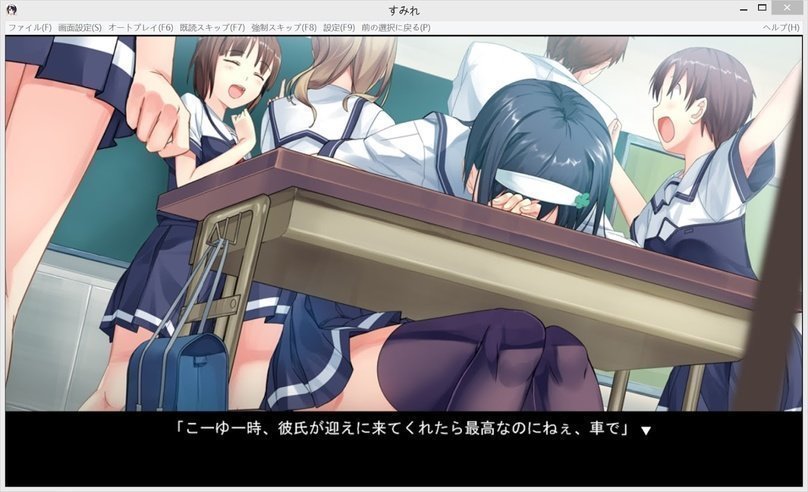
That’s exactly what “you can’t wake someone who’s pretending to sleep” means. The pretender chose to pretend because they never wanted to wake up in the first place. You can’t wake them.
NekoNeko Soft’s 15th anniversary title Sumire (Violet) picks precisely this “pretend sleep” theme. Just like its OP, “Sleeping Pretend,” it’s the story of three girls who each pretend to sleep to get away from the various things in their lives.
The game opens with the protagonist graduating and becoming a company man. Work eats up all his time, so he stops being an otaku and just kills the spare moments online. In a virtual community he meets three girls—Moe, Pink, and Tae—who are the heroines of the game’s three stories.
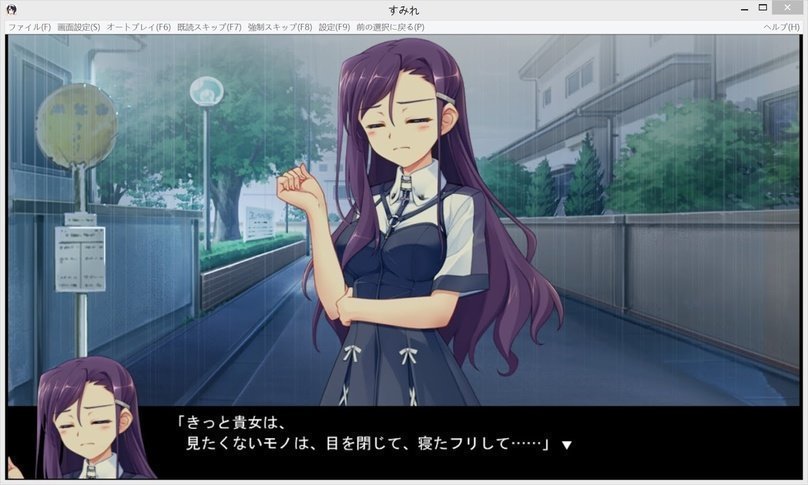
The real-world Moe is someone with no presence, no courage. Her grades are middling, and every day after class she just lies on her desk pretending to sleep.
Yes, pretending. She isn’t asleep, she’s faking it, ears perked up to everything going on around her. She wants to talk to her classmates too, but she can’t make herself move, so she just pretends to sleep, endlessly. Online, Moe is an outgoing, cheerful girl—the complete opposite of her real self…
The reason for that gap: “I don’t want to be hated.”
Online is nothingness. Change your skin and you’re reborn. In reality there’s no skin to change. After school Moe doesn’t dare take the bus at the school gate—she’s afraid of running into classmates, afraid of talking to them, afraid one wrong sentence gets her hated. Between classes she doesn’t dare speak, afraid a slip of the tongue gets her laughed at. She wants friends but has no idea how to start, so she just runs and runs and runs, and when there’s nowhere left to run, she pretends to sleep.
Moe has her vanity too. There’s a stretch where the protagonist becomes her stepbrother in real life, then comes to pick her up from school, and gets mistaken for her boyfriend. Suddenly Moe is the hot topic among the girls.
Her response isn’t to explain—it’s to lie and go along with it, and she’s genuinely happy people are talking about her. It falls apart fast, and what she gets in return is more mockery than before.
Finally Moe can’t take the gossip anymore and snaps, cutting ties completely with everyone who was talking about her.
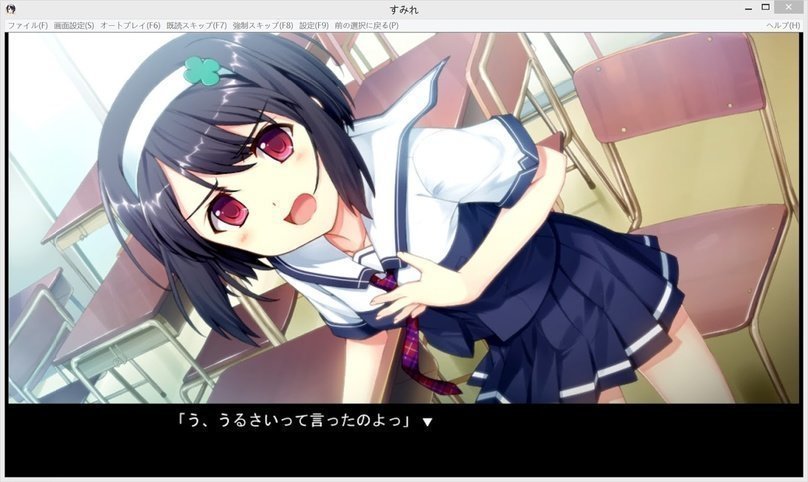
Afterward Moe realizes she’s changed somehow. She’s started wanting to talk to people—not the ones who gossiped, but the ones who don’t care about her past.
“I pissed off some people, but I gained some too.”
She ends up with friends and outgrows the shadow of pretending to sleep.
You can’t please 100% of people in this world. If you want friends, you’re going to make some enemies.
In reality Pink is a cold, aloof girl. She grew up in a single-parent home; her mother treats her well, but she’s never had a father.
Pink got mocked for that lack of fatherly love from a young age, had no friends to play with, and over time she fell in love with loneliness. She started hating everyone else, growing bitter and misanthropic.
So she runs away from herself onto the internet. She goes through the motions at school, and once it’s out, she finds some empty spot, connects, and finds all sorts of friends online to hang out with. The more she gets sucked into the net, the more she hates reality.
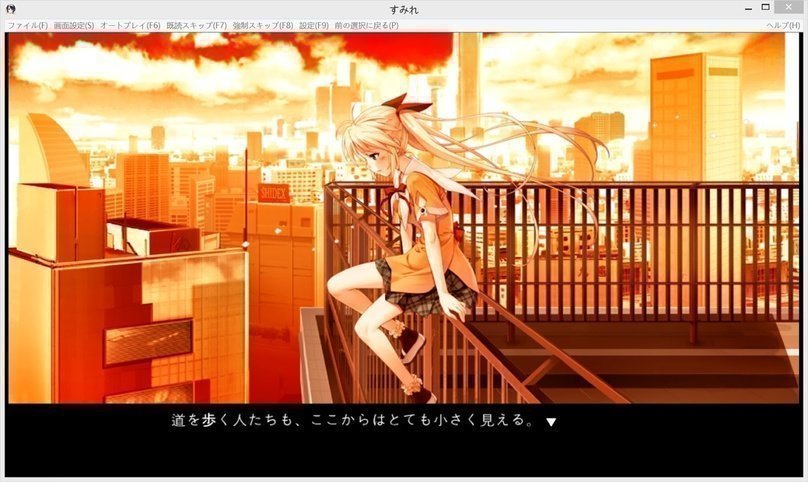
Honestly plenty of people are willing to talk to Pink, but she responds to all of them with cold indifference, looking right through them. For someone living in society, that’s another form of “pretend sleep.”
Soon Pink realizes she has almost nobody around her besides her mother. She figures she has no friends because nobody wants to be her friend. Sometimes she wonders if she should go talk to people first, but she doesn’t have the courage.
The protagonist finds out who Pink really is and starts interacting with her constantly. Even when she hates him for it, he doesn’t give up.
I don’t think I need to spell out this part of the plot. Most shut-in girls are like this. Think Shiori Shiomiya from The World God Only Knows.
“Shiori, is it the library you want to protect? Or is it the one place that will accept you? If you don’t have the courage to step outside… then let me give you that courage!”
“Pink, you were smiling at the amusement park. You can smile, so why do you keep rejecting other people’s kindness?”
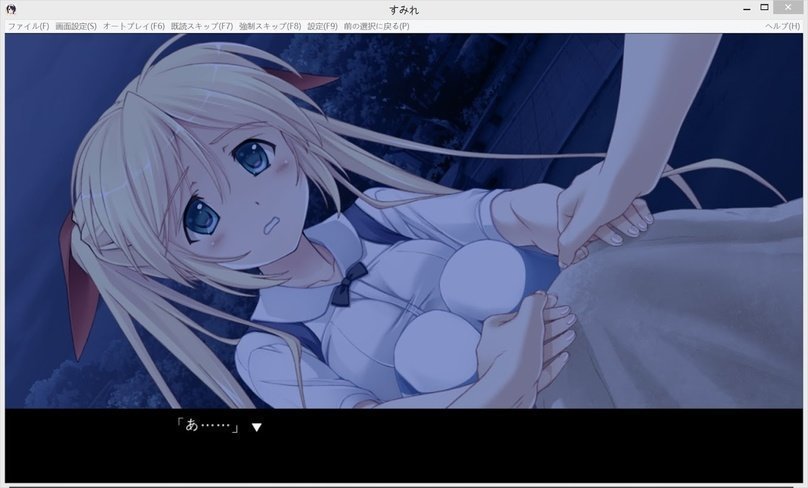
“Enjoying real life only takes one key step. If you don’t have the courage, then let me take your hand and walk with you.”
And so Pink is saved.
Sometimes all it takes is one step of your own, and your life is different.
Tae is probably the main heroine of Sumire, since she shows up in the first two chapters as the one doing the saving.
Actually, she and the protagonist met long before that.
Tae is a rich girl, but her family is a mess—her parents are always fighting. One day she comes down with a chronic illness and gets hospitalized… and pretty quickly, sick Tae becomes the ceasefire drug for her parents. Both of them start hovering around her.
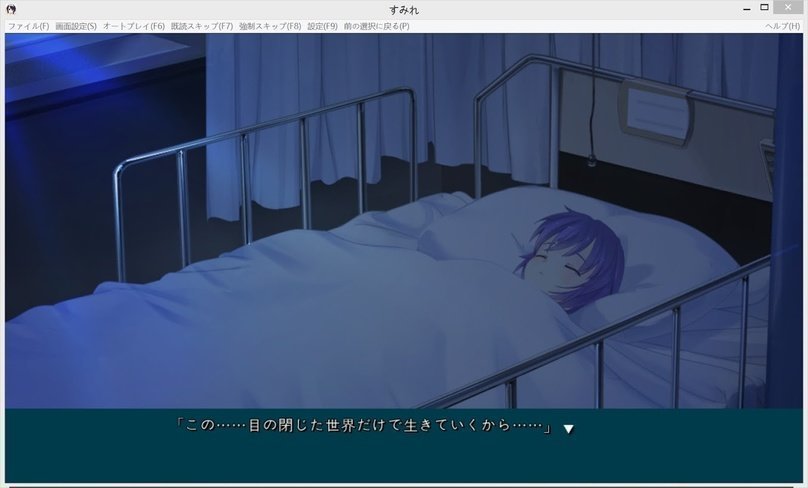
Seeing that as a kid, Tae had a thought… she started lying in the hospital bed pretending to sleep… Stubbornly convinced that as long as she stayed sick, her parents would be punished. She carried that knot in her heart the whole time. Tae probably didn’t much like her parents, so she kept at it. The nurses all figured out she was faking, but at her request they didn’t tell her parents—her family had money anyway, so she could stay as long as she liked.
Tae’s long coma-level stillness drives her father to despair. One day he picks her up, meaning to jump off the building with her… his daughter is like this, so what’s the point of him living. Tae is awake at that moment. If she just opened her eyes, her father would stop. She doesn’t.
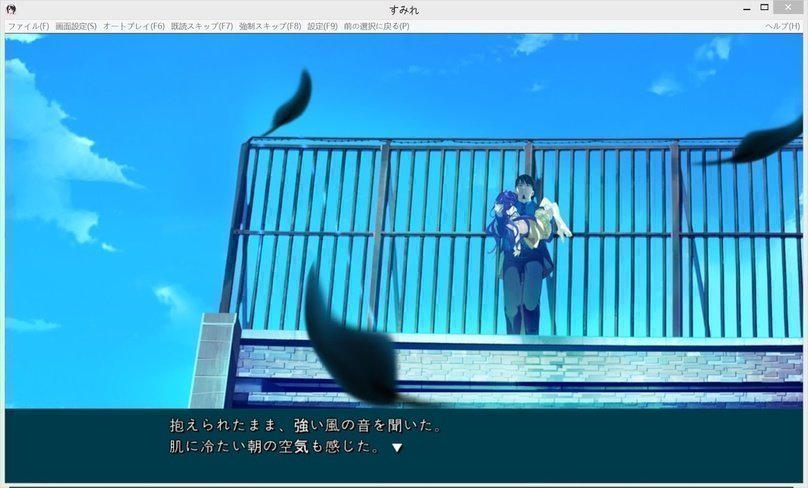
In the end her father puts Tae down and jumps alone.
Having lost her father, Tae keeps pretending to sleep. Her mother falls apart too, and Tae just goes on faking it in that hospital room, year after year, day after day… until her mother leaves her as well.
At first Tae was only pretending to sleep over something small, but as the things her pretense caused got bigger and bigger, she forgot why she started in the first place. Like a habit, she just quietly kept doing it.
Back when Tae was a kid faking sleep, the protagonist was also hospitalized, and the two met. They played together, laughed together, had fun together. Then he got discharged and Tae stayed behind, still pretending. They made a promise that he’d come back and keep playing with her. But after Tae’s father died, he never came back.

Tae uses the capital she inherited to start a company and build an online game community, and through some means pulls in people who are running from society, pretenders like herself, giving them a home in that virtual world. She knows she’s one of the pretenders too, but she still can’t break the spell.
At the end of the story, the protagonist remembers his promise to Tae, goes to find the real Tae in her hospital room, and keeps it. And Tae is finally freed…
Pretending to sleep isn’t a solution. It’s a trap, and it’s easy to sink deeper and deeper.
As a whole, Sumire’s premise is great. Depicting all these people in society running from reality and “pretending to sleep” is both profound and heavy. The character work has its strengths too—though the title is the name of the first heroine, the real heroine in the end is unfortunately Tae.
Great premise doesn’t mean Sumire is a good game, though. It’s billed as NekoNeko Soft’s 15th anniversary title, and it stuffs way too much “anniversary” content into the game—forcing old-game characters and references into the virtual community, none of which have a damn thing to do with Sumire’s main story. Sumire’s own chapter also wedges in a long, tedious play-within-a-play from an old game that drags on and makes no sense.
And almost all of that fanservice sits at the very beginning. Once the Sumire chapter is over, the game completely drops the references and the “anniversary” act and goes full plot mode—and the transition is extremely clunky. The three chapters feel force-fitted together, neither complete nor smooth.
The character art isn’t attractive at all. The artist is the same one from Birthday of the Endless World, and everyone’s got that Zhao Benshan face. Even dumber, the artist seems to know full well his art can’t get anyone off, so he aggressively draws nipples and panties everywhere—which just makes it feel cheaper. A pure girl in a sundress is more fappable than some rural auntie fully naked; did the production team think drawing more lower body would boost otaku sales or something?
All that said, Sumire’s premise is solid—novel and profound, living up to the reputation the scenario writer built up before. But the arrangement is lousy, the BGM is terrible, the art is terrible, and the plot is in pieces. I had to skip, fill in gaps, and strain to understand just to barely string the three messy parts together, because there’s so much of that “anniversary” content stuck in like little ad flyers. The devs themselves joke in the omake that this is more of a fandisk than a standalone game.

Looking back, though—as someone who plays for story—Sumire did give me some reflection and resonance. That running from society, that terror of being hated, that “pretend sleep” born of excessive loneliness, I’ve felt all of it deeply. The huge gap between me online and me in reality exists in me too. Anyone who’s met me in person would probably say I’m nothing like I am online; I can’t open up to that degree offline, and I’ve gradually adapted to talking online and come to hate the real-world way of doing things. I doubt it’s just me—most of the internet generation probably struggles with this.
Who knows when I’ll get out of the shadow of “pretending to sleep.” Hopefully not like the game’s OP, “Sleeping Pretend,” sings:
君が笑って くれたなら
これで 本当に良かった
出も書き換えることは出来ない
後悔を抱いている
私は眠りにつく
Comments are hosted on the Chinese main site. This mirror is read-only.