Secret Game:Code Revise 2nd Stage Boosted Edition Review
Secret Game
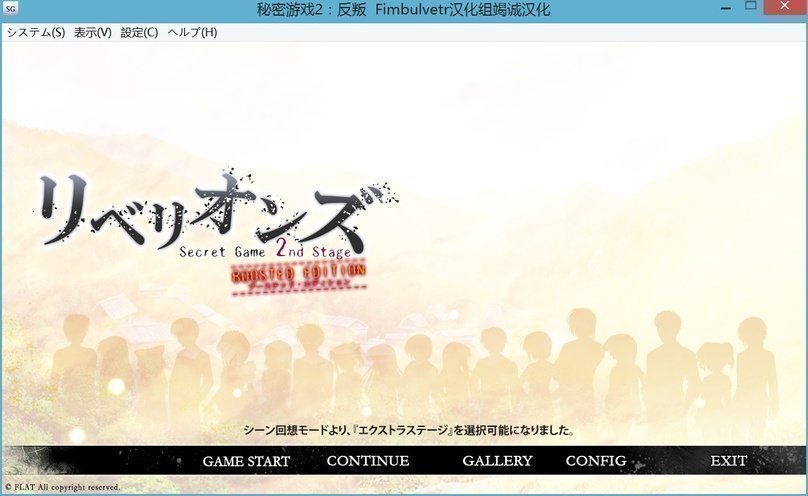
Secret Game is a galgame series by FLAT with a battle-royale-ish plot. I played its predecessor’s enhanced version, Killer Queen (杀手皇后), a long time ago, and it left a strong impression on me.
I call it deep not because it’s brilliant or anything, just because… it’s so goddamn infuriating.
Because the protagonist is a total bleeding heart — the kind who won’t lift a finger no matter how badly people screw him over, and who goes around spreading love and peace to everyone. A pushover like that in real life would’ve been picked clean by now. Unfortunately, he’s a game protagonist, so not only does he survive without spilling a drop of blood, he also gets to bang the girl.
This is also the game that made me remember the scenario writer’s name, and now whenever I see him I can already tell roughly where a work is headed.
So that Secret Game did get a sequel. The first one was just called Secret Game 2, then got the name Secret Game: Code Revise, and later it was ported to the PSP with the story and visuals fully overhauled and renamed Secret Game: Code Revise 2nd Stage. Then that beefed-up PSP version had 18+ content added and was ported back to PC in reverse, under the full title Secret Game: Code Revise 2nd Stage Boosted Edition.
Alright, whatever the hell the full title is, my point is just that despite this being the sequel, the setup is the same as the first game.
A bunch of people who may or may not have anything to do with each other get kidnapped and dumped together for no apparent reason. Each one’s handed a PDA with an identity and a task loaded onto it, and the killing game begins.
The plot is pretty much the same as the well-known Danganronpa and stuff like that: characters suspecting each other, cooperating with each other, some bleeding-heart types who don’t want to kill anyone, some vicious ones out to screw others over for their own gain. But this time the protagonist isn’t the bleeding-heart type — he’s more like a Yuuji Kazami sort of guy, and the bleeding-heart role gets handed to his childhood friend instead.
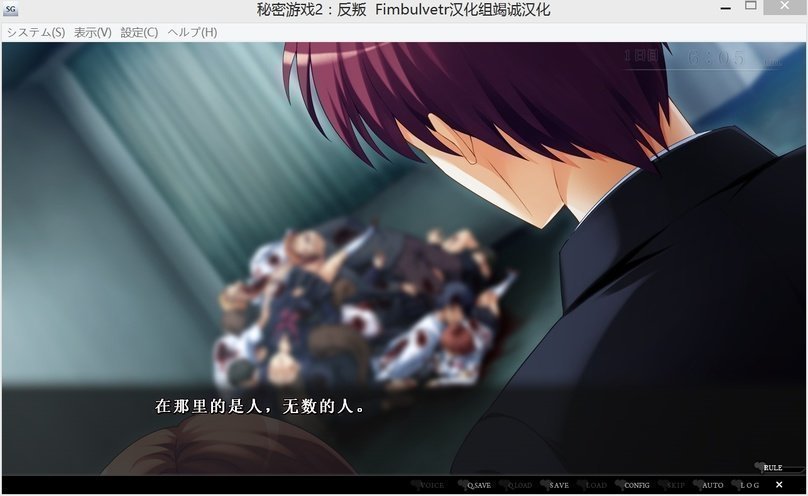
That feeling is great, you know? Men should be a bit more manly, and for women, being a bit saintly isn’t so bad either. As the story progressed, I realized this game’s narrative style is also way better than the previous one. It no longer just hands each person a role and a task to execute from start to finish; instead it sets up a distinction between Stage 1 and Stage 2. In Stage 1, at the very start of the game, the objectives each person has to complete are mostly cooperation-based—things like “stay with someone for how long,” “assist so-and-so in completing their task,” and so on. By all rights, everyone cooperating should let them clear the game with no worries at all, but this is a battle royale—drag a bunch of people together and tell them to play a survival game, and there’s no absolute trust between people. Conflict is unavoidable, so as the plot moves forward, someone finally loses their mind and kills.

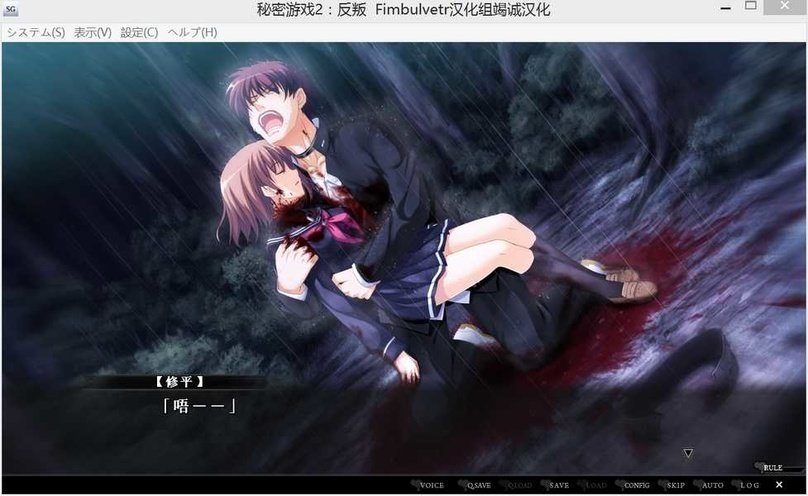
After the killing, Stage 1 ends and Stage 2 begins. In the second stage every character’s objective flips — or rather, everything is inverted from the first stage. What used to be “protect player X” or “stay with player Y” turns into “kill player X” and “stay away from player Y.” The protagonist, having lost his childhood friend, goes completely off the rails and starts killing too. That’s when the game really gets going, right up to the end.
I have to say, this setup is genuinely hilarious (from the death game organizers’ point of view). People who barely knew each other could have just finished the game alive, but a moment of impulse drags them into Stage 2. And because the first stage is cooperative, everyone tends to stick together — so you get total strangers killing each other. Twisted and entertaining at the same time, honestly… The game also introduces the Repeater (players on their Nth playthrough), which only makes me more hyped for where this is going.
Even with that setup, the first round of the game — the ending of Chapter A — is a near-total wipe, and I have to admit the story’s still pretty damn good. A lot of the foreshadowing pays off, and the protagonist actually mans up at the end. Compared to the spineless saintly End from the last game that made me sick, the second one is on a whole different level.
But like the first Secret Game, besides Chapter A there are also Chapter B and Chapter C, where different possibilities lead to different endings, plus a hidden Chapter D, and a flashback chapter Z…
The devs were also kind enough to switch to the operators’ perspective at the end of every chapter, telling the player something like, “If the game had XXX and XXX acting together from the very start… would the ending have turned out this way? Maybe in another worldline, a story like that exists.” — while nudging the player into the next chapter. Honestly, pulling that off at all is already no small feat.
But even so, I’m still not entirely satisfied. See, one of the most annoying quirks of the Secret Game series is that it describes different world lines through separate chapters, rather than using choices like a normal Galgame. In other words, this game has no choices at all — it’s a novel at best, and calling it a Game is a stretch. Since the game keeps hammering on “what if this” and “what if that,” it’d make more sense to just throw the choices into the main story and let the player pick a different world line. No idea why the game stubbornly refuses to do that.
Considering the game launched with only a single chapter of story at the start, and only got to its current length after endless rounds of reinforcement, reinforcement, and more reinforcement, that might be one reason too.

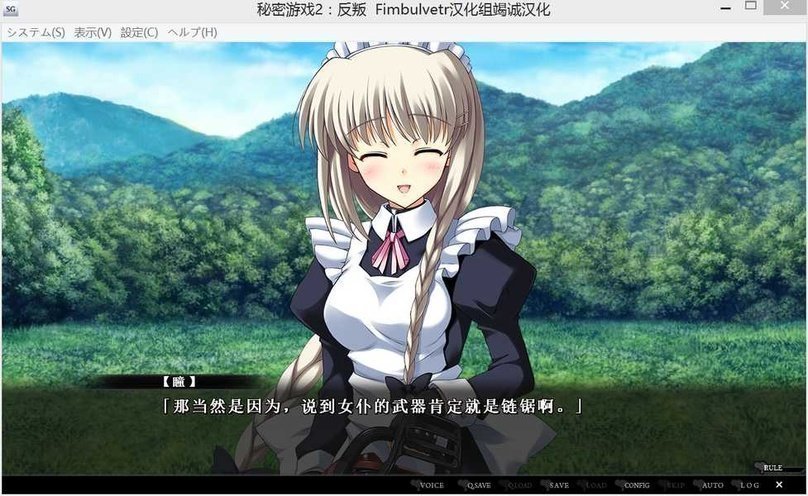
Chapter 1 was genuinely great, but sadly the quality falls off a cliff once you hit Chapter 2 (B) and Chapter 3 (C). Chapter 2 has no real main plot, just a mess, and since the earlier chapter already showed off the personalities of basically every hidden character, sitting through it all again is a sleep aid — and it still ends with everyone dead. Chapter 3 does bring the main plot into focus, has the protagonist team up with an experienced Repeater, and reveals the maid’s true identity, but beyond that there’s nothing else to it. And there’s not much to say about what follows either — it just feels like different people die, with a strong sense of copy-paste and here-you-go-just-play-it. Or maybe it’s more like the same game’s replay: flat, boring, no payoff, like filler.
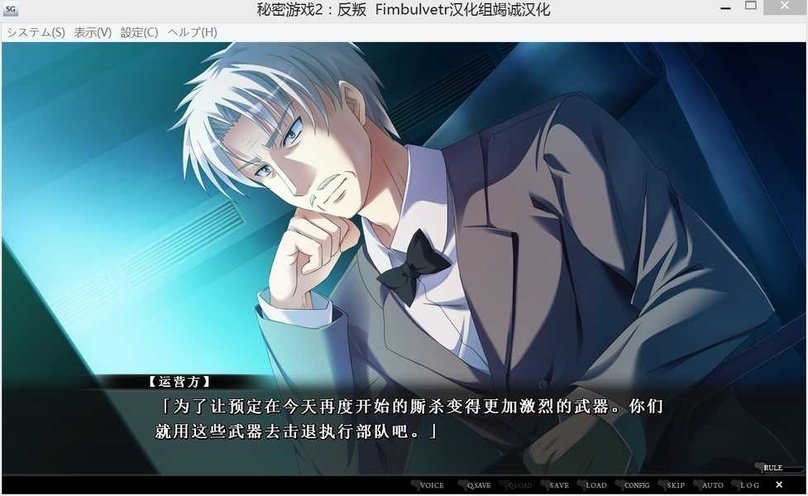
But at the end of chapter 3, the game pulls a reveal: the Gamemaster is actually just another piece in the game. At the start of chapter 4, the GameMaster remembers that they have family or friends among some of the players. And the game’s operator is only using the GameMaster — they want to see the GameMaster’s own friends or relatives slaughter each other in the game, for the thrill of it.
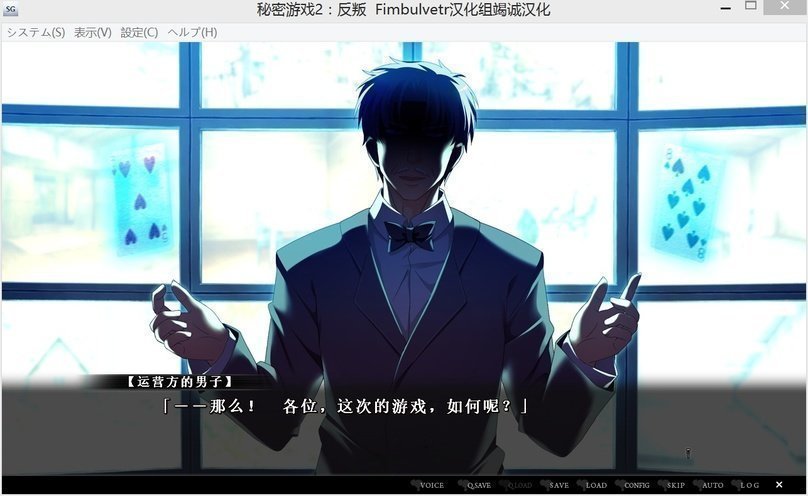
So chapter 4 works as the game’s finale: when the mid-route plot unfolds, the GameMaster’s betrayal is the big wham moment, all the players start fighting back, seize the speedboat on the island, and the survivors escape. Later they found ACE, an organization resisting this kind of game, and draw up a plan to infiltrate and sabotage the operators. It ties perfectly into the True End of Secret Game 1—that’s when I finally got why the game’s PDA is some ancient thing like the HP iPAQ HX2700, and why the phones in the game are called “keitai” rather than “smartphones.” It’s a prequel to Secret Game 1, a game from 10 years ago, after all. The final Z chapter is the past arc, filling in the one dangling mystery in the game—the past of the Repeater, Yuna Todo—and it also fills in the H…
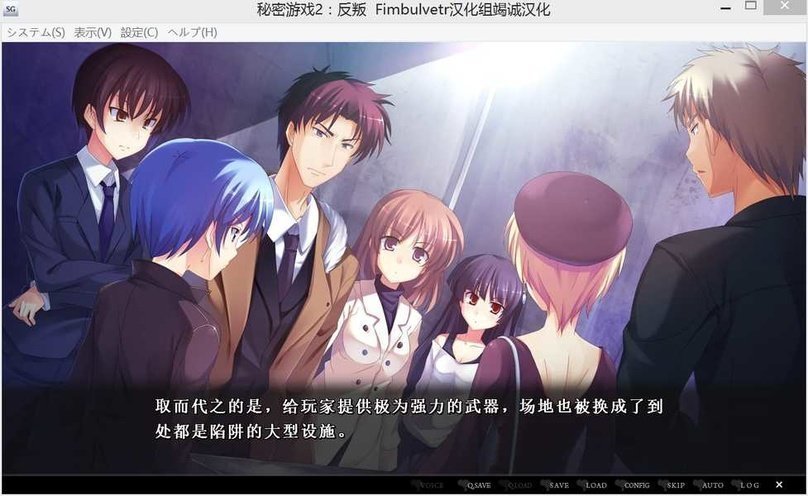
I mean, the H scenes in this game are basically useless, and they feel so out of place. You’re about to die—who’s got time to “get one in while she’s still warm” right in front of the cameras?
Looking at the whole thing, Secret Game 2’s setup is honestly pretty reasonable, but the two middle chapters are way too baffling and a waste of time if all they’re doing is explaining the backstories of the protagonist’s sister and the maid. Having to replay the game from scratch every single time gets really tiresome. The final chapter’s uprising leans a bit too hard into that Danganronpa-style “call for love, courage, and unity” spiel that comes off as kind of preachy, except in Danganronpa you actually control the battles yourself — Secret Game has no combat, so that irritation hits even harder. Still, the intense parts aren’t too unpleasant, since people do die, and it doesn’t pull the bullshit zero-death Killer Queen run from the first game. The perfect tie-in with the first game at the end caught me off guard, and it indirectly patches up some of the awkward bits from the original.
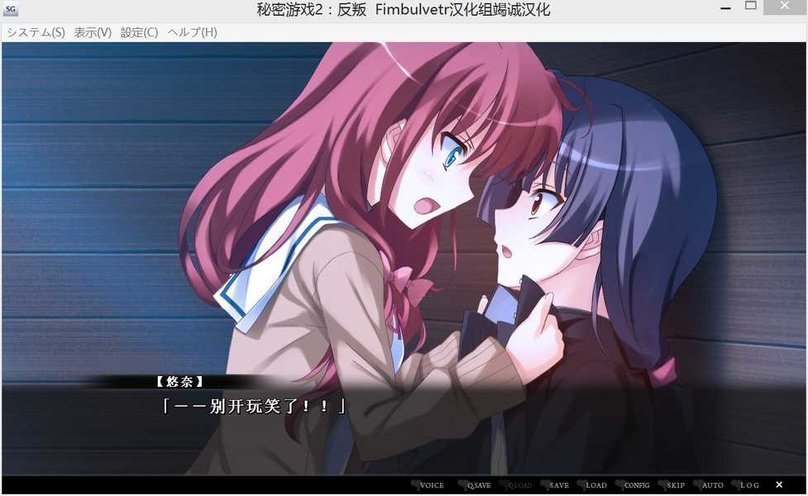
On the visual side, I can only say Secret Game 2 is way better than the first game. The artist’s improvement is honestly obvious, and the music is also better than the first game’s noise-like effects—it laps the Danganronpa OST, which apart from Heat Up is nothing but unlistenable, several times over. The yūjo in the OP still delivers, which directly led me to buy the game’s PSP limited first edition (because it comes with the OST).
All in all, I went into Secret Game 2 expecting it to be as goofy as the first one, fully prepared to eat shit — and it turned out way better than I expected. The middle B and C parts have way too much skippable content, and the final chapter isn’t as good as the first, but even so it’s still worth playing.
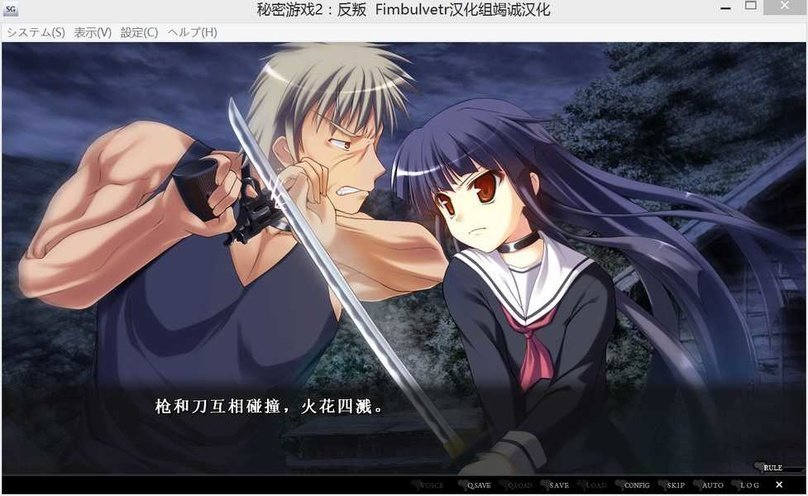
Ah… after finishing the game I’m left feeling unsatisfied. I thought it was going to be Takehaya-sensei’s shit, but it wasn’t… kind of a letdown.
Comments are hosted on the Chinese main site. This mirror is read-only.