A Few Days with Arduboy
Impressions: A DIY Arduboy
The Arduboy is an open-source, credit-card-sized handheld built on the Arduino platform. It’s all about that 8-bit era feel—roughly, you know, a step above those black-and-white LCD Tetris handhelds.
The project actually started as a way to promote Arduino, something Arduino fans cooked up themselves. It later hit Kickstarter, became a proper product, and turned into a geek toy. As more people bought it, they did a bunch of collabs and even put out an enhanced Arduboy FX with more preloaded games and USB-C link play…
It looks commercial, but the thing is fundamentally open source. You can buy an ATmega32u4 chip and, by mooching off companies like JLC, solder one together yourself. No need to buy the official version—especially since the official one has been out of stock and getting pricier lately.
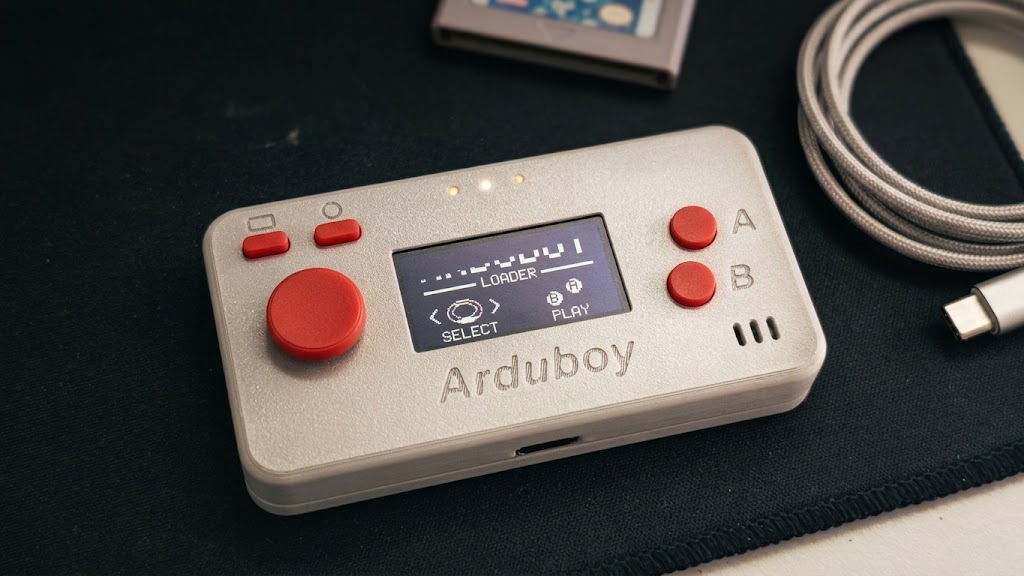
What I got is a “DIY” Arduboy. Performance and features are basically at the Arduboy FX level. It comes with a bunch of games preloaded, and you can even download Chinese resources for it.
There’s a wide variety of game types—after all, developing games for the Arduboy is part of learning to program. Sure, I’d say it’s a notch below Pico-8, but Pico-8 doesn’t have an official dev-kit standard yet, whereas the Arduboy standard is much clearer.
| Item | Specs |
|---|---|
| Resolution | Fixed 128×64 pixels, 1-bit monochrome OLED (pure black and white, no grayscale) |
| Buttons | Fixed 6 physical buttons (D-pad + A/B action buttons) |
| Processor | ATmega32u4 (16 MHz 8-bit AVR) |
| Memory | 32 KB Flash for programs, only 2.5 KB SRAM at runtime (extremely tight) |
| Sound | Piezo speaker (simple sound effects) |
| Battery/Port | ~180 mAh, 5–8 hours battery life; Micro-USB on the original, USB-C on the FX-C |
Worth noting: some DIY Arduboys use bigger screens with higher resolution, but theoretically that’s not ideal. The official game development standard is that exact size, and bigger screens and resolutions only bring more compatibility issues. If you want the authentic experience, it’s best to stick to the official standard.
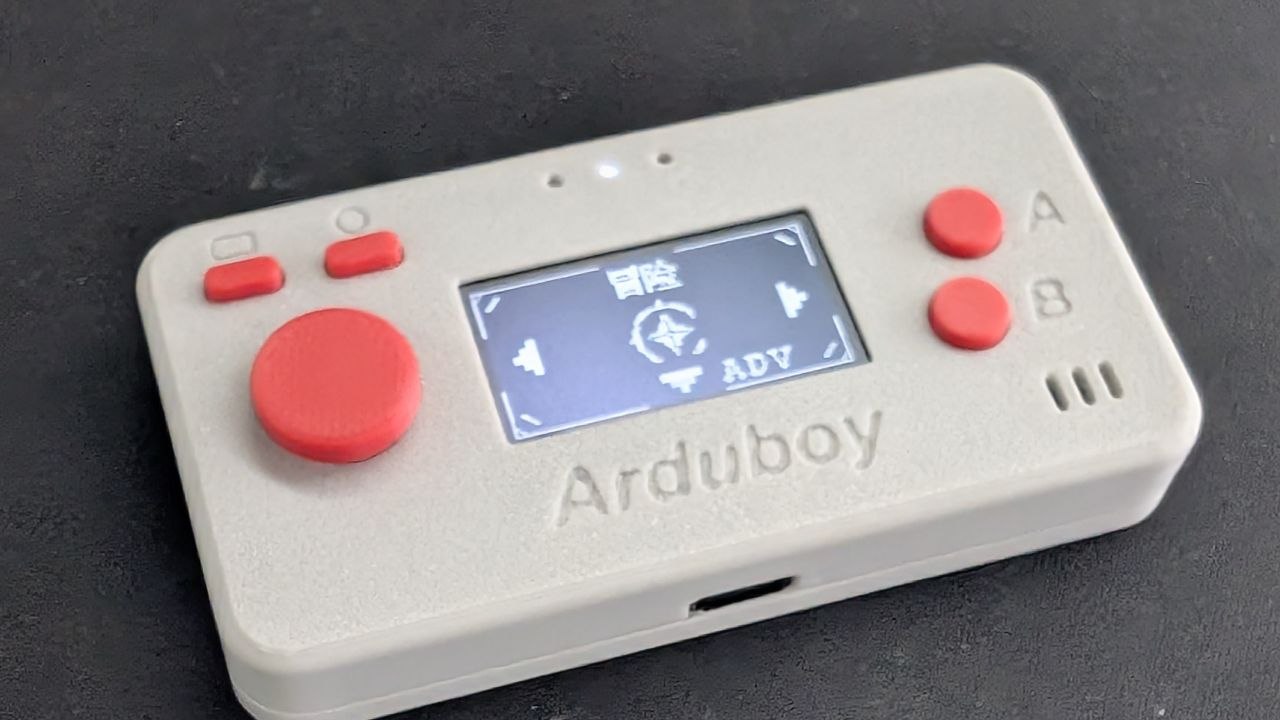
How are the games themselves? Let’s just say they’re good for killing time—don’t expect too much playability. Still, a lot of them are pretty interesting to study for their mechanics. Figuring out how to make the most fun gameplay with simple buttons and limited capacity is genuinely a topic worth digging into.
What bugs me… is that the screen flickers. It’s so hard to take a photo without catching the flicker. Drives me nuts.
Comments are hosted on the Chinese main site. This mirror is read-only.