Phantom Blade Zero Review
Phantom Blade Zero: Being Fun Matters More Than Anything
After finishing Phantom Blade Zero, I did want to say something, but then I thought about it and realized I didn’t know what to say. I want to praise this game, but it’s very different from what most people picture when they hear “a good game.”
Its visuals aren’t anything special, and as an action game its combat depth is basically nonexistent. The story looks like it’s imitating Gu Long, but Gu Long—both the man and his style—went out of fashion long ago by 2026, so it all comes off as awkward now. As for the audio-visual presentation, this fusion of classical and modern elements in the music was already done to death back in the Warriors Orochi series. And even when it comes to building a wuxia world and wuxia combat… whether it’s the pioneers of xianxia games or later stuff like Meteor, Butterfly, Sword, Naraka: Bladepoint, or even Where Winds Meet, they’ve all pushed wuxia combat much further…
So what exactly does Phantom Blade Zero do best?
The answer lies in what Feng Ji said back when Black Myth: Wukong launched: “Completion matters more than perfection.” For Phantom Blade Zero, it should be: “Breadth matters more than depth,” or maybe “Giving up matters more than persisting”?
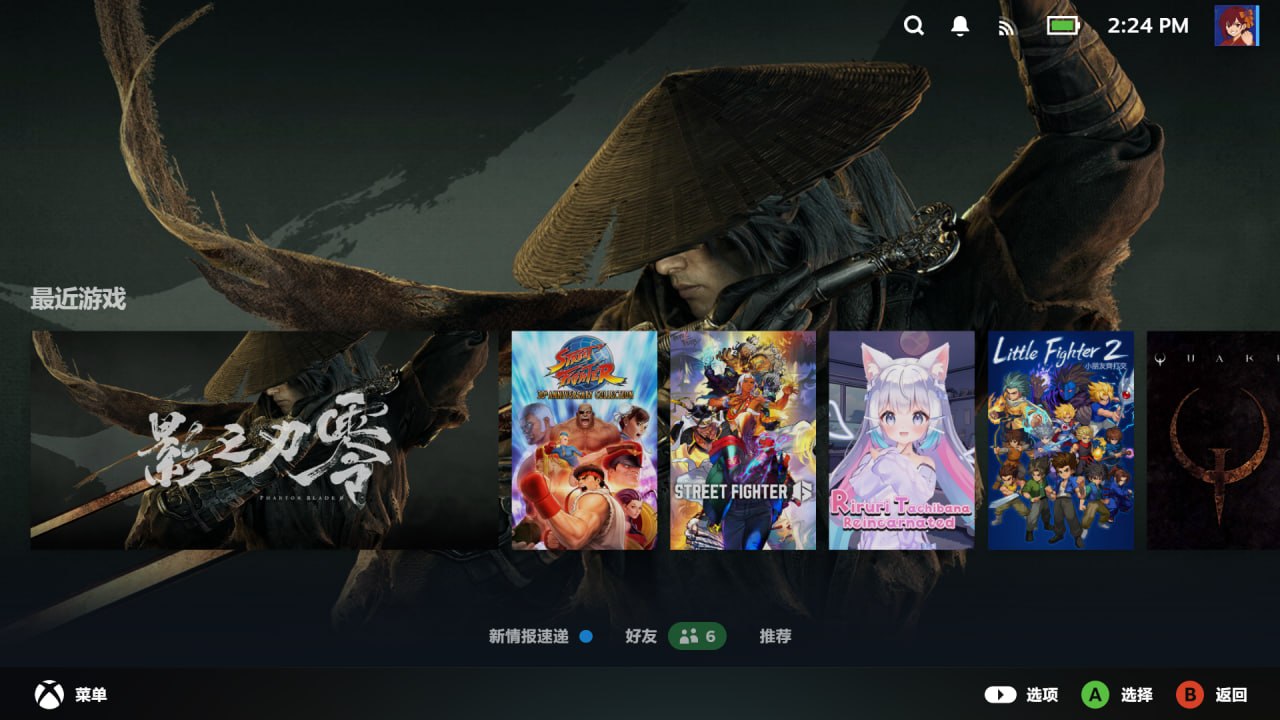
The visuals aren’t detailed, but the frame rate holds
Billed as the next 3A title after Black Myth: Wukong and Wuchang: Fallen Feathers, Phantom Blade Zero doesn’t shine visually—at medium-low settings it often looks downright rough. But this was intentional from the start. Producer Liang Qiwei said the game was developed based on standard PS5 performance from the beginning, specifically to make later optimization easier; as an action game, a stable 60FPS matters more.
And in practice, Phantom Blade Zero didn’t draw much criticism for its launch optimization. You’ll see plenty of people trashing the graphics, but few complaining about stuttering or poor performance. That’s at least much better than when Black Myth launched on PS5—loads of PS5 players complained about input lag, poor visuals, and bad frame rates, and it took nearly half a year before it was optimized to a barely acceptable state.
Playing Phantom Blade Zero on my ROG Ally X, it actually hit 60FPS at 1080p on medium settings, and could even do 45-50FPS at 18W total power draw. Compared to Wuchang: Fallen Feathers, which needs 720p at all-low to hit around 50FPS, this optimization is basically perfect.
Of course, Phantom Blade Zero isn’t without optimization issues. They mainly show up when running it under Linux via the Proton compatibility layer, where there’s a serious memory leak, and Nvidia cards lose character models entirely. AMD and Intel GPUs fare much better, though performance is still mediocre. Linux isn’t exactly a mainstream platform anyway, so here’s hoping support improves later.
But for Phantom Blade Zero’s main audience—PS5 users, Xbox users, and most Windows PC players—the game is very friendly. Aside from Unreal Engine 5’s shader compilation being a pain in the ass, there’s really nothing wrong with the performance optimization. The visuals and facial expressions are a bit lacking, but for an action game where you spend most of the time staring at the protagonist’s back, that’s not a problem.
The story isn’t remarkable, but there are no landmines
Based on how previous entries in the series went, Phantom Blade Zero’s story is full of early-2000s chuuni energy with a heavy Gu Long flavor—and Gu Long loved writing NTR plots. The most famous example is The Little Li Flying Dagger; put that plot in front of modern audiences and Li Xunhuan would probably get called a cuck for days, but it was popular back then, even considered cool…
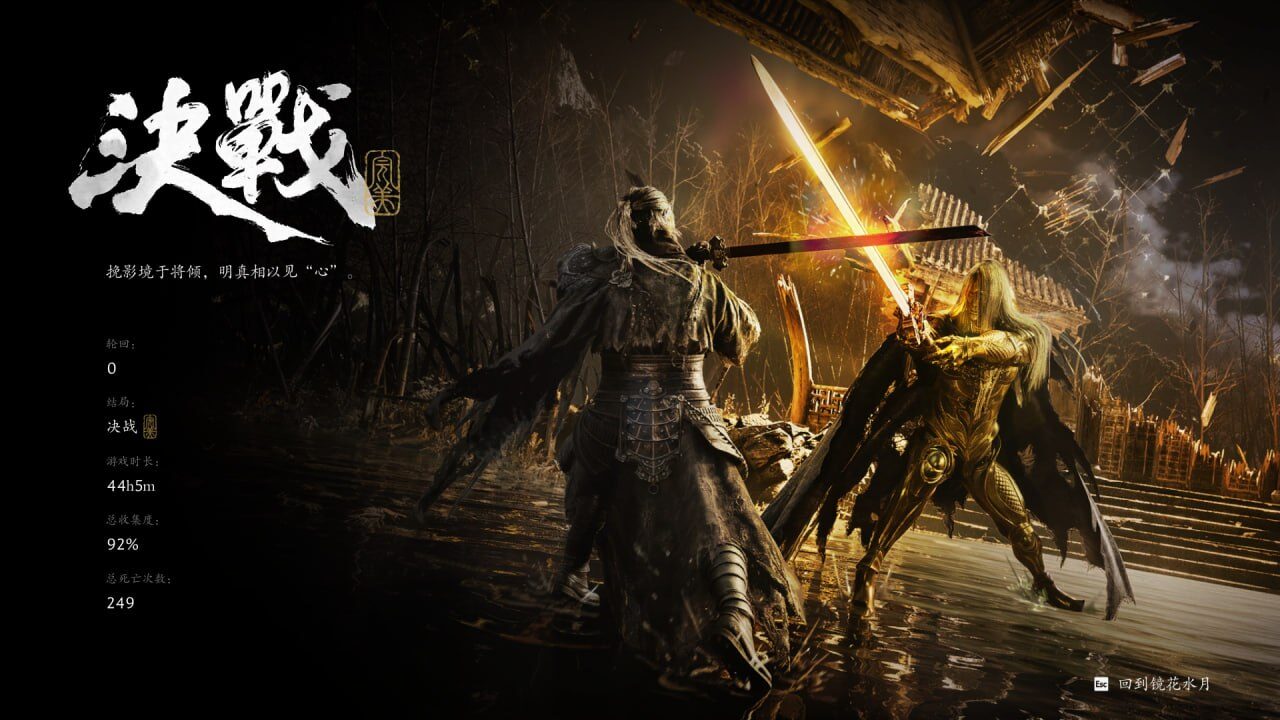
What Phantom Blade Zero actually delivers is more… bland? The protagonist is a wrongly accused martial arts master investigating the truth, only to discover his sworn brother is behind it all, seeking to control dark forces and rule the world. The “dark forces” are basically sacrificial black magic, easy enough to grasp. Even overseas players shouldn’t have trouble understanding it—it’s ultimately a straightforward revenge story. No depth, but nothing that makes you gag either. They even removed the early love-triangle elements that could have caused controversy, clearly playing it safe.
Interestingly, most “action games” have simple stories anyway, so Phantom Blade Zero’s plot is par for the course.
Combat is simple but not simplistic
As an action game, Phantom Blade Zero’s combat system is the most controversial part. Plenty of hardcore action game players say the combat lacks depth—and that’s true. Your killing intent is your shield; blocking doesn’t cost HP. You can basically just hold block the entire game and casually dodge the occasional red, blue, or black glow attacks. Even if you don’t dodge, it doesn’t matter—you can swap weapons to quickly restore killing intent. Even if weapon swapping has a cooldown, you can quickly build up three full bars of killing intent through sustained offense, meaning you get three full-HP shields per fight for free.
Each weapon basically has only 2-3 skills, or really no combos at all—one button for light attacks until you die, one button for heavy attacks until you die. A few weapons have special properties, but you can count them all on one hand. Sometimes using a weapon makes me feel like I’m playing a gacha game, with just a skill 1, skill 2, and an ultimate. The kind of deep combat design you see in other action games—all those branching moves, variant trajectories—Phantom Blade Zero doesn’t have any of that. There’s basically not much depth to explore.
But the game gives you a massive arsenal… the kind of weapon count you genuinely can’t get through in a single playthrough (nearly 60+ main and sub weapons combined). And most weapons are absurdly strong—there are only weapons that are “relatively less powerful,” never “completely useless” ones. So on that foundation, you can keep swapping and trying new weapons to maintain freshness, never getting bored the whole way through.
So is the combat depth simple? Yeah, definitely simple. Is it boring to play? Simple, but not boring.
Massive content and thoughtful design
The massive arsenal is matched by Phantom Blade Zero’s story and map size—the sheer scale of the monsters and maps is ridiculous. That one Pang Town map alone would be enough for another game to use as an entire title. The map design is excellent too; all those branching paths never get boring, and you won’t even get lost.
The boss count is also absurd, though most boss designs are garbage. Aside from a few martial arts masters, even the final boss is terrible—it’s like a rabid dog. But the protagonist’s extremely high performance and huge weapon variety make up for it… Your dodge and block can be canceled at any time, so as long as you press fast enough, you don’t need to worry about getting wrecked by bosses. You have a huge HP bar, tons of healing potions, and even fully upgraded wheelchair weapons—the whole thing is about clashing magic against magic, so your experience never gets especially miserable.
Not to mention the game doesn’t make you redo second phases, mobs don’t respawn, and reverting weapons doesn’t cost resources—so you never suffer through the whole game…
Of course, it’s not like the game has no difficulty. Some bosses still require you to think a bit and swap up your loadout, and then you can beat them easily.
The music takes a back seat, but the ideas matter
The music in Phantom Blade Zero is fairly divisive online. Some people think the soundtrack is highly original and full of ideas, blending modern and traditional instruments, mixing trap, harsh vocals, khoomei, and all kinds of drum and bass—very fresh. Others are conservatives who think: you’re a Chinese game, a wuxia game, and you’re not promoting national essence, you’re neither Chinese nor Western…
And then there’s a third camp saying the instruments are recorded live but the texture sounds electronic and cheap.
Personally, I think Phantom Blade Zero’s soundtrack is excellent—but that’s in the context of the game itself and the combat and story, where it fits tightly. If you listen to it on its own, it feels like something’s missing, which is actually the benefit of a soundtrack that doesn’t overpower everything. As for the live recording and such, I believe the producers did it intentionally, deliberately making the texture “electronic” to match the punk atmosphere.
More than anything, the game gives you those “holy shit, these two instruments can blend” surprises. Being pleasant to listen to is secondary—opening up new ideas matters more. I’m sure we’ll hear more “classical meets modern” fusions going forward, getting foreigners to groove to pipa and guzheng tones over trap beats. That’s better cultural export than forcing people to listen to Peking opera.
A pure power-fantasy game
Honestly, writing this article has been awkward, and you can probably tell the flow isn’t exactly smooth—mainly because I genuinely don’t know how to evaluate Phantom Blade Zero.
Many points have been made by others. When you try to find its strengths, you realize many aren’t really strengths—a lot are outright flaws. But if you say it’s not a good game, your body knows the truth—I honestly had a blast for nearly 50 hours…
Phantom Blade Zero actually reminds me of when I first started gaming as a kid. Everyone was playing Red Alert, which looking back had no depth, not even tactics—just find the strongest unit type and mass-produce it and bash heads. Everyone was playing like shit, but having a great time.
Later, when I got into StarCraft and Warcraft, I understood that RTS games need “macro,” “unit counters,” and so on…
But after deeply learning and engaging with Blizzard’s RTS games, I actually felt like I’d lost the joy I had playing Red Alert as a kid. I had too much to think about, too much to consider, every wave of actions and jungle fights needed careful deliberation, I had to think about tactics…
The same thing happened with MOBAs. The earliest map type was called 3C, and our favorite was Chenghai 3C—that competitive map had basically no balance to speak of. Many heroes had absurdly broken ultimates, and the so-called balance was achieved by “everyone being broken, allowing you to buy multiple heroes,” ensuring mutual destruction. Late game was everyone spamming ultimates—mindless, but satisfying…
Then there was another 3C map called AI Orc, which was clearly more restrained in design and much more balanced… but playing it just wasn’t as satisfying, not as fun.
So Phantom Blade Zero is like those “satisfying” games from before: average depth, bland story, but the combat is just satisfying. It fulfills most people’s fantasy of being a “master warrior” without a huge learning curve or suffering. It gives you all kinds of weapons to have fun with, and you can directly feel how satisfying it is…
Sometimes I think a game achieving that is enough.
Should games pursue appreciation or fun?
Phantom Blade Zero sometimes reminds me of 2016, when I first encountered DOOM (2016).
DOOM (2016) was a series reboot. Before that, the industry’s 3A FPS design had basically ossified: varied weapons, careful advance-and-cover combat, duck behind cover to regen health when hurt, all striving for a “real battlefield experience.” Even DOOM 3 and Quake 4 were designed that way.
But DOOM (2016) tore up all those assumptions and labels. It told you FPS could return to being hardcore, return to the original in-your-face combat. No regen health needed—just melee execute enemies to sustain yourself through combat. It gave players a long-lost sense of satisfaction, showing you that you don’t need to play like a turtle, creeping forward step by step—you can charge straight into the enemy horde and surround the demons.
Looking back now, DOOM (2016)’s systems weren’t perfect. Many weapons were broken, the final boss fight was mediocre, there was no perfect combat loop, and the Marauder hadn’t appeared yet… basically what people now call “not enough systemic depth.”
But that didn’t stop DOOM (2016) from being a game you had a blast playing. After earning player approval, we got DOOM Eternal, which further refined and explored systemic depth, becoming a classic that players still talk about to this day.
I read interviews about Phantom Blade Zero, and I found that the developers intentionally made the combat system simple. They just wanted players to have fun and experience what it feels like to be a martial arts master with simple controls. They definitely achieved that, and they showed everyone that besides “Soulslike,” action games can also let you be the boss, turning you into the “Doom Slayer” of the martial arts world—everyone you meet calls you “Lord Soul,” and fights are all flashing blades instead of dodging someone’s fast-slow attacks like a maggot before getting one-shot. With this successful first step, I think the team can further refine the foundation and make a sequel with more combat depth and even more satisfying action. You can tell the developers left out a lot of content, and I hope that content comes back through various refinements and design work later.
Phantom Blade Zero may not be a work worth digging into and studying for its internal core value, but it is definitely a game that makes you happy after playing. Games are meant to bring joy—not to be some art piece you need prerequisite knowledge to appreciate.
“Breadth matters more than depth,” or “giving up matters more than persisting”? Neither. Being fun matters more than anything.
Comments are hosted on the Chinese main site. This mirror is read-only.