An Unfinished Mediocre Work: Meguru Kisetsu no Yakusoku to, Tsunaida Sono Te no Nukumori to
Today I’m going to talk about a visual novel that never actually came out, and probably never will.
The title is long: Meguru Kisetsu no Yakusoku to, Tsunaida Sono Te no Nukumori to (The Promise of Passing Seasons and the Warmth of That Hand). It was originally slated for May 2013, pushed to the end of September that same year, then kicked to “this winter,” and after that—nothing.
Two years later, in 2015, Sofmap (the brick-and-mortar chain) listed it as “release cancelled.” The official side has never said a word about it. Though at this point, saying something or not hardly matters—since around April 2014 the official channels, social media, the website, all of it went completely silent. For all intents and purposes, it’s dead.
But here’s the funny part: this stillborn game didn’t leave zero traces. One month before the first delayed release date—September 2013—it put out a trial version. That trial is the last remaining clue, the best evidence that this thing ever existed at all.
Though I suspect most people know this game through its OP. “Ferris Wheel” (観覧車) is just too famous.
What the trial version actually says
It’s been dead for over a decade, and I’m honestly surprised the official site is still up. You can still find the trial for download—about 800MB—so I figured I’d start there and see what story this game was trying to tell.
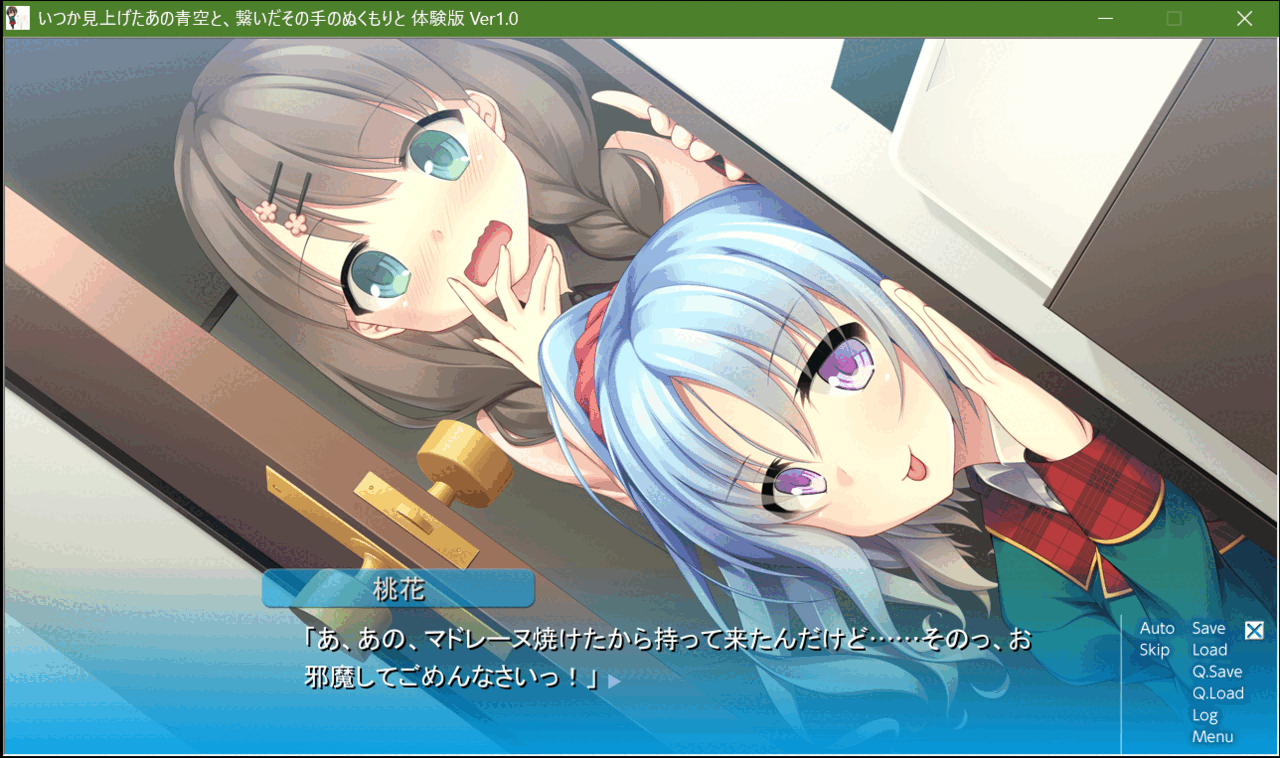
The trial isn’t long, but it feels long, because the writing is genuinely boring. It’s wall-to-wall stock banter, and almost nothing related to the actual plot.
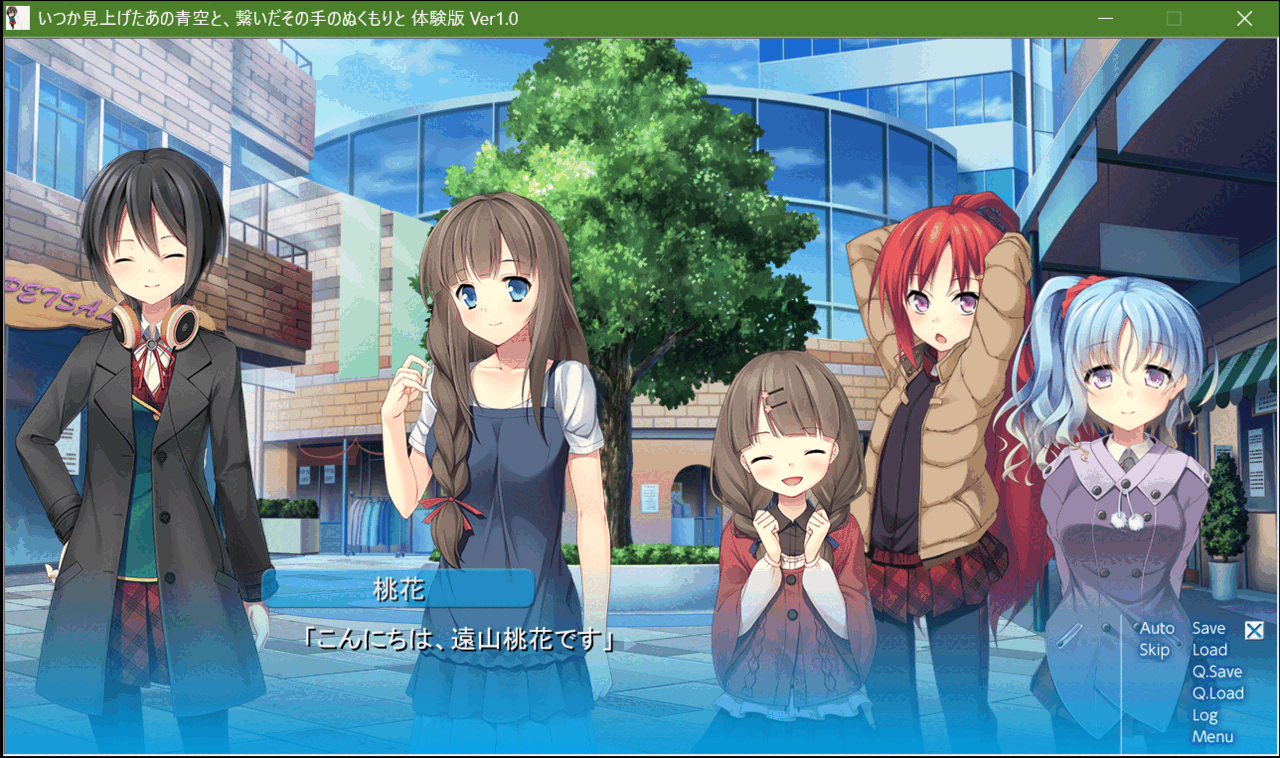
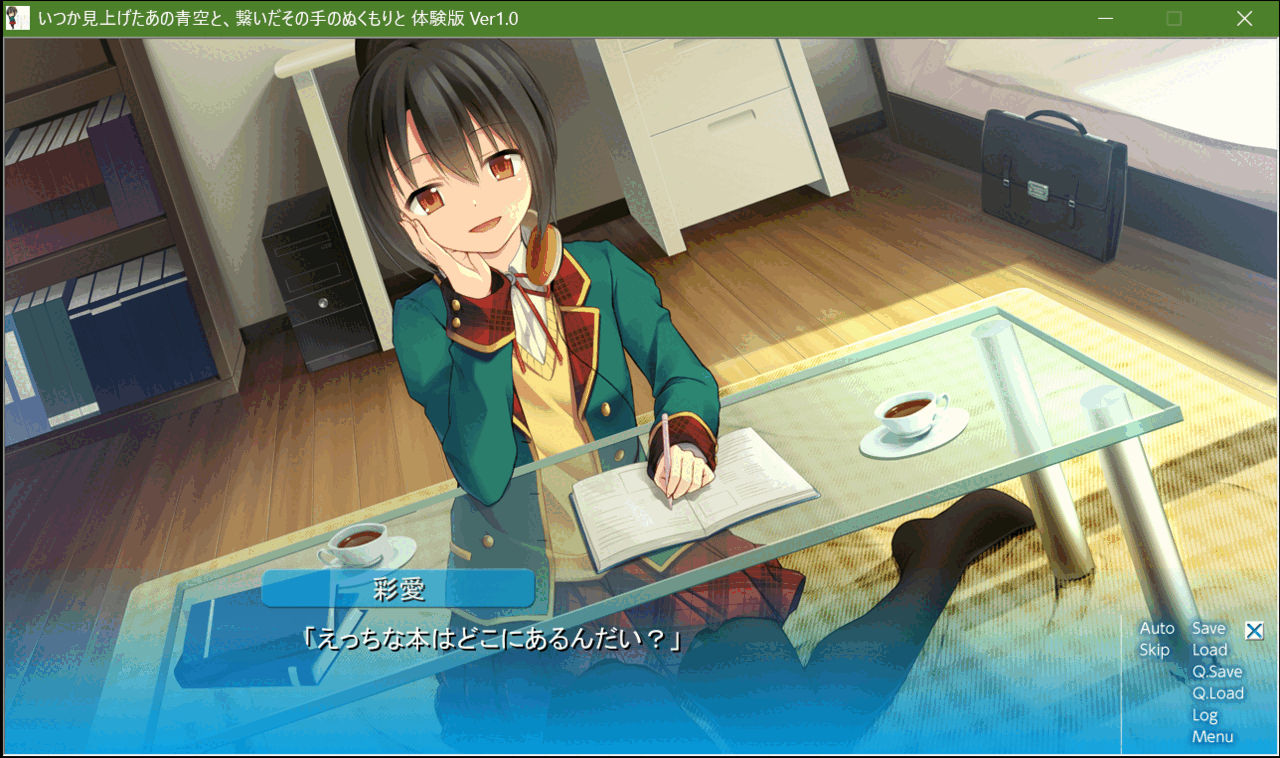
The protagonist meets a bunch of heroines at school. The central one, Aiai, is a strongly androgynous character who dresses masculine—that was one of the game’s selling points back in the day. The other heroines are pretty unremarkable. The trial opens with the club room at school, everyone shooting the shit, some painfully awkward gags.
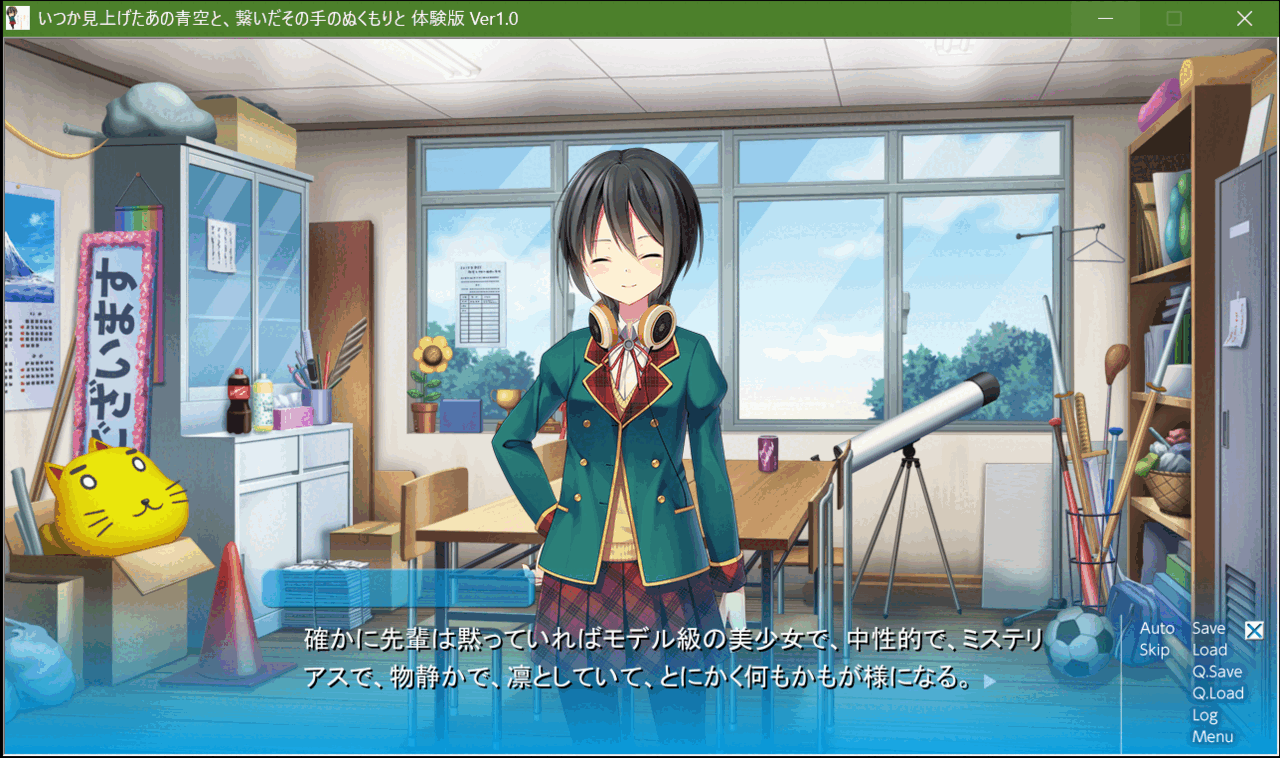
Then two important things surface. One: the protagonist has lost his childhood memories—can’t recall a thing. Two: the background art is absolutely lousy with a ferris wheel (観覧車).
Midway through the trial, the plot finally kicks in. The protagonist chases a cat and ends up at a place called Dream Park, an amusement park abandoned for nearly ten years. Inside, he sees the stopped rides, including the enormous ferris wheel.
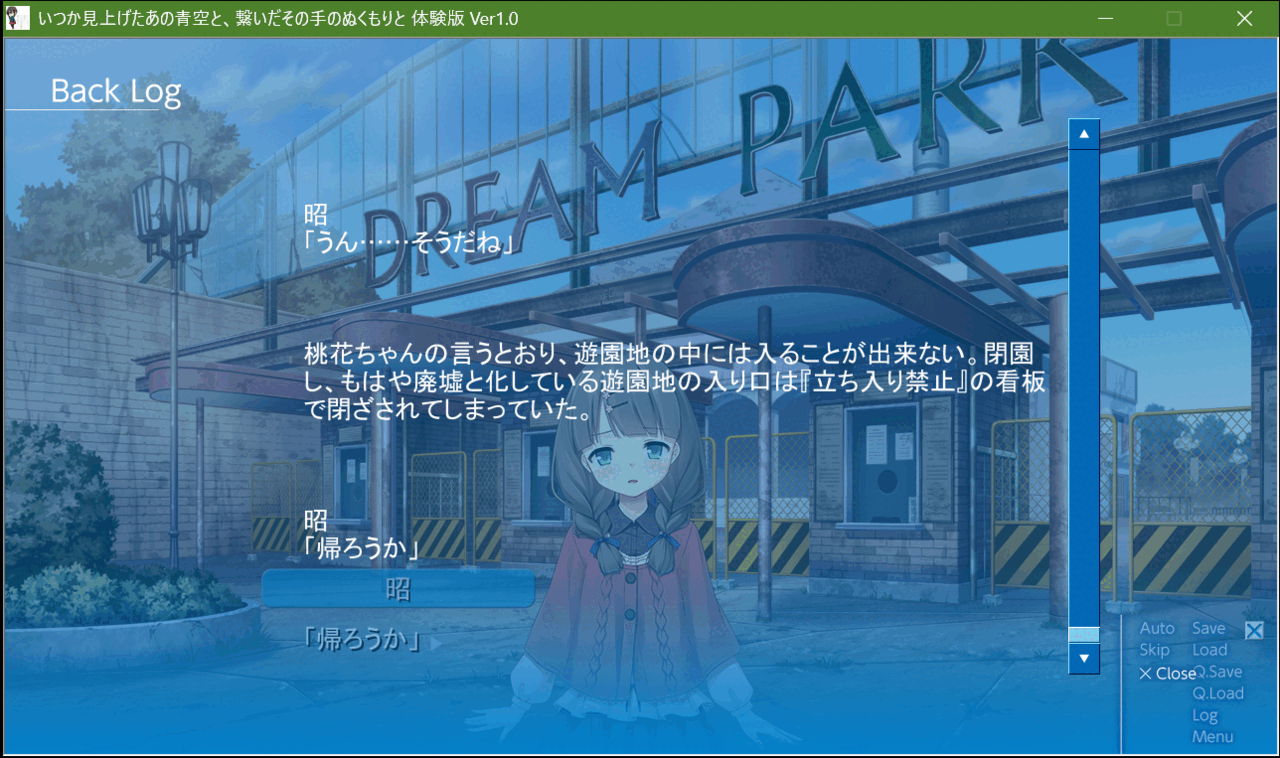
He gets guided back to this ruined park several times—sometimes by the cat, sometimes following Aiai at night. In the ruins he has visions: crowds from when the park was still open, and a strange girl gripping his hand tightly, claiming to be his sister.
Then the game drops into a flashback: ten years ago, Aiai, the protagonist, and a few others as kids, playing at the park. Everyone says they’re going to clear some castle or whatever today…
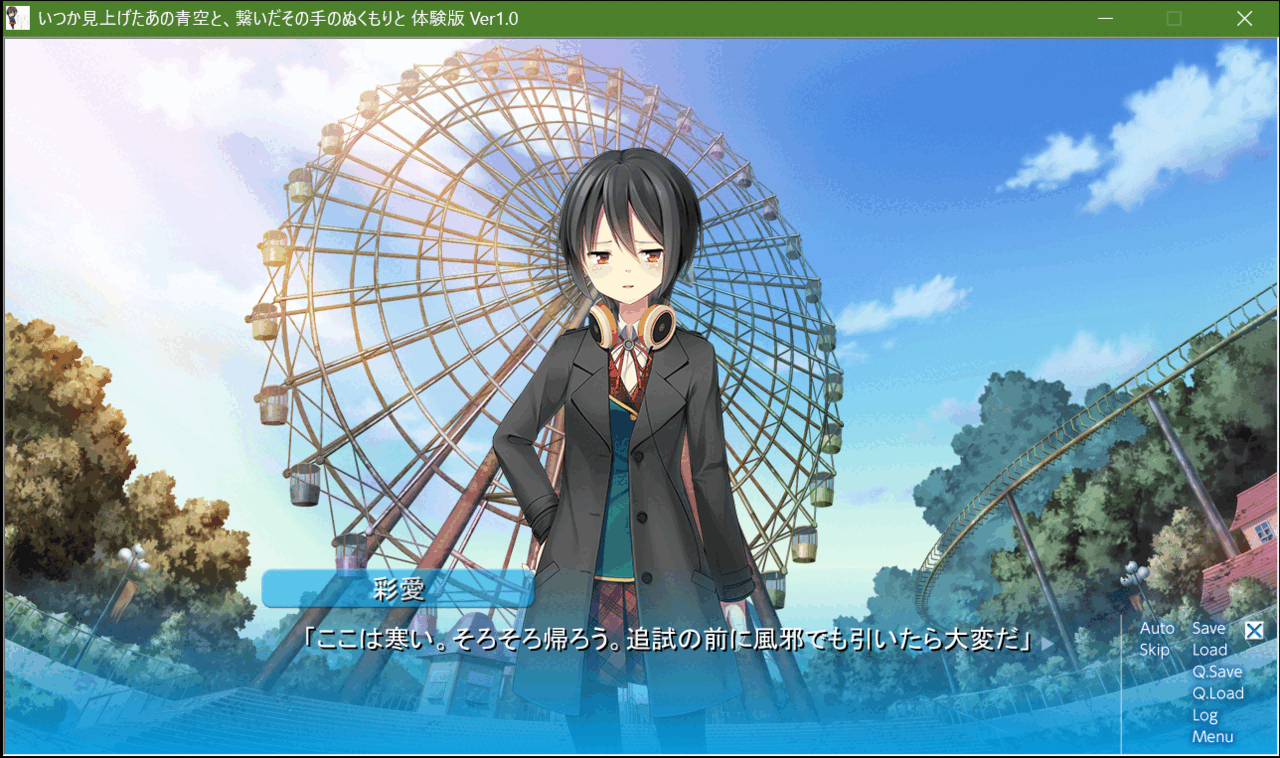
Then that absolutely killer OP plays, and the trial just stops.
The trial also includes two HCGs. Nothing worth writing home about. The only real point of interest is that Aiai, who’s been playing the tough-boy act the whole time, drops the masculine disguise during the deed and becomes fully female—but that doesn’t tell us much either.
So from this very limited trial, let’s lay out what the game’s plot might be:
The protagonist’s town had a big amusement park ten years ago, with a huge ferris wheel.
The protagonist and most of the heroines played at that park as kids.
The park closed down for some reason and never reopened.
The protagonist lost some childhood memories for some reason, including the time spent at that park.
He has visions of those childhood memories in the abandoned park.
He dreams of a “sister” grasping his hand at the park, but she’s never identified.
One more detail: he overhears one heroine having a nightmare, muttering “No… help me…”
It’s pretty obvious the game is about something that happened to the protagonist and the heroines as children at that park—something that caused the park to close, and caused the protagonist’s amnesia and withdrawal, probably some form of PTSD. Combined with that heroine’s nightmare, it was almost certainly an accident.
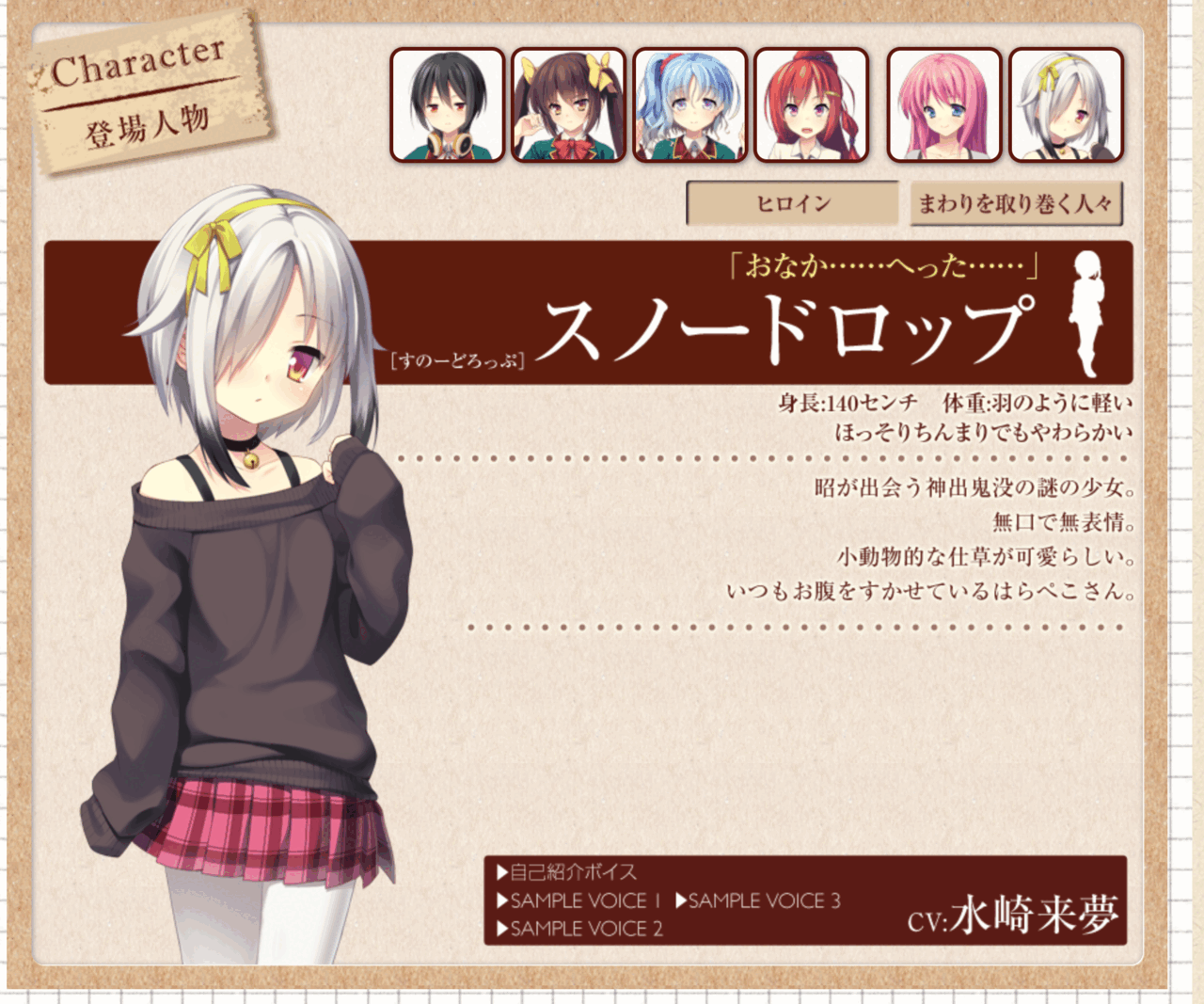
And on the official site you can see two characters who never appear in the trial: one is Kei, the purple-haired girl—compare her and she’s clearly the “sister” holding the protagonist’s hand in his dream. The other is a white-haired loli who exists only in the OP, named “Snowdrop” (スノードロップ).
So the core of the game is clearly whatever happened ten years ago at the park—maybe on the ferris wheel itself—that traumatized the protagonist. But as everyone knows, the game is basically never coming out. Those plot questions… probably never getting answered.
Hunting for the missing pieces
Of course, here in 2026, there might be another way to dig into this game’s secrets. The answers may be sitting in the trial version it left behind.
I enlisted AI to unpack the trial and read through every script file. And honestly? There was a lot to find.
First, there’s a ton of unused assets, including five BGM tracks:
07 震える空気
10 Lost Memory
14 クロイネコ
16 小さな勇者
17 魔女
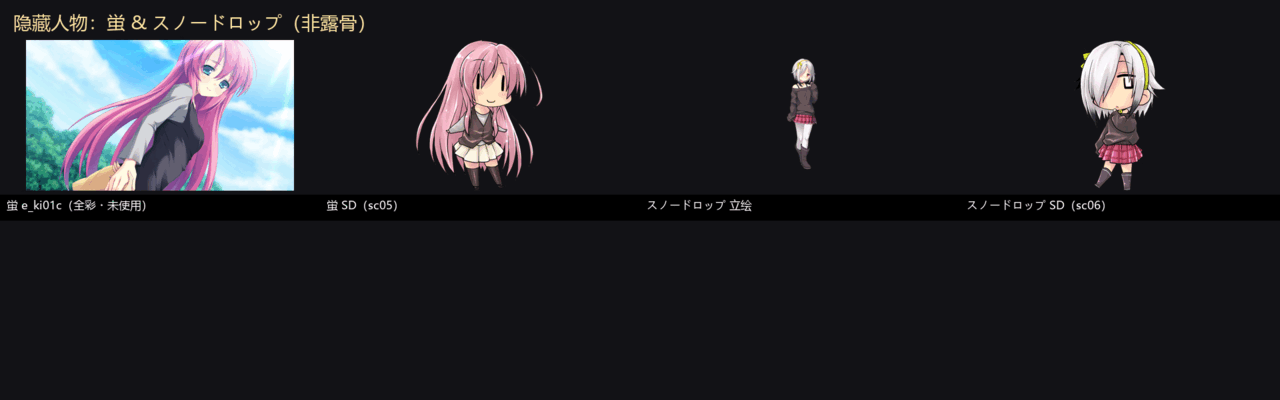
Some cave and forest backgrounds, some character sprites. The interesting bit: the unused sprite is Snowdrop—the white-haired loli. The other hidden character, Kei, has no sprite at all, just an SDCG. And… the full version of the image from the protagonist’s flashback.
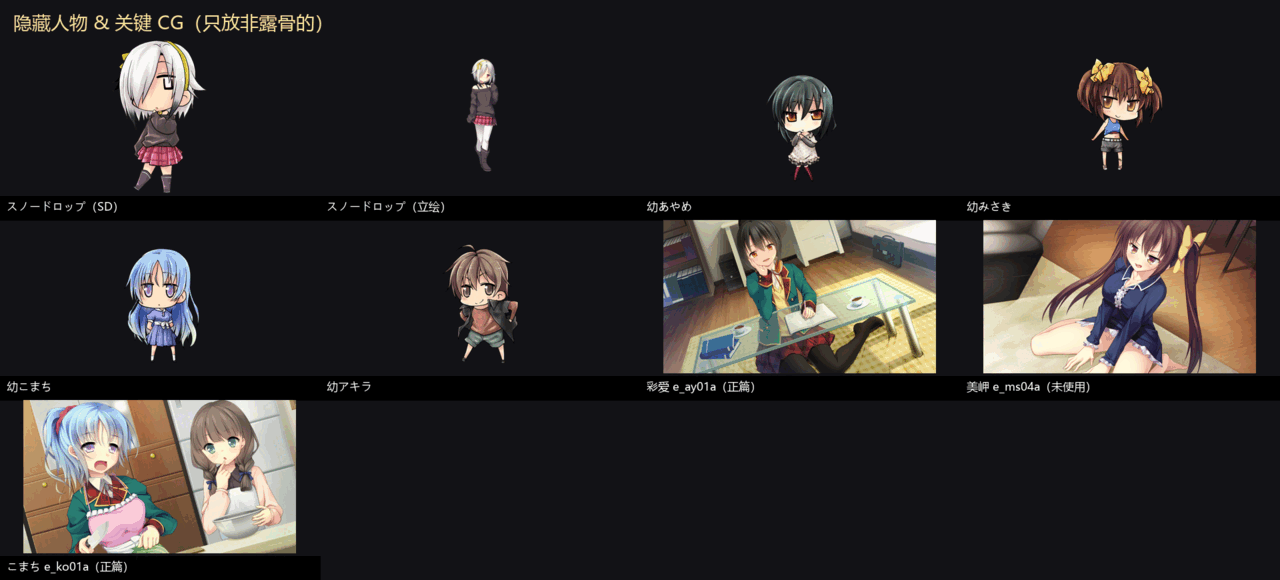
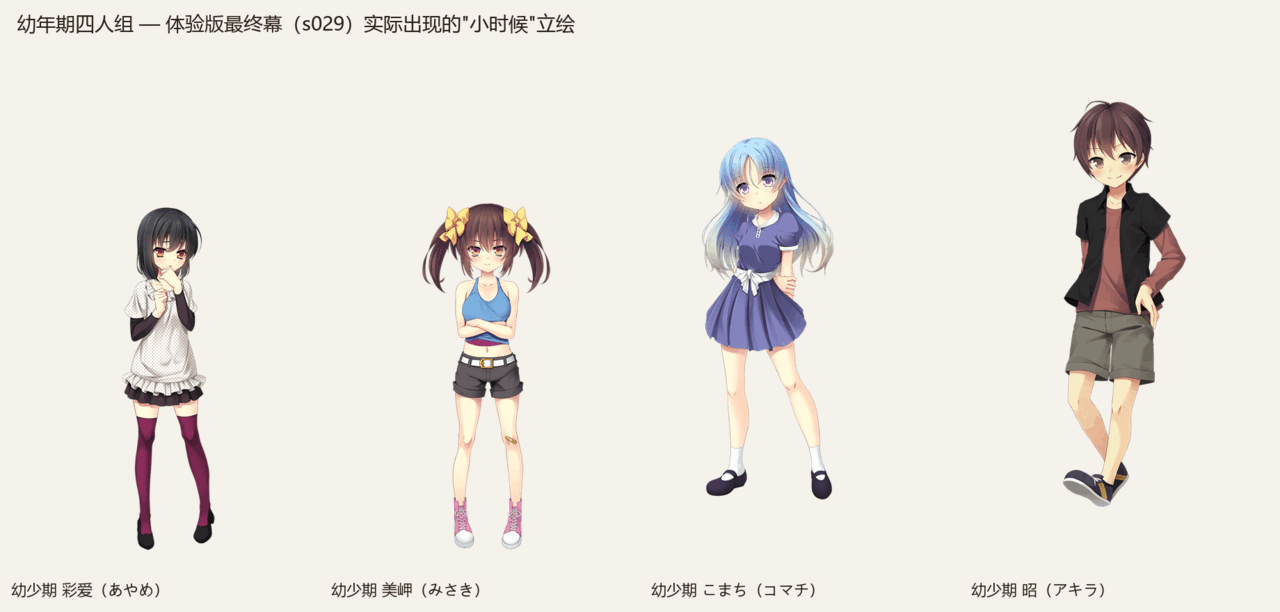
There’s also a pile of unused system voices—the “save successful” type prompts—which suggests the full release would’ve let you switch voice sets per character. The scripts reference a lot of CG files that don’t exist in the trial; clearly deliberate trimming, or art that was never finished.
The two HCGs included in the trial aren’t the only ones—there are two more, just disabled. Content-wise they don’t tell us anything useful, and they’re incomplete (CG unfinished, dialogue unfinished), but the voice work is complete. So they recorded it all, at least?
The part we actually care about is the story, and the trial already shows the game had a plot lock. Two conditions for unlocking different scenes and choices: being on a second playthrough, and choice flags.
Every flag choice in the game is prefixed with “Dummy”—a placeholder, meaning picking them doesn’t change affection or variables. And in a trial, you can’t reach a second playthrough anyway.
There are also script comments left in:
“At this point, if Kei’s affection count flag (flag0003) is 3 or higher, display choice”
Meaning certain branches only trigger if the player’s affection for Kei is 3+.
There’s a hidden scene, apparently late-game, in the flashback about how the protagonist first met Komachi—helping her get a balloon out of a tree. And the trial has a grown-up protagonist helping someone get a balloon too. Clearly a callback on some route.
A first playthrough almost certainly locks you to Aiai’s route, because there’s a single choice that only triggers “after clearing Aiai’s route”—asking Aiai if she knows about Kei. She clearly does, and denies it.
「そして、なんだか不思議な女の人に会いました。確か……名前は蛍って……」
「……蛍」
「先輩、その人のこと、知りませんか?」
「……ぼくは知らないと言っているよ」
Also, the scene where the protagonist wanders into the abandoned park plays differently depending on playthrough count.
First playthrough: a cat leads him in.
Second playthrough: he meets Snowdrop, the white-haired loli, and they have a conversation:
スノードロップ「それ……なに……?」
昭「もしかして……欲しい?」
スノードロップ「おなか……空いた……」
昭「……食べる?」
スノードロップ「いいの?」
スノードロップ「……開かない」
スノードロップ「……ありがとう」
スノードロップ「……美味しい」「すごく……美味しい……」
スノードロップ「……ごちそうさまでした」
昭「ところでさ。きみ……」
スノードロップ「……スノードロップ」
スノードロップ「ここには誰もいない」
スノードロップ「ここはどこでもない」
スノードロップ「だから……帰った方がいい」
So the protagonist meets this white-haired girl in the ruins and gives her the food he’s carrying. She warns him there’s nothing here and tells him to leave.
And worth noting: that conversation has conditions. If the protagonist doesn’t have snacks on him, it doesn’t continue—it goes like this instead:
スノードロップ「……どうしたの?」
スノードロップ「ここで……何、してるの……?」
スノードロップ「しらない」
スノードロップ「女の人なんて、見ていない」
And the white-haired loli just brushes him off.
All of the above only triggers on a second playthrough, so you can’t see it in the trial.
When you’re on a second playthrough or later and have cleared Kei’s ending, a new choice appears at the park: Snowdrop gets replaced by Kei’s sprite, and she asks whether you’ll call someone or chase after her.
If the player picks “それでも追いかける” (chase anyway), it jumps to another character’s route—Neko. That route’s content, of course, isn’t in the trial.
Neko is worth a look herself. Her name is pronounced “neko”—cat. The script also notes that on some playthrough (trigger unknown), the protagonist is stopped by Neko at the park, and after he leaves she mutters to herself, “Don’t do unnecessary things” (余計なこと、すんな). She clearly knows something.
There’s also another conversation with Kei where the voice work is already recorded, but Kei has no sprite. It’s a time-crossing scene: the protagonist greets Kei, and mid-sentence, his younger self appears, calls her “sis,” and she calls the young protagonist “A-kun.” The dialogue cuts off right after the time skip.
蛍「あ……いえ……その……変なこと聞きますけど……どこかでお会いしたこと、なかったでしたっけ?」
昭「多分……初めてだと思います」
蛍「うん、そうね。わたしの勘違いかも」
アキラ「あーっ! ねーちゃん! こんなところにいたっ!」
蛍「あっくん!」
アキラ「まったく、ねーちゃんふわふわしてるから。俺がちゃんとしてないと、すぐ迷子になっちまうんだから」
蛍「迷子になったのはあっくんだもん!」
アキラ「ほーら、早く行くぞー」
蛍「もう……あっくんっていつもこうなんだから……」
昭「行ってやったほうがいいですよ」
蛍「そうですね」
蛍「それじゃ、ごめんなさい、ありがとう」
蛍「わたし、蛍っていいます。あなたは?」
From the script conditions, triggering this time-crossing conversation requires: meeting the white-haired loli, giving her snacks, and having another vision—only then can you reunite with Kei inside it.
After enough choices, a new option appears on the title screen. From the assets, one is an After Story; whether there’s a Final Route or something similar is still unknown.
What we can determine from the unpacked scripts is that the game had a multi-playthrough plot lock, and each loop gradually unlocks what happened at the park. Kei appears as a major character late-game and decides where the story goes… Her sprite is even swapped in for Snowdrop’s in the script, and she knows the young protagonist—they’re siblings.
So the question is: who is Kei? The trial never has the protagonist mention a sister. That “sister” exists only as a phantom in the park. Normally the name 蛍 is read “Hotaru,” so why is it “Kei” here?
The vanished “Kei”
Kei isn’t actually that mysterious—the official site has a profile for her: a mysterious older woman. Her self-introduction voice line even says she “might not be able to meet everyone right away,” hinting she’s a late-game character.
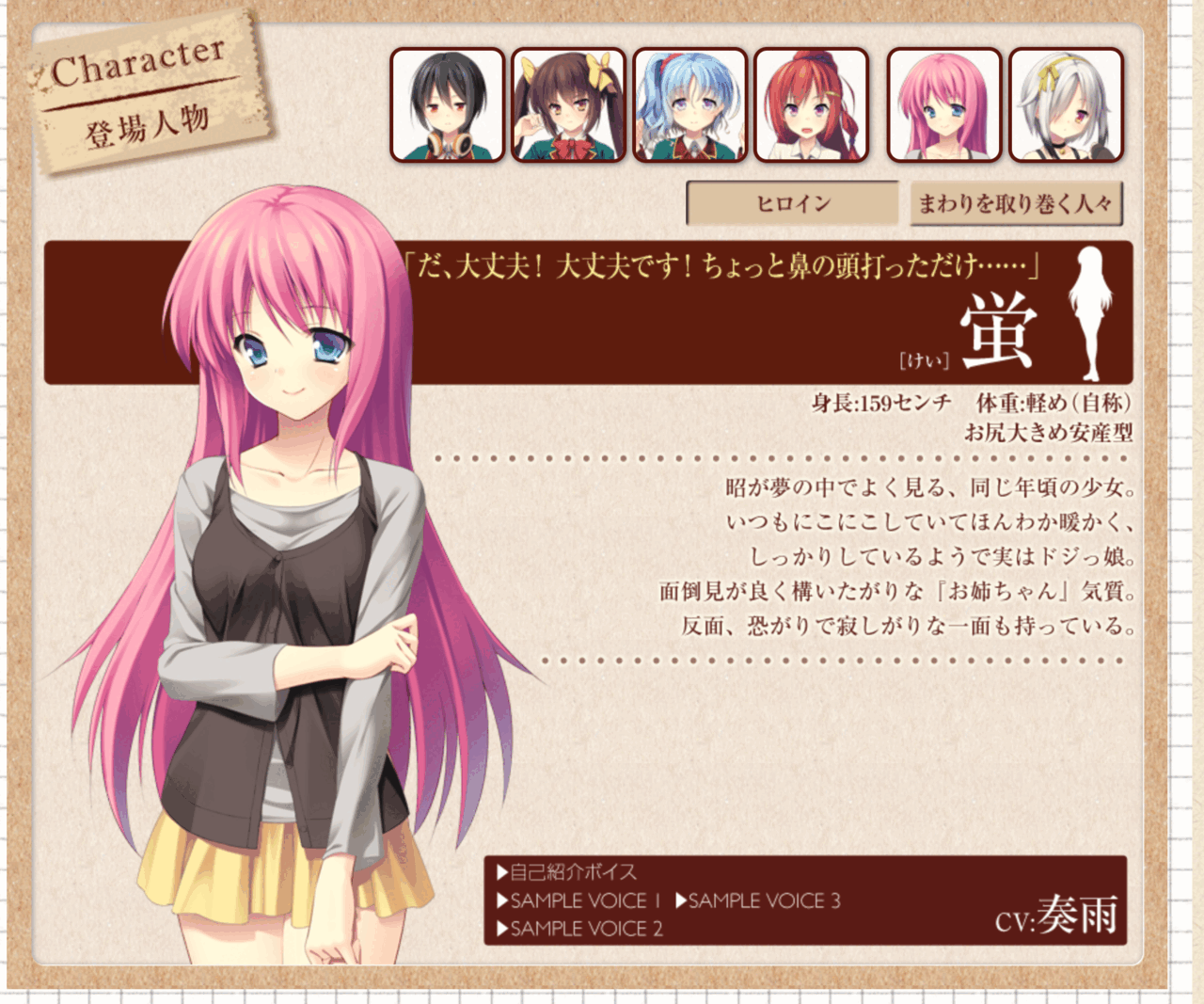
I’m Kei. Written as 蛍, read as Kei. …I might not be able to see everyone right away, but I look forward to meeting you. –Official character voice
And in the game itself, apart from that one time-crossing conversation that hints she knew the young protagonist, there’s nothing else.
So where did she go?
Time to look for new clues. The answers might be hiding in the game’s OP and lyrics.
First off, all the lyrics were written by the game’s own scenario writer, and the OP melody runs throughout the common route as BGM—so it wasn’t just filler. In the OP animation, you can catch a glimpse of Kei dissolving into bubbles and vanishing (top left).
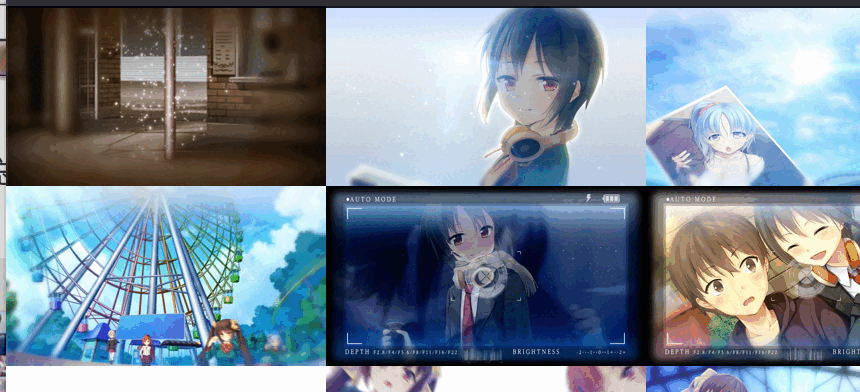
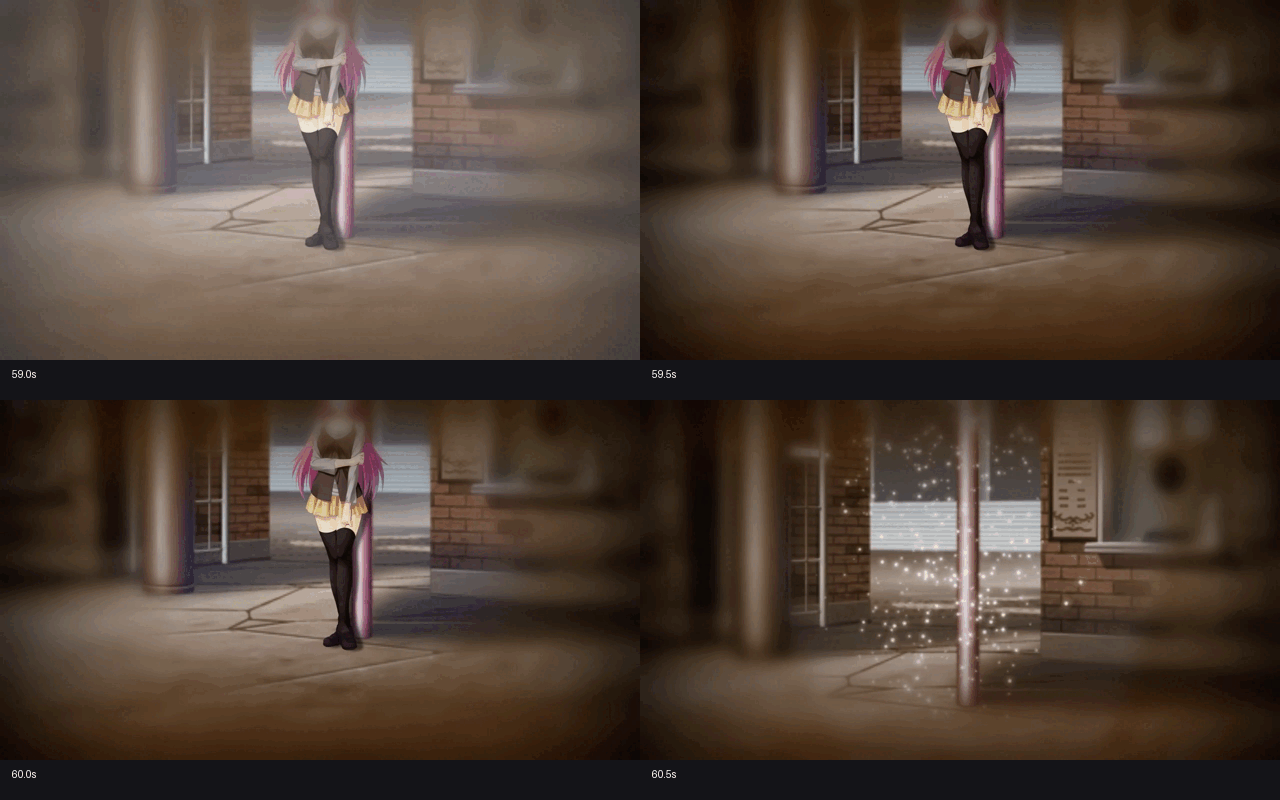
And the OP lyrics keep hammering certain things:
もう廻らない観覧車 “The ferris wheel no longer turns” 例え 今ここに君がいないとしても “Even if you’re no longer here” 哀しいあの涙だって僕の宝物なんだ “Even those sad tears are my treasure”
Yeah—this hype-looking OP is actually a sad song. I’m acquainted with the composer, Meis Clauson, and we’ve talked on Twitter, but he seems to be dealing with mental health issues now, so I can’t ask him about it. From the lyrics and the OP visuals, we can probably infer that something happened to Kei—or that she’s no longer alive.
The ED is even harder to find, because it wasn’t included anywhere except the game’s theme song CD, and that CD was event-exclusive—no convention, no CD…
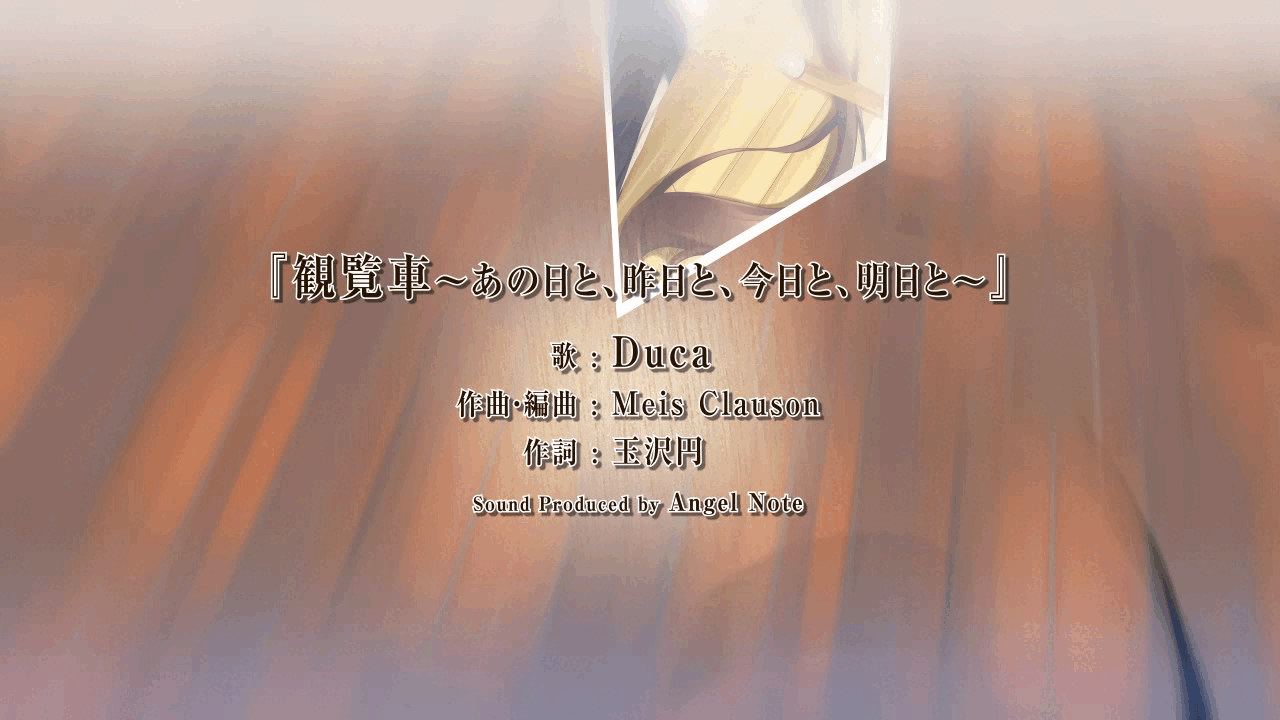
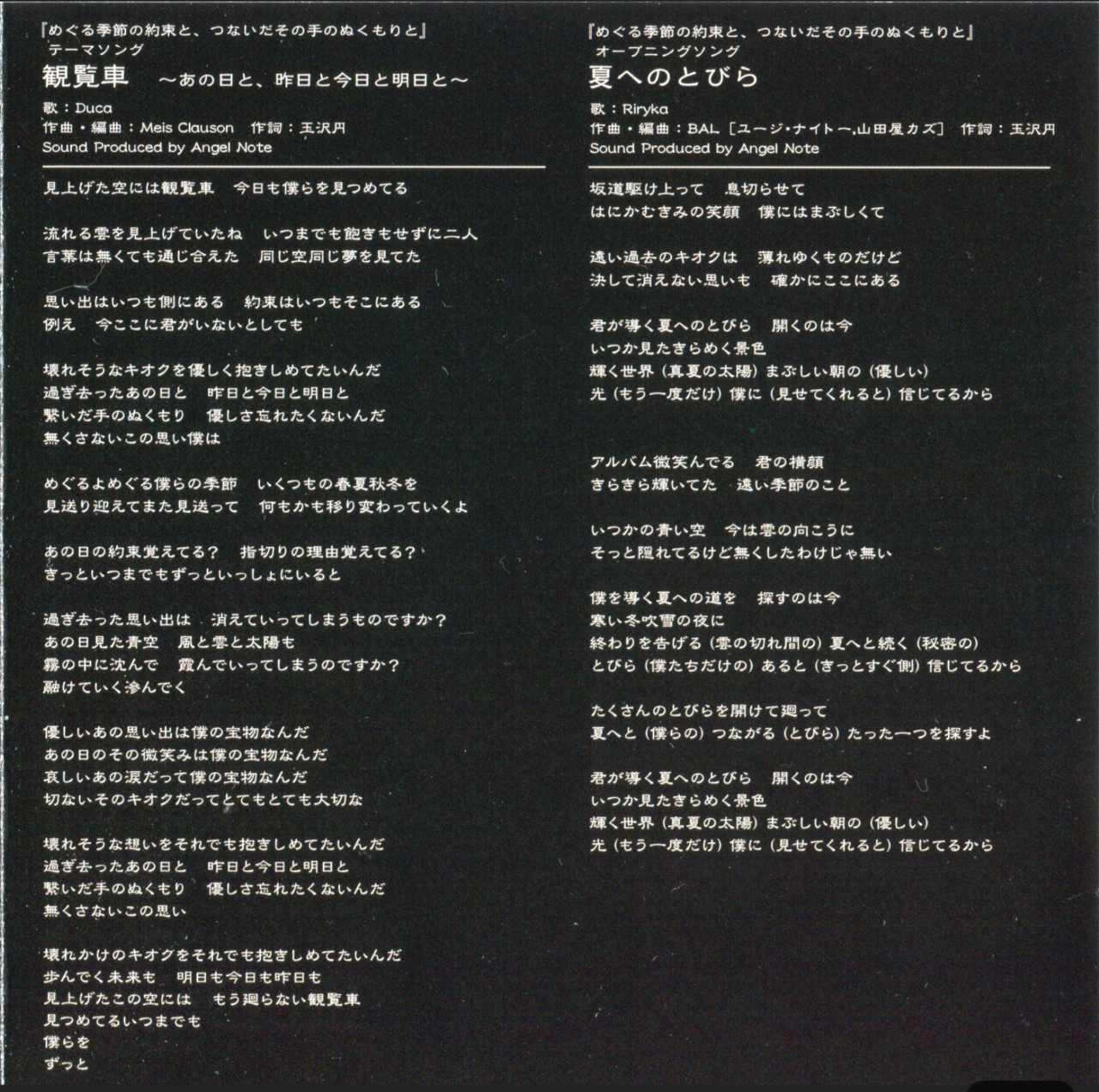
But here’s a coincidence: I happen to own that CD 😄. So I analyzed the lyrics:
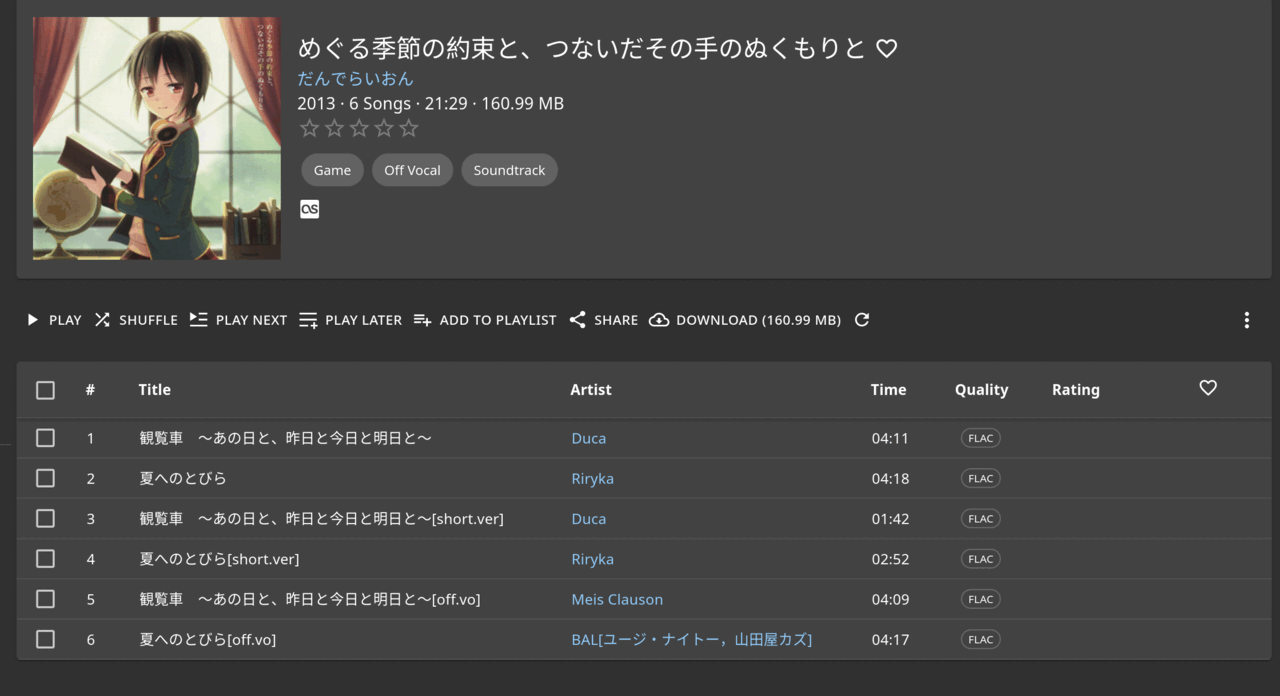
As you can see, the ED is very upbeat—most of the lyrics are about looking forward, not much else. Probably the game’s final ED, the big ending feel.
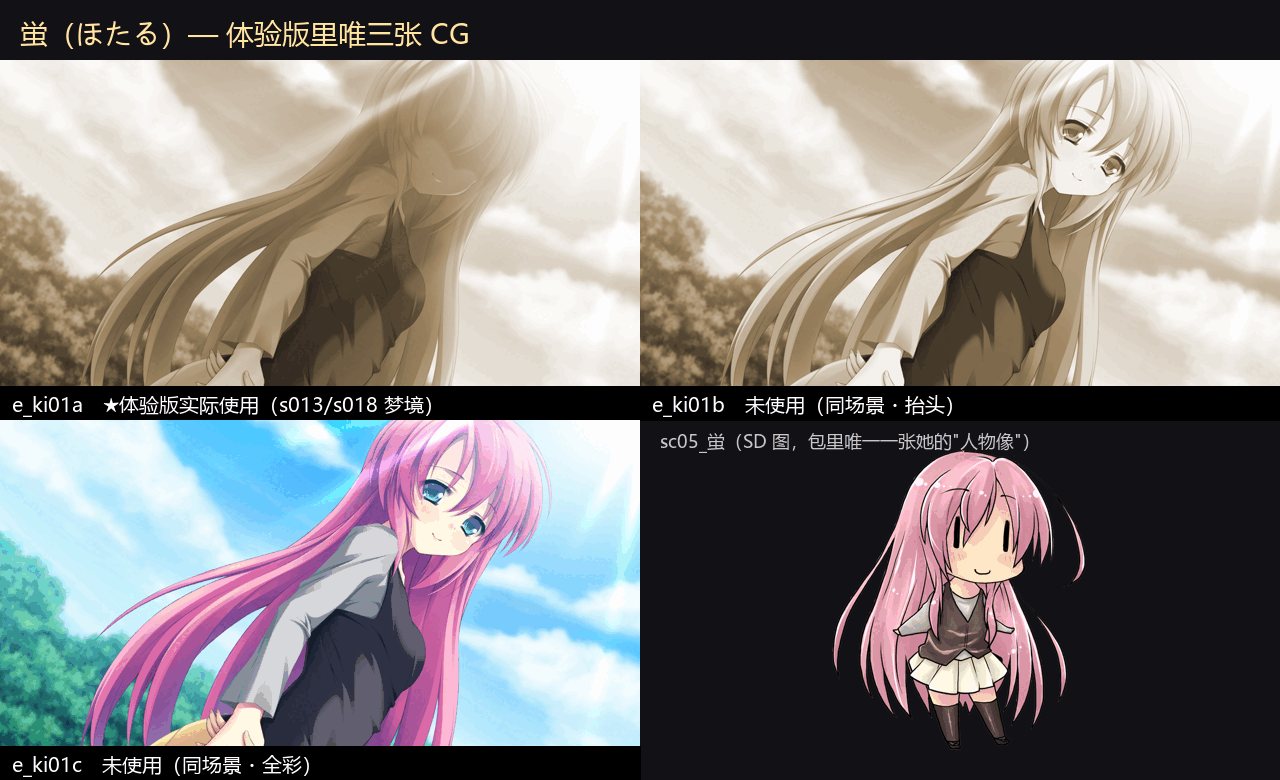
Next, let’s look at the only CG of Kei in the game and see if it tells us anything.
The composition shows the protagonist gripping Kei’s hand, and Kei smiling gently. But the weird part is the trees in the background are positioned very low. Normally… this CG looks like two people holding hands high up in the air.
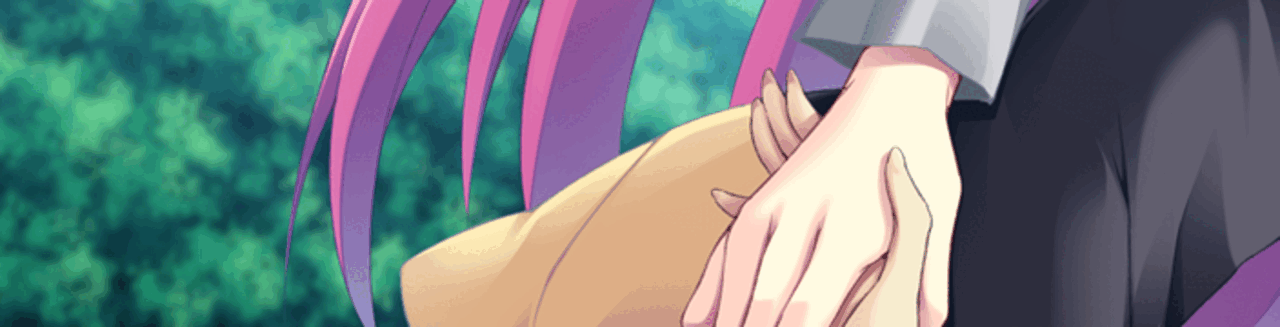
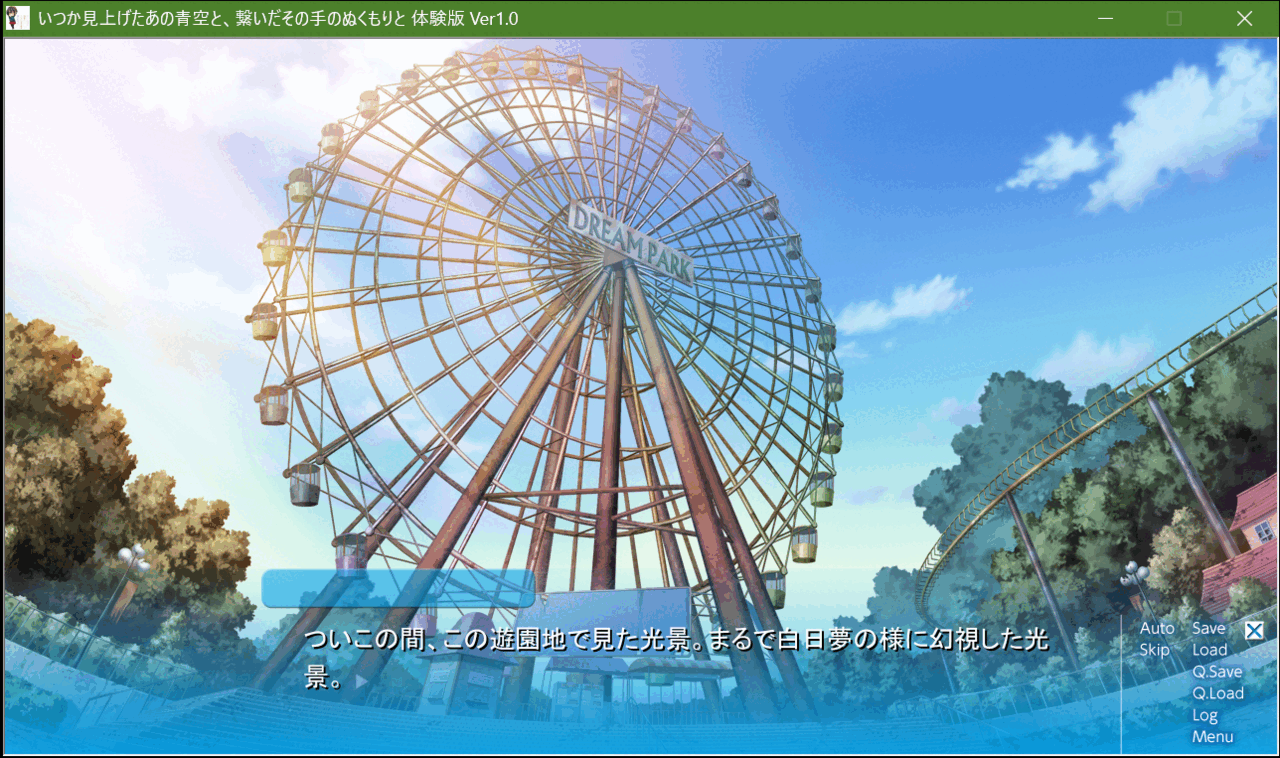
I can even match the position to a tree behind the ferris wheel in the game.
Also, Kei’s official profile has a line that’s easy to miss: she’s timid (恐がりで寂しがり).
In the unpacked dialogue, there’s another fragment with no beginning or end, like a flashback: a child-voiced person begging someone to ride some attraction. The person being asked is scared and doesn’t want to, but eventually gives in.
???「ねえ、あっくん。次はどれ乗ろうか?」
???「わたし、次は怖くないのがいいな」
???「ええっ!? あれぇ? あれは、ちょっと……」
???「まあ、あっくんが乗りたいなら……いいけど……」 ……
???「……どうしたの? あっくん。やっぱり怖い? やめる?」
???「うう……あっくん、ホントに怖いの大好きなんだから……」
繋いだ手その手は柔らかかった。 少し冷たくて、だけどやっぱり暖かくて、とてもとても心地よかった。 だけど、声にはならない。何故だか俺の声は、音として響かない。
At this point, it’s probably the young protagonist begging Kei to ride something. If she’s scared, it’s either heights or thrills… so if it’s not a roller coaster, it’s the ferris wheel.
Maybe you think I’m overreading. But for a game with this little material, speculating about the story doesn’t hurt.
So combining what we’ve got, here’s a reasonably credible sketch of the never-seen Kei’s story:
The protagonist knew Kei as a child. She was an older-sister figure who took care of him.
He was having fun at the park with his friends and begged Kei to ride the ferris wheel with him. She was scared but went anyway. During that ride, something probably went wrong—maybe a danger of falling from height. My guess: Kei grabbed the protagonist’s hand first, then as the wheel turned, he couldn’t hold on (or maybe she let go on purpose to save him), and she fell to her death. That incident gave the protagonist severe PTSD.
The details might not be right, but Kei is almost certainly dead.
Assembling the whole picture
Let’s put the game together.
It’s clear Meguru Kisetsu no Yakusoku to, Tsunaida Sono Te no Nukumori to wants to tell the story of the protagonist’s childhood selfishness getting a close older-sister figure killed, leaving him withdrawn and traumatizing his friends, and causing the amusement park to shut down.
Another clue is Aiai’s masculinity. In the flashback she’s timid, so her “masculine” side is probably tied to the park incident ten years ago. Among the unused tracks are “Black Cat” and “Witch,” which suggests late-game plot involving a witch-like character’s wish and equivalent exchange.
Maybe Aiai sacrificed her feminine side to bring the protagonist back, or something like that. The game repeatedly stresses that the town has lots of cats, and the protagonist keeps returning to the park because of cats—so maybe some kind of psychic cat shows up. I suspect Neko might have another identity. She’s one of the few characters not in a school uniform; look at her profile and tell me something doesn’t feel off.
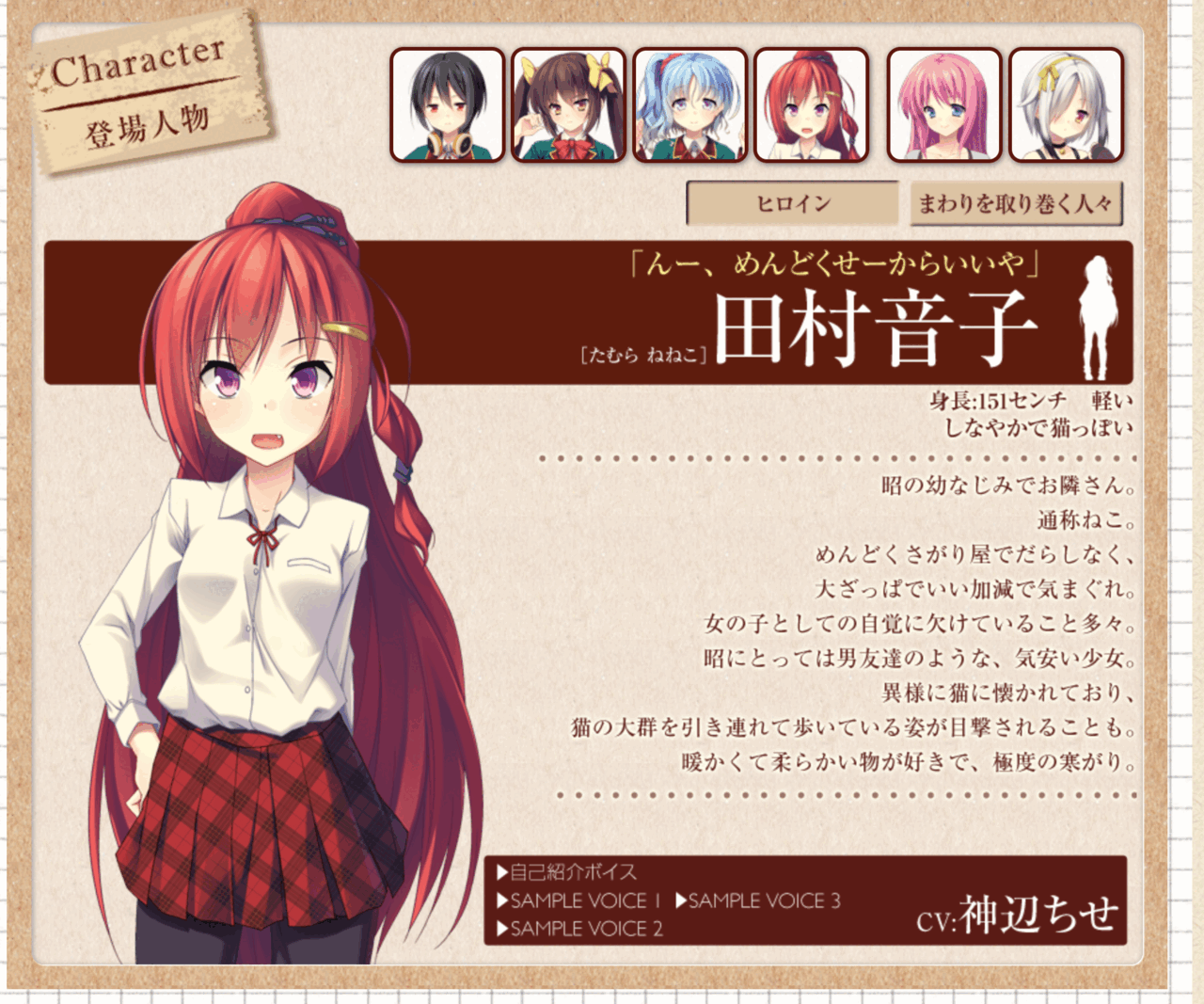
The game probably forces you onto the Ayame route for the first playthrough, then unlocks other heroines’ routes on New Game+. As you restart and return to the abandoned amusement park, you start running into the white-haired loli and other characters, getting closer to the truth, until you contact Hotaru and recover some childhood memories. Then Anko’s route triggers, leading to the final ending.
Of course, it’s also possible the game isn’t a “multiple playthroughs” affair at all, but rather a time-loop structure where everything ties back to a fatal accident or some kind of witch’s bargain.
But the game has basically zero chance of ever hitting shelves now. My speculation here—aside from the original producer, I doubt anyone knows if it’s true.
Why It Got Cancelled
Like many people, I spent years unable to understand why Meguru Kisetsu no Yakusoku to, Tsunaida Sono Te no Nukumori to just died. Normally when a game dies or gets cancelled, there’s at least an official announcement. This one died without even a death notice—just a quiet, hasty end.
What’s even weirder is that although the game died and the company stopped releasing new titles, the official website is still accessible to this day. Someone’s been renewing the domain all this time. It adds a layer of mystery to the whole thing.
The game was first delayed to a late-September release, and they even put out a trial version in early September. So how did it die? Everything looked fine, right?
But if you look closely at the trial version, you might think otherwise.
First off, the trial version’s title is just wrong!
The trial is called Itsuka Miageta Ano Aozora to, Tsunaida Sono Te no Nukumori to Trial Ver 1.0.
The official title is Meguru Kisetsu no Yakusoku to, Tsunaida Sono Te no Nukumori to. That tells you the trial itself was a rushed release—they couldn’t even be bothered to fix the name before pushing it out. The PV from December 2012, the official site from February 2013, and the OP all use the new title Meguru Kisetsu no Yakusoku to… So was the trial version built on even older content?
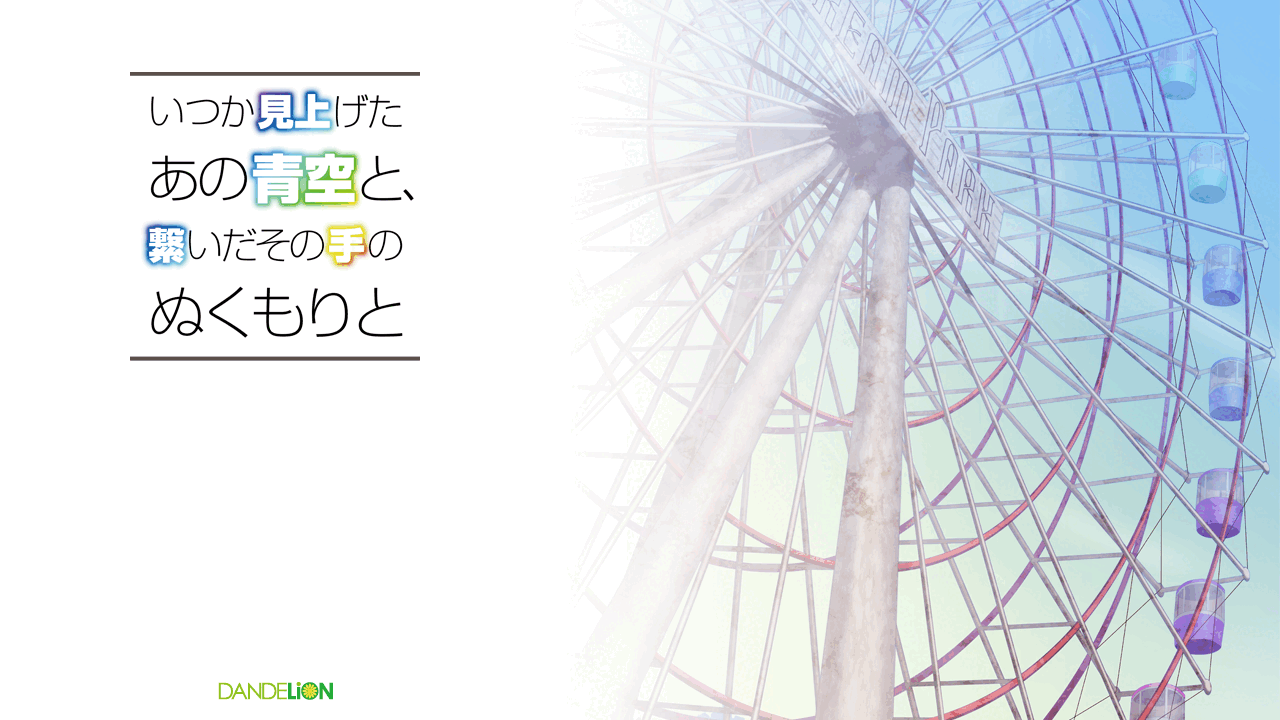
Of course, that alone isn’t conclusive, but some juicy stuff from unpacking the files backs it up. The trial was packaged on August 30th, and just three days later, on September 4th, it was released. A trial packaged on 2013-08-30 and released on 2013-09-04, with a window title still stuck on the pre-rename version—that shows how chaotic the production and release was.
In the game’s HCG preview page, the character variable names don’t come from this game at all—they’re borrowed from other games’ frameworks and code. You can see two filenames and the corresponding heroine names written inside:
yyh_config.ks Sakurako/Asagiri/Suzuran/Tachibana otogi_extra.ks Tsukiyo/Saori/Nanami/Akane
Obviously none of those names exist in this game. They come from yes, your highness and Otogibanashi wa Yami no Naka. Funnily enough, the scenario writer for both of those games is Fujimaru Tamasawa, who also wrote this one. And it’s worth mentioning that yes, your highness was released around the same time this game was supposed to come out, under the sister brand Himawari—which also went quiet afterward.
So we can see that the scenario writer and producer, Fujimaru Tamasawa, had several irons in the fire that year, handling scripts and supervision for multiple games at once, and the coordination was tight and messy. As this game neared release, they hastily copied a framework from another game they were working on, pasted this game’s story in, tweaked it, and shoved it out the door. Not only did they fail to clean out leftover content from the retail version, they didn’t even calibrate the title. Just rushed it out.
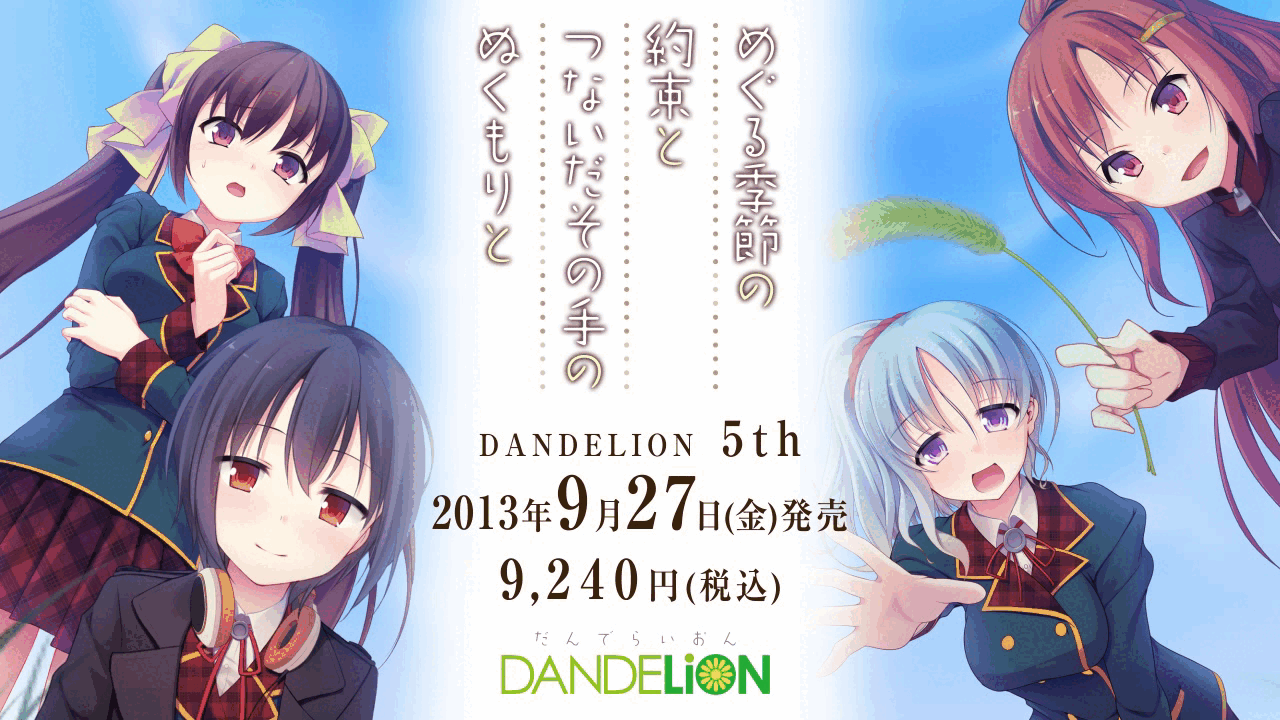
After that, there were no more updates. As for why the game died, someone on the Taiwanese PTT forum mentioned the artist ran away. I think there’s some credibility to that, because in the trial you can see that both voice and script for later content had already been produced. You can even dig up unused voice lines for male side characters, complaining about the protagonist pursuing a certain heroine on her route later on, plus some slice-of-life segments. It’s clear the only thing lagging behind—the shortage—was the number and quality of CGs. Many characters who appear in the script don’t even have sprites, and that’s with multiple artists working on the game.
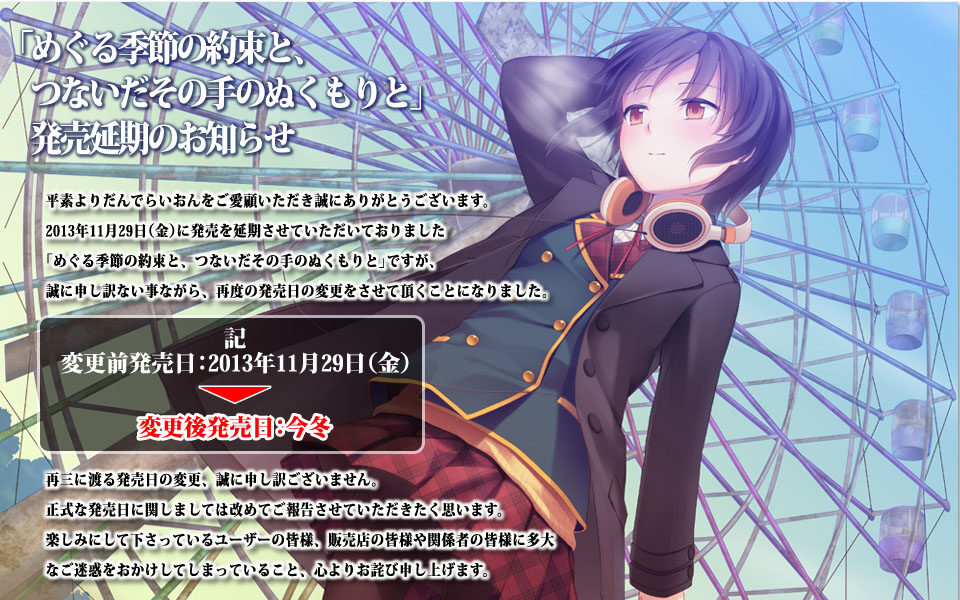
And if you’ve played the trial, you can feel that the art quality is honestly kind of bad. You could say the few viewable CGs all got crammed into the OP; the rest are rough.
It’s pretty much certain that management was a mess across the board near release. Even if they put out a trial, it was probably just a stalling tactic. Who knew the company wouldn’t recover—or rather, wouldn’t pull through at all. The cancellation was inevitable.
Masterpiece or Mid?
After all this unpacking and analysis, how should we evaluate Meguru Kisetsu no Yakusoku to, Tsunaida Sono Te no Nukumori to?
Honestly, I can’t. You can’t evaluate something that doesn’t exist. The game never came out—how am I supposed to review it? All we can do is speculate.
But if it had come out, I’d guess it would’ve been extremely mediocre—maybe even a landmine. Not because of the narrative framework or the dramatic reveal of a hidden character’s death. If you’ve played the trial, you can tell the writing is actually pretty bad. Most of it is crude, forced jokes and filler slice-of-life banter. Only when you get under the abandoned Ferris wheel does the script start talking like actual people—but even then it’s all cryptic nonsense, dragging on. The pacing is terrible. The trial only covers seven days of story and I was nodding off. If the full game was like that, I don’t even want to imagine.
But maybe it’s precisely because it was cancelled—and because of that incredibly distinctive OP song—that the game has taken on a legendary air. It’s got a level of buzz it never would’ve earned otherwise.
A lot of people feel sorry for this game. The OP song is that good. But here’s a comfort: the song got remastered and reused as an insert song in the Sweetest Girlfriend series from Seal Soft. So at least the best part got put to good use.
As for all the unfinished story left behind… I thought about it, and… maybe it’s better left unfinished. Like Hotaru, who never officially appeared in the game—the dead can’t be brought back. Better to look forward.
PS. I actually considered asking the game’s writer, Fujimaru Tamasawa, about this game. He’s still active in the visual novel industry, after all. But I took a look at his social media and he seems like a shitposter and internet troll. Figured I’d let it go.
Comments are hosted on the Chinese main site. This mirror is read-only.