LoveRec. Review
I haven’t played many Alcot games, but most of them follow the same path: fairly lowbrow (no offense) snark and slice-of-life, cute moe character designs, and music that’s better than it has any right to be. I’d say it wasn’t like this back in Clover Heart, but by the time Clover Days rolled around it had quietly become this way, so my feelings about Clover Days carry over: no matter how you look at it, this stuff is “not especially clever,” but it’s also “not bad.” The plot beats are a bit clichéd, but it never force-feeds you shit.
When LoveRec. was being promoted I took a look at the character designs…
“Oh fuck, isn’t this just Anzu?”
Yes, the heroine named Hitomi looks almost identical to Takakura Anzu from Clover Days, just with a different hair color and eye color. You could chalk it up to Jinmura Yuji’s art style, but the feeling that they “literally just took an old character, tweaked her, and put her on sale” is a weird one. Incidentally, the other two heroines weren’t drawn by Jinmura Yuji, but they’re also a bit off, and overall not as cute as Clover Days.
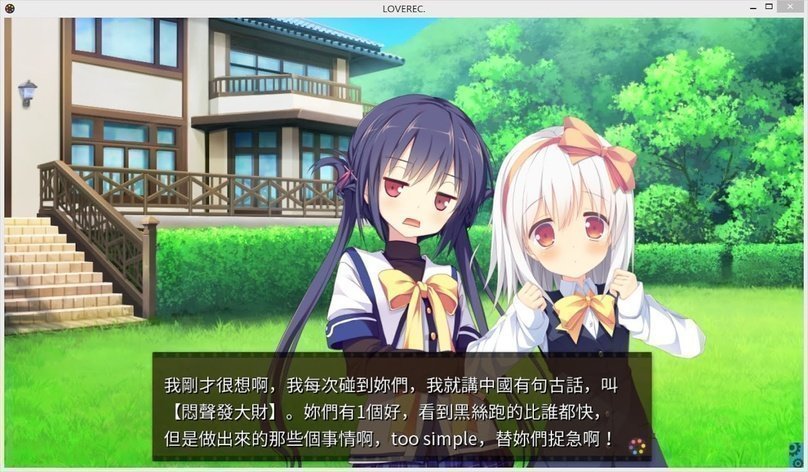
Given Alcot’s usual style, I assumed this game was at most a moe showcase, and from the designs and the rough blurb that’s exactly what it looked like. But after finishing it, I came away feeling something different.
From the start, the game tells us the protagonist loves cameras and treasures the one he’s used for 10 years. Then one day he sees a girl in the camera’s footage who isn’t there in reality. She smiles at him and says:
“You want to see me? Then I’ll come see you.”
A flash of light, and a spirit appears before him. The spirit calls herself Hitomi (hitomi, meaning pupil/eye), says she’s a spirit living inside his camera, and that after years of his care and affection she’s materialized to repay him. She says she can use magic and will help him fulfill his wishes.
And so the story begins.
Then the protagonist goes to school, meets all sorts of people, and by coincidence ends up founding a film club, aiming to screen their own movie at the school festival. There are four heroines: the childhood friend, the school senpai, the best friend’s little sister, and Hitomi. The game actually has a route lock—if you want to pursue Hitomi, you have to clear everyone else first.
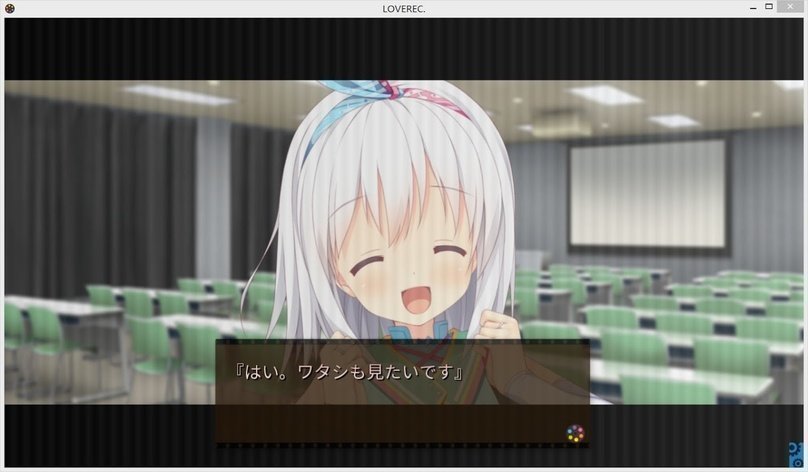
At first the game felt very off to me, because from Hitomi’s appearance to the full establishment of her setup takes less than 10 minutes. I was struck by how the protagonist and everyone around him show no surprise at a fairy appearing—they just go “oh” and accept it. Hitomi enrolling at school is handled with a single spell. I told myself this was just Alcot’s usual style; after all, this is the company that once shipped a setup like “the world ends tomorrow and your childhood friend becomes president.” This kind of development is nothing strange.
Aside from Hitomi, the other heroines’ routes aren’t worth much discussion—just ordinary romance. At the first branch you choose who the protagonist points his camera at, and that’s whose route you get. The routes proceed conventionally: interest, romance, dates, sex. The common thread is that the protagonist hits a crisis late in each route, and Hitomi highlights her “repayment” element to save him, leading to a Happy End.
After clearing the other three, Hitomi’s option appears. Choosing “treat Hitomi as your partner” at the first decision puts you on her route. Hitomi’s route starts out plain too—the protagonist decides to shoot the festival movie and wants Hitomi as the lead. As for the story, he decides:
“Let’s shoot a story about a fairy who comes to the human world, falls in love with the protagonist, and then has to part with him unwillingly.”
Anyone can see this is modeled on Hitomi and the protagonist’s relationship. Hitomi initially refuses, saying she’s just a camera, meant to film others, not to be filmed, but the protagonist wears her down with all kinds of offers and she agrees—on the condition that her true identity as a fairy is revealed to the club. As you’d expect, the group isn’t surprised when Hitomi’s identity is revealed either; they accept it for no good reason. Filming proceeds steadily, and at the end the protagonist chooses the Enoshima observation deck to shoot the scene where the fairy disappears after the confession. In the setting sun, he confesses to Hitomi—and this confession isn’t acting, it’s real. Hitomi accepts, and they become a couple.
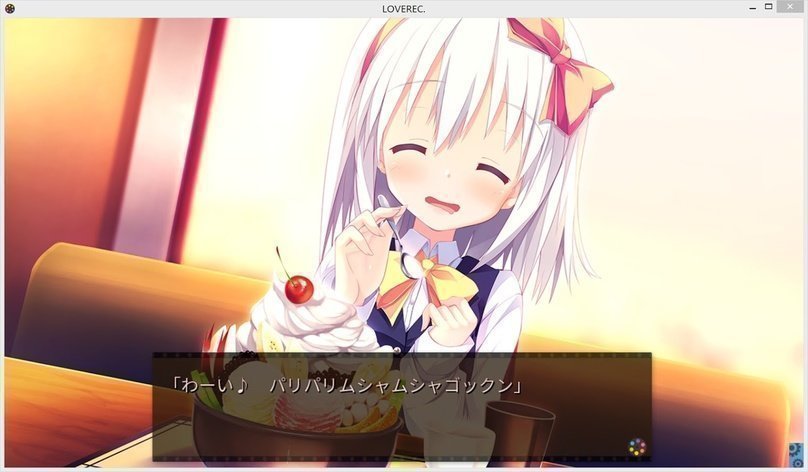
After becoming a couple, Hitomi and the protagonist want to change the movie’s ending to a Happy End, and everyone happily agrees. Before that they decide to relax with a trip to the beach, but on the day of the trip the protagonist notices strange things happening around him. At dusk, as everyone is about to head home, he realizes the world seems to have paused for everyone but himself and those with him. He tells Hitomi, who panics and admits she used magic on her own to make that beautiful sunset moment last a little longer.
But the strange things continue. After that night passes, the protagonist finds that, except for himself and Hitomi, the date has gone back one day.
In other words, the beach trip was Monday, and the next day should have been Tuesday—but he wakes up and it’s Monday again.
Hitomi explains that she must have wanted the beach trip so badly that she unconsciously triggered time-rewind magic in her sleep, replaying the day. But soon the protagonist discovers time isn’t moving forward—it keeps rewinding—and only he and Hitomi retain memories of the loops. Hitomi grows more and more panicked, while the protagonist simply believes this is because Hitomi clung too much to the past and used magic on her own, and he talks her out of it.
Finally, Hitomi tells him:
“I know why now. Don’t worry—tomorrow won’t be like this.”
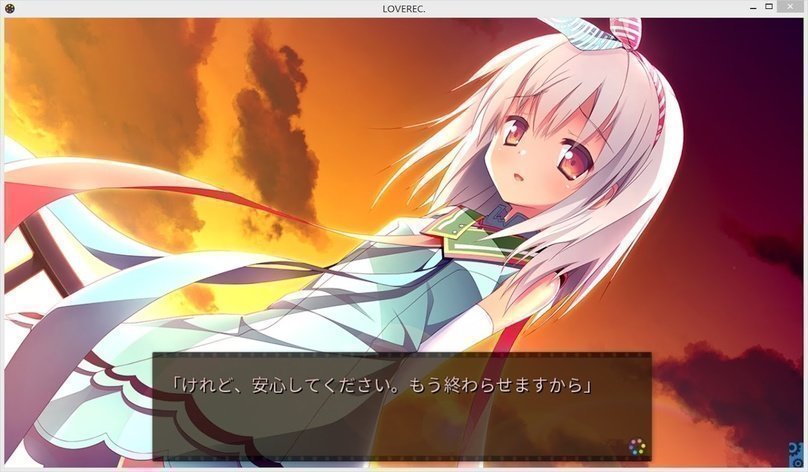
But Hitomi makes one last request: she wants to spend the final day on a date with him. The date is fun, and at its end the protagonist sees Hitomi revert to her original fairy form, and she slowly explains why things turned out this way.
The world the protagonist is in now is a dream world created by Hitomi. The real protagonist is unconscious, having lost consciousness after diving into water to save someone on a rainy day.
“I’m the spirit in the camera. My purpose is to repay my master.”
So Hitomi entered the unconscious protagonist’s dream and showed him the possibilities of his future (that is, the various heroine routes).
“A dream world with the same beginning and different future endings. The way a fairy repays you is to show you a beautiful future, in the hope that you’ll live on strongly.”
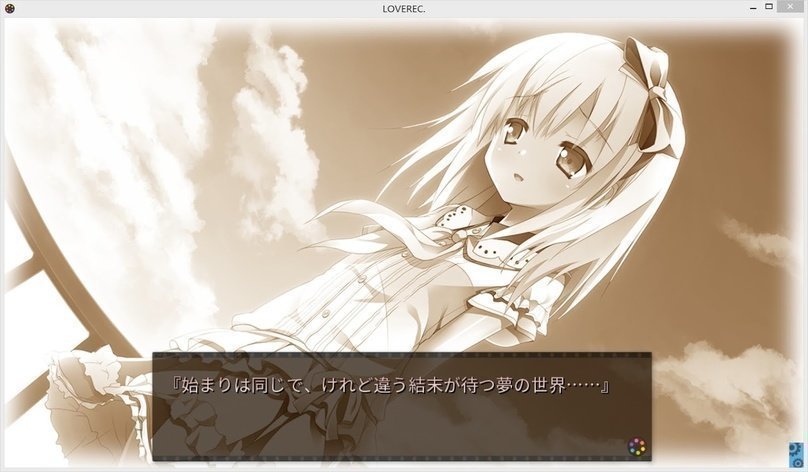
This is also why, on Hitomi’s route, the protagonist keeps seeing scenes from the other girls’ routes and feeling a sense of déjà vu. Seeing his own happy future gives him the will to live, and that’s what will wake him.
“But I’m just a fairy. I did something I shouldn’t have.”
As a camera spirit, Hitomi can only show the future—she can’t interfere with it on her own. But she did anyway, showing the protagonist the future she desired with him, creating a new dream and becoming his lover. But a fairy is a fairy; she can’t love a human, and there’s no real future there, which is why in Hitomi’s dream the date reaches Monday and there’s no tomorrow.
“Then… goodbye. You can wake up now. Thank you.” Hitomi leaves those last words and disappears. The protagonist sees the world before him begin to burn like a reel of film, and when it burns away he wakes up in a hospital bed. Things are as Hitomi said—he’d been unconscious for a long time after falling into the water, and his friends were all worried.
After waking, the protagonist searches for Hitomi, but unfortunately no one has ever heard of a fairy popping out of a camera. His camera is broken from water damage. Even in videos recorded by others, the parts where Hitomi should be are perfectly cut out.
The protagonist begins to doubt whether Hitomi ever existed—whether she was just his delusion, just a dream during his coma.
But in conversation, the other heroines say the name Hitomi sounds familiar, from their own dreams…
It turns out they all dreamed of happy endings with the protagonist, and the contents match the “different possible futures” the protagonist saw. In other words, Hitomi likely used magic to link the unconscious protagonist’s dream with the other heroines’ dreams. The odds that Hitomi exists rise sharply.
Then the camera is repaired, and when the protagonist checks the data inside, it still plays—and more importantly, it contains Hitomi’s voice, though broken up.
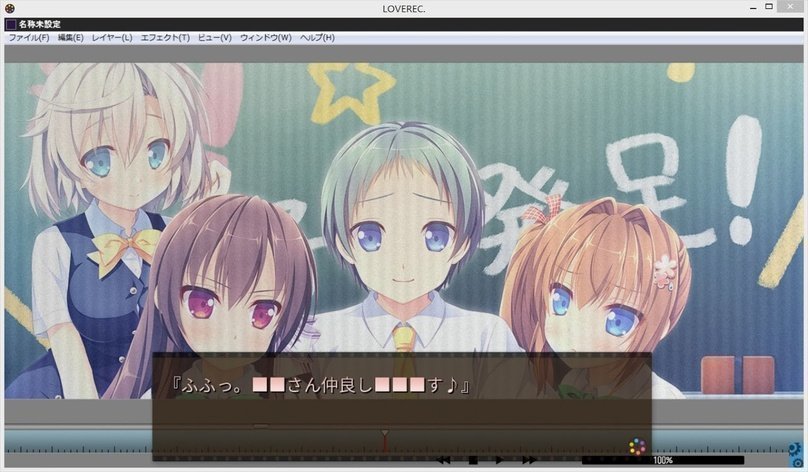
So the protagonist finally confirms Hitomi’s existence and thinks of a way to see her.
Hitomi is now in the space she created, playing her own movie. This is also where the game begins. In the film, Hitomi alone, as a fairy, falls in love with a human, and because they can’t be together, they part, and she leaves alone.
“This is… my happy ending.”
Hitomi says to herself. Then the protagonist and his friends appear, and after some persuasion, Hitomi finally forgives herself and chooses to meet him again. They’re a fairy and a human, but the protagonist doesn’t care.
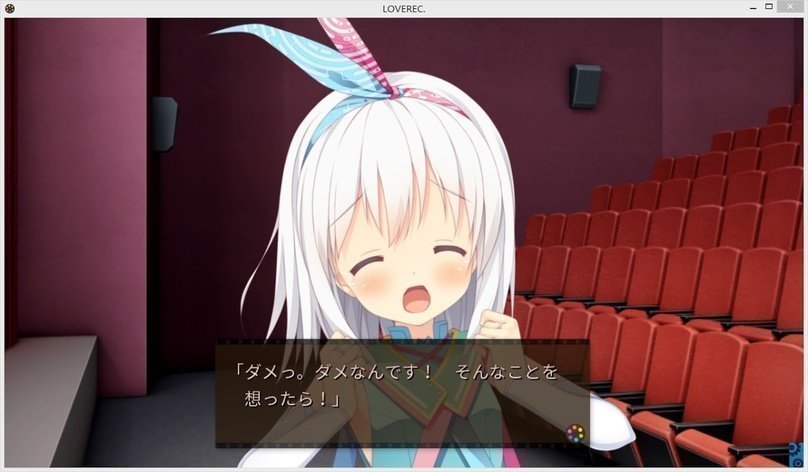
In the end, the movie about Hitomi screens at the school festival and gets a good reception, and Hitomi lives on as a real fairy inside the protagonist’s camera. They can’t touch directly, but the protagonist doesn’t mind—he’s willing to travel the world with his camera, filming every beautiful sight, together with his lover Hitomi…
I have to say, Alcot’s development here caught me off guard. I thought it was just nonsense—fucking a camera, sure, that’s about right—but I never expected it to all come back around so neatly. That’s impressive. The early setup, the plain romance routes of the other heroines, plants its foreshadowing too deep and is highly misleading. For example, the best friend’s little sister says she dreamed of someone being rushed to the ER while people prayed—I assumed she meant Hitomi, but actually the person saying it was the dream, and the real event was the protagonist in the ER being prayed for. Once all the truth comes out and you think it over, everything has an explanation: why Hitomi’s appearance was so easily accepted, why any explanation about Hitomi worked, why Hitomi could enroll in school just like that and do whatever she wanted, why the protagonist met so many friends so smoothly and founded the club he wanted. It was all Hitomi’s dream, and Hitomi helping him from behind.
Up to this point, LoveRec’s story is quite good, especially at the end when Hitomi cries out—Uehara Aoi’s performance is a perfect score. It’s so real I had to wonder if she was genuinely tearing her throat out. Aside from Uehara Aoi, the other heroines’ CVs are all a bit lacking. Shimura Yumi didn’t voice the little sister this time; instead she played an older-sister type, and the gap from the little sister in Pure X Connect is huge. The best friend’s little sister, voiced by Kinoshita Yaya, is interesting—a husky voice with a slow delivery left quite an impression on me. I wonder if I’ll run into her again.
What’s rarer is that the game has a very current meme in it, like taking an arrow to the knee…
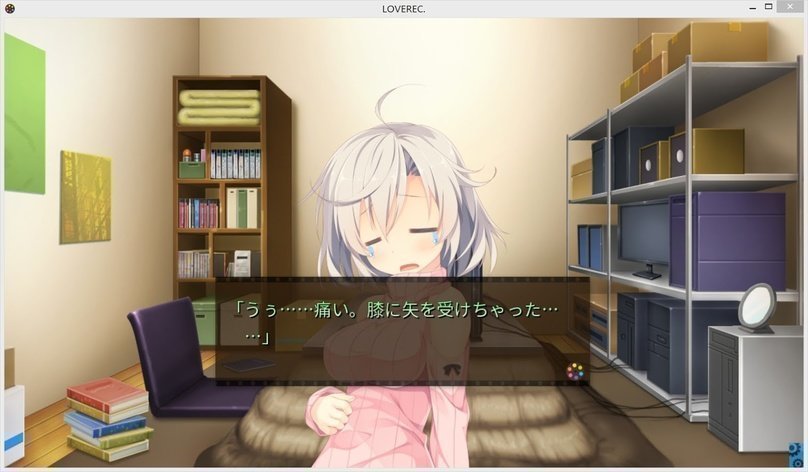
Of course, I have to emphasize that the story is good “up to this point,” because after clearing the game an Extra chapter appears.
The chapter picks up right after the main ending: Hitomi lives with the protagonist inside the camera, while the other girls haven’t given up and keep chasing him, jealous and bickering. Hitomi offers a solution—since it’s come to this, why not let me link your dreams, and we’ll all see who loves the protagonist more!
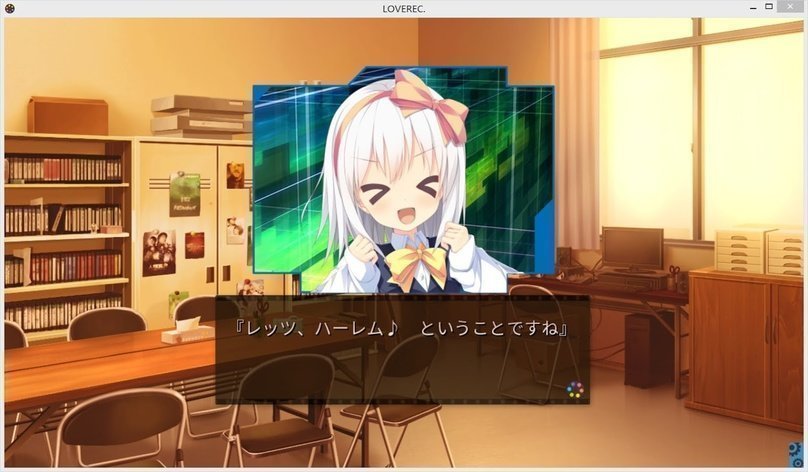
“Let’s, harem!”
And so the game cuts to a merciless… let me count: 1, 2, 3, 4, 5… oh right, 5P. After the mighty 5P scene ends, the protagonist becomes the harem king just like that, and his mother praises him for managing to land four women.
………………………………….
This Extra chapter feels like it exists purely to hand players fap material, and compared to the main story it means basically nothing. The transition feels like a needless appendage, and indeed it is—the word Extra is tucked in the corner of the chapter list.
Still, LoveRec’s attempt drew some mixed reactions. ErogameScape was mostly normal; more people disliked the protagonist’s rude habit of filming people without asking (as if afraid you’d forget the game is called LoveRec), and disliked that he’s a balding guy (yeah, I thought so too). As for the story, some found it clichéd, some thought it was fine. Domestically, some people—whether intentionally hating or not—labeled the game a landmine, for two reasons:
- Hitomi never becomes physical at the end; she still only lives inside the camera. It feels like Hatsuyuki Sakura—cruel to the heroine.
- The final True End turns out to be Hitomi helping the protagonist build a huge harem, with everyone gathered together having sex—total landmine.
Maybe Alcot’s earlier games were too gentle, leaving many Alcot fans naive; maybe Galgamer who read Japanese are all liberal-arts types; maybe the player base skews young. Whatever the reason, I can’t understand the impulse to call a game a landmine just because “the heroine doesn’t become physical” or “the heroine can’t stay by the protagonist’s side at the end.” I think the essence of a romance story is to celebrate love itself—as long as the protagonists’ romance leaves an impression on you and moves you, it’s a good story. What happens to the heroine in the end can only follow from the demands of the romance. Otherwise Yao Zhuangxian would have been sodomized countless times by now.
Besides, it’s not like Hitomi actually dies at the end—she’s still by the protagonist’s side. What’s the landmine? It’s better than forcing both of them to die and part forever, isn’t it? Did you not read enough fairy tales as a kid? Did anyone call The White Snake a landmine?
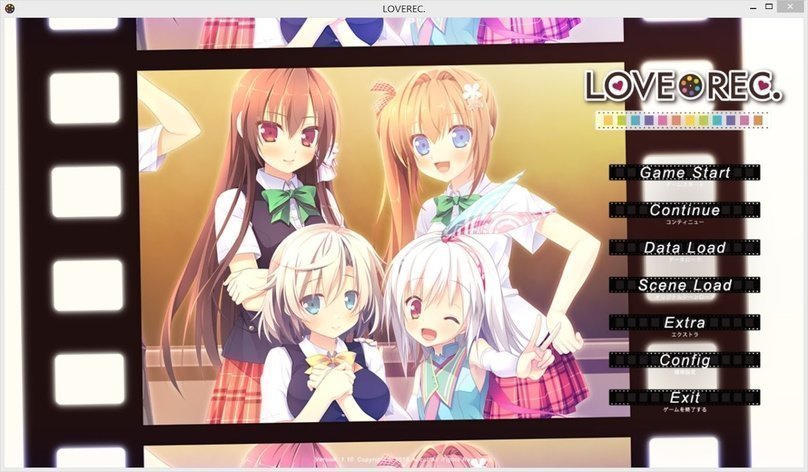
As for the second point, I can only call it a malicious reading. According to LoveRec’s setup, after you finish Hitomi’s route the main menu is already in ALL Clear state, and that Extra route is just tucked in a corner—it’s not the main story, just fanservice. Treating it as the main True End leaves me speechless. I don’t know if Professor Dave’s masturbation channel in Grisaia no Rakuen counts as the main story—that one fucked his own mother.
All in all, LoveRec surprised me more than I expected. At first I thought it was just a sistercon moe game, but it turned out to have a development that holds together. Sure, the script’s handling of daily life is a bit stiff—mostly old jokes and deliberate moe pandering—and the protagonist lacks the “lewd” feel of past Alcot protagonists. Even though the writer tries to imitate it, he doesn’t quite pull it off. But none of that hurts the overall story. A story about a camera treasured by its owner giving birth to a spirit who helps him fulfill his wishes is roughly on the level of the old seashell fairy tales.

One last thing worth mentioning: LoveRec. includes a feature called Delusion Mode, which lets players customize and play scripts and short scenes. Think of it as a map editor for the game. It’s limited, but it sets a nice precedent—maybe more games will let players direct their own little plays in the future.
Comments are hosted on the Chinese main site. This mirror is read-only.