Hakoniwa Logic (箱庭ロジック) Review
Hakoniwa Logic
Only after learning Japanese did I realize how many Chinese words actually come from Japan. Setting aside stuff like 暴走 and 违和, 箱庭 is probably one of them.
I run into 箱庭 all the time in anime lyrics — はこにわのせかい (箱庭の世界), that kind of thing. It’s not a hard word to figure out: a garden in a box, or a box garden. Describe it with a Western term and you get sandbox or sand table. There’s even a more Chinese-flavored word for it, like 盆景 (bonsai/penjing). The concept itself actually originated in the West; Japan just imported it and called it 箱庭. And honestly, I’m deeply grateful to whoever did that — that they didn’t write it as サンドボックス or some other mess already has me weeping tears of joy.
Of course, the thing most closely tied to the word 箱庭 is 箱庭療法 (sandplay therapy). It’s a form of therapy related to psychological diagnosis: you give the patient a “box garden” and let them build their ideal little world, then infer their mental state from the elements in that world.
Basically a fancy psychological test.
So the first time I saw 箱庭ロジック (Hakoniwa Logic) and its detective/suspense branding, I figured there had to be more going on under the surface.
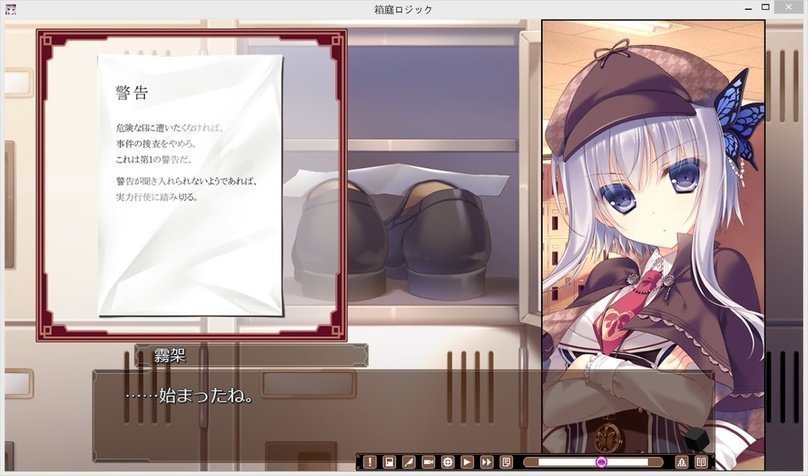
Hakoniwa Logic was made by Cabbit, the studio behind 翠の海 and ソラの花. Counting this one, I’ve now played every Cabbit game. I have to say, this studio’s story setups really suit my taste — and that holds true here too, it just falls a bit short of what I expected.
The premise: the protagonist lives in 箱庭市, a separately demarcated experimental city that only specific people can enter and reside in. They say it uses all the latest technology and rules; residents either win a lottery or get a special invitation. The protagonist gets in because his mother is a schoolteacher. Then right at the start, he’s asked by the school’s 紅鶴会 (roughly the student council) to investigate the disappearances of girls in 箱庭市.
“Six girls have gone missing in 箱庭市. I want you to take part in the investigation until the truth comes out.”
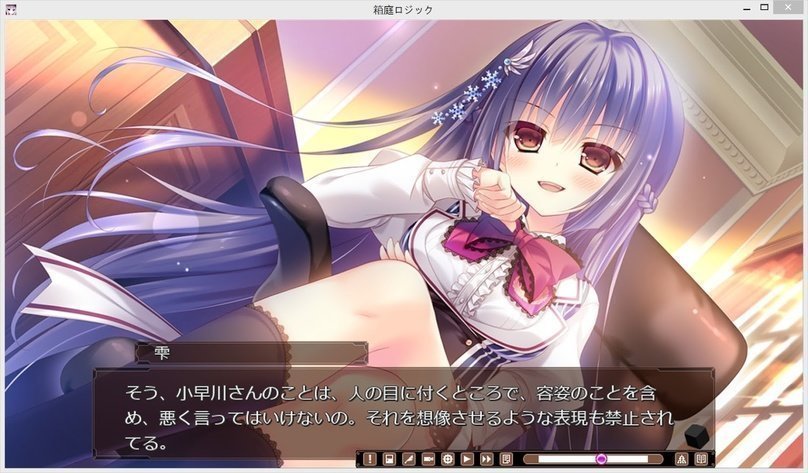
The protagonist accepts for no clear reason, and then a girl in a detective outfit appears before him, calling herself 前園霧架. Along with 入谷瑚子, who claims to be the best friend of the last missing girl, the two declare they’ll investigate the truth together with the protagonist. And so the story begins.
I have to say, Hakoniwa Logic drops way too many smoke bombs at the start of the investigation — it confused me for ages before I grasped the overall picture. At the beginning, the clueless protagonist can only start from the last person who went missing. He learns she was a bit of a delinquent girl who was always short on money and constantly looking for work. Then he discovers that in 箱庭市 there’s a popular mobile game called “箱庭” — you play the “box garden game” on your phone, lots of people are into it. But that’s not the important part. The important part is that inside “箱庭” there are private-job and work recruiters who contact you directly through the phone app.
The last missing girl, 小早川, was someone desperate for money, and she played “箱庭” too — so there’s a strong chance she was using the game to look for work.
So the protagonist, nothing ventured nothing gained, poses as a job-seeker and waits for a recruiter to bite. Sure enough, one shows up quickly — and it turns out to be the daughter of the owner of a bar in 箱庭市 the protagonist frequents, who also works part-time there.
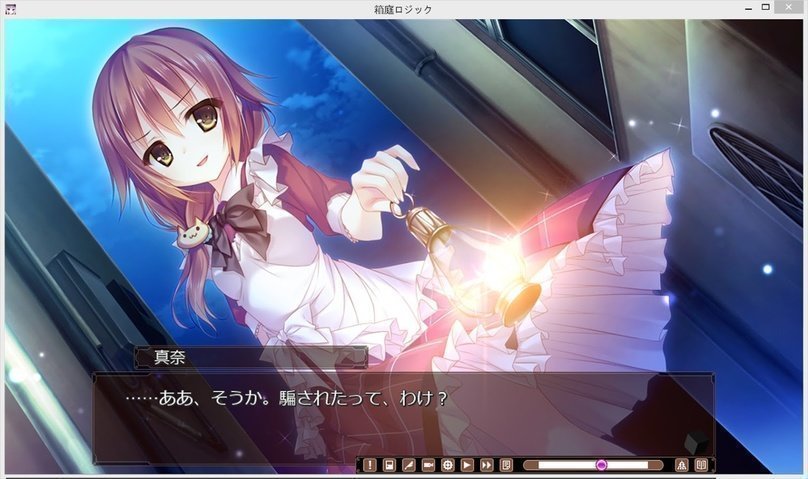
The part-timer girl is initially treated as the mastermind, but she can only confess that she just introduces jobs and doesn’t really know the boss. She herself ended up working in 箱庭市 because her mother went bankrupt and she was forced into an indenture contract. By her account, someone must have taken an interest in her; in reality she knows nothing about what’s going on behind the scenes — she’s just an ordinary job broker.
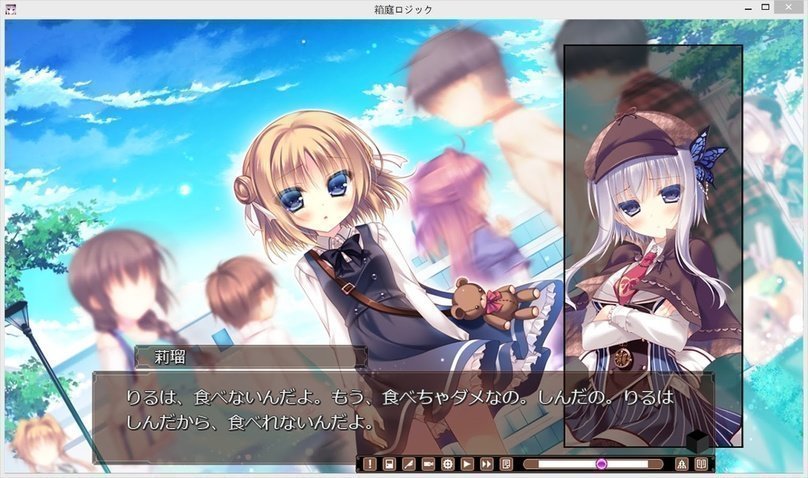
Around this time, the protagonist and 霧架 spot a strange girl on the street. 霧架 recognizes her — her name is りる, an orphan, and more chillingly, she should have gone missing long ago, or rather been presumed dead. Whether the りる the protagonist sees is a ghost is honestly hard to say. This りる appears several times to warn the protagonist to stop investigating, and tells 霧架 she has reasons she can’t help. She also gives 霧架 an encrypted letter; once decrypted it reads “Ruins of the hospital.” 霧架 and the protagonist go to the so-called suburban hospital ruins and find nothing there.
Then one day, 霧架 just vanishes right in front of the protagonist, in the blink of an eye.
The protagonist starts thinking about where 霧架 could be, and then remembers the “Ruins of the hospital” cipher note. The stair-shaped text gives him an idea, and finally, in the basement of the hospital ruins, he finds 霧架 — anesthetized and tied up — along with りる, who is being mind-controlled and is about to cut off 霧架’s legs.
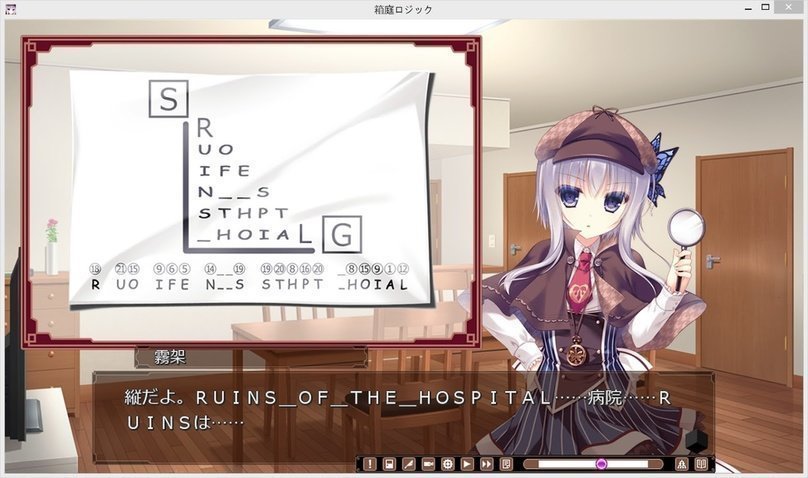
After a struggle, the protagonist saves both girls. りる can only say she was being controlled — when she woke up she didn’t understand much, she just remembered seemingly having cut off lots of people’s arms and legs. She’d been drugged with a mind-control substance and was in a daze.
The investigation continues, and the truth about the missing girls is peeled back bit by bit. Soon the protagonist discovers the student council that hired him also has secrets it can’t reveal — for instance, the student council president lied about telling him the girls were missing.
In fact, only three girls had actually gone missing. The first three had been hidden by the student council president in the council dorm, not going to school or class, just playing carefree all day.
Under pressure from the protagonist and 霧架, the student council president admits to hiding the three girls.
“They don’t get along with their families and don’t want to go to school, so I hid them away and we play every day… you could call it running away from home, I suppose.”
“I told everyone those girls were missing… at first I only hid one girl, then a second, a third. Then suddenly a fourth girl went missing too — but that wasn’t me, she really was missing. Then a fifth, a sixth… I got scared, so I could only ask you to investigate. To keep what I’d done from coming out, I had to lie more or less.”
“So how do you get the money you need to live? At this rate you won’t have anything to eat, right?”
“See, my father runs a private hospital, and lately they’ve been short on blood. So we donate blood. Selling blood is illegal and hospitals wouldn’t do it, but if you donate a bit, I can use my connections to get extra food as consolation… as long as nobody starves, it’s fine.”
Only then does the protagonist notice the band-aids on the president’s arm, hiding needle marks.
“Please, I know hiding students on my own wasn’t malicious, but the later disappearances weren’t my doing. If you keep investigating, you have to catch the real culprit.” The president pleads.
“Do you know why there’s a blood shortage? Because someone anesthetizes living people and cuts off their arms and legs, and doesn’t want to kill them — so they need blood for emergency treatment.”
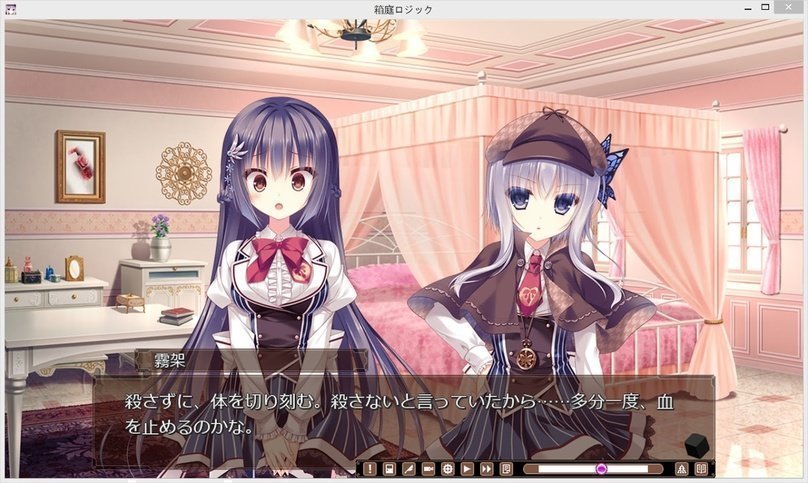
The president is stunned.
The investigation continues, and a new character appears: a girl named 桜庭萌美, who gets forcibly kidnapped right in front of the protagonist. He rescues her, and since he figures she could be the next target for disappearance, she joins the investigation too.
They discover that two of the last three missing girls are from the neighboring elite girls’ school. During the investigation at that school, they find a strange one — a girl with no arms.
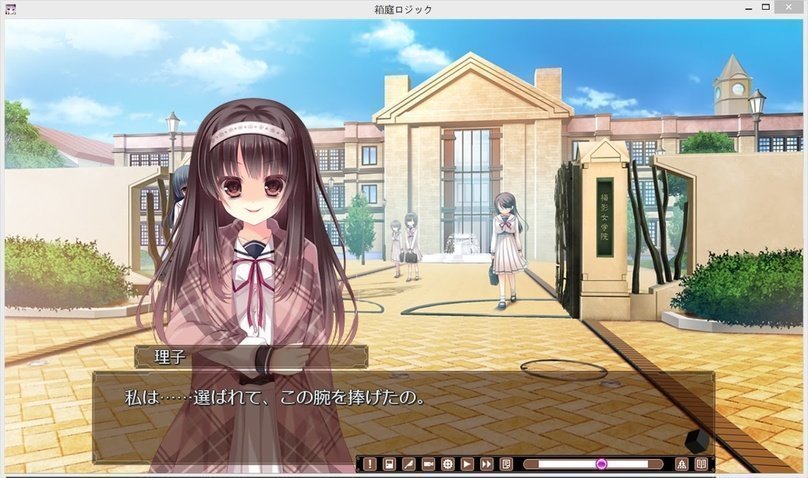
“I gave my arm to my teacher, hehehehe. No one has the resolve I do. My importance to my teacher is essential.” The girl seems mentally unstable, and the teacher she speaks of is 霧架’s older brother.
霧架’s brother acts baffled by the girl’s claims — he’s just that school’s art teacher, he says, and knows nothing.
霧架 wants to believe her brother; after all, she herself nearly had her legs cut off, and this girl might well have gone through the same thing, which would explain her mental state.
Then the protagonist notices 桜庭萌美 has secrets — for instance, another side of her. He finds this out when he visits her home.
桜庭萌美 admits it readily: she isn’t an ordinary student but a researcher, doing research at school — things like the daily-life psychology of female students, criminal motives, and so on. She was also the one who arranged her own kidnapping, to see how the people around her would react.
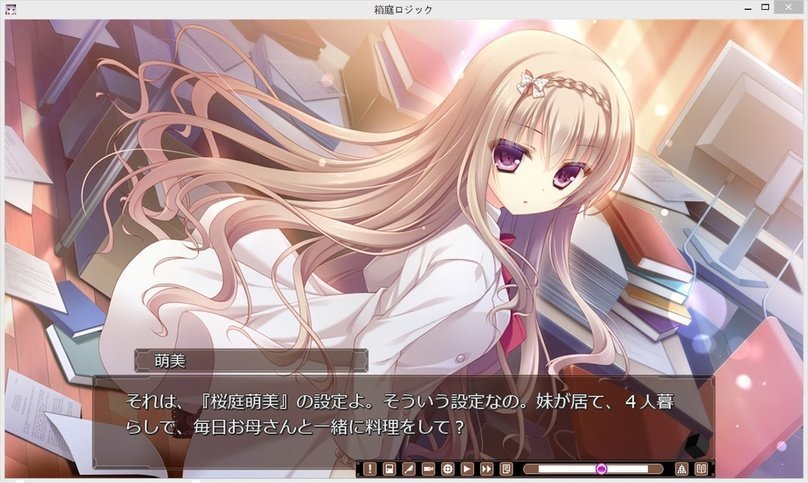
“箱庭市 is a researcher’s paradise. Everyone’s doing research here, so why can’t I? It’s nothing new.” With that, 桜庭萌美 leaves the investigation team.
Thanks to that, the protagonist’s investigation gets even stranger. The part-timer girl said the jobs she introduced were research; りる said she cut off people’s organs for research; 桜庭萌美 says she does research too, and claims the city itself is full of strange research. Could the missing girls also have been kidnapped for some kind of research?
霧架 decides to take the protagonist straight to 箱庭市’s largest university — the research center — and question someone in the know there. When they arrive, they find the protagonist’s mother waiting.
“So you’ve finally come?” The protagonist’s mother pulls out a diary. The diary describes the protagonist, and the truth of how he came to be here.
The protagonist’s mother is a psychologist specializing in sandplay therapy. The best subjects for sandplay research are children, so at a certain kindergarten she had the kids play box-garden building games while she observed and collected data for her research. But kids will be kids, and in one child’s box garden some things were stolen. A girl in the same class was suspected as the prime culprit, and the protagonist spoke up to protect her, insisting she was innocent. Soon the protagonist got into a fight with the doubters, was pushed to the ground, hit the back of his head, and was seriously injured and left dazed — that little girl was 霧架.
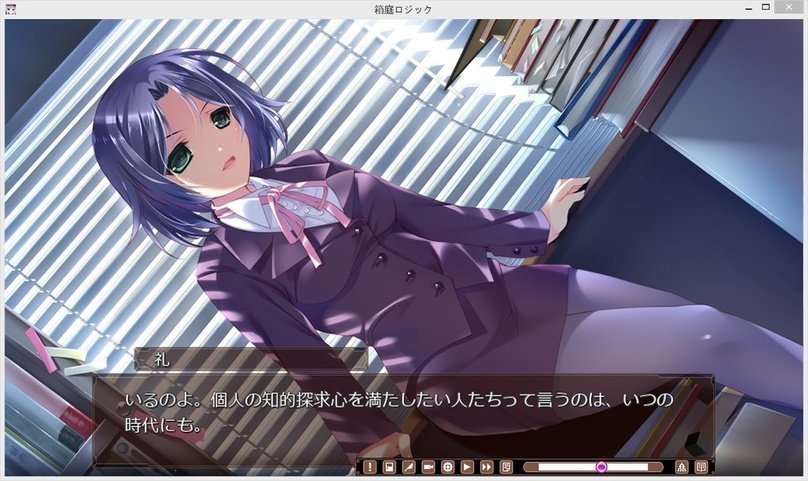
His mother was heartbroken and, hoping her son wouldn’t be bullied at kindergarten anymore, secretly went to his teacher and slipped her some money, asking her to look after him.
Other kids saw this, and word spread quickly, until it became a story that the teacher had taken bribes and that the protagonist and his mother had bribed her. And the fact that his mother had tricked kids into playing games for research was about to leak too. The teacher, unable to bear all the accusations, chose to take her own life.
Because of this, the protagonist’s mother was blackmailed into joining the 箱庭市 construction project. The city’s purpose is research: researchers select people who fit their conditions, move them in, provide every convenience — but the price is that the residents are all research subjects, and all kinds of inhumane research go on. Cutting off limbs, 萌美’s criminal psychology research, and his mother’s sandplay therapy research.
“So those missing girls…”
“Yes. Using ‘missing’ as a cover story, they’re probably already dead.”
It takes the protagonist and 霧架 a long time to accept the truth. They can’t stop the darkness of the 箱庭 project — but before that, 霧架 has something she cares about more: her brother.
Her brother must be doing research too. If the protagonist’s mother is telling the truth, then her brother must also have secrets he can’t reveal. The girl who said she offered her arm to her teacher is definitely not just mentally ill.
In the end, 霧架 takes the protagonist to confront her brother, and he admits it readily: he cuts off women’s limbs to make living sculptures, and says the sculpture he wants most is one of his own sister, 霧架. He was the one controlling りる, and the one who wanted りる to cut off 霧架’s legs.
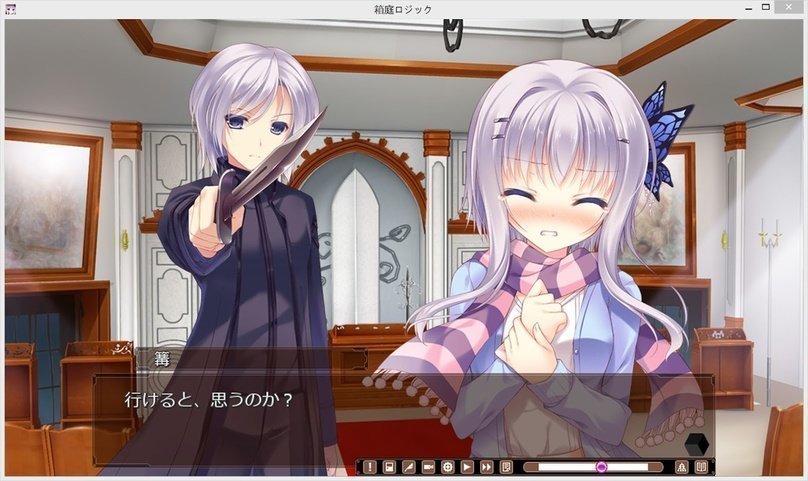
Just as 霧架’s brother is about to go completely off the rails, 入谷瑚子 arrives with the police. The brother is arrested and takes the blame for all the missing girls. The case closes.
This ending is just too dark, because we still don’t know who the real researchers are, and the darkness of 箱庭市 is far from over.
Hakoniwa Logic uses a key-unlock route system: go down a branch and you get a key from that branch’s heroine, and only then can your main story continue. In other words, it’s a plot lock, just dressed up a bit like an RPG dungeon crawl.
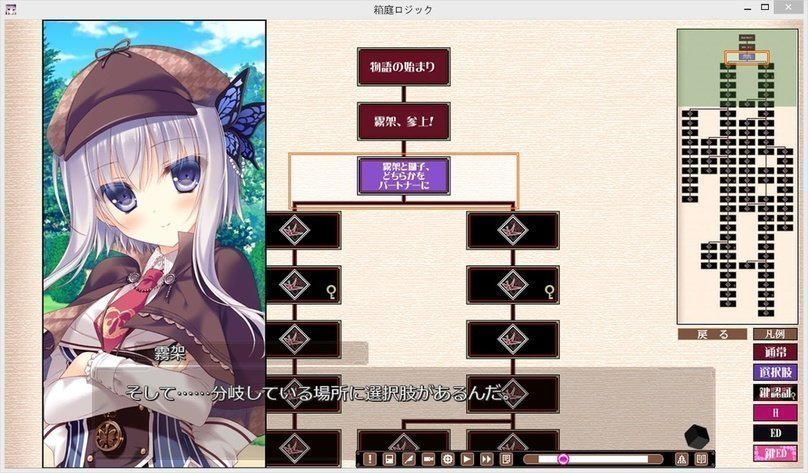
Looking at the whole thing, Hakoniwa Logic’s story is one big smoke bomb. The investigation early on is basically meaningless — you could have just confronted the protagonist’s mother from the start and solved it. All those long stretches of investigation are just the protagonist wandering around, and the story only really begins once he accepts that dark research exists in 箱庭市.
But the final twist isn’t without foreshadowing. In the common route, after every segment a mysterious diary entry can be viewed, one per day. That diary corresponds to the one the protagonist’s mother finally reveals — the diary of 霧架, who was thought to be the thief. So when the truth is revealed, I didn’t feel too screwed over; it was more of an aha moment. Still, I felt something was missing earlier — the sudden final reveal and the investigation before it are just too disconnected.
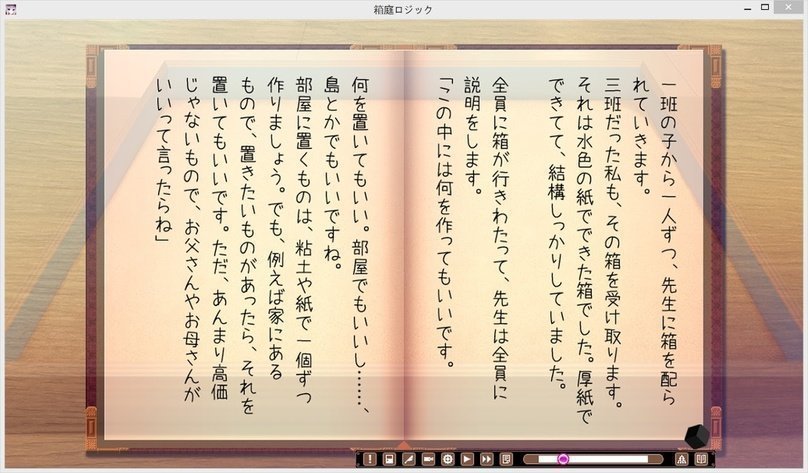
And the most important thing: this key-unlock plot lock… is genuinely insane. You have to clear every route.
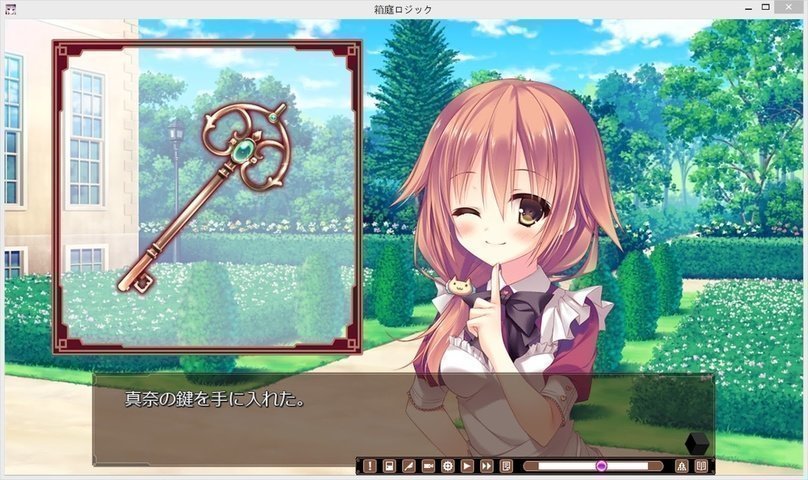
Even though the game brands itself as detective mystery, the only real mystery solved is that “Ruins of the hospital” thing — most of the rest is just stumbling around to unlock story. The main story splits into 霧架 and 瑚子 routes. The 瑚子 route investigates from the sidelines, while the 霧架 route leads to the True End. But thinking back, the 瑚子 route has basically no substance — all moe and nonsense. Or rather, 入谷瑚子 is just a moe character; whenever she shows up the investigation stalls in place, and her shameless, hardcore masochist personality left me with nothing to say. Combined with 小倉結衣’s voice, it’s just…
The ending left me speechless, since nothing gets resolved. The missing girls are all dead, the heroine’s brother takes the blame. But thinking about it, it makes sense — two students investigating a project this big, what could you possibly do? You’re not 御坂美琴, you’re not 一方通行, this isn’t a superpower game. Maybe this ending has its own logic.
The game carries on Cabbit’s usual traits: healing slice-of-life, great music, a shit OP, fun branches, and… zero hesitation when it’s time for dark turns and blood.
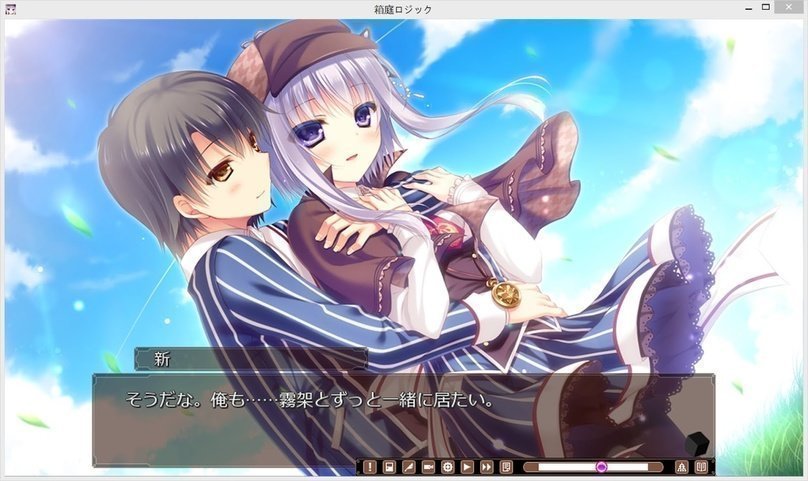
Overall the game is pretty interesting, and that’s my view of every Cabbit game. The story is a bit awkward, though I can’t quite put my finger on where, but after playing it, I do find it interesting. ゆきえ’s art is cute, and that’s a major selling point. It’s just that her recent game, “中二病少女恋愛方程式,” is genuinely bad — bad even as a nukige. I hope she returns to cabbit soon and keeps making games with interesting setups, fast pacing, and lots of choices.
Comments are hosted on the Chinese main site. This mirror is read-only.