Impressions: MAGIC GT100S
MAGIC GT100S
People call audio mysticism “mysticism” because there’s so much about it that’s uncertain and unprovable.
Headphone forums love using precise instruments to stay objective, to determine whether a pair of headphones is truly Hi-Fi — after all, Hi-Fi originally meant high fidelity. High fidelity means reproducing a song exactly as it was originally recorded…
So an audio device that boosts the bass, boosts the treble, boosts this and that is, in theory, violating the original vision of Hi-Fi. On this point, the various instrument tests on headphone forums really aren’t wrong in their direction.
But there’s this concept called “listening impression.” That’s where the mysticism begins.
An earbud might have tremendous playback capability on an audio oscilloscope, but that doesn’t beat a bunch of people listening and saying it “sounds bad.” One sentence — “sounds bad” — can drag a high-end earbud through the mud.
What causes this “listening impression” to exist? Well, there are plenty of reasons… From my years of listening to music, it comes down to how the original song was recorded. For devices that lean toward reproducing Hi-Fi, we need recordings that are “worth reproducing” — like master tapes from a high-quality studio, like live performances recorded with high-quality equipment, like symphonies full of presence.
But unfortunately, most of the songs we hear — including most pop, a good chunk of rock, and 99% of ACG songs — are recordings that “aren’t worth reproducing.” In recent years there have been quite a few Hi-Res ACG songs, but honestly, apart from a small portion, the recording quality of the rest isn’t really discernible.
These “not worth reproducing” sounds — rather than saying they’re not worth reproducing, it’s more like “we don’t know how to reproduce them.” Most have gone through post-processing, had sound effects added, had some electronic elements thrown in. They’re no longer straight from the studio; there’s too much in there that was added in post and never existed during recording. To put it bluntly, the left and right channels were probably made in post — you can’t even tell where the singer is positioned. As for detail resolution, maybe the post-production team wanted you to hear it, so you hear it; if they didn’t want you to hear it, no amount of resolution improvement will help. Even if you achieve 100% reproduction of such a song, it’ll still sound uncomfortable. Like if I recorded a Guo Degang crosstalk routine and forcibly added background laughter in post — anyone with sharp ears would immediately feel that the laughter, out of place with the live atmosphere, is like a plaster stuck on the outside: useless and especially unpleasant.
So listening to these “effect-added” songs on Hi-Fi equipment is inherently odd. No wonder I cry tears of joy listening to Jacky Cheung’s Live on the Q701, but after a while of fripSide it feels harsh…
But thankfully, those truly pursuing Hi-Fi are a minority. Apart from most musicians who need it for work, and a very small number of audiophiles, everyone else’s pursuit of Hi-Fi stays at the level of “music playback effect.”
It’s not that this level is low — it’s that for those “effect-added” songs we often listen to, we also need an “effect-added” earbud to match and express them.
So many non-monitor headphones take the route of “improving capability” paired with “distinctive tuning.” Improving capability means the driver’s inherent quality — if the sound coming out is fuzzy and crackly, what good is anything else? And “distinctive tuning” has become a major characteristic of most earbuds I’ve encountered.
So when you buy earbuds, most of what you’re buying is just that tuning. That’s one of my biggest takeaways these days.
On the matter of tuning, I think domestic Chinese manufacturers have already gotten pretty damn good at it — but they often lose their minds. You see, most domestic earbuds that sell at high prices get no attention. On one hand, people distrust domestic brands; on the other, domestic brands still lag a bit in quality, after-sales service, and even industrial design. So most domestic earbuds make sure to squeeze under the 1,000-yuan price point, and at that price the biggest buyers are students.
The youth market is huge. Though it seems niche, most of them are bored and restless (no offense), willing to spend time online buying stuff to feel important, or to fight with strangers for three days over a tiny component difference and performance variation — while ignoring that just 50 yuan more would bridge that performance gap. More importantly, herd mentality is enormous; most people don’t really know what they need.
But a few things are consensus: when it comes to earbud research, capability, bass, vocals, treble, soundstage, and detail resolution have always been eternal topics.
Apart from capability and resolution, the rest is tuning. And in tuning there’s no absolute good or bad. I’ve heard some high-end domestic headphones and some cheap DIY ones, and I feel most earbuds are still in the fumbling, experimental stage when it comes to tuning.
For example, if you want female-vocal poison, you can cut the bass boost, sharpen the highs a bit, and pull the mids closer. If you want pop tuning, boost the low end, widen the mids to create some soundstage, and do whatever you like with the highs. Up to now, the most extreme one I’ve felt is this HAVI earbud — its mids are a bit distant, its highs are… also a bit distant, and the bass isn’t boosted. But interestingly, it creates a large soundstage and sounds rather ethereal. Compared to earbuds that desperately stuff the singer’s voice into your ear, this one at least has some character. There’s also Vsonic’s 99-yuan earbud — even if the tuning is decent, limited by price, its inherent capability isn’t great.
Actually, tuning low-end domestic earbuds has its own dilemmas. First, two realities:
- Most non-audiophile users believe “big bass or boom-boom-tss is good sound quality.”
- People with correct listening habits are probably less than 10%, and they’d turn their noses up at earbuds in this price range.
These two are contradictory. If you want to make an earbud with a good reputation, you have to abandon that boom-boom-tss bass — but then many non-audiophile users will buy it and be confused: “Why is there no heavy bass?” I remember when I first bought the TF10, a guy at work listened and said it was worse than his Skullcandy Beats. I listened to that thing — even though the TF10’s bass is already decent, that Skullcandy Beats’ bass was simply enormous…
So we see tons of low-end domestic earbuds (even some high-end flagships) going for a lower-midrange or balanced approach. Some even give up and tune randomly. You want transparent highs, deep lows, sweet mids? I’ll push all three frequencies to MAX — and the result sounds like a tiny soundstage smeared into a blob. But no worries: if it doesn’t sound good on first listen, I’ll say you haven’t burned them in. Bad for a day? Listen for a week. Bad for a week? Listen for a month. In short, once your brain-burn-in kicks in, or you get the feel on certain songs, that’s when you’ve burned them in properly.
So I have a bit of a soft spot for earbuds that dare to try new tunings — like this MAGIC (脉歌) GT100S.
Lin Sir has an assessment of this earbud, very simple, two words: female-vocal poison.
So with expectations of female-vocal poison, I quietly opened the package. But I have to admit, this thing’s packaging is really hard to open — all sorts of mechanisms and tricks inside. The maker was probably waiting in ワクワク ドキドキ excitement for you to praise how clever and thoughtful the packaging design is.
But let’s imagine this situation…
My sister finally agreed to date me, and we decided to do it on some romantic day.

That day she was wearing nice clothes. Smelling her scent, my pants were already tight.

No time to waste — we rushed into the room and were about to strip when I discovered her nice outfit was covered in all sorts of hidden clasps that needed to be patiently undone one by one.

Sure, I could just rip it open, but that would be barbaric.

By the time I calmed down and slowly got her undressed, my little buddy had gone soft.
Opening the MAGIC GT100S package feels roughly like this. Solidarity, my friends.
As a 369-yuan product, the included extras are fairly generous: several replaceable filter meshes, which are said to affect tuning, plus various eartips and that highly-praised, classy carrying case that’s been exploding online.
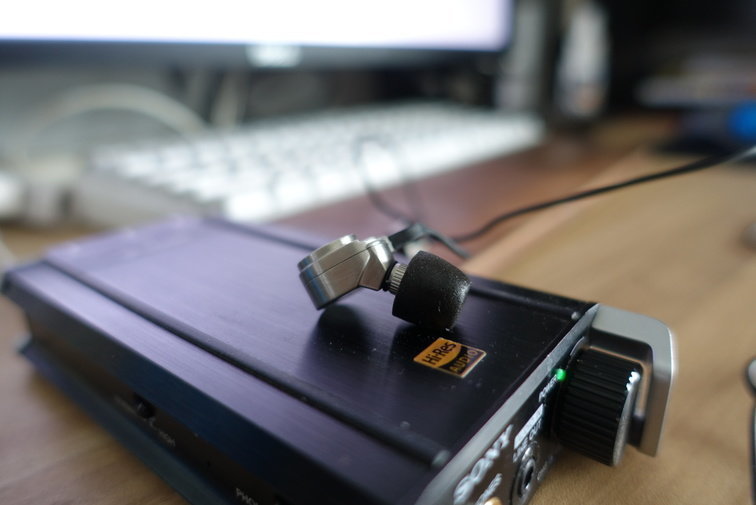
The earbuds themselves are very hefty — how to put it, all-metal construction, heavy in the hand. To put it unkindly, you could swing this thing by the cable and use it as a weapon. I guarantee that if this iron lump of a driver unit hit someone’s head with force, it would punch a hole through it. Even without that, launched from a slingshot it could probably penetrate several panes of glass…
The design means you can only wear them over-ear. That’s not a problem… I’m used to it. Even if you’re not, I suggest you get used to this wearing style.
Now for the sound. After a week of listening, I have to say the MAGIC GT100S’s tuning is indeed very… unique.
I’ve always believed that talking about sound quality without relating it to music is hooliganism. And since it’s female-vocal poison, it’s not positioned as Hi-Fi anyway — so let’s just go with ACG songs.
First up is Snow no Elfin Lied by Nitta Emi, an OP2 and insert song from some game. First, I must declare this song has added effects; Nitta Emi’s real voice doesn’t sound like this. Even so, the GT100S’s performance surprised me a bit. First, the resolution seemed slightly higher than the IM03 I’d been wearing before. Then on closer listen, it wasn’t that resolution was better — many details near the midrange were deliberately amplified, and the highs were somewhat restrained. Simply put, there’s none of that thin, sharp, noise-like quality. The bass is a bit sad — the drum hits feel very far away. This tuning works okay for this song because the mids aren’t shoved into your ear canal like Phonak earbuds — they’re pulled back slightly, giving a bit of soundstage. By this performance, the earbud does indeed enhance female vocals.

Since the two songs are close together, I gave this one a listen too. Similar to the first: prominent mids, restrained highs, bass with reduced presence. After snow -Shiroki Eien- felt the same as the first song while listening, but just when I was about to make my final judgment, I interestingly discovered a break in the climax of this song…
That is, when singer Ceui’s voice suddenly rises — at the line “Astraea” — the voice goes up a few degrees, then suddenly goes dark… When the vocal line returns to normal, it rises again…

So I had a hypothesis: in the GT100S’s tuning, did they choose to specifically boost a segment of mid frequencies, cut the transition between the two to create layering, and make limited adjustments in the highs and lows to ensure they don’t drown out the mids?
Strangely, the frequency response curve chart included with the earbuds doesn’t show too aggressive a bass roll-off, though you can see a rise in the upper-midrange vocals.

But strangely, the bass really doesn’t stand out clearly. Might be related to this thing’s reverse dynamic driver technology — basically mounting the dynamic driver backwards. At least I think mounting it backwards definitely reduces bass, or at least makes the bass feel far away.
So I got a little interested in this earbud. I wanted to know what kind of female voice would exactly hit this thing’s sweet spot. Because you could pull out Zhang Yunyun’s voice and call it female too, right…
First thing that comes to mind is naturally Fish Leong, who gets trotted out for testing every day.

I chose Sky Lantern because, unlike other songs constantly played for testing, this one has rich layering in the harmonies — it’s genuinely several Fish Leong voices synthesized together. The moment the song starts, it’s a revelation. I don’t know if it was targeted, but Fish Leong’s voice definitely falls in MAGIC’s “midrange boost zone.” The female vocal throughout is hugely infectious, everything is just right, the bass doesn’t steal the show too much, the highs don’t overdo it — what’s left is that intoxicating female voice. The instruments in this song aren’t complex and don’t create a mess.

Darling Baby is originally sung by Touyama Nao, but I listened to an unplugged cover version. The female singer’s name is unknown for now — I only know she’s from the group eyelis. Her performance on this song isn’t as good as Fish Leong’s. Just as hypothesized, instruments and everything else are fine — the female voice just doesn’t hit this earbud’s sweet spot.
From this, the MAGIC GT100S is a vocal earbud extremely optimized for a specific vocal frequency range. If, unfortunately, the vocals in the songs you like don’t fall in this zone, the performance will either be mediocre or actually go backwards.
Of course, this doesn’t mean that if one song by your favorite singer performs poorly, all her songs will. Thanks to modern music post-production, the female vocal frequencies can differ between songs.



Clover Heart’s has 3 versions: the 2003 old version, the 2013 new version, and the 2013 fripSide rearranged version.
Listening to them one by one, the performance order is 2003 > 2013 > fripSide. It’s not that Marie’s voice isn’t in the sweet spot — it’s that in the 2013 rearranged version, there are quite a few instruments in the midrange… On the other hand, it’s precisely because some instruments close to the mid frequencies steal the spotlight that the vocals get slightly overpowered, a bit less transparent than the 2003 version.
As for the fripSide version, I don’t want to say anything. Miss Nanjo’s voice is already transparent enough — please stop adding effects to her, okay?
Of course, even the best-performing 2003 version isn’t great. Conversely, one of Marie’s newest songs performs wonderfully…

On closer listen, this song deliberately pulled the vocals forward during recording, and combined with the GT100S’s special presentation, it achieved a 1+1>2 effect.
Actually, by now, my feeling about this earbud isn’t “is the sound quality good or not” — it’s more like “trying different types of songs to adapt to this earbud’s special optimization zone”…
So how is the MAGIC GT100S really? I think all this rambling should be enough to describe the general feeling.
The MAGIC GT100S is an earbud specially optimized for upper-midrange female vocals. Not many songs can adapt to it and let it perform perfectly — mostly small-ensemble female vocals. So as a female-vocal-poison earbud, it’s passable, but the range of songs it handles is far too narrow. Songs that don’t fall in this optimization zone sound strange, and its versatility isn’t great.
That said, the build quality is good and it feels solid. At least matching songs to it is fun.
Incidentally, this earbud also performs decently on some Jay Chou songs, but never use it for too much electronic music. Lastly… this earbud is not Hi-Fi. If you like live versions, symphonies, or even classical, just give it a casual listen.
Comments are hosted on the Chinese main site. This mirror is read-only.