Sorcery Jokers (ソーサリージョーカーズ) Review
Sorcery Jokers: Flexing With Actual Skill
Everyone loves to flex, but almost nobody enjoys watching someone else flex in their face.
There’s a very telling phrase for this: “flexing with actual skill.” Sure, it’s mostly used as a joke, but it gets at something real—when it comes to flexing, if you’ve got enough genuine chops to back it up, there’s not much anyone can do about it.
Speaking of “skill,” I’m reminded of a conversation I once had with a friend about cooking.
Back then I was being a total idiot, convinced that “a great chef has to make all these flashy, fancy dishes to be legit.” My friend just shook his head.
A real chef’s excellence shows in the little things. Take a plate of tomato and egg stir-fry—someone who can cook and a master chef will produce two completely different things, even with the same method and the same ingredients.
I thought about my own tomato and egg stir-fry versus my dad’s, and yeah, there’s something to it. My dad doesn’t even try that hard—he leaves some of the stems in—but it still tastes way better than mine.
“So once a person has real skill, even the most ordinary-looking thing will show it.”
It seems to work the same way for ACG works. We’ve seen way too many titles try to stand out with a unique setting, only for the follow-through to fall flat, leaving that setting an empty shell—a complete garbage fire.
When I reviewed Aldnoah Zero, I said: “Maybe Gen Urobuchi is just a writer who loves spraying blood, but that doesn’t mean you can spray blood too and suddenly become Gen Urobuchi.”
For a lot of ACG works with great stories, their success and acclaim come from overall strength across the board—it’s not something a quirky premise or pretty art can carry on its own, and it’s certainly not about hitting your specific fetish. Even nukige aren’t that simple. Only a certain someone gets hard over a pig trotter wrapped in black stockings.
When it comes to evaluating works, things are generally fair—overall strength says it all. Settings are just marketing slogans. Some kickass works don’t grab your eye in the promos, or even give you a sense of déjà vu with their premise, but thanks to the creators’ skill, the whole thing still radiates a powerful, kingly aura.
And that’s exactly what Sorcery Jokers is.
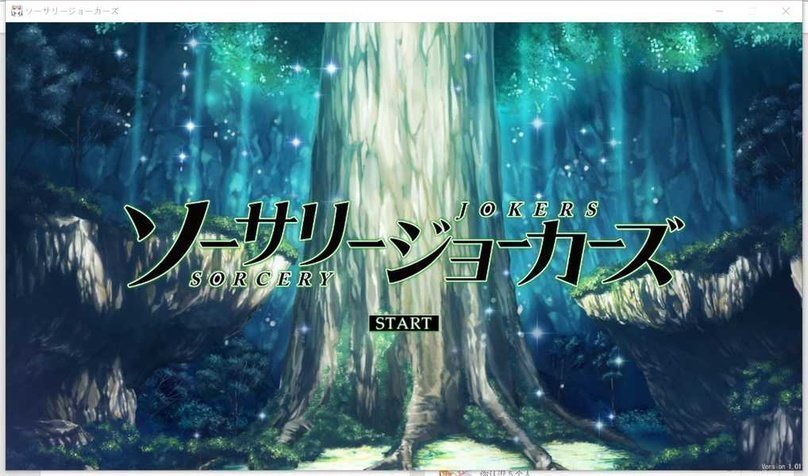
The game’s name is literally “sorcery jokers.” You can read it as Ace Mage or Ace Magician or whatever the hell you want—just don’t forget the S at the end. The story is set in a future world and deals with magical ability development and the ugliness of human nature.
The plot summary is simple. In the future, humanity abandoned high technology and started using magic as its main energy source. But as the energy gets consumed, magic is about to run out—and by then humans can’t live without it, just like we can’t live without electricity now. So people propose regulating and licensing magic, and researching it.
Researching what? On one hand, only certain licensed people are allowed to use magic—these mages are called proper Casters. Then there are those who got their magic through unofficial channels, called OutCasters—you can think of them as rogue mages. The latter are shadowy figures who can’t show their faces.

The government’s restrictions and management of magic seem reasonable on the surface: on one hand they’re developing artificial magic, on the other they want to implant artificial magic crystal circuits into all sorts of devices, called Magi, so that ordinary people can use magic like mages (for civilian use, of course), achieving full magic popularization.
But things aren’t that simple. The story begins with a series of mysterious OutCaster deaths—their bodies turned to liquid, and their casting rings destroyed and taken away. Our protagonist discovers this, and also notices that certain government people are monitoring these OutCasters and recovering the rings.
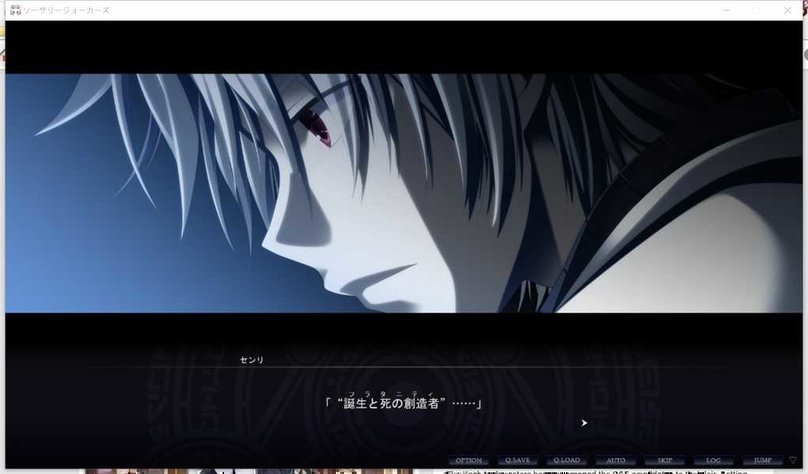
Later it’s revealed that the government is using these illegal OutCasters to experiment with newly developed artificial magic particles. Once implanted into human bodies, these particles either cause mutation or kill the subject outright—basically all failures. They can’t experiment on normal people, so they use OutCaster criminals as test subjects.
Later on, the protagonist digs deeper and uncovers more conspiracies. In the process of researching artificial magic, the government has done far too many dirty things, including observing and endlessly cloning people with specific magical aptitudes, and even trying to create artificial magic angels as an energy source. On the surface there’s nothing wrong with it—it’s all for humanity’s development, right? But the key is that this plan gets exploited by bad actors who want to use magic to create something like a World Tree and become gods of a new world.
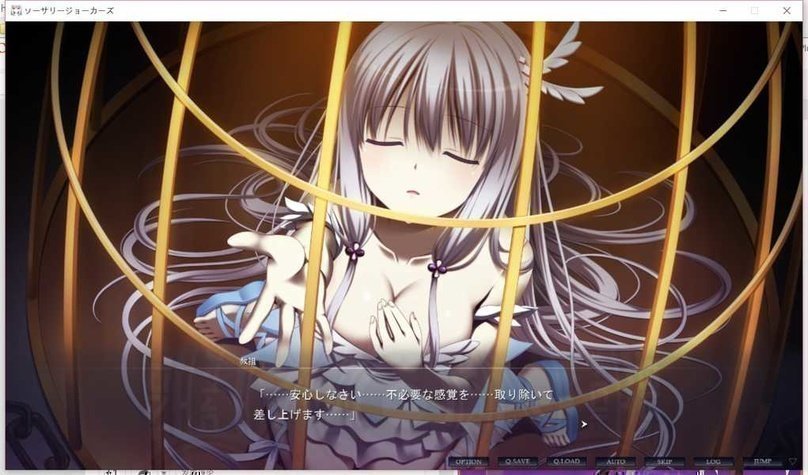
Yeah, pretty cliché, right? The ending is, naturally, the protagonist seeing through the conspiracy, defeating the boss, and restoring order—humanity’s reckless magic research gets reined in.
Cliché as it is, like I said earlier, this is a game “with real skill.” In telling a fairly old-fashioned story, it brings enough powerful new ideas to the table.
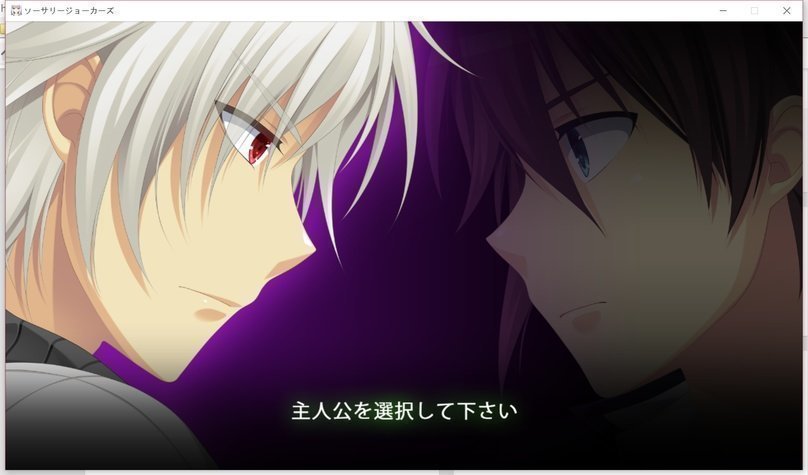
First, the dual perspectives. Or rather, there are two male protagonists and at least four heroines. One perspective is the high schooler Youto, a victim of the government’s magic program—he’s actually a clone of a certain researcher. Because of that researcher’s unique physical traits and excellent magical aptitude, the government cloned him ruthlessly. Youto is a tragedy in the story: he’s incredibly weak, a mere pawn, gets dunked on and used left and right, and being a high schooler, he can’t really do anything. The writer didn’t deliberately write some corny “high schooler saves the world again” crap. To me, Youto’s existence is more like a viewpoint character for the school side of things—the real battles aren’t there.
Incidentally, because Youto is so weak, a lot of people joke that he’s a professional jobber protagonist. I agree—he’s just… too pitiful. Every time he wants to power up, he realizes he’s actually useless. Think about it: you just had a cool moment, then someone tells you you’re a clone, and there’s a whole row of people just as cool as you, and you’re mass-produced as a weapon to be killed for fun. How would you feel? It’s like Misaka in A Certain Scientific Railgun seeing the Sisters—you’d totally break down…
The other perspective is the game’s true protagonist, Senri. Senri-san’s real identity is actually the son of the researcher Chisato—his name is pronounced the same, “Senri.” But because his father was framed, he assumed a new identity and began investigating the government’s magic programs. The fun part is that Youto is actually a clone of Chisato, so when Senri sees Youto, he should realize this guy looks exactly like his dad…
Senri’s characterization is very complete: wise, calm, overpowered in combat, with his own way of thinking—he leaves a deep impression. The game builds plenty of mystery around him: early on “who is he,” mid-game “why is he so badass,” and late-game “how can he get even more badass”—all good progression hooks.
Senri himself has immense magical control, but the interesting part is that early on he barely uses magic—he uses a gun. This leads many people to underestimate him. That is, until his first confrontation with the变态 boss Luu, when Senri one-shots the black aircraft the boss summoned. The boss is stunned and even quips, “Were you holding back this whole time?”
I should mention the game’s dual perspectives. Most of the time you can freely choose whether to follow Youto or Senri, but ultimately you need to see both. I personally recommend doing Youto’s route first to build up the mystery, then going through Senri’s route to break it all open—that’s the better, more fitting order.
Also worth mentioning is one of the game’s bosses, Luu. She’s the only boss who appears throughout the entire game, from her mysterious first appearance to the final battle. Her personality is very much like the Joker from Batman—pure “evil,” living to torment others and cause chaos. Though her public identity is a government research product, she also shows intense interest in Senri at certain points, saying her goals are “partly the same as the government’s, partly not.” She has her own ambitions—world domination and all that.

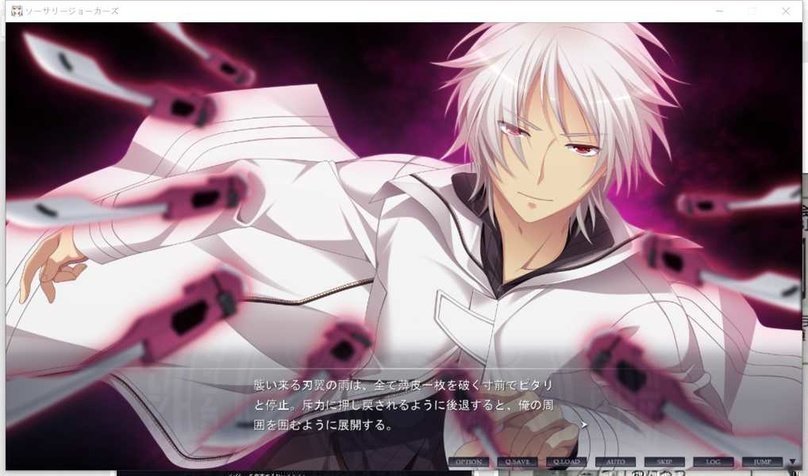
World domination isn’t easy, but she’s certainly capable. Her abilities are crazy strong: she wields several knives as independent Magi that can’t be destroyed, she has mind-reading to see through your thoughts, and she has immense magical power. Her strongest ability is mind control—definitely badass.

Luu’s performance is spot-on, and her CV is the long-awaited Kiritani Hana. I never expected her to be so good at playing yandere and psycho characters—couldn’t be better.
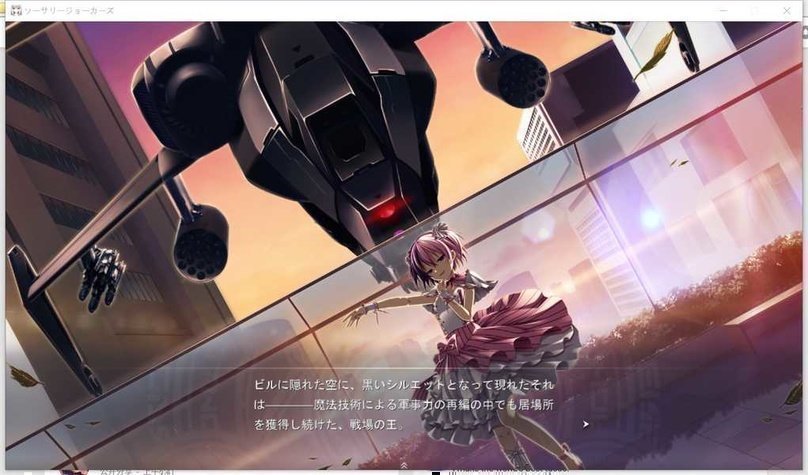
As badass as the boss is, Senri is even more so. Senri’s ability is magic replication—cough, you know what that means. The despair the boss feels when she’s defeated by her own skill is deeply satisfying. Youto fights this boss no fewer than several times, getting flattened every time, while our man Senri just needs one burst and a magic replication to instantly wreck the boss and teach her a lesson.
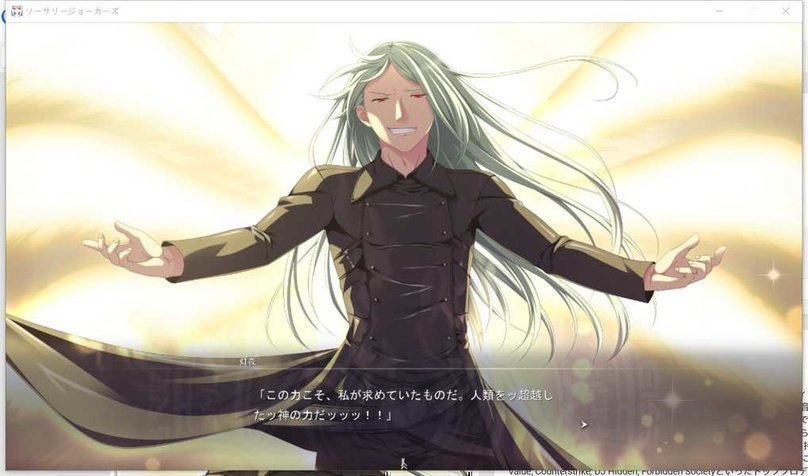
As for the final boss, Rokudou’s sister’s brother—though there’s a lot of buildup about this character’s dream of a “Land of Dreams,” I have to say this boss isn’t as vivid as Luu. He appears too little, and the finale is a typical righteous showdown—Youto powers up and finishes the boss. But incidentally, Youto himself is pretty useless; the main thing was Senri saving Noah on the other end, which distracted the boss (I think).
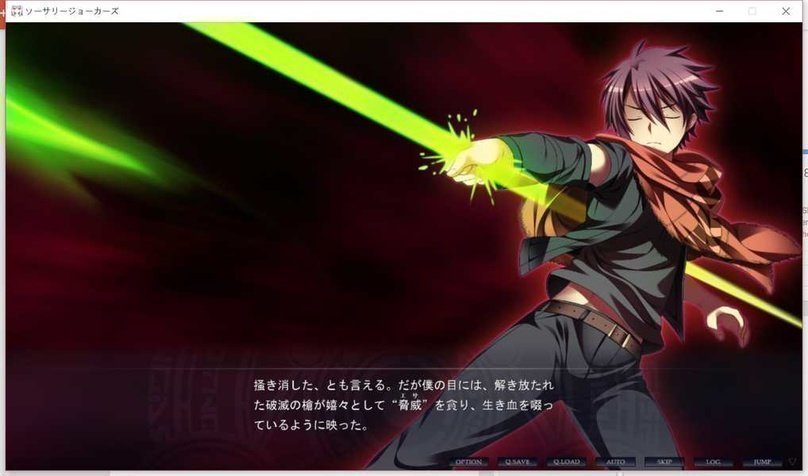
The game has at least four OPs. Only OP1 and OP2 have new songs; the rest are just animations. Different OPs represent different stages of the story. Mid-game routes develop the plot while describing the pasts of several heroines—you could call them individual routes. Fiona’s personal route is interesting, involving several betrayals that give a Catwoman-from-Batman vibe, but that section drags a bit. Or maybe I was just impatient and wanted to binge it all, so I didn’t read carefully. Not that there’s anything indispensable there—Fiona’s past is only tangentially connected to Rokudou’s sister’s brother anyway.
The game’s visuals are gorgeous, the music fits its OST role perfectly—setting the atmosphere without you even noticing—and the battle sprites don’t skimp. The protagonist even has voice acting in key story scenes. To borrow a comment from Chuuni Space: the game feels “extremely polished.” You can’t see a single trace of rushed work—only meticulously crafted dedication.
Sure, the story has shades of A Certain Scientific Railgun + Guilty Crown + Batman, but that’s not a problem. The game’s quality speaks for itself—even when telling a story with déjà vu, it delivers enough heart and sincerity. “Dinei” (meticulous) is how I’d describe the game’s overall style. It’s very proper, very formal—no parodies or gags. The only exception is a bit of girlishness when Rokudou’s sister falls head over heels for Youto; everything else is very orthodox, with a straight-faced narrative style (don’t mind my shitty Japanese—50% of the details I fill in with imagination, but I can still feel it). If you extracted it and wrote it as a sci-fi novel, I think it’d be pretty good.
Ah, how should I put it—aside from the early foreshadowing phase where the game is overly dull, I honestly can’t find any flaws. Even the dullness pays off with the satisfying payoff when the foreshadowing is collected later.
Sorcery Jokers is probably the most well-rounded game I’ve seen this year: excellent story, great art, awesome music, and a standout voice cast. Plus, the game always gave me this aloof, independent vibe—barely any promotion, a lofty premise, and though the déjà vu is strong, it’s hard to pin down. On the other hand, it’s a game that’s “flexing” from every angle—the narrative style, the characters, the dead-serious dialogue. Throughout the game I felt this work had an attitude that, put nicely, is refreshingly refined; put bluntly, is downright condescending. Among a pile of 18X galge, having this thing is like finding a high-and-mighty princess in a nightclub who claims she’s pure of heart and looks down on you worldly types. If not for the few optional H-scenes, I’d almost think the story structure was something like a Trails game rather than a Galgame—it just needs a battle system. Honestly, it’d be perfect as an RPG, but they didn’t do that. Maybe they ran out of money.
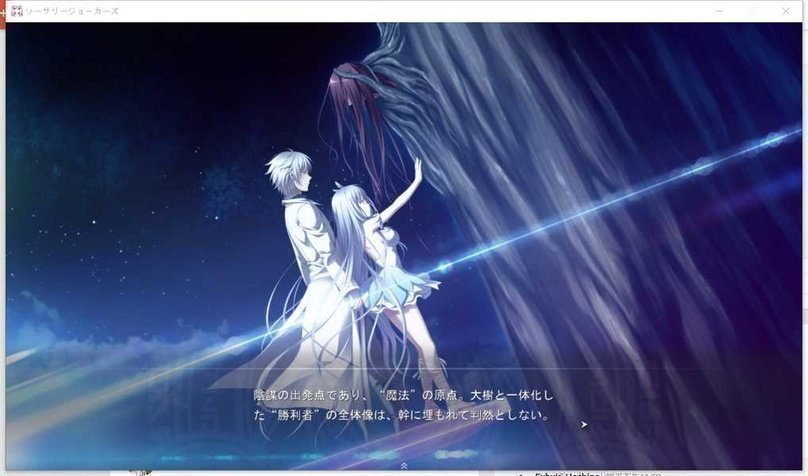
Even with all that flexing, it doesn’t mean they lack the skill to back it up. The game is excellent. Over on Chuuni Space, a bunch of long-poisoned youths, starved for a good work, excitedly gave it 100 points. I personally don’t think it’s a 100, and frankly, while playing I didn’t really enjoy such an overly pretentious game. It’s excellent in every way, but I can’t say I liked it that much—that’s not about quality, probably just my personal taste.
Or maybe I just hate flexing.
Even so, Sorcery Jokers is a flex backed by real skill. It really is excellent—even if I don’t particularly like it.
Comments are hosted on the Chinese main site. This mirror is read-only.