Sakura ni Kagetsu (さくらにかげつ) Review
February Sakura
I know a very gay straight guy.
He’s obsessed with otome stuff, even BL. Watches it, raves about it, and constantly tries to convert me, hoping to turn me gay.
But you know how it is. If there’s only one straight guy left in the world, it’s me. So I turned down all his invitations and dodged every trap in the videos he sent me.
Still, back when I was being an idiot two years ago chasing a fujoshi, I figured this little gay dude was pretty reliable. As a fudanshi, he’d have deep insight into fujoshi.
“It’s not really about BL, you know. Fujoshi are still girls.” The bastard pushed up his glasses and continued in that thick, screechy voice of his. “What you need to understand is ‘what a good man looks like in a girl’s heart.’”
“And what does that look like?”
“It’s like those trashy moe anime you watch. The unrealistic fantasies about women in them — childhood friend throwing herself at you, great cooking, always having you in her heart — that’s your fantasy ideal girl. Same logic, girls have their fantasy ideal guy.”
“Cut the bullshit. Just tell me what it is.”
“It’s not really my place to say…” The bastard pushed his glasses up again (god I hate how he does it with his pinky out). “You should watch some otome anime, see what handsome guys look like in girls’ minds…”
Then he dumped a bunch of links on me. At first I refused to click, because I was afraid I’d end up with BL games like Enzai or Togainu no Chi, or BL anime like Sekaiichi Hatsukoi or Uragiri wa Boku no Namae wo Shitteiru. I’d never watched any of that stuff, never even heard of it. What if I watched it and got turned gay?
But no choice. Chasing girls is important. So I clicked. The content was at least normal, and I’d heard of the titles.
Hakuoki… and Black Butler.
I didn’t watch them too closely — I was worried that watching too carefully might affect my already rock-solid straightness — but after a rough preview I basically got what the gay dude meant.
Female otaku are just like male otaku. When it comes to constructing the ideal opposite sex, they follow the same principle of “low standards for yourself, high standards for the other.” The so-called “prince charming in a girl’s heart” is just good-looking, rich, and hardworking. Same way a male otaku’s ideal woman is “good-looking, rich, big tits, hardworking”… (I don’t know if women require a big dick…)
But even knowing all this was useless in the end. My plan to pursue the fujoshi ended with me getting dumped. I don’t have much to say about that — I’m not good-looking, not rich, not hardworking. Nothing to be done…
After that experience though, I became more rational about the views in works full of fantasy and nonsense. Sometimes when I watch ACG works where women throw themselves at the protagonist from every direction, I just sneer and think, “Fairy tales are lies. Reality is way crueler.” After I started playing visual novels, this got even worse. Most romanceable heroines start with max affection for the protagonist, or at least above-friends-below-lovers level. See it enough and it gets old. And lately the protagonists are getting closer and closer to being useless — perverted, NEET, lazy. At best they’re chauvinist. Most of the time it’s the women taking care of the men: making bento, nursing them at their sickbed, even during sex saying “I’m fine, just make sure you feel good”…
Thinking about it, it’s whatever. These are games for men. Having to serve someone else in a game would be miserable. Who’d dare write the protagonist as a nagging old housewife?
Well, actually, someone did. Sakura ni Kagetu (さくらにかげつ), for instance.
Honestly I don’t dare translate the title. From my shitty Japanese it should mean “two months of cherry blossoms,” but either way the name sounds dumb and has zero depth. More importantly, I always feel like it has some other meaning. But no matter how I think about it, I get nowhere, so let’s just go with the original title.
I played the demo early on and had no idea what was going on. The demo tells you upfront it’s a headless, tailless slice cut from the game. After playing I was even more confused — it just showed the protagonist taking care of some dumb girls every day, then the OP played, then nothing…
Only after the full release did I actually understand the game’s plot…
The game uniquely defines the protagonist as a “human rearer.” Maybe it sounds bad, but that’s exactly what it means. He’s good at taking spoiled, clumsy people with no independent living skills and turning them into self-reliant, capable individuals.
Ah… these people do exist in reality… What are they called? Housewife? Nanny? Parents?
So the game starts by telling the player a shocking fact: due to one of the protagonist’s mistakes (probably not watching her properly), a girl he was caring for (raising) died. He actually kind of liked this girl, but at this point he mostly feels guilty — it was his responsibility after all. Just as he’s suffering, a masked girl appears. She calls herself Sakura, an angel with special powers, and asks the protagonist a question:
“Do you want to see that dead girl again?”
The protagonist naturally says yes, and the angel states her terms.
“For the next two months, I’ll give you four dumb girls to take care of. If you can raise all of them into self-reliant, capable people within two months, I’ll let that dead girl come see you.”
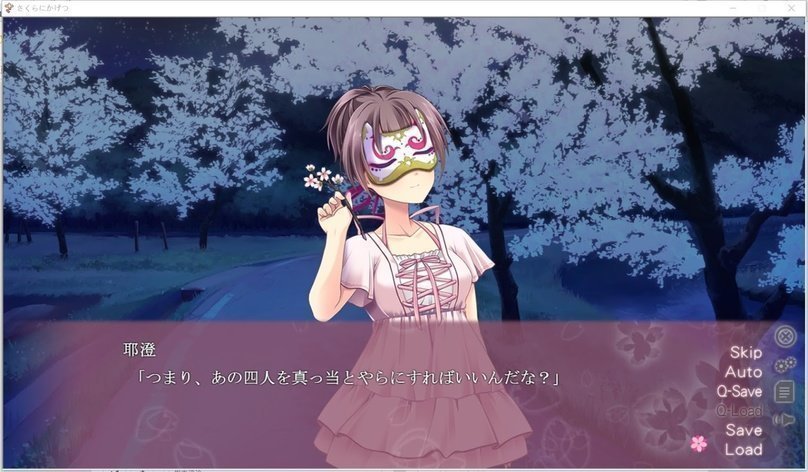
The protagonist thinks it over and has no choice but to believe her — the masked thing in front of him has angel wings after all.
So at this point the game cuts to the OP, and the main story begins.
Just as Sakura said, four girls soon move in with the protagonist for various reasons, and every one of them is dumb as a brick and needs him to take care of her…
Now the game enters a normal school romance phase. Four girls, four routes. According to the guide, the final True End only unlocks on the main menu after you clear everything…
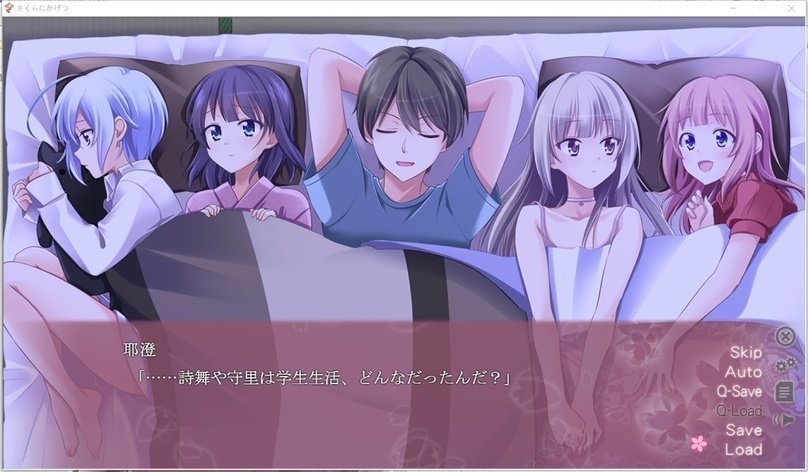
Now I have to talk about these four girls’ routes. If I have to evaluate them concisely, I can only use one word: “hypnotic.”
I’m being polite. I originally wanted to say “boring,” but I felt that was really inappropriate — I can’t actually point to anything genuinely boring. It’s more just that I personally found it boring.
The four girls’ routes are just very orthodox daily conversations, feelings developing over time. But this game is different from other visual novels in that the daily plot lacks a main thread. You could say the main thread is “raise four girls to self-reliance,” but the rearing process is way too bland. It’s just the protagonist serving food, serving drinks, even serving these girls their baths. He even has to serve them until they sleep.
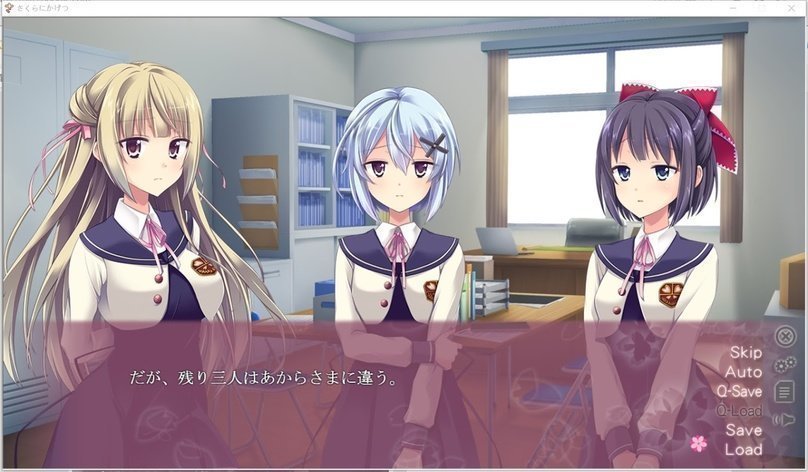
Don’t expect fanservice. Watching the protagonist run around like a dog every day, you probably won’t have the energy to jerk off. Seeing him nag those four girls — dumb as pigs — not to get lost on the way home, over and over, made my heart ache. And the girls are all ojousama types. The protagonist runs back and forth. If this were a palace drama, he’d be the eunuch serving the young ladies…
In normal visual novel development, the usual way to liven up daily life is to add a character who acts as a “plot engine” — like Suzuki Kana in Daitoshokan, or Nokia in Ren’ai 0 Kilometer… etc. Without a clear main thread and twists, you at least need someone to do comedy routines so the player doesn’t fall asleep. Unfortunately this game has none. Honestly, since I started playing this game, my sleep quality has improved dramatically. Not just the plot — the visuals too. Every character wears the same expression the entire time, staring at you with dead fish eyes. After a while, the person in front of the screen starts making that face too. Even more notable: none of the VAs are famous nukige VAs. The studio probably had no money and could only hire these. Their performance isn’t great — they convey “the expected cuteness” but lack soul, emotionless and softly spoken, exactly like those hypnotic doujin voice works. The music is genuinely unassailable — gentle and lilting. But… that BGM, combined with the bland-as-water plot and soulless VAs, mixes into a powerful sleeping pill. You’ll easily drift off while playing…
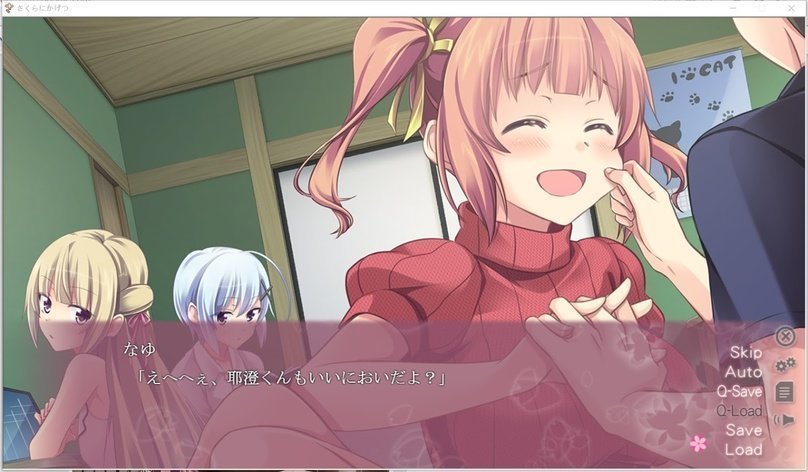
The last time I felt this was listening to Maria’s ASMR test video on YouTube…
Or rather, this is just a lullaby, full stop!
Anyway, the four girls’ routes aren’t bad per se, but they’re just too bland. If you like plain-water romance you might accept it, but a heavy-taste guy like me feels something’s missing.
So I fought off sleep, reading and skipping, and finally finished all four girls’ routes. Nothing special about them — Sakura just appears mid-route, tells you the two-month deadline is up, the protagonist’s challenge to raise four girls to self-reliance simultaneously has failed, meaning he won’t see that dead girl. Then Sakura, with a “well, can’t be helped if you failed” attitude, disappears like an angel.
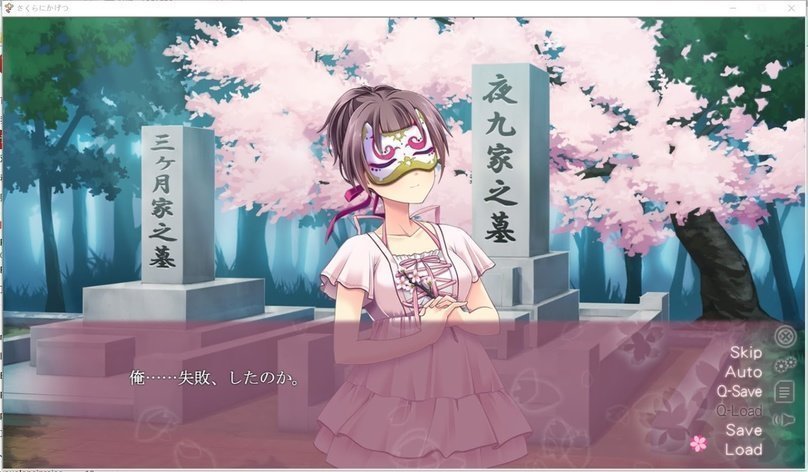
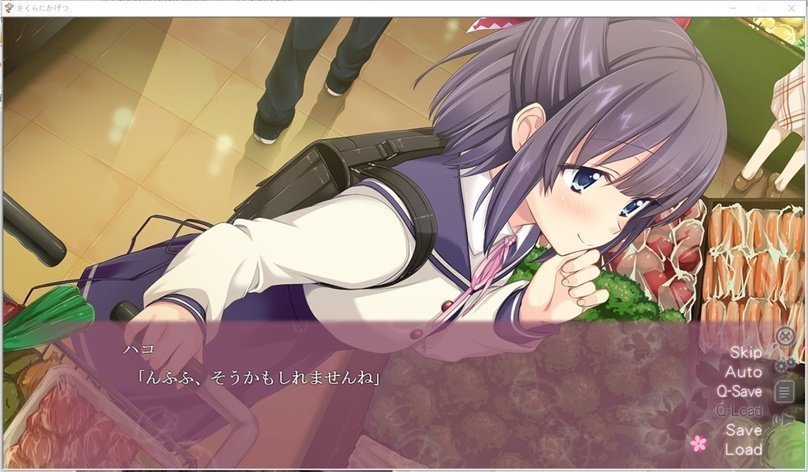
Honestly this is all very logical. Take care of four idiots for two months? How could that work… As for how dumb those four girls are — I’ll just say go play the game and experience it yourself. They don’t recognize anything, can’t cook, can’t find their way, can’t shop, can’t even wash their hair in the bath, and need someone to hold them and count sheep to sleep.
Sometimes I think if this game had made those four girls into four lolis, with loli-bouncy personalities, would the common route and four romance routes be less hypnotic?
After the mission fails, the protagonist realizes he might have fallen in love with one of the girls, so he grows closer to her, and eventually reaches a romance ending. Nothing else, that’s it.
So when I saw “Sakura ni Kagetu” appear on the main menu, I got weirdly excited. True Ends are always exciting.
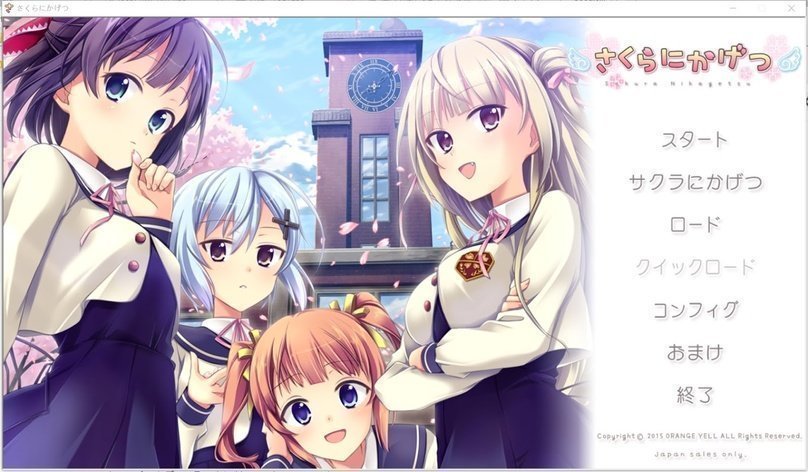
But this True End is… a dagger, stabbed into your heart.
The True End starts from the perspective of the dead girl the protagonist wanted to see. Or rather, the whole True End is from her perspective. The girl died. When she died, she was thinking of the protagonist. She loved him, but there was nothing to be done — she was dead.
An angel’s voice comes, saying the girl will have one chance to return to the world.
A god named Suzu tells the girl she can return to the world, but only for two months. After two months she’ll disappear, fleeting like cherry blossoms.
The girl thinks it over. She’ll disappear in two months anyway. Better to use this chance to find a better home for the man she loves most. So she puts on a mask, calls herself Sakura, finds the protagonist, and starts a bet — “can four girls be raised to self-reliance in two months?” Maybe Sakura knows it’s impossible. Two months is too short. Or rather, Sakura doesn’t want to see the protagonist at all.
“If I do it, you’ll let me see her?” the protagonist once asked the girl called Sakura.
“Ah, probably… I’m not sure. Maybe that girl doesn’t want to see you either.” Sakura has already seen the boy, but she doesn’t want him to recognize her. She just wants to find him a new girlfriend.
With the power of the red thread, the boy quickly ends up living with four new girls. Sakura watches them flirt every day, feeling inexplicably awful inside, but she keeps helping them along anyway.
In the end, the boy fails his mission. Sakura calls him over and announces it.
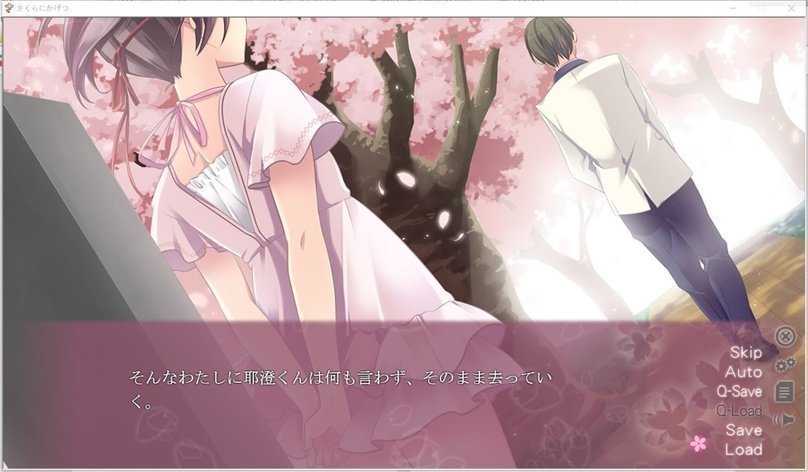
The boy notices that Sakura must be the dead girl he wanted to see, but Sakura flatly denies it. In reality, Sakura’s heart is bleeding at that moment.
The boy sighs and turns away. Watching his receding back, Sakura wants to cry.
The god Suzu appears and tells Sakura she’s about to disappear. Sakura, full of reluctance and a bit of resentment — “Why couldn’t it be me by his side?” — says nothing and can only accept her fate of leaving.
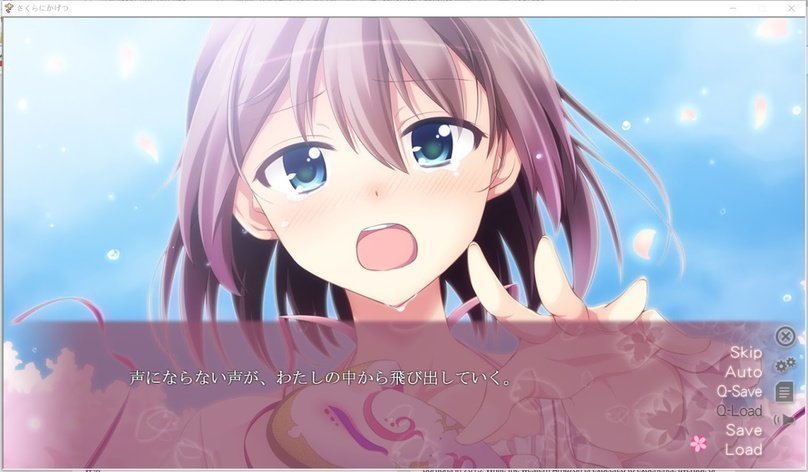
“Why don’t you fight your fate?” The god Suzu finally asks Sakura. Sakura just smiles and disappears forever.
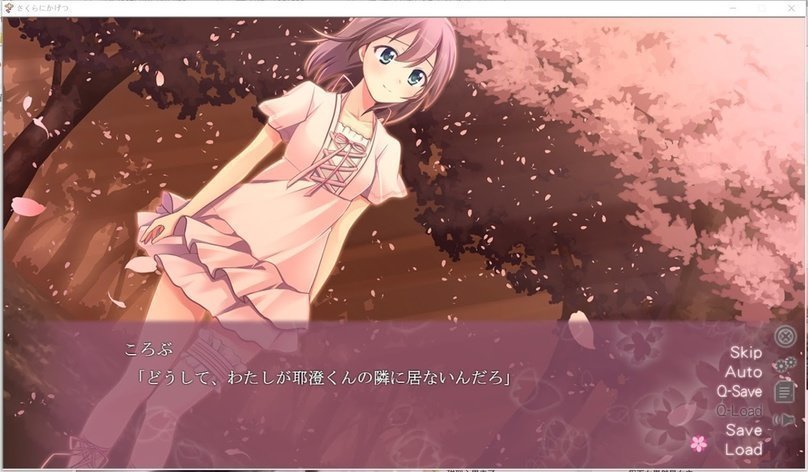
And that’s where the True End ends.
What the hell? Did I pick the wrong choice? But this game has like two choices, dead simple! This doesn’t follow the rules! Even if I have to eat shit, at least let me finish the plate! Taking the plate back halfway through is what?! Is this a rushed ending???
Let me check. I don’t believe it. There must be another ending.
The ending is cruel. Yes, it’s over. I checked the guide, CG completion rate, and recollection scenes repeatedly. It’s really over. That’s all.
Does your stomach hurt? Mine does.
So what the hell is this thing labeled “True End”? You call it an End, but it’s really more of an explanation, isn’t it? A girl who loved the protagonist dies, pays the price herself, hides her name to gain two months back in the world — and during that time this poor girl doesn’t go see the boy she loves most. Instead she plays matchmaker for him, picks him a girlfriend, and in the end the boy gets his happiness and the girl disappears forever.
This is literally a Bad End! By normal visual novel conventions, shouldn’t there be a true heroine route?
That’s it?
Okay, okay. If this were a novel, maybe I’d think this ending isn’t bad. Not every story has a happy ending. Sometimes leaving a regret or ending in tragedy is a fine choice.
But! But! That’s not the point! This is a game — a visual novel! It’s not a novel! Looking at this final development, I feel like the scenario writer came up with the “girl sacrifices herself, comes back briefly to help her boyfriend find happiness” plot first, then forced four irrelevant girls’ romance stories in as filler. The four girls’ routes have nothing to do with the main story. The main story just uses a short 20 minutes to re-describe how Sakura, among the four girls, helped the protagonist while her heart bled. It’s somewhat moving…
But it still doesn’t hide the fact that those four girls’ routes are too long, boring, sleepy, hypnotic.
If you say you don’t like the art, I can say it’s the artist’s style. The H-scenes show the girls’ bodies pretty well. If you say you don’t like the VAs, I can say it’s what the plot requires. The game’s daily life is bland after all. If you say you don’t like the music, I can say it’s the atmosphere. The game’s season is a lazy one after all. If Sakura doesn’t get her own ending, I can say it’s a good development. Nobody says you have to force a melodramatic true heroine route.
But no matter what, it still doesn’t hide the fact that those four girls’ routes are too long, boring, sleepy, hypnotic.
Combined with that short, flat True End, the feeling is like lying on a hillside covered in cherry blossoms, spring breeze on your face, slowly drifting off in the warm air — and then some park auntie shows up, splashes cold water in your face, and tells you the park’s closing so get lost.
I can’t evaluate this game. Honestly, I don’t like the four girls’ routes, and I can’t evaluate the final route either. You can’t say it’s bad, you can’t say it’s nonsense. I can only say, I’m not happy about it.
Thinking back, the title Sakura ni Kagetu feels more like it’s saying this is the story of Sakura the girl’s two months. And the game’s OP, “Sakura Route,” feels like it’s mocking the player — this game has no real Sakura Route.
まあ、まあ、whatever. I get sleepy just looking at this game. Maybe it’s better to save it for my next bout of insomnia, open it up and ponder slowly.
Comments are hosted on the Chinese main site. This mirror is read-only.