A Few Days with Marshall Mode
No Taste for the High-Brow: Marshall Mode
“So… you like music?”
When I told the blind-date woman—God knows which number by now—about the only hobby I can actually bring up, I finally got something slightly more positive than the usual “oh.”
“Yeah, a lot.”
As I said it, my head was full of the line from an eroge: “はい、大好きです。”
“Me too!” she said, lighting up. “I love classical, symphonies, violin stuff. Pieces like XXXXXX, AAAAAA, BBBBB, and also that CCCCC, DDDDD, FFFFF-sky, TTTTT-vich, YYYYY-s. Which ones do you like?”
“…………….” I was speechless for a moment.
When I told her that what I listen to is mostly Japanese-leaning pop—I even left out the ACG part to be safe—her face was dripping with contempt.
“Don’t you listen to anything non-Asian?”
“Some American stuff. Skillet, Alkaline Trio.”
“What’s that?”
“Rock, punk, that kind of thing.”
“Heh.”
The conversation went downhill fast after that. She went back to her earlier topic and grilled me on the exact subgenre of this “Japanese-style” music. I pulled out a few tracks from my MP3 player that I thought were good and let her listen, but when she found out they were all soundtracks from Japanese adult games, she looked like she’d been insulted and took the earphones off.
“Mr. Li, you really are a legend.”
That’s what she left me with in a WeChat message some days later. I tried to explain. What I got back was “Heh.” Then I was blocked.
She wasn’t the first “refined music appreciator” I’ve met, and she won’t be the last.
I don’t know why, but the definition of “music appreciation” has gotten boxed into some high-brow category. As if the only way to prove you appreciate music is to listen to classical, to piano-and-female-vocal, to delicate large-ensemble works. If all you want is rock, rap, hip-hop, or thumping bass, you’re apparently a moron in Beats headphones bobbing your head to the beat.
Same story in the audiophile world. We all know most people equate “good sound quality” with “strong bass.” As if good bass and thick bass make something a low-tier product, while real good headphones and earphones push the highs and mids as far as possible to create “female poison” and “transparency.” High-end products all play it conservative on bass—“bass has quantity without booming” has become an iron rule. We even avoid bass-heavy tracks for audiophile test songs. After years of Aunt Cai Qin’s “Ferry Crossing,” those opening drum hits rattle your eardrums even on monitor headphones. Bass or no bass hardly matters anymore.
More and more people care about “female poison,” about “vocals,” about “transparency.” Very few care about the punch that “bass” brings. The earphone reviewers all throw on classical pieces, high-brow vocals. And most of the bandwagon crowd just bust out “Hotel California” for the test, then go right back to listening to 320Kbps Jay Chou on their high-end buds. For them, a pop earphone is what actually matters.
Bass is hard to do. Do too much and it turns muddy, stuffy. Hand it to someone who listens to earphones regularly and one earful of that stuffiness makes them shake their head, decide it’s a low-tier bud, maybe even suspect they’re hearing Beats. I’ve got a classical bud, the IE80, but most of the time it’s paired with my ZX1 for what? For everything. The IE80 has a recessed midrange, and the ZX1 is warm with boosted mids. They complement each other, just right. I don’t listen to classical. If there are any classical tracks, it’s just the violin and piano in Galgame OSTs. If you’d asked me what I listened to before I got into ACG—
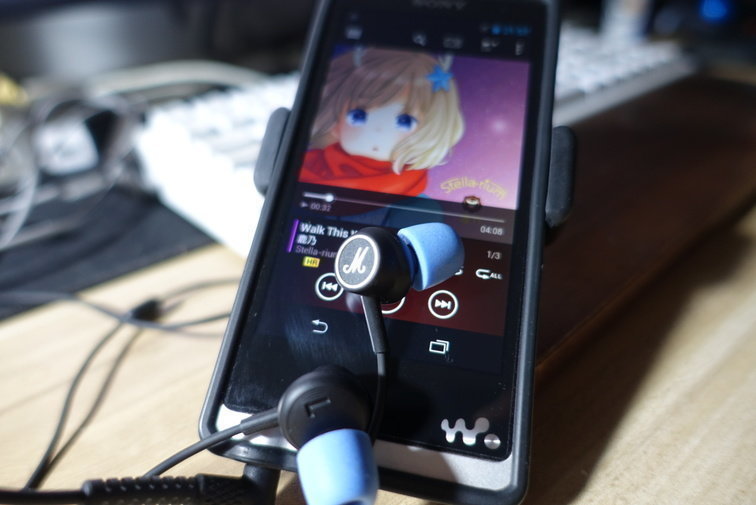
I’d tell you it was all kinds of aggressive rock, punk, and metal.
In college I was hooked on World of Warcraft. A lot of WoW PVP videos used that kind of music, and I’ve said before that I’m a guy who loves intense rhythm. As long as there’s rhythm and melody, I like the song—rock, punk, metal, no exception. My love for this stuff even got me buying CDs.
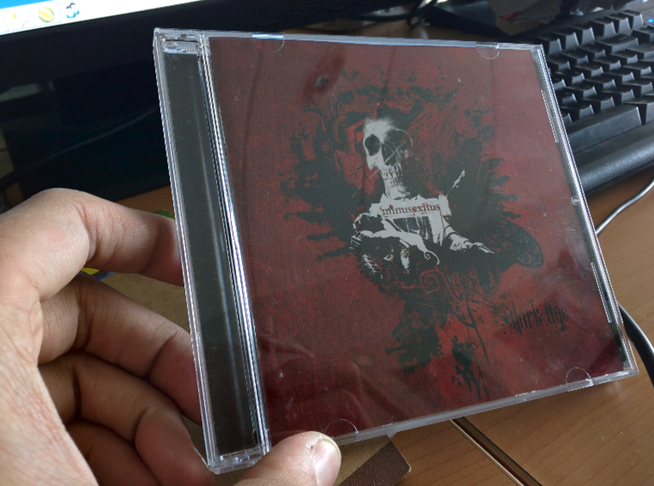
Nostalgia’s been in fashion lately. After listening to a ton of old Chinese pop from my high school days, I couldn’t help but think back to the rock and metal that kept me company in college. But one question kept nagging me: is there an earphone made for rock and metal?
Someone recommended Marshall, so I figured I’d give it a try. The previous Marshall was a weird flat-head design; the Marshall Mode is a basic in-ear.
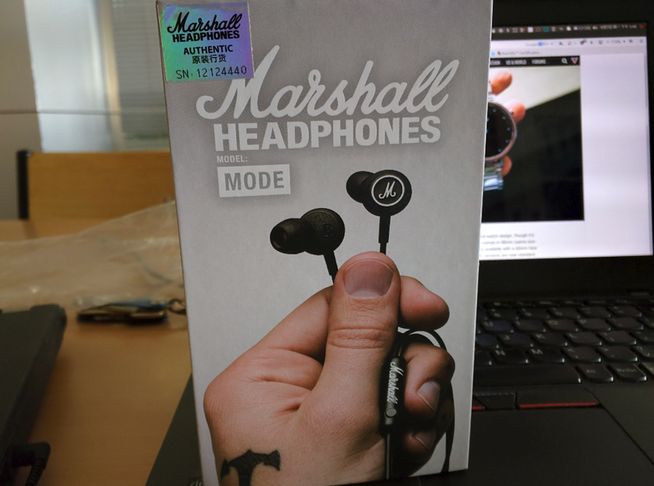
I don’t want to spew too much audiophile nonsense, so I’ll just say how it feels: this bud needs some power, and it’s a lower-register earphone that leans toward instruments and bass punch.
Lower-register isn’t a dirty word, by the way. Who the hell started saying that any bud leaning toward the low end is a put-down? Nobody ever said it that directly, did they?
Compared to the Marshall Mode EQ, the Marshall Mode drops the gimmicky EQ function—just a single answer button—and loses the flashy black-and-gold colorway, but the sound is basically the same. Some say the Marshall Mode is an OEM rebadge. Even so, I think it has character. At least it fits the positioning the Marshall name should have: rock-leaning, punch-leaning, guitar-leaning.
What’s funny is the inline remote actually has a bit of swagger.
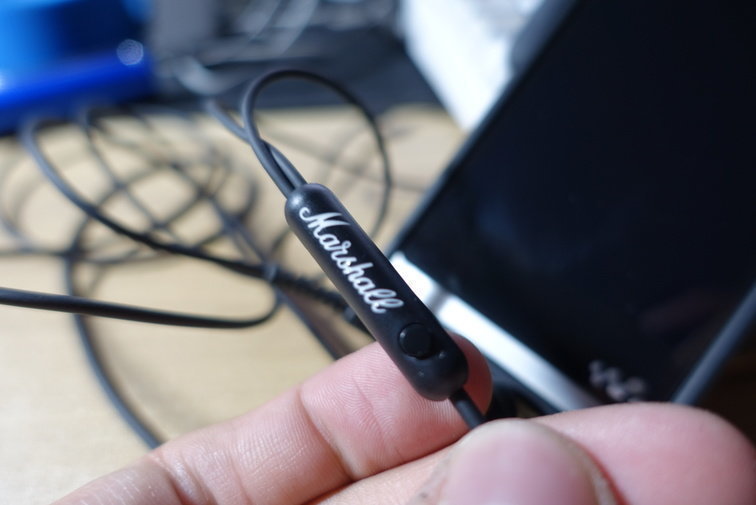
And the default ear tip set doesn’t include Comply tips, but the seller thoughtfully threw some in.
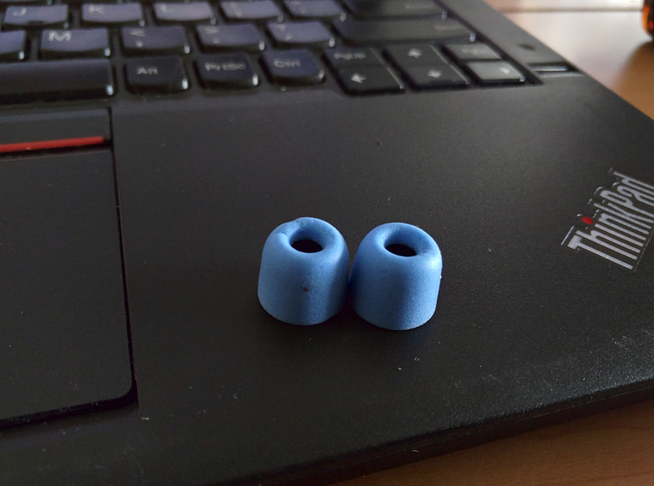
One thing to mention: at first I plugged the Marshall Mode into the Walkman ZX1, and the result was muddy as hell. I was crushed. Then I switched to the PHA-2 and kicked it up a gain level, and everything changed. The mids and soundstage opened up. The stage isn’t huge, but it’s enough. I’m telling you this to say the Marshall Mode needs power—harder to drive than the IE80, at least. And also that the Walkman ZX1’s output is pathetic.

Let’s get to the songs. First up, my favorite, Outside The Inside by Dark Age. Plugged into the PHA-2, the Marshall Mode’s soundstage opened up. The fierce drums at the start slammed straight into my brain, and the electric guitar in the breakdown had real presence. Sure, the bud’s vocal delivery is a bit lacking—the male lead’s voice always feels a little distant, not on the same level as those “close-to-the-ear female vocals” I’m used to. Still, the aggressive drums and powerful guitar left a deep impression.

Next was I Found Away by Alkaline Trio. Not an especially intense track, just straightforward rock, and the Marshall Mode showed off its “guitar advantage” again. From the first guitar notes it was full of expression. For a song drenched in guitar and drums from start to finish, the Marshall Mode played to its strengths—and… also highlighted its “vocals aren’t super close”… feature? Anyway, it didn’t sound bad to me. Actually, after using “female poison” buds for so long on this kind of music, it felt kind of fresh.

Then Comatose by Skillet, a more hybrid track and a personal favorite. Not just because the lyrics are good, but because the arrangement is so rich—guitars, strings, multiple styles all in one.
Through the Marshall Mode, Comatose actually came off better. Maybe Skillet’s lead vocal is so thick that the Marshall Mode’s slightly distant vocals didn’t stand out as a weakness. With the guitars and rhythm pushed forward, the whole listening experience got elevated.


So next we need something properly metal: Spit You Out by Bullet For My Valentine, and Blood by Papa Roach. I have to say, the more electric guitar and noisy rock a song has, the better the Marshall Mode performs. It pushes the percussion and electric guitar so far forward that you have something to focus on, instead of floundering lost in a mess of noise.
By now the Marshall Mode’s character is clear: modest soundstage, slightly distant vocals, but outstanding in the low end—especially kick drums—with strong rhythmic drive. And as you’d expect from Marshall’s home turf, it makes guitar tones stand out. If the rock you like has fierce guitar work, the Marshall Mode will grab your ears.
Actually, one more thing. The Marshall Mode suits guitar and bass and is very much a “rock” earphone, but some Japanese-leaning rock tracks do well too. Take Kano’s Walk this way!—the driving drums and guitar give you a pretty good ride. It’s just that Kano’s voice isn’t as… intense as male vocals or various harsh screams.
Sometimes I wonder whether I even count as someone who likes music. Literally speaking, sure. It’s just that the music I listen to is hard to talk about with others. My rock knowledge isn’t that deep—just some surface-level favorite bands. As for ACG, I can’t name many arrangers or composers. But listening to those college-era songs recently made something click. Maybe it was rock’s rebellious spirit that inspired me, or maybe it’s just my own thinking.
We’ve all read too much audiophile mysticism, heard too much random nonsense. But with music, it’s mostly about personal taste. Music—if you like it, listen to it. Why put on airs?
I’m a regular guy who likes rock, rap, eroge songs, and old Chinese pop. I can’t reach the level of those literary types who hear a soundstage in doujin electronic music through some damn Audio-Technica. I can’t understand what the hell the difference is between a lossless and a 320Kbps computer-made song like Nyancat. And I really can’t understand people who review earphones with Cai Qin, the Eagles, Song Zuying, then go right back to listening to “Skateboard Shoes” on their classical-female-vocal buds.
Sometimes an earphone just needs the right match. I’m a regular guy. I quite like the Marshall Mode’s straight-to-the-low-end tuning, and I enjoy the rock experience it gives me. At this price, doing that much is enough.
Comments are hosted on the Chinese main site. This mirror is read-only.