Tokeijikake no Ley Line: Asagiri ni Chiru Hana (時計仕掛けのレイライン 朝霧に散る花) Review
Tokeijikake no Ley Line: Just Because I Was Lonely
Tokeijikake no Ley Line is one confident game. How so?
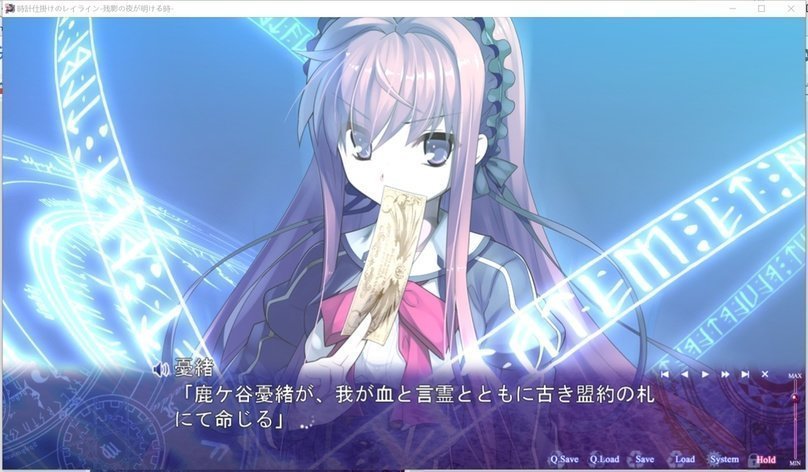
Because it dares to split a single game into multiple parts and sell them separately.
This reminds me of when I sold my old PDA. Someone offered me a shitty price: 550. I mean, I bought it for over 2300. You can’t just knock it down to 550 because it’s two years old, right? My classmate “Lu Dazuo” gave me a suggestion: sell it in parts. For example, according to Taobao’s parts prices at the time, the screen could go for 300, the motherboard for 200, the shell for 100, the charger for 50, and the cable for 50.
“See, if you sell it piece by piece, you can get 150 more,” Lu Dazuo said smugly, looking at the Taobao search results.
But that was too much hassle. In the end, I just sold it whole for 550. I hate wasting time. At least I wasn’t willing to go through all that trouble for an extra 150—selling parts is way more of a pain than selling the whole thing. Still, I did learn one thing: selling things in pieces always earns you more than selling them whole, as long as you’re willing to put in the time and can actually sell them.
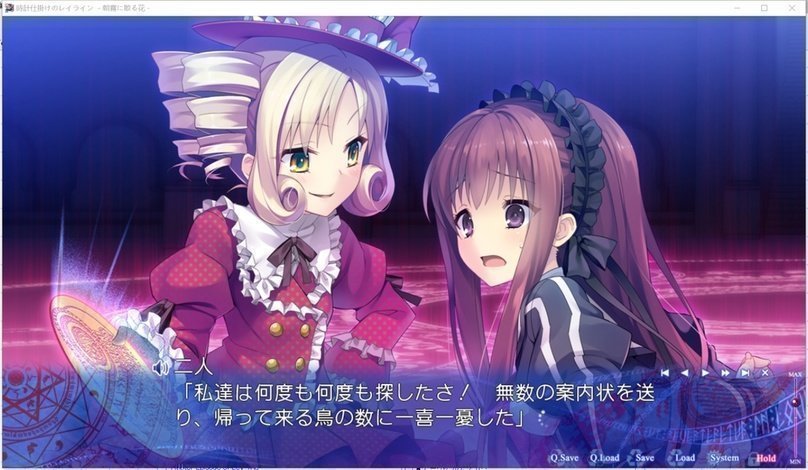
Splitting a work into several parts to sell takes a lot of guts—movies do it, TV series do it, novels do it, and games even more so. If each part sells well, you’ll probably make more money. But if they don’t, it’s like my PDA: I sold the motherboard and got stuck with a screen nobody wanted. In the end, it’s worse than just selling the whole thing, right?
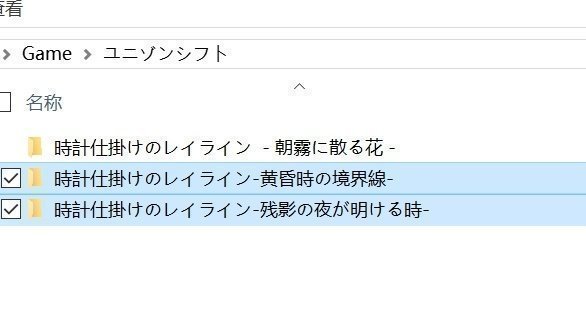
So Tokeijikake no Ley Line can’t compare to the big, bad masterpieces from certain big, bad companies, but it still dares to sell itself in parts. I have to admire the company’s courage. The Tokeijikake no Ley Line series has three parts:
Tasogare Toki no Kyoukaisen (Boundary Line at Dusk) Zanei no Yoru ga Akeru Toki (When the Night of Afterimages Dawns) Asagiri ni Chiru Hana (Flowers Scattering in the Morning Mist)
The name Tokeijikake no Ley Line means “Clockwork Ley Line.” Ley Line refers to ley lines, suggesting that everything is connected by some kind of causality, while the clockwork part probably describes how problems arise one after another, like gears in a machine.
The overall game flow is… well, it’s a tearjerker. Because there are three parts, each one is naturally the length of a full game. From the very first part to the end of the third, the战线 was so long that I can’t even remember some of the plot from the first part. But thankfully, the good stuff is all in the later parts. The so-called first part gives off a completely useless feeling—if you forget it, you forget it.
Overall, in terms of the story’s conception and content, this is a rare gem in recent years. The core themes are “witch,” “magic,” “relics,” “dolls,” and “time-space,” and the game uses these themes to present plenty of interesting material.
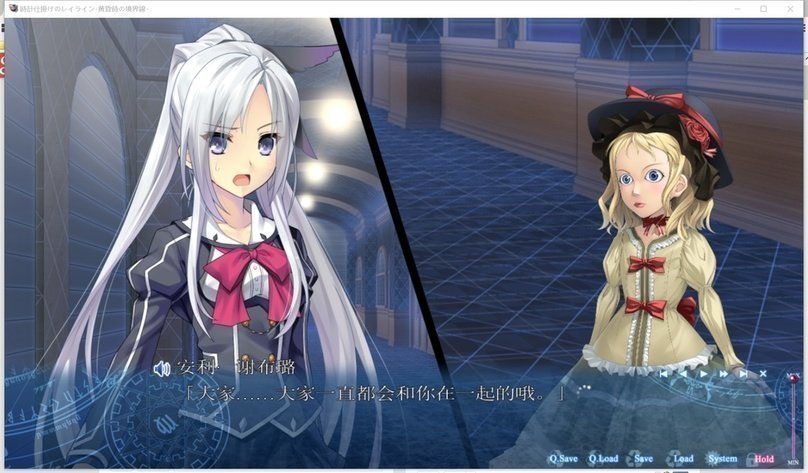
Kuraru Razuritto (Claral Razurit?), a witch with the magic to control time, adopted a girl called Anderu (Andel?), known as the “Witch of Calamity.” Anderu got that name because of her crimson eyes and immense magical power. Razuritto, the Witch of Time-Space, took in the Witch of Calamity as her daughter and let her grow up peacefully in the academy she founded. Their mother-daughter relationship was very harmonious. The Witch of Time-Space loved her adopted daughter deeply and wanted to protect her, care for her, and see her smile.
Soon, the adopted daughter grew up. Because her mother was a witch, the academy’s library was full of books on magic. Anderu started playing there, reading all sorts of magic books every day. Since she herself was a witch with immense power, she quickly mastered some of the spells, and her days at school began to improve. She laughed and chatted with classmates every day, and her mother was delighted.
Then one day, while the Witch of Time-Space was away on a trip, Anderu ran into some trouble at school. A good friend’s doll had broken, and the friend was heartbroken. Anderu didn’t want to see her friend so sad. She thought of her own ability and decided to make a new doll for her friend. Once it was done, her friend would surely be happy. Then Anderu started thinking: if she could make a doll with a soul, not only would her friend be happy, but her mother would be proud of her progress, right?
So Anderu buried herself in the library, reading books on homunculus magic. Actually, creating a homunculus with a soul is no simple task, but because Anderu was the “Witch of Calamity,” the power of the Witch of Calamity is… the ability to manipulate souls.
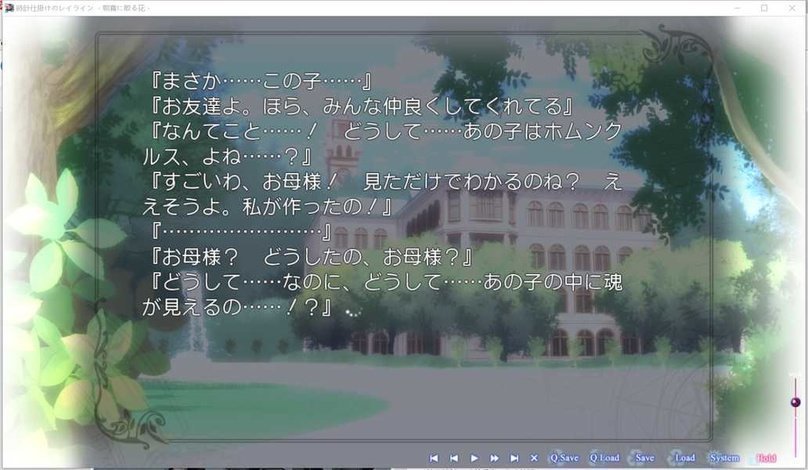
And so Anderu succeeded. Because she could manipulate souls, she created a homunculus with a soul and named it Seti. Her mother, the Witch of Time-Space, returned, and Anderu excitedly went to share the news—only to be met with her mother’s shock and a warning…
“Promise me, Anderu. Don’t—never again—make a doll with a soul. It’s a sin. Dolls are not human. They are… different.”
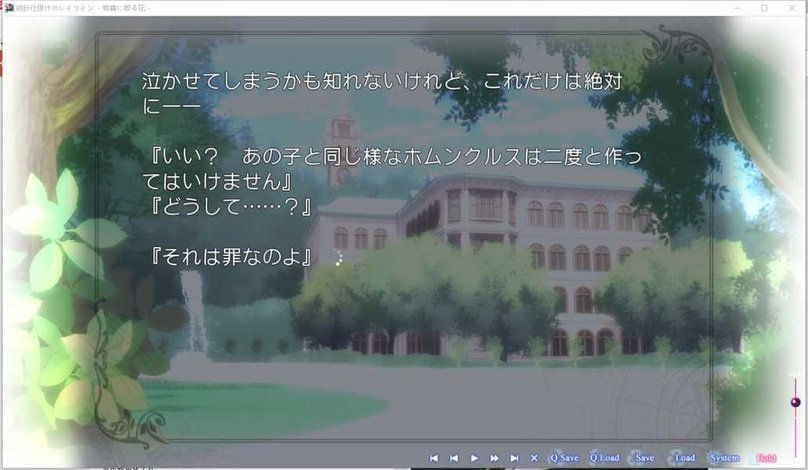
Her mother’s slightly angry expression made Anderu very unhappy and pained. She had promised her mother, but she didn’t want to give up the soul-bearing doll she had created, Seti. So she decided to treat Seti as a human, and she became Seti’s mother.
Seti was not human, just a doll—a doll with a soul. At first, Seti wanted to go to school like her mother. Anderu agreed, but when she arrived in class, the classmates didn’t recognize this sudden newcomer.
“Who are you? Never seen you before.” “Yeah, where are you from?”
The barrage of questions filled Seti with fear and dread. She turned to her mother Anderu for help. Her mother panicked too, unsure how to handle the situation. In her heart, she desperately prayed that everyone would treat her daughter kindly. Then she remembered her ability: “soul control.” So she activated it, rewriting the souls and perceptions of all the classmates, making them accept and befriend Seti. Soon, Seti was playing with them without a hitch.
But Anderu knew this was all the result of her ability. Once the soul control was lifted, Seti would return to her original situation. This worry made Anderu uneasy. So one day, during a gym assembly, Anderu decided to temporarily release the soul control to see if Seti could be accepted by everyone now. After all, some time had passed, so it should be better.
But reality was cruel. The classmates again wondered who this sudden stranger was.
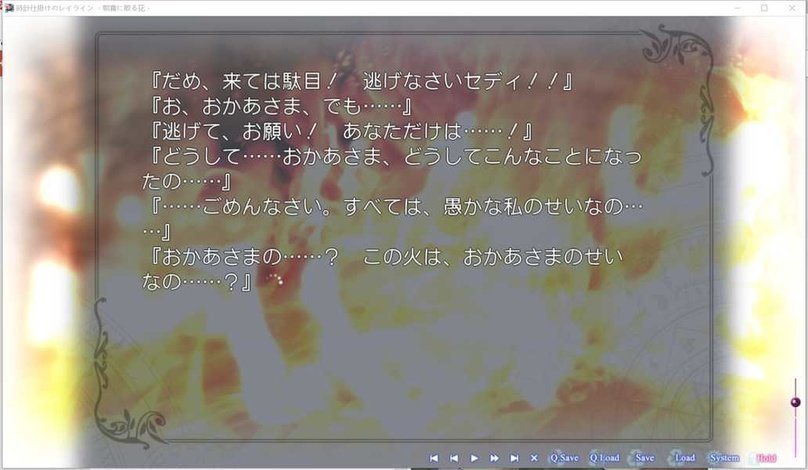
Seti began to panic, and Anderu panicked too. She tried to re-control the classmates’ souls, but in her nervousness, she couldn’t. So she poured in more magic, more magic, more magic—and lost control of her ability. Because the ability was soul control, the out-of-control Anderu ignited the souls of everyone present. They were engulfed in a sea of fire—a sea of soul fire.
Anderu realized her mistake and remembered her mother’s warning: dolls are dolls; they cannot live in a human environment, nor be treated as human. The Witch of Time-Space rushed to the inferno and used all her magic to freeze time, soothing her daughter and stopping the magic rampage. Anderu finally calmed down, and together with her mother, they began to extinguish the fire and control the magic. After much struggle, the fire was out, but both witches had exhausted their magic and were gravely injured, barely alive. The classmates whose souls were scorched perished.
A great mistake, no survivors—except the doll Seti. Seti saw the two witches collapsed on the ground, barely breathing, and felt pain. Then Anderu called her over.
“I… made a mistake. It’s all my fault. You… must help me, so those dead classmates… can be saved. Remember… this is… your master’s command.”
As a doll, Seti cannot disobey her master’s orders. Then the Witch of Time-Space, with her last strength, infused a portion of her time-space magic into the doll Seti, hoping this doll could complete the task of saving those classmates and atoning for the great mistake.
With that, both witches breathed their last, leaving only the doll Seti—a doll with a soul, who also possessed some time-space power.
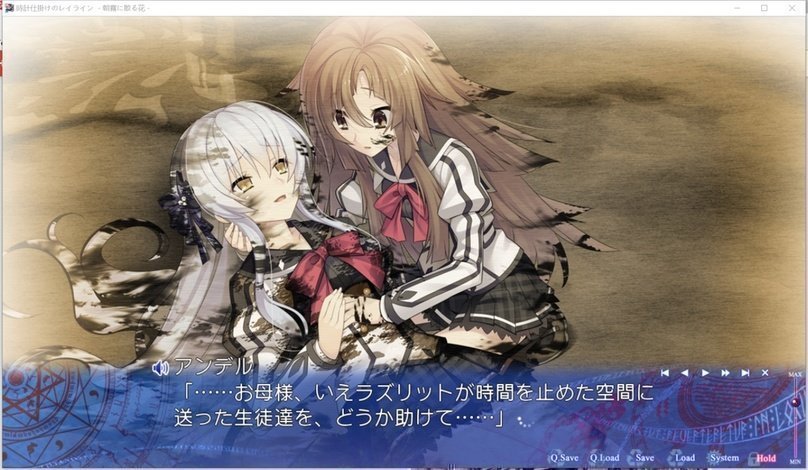
But even so, what can a single doll do? The classmates’ souls were scorched. Only the Witch of Calamity, the one with soul-manipulating power, could save them. No one else.
In the long days that followed, Seti returned to the library and met Lito, a soulless doll who served as the library’s index and guide. Through talking with Lito, Seti realized she might need some help. So she read the homunculus books in the library and created her own homunculi: one named Kujisaka Futari, and another a white glazed mouse named Ninomae. As homunculi made by a homunculus, these two seemed a bit off, but they ultimately obeyed their master.
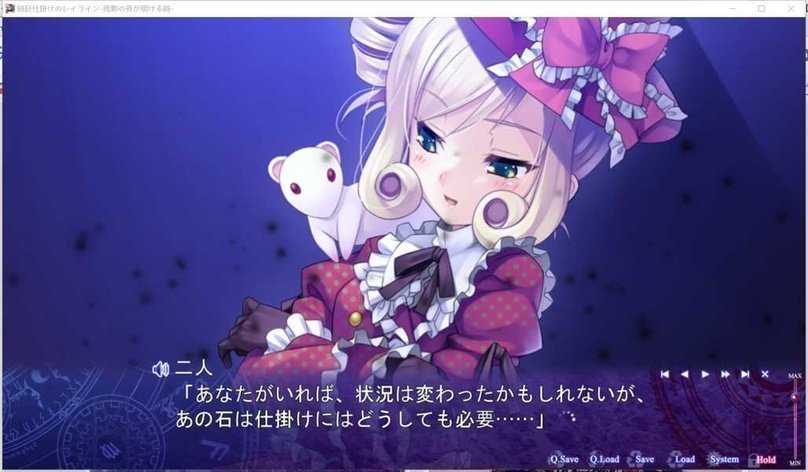
Their master was Seti. She wanted to inherit her mother Anderu’s will and save the classmates whose souls were scorched. The exact method of salvation was incredibly hard to find. As time passed, because her master was dead, Seti’s consciousness gradually blurred. She had forgotten why she needed to save the scorched classmates, for whom she was saving them. She only knew that the classmates must be saved—because it was an order.
There were two methods, as suggested by the homunculus Futari:
- Find the newest successor of the “Witch of Calamity,” because only she can save them.
- Use time-space magic to create a separate dimension, and transfer the state of the classmates from 20 years ago, before their deaths, into the bodies of present-day humans via soul transplantation, directly seizing their consciousness.
Futari also suggested: why not reopen the academy? Search for people with strong magic—maybe they’d find a new “Witch of Calamity.” Meanwhile, gather students, steal their magic, and use their bodies as vessels to resurrect the souls of the classmates who died 20 years ago.
That way, those people would be saved.
“Isn’t it bad to involve others? Because doing so means those present-day people’s bodies will be taken over by the souls from 20 years ago.”
“There’s nothing bad about it. We can’t do anything with just the few of us. Besides, you were ordered to save those who burned to death in the fire. Those people are the priority. Everyone else doesn’t matter.”
Seti was a doll, after all, so she agreed.
“Oh, and it’s best to erase some of Lito’s memories in the library. Books about homunculi shouldn’t be known to others.”
So the academy reopened, recruiting people with strong magic from all over. A huge magic circle was constructed on campus, and an experiment to summon the souls of people from 20 years ago began. Because it couldn’t be done during the day, it had to be at night. Several students with strong magic were chosen as the magic source for the summoning.
Every evening at dusk, the school would transform into the night world. The night world had its own students, and the school’s disciplinary committee maintained order there. But no one knew that the night world was the world from 20 years ago.
Futari was appointed as the school director, while Seti infiltrated the summoned night world of 20 years ago. She said she was more familiar with it, and she took the alias Hina.
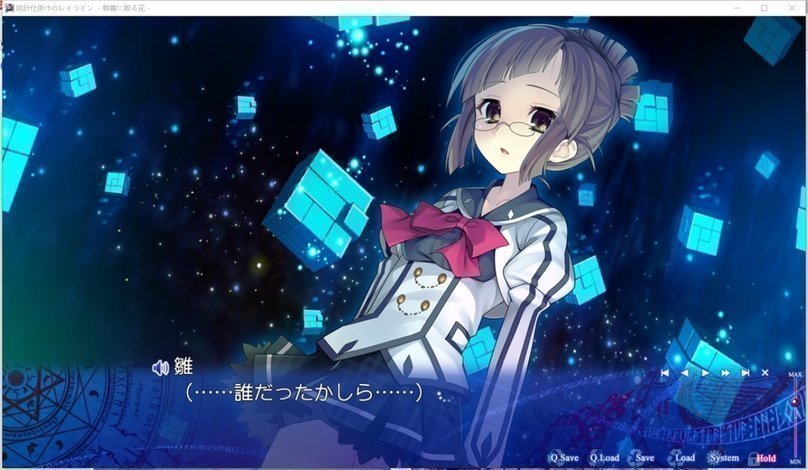
Everything went smoothly. Each dead student’s soul transfer required a magic stone, and through extracting the students’ magic, the magic stones were nearly complete. All that was left was to use the current students as vessels and inject the souls of the students from 20 years ago to complete the resurrection ritual.
As you might expect, the protagonist ruins these plans.
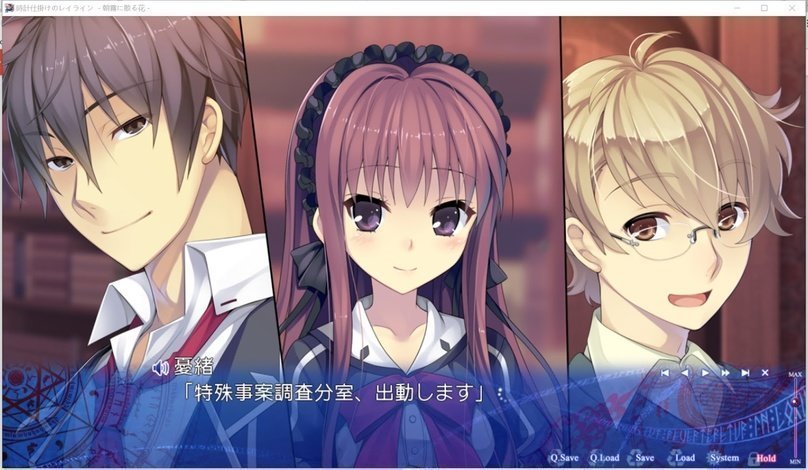
The male protagonist, Kuga Mituyoshi, along with his friends from the Special Investigation Branch, uncovers the director’s scheme through investigation and tries to stop it. But the director, even after having her plans foiled several times, refuses to give up. Because the homunculus dolls must obey their master’s orders—if the classmates from 20 years ago aren’t saved, everything will continue. And since they can’t find the Witch of Calamity, only one method remains.
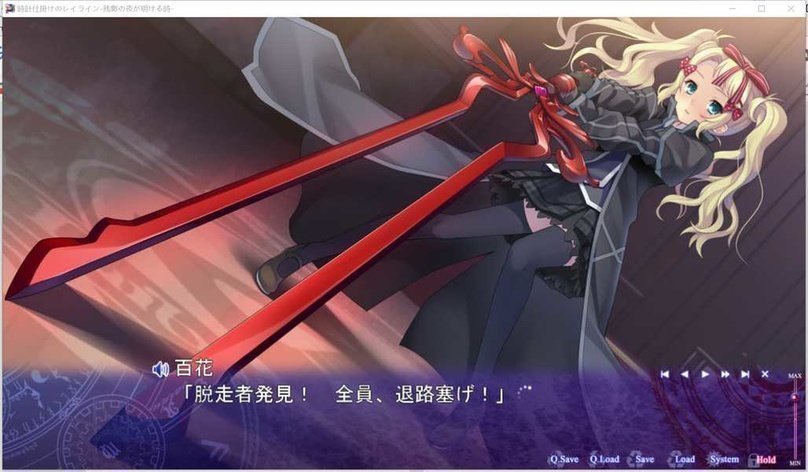
In the final confrontation, both sides are left battered. Just then, Kuga Mituyoshi discovers a secret about himself.
When Kuga Mituyoshi enrolled, the director rated his magic level as very high, but in reality, he has zero magic. He has a younger sister, Kuga Mira, whose magic is terrifyingly high but often unstable.
In Kuga Mituyoshi’s memory, he was caught in a fire as a child. The fire killed his parents, leaving only him and his sister. But in his sister’s memory, she caused the fire, killed their parents, and nearly killed her brother. In the end, only she and her brother survived, relying on each other.
Only at the very end of the game is this mystery solved: the protagonist Kuga Mituyoshi is the new generation “Witch of Calamity.” The fire from his childhood was caused by his own uncontrolled soul magic, triggered by his wish for a future where his parents lived in harmony—exactly like Anderu before him. But this time, Anderu’s figure appeared in the flames.
Though dead, she left a residual phantom near the successor of her power. Not wanting her tragedy to repeat, Anderu drained all of Kuga Mituyoshi’s magic and transferred it to his sister Kuga Mira, and also altered their memories so that the sister believed she was the one who caused the fire. This reduced the true witch Kuga Mituyoshi’s power and instability.
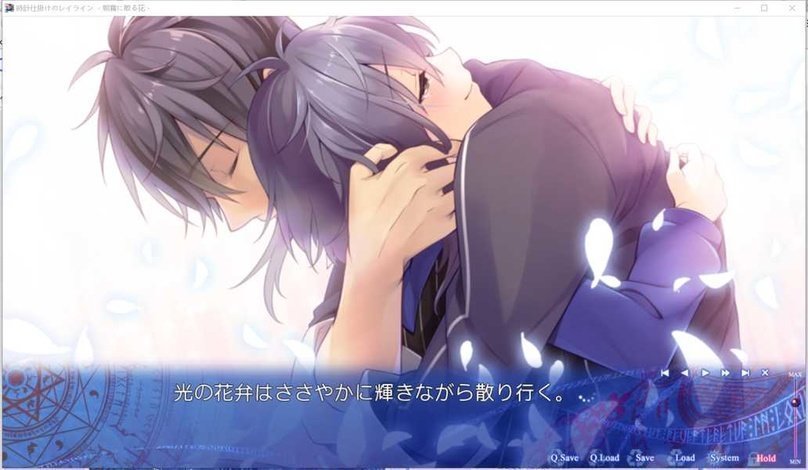
Now that the witch was found, the problem was solved. Kuga Mituyoshi accepted his lost magic, regained the power of the Witch of Calamity, and met Seti. He told her that he was the one they were looking for, and there was no need for any stupid “summoning the night world” nonsense. Finally, using his power, he repaired the souls of the classmates who died 20 years ago and returned them to the world where they belonged. A happy end—no one died, no one was hurt. The story ended just like that.
Although I described the story in chronological order, unfortunately, the game is told in reverse, and it’s a mystery-solving reverse narrative.
In the first volume, Tasogare Toki no Kyoukaisen, the main plot follows the protagonist enrolling and joining the investigation team. You don’t see the conspiracy behind the school at all. At the end of the first part, you’re told that the night world is made of a great magic, not some supernatural phenomenon, and the reason for the magic is to protect those magic stones.
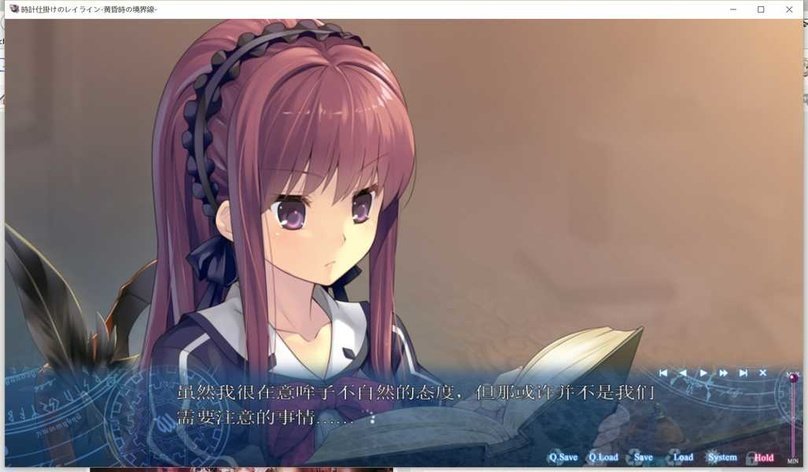
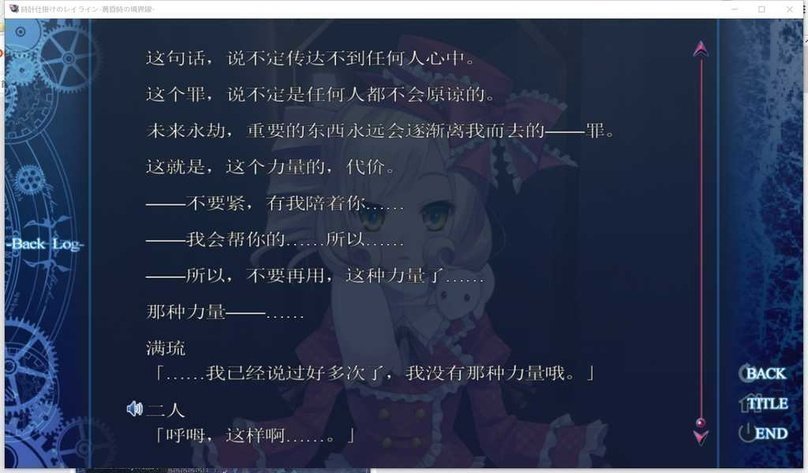
In the second volume, Zanei no Yoru ga Akeru Toki, the story unfolds in the latter half. The director summons the night world to resurrect the dead, which would also steal the souls of the living, instantly putting her in opposition. The protagonist begins to confront the director, and naturally succeeds. The director’s magic circle is destroyed, and she disappears.
The third volume is even more substantial. Most of it uses an ink pen relic to narrate in reverse, uncovering the exact cause of the fire 20 years ago. The reverse narration goes on for several chapters before the whole story is pieced together and the final ending is reached.
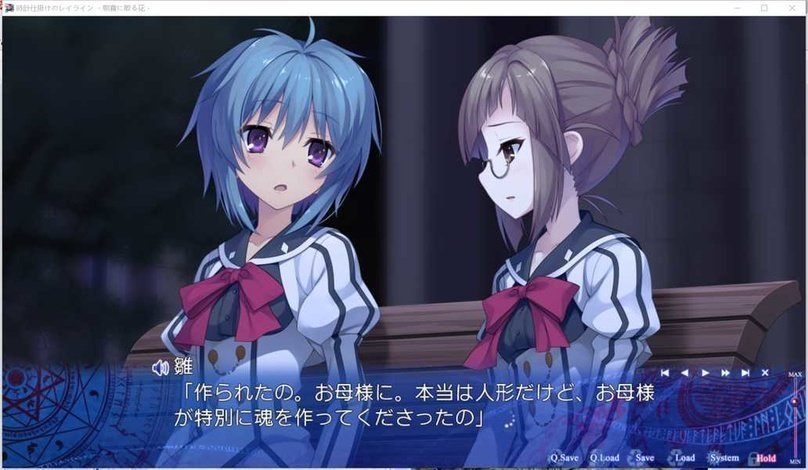
The game itself is a suspense story, and it makes good use of investigation and deduction to create plenty of intrigue. Both the memory sections in the third volume and the investigative analysis in the second are worth pondering and savoring. You can tell thought was put into it—foreshadowing isn’t just randomly inserted. Speaking of foreshadowing, that’s a major highlight of this game. As someone who has written novels, I know that planting foreshadowing in text is the hardest part. Because if you spend a little extra ink to highlight something, readers will notice that deliberately placed element must have meaning. But in Tokeijikake no Ley Line, the foreshadowing uses misdirection: some things look like foreshadowing but aren’t, and some things that seem like stupid settings are actually foreshadowing. To confuse players, the game even inserts two characters to muddy the waters. Those two German magic nobles who appear in the second volume—I always thought they might be descendants of the witch, but in the end, they were just a huge smoke screen. And the protagonist’s fire, Karasuma Kotaro’s sentimentality and cross-dressing, Kurotani Maya’s overeagerness, and Nanaban Hina’s emotionless speech—all these are huge foreshadowing elements. When they unfold, I had that slap-my-knee moment of “wow, that makes sense in hindsight.” That’s true “surprising yet inevitable.”
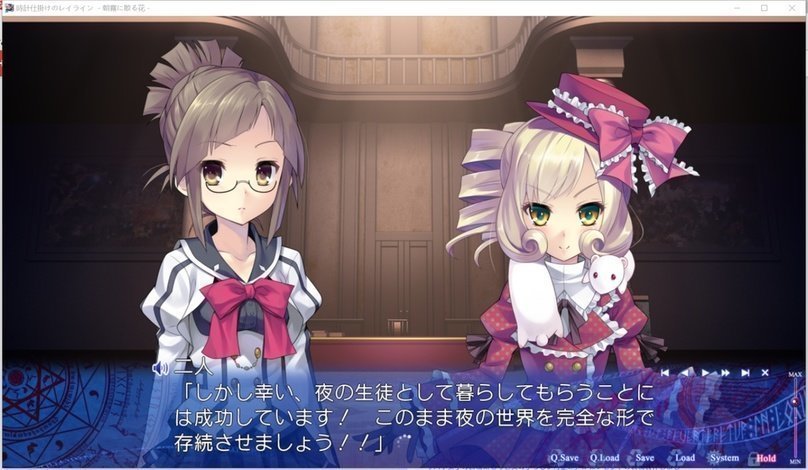
Some content from the daily life sections in volumes one and two isn’t meaningless either. Doll-making and homunculus creation are brought up multiple times, giving players plenty of advance warning. The final reveal makes full use of these early foreshadowings, so it doesn’t feel too abrupt.
The game’s music deserves mention. Composed by Suigetsu Ryo, it’s excellent. The OP1, “Tasogare Toki no Ley Line” (Youtube / 163), with its various arrangements, runs through the entire trilogy—you could call it the main theme. Other BGM tracks fit the scenes well, too. Aside from some goofy, cheerful BGM, the rest are strong enough to stand on their own.
Compared to the scenario and music, the voice acting is a bit average. Moriya Miyono’s heroine uses my most hated voice type—it gets a bit nauseating after a while. On the other hand, the school director Futari’s CV, Ogura Yui, is insanely good. At first, it sounds very distorted, but after hearing it more, I can’t get enough of it… I have to say, Ogura Yui is a CV who’s beautiful beyond her talent as a voice actress. As for the others, they’re just standard—none can match Ogura Yui’s director for ear-satisfying performance.
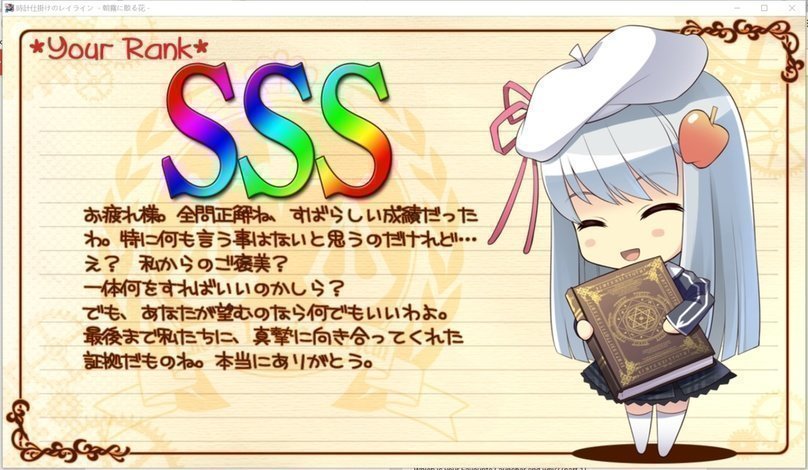
The game’s choices aren’t typical options; they’re more like reading comprehension. If you don’t pay close attention, you’ll easily pick wrong, and wrong choices lower your score. At the end, the game rates you based on your deductions—all correct gets you SSS.
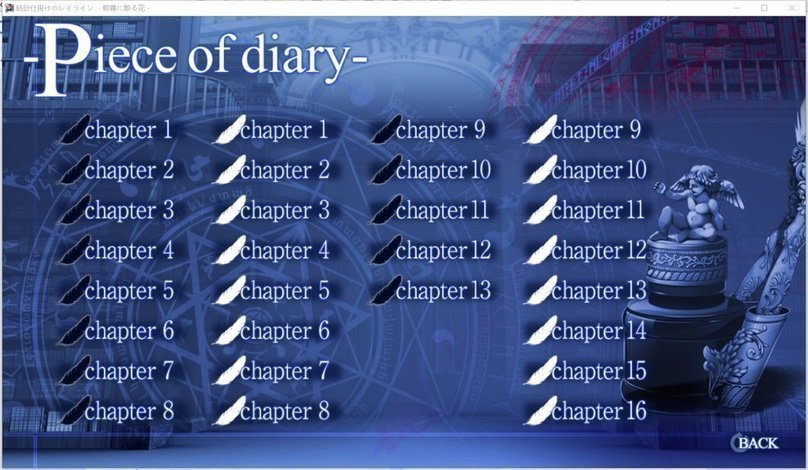
The third volume frequently uses flashback scenes, based on a diary relic. The game even adds a dedicated function to view that diary—talk about attention to detail.
Beyond these elements, the game also has moments that tug at the heartstrings. It often discusses homunculi and emotions, somewhat like the future debate of “should robots have feelings?” The game takes a positive stance. When the protagonist tells Seti, “You’re not a homunculus—you’re a being with a soul. No matter how you were born, you have your own independent emotions. No one can be your master,” it’s hard not to tear up.
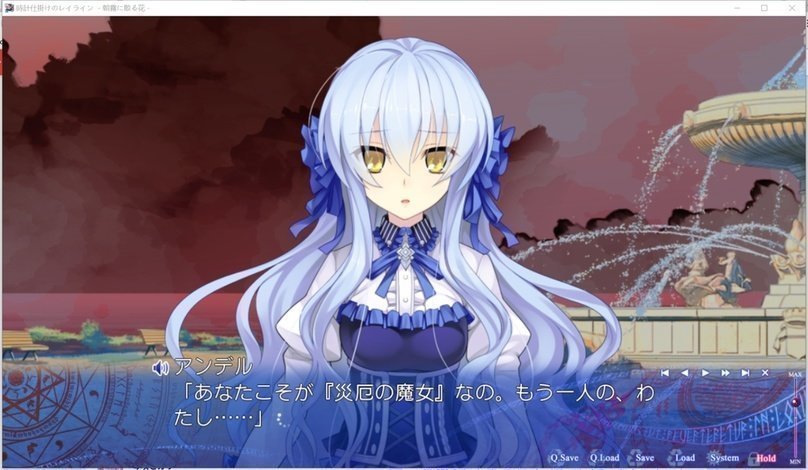
One of the game’s themes is loneliness (sabishii). Razuritto saved Anderu because she was lonely. Anderu created Seti because she didn’t want her friend to be lonely. And Seti, lonely after losing her master and mother, created Futari and Ninomae. Then, to see her mother again, she was willing to destroy so many lives.
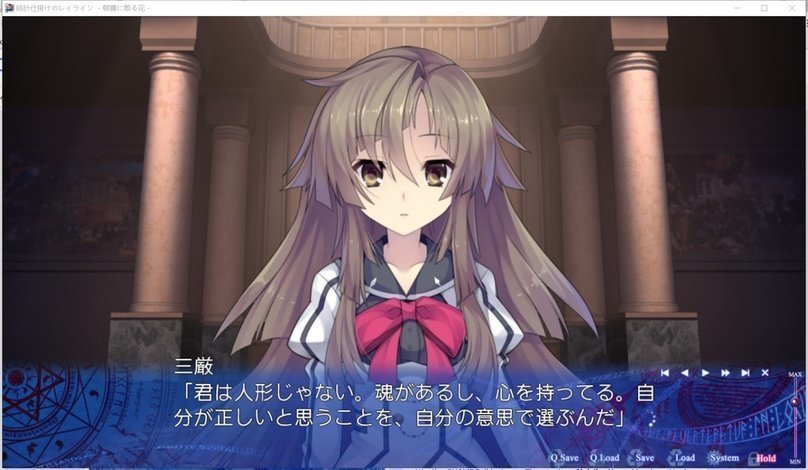
Though the root of everything is Anderu creating the soul-bearing homunculus Seti, the game also repeatedly states that homunculi themselves don’t mean anything—it’s more that humans need someone else to support their hearts.
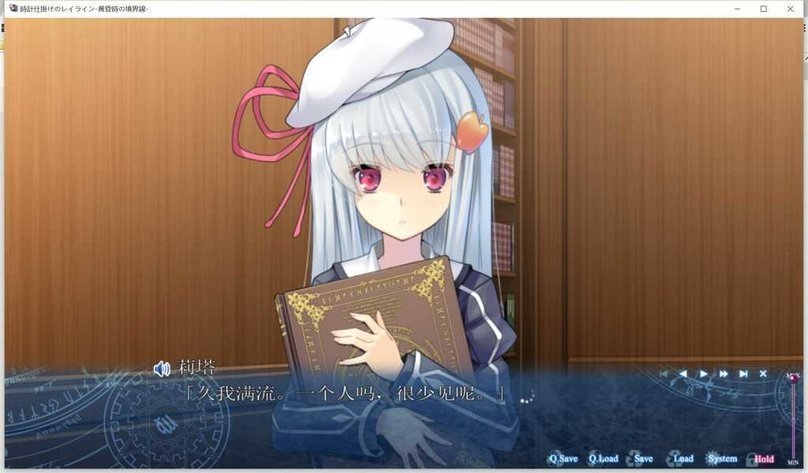
Having a spiritual companion is important, whether you’re a homunculus or a human—it doesn’t matter. That’s the theme the game highlights.
After all this praise, does that mean the game is flawless and invincible? Of course not. It has plenty of problems, chief among them pacing.
Cai Jun wrote a novel that, like Tokeijikake no Ley Line, took the “sell in parts” route. It’s called Tian Ji (Mystery of the Heavenly Signs). I can’t say that novel is bad—I’ll just say the beginning and the ending are fine, but the middle is way too dragged out.
Tokeijikake no Ley Line has the same problem: bad pacing. Probably because they planned three volumes from the start, the first volume’s scenario and plot progression are painfully slow—so slow it’s outrageous. You might have no idea what the hell it’s trying to say. Even the end of the first volume is baffling. Then in the first half of the second volume, it’s the same: bland, messing around, no main plot, no clue what’s going on. But in the latter half of the second volume, the story suddenly gets serious, like a roller coaster going downhill, racing all the way through the third volume to the end. That roller-coaster thrill is nice, and many games use this “plant foreshadowing first, explode at the end” pacing, but…
But they didn’t split it into three parts with years between each release.
And on top of that, Tokeijikake no Ley Line is just a visual novel—not an anime, not a novel. The first game through the first half of the second already push the boring parts to their absolute limit. It does get better later on, but it still feels rushed. The whole thing gives off the vibe of a writer who starts out thinking “eh, I’ve got three whole games to work with, I can take my time,” then looks up halfway through the second game and realizes they haven’t explained a damn thing, so they panic and start speeding through the plot.
The trilogy also reuses a ton of sprites and backgrounds. After a while it got genuinely tiresome and boring—same feeling as playing one of the Ninja Gaiden games and realizing you’re just running around the same one area the whole time, and instantly losing all motivation. If Tokeijikake no Ley Line had trimmed the unnecessary bullshit from all three games and condensed it into one, I’d rate it higher. But it’s not that kind of game. Don’t tell me there wasn’t enough space—Kami no Ue no Mahoutsukai pulled off continuous story twists in a single game, while Tokeijikake no Ley Line needed one and a half games to do it, and even then all the twists are crammed into the second half of the third game. It really makes you think the writer was like, “you took your sweet time early on and only realized at the end you hadn’t finished.” If you want to argue there wasn’t enough space, then those two German nobles shoved into the second game are basically useless. They’re not essential characters at all—they just feel completely random.
I remember writing exam essays back in the day, staring at that endless 800-character grid, always afraid I wouldn’t hit the word count. So I’d start with all kinds of filler, then halfway through I’d realize I hadn’t even gotten to the main point yet. That’s when I’d speed up, cut the fluff, and barely manage to cram the whole essay into the grid. I figure Tokeijikake no Ley Line was probably the same kind of situation.
After finishing this rather massive game, I felt a bit empty. I kept thinking about that line from the game: humans need someone to support their fragile hearts, otherwise a person can’t live on strong alone. But in today’s society, there are more and more people who lack respect and understanding for others, who default to treating everyone with cold indifference, and “being sharp-tongued” seems to have become something to be proud of. I honestly don’t get it. Even if you’re going to speak your mind, there’s always a calm way to say things. I don’t know why people have to choose to push others down, being rude to people while complaining about having no friends—it really does feel like a vicious cycle. Compared to the coldness between people in reality, sometimes we might be worse than the dolls that always obey their masters. At least they’re trying to envy the souls and emotions we have, while we hold the most important things in our hands and don’t cherish them.

Maybe one day, when people have truly cut off basic trust between each other, will we end up committing the mistake of giving robots emotions in the future? Will we screw up because of it? Not for any other reason—just because we’re too lonely.
Comments are hosted on the Chinese main site. This mirror is read-only.