Akai Hitomi ni Utsuru Sekai (紅い瞳に映るセカイ) Review
Old Man Bad Attitude Tells a Story
The moon is bright and the stars are few; the autumn night has already begun to carry a chill.
An old man in a short-sleeve shirt and jeans, idly messing with his phone.
“Grandpa.” A little girl’s voice rang out. She looked like she’d been staring at the old man for a while, and had finally worked up the nerve to speak to him. “It’s so chilly tonight—aren’t you cold out here?”
“Cold my ass.” Old as he was, his tone carried an unmistakable flippancy—until he looked up, saw the girl in front of him, and realized that kind of talk didn’t suit his image. So he straightened his expression and put on a smile that wasn’t exactly handsome, saying to her, “I’m not cold~ thank you~.”
The little girl didn’t seem to care about how the old man talked. She just went on slowly, “Grandpa, grandpa, what are you looking at?” As she spoke, she started peeking at the phone in the old man’s hand.
The old man looked a little embarrassed and hurriedly put his phone away. He didn’t want the little girl to see what was on the screen, because in his eyes—no, in most people’s eyes—what was on that phone screen really wasn’t something you’d want others to see.
**“Hey there, kiddo~” The old man forced himself to stay calm. “How about I tell you a story?”
“A story, huh? What kind of story?” The little girl didn’t turn it down at all—if anything, she looked like she’d heard them all.
“What kind of thing do you want to hear?”
**“There are handsome guys, pretty girls, and people falling in love…”
“Tch.” The old man clicked his tongue, then immediately put his grin back on. “Ever heard the story of the Cowherd and the Weaver Girl?”
"……you…… pervert…… uncle?" The little girl looked completely confused.
Do kids these days not even know the story of the Cowherd and the Weaver Girl? The old man couldn’t help but sigh. “Want to hear it?”
“Yeah!” The little girl was thrilled.
**“Come on, come on, sit here.” The old man patted the clean spot beside him. “The story has to start from the beginning…”
……………………
Irotoridori no Sekai (五彩斑斓的世界) is a game from FAVORITE — no wait, it’s a whole series. I’ve played the somewhat newer Astraea no Shiroki Eien, but Irotoridori no Sekai clearly has the better reputation, and people call it “Iro-tori” — I’m guessing because いろ = color and とり = bird in the Japanese title. The game got a main release plus a fandisc, Irotoridori no Hikari (五彩斑斓的曙光), and this year came a fandisc of the fandisc, Akai Hitomi ni Utsuru Sekai (紅色眼瞳中映出的世界). Apart from the different scenario writer, everything — the music, the art style, all the engine presentation — is basically the same style as Astraea no Shiroki Eien. The game is long… long… long… Irotoridori no Sekai uses a chapter structure; it’s split into numbered episodes like an anime, with 12 episodes in the common route, and every single one of them is absurdly long. After the common route ends you go into the individual routes, and there’s a really shitty route lock: you have to clear every route for all the side heroines, finish all the individual routes, then start the game over to reach the True End.
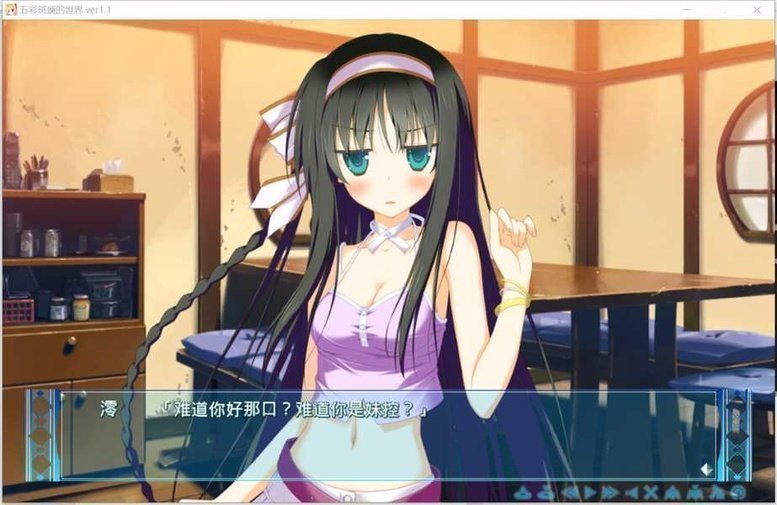
It’s actually pretty normal, but… the game is just way too long. Even the common route is terrifyingly long, and it’s easy to lose your patience. Honestly, this game ate up a good chunk of my time—first the main game, then the FD, then the FD of the FD. After the story finally reached that so-called ending, I had a lot of feelings, but it was a kind of feeling I couldn’t quite put into words.
I can’t give this game a straightforward verdict, because on a personal level I kind of dislike it — but thinking it over, I probably only dislike it because I actually like it. I want to say it doesn’t really live up to its reputation for excellence, but then again, when I look closely, it doesn’t really do anything wrong; it’s mostly my own feelings getting in the way…
Whatever, whatever… maybe it’s better to calm down and talk about this game nice and slow.
Looking at the game as a whole, its story progression can be split into three stages.
The first part covers the entire common route plus Kanami Konami and the other side heroines’ individual routes. The protagonist’s deal is that he can cross between several parallel worlds, and his job as a “liberator” is to save people in various worlds whom the gods have marked for erasure. He’s also got Nikaidou Maho, who calls herself a “translucent magician,” helping him out, and he spends his days going to school, working, and helping people. Oh, and there’s an old clock in a secret room in the dorm that can travel across worlds and time—different positions of the hands take you to different otherworlds. The protagonist is constantly heading off to different otherworlds for work, and also keeps crossing over to track down the source of that “save us” voice he keeps hearing in his dreams.
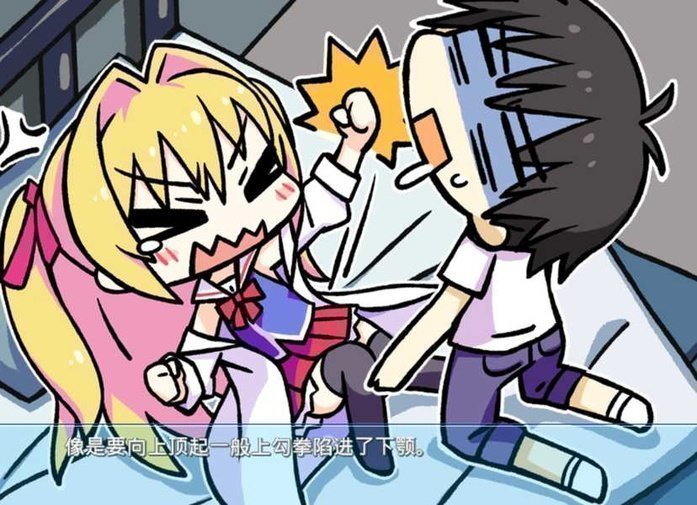
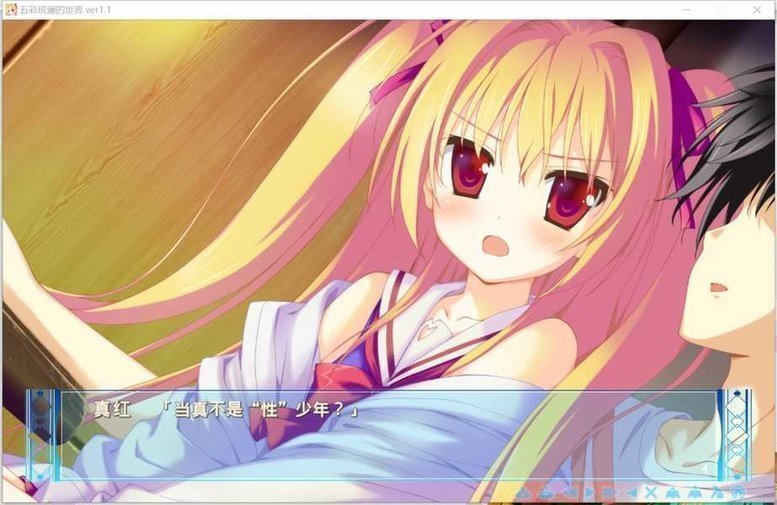
The info you can pick up here is mostly that the protagonist has a bad memory, that Nikaidou Shinku has psychic powers, and that if the protagonist borrows Shinku’s powers he burns through his own memories—so his memory keeps getting worse, he forgets more and more things, and plenty of people around him are left baffled by it, his childhood friend included. In the common route the protagonist actually does try taking on two “Liberator” jobs, and both of them flop completely. He also says himself that the Liberator’s success rate is basically 0, yet he keeps using Nikaidou Shinku’s power to save people anyway, and his memory keeps deteriorating. To keep him from being quite so forgetful, Shinku makes him write in a diary every day and glance over it now and then.
At the very end of the common route you get to see some of Shinku’s memories, and in those memories she says the world was destroyed by feathers dancing through the air. Once the common route ends and you go into Kana’s route, those feathers start showing up more and more. That’s when you start noticing the feathers are tied to each character’s fate.
The feathers seek out the chosen ones. Anyone touched by the golden feathers that fall from the sky—anyone the gods have picked—vanishes. There’s no running from it, nowhere you can hide. The protagonist’s job is to help these “chosen ones” escape the feathers’ pull and avoid vanishing. But he’s basically never succeeded. Most people the feathers pick try to run at first, then give up and accept their fate. After the protagonist talks them into it, they agree to fight fate one more time—and then the fight fails, and they’re wiped out right in front of him.
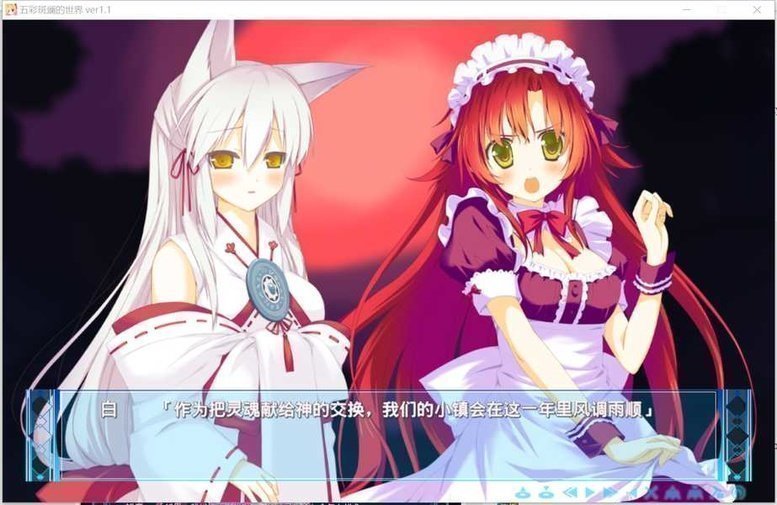
I have to say, the game pulls the “defying fate” beat multiple times, and here the “feathers” seem to work as a metaphor for a lot of things—really they read more like a metaphor for “fate” itself. Everyone has a fate decided from above: death, failure, whatever it is. We always try to fight it, but in the end the fight is futile too. The mere existence of fate already settles the outcome; all you can do is quietly bear it.
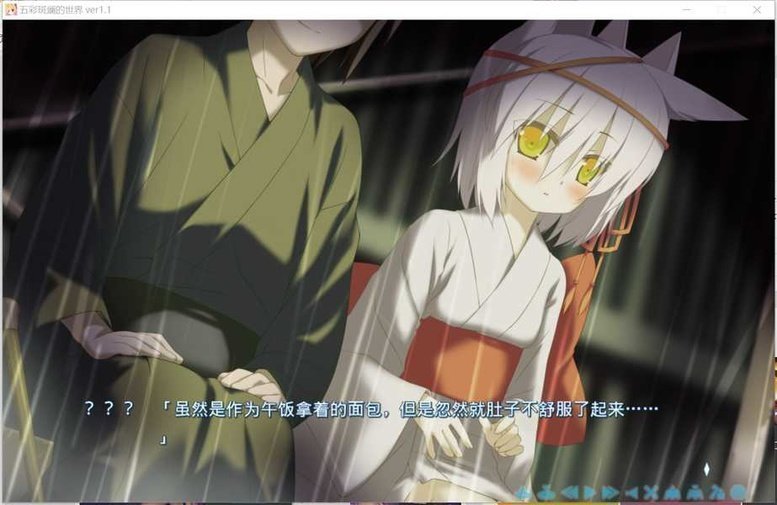
In Kana’s route, the protagonist himself acts as a kind of “liberator”: he watches a fox and a human fall in love in the other world only to be torn apart by fate, watches Kana get toyed with by fate because of one moment of selfishness, watches Shiro fight fate head-on and lose completely. On this point the player and the protagonist are the same — both are bystanders. Beyond sighing at how cruel fate can be, you also sigh at your own powerlessness, at the fact that you can’t change any of it.
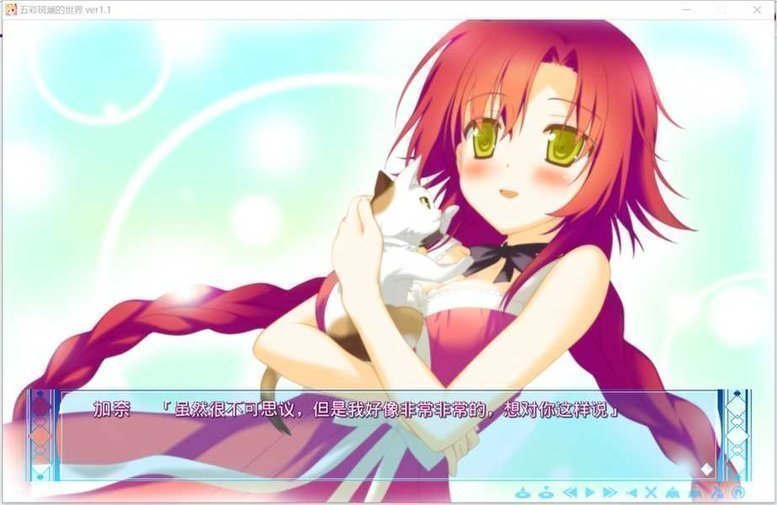
Kana’s ending is a happy one, sure, but it’s a hard-won happiness. Maybe it was already decided the moment Yuma saved her the first time she tried to die.
After Kana’s ending, Kisaragi Mio’s route feels a lot more plain by comparison—her personal route is mostly just moe pandering, and it only really opens up in the key mid-to-late stretch, where it parses out the existence of the “multiple parallel worlds” that the protagonist’s common route keeps stressing, and name-drops the theme of “Irotoridori no Sekai” from the side (or so I wanted to believe at the time). The world is rich and colorful, and even a single possibility means another parallel world exists. And Mio’s ending isn’t exactly great either—after escaping her tragic fate, she and the protagonist are just split across two different worlds. They can meet, but there’s no way to touch beyond that. If you call that a Happy End, I can’t agree, because this is clearly Bad End-tier treatment… Fortunately the route is described clearly enough; it just doesn’t feel as close to the theme as Kana’s route.
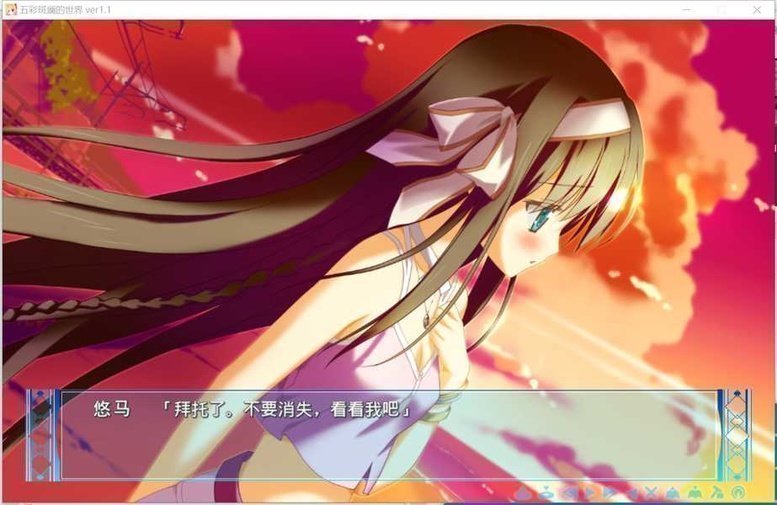
As for the Shikishima Kagami and Toumine Tsukasa routes, I really don’t want to say anything. If I have to sum them up, it’s “the freebie you got for topping up your phone credit.” Toumine Tsukasa gets the worst treatment in the whole game—her setting, her story, her route, all of it is the worst. She’s always hungry, constantly hit by bad luck, and has to go out and embarrass herself for money. I don’t know what grudge the writer has against this green-haired kid that they had to keep tormenting her. Also, I don’t know if the game’s route locks were a FAVORITE requirement, but after finishing Kana’s and Kisaragi Mio’s routes, the writer clearly had nothing left to say. Those two routes are just moe fluff and stalling that have basically nothing to do with the main theme. Actually, stalling doesn’t even fit—they’re pretty short and fast. Unless you have a huge love for the characters, I think 80% of people will skip these two routes, since most are more curious about the game’s truth and Nikaidou Mahiru’s story.
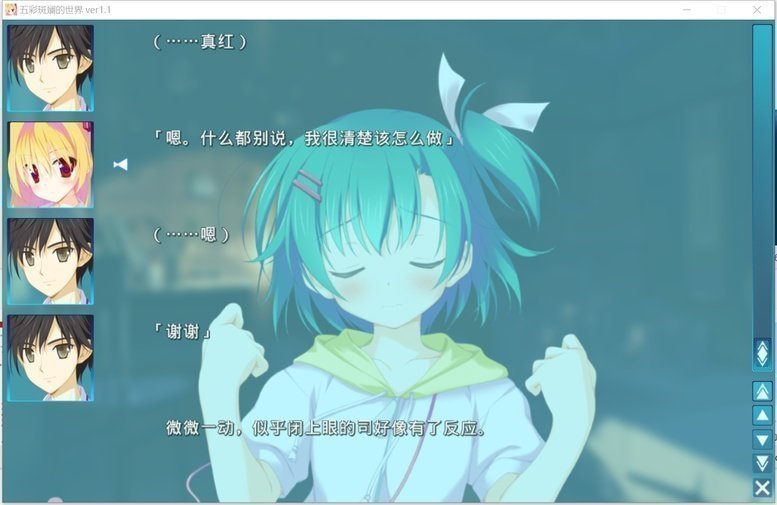
But it’s not until the moment you reach the True End that the second phase begins…
…………………………………………
…………………………………………
“So anyway, the cowherd and the weaver girl fell in love, but the gods up in heaven were dead set against it,” the old man said, telling the story of the Cowherd and the Weaver Girl with his face lit up in delight.
“But Grandpa, why are you against it? They’re two people who love each other.” The little girl was so naive and innocent.
“Because gods can only fall in love with gods, not with mortals.”
“Huh? That’s so much work,” the little girl pouted, clearly unhappy. “Gods really are the worst…”
“Yeah, I think the gods are a pain in the ass too.” The old man laughed.
“So then… what happened after that? The Cowherd and the Weaver Girl… what became of them?”
“And then, y’see…” the old man drew the word out, “then things went right to hell…”
…………………………………………
…………………………………………
When you hit the True End of Irotoridori no Sekai’s second phase, it throws you off hard — the whole world the game had built up in your head across the common and character routes just gets flipped upside down.
The protagonist is no longer the protagonist. Instead, a stranger drops out of the sky, arrives in the game’s original town, sees Nikaidou Shinku, and also sees several kids — all child forms of the heroines from the earlier routes.
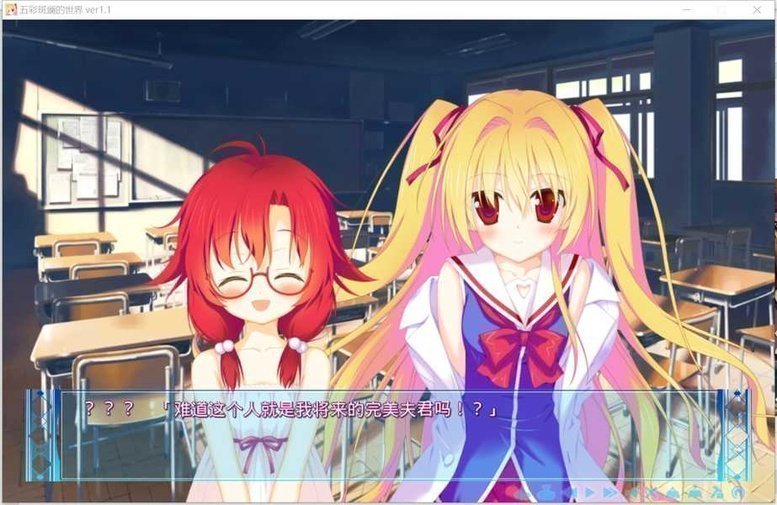
Nikaidou Mashiro is the teacher here. She’s giving a lesson to the kids and invites this nameless protagonist to join in — and while she’s at it, she tells him…
“The world is about to end.”
The cause of the world’s destruction: feathers falling from the sky. Each feather is a summons from the gods, and anyone who touches one vanishes to go meet God… or to put it plainly, they die.
Nikaidou Shinku says the windmills in town exist to track the movements of the feathers. Nobody wants to be declared dead on the spot for no reason—everyone’s on edge. And soon, humanity will be wiped out entirely by these feathers spreading everywhere.
Nikaidou Shinku takes this nameless protagonist with her and starts a fight against that “unreasonable god.”
Nikaidou Mafuyu tells the protagonist that her little sister, Nikaidou Ai, was taken away not long ago — along with her boyfriend, Kashinoue Yuuma. For some reason the protagonist says he’s Yuuma too; maybe it’s just a coincidence that they share a name. Mafuyu doesn’t say anything about it, and it’s no wonder — the world’s in crisis, no time to dwell on that.
Overall, in the first phase the protagonist is just a bystander — the people around him lose their loved ones to the “unreasonable god.” But in the second phase’s story he’s personally involved, becoming one of the victims whose beloved is taken by that same “unreasonable god.”
Mayu is a researcher—theology, plus other sciences—but she can’t find a way to stop that feather from falling, or to stop the Earth from being destroyed. Soon the feathers take the remaining children, one after another. The protagonist tries to run away with Kana, but the feathers only multiply. In the very end, Kana gets taken too, and the world is finally left with just Mayu and the protagonist…
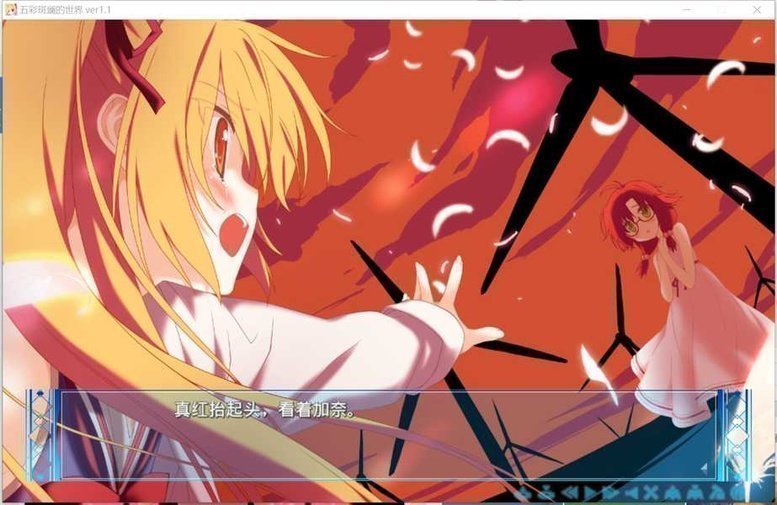
The protagonist runs into someone who calls herself a witch. Anyone who’s played the common route should recognize her — she’s the guy’s mentor. The witch lays the truth of the whole situation on him, and on the way she gets him to remember who he actually is.
Protagonist isn’t some Yuuma at all — his true identity is that so-called “unreasonable god.”
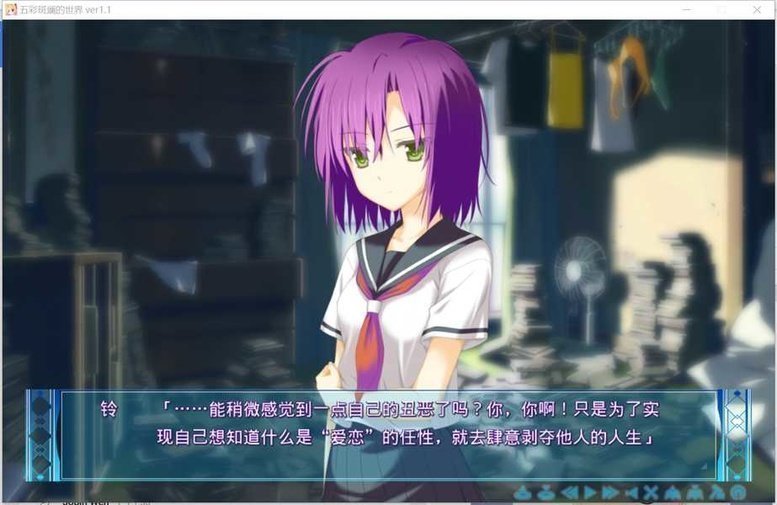
The library at the end of the world does exist, and the protagonist’s divine identity is that of its guardian. Endless, boring guard duty leaves the god growing curious about the mortal realm—he wants to know everything about it. The good food, the fun stuff, emotions, entertainment, and… romance.
When a celebrity dies, you always see people say “God wanted to hear some crosstalk, so he took XXX away.” That line fits perfectly here. God wanted to know about all sorts of things, so God scattered feathers and took away all sorts of people from all sorts of worlds. That pettiness is what threw the world into chaos, and the world is about to be destroyed because of it.
God wanted to figure out what “love” is, so he brought Nikaidou Ao down with a feather… When asked “what is love,” Nikaidou Ao answered with a smile: “I can’t really put that into words. If you want to know, just experience it yourself. Oh, that’s right—you could fall in love with my older sister, Nikaidou Shinku.”
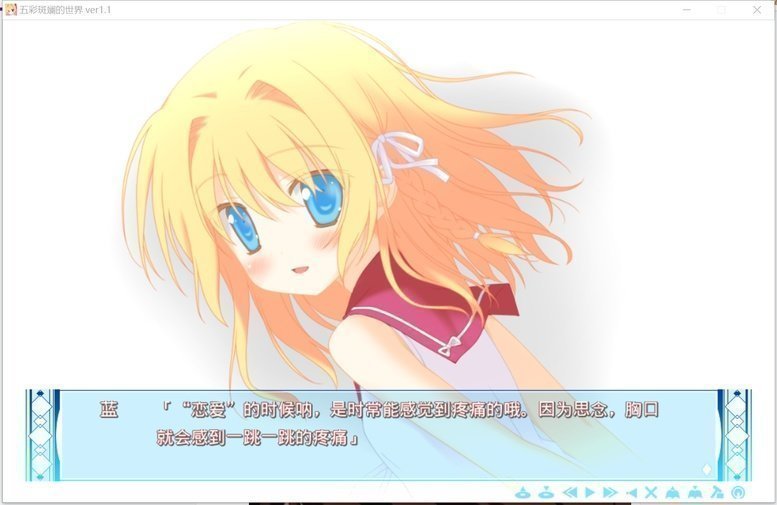
Carrying a shred of curiosity, God summoned a whole crowd of people to help him successfully descend to the mortal realm — all so he could play at being human for a while and get a taste of this thing called “love.”
So the protagonist standing here, the protagonist whose thoughts are always a mess, is that “unremarkable god” himself. Ironically, the unremarkable god didn’t fall in love with Nikaidou Shinku—instead he realized the world was about to be destroyed because of his own selfishness… The god wanted to save them, wanted to repent, but he had already gained emotions, and returning to the heavens wasn’t so easy anymore.
“Don’t forget, you’re a god. Creating a new world and sending it back to heaven shouldn’t be all that hard, right…” the witch suggested.
So God picked up his notebook, wrote out the chapter he wanted, and gave form to the story he’d written. The god in that story is a “liberator” named Yuuma Kanojo—wait, no, Kanojo’s wrong, it’s Kanojo… anyway, a liberator by the name of Yuuma Kanojo—no, hold on, his partner is the translucent magician Nikaidou Shinku…
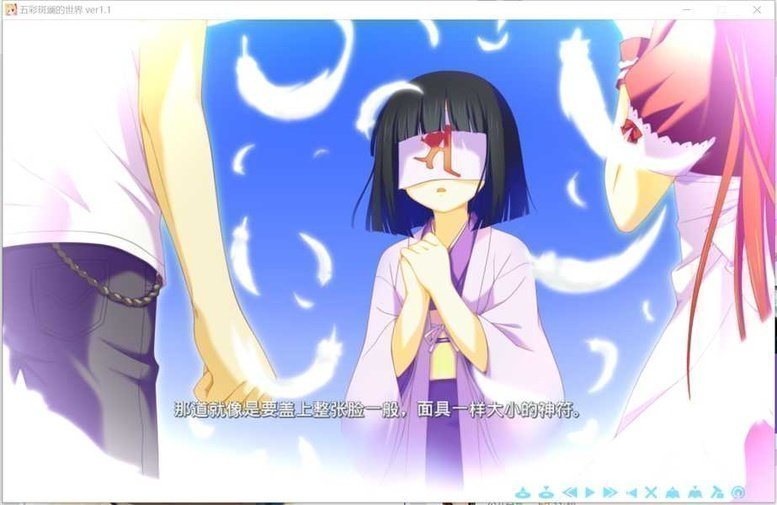
And that’s when the player realizes it: every story from the first phase was just a world created by God’s diary. The real world is the one right in front of you — the one where humanity is on the verge of extinction, about to be destroyed.
In the god’s diary, every time Kano Kami Yuma uses his power, it eats away at his memories. By the end of the story, those memories are gone completely—and Makka, the translucent mage, is finally set free now that her wish has come true……
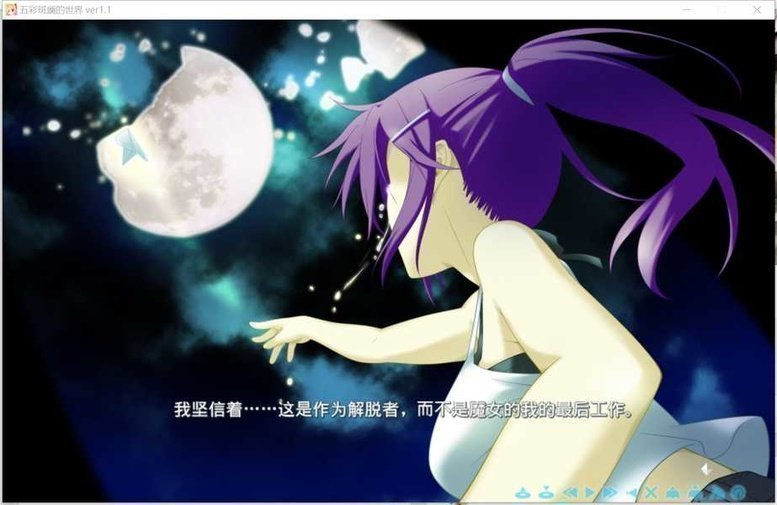
Simply put, at the end of this diary, God forgets everything, and only then can he become once again a god untainted by worldly affairs, and return to the heavens.
But here’s the thing… it wasn’t that simple. The witch tore up this god’s perfect plan…
…………………………………………
…………………………………………
“So then, to punish the Cowherd and the Weaver Girl, the gods up in heaven split the two of them apart, with the Milky Way between them, never to meet again,” the old man said slowly.
“Poor thing…”
**“Yeah, not being able to see your lover is a real killer, huh.”
**“Grandpa, why are the gods up in heaven so cruel?”
“It’s fine, I guess. Just following the rules.”
**“But Grandpa…” The little girl tugged at the old man’s sleeve. “What happened after that? Do Niulang and Zhinyu really never get to see each other again?”
**“Wanna hear it?”
“I do!”
The old man took a breath, pulled out his phone, checked the time, slipped it back in his pocket, and went on. “Actually, there is a way for the Cowherd and the Weaver Girl to meet…”
…………………………………………
…………………………………………
At the moment the witch plan is revealed in the True End, the story enters its third phase — the one that disgusted me the most…
Why do I say that? Because originally, according to God’s plan, once the story in the diary reached its climax, God would forget Shinku and return to the divine world, continuing on as a god to repair this broken world.
But here’s the thing: over the course of that diary story, there was a possibility—that God and Nikaidou Shinku might fall in love. They’re the kind who grow on each other over time, after all. So the witch rewrote a tiny part of the diary, not letting God completely forget Nikaidou Shinku, but making him remember… Remembering is a good thing for a couple, but for the world it’s not. The world still gets destroyed—heaven’s without its ruler, after all.
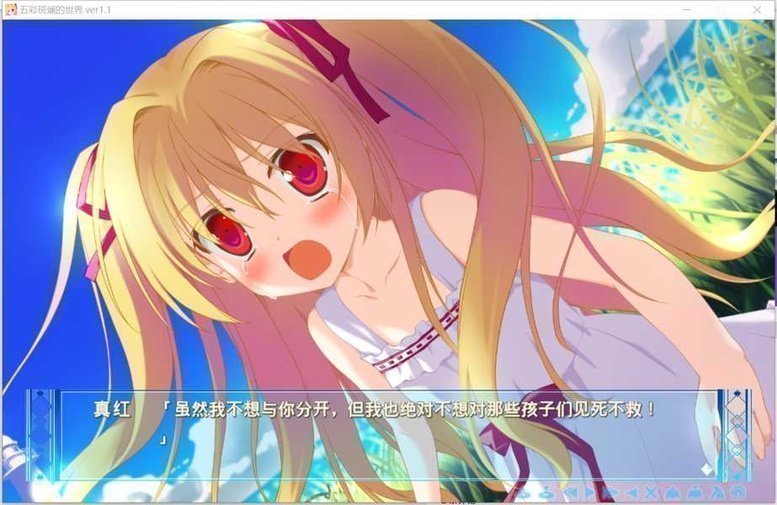
The protagonist, being a god, is destined to return to heaven, and breaking up with Nikaidou Shinku after confessing is just as set in stone — a god and a human can’t be in love. But because the witch threw a wrench in the plan, the god up in heaven didn’t forget Shinku; if anything, he missed her even more…
God’s longing and man’s longing are not the same. A human’s longing amounts to nothing more than a good dream, but God’s dream can conjure an entire new world.
So in the second half of the True End, Kanoe Yuuma shows up again and goes on a date with Nikaidou Shinku… they do a bunch of couple things, but here’s the thing… you can’t tell whether Nikaidou Shinku is real or fake, whether this actually exists or is a dream cooked up in the god’s brain, and whether Nikaidou Shinku’s love for the god truly exists or is just a brainwashing effect produced by the god’s YY.
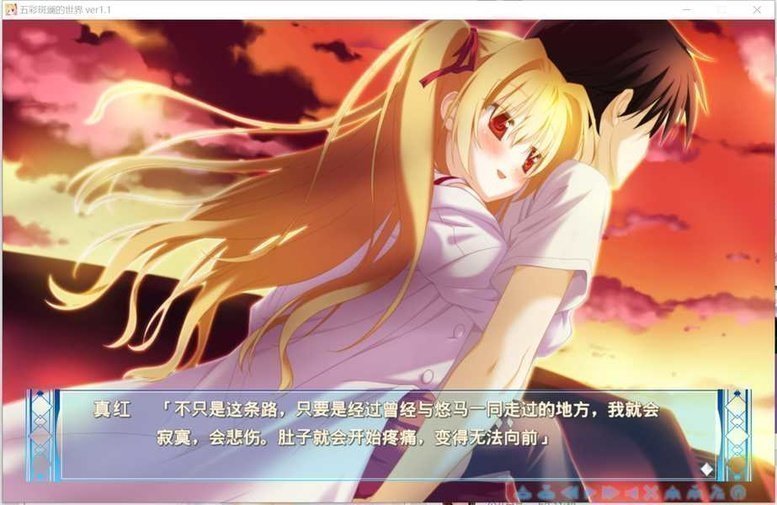
God is just anguish — one idle whim and boom, a whole world gets willed into being for wish-fulfillment, so real you can’t even tell what the original world was like anymore.
At this point, the scenario writer of Irotoridori no Sekai had already pulled off a comeback. Under the current setup, whatever story he writes doesn’t really matter anymore — the protagonist has become a god, so he can write whatever he wants. After all, a god’s dream can be explained away no matter how you interpret it.
Put plainly, it means the scenario writer’s current bullshitting is all justified — not a shred of it is fake. After all, they can always cover their asses by saying it was a dream, and it even holds up.
A god’s dream made manifest is way more insane than anything a mortal could pull off — you can even rewrite what other people in that world think. Even if that world really exists, it probably develops with the story written in the god’s notebook calling the shots.
To put it even more plainly: even if the story is no longer a dream but something real, it could still be fake. The world had already been destroyed on its original course. God began trying to save it and started a second playthrough, but by then God had feelings, had biases. The new world was created specifically to make certain developments happen. It exists beyond time and space—or it might just be a parallel world.
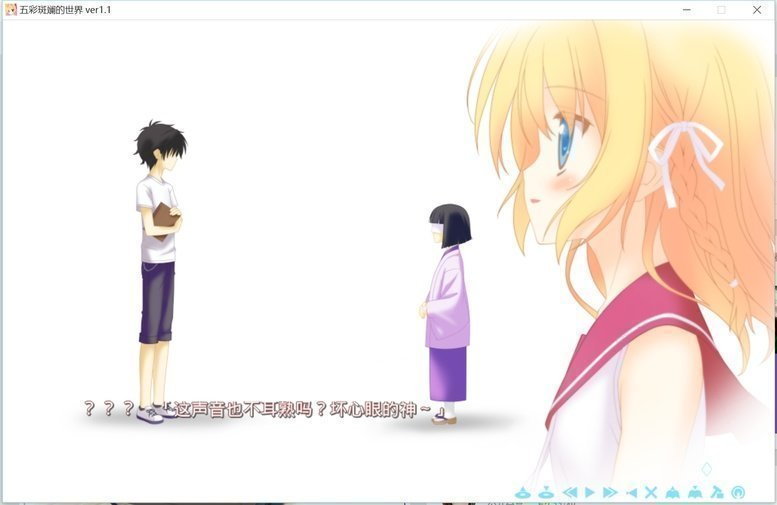
Honestly, even that would’ve been fine. But then the author starts going on and on, endlessly, about “this world created by God”—over and over, it’s fake, it’s special effects, it’s all a duang, it’s God’s dream.
And so this is where my frustration with the game’s story begins.
《Irotoridori no Sekai》的结局是悲剧,世界在原本的世界线是要毁灭的,而男主回到天上,孤独度过接下来的日子,就算有了一个”鹿野上悠马和二阶堂真红“亲亲热热的路线故事,但是最后还是会被强调,这是梦……不是现实,这只是上帝在自己的日记本上书写的一页罢了。
It’s like when you’re just getting into a story and it’s pretty good, and then some asshole finally tells you it’s all fake, made up, and you should go read the original. The original isn’t even finished, but what’s written ends in tragedy. You ask how the original ends and the guy hems and haws and won’t say a word, just sits there looking like he’s about to say something but doesn’t, and you want to raise your fist and fuck him up the ass. That’s roughly the feeling.
And so, in this world created by God, thanks to the witch’s meddling, God and Shinku were separated after all at the story’s end. He returned to the heavens, carrying God’s longing with him.
A god who’s never supposed to fall for a mortal, and a mortal who slowly fell for the god who came down to earth — of course they won’t end up together. They’re not even the same species. The witch’s meddling did stop the god from completely forgetting Shinku and heading back to the heavens, but the god went back anyway, carrying his longing for Shinku with him.
Two lovers separated by the boundary between worlds, waiting for their next meeting.
If the story had ended there, it would’ve been nothing more than a stomach ache—uncomfortable, sure, but not unbearable. Not every story gets a good ending, and a tragedy can leave just as strong an impression.
But here’s the thing… Whether it was to milk more money out of players or to placate them, the game got an FD that gives those heroines their due. That’s not a bad thing in itself — the problem is that the scenario writer always insists on doing more than necessary.
…………………………………………
…………………………………………
“And so the Queen Mother of the West allowed the Cowherd and the Weaver Girl to meet once a year, you see.” The old man spoke slowly and deliberately, and as soon as he finished, he turned his head to glance at the little girl beside him.
“Just once… for a whole year?” The little girl looked thoroughly displeased.
“Can’t help it — when a god dates a mortal, just getting to meet at all is already pretty good.”
“Wait… does this mean… from now on, forever and ever, the two of us only get to see each other once a year? Is it gonna be like that forever?” There was so much hope in the little girl’s voice…
**“Not… not exactly… there’s another way of putting it…”
“What what…?” The little girl perked up all at once.
**“In that story… the romance of the Cowherd and the Weaver Girl had the Queen Mother’s blessing…”
…………………………………………
…………………………………………
Irotoridori no Hikari (五彩斑斓的曙光) and Akai Hitomi ni Utsuru Sekai (红色眼瞳中映出的世界) are the two fandiscs released after the main game — the first covers all the heroines, while the second is devoted entirely to Nikaidou Shinku.
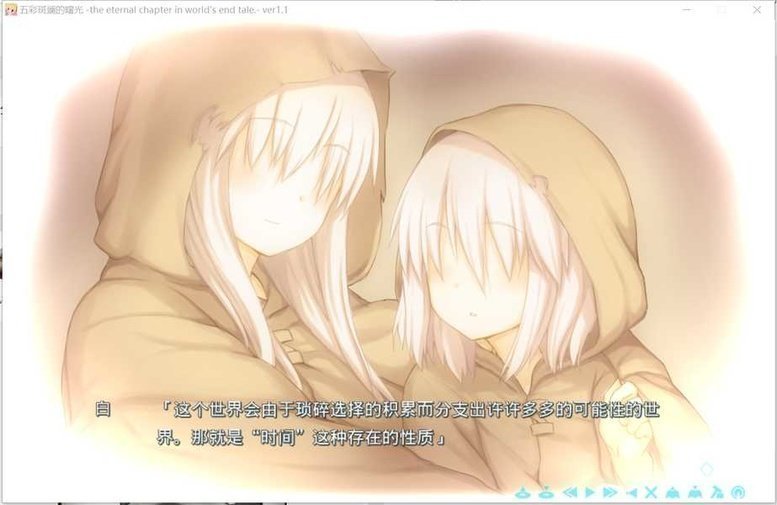
The original story is a tragedy, and we always want to see the characters we like get a good ending — that’s understandable. The developer responding to demand and making a corresponding game is also understandable; you could even call it thoughtful. But where it all goes wrong is that the scenario writer likes to play at being clever, thinking he’s pulling off some little trick.
In Irotoridori no Hikari, the first playthrough forces you onto Nikaidou Shinku’s route. That route starts out ridiculously insubstantial—it just assumes the protagonist, Kashinoue Yuuma, meets Shinku again, picking up right where Irotoridori no Sekai left off. He’s still a liberator, still has a master, still has a dorm manager, and the game kicks off with the two of them living out their little two-person world together. What follows is a stretch of lovey-dovey flaunting so absurdly long and so jealousy-inducingly sweet it’s almost criminal……
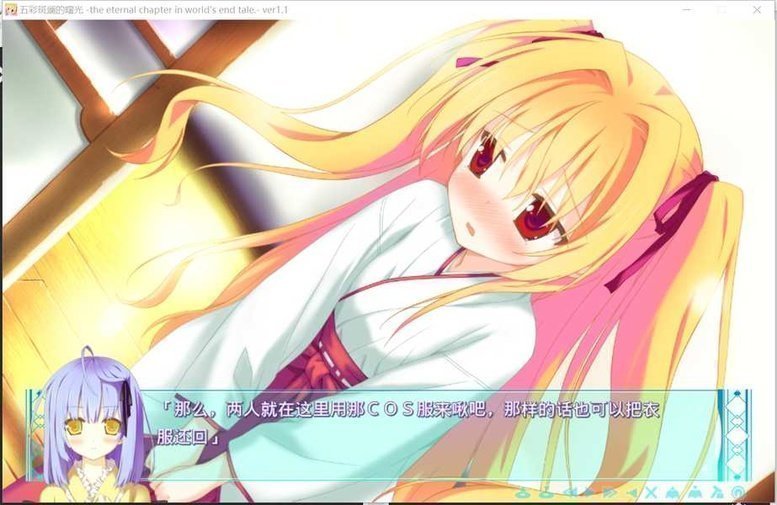
Yeah, the lovey-dovey stuff was so convincing it had me believing it was real, but right at the peak of all that sweetness the pen suddenly swerves and tells you this was just a dream born from Shinku’s longing for the protagonist, made possible through the power of that god’s diary.
So yeah — fake. And then, right after the game slaps you across the face with that line, it tells you the diary doesn’t have to be about Shinku alone, and unlocks the Fandisc after-stories for the other heroines.
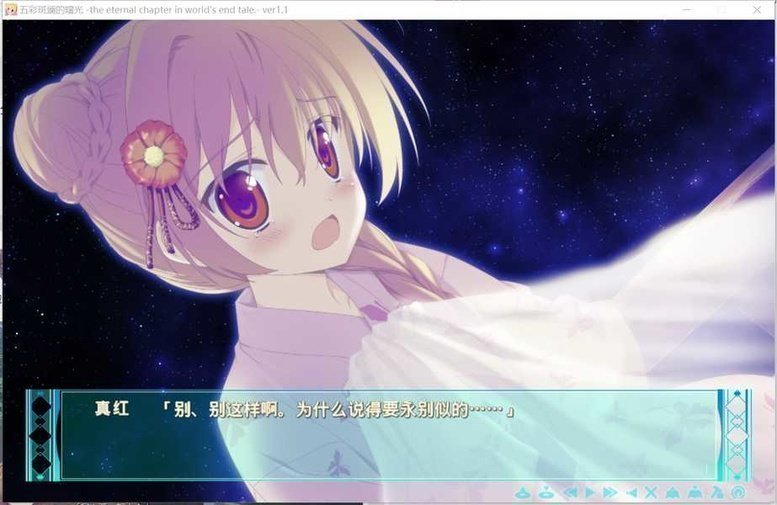
I’m usually pretty even-tempered, but at this point I was a little… no, scratch that, I was seriously pissed off. I get that most Galgame multi-endings run on parallel worlds. I’ve also seen plenty of stories where the original world gets destroyed and the protagonist uses divine power to recreate it, shaping a perfect new world all over again. But this kind of thing—where the original world is left sitting there as a giant mess, new dream worlds keep getting opened up one after another, and then right at the most touching moment, when the dream is about to reach its ending, it forcibly tears the male and female leads apart and tells you to go back to reality—that I’m seeing for the goddamn first time.
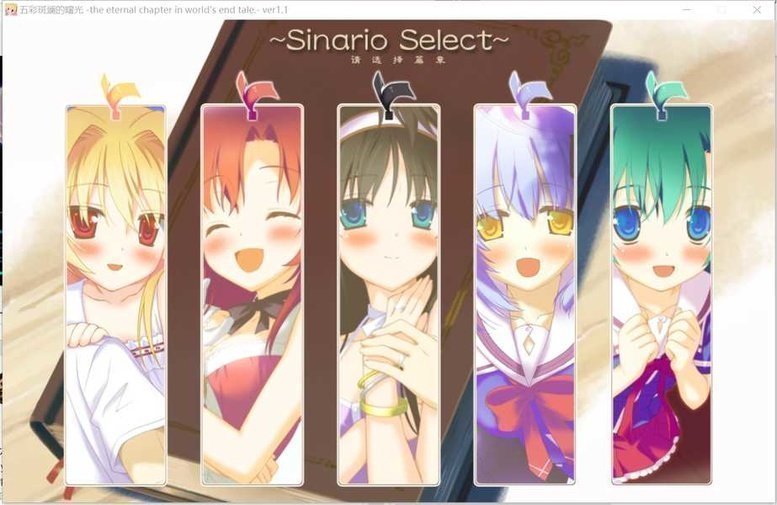
It’s like a virgin who finally dreams up a flat-chested—no, big-titted—twintailed tsundere sweet JK soft girl who’s head over heels for him, and they’re right at the point where all that’s left is for him to confess… or for him to push her down, and then some idiot shakes him awake and says this is a dream, stop fucking dreaming.
“Who the hell doesn’t know this is a dream? Can’t you at least let people enjoy the dream while it lasts? Do you really have to hammer home that it’s a dream at the worst possible moment?”
But sadly, that scenario writer really is just that unpleasant.
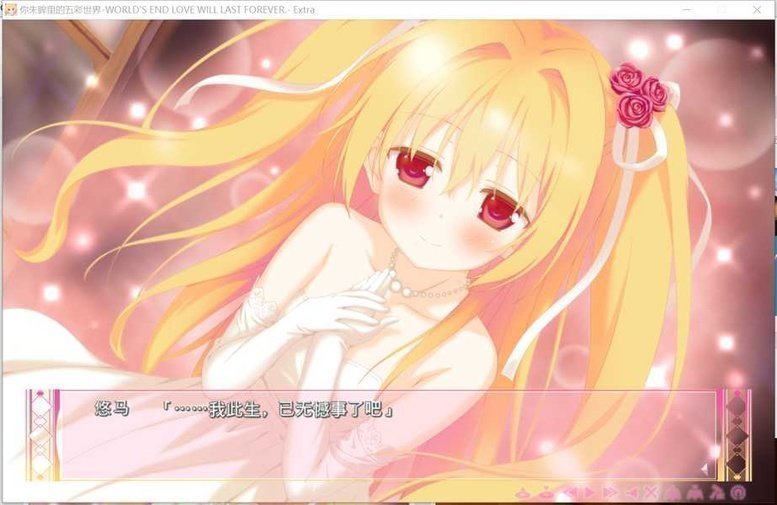
Maybe it’s because Nikaidou Shinku’s chapters in Irotoridori no Hikari were too short, or because the ending wasn’t a perfect one—whatever the reason, it left people feeling unsatisfied. So years later, a new dedicated fandisc, Akai Hitomi ni Utsuru Sekai (The World Reflected in Red Eyes), came into being. The game is direct, and so is the promo art: Shinku in a wedding dress is basically telling you this game exists purely out of love for her.
So as a sweetness-flaunting fandisc, all it had to do was flaunt the sweetness and hand out CGs — but that writer went and did something extra again.
《紅い瞳に映るセカイ》 still follows the original setup: the protagonist is the Liberator, he’s in a relationship with Shinku, and they now have a daughter named Sora — 青空. The story starts out sweet, with the whole crew reuniting years later and settling into a quiet slice-of-life groove.
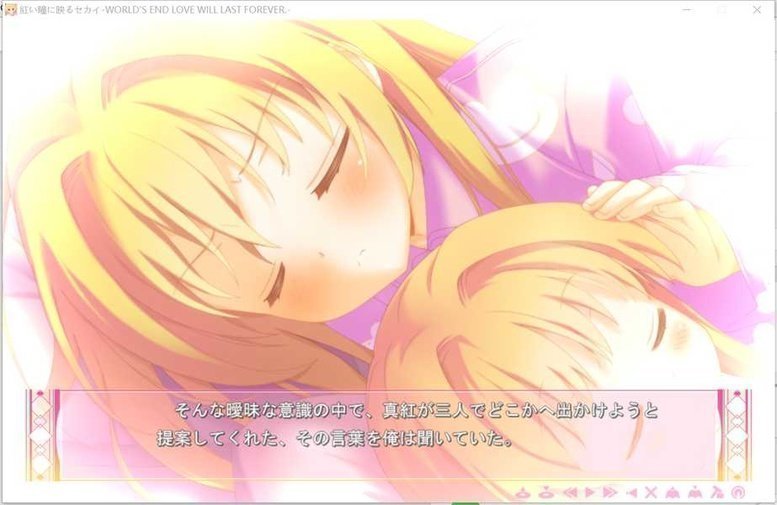
And the whole game is stuffed with filler—the kind where the main story isn’t enough so they pad it out with comedy skits. Not that that’s necessarily bad, but it always feels jarring, and it gives off this vibe where you have no idea what the story’s even trying to get at next.
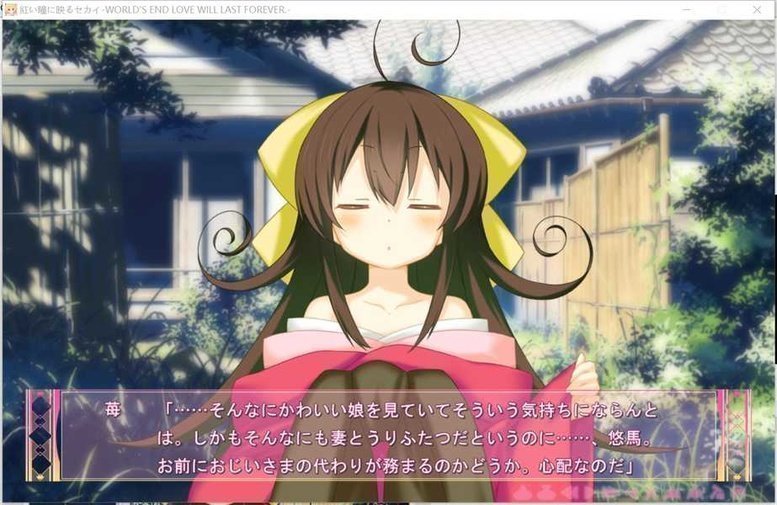
As a fanservice-filled Fandisc, there’s honestly not much to say about this one’s plot. After the previous Fandisc, most people had already figured out what kind of cheap tricks this scenario writer likes to pull. Sure enough, it opens with the protagonist flipping through a diary—maybe the whole story is just a hallucination from that diary. Between every sweet scene, you get a cut of him flipping through the pages, sighing over and over, “Why did the person I love most have to die?” It’s building suspense, practically telling you Nikaidou Shinku is already dead and the lonely protagonist is just jerking off to God’s diary. The main story is at least sweet enough that you can ignore these nitpicky details.
But you’d never expect what comes next: they force a dream-within-a-dream into the main story. In the dream, Nikaidou Shinku has amnesia from an injury and only retains one hour of memory per day. Before you can even get a good cry in, it turns out the one with amnesia is actually the protagonist. Just as you’re about to curse out the writer, the plot flips again: the amnesia storyline was a novel the protagonist wrote, and at the novel’s ending the two still end up separated. But then the story swerves once more, revealing that the whole “writing a novel” and “separation” stuff was just a passage in the protagonist’s diary—and the two of them finally get to welcome a real future.
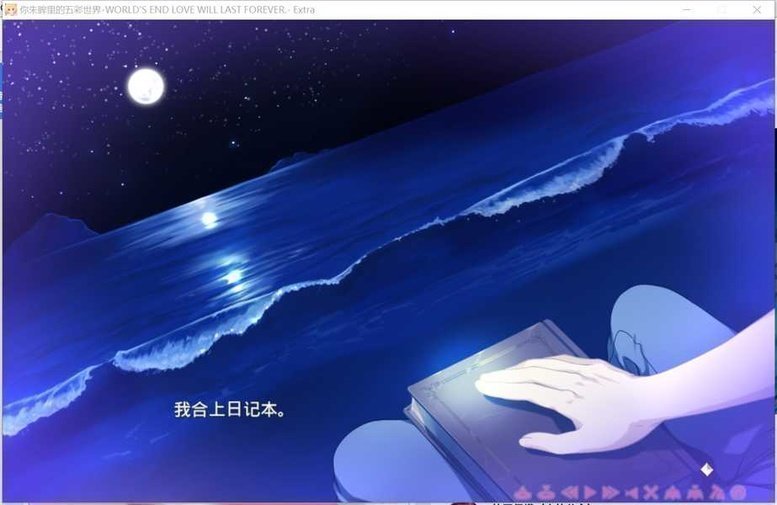
And then at the very end, the game reminds you in style: the world where the protagonist’s “liberator” identity exists is still just another kind of dream that God created.
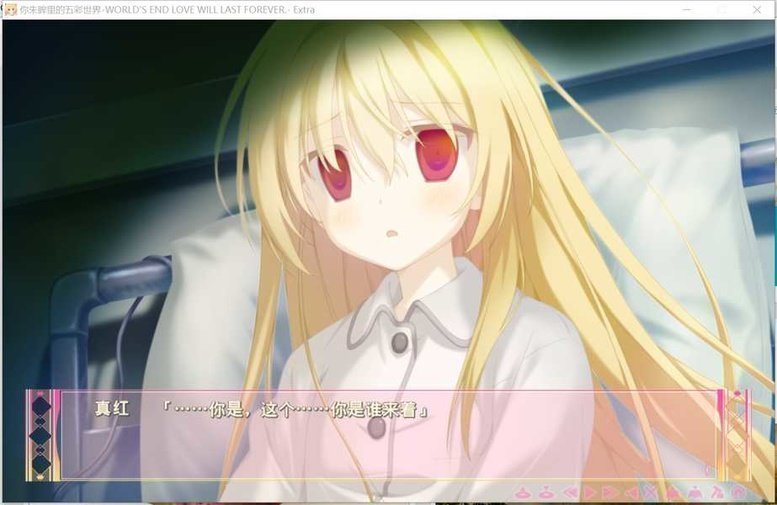
So this fandisc not only pulls a dream-within-a-dream-within-a-dream-within-a-dream, it also casually tells you that even the top layer is still a dream, the world is still the same old shithole, and it never actually says what the real Shinku’s final ending is. I guess you can just take it that Shinku found happiness in this fake world.
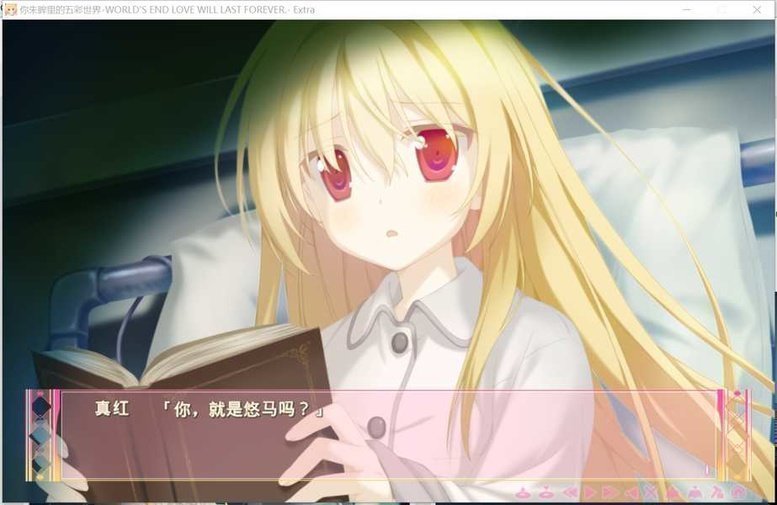
So anyway… what’d you think of the story? Pretty damn good, right? I think so. Makes you wanna sodomize the scenario writer, doesn’t it? Yeah, me too.
…………………………………………
…………………………………………
“Because after the Cowherd and the Weaver Girl got married, they stopped tending their ox and stopped weaving, and just played together all the time, the Queen Mother of the West went ahead and separated them anyway.” The old man’s voice had a note of smug satisfaction in it.
**“Huh????” The little girl was very confused. “So they end up apart after all? Or do they only get to see each other once a year?”
“Yeah.” The old man glanced at his phone and went on. “The ending of the story doesn’t change, you know. Only the middle part’s a bit different. At least the two of them got Heaven’s blessing for their romance.”
“But… isn’t the ending the same? What happened after? Did the two of them ever fight back? Having to meet only once a year like that the whole time… that’s gotta suck.” The little girl looked like she could relate, maybe reminded of some relative of her own.
“You want to hear more about the story of the Cowherd and the Weaver Girl?” A smile played at the old man’s lips.
“Yeah, yeah, yeah!!” The little girl cheers, absolutely thrilled.
“Then let me go on a bit more about the story of the Cowherd and the Weaver Girl…” The old man shifted his posture and slowly began to speak.
…………………………………………
…………………………………………
How to evaluate Irotoridori no Sekai (いろとりどりのセカイ) as a whole game is honestly hard to say. I like what it’s going for—after all, among the many galgames out there, works that can “completely overturn the common route in the True End while pulling off multiple plot twists on the way to the ending” are genuinely rare. Most are half-baked or have various flaws. Similar examples include Sukima Sakura to Uso no Miyako, Owaru Sekai to Birthday, and Mahou Tsukai no Hako—all of this type, where when the True End arrives and the truth is revealed, you suddenly realize you’ve been dreaming all along. Writing that kind of reveal requires enough foreshadowing skill, and Irotoridori no Sekai actually handles its foreshadowing pretty well. The Kana route already lays out quite a few of the setting details clearly enough—the existence of the gods, the distant library, everyone’s memories, and even the multiple worlds. It even remembers to tell you about Nikaidou Shinku’s dream at the end. These are all foreshadowing for what comes later, so nothing feels wildly abrupt. When the final truth is revealed, you can more or less understand what’s going on. It’ll surprise you, but it never gives you that feeling of the writer just making shit up.
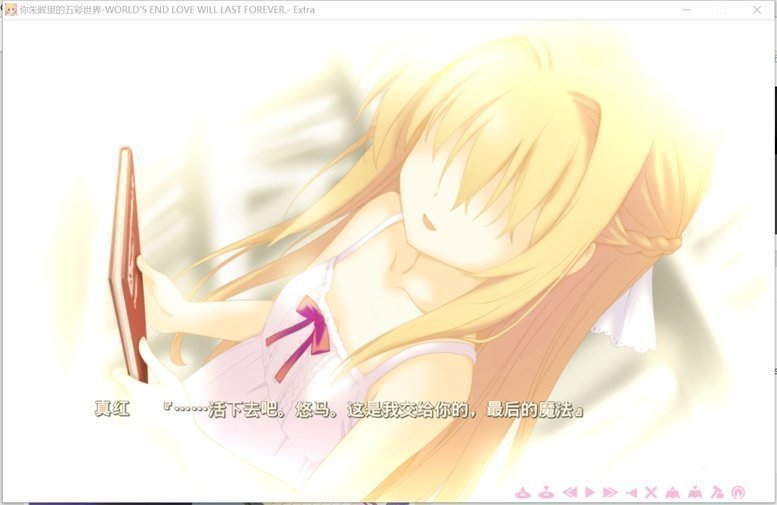
That said, this doesn’t mean the game’s plot progression is free of flaws—there are quite a few jarring spots. The main issue is that the scenario writer, Urushihara Yukito, is genuinely terrible at writing romance. For romance, writing lovey-dovey scenes and H scenes is basically no challenge, and writing ordinary dialogue isn’t hard either. What’s hard is writing the process of going from “friends” to “lovers”—that process is just too difficult to do well, so much so that most ACG works tend to just bluntly slap on max affection from the start while cobbling together a flashback that says “I’ve loved you all along.” Urushihara Yukito did that too, but not thoroughly—the reason for love in the flashback is just too low: betting that you’ll fall in love, like “let’s see what love tastes like” or whatever. In a way, Nikaidou Mahiro’s little sister Nikaidou Ai even feels like she’s pimping for God, and you can’t feel the transition into love at all—it’s like the characters got superglued together. And after they’re glued, to dilute that arranged-marriage feel of randomly pairing people off, the game launches into extremely high-density lovey-dovey scenes, which really makes it hard to feel that heart-pounding sensation. Fortunately, the game’s voice acting is very generous—Nikaidou Mahiro is voiced by Fukuen Misato, and her clingy tone directly rescues the lack of personality the script gives Mahiro. If you ask me, swap in any second-tier CV and this character would probably just be ruined. In stark contrast to the CV’s skill is Kisaragi Mio—because the CV performance isn’t great, this character always feels like she’s missing something. Incidentally, Kisaragi Mio’s character writing isn’t without its highlights; her take on “tsundere” is more realistic. It’s just that the author poured most of their energy into Kana and Mahiro’s True End, leaving Mio’s route with insufficient late-game momentum and a rushed ending. As for Shikishima Kagami and Toumine Tsukasa, as mentioned earlier, they have basically no presence, and the author had no energy for them either.
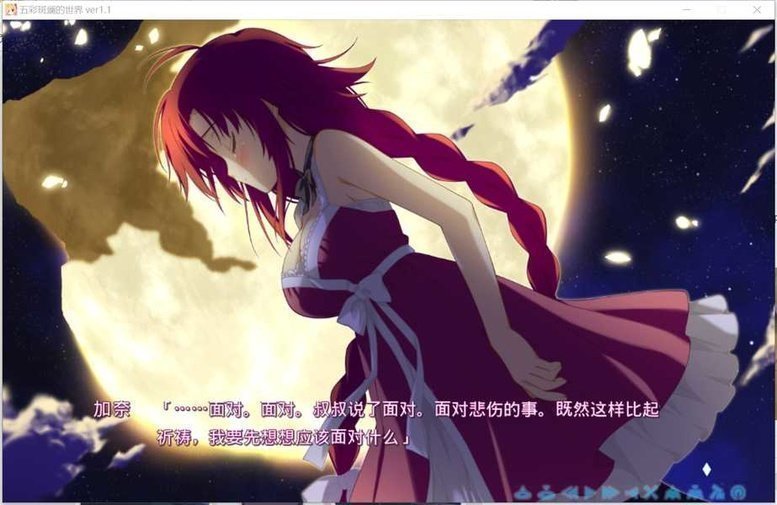
Honestly, I can say the romance parts in Astraea no Shiroki Eien are actually written pretty well — not just because the CV work is good, but because the one thing scenario writer Tamotsu Kei can actually do is write girls being clingy and whiny. As for the rest of Astraea no Shiroki Eien, that’s another story entirely.
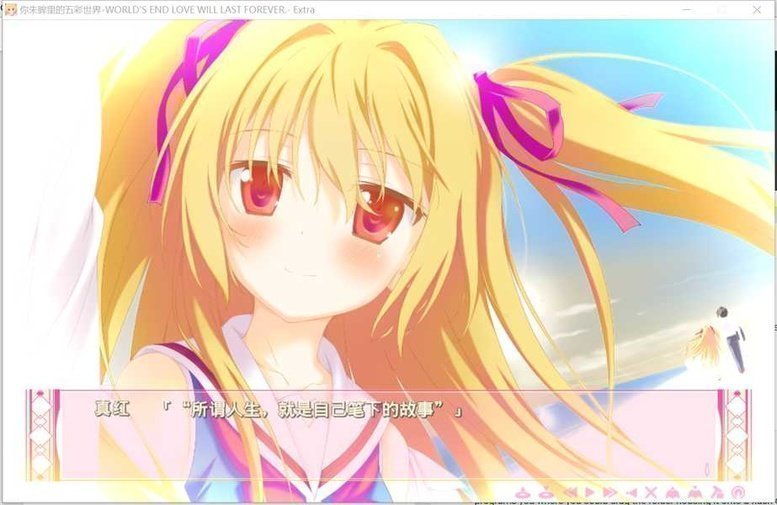
The art is good. It might be hard to swallow at first glance, but after a while you start to notice a subtle level of detail in it. As for the music, I have nothing to say — it’s among the best soundtracks I’ve heard in a Galgame. アストラエアの白き永遠 was made by basically the same staff, after all. On everything except the story, I don’t really have many complaints.
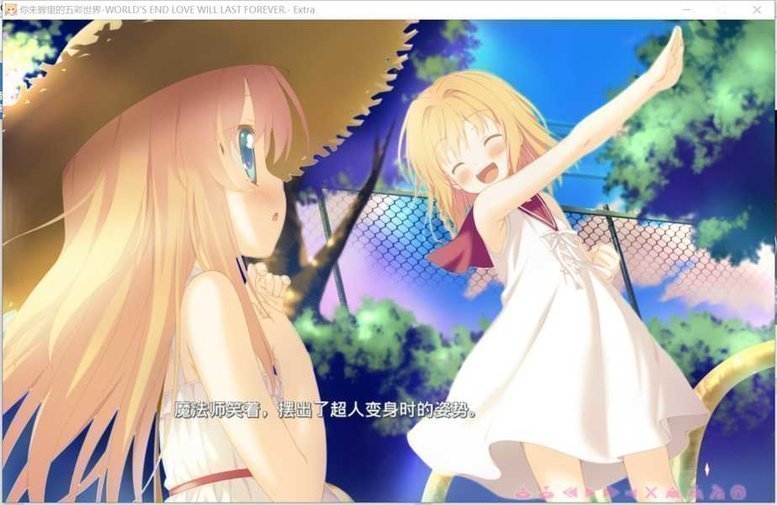
Another interesting thing is FAVORITE’s in-house engine — the way character sprites zoom in while the background blurs is genuinely insane. It always gives you this pleasant, classy, even slightly ethereal sense of presence. Pair that with the skies, sunsets, and night scenes the games keep throwing at you, and the presentation hits hard. Sometimes I even felt like Irotoridori no Sekai and Astraea no Shiroki Eien were written by the same scenario writer, because they always carry that same flavor — when in reality the two scripts are nothing alike. It’s all just déjà vu generated by the engine’s staging.
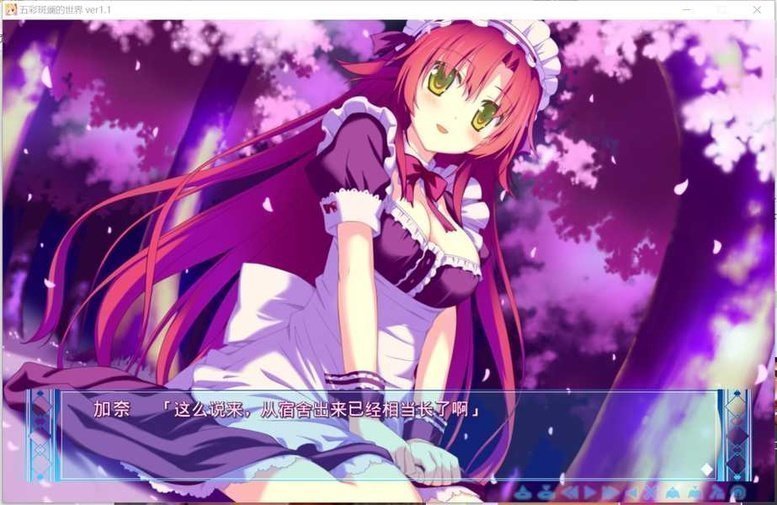
At this point we have to talk about the scenario writer’s little smug tricks in the game. Throughout the whole thing, the writer’s favorite move is “write a story, then tell you it’s fake.” This isn’t just in the Fandisk that comes later; it happens several times in the common route too. Some of the protagonist’s hallucinations are there for comedy, and some are purely there to gross you out. As for the ones in the Fandisk, they feel more like the writer showing off, taking something that was genuinely good, holding it out to you with a sadist’s sneer, and barking “eat up” like he’s tossing scraps to a dog.
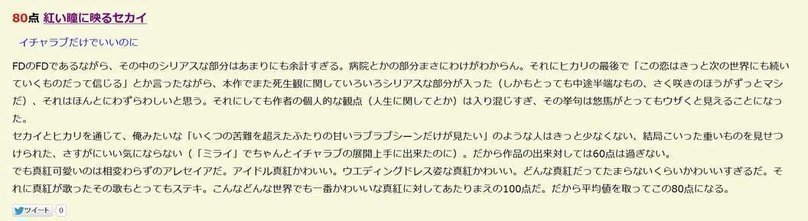
If this game had been more decisive in its final ending and just straight-up said the world gets remade and Yuuma and Shinku stay happily together forever, I wouldn’t have said a word. If this game had been a bit better in the Fandisk—cut the pointless waffle, stop repeating over and over that it’s a dream—I wouldn’t have said a word either. If this game’s Shinku Fandisk had gotten rid of that whole hospital section in the middle, and also gotten rid of the baffling shit in the opening cutscene, I wouldn’t have said a word. If this game’s scenario writer could just fucking stop being a smartass and doing unnecessary crap all the time, I really wouldn’t have said a word. If… if…
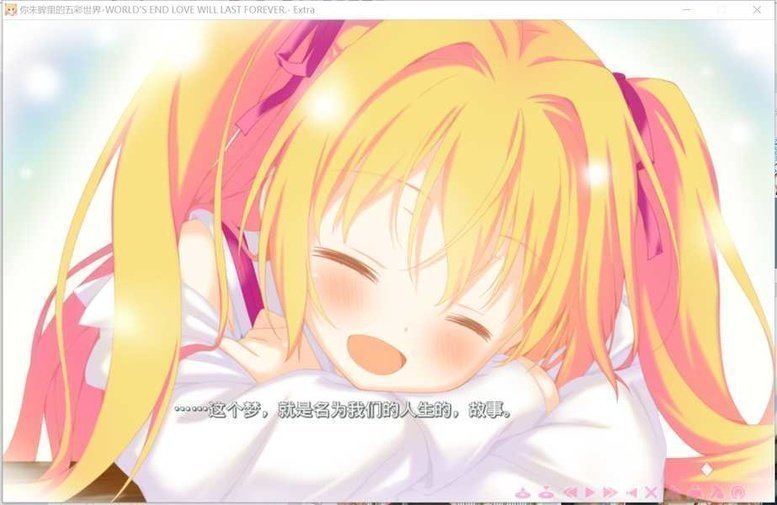
There’s no ifs about it, so this game left me feeling unusually sour. I wanted to tear into it, but then I realized there’s not much actually wrong with the game itself — the bigger blame lies with the scenario writer trying to show off how clever he is behind the scenes. But the scenario writer did create the story, after all, and I mostly hold these kinds of stories in contempt, White Album 2 included, along with others of that sort. Maybe this one’s the exception.
Whatever. It’s just a game impression, not something that has to end with a verdict. Maybe years from now I’ll have a better idea of how this game should really be judged.
…………………………………………
…………………………………………
“So in the end, the cowherd got dumped by the weaver girl, and she fell for someone else…” The old man’s story kept going.
**“What the hell!” The little girl was getting a bit impatient. “How come Zhinü doesn’t love Niulang anymore?”
“Oh, that’s actually a story other people tell, not the real Niulang Zhinu legend…” the old man explained.
“I wanna hear what happened to the Cowherd and the Weaver Girl after that!” The little girl shook the old man’s arm…
The old man gave a knowing smile and said slowly,
“Naturally, we’re in different places, so we meet once a year.”
“So those two just stayed like that forever?”
“That’s not necessarily true either~”
“What the hell even is that…”
“You want the story of the Cowherd and the Weaver Girl? Or should I just tell you another one?”
“No, I want to hear the actual rest of the Cowherd and Weaver Girl story!”
“Heh heh.” The old man’s mouth twisted into a smirk. “Come back tomorrow, and then I’ll tell you.”
**“What the hell is wrong with you.” The little girl got angry and stood up. “I asked you to tell me a story, and you tell half of it and skip the rest, then you keep making up fake stories to trick me, and in the end you won’t even say how it turns out—you just laugh. What’s so funny!”
“Because you’ve gotta leave a little suspense…”
“Whaddya mean, a cliffhanger!” The little girl dusted off her clothes and turned to leave. Halfway there she whipped her head around, pulled a face at the old man, and huffed, “My grandma says people who start a story and don’t finish it properly are all bad-butt buttholes! Pffft——————”
The little girl skipped off, leaving the old man sitting there alone.
“Bad-attitude little shithead, heh.” The old man pulled out his phone, kept fiddling with it, and muttered to himself.
“The plot of some game I played when I was young—now THAT author was a real Bad Attitude asshole.”
A gust of night wind blew through, lifting a fallen leaf from the ground far away. The leaf rose with the wind, cut across the moonlight, and drifted off into the distance…
Done.
Comments are hosted on the Chinese main site. This mirror is read-only.