Koi x Shin Ai Kanojo (恋×シンアイ彼女) Review
"If You Love Eating Shit, Go Eat Shit!"
I didn’t really want to play Koi × Shin’ai Kanojo (恋×シンアイ彼女) at first. Two reasons:
- Didn’t like the setup. That kind of school romance plot looks like a sleeping pill just from the description.
- I’m not a fan of Niijima Yuu, the writer everyone keeps hyping.
Sure, I think Hatsuyuki Sakura (はつゆきさくら) is a decent game, but this guy’s scenario-writing ability really doesn’t deserve the praise. His work on Kisaragi Kinboshi pretty much confirmed my judgment.
He’s good at structure. He can come up with a solid setup and a great concept. But he absolutely cannot write slice-of-life, or the transitions between scenes. The filling he stuffs into his own outline just isn’t enough. That leads to two outcomes: the plot runs like a rollercoaster that’s too fast, like Hatsuyuki Sakura, or the daily-life scenes are too low, like Kisaragi Kinboshi.
“Niijima Yuu is nothing more than a high-schooler-tier writer.” That’s my assessment. Meaning: no matter how good it gets, it’s still high-schooler-tier. A long way from the college/adult world.
So when Koi × Shin’ai Kanojo was announced, I noticed Niijima Yuu wasn’t the only writer on it, and according to what people were saying about the trial version, it was indeed flat. No way there was going to be some tearjerker twist. Everyone was screaming that Niijima Yuu had reformed, but I figured this was just what collaborative writing looks like. Same as Kisaragi Kinboshi — nothing tragic in it, and you probably can’t even tell which parts were his.
Besides, Niijima Yuu is only that good anyway…
But then the game actually came out, and what had to happen happened…
Koi × Shin’ai Kanojo got slapped with the “landmine” label pretty much immediately. People were already out there saying, loud and proud, “Niijima Yuu hasn’t changed. He blew up the toilet again.”
I don’t care about Niijima Yuu. What interested me was the “landmine” part.
“How could a story that stable in the trial version turn into a landmine?” That was my big question.
So with that question in mind, I opened the game…
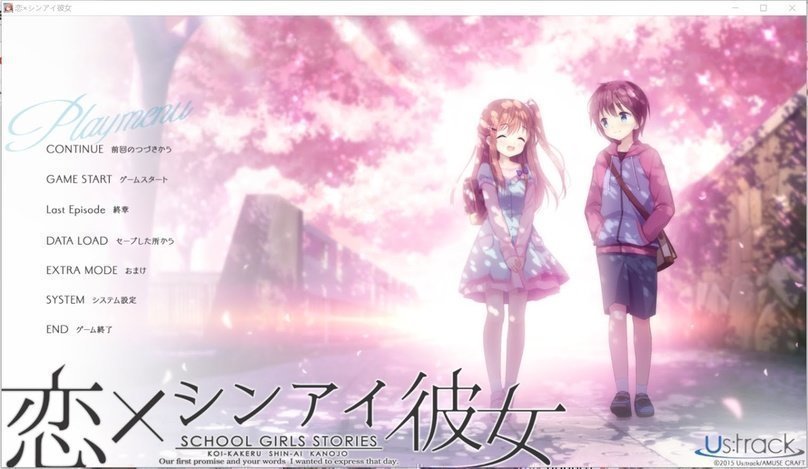
Finishing this game is genuinely rough. It’s got a sadistic route lock: you have to clear all four heroines’ routes before the final True End unlocks.
Maybe you think a route lock isn’t a big deal. But I have to be honest — before the True End, my impression of this game was extremely negative. Long… long… and long. Even though it’s not actually long. But thanks to the flat common route and the male lead’s whining — whining and flatness baked into the bone — that length reaches an unbearable, hopeless level. You get the feeling the writer is constantly jacking off to himself…
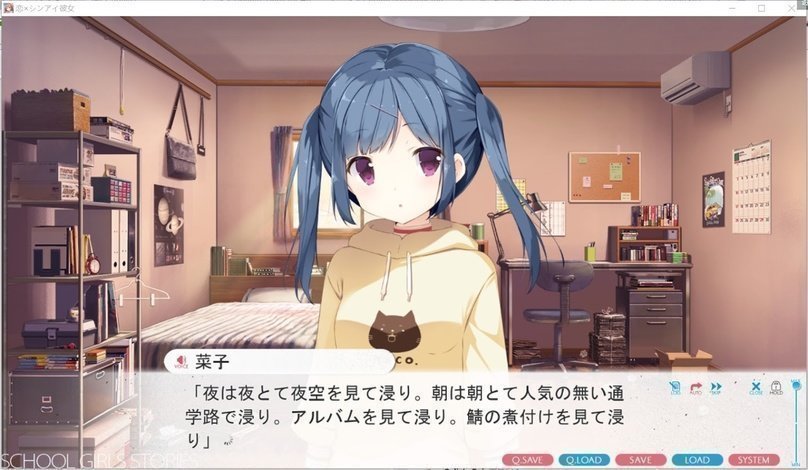
The story starts with the protagonist saying he wants to be a novelist, and he’s been trying to write. But no matter what, he can’t write a romance novel he’s satisfied with. Simple reason: he’s never been in love, no life experience, so no authentic work.
Then it’s all very cliché… or should I say orthodox. The protagonist starts the new semester. Three schools are merging, so a ton of new students arrive. Two girls catch his eye: Hoshimiya and Ayane.
Ayane was his classmate back in middle school (or whenever, I forget). Back then she organized a chorus competition for the class and got mocked and misunderstood by her classmates. The protagonist stepped in, comforted her, helped her out, and won her affection. After that they promised to go to the same vocational school together. The protagonist didn’t go, for various reasons, breaking the promise. They never saw each other again.
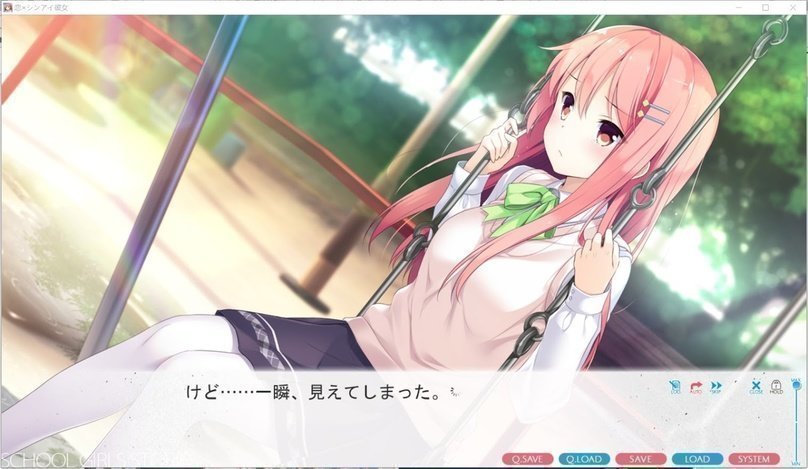
Hoshimiya and the protagonist met even earlier — back in elementary school. She was always listening to her iPod (“My Pod” in the game) and said most of what she listened to was her own compositions. She didn’t have many friends in class, and boys would often snatch her iPod. The protagonist stepped in, helped her out of trouble, and won her affection. Then she transferred away without a word, and he never saw her again.
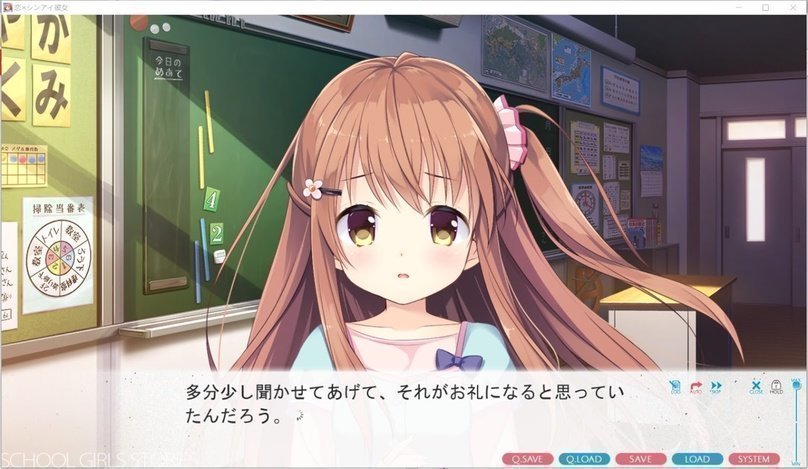
Both girls have history with the protagonist. But that’s not the point. The point is that both of them are girls he’d exchanged love letters with.
When the protagonist graduated middle school, he received a love letter from Ayane. He never saw it.
Before Hoshimiya transferred away, the protagonist gave her a love letter. She never replied.
He got a love letter he never saw, and a love letter he sent that got no reply. And now both of those people are standing right in front of him at the same time. Naturally, that feels…
Awkward. Extremely awkward.
So after all that, the game enters a love-triangle phase, and this is where it starts to get interesting. The important part is Ayane’s behavior — after all, her love letter went unanswered, which by normal standards means she got dumped. Facing the boy who dumped her, of course she’d be nervous and flustered. And soon the protagonist finds the letter he never saw, understands why Ayane acted the way she did — she’d liked him, and he knows exactly how painful it is to send a love letter and get no reply. So he writes two letters, one for Hoshimiya and one for Ayane, explaining the past. Then he gives them to the wrong people, and now all three of them know everything…
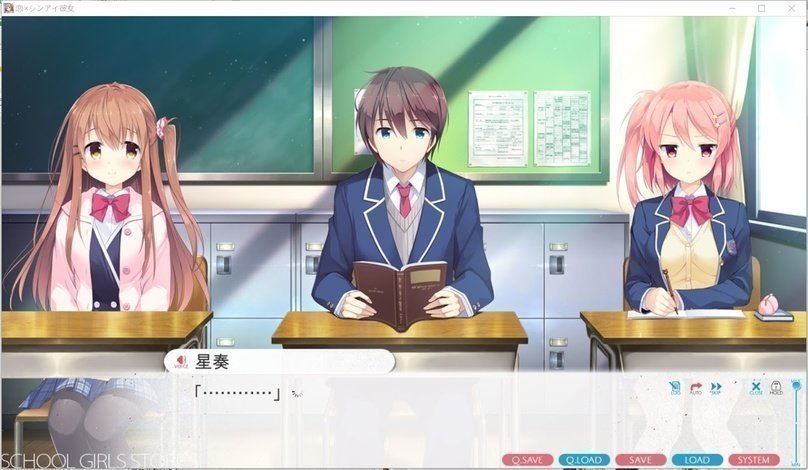
So the triangle gets even more awkward. This stretch really does pick up.
But it doesn’t last long. Depending on your choices, the protagonist picks one side of the triangle and continues.
Let’s start with the main route, Hoshimiya’s. The protagonist chooses Hoshimiya, confesses to her, and she responds quickly — and says this reply is also the reply to the love letter from back then.
“Back then” means the one from childhood.
They become a couple, Ayane voluntarily backs off, and the game descends into a long stretch of… flirting.
I don’t hate flirting scenes. It’s that the story is purely flirting, with nothing else progressing. Unless you’re a total simp, you’ll fall asleep after enough of it.
The protagonist also starts writing his novel — about romance. His second novel. The first was Sayonara Alpha Cologne, the second is Korekara Alpha Cologne. He also starts writing a script for the school festival’s film.
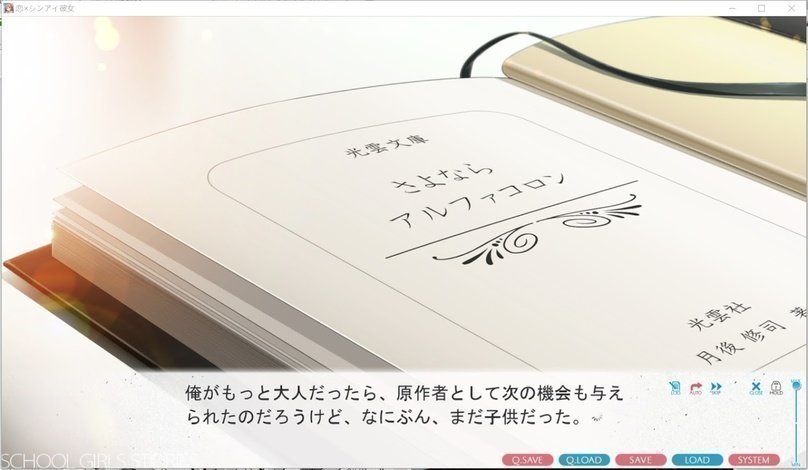
Flirt, flirt, flirt, flirt… until one day Hoshimiya tells the protagonist that the iPod she had as a kid got snatched again and is missing. And the guy who took it has grown up too, and he’s at this school.
The protagonist goes to negotiate with him, gets the iPod back, and returns it to Hoshimiya. (Don’t ask me why a guy would hold onto a stolen iPod for that long.)
Hoshimiya is happy to have it back, and they continue their daily sweetness. Soon the school festival arrives, and they’ve invited a band called Glorious Days. The vocalist sees Hoshimiya and seems to recognize her.
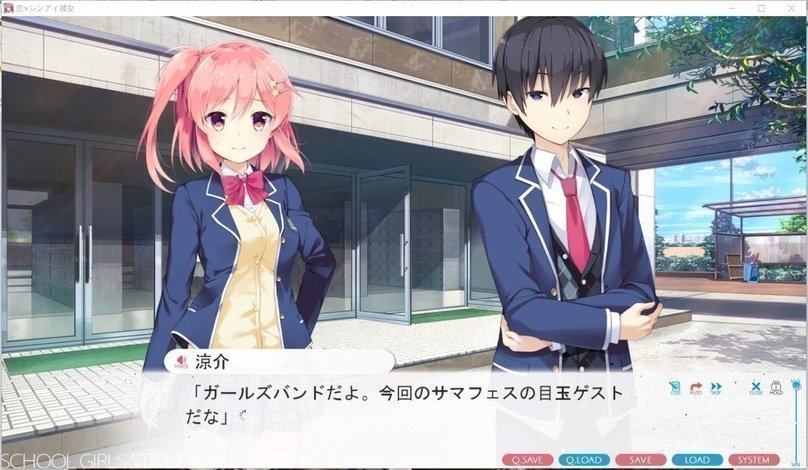
“Come back. We promised. It’s already… almost summer…”
She leaves those words. Hoshimiya’s expression is complicated, but she tells the protagonist nothing… And at the Glorious Days performance at the festival, Hoshimiya appears on stage as a candidate vocalist and performs. The protagonist never knew about any of this…
Then Hoshimiya suddenly transfers away again. She leaves nothing behind, not even a message for him…
Hoshimiya’s route ends like that. At the end of her route’s ED, the protagonist’s second novel Korekara Alpha Cologne is released, Hoshimiya shows up at the signing, the protagonist spots her and chases her, but doesn’t catch her…
What happens next? You have to clear the other three heroines’ routes to find out…
Seeing this bullshit route lock made me furious. My impression of the game up to this point was terrible. Too little female dialogue, too much protagonist monologue, and extremely whiny. For example — at the start the protagonist says he’s never been in love, but who knew the guy had two girls nearly swearing eternal love to him as a kid… It’s like he’s slapping his own face.
Also the music. It acts as a catalyst for the sleep-inducing effect. The music is by Minazuki Ryou. I’m not saying her scoring is bad — on the contrary, her work on Hatsuyuki Sakura and Tokei was outstanding. But this game’s BGM is basically reworked versions of some of her Hatsuyuki Sakura second-half tracks and Hanasaki Work Spring tracks. One track is literally just the second-half version with minor tweaks, and they didn’t even bother adding the violin accompaniment. Listening to it, it’s full-on instant familiarity. It feels exactly like they took old scraps, patched them together, and turned in the assignment.
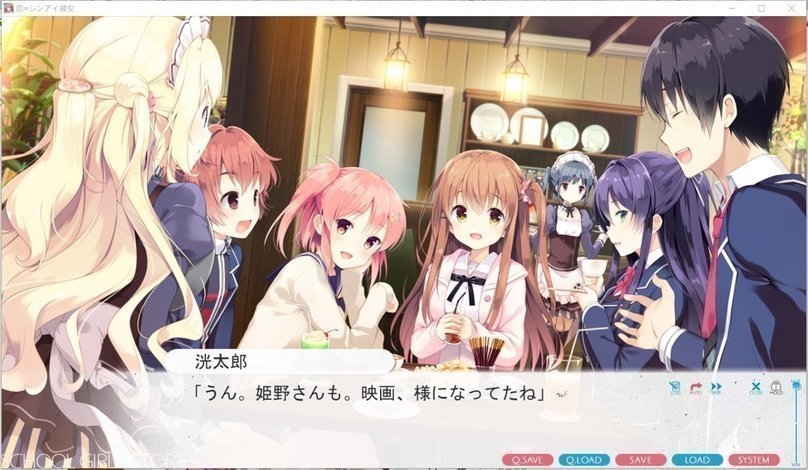
The soundtrack lacks lively tracks. Like Step and Skip from Hanasaki Work Spring — that perfectly captures the feeling of a girl skipping along as she walks. That kind of joyful, pleasant music can’t be made up for by Minazuki Ryou’s samey slow piano.
Honestly, I played it to see how much of a landmine it was. So I went straight for the heroine. Then I found the heroine wasn’t the problem — it was the whiny male lead who made me sick. I tolerated the forced last-minute flag-planting to drag things out. Drag, drag, drag, and then at the end they cut you off with nothing and tell you to clear the others to see the ending.
That arrangement is disgusting. Either make Hoshimiya unrouteable from the start and have her route come after everyone else’s, or do it all in one go. What’s the point of this half-assed, half-baked route lock? Even if I clear the other three, by the time I come back I’ll have forgotten what happened at the start. Hanasaki Work Spring used a route lock to split the main story in two, and at the end I had to think for a while before I remembered what happened with Ashika. But at least that game’s slice-of-life was fun. This game’s isn’t, and it’s holding back the main story. Now I’m annoyed whether it turns out to be a landmine or not.
Still, I pushed through the other routes. I didn’t read them that carefully, but they did change some of my views.
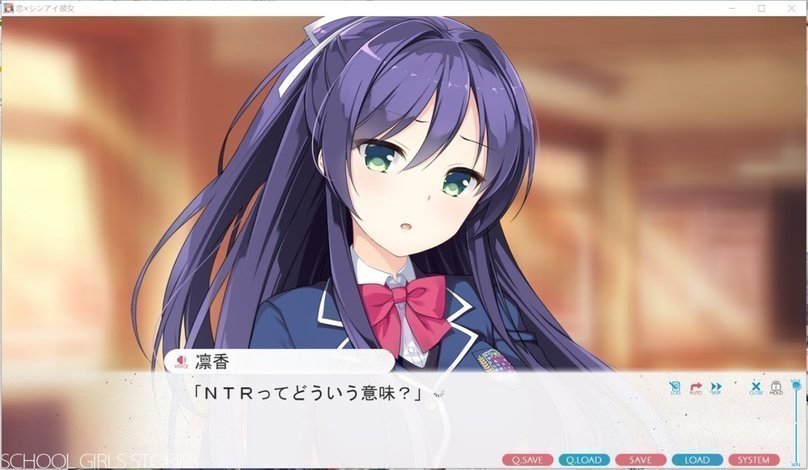
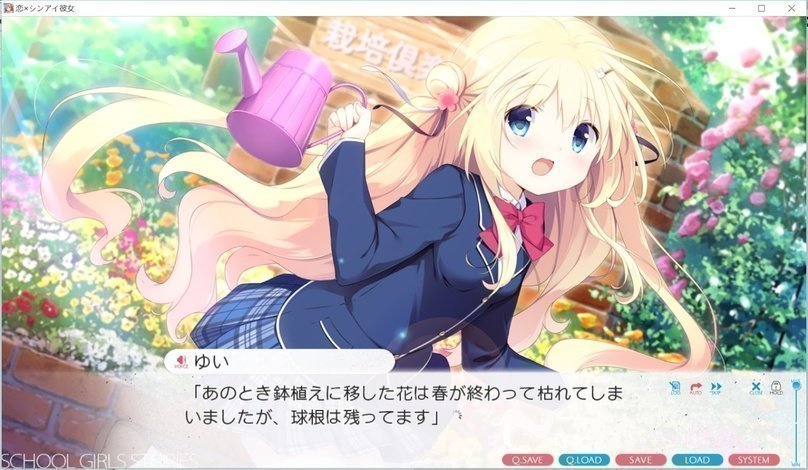
The Yui route is about surrounding the school flowerbed. The student council president’s route is about running for election and revitalizing school activities. Worth mentioning is Ayane’s route — that’s the real romance story. Ayane has always loved the protagonist; his childhood mistake of not responding created the awkwardness when they reunited. In the end, by expressing their feelings, it shows absolute sweetness. And Sendai Eri’s voice acting is genuinely great… The sweet scenes are stable, and it quickly reaches a happy ending.
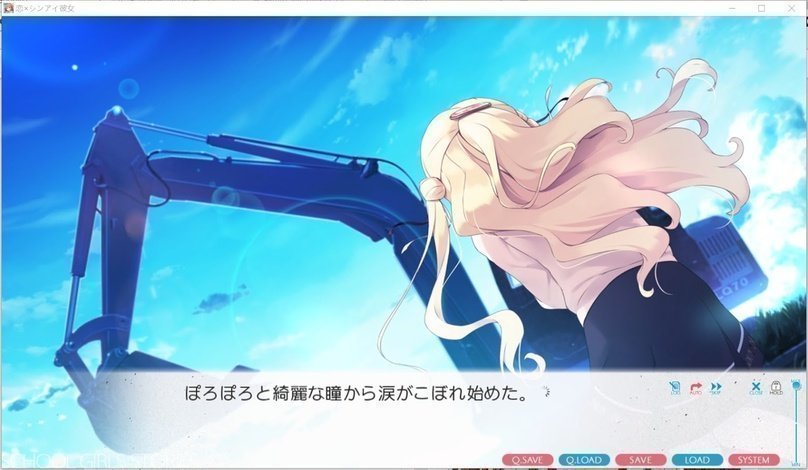
Actually, Yui’s route ending is also thought-provoking. The main thread is protecting the flowerbed her mother left behind. In the end the flowerbed is torn down, but they find her mother’s time capsule. Her mother tells Yui that flowers bloom and then wither, but even so, you can’t give up on blooming just because of that. The flowerbed is gone, but the flowerbed in your heart remains, and that’s how you can have a good life.
Yui is genuinely cute.
Great, isn’t it! These decent individual routes made my feelings even more complicated…
Why? Because all these so-called other routes are better than Hoshimiya’s half-finished one.
Hoshimiya’s story is full of mysteries so far: why didn’t she reply to the protagonist’s childhood love letter, why did she suddenly disappear the second time, why did she hide from the protagonist that she was a member of Glorious Days, and why did she run away from the second signing event.
Since I’ve cleared everything, that means I’m standing before the True End.
The moment I entered the True End, it was like stepping into a completely different game.
First, the protagonist has voice acting.
Second, the time has moved to after the protagonist started working — he’s 27. He’s become a school teacher, and things aren’t going well for him.
While working at the school, he meets an interesting female student, and they have hilarious conversations every day. Honestly, from the True End onward, you can clearly feel the slice-of-life becoming fun — completely different from the sleep-inducing content of the original routes.
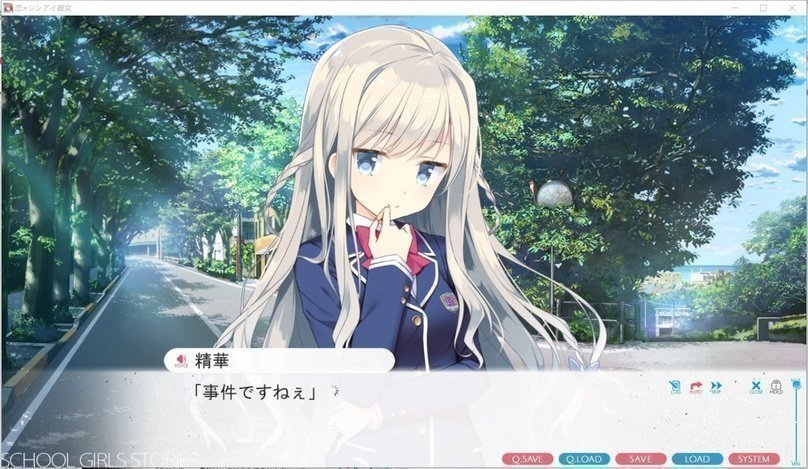
Why did the protagonist become a teacher? Because he felt he had no talent. He wrote Sayonara Alpha Cologne and Korekara Alpha Cologne, got very controversial reviews — mostly negative — and poor sales. So he gave up on becoming a novelist and stayed in his hometown as a teacher.
Then soon he runs into Hoshimiya on the street again…
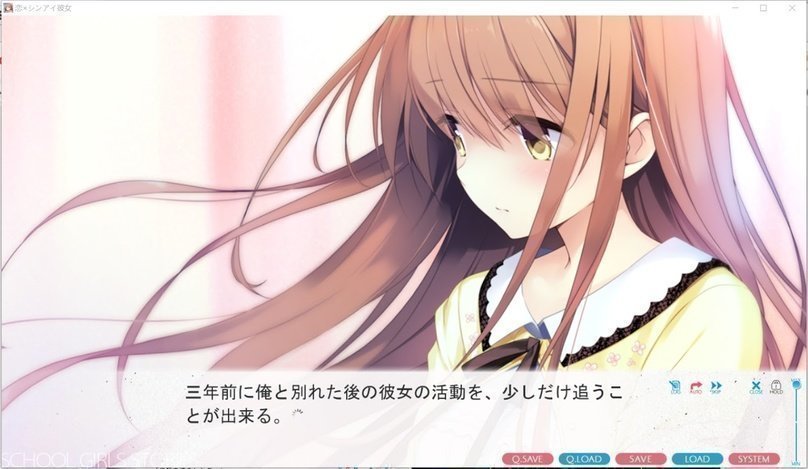
From their conversation, he learns Hoshimiya is no longer a band member. She’s just passing through. She jokes about whether she should stay at his place. The protagonist gets a bit angry and says:
“The last time you transferred here for half a year, you had some ulterior motive, didn’t you? You dated me, got your iPod back, and seemed to be searching for something. Once you were satisfied, you left without a word. You were using me for something, weren’t you?”
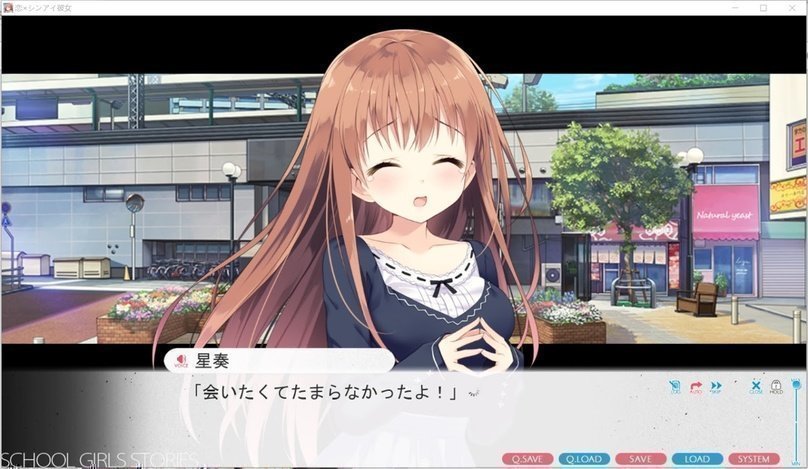
Hoshimiya freezes for a moment, then plays it off jokingly: “Uh… haha, you caught me… sorry about that…”
So the protagonist leaves angrily.
But soon, through a friend, he learns that isn’t how it was. The band’s business management failed, it completely disbanded, and Hoshimiya is now unemployed — practically homeless.
The protagonist feels sympathy. He figures Hoshimiya wouldn’t lie to him for no reason. He searches the streets for her again, for three days, and finally finds her. He tells her: if you have nowhere to go, come to my place.
Old lovers reunite, passion reignites, the protagonist realizes he still loves Hoshimiya, and she doesn’t seem to reject him… So they move in together again.
Soon, one day the protagonist has a premonition that Hoshimiya will disappear. The next morning he wakes up and finds she’s left a letter and gone…
“I’m sorry. I’ve caused you trouble these past days. I’m truly sorry for deceiving you in the past. I swear I won’t use you again, and I won’t appear before you again. Goodbye.”
Facing Hoshimiya’s departure again, the protagonist senses something deeper is going on. Not long after, he’s misunderstood over caring for the female student and can no longer be a teacher. He goes to work at his old classmate’s publishing house. While there, under the pretext of writing a feature on the rise and fall of Glorious Days, he starts investigating Hoshimiya.
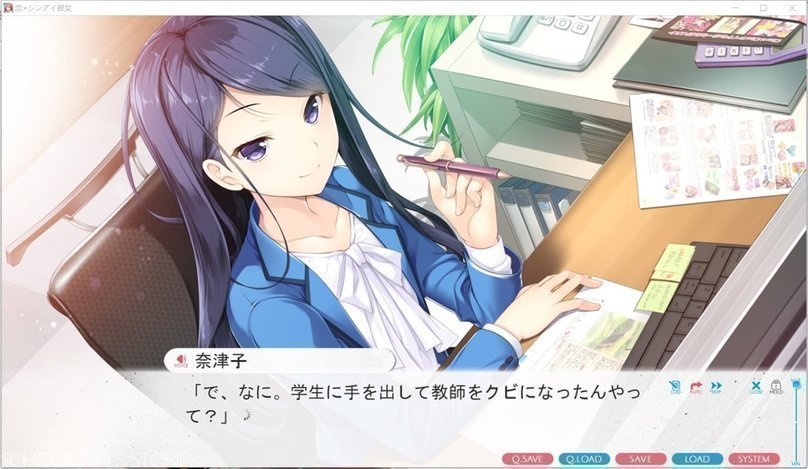
He contacts a former Glorious Days member. She doesn’t want to do the interview, but when she hears the protagonist’s name, she agrees.
“Koutarou, right? The person Hoshimiya talked about every day… her boyfriend…”
From the member’s mouth, the protagonist learns the whole truth.
Hoshimiya was a composing prodigy in elementary school. Back then she sent her compositions to a commercial company, which recognized her talent. The company had a girl-band project called Glorious Days, so they brought in Hoshimiya and other girls to debut as a band. Hoshimiya agreed.
Agreeing to debut meant she had to transfer away — and that was exactly the moment the protagonist first handed her his love letter. Hoshimiya received the letter and immediately left her hometown to start commercial activities. She told the other band members she’d received a love letter from a boy and was happy, but didn’t know how to reply…
But commercial activity is brutal, and Hoshimiya never had time to reply to that letter.
Soon, for various reasons — physical exhaustion, member conflicts, and her own lack of inspiration — Hoshimiya, the main composer of Glorious Days, could no longer write new songs.
Hoshimiya said she wanted to rest. The company agreed to give her half a year to return home, rest, and look for inspiration.
And that’s what leads to Hoshimiya transferring back at the start of the game. During those six months, Hoshimiya and the protagonist became lovers. But at the end of the six months, at the school festival, Glorious Days told Hoshimiya she had to come back…
Glorious Days came before her romance with the protagonist. Hoshimiya gave up the relationship, chose to leave without a word, and started her new career with Glorious Days.
But Hoshimiya still loved the protagonist within Glorious Days. The band members all knew his name — they all said he was the guy Hoshimiya talked about every day.
Glorious Days’ second boom didn’t last long either. The company squeezed the girls hard, and soon Hoshimiya’s talent dried up again. But this time there was no new rest plan — only more squeezing. Then internal strife, and Hoshimiya, unable to bear the pressure, attempted suicide… unsuccessfully.
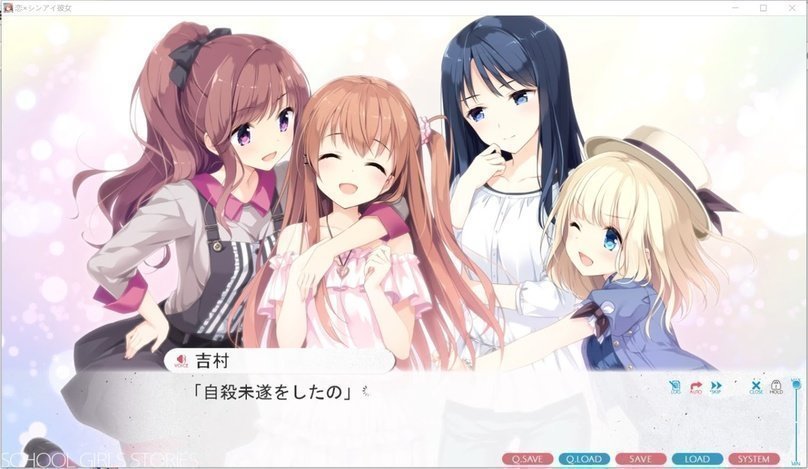
In the end, Glorious Days became a has-been band and disbanded… Hoshimiya returned to her hometown and met the protagonist again. Although he still loved her, Hoshimiya remembered all the things she’d done — especially leaving without a word in middle school — and felt deeply ashamed. She couldn’t face this boy. She could only choose to apologize again, leave without a word… and say she’d never use the protagonist again, never appear before him again.
After learning about Hoshimiya’s past and that history, the protagonist’s heart is a mess of emotions. He understands her pain and how hard these years have been…
He wants to see Hoshimiya one more time, but she’s said she won’t appear before him. He remembers Hoshimiya liked his novels — even though they got middling reviews, she bought and read them all, and even dared to show up at the signing event.
Then, because of some inappropriate reporting on Glorious Days, the protagonist gets fired from the magazine…
Unemployed again, 27 years old, facing his future and a Hoshimiya he can’t get back, he starts writing a new novel. The title: Kimi ga Alpha Cologne.
After the novel is released, the protagonist sits on a bench by the road, watching cherry blossoms fall from the sky, and writes a love letter to Hoshimiya in his mind, into the empty air…
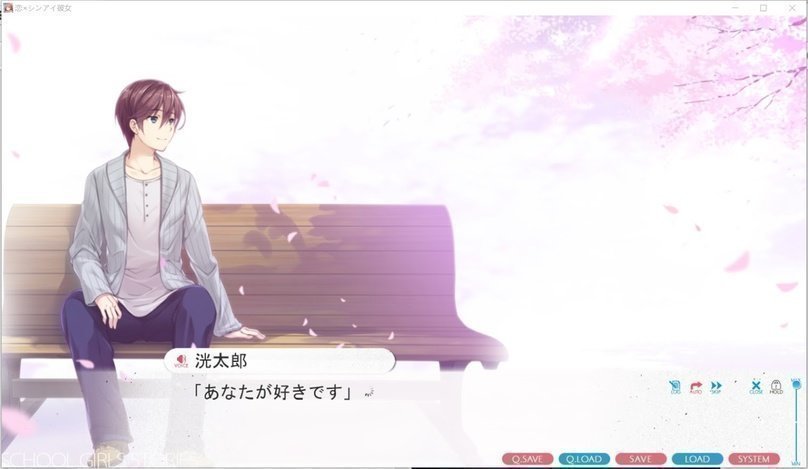
He realizes he still loves Hoshimiya that much, and he knows Hoshimiya loves him too.
He wants to see her, to see her one more time, to tell her how he feels, and he doesn’t want her to leave him again.
As he thinks, the protagonist falls asleep…
And at the very end, there’s a scene of Hoshimiya quietly sitting beside him, smiling at him.
Did the protagonist and heroine meet again? Unknown. After all, in that scene they’re still wearing their younger clothes.
The game ends.
So… landmine?
After finishing the True End, I was shaken. My head was full of “Why?”
Why is this True End so real and so painful? Why is the only good part of this game called a landmine? Why is this game’s ending called a toilet explosion?
Sure, the common route and the earlier individual routes are long and boring. The final True End is a big disconnect from what came before, and it deals with adult working life, already far from the game’s advertised “school romance” slogan. But even so, what it’s saying is clear.
A woman who once gave up love for her career, comes back to her hometown after her career fails, can’t face the man she once deceived and loved, and chooses to run. The man who loves her keeps chasing. That’s the story.
Have you seen 5 Centimeters per Second? If this counts as a toilet explosion, what does 5 Centimeters per Second count as? Shit soup? What does Chinese Paladin count as? Urine? What does Grass-like Years count as? Sheep shit pellets? What does April Rhapsody count as? A chamber pot? What does Palace of Desire count as, garbage?
The final stretch even made me feel like I was seeing myself. Once upon a time I loved a girl too. She did a series of things that seemed like “using” me. In the end, angry, I said some harsh things to her, and I haven’t talked to her since. Sometimes I think maybe she had her own reasons she couldn’t help, and maybe my words hurt her without me realizing.
The final stretch’s depiction of working life couldn’t be more real. Commercial companies exploiting and squeezing girl idol groups is completely normal. The protagonist’s confusion about the future at work, and his inner desire to write novels but helplessly giving up because he isn’t appreciated — how similar is that to all the people today with dreams who choose to put them down and live out their lives mediocrely…
I even wonder — did the writer put his own story in here?
I learned from Twitter that the final stretch’s script… was indeed written by Niijima Yuu.
I’ve heard before that Niijima Yuu started writing game scenarios after a broken heart, and wrote Natsuyume Nagisa and Hatsuyuki Sakura, both with rather tragic plots — at least not perfect Happy Ends. A bunch of kids online trashed him endlessly, calling his work “heartwarming” sarcastically and “heroine-abuse.”
From the final stretch of Koi × Shin’ai Kanojo, I feel like I’m seeing Niijima Yuu’s confession about his own writing…
The protagonist, describing his novels, says countless times that what he writes is highly controversial, and he often doesn’t know where to go, even though it always gets accepted. Think about it — maybe the writer is speaking through the protagonist’s mouth, voicing his own heart.
And in the end, the protagonist reaches a resolve: what he writes, he’s definitely prepared to endure malicious reviews for.
Combined with the game’s final development and its still-sad ending, Niijima Yuu probably prepared himself to be cursed out too. But even so, he insisted on stuffing this in.
Actually, “stuffing it in” is accurate. According to something I saw somewhere, this game originally had no True End — it was supposed to end plainly and simply. Because up to that point, the game still lived up to the “school romance” banner.
The final True End is more like a bet. Some say it’s like going off-topic in a college entrance exam essay. I think so too. But every year, even though the Chinese exams emphasize no poetry and require 800 characters, there are still frequent cases of people getting full marks with poetry through exception, right?
Maybe what Niijima Yuu bet on was that “exception.” For him, this is the story he wanted to tell, and he still has a bit of that unwillingness to compromise.
In that respect, I admire him. I won’t call him a “high-schooler-tier writer” anymore. Being able to write this story proves he’s got real substance.
It’s just — was doing it this way good, or not?
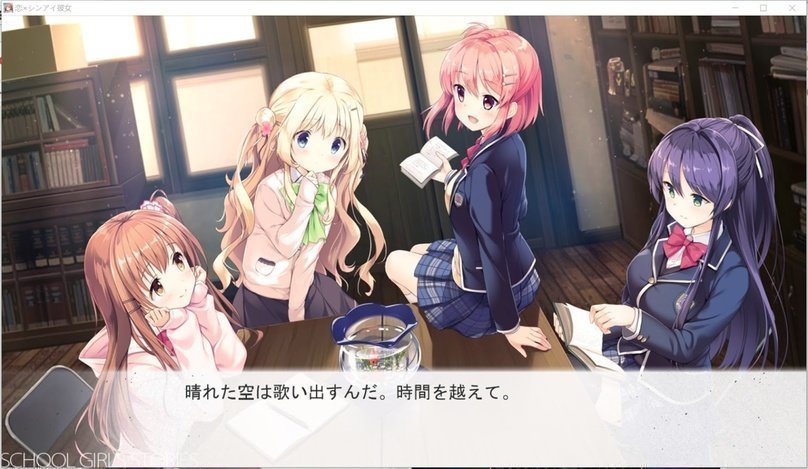
I thought about it for a long while and got nowhere. This True End is probably something a lot of people can’t accept, because it breaks the usual trajectory most visual novels follow — it drags in something that feels like a Korean drama, kind of melancholy, and it also betrays the game’s original pitch: campus romance.
But this True End hits right for me. All I can say is that, personally, the True End is this game’s biggest highlight, not some black mark.
Oh, right — I should stress that I’ve been talking about the True End the whole time. Looking at the game as a whole, it has plenty of problems: a flat common route, the sleep-inducing Hoshika END1, and that lullaby of a soundtrack… Even if the ending is god-tier, the game overall isn’t anything great. At best it’s mid, with a slightly unexpected finish…
Still, that doesn’t make the game a “landmine” or “shit bomb.”
I can’t wrap my head around it. Even if the protagonist and heroine don’t end up together in the final ending, that’s no reason to call it a landmine or force-fed shit. Why do people say that? I checked the reviews on Kanshou Space, and most of them say it “doesn’t match the title” — exactly what I said earlier, that the last stretch betrays the game’s original pitch of “campus romance.” Put harshly: false advertising.
But false advertising is false advertising, and force-fed shit is force-fed shit.
I searched for ages and finally found the original Baidu Tieba post calling this game “shit-eating.”
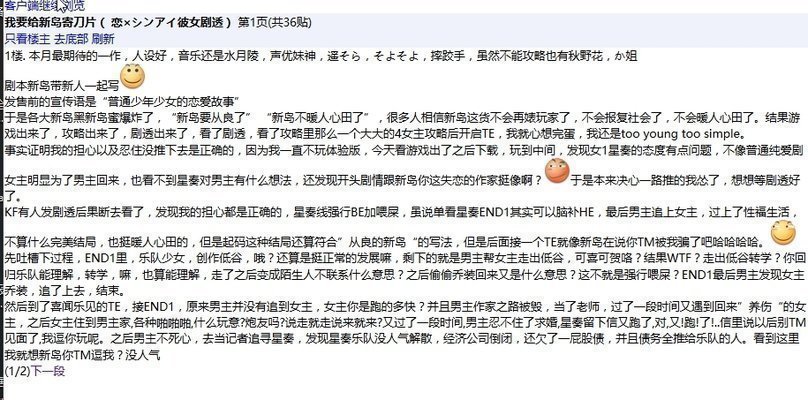
I admit I hadn’t been angry in a long time. After reading this, I still got pissed off…
How twisted does a person have to be to read it that way? How malicious does a person have to be to say something like that?
I even doubt these people know Japanese. I don’t think anyone who’s actually played the game would say this so lightly. The game has flaws — plenty of them — but not the kind described in that post.
Thinking it over, back then some people called LoveRec a landmine and a shit bomb too, just because of the final harem fantasy ending — a bonus meant to serve the players, twisted into being treated as the main story.
Haha, I couldn’t help but laugh out loud. I’d forgotten there are people in this world who take pride in being twisted. With a sigh, I want to tell them:
“If you love eating shit so much, go eat shit!”
Shit in the heart, shit in the brain.
However thick the shit, that’s how foul the mouth.
Comments are hosted on the Chinese main site. This mirror is read-only.