A Few Days with FiiO X7
FiiO X7
As a FiiO X5K user, I can’t say the FiiO X7’s hardware upgrades excite me much. I never bothered reading closely about which chips it upgraded or what tech it uses, because sound-wise the X5K already satisfies me — at least it has way more driving power than the ZX1, and the basics are good enough. Tuning is all smoke and mirrors anyway; you can fix it with earbuds.
But one thing about the X5K always grated on me: the UI.
FiiO already has the best UI among Chinese DAPs, but the X5K’s godawful dot-matrix font and lack of touch support drove me crazy after getting used to Sony’s stuff. Browsing for songs was a nightmare. And the kicker: even though the X5K handles album art and other metadata well enough, song names in the file list still show up as filenames. I was stuck navigating piles of 1.XXXX-XXX.flac, and since a lot of them start with album numbers, sorting to find anything was hopeless. I gave up on that idea.
You can probably guess what I’m getting at. The biggest win of the X7 for me is the brand-new touch-controlled UI. When I first heard FiiO was making an Android player, I was worried about a Chinese Android playback UI — figured the best case was it barely escaping the shanzhai smell. But after the product came out and I watched some overseas review videos, it surprised me quite a bit.
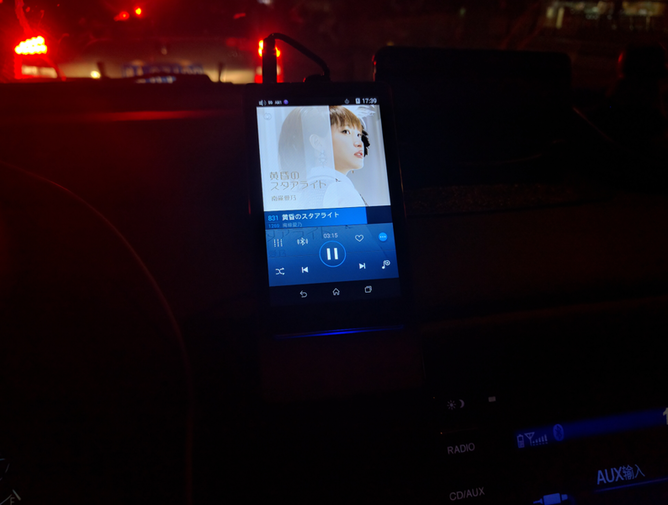
No need to beat around the bush: honestly, this UI is already pretty great.
There are plenty of videos online about the UI controls, so there’s not much point in me describing it. I’ll just say that for control and song selection it’s basically on the same level as the Walkman, and the layout is reasonably sensible. So for my UI needs, the X7 already exceeds expectations.
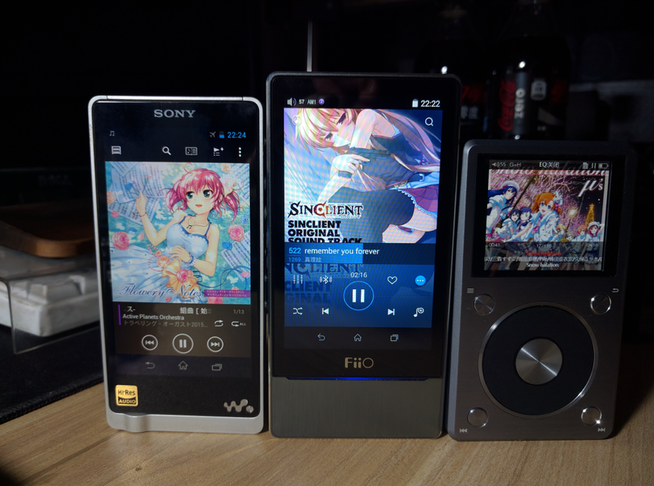
Of course, for a portable player, talking only about the UI isn’t enough, so here are some quick impressions.
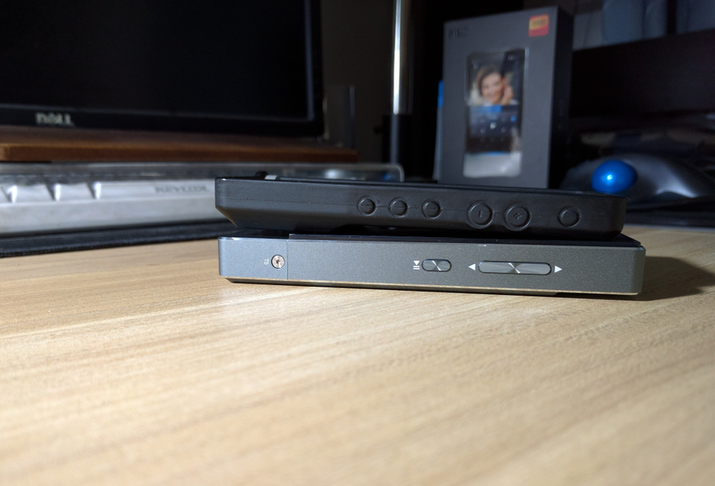
- The thing really is a brick… I mean it’s a full size bigger than the ZX1, but still acceptable. Fine for taking out.
- Build quality is excellent. The buttons on both sides have soft rebound but feel good in hand — different from the ZX1’s stiffer ones, each has its merits.
- Supposedly the body is cut from a single block of aluminum, and it does look like they put thought into it. Detail work is better than the Walkman ZX1 — you know the ZX1’s volume button is still crooked, right?
- There’s a blue breathing light in the middle of the unit, but it stays on whenever the player is on… FiiO says a firmware update will let you turn it off later.
- The screen isn’t great. FiiO stresses it’s IPS, but it looks noticeably grainy. Resolution is about the same as the ZX1, but the ZX1’s screen is smaller, so of course it looks finer. The colors also look washed out — I don’t know if this is a cheap “IPS” panel.
- The player ships with a bottom amp module called AM1, and you can swap in more advanced amp modules later — they call that flexibility. Sounds like a pie in the sky to me; who knows how they’ll sell them down the road.
- There’s a LO output on top, and the headphone output is on the bottom amp section. In theory, if you only use LO, you don’t need the bottom part.
- The player has two modes: Android mode, and a pure music player mode that disables most other useless functions (basically like the ZX1 with airplane mode on, most apps disabled, and wireless/Bluetooth off).
- On battery life, the system has a “shut down after 20 minutes idle” option, but I haven’t seen it work yet. If it worked, battery life would probably beat the ZX1, because 80% of the ZX1’s power goes to standby.
- A quick test: the X7’s battery life is okay. After an afternoon of fiddling it dropped 17%. If auto-shutdown worked, using it for days would beat the ZX1 sitting in standby.
- LO output quality is very high. Never mind hooking up other amps — even just AUX into a car stereo the difference is obvious. FiiO shows off its measurements everywhere, so I figure the fundamentals are there.
- The bundled AM1 amp doesn’t sound as impressive as LO. Overall it trends the same as the X5K — balanced across the three frequencies — but the sound is a bit muffled, maybe because the highs aren’t as bright as the X5K’s. Personally I think the AM1 module has a lot of room for improvement. Maybe FiiO knows this too and will release new stuff to milk us later.
- In Android pure-music UI mode, controls are mostly smooth, but there’s an occasional 1-second stutter, most noticeable when swiping out the list from the left.
- Song search and sorting follows standard pinyin, alphabet, even the gojūon table — but search only supports Chinese and English. There’s no gojūon swipe search for Japanese, since FiiO isn’t Sony catering to the Japanese market.
- The Android system isn’t very stable right now. It happened twice where playback froze for a minute and then resumed.
- In the playback screen, all English artist names are fully capitalized. Some artist names can’t just be capitalized arbitrarily — Ceui, for instance.
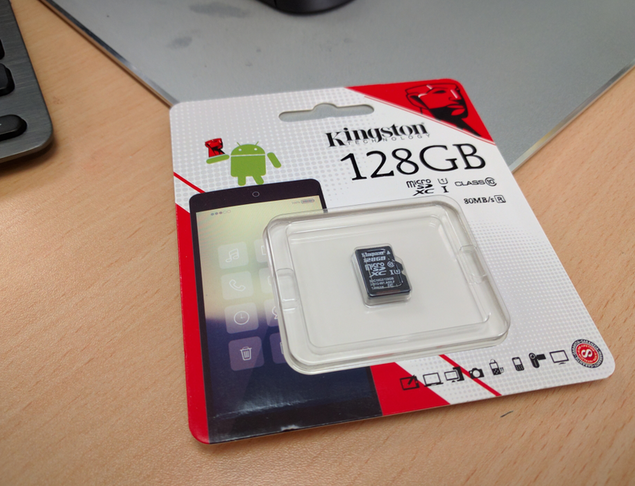
- The player supports 128G TF cards. I also solved the problem where songs copied via Rhythmbox to a TF card couldn’t handle long filenames — seems it was limited by the exFAT format, which is what the FiiO X7 formats to by default. Long filenames like August’s symphonies couldn’t be copied. The fix is simple: format to NTFS. Sure, they say it shortens TF card lifespan, but whatever, who cares.
From what I’ve seen of the X7, I like FiiO more and more as a company. Say what you will, but FiiO’s products aren’t afraid of being torn down and inspected — the parts inside are genuinely stacked in your favor. The X5K’s parts weren’t bad either, but selling at that price definitely had something to do with cutting corners on software. So this time FiiO put Android on the X7 and focused on software UI and controls — that’s a fairly big leap, and more importantly, the leap turned out pretty good.
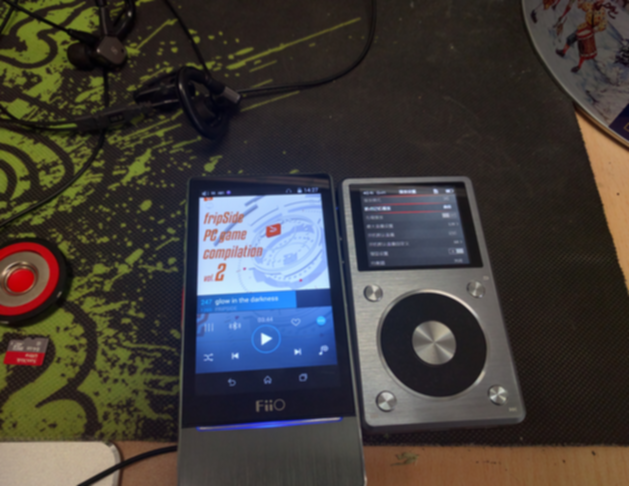
What’s also nice about FiiO is that they’ve always been good at the “cheap but convenient for users” details — a screen protector in the box, a shirt for promotion, and all sorts of accessories included. It’s pennies for the manufacturer, but it easily wins users over.
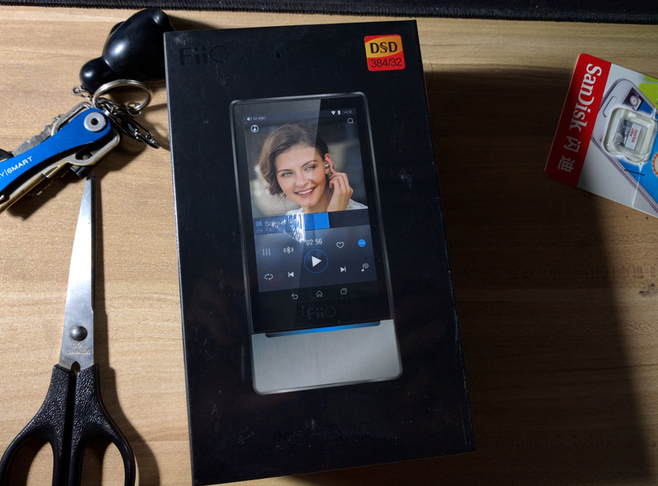
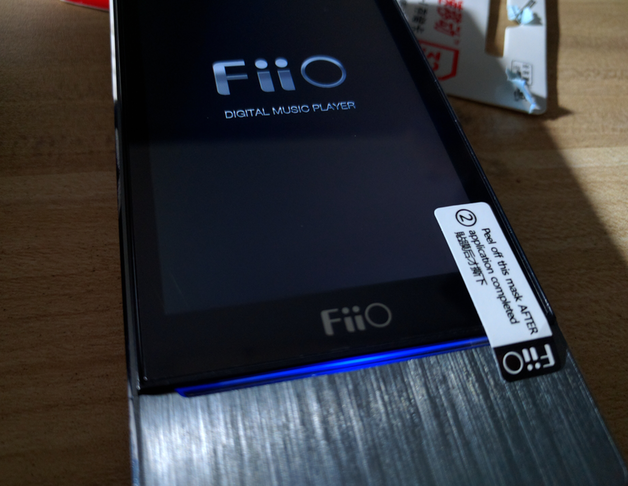
A lot of people don’t think much of FiiO’s tuning. Actually, I think those FiiO folks are right on this point: as a Chinese company selling players, Hi-Fi means chasing that “high fidelity” — faithfully reproducing the original sound without loss. That’s probably why FiiO seems to show off its test results. On the numbers, this Hi-Fi player delivers.
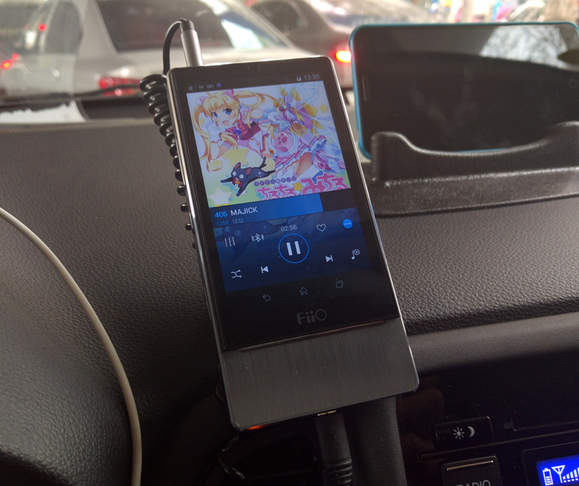
As for listening feel, ordinary Hi-Fi presentation can be tiring — especially for songs mixed in a studio, where vocals, highs and lows all sit at the same level and sound messy and exhausting. That’s also what a lot of people dislike about FiiO.
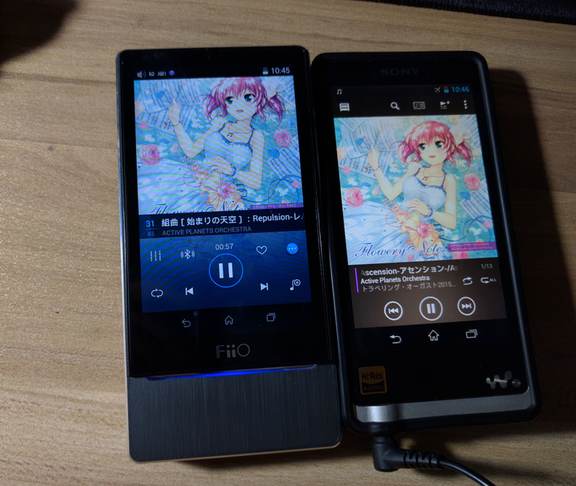
Personally I think it’s fine. At first I listened to a few game OPs and really couldn’t get used to it, until I listened to some Lives — the unreserved reproduction of the venue made me realize that so-called Hi-Fi does have a method to it. As long as it can reproduce the live sound and put you there, that’s enough. As for tuning for pop, maybe just swap earbuds.
I said before, “if I buy another snake-oil product, cut my dick off” — and yet I bought it. What’s coming will come, what’s owed will be paid…

Anyway, the dick’s been cut. Do as you please…
There’s also a video here:
https://www.youtube.com/watch?v=FGI-6C388cY
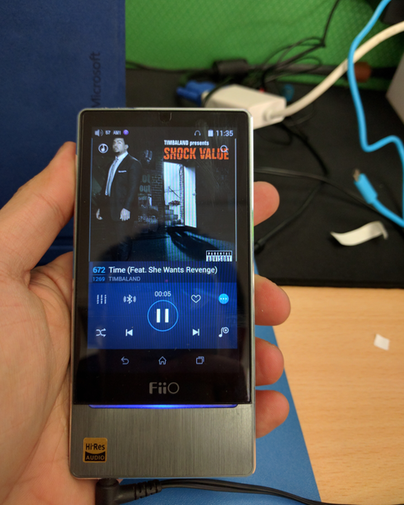
Finally, don’t forget the faithful gold badge.
Comments are hosted on the Chinese main site. This mirror is read-only.