Soratobu Hitsuji to Manatsu no Hana (空飛ぶ羊と真夏の花) Review
"I Said Story, Not Like That"
When I first started out as a web editor, I thought it was a sacred job.
After all, so many people are reading what you write. What you write has to be responsible to others—no garbage content, no stupid opinions, no vague phrasing.
I don’t remember what the article was about, probably browsers, let’s say Chrome. That day there was a foreign news report saying that some version of Chrome had a lower security rating than IE9. So I compiled a news piece: “Chrome Version XX Less Secure Than IE9.”
The news went up and was quickly taken down by the editor-in-chief, followed by a private talk.
“The news is fine, but it has zero impact. Your headline is too bland.”
I tried to explain that I knew the headline was bland, but it was the best I could do to summarize the news with the fewest words.
“No, that’s not what I mean. I mean your headline isn’t interesting, isn’t attractive, doesn’t make people want to click at all.”
After thinking for a long time, I got it. The editor-in-chief meant I wasn’t enough of a “clickbaiter.”
Actually, I’m great at clickbait—just like I’m great at knowing what you want to hear me say, what you want to see me post, what you want to see me express. I think I’m pretty good at reading people’s minds. So after reading the editor-in-chief’s mind, I changed the headline to:
“The Truth? Chrome Security Gets Crushed by IE?”
The new headline got praised by the editor-in-chief, who also said I was quick-witted and worth learning from by other new editors.
But I always felt that creating a headline like that made me lose something. And later, I realized it was that little bit of restraint and integrity regarding professional ethics—“integrity” for short. Meanwhile, the editor-in-chief’s demands for headlines kept getting higher, to the point where some headlines felt like outright fraud, but I’d happily publish them anyway.
“Clicks mean money, means profit. Everything else is bullshit.”
“You can’t even afford food, what integrity are you talking about?”
That actually makes sense… for work, you first need to fill your stomach. If you starve to death, what good is integrity?
But integrity aside, I couldn’t tolerate deception… repeatedly producing clickbait news, even bottomless deceptive clicks, made me sick.
Years later, I’m no longer an editor, but looking back at the places I worked, it’s still one clickbait headline after another, worse than before—or rather, they’re playing it up even harder. The public complains, but what can you do? You complain about clickbait while still reading it, don’t you? Every click turns into someone else’s money. Sometimes users are just that cheap.
Even I, who hate clickbait, occasionally get tricked into clicking a few news stories, then curse after finding out the truth, only to quickly realize how ugly I am myself.
Actually, sometimes I kind of understand—an attractive headline does have a bit of necessity, because plenty of news gets buried in the ocean of information due to bland headlines. The same sentence, between interesting and rigid, we’d all choose the “interesting” side. Same for news headlines. I think that’s exactly where “the charm of writing” and “the charm of words” lies.
One hand can’t clap, the flood of clickbait isn’t one side’s fault—it’s just that society is too restless.
So that shouldn’t be an excuse to not make “originally rigid text” interesting. Headlines are like that, news is like that, stories are like that, and I think games with plot are like that too.
An interesting story plot—I used to think its interestingness was about setting, direction, pacing. But now I’d add one more: it’s also about how the story is arranged, and it matters a lot. Good arrangement can make a game full of suspense and fun at all times, while bad arrangement can turn an originally interesting story into a boring one—just like the game Sorahane (空飛ぶ羊と真夏の花).
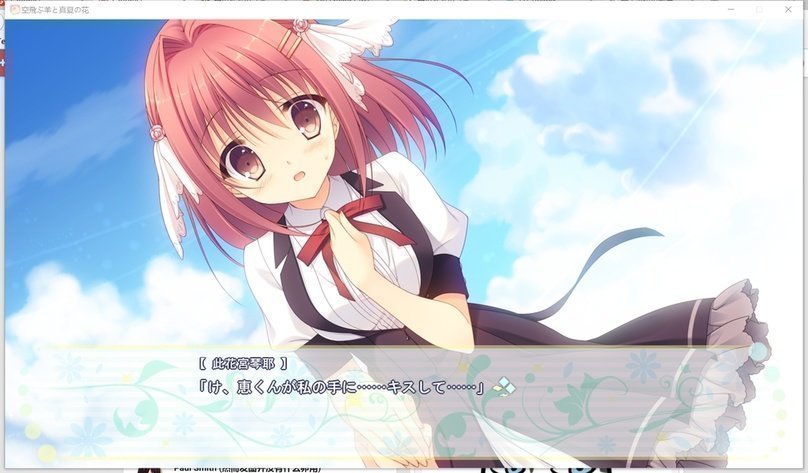
Sorahane is the debut work of Navel honeybell. You can tell what kind of company it is just from the name, so I won’t waste words.
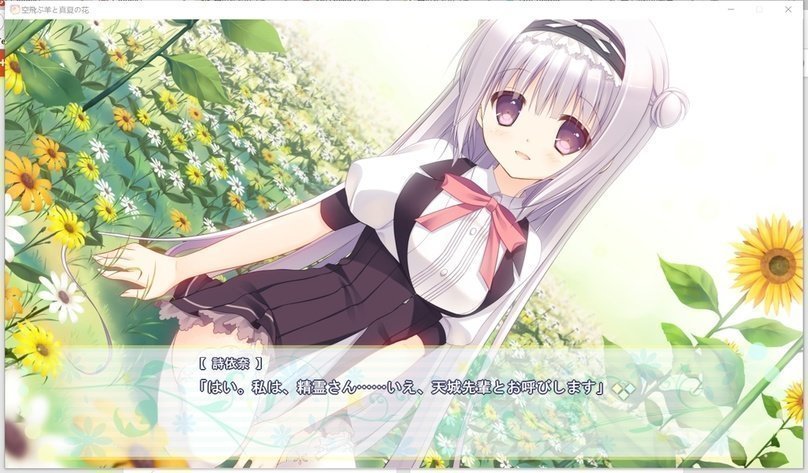
Sorahane is exactly a game that fails to tell an “originally interesting story” well, and instead makes it very boring. After completing it and looking back, I found that the story actually doesn’t have any major flaws—rather, it has many highlights. But to squander all those highlights so thoroughly takes some serious effort.
The game’s story is pretty straightforward: the protagonist is a god in heaven, watching over and observing the world every day. The god has a little sister, a goddess, who one day chats with her brother (the protagonist) and says heaven is so boring—if she jumped down to the human world and reincarnated, could her brother find her and bring her back?
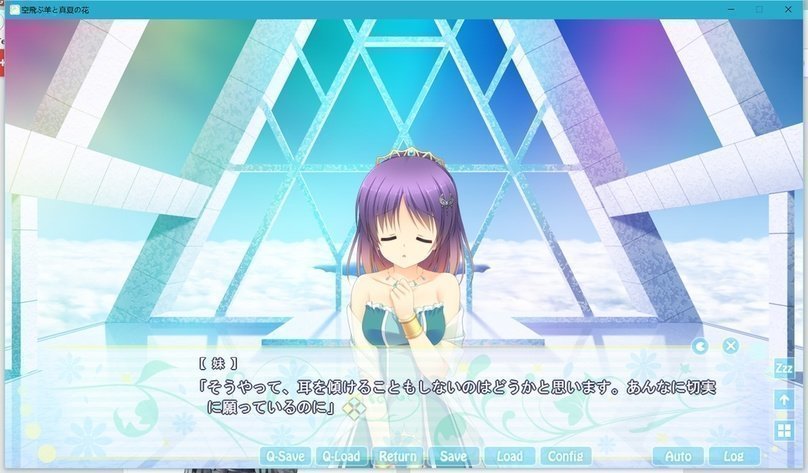
As a god, the protagonist naturally doesn’t take it seriously, but the sister goddess actually jumps. Before jumping, she says this is a game (ゲーム) she’s playing with her brother.
The sister is gone, presumably reincarnated as a human in the lower world. The protagonist, as a god, is quite uneasy. Then an angel appears, claiming to be the sister goddess’s guardian angel Meriel. She warns the protagonist—the god—to go down to the lower world and find his sister as soon as possible. The protagonist has no choice but to descend. After descending, he doesn’t reincarnate but directly sets himself a background: an orphan whose parents died early, adopted by a young lady named Kiyoya Kotoha. At this point the protagonist has become human, named Amagi Keisuke, and has lost his memories of heaven—in short, he doesn’t remember being a god. So he lives honestly as an orphan, even going abroad to study and becoming the butler of the young lady who adopted him, quietly living a life of going to school and working as a butler with her, and meeting many friends and girls at school.
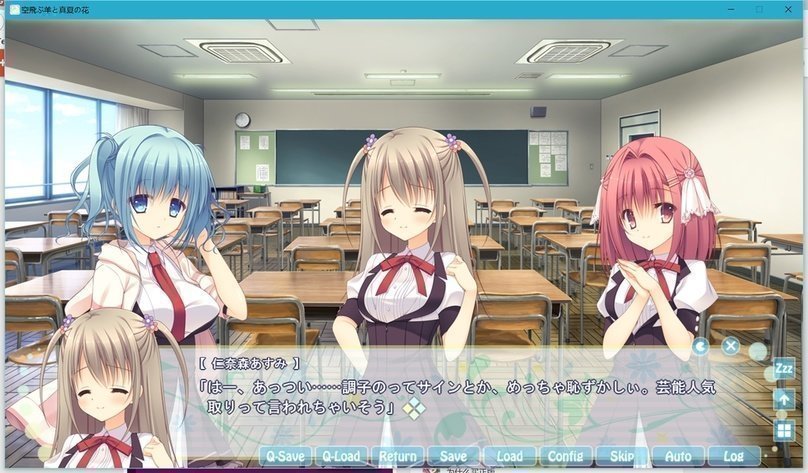
A guy claiming to be an angel named Meriel appears (yes, the same angel from the beginning) and tells the protagonist his true identity is a god, that he originally came down to find his sister, and reminds him not to forget the real business.
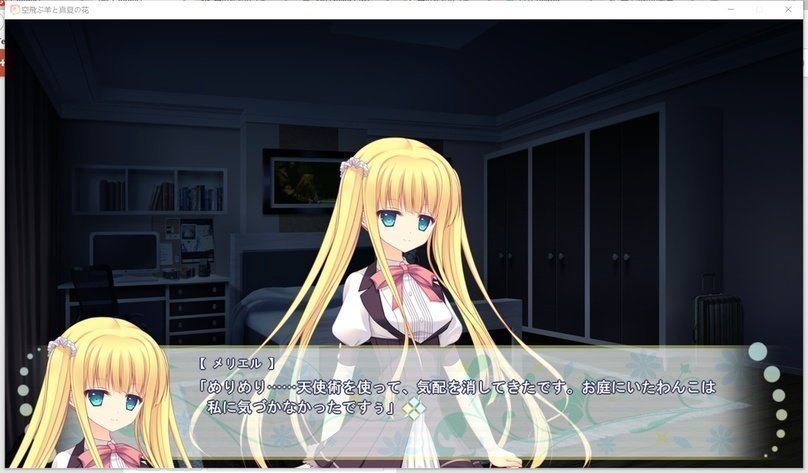
Naturally, the protagonist is skeptical, but as a human he occasionally dreams about the gods in heaven, so he chooses to believe her. The angel tells him that to awaken his sister, he needs to collect several fragments (フラグメント) scattered when she fell to the mortal world, so that the sister awakens and returns to heaven with the protagonist, ending this so-called game farce.
So where are the fragments? Meriel gives candidates, all people the protagonist has seen at school: the president of the superpower club, the student council president, an idol friend, a mysterious girl seen in the school garden, and his own young lady (probably?).
So the game’s story is about conquering girls, collecting the fragments of the sister goddess attached to them, then awakening the sister and returning the god protagonist to heaven to restore order. This setting is quite similar to The World God Only Knows—they collect lost souls, you collect fragments—but the development is different. Katsuragi Keima clears his memory after each conquest, while the protagonist, a human who was once a god, after conquering… stays in the human world forever.
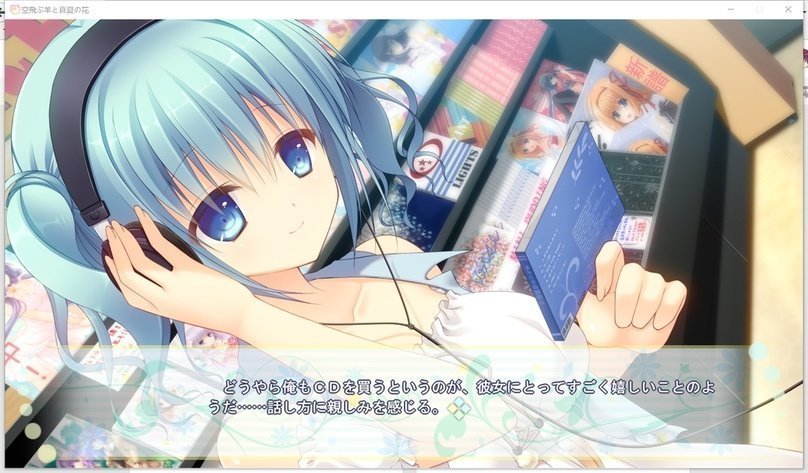
Yes, in each heroine’s route in the game, the fragment’s influence on the heroine is crucial. Some become a source of confidence, some gain superpowers because of it, some have a special talent for singing, and some… rely on the fragment for special power to stay alive. After falling in love with each heroine, the protagonist can’t let her go, can’t cruelly abandon her and return to heaven alone. Although Meriel assures him she’ll erase the girl’s memories and reset everything, once the protagonist has loved, he can never forget that feeling. Every route’s ending is the protagonist and heroine unable to forget each other, choosing not to be gods but mortals, returning to the human world to continue living with the girl.
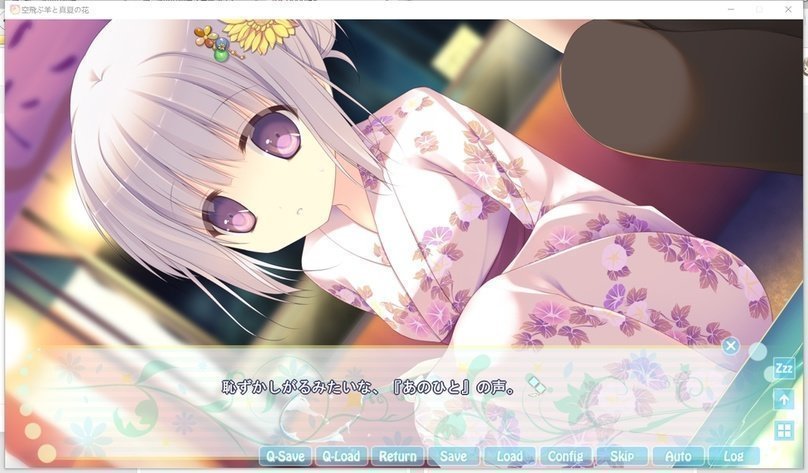
Actually, just looking at the routes, they’re very moving and fully express the beautiful longing for love, quite like the ancient Chinese sentiment “If we can be like fish swimming side by side, why fear death; I’d rather be mandarin ducks than envy immortals.” But looking at the whole game, this kind of plot feels weird.
The game starts with the protagonist and his sister playing a game. Because of the sister’s selfishness, the protagonist has to go down to find her. Logically, the ending should be about the sister, and the so-called Happy End should be the protagonist going through all sorts of hardships to find his sister.
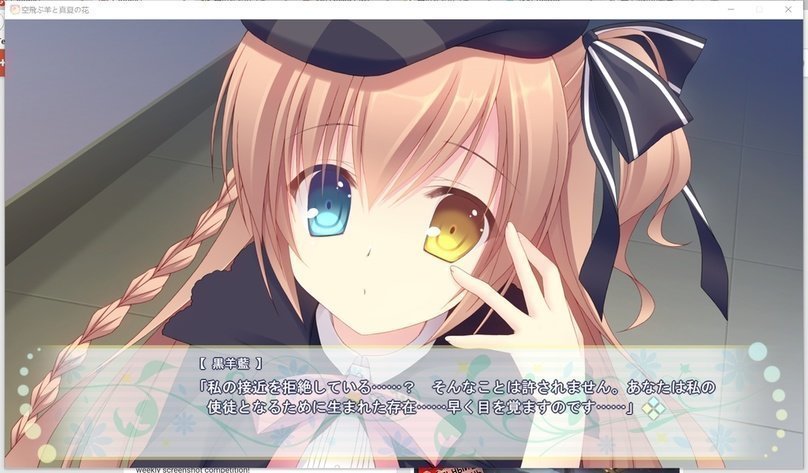
But all the route endings in this game have the protagonist falling in love with a mortal girl while looking for his sister, ultimately choosing not to be a god and leaving the sister alone in heaven. One route is even more direct: the sister appears and confesses to the protagonist (actually, the sister’s CV, Ui, exposed that character from the start), only to be rejected…
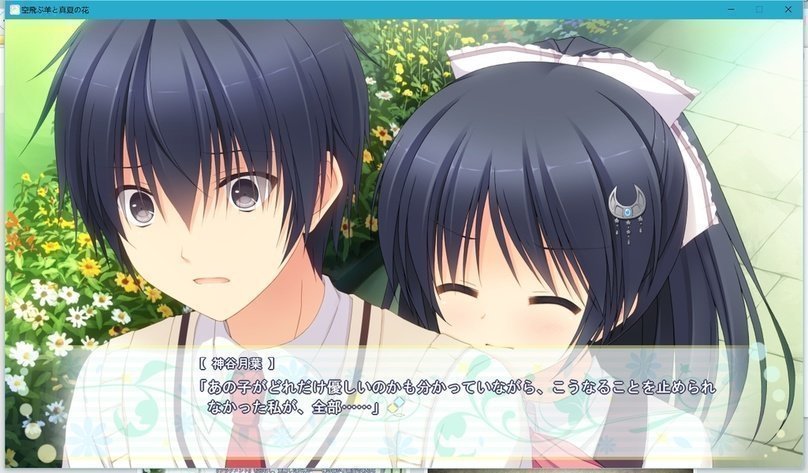
It’s not that there’s no ending related to the sister route—if you pick options randomly and reach the Normal END, the protagonist doesn’t fall in love with any girl, Meriel pops up saying the game is over, the sister appears, and the protagonist returns to heaven with her…
So the ending closest to the game’s normal pacing is a ridiculously short Normal End. What the hell?
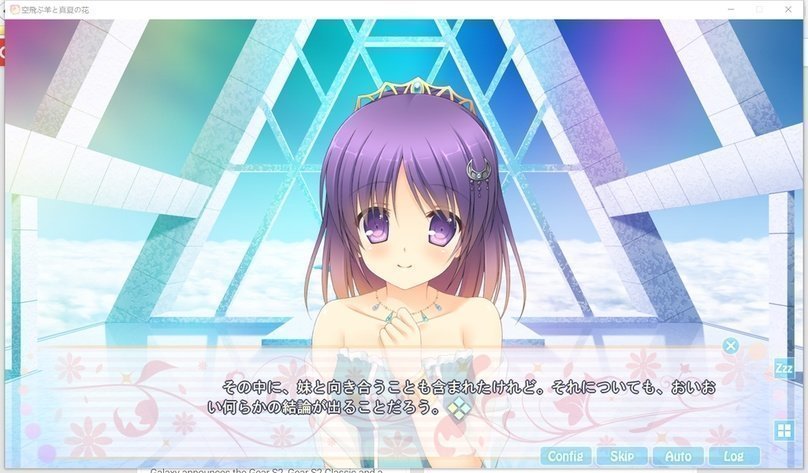
Also, generally, this kind of game’s plot should develop with the protagonist starting as a mortal, beginning a romantic school story, then an angel pops up and he’s skeptical, and finally a story lock opens the True End, where the truth is revealed—the angel really is an angel, the protagonist really is a god, everything was just a game, and after much hardship he finds his sister, then a sister route and a heartfelt confession. That’s the proper development!
But this game has no story lock, only conquest stories with the fragment holders, no direct story with the sister, just a Normal End. Even more incomprehensible is the storytelling: from the very beginning, it uses a dreamlike feeling to directly tell the player that the protagonist is a god, everything is a game. The setting is explained, and the main story begins. But doing it this way removes all suspense from the game… I originally thought there’d be a hidden ending, a sister route, but there isn’t.
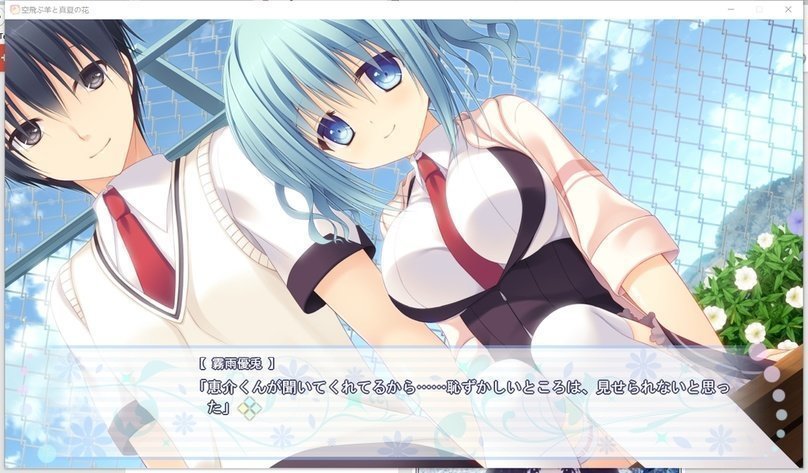
I don’t know what the scenario writer was thinking. The game starts exciting, but the middle has no suspense, and the end doesn’t deliver a surprise sister route. The player goes from initial excitement to increasing boredom… more and more boring, and the heroine routes are numerous and long, making it hard to keep reading.
Ah, that’s not to say the individual routes are terrible—they’re actually pretty good. Whether it’s the baseball showdown, the chuuni magic research, the young lady’s, the girl with the terminal illness, or the idol, they’re all decent stories. But… they’re like a plate of loose sand. Apart from the common point of collecting fragments, there’s no skeleton connecting them. In other words, they have nothing to do with the main plot! And the route patterns are very uniform: most involve a rapid confession, lovey-dovey show, then Meriel appears warning the protagonist not to fall in love as a god, the protagonist ignores it, and finally chooses to be mortal instead of a god… etc., etc…
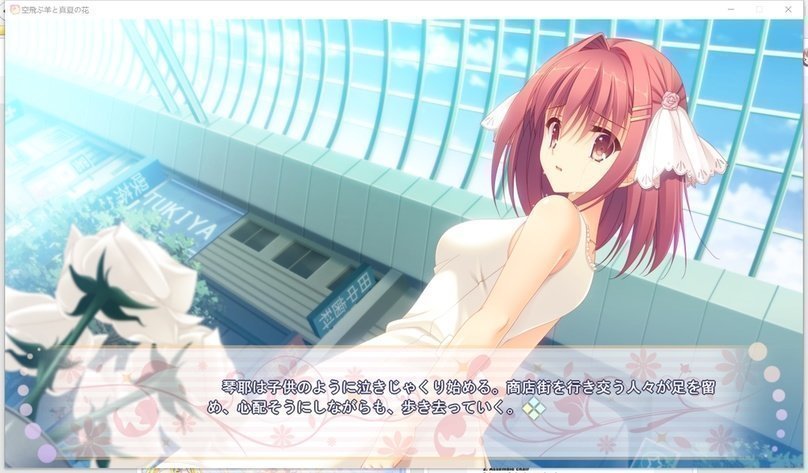
Or rather, is the game’s main plot just that Normal End?
Ah, no wonder some people give this game low score after low score. To me it’s really a shame—if they just changed the narrative method, it would be a good setting and story. It wouldn’t be hard: add a sister route, include a story lock, and put the bet with the sister in the final True End.
Maybe the scenario writer was too honest, or maybe it was a planning mistake. Anyway, this game is like a clown who spoils itself—you know the ending from the start, and the ending is indeed that ending, no surprises, no shock, just that.
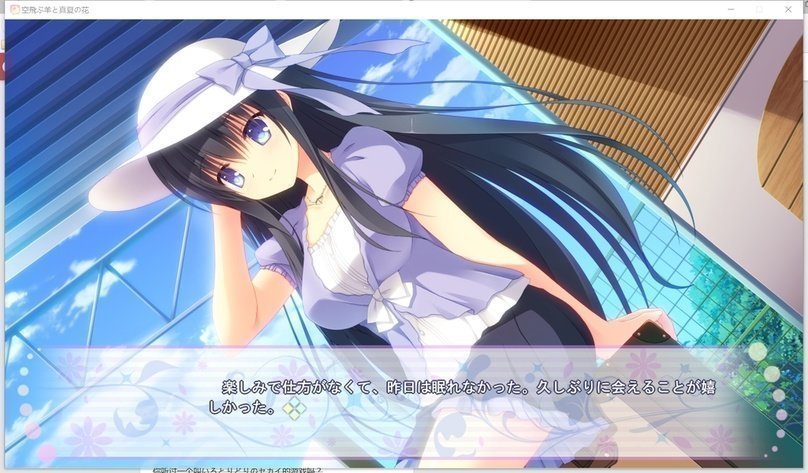
The game’s art is absolutely gorgeous, the CV cast is luxurious—Uehara Aoi, Kiritani Hana, Ui—all talented. The music is lovely, the OP is literally toxic, and the game system is thoughtful: even skip works chapter by chapter, making it easy to jump and locate.
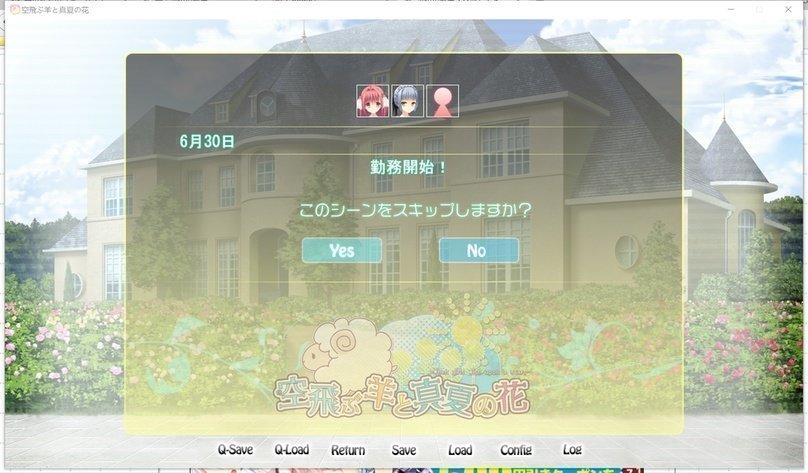
But such a game where everything is fine is turned into something like a sleep aid by a poorly arranged story.
Watching Shaolin Soccer, one line stuck with me:
“I said ball~ not kick like that!”
I want to say the same to this game’s scenario writer:
“I said story, not write like that”
Comments are hosted on the Chinese main site. This mirror is read-only.