Kodomo no Asobi (コドモノアソビ) Review
Meizu to phones is what Lump of Sugar is to eroge
Let’s talk about Lump of Sugar for a second. Back when I didn’t know any Japanese (still don’t, for the record), I figured this studio was hot shit. Mostly because the name sounded nice and because everyone and their dog kept holding forth about it. And whenever someone says “Lump of Sugar,” I picture an elegant girl sitting on a street corner in the afternoon, watching the crowd drift past under the awning, dropping a sugar cube into her coffee with pale fingers. Very atmospheric, very mood.
But mood is mood, and in reality Lump of Sugar is just a company that makes porn games. Yeah — the kind that otaku love to gab about, big tits bracketed by mosaic, flesh-colored straws spraying white gunk. The feeling is like that elegant girl I just described taking a sip of her coffee, then suddenly shuddering, cheeks flushing, all because the black uncle running the shop next door has a remote-controlled vibrator stuffed inside her.
The whole thing changes in an instant…
So what I’m saying is that Lump of Sugar games have always been like that for me: one impression before I play, and then everything flips the moment I actually do. Like most men who look at a girl’s face before her dick, I get hooked on a visual novel by two things: the OP and the premise. And those are exactly the two things Lump of Sugar is best at. I go in all excited, start playing, and it’s nothing like what I expected…
I played Unmei Senjou no φ first and found the plot so mind-numbingly stupid it was infuriating.
Then I played Rensou Relation, and its insane route locks and keyword-based branching system made me curse my own existence several times over.
And now here comes Kodomo no Asobi. When I first got asked to play this one, I said no. But the OP was too catchy, so I got suckered in again.
How do I put it… the story is a bit better than those last two, but everything else became the weak point.
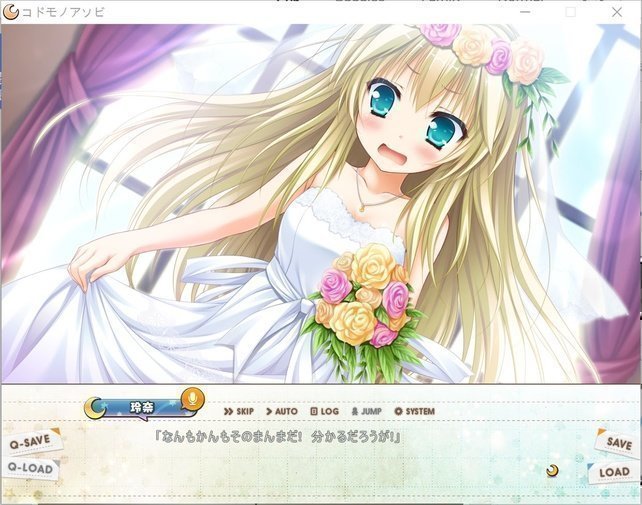
The game’s title, こどものあそび, kodomo no asobi — “children’s games.” The story is about children’s games too. The setup: the protagonist and his childhood friends, including his little sister, summoned a witch named Sarah seven years ago and performed a ritual aimed at “granting wishes.” Everyone offered something of themselves to Sarah and in return got a power to make their wish come true (later they call it a ルール or something — I don’t remember, probably the katakana for “role”). Normally Sarah would have digested all those wishes, but one went undigested: “romantic feelings for the protagonist, Kiyosumi.”
Meaning that during that childhood ritual, someone offered up their “feelings of love” for the protagonist. Sarah received it, got affected by it, and fell so hopelessly in love with the protagonist that she had no choice but to show up again seven years later, find him, and ask him to gather everyone who took part in the ritual and figure out whose feelings those were, so she could cancel the effect and stop pining after him all the time.
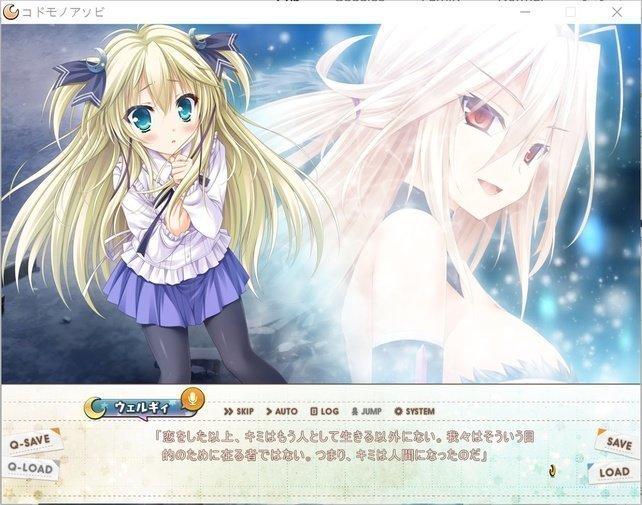
So the main story begins. The witch Sarah tracks down the people from back then and asks them to perform a reverse ritual, but none of them have any memory of the original. She has no choice but to hold a vote — everyone picks who they think the “feelings” might belong to, and whoever gets the most votes has their granted wish and power revoked and their stuff returned, and this repeats until they find the owner of the feelings.
So with the first reverse ritual, the second, the third, the details of the ritual seven years ago come clearer and clearer. The protagonist’s little sister had received the power of “whatever you say becomes truth,” and after the ritual she said “Nobody knows each other. Everyone forgets what happened here.” — the power made it real, which is why the whole group has no memory of the ritual.
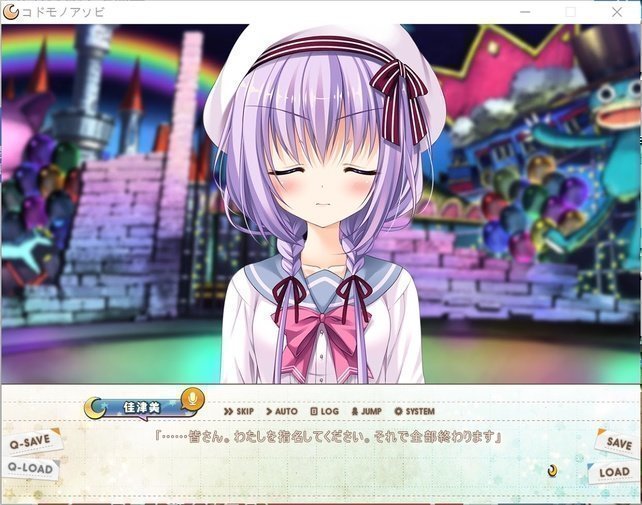
More importantly, the protagonist’s little sister keeps insisting that those “feelings” were hers, and that if they pick her next time, everything will be over.
But are they really hers? At the next class trial — sorry, the next reverse ritual — the protagonist picks another childhood friend, Chou. It turns out the one who’s always been two-faced and sharp-tongued is the real owner of the feelings (the reasons are fifty-fifty truth and bullshit, and there are way too many of them).
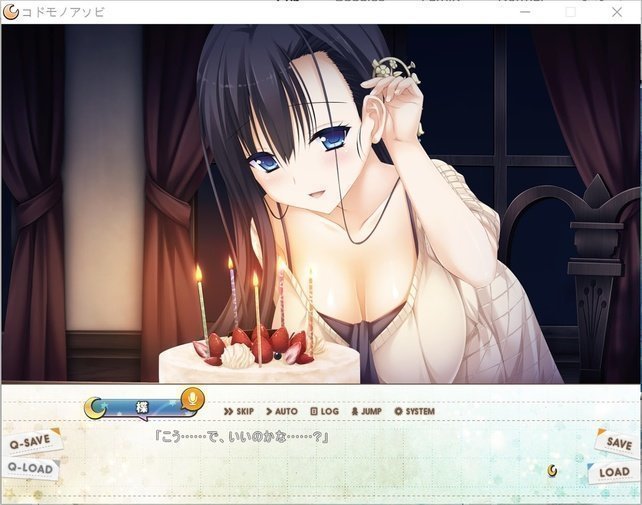
The reverse ritual ends and the feelings inside Sarah are purged. But Sarah still loves the protagonist, which confuses her — until her boss shows up and explains. Sure, the feelings were returned, but they’d been inside Sarah for seven years, and over all that time love only grows. So returning the original still leaves plenty behind.
As a result, Sarah joins the battle for the protagonist’s heart. At this point the rest of the plot doesn’t much matter — the main story is done, and all that’s left is picking a heroine, showing some affection, and hitting the END. I went with Sarah. In the end, because she’s in love, she can’t stay a witch, so she lives forever with the protagonist as an ordinary girl.
How to put this… overall, the story isn’t bad. Especially during the reverse rituals, the game focuses on each character’s inner state, laying out everyone’s little calculations. Every one of them has some feelings for the protagonist — well, what can you do, he’s the protagonist.
The game’s flaws aren’t in the plot, though. They’re in all the edges and corners — the art, the music, the voice acting, the HiDPI support…
Art first. You’d think Lump of Sugar’s character design couldn’t miss. Fumitake Moekibara and Hana Nanaroba draw cute girls. But! But — in this game they only did two characters; everyone else was drawn by someone else…
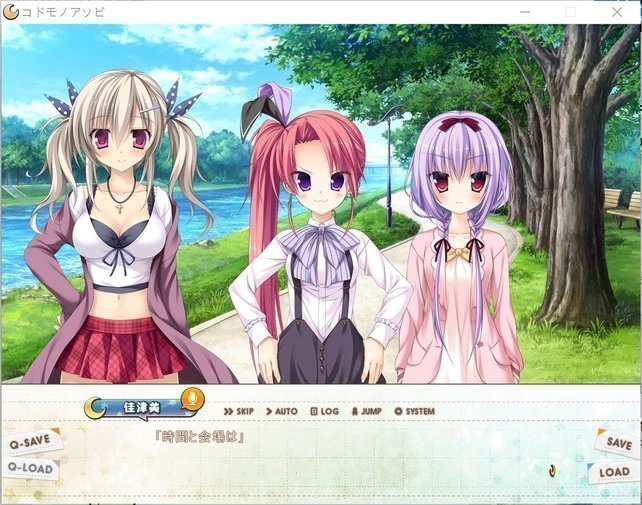
And those drawings have serious problems. Like the little sister and her friend with their arthropod faces.
And the whole game’s coloring feels “dirty.” I don’t know if it’s the detail wrinkles or too much blush on the faces, but the art doesn’t feel clean. Everyone looks like they’ve been through wind and rain.
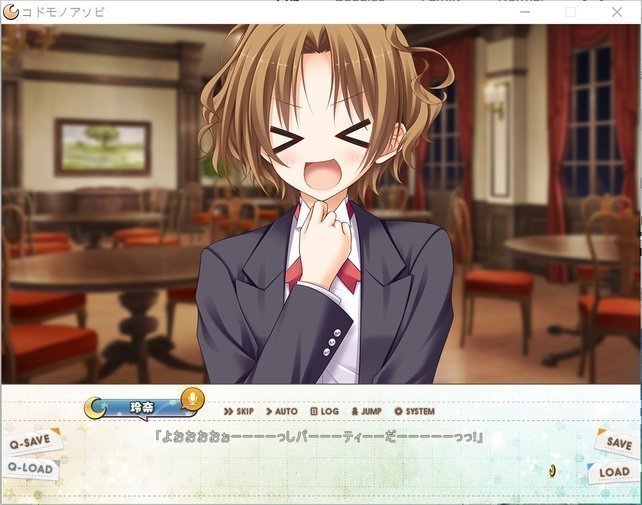
Not only that, the music is lazy. Thick doon-chika electronic tracks — not that electronic music is bad, but this soundtrack gives off a very slapdash vibe. Even the title screen BGM is goofy: Famicom-style sound effects with no nostalgic feel, just noise. The one bright spot is the ritual voting BGM, which sounds like the class trial music from Danganronpa and actually has some flavor…
Honestly, the BGM doesn’t deserve an OP that good.
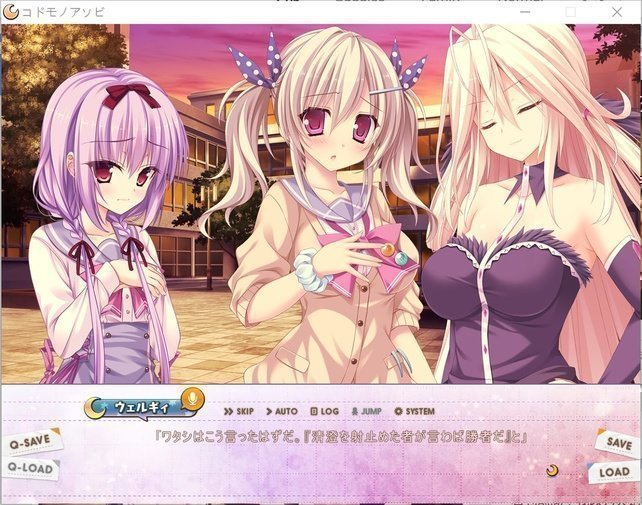
Next, the voice acting. Everyone’s performing at their normal level, but the art and music are so off-putting that some performances feel utterly emotionless by contrast. I’ve always wondered about Auntie Sanma’s voice — why is it sometimes good, and sometimes it sounds like it’s been run through effects, like a cheap microphone? Same thing in Fureraba, same thing here. Very strange. I don’t know if it’s the recording studio.
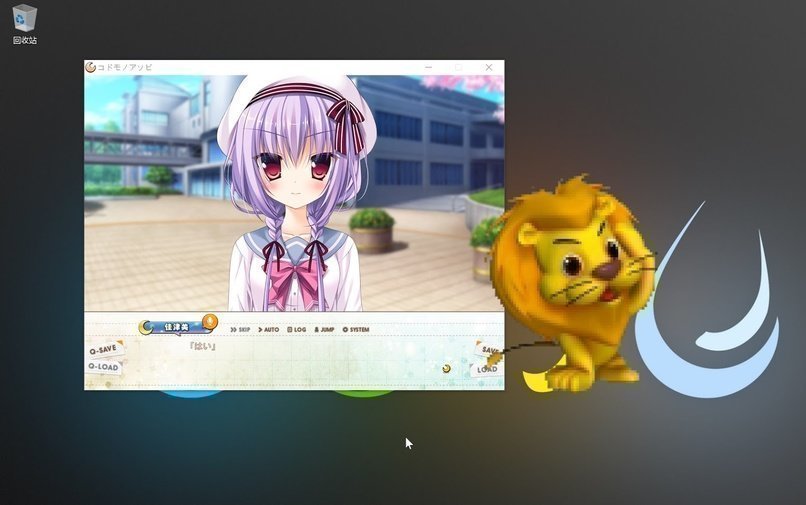
And finally, the thing I want to rant about most: a game on the same engine as August’s titles, and it doesn’t support HiDPI scaling. Running it on my brand-new Surface Pro 4 was agony. At the new 2K resolution, the game window is barely bigger than the span of my thumb and index finger — my eyes nearly went blind. Even the Rising lion mascot fills the screen height…
Ah, but that’s not the impression Lump of Sugar used to give me. I always thought that even if this studio’s plots were dumb, it was ahead of the industry’s prostate in gameplay, premises, and wringing every last drop out of its engine, even the black magic stuff. Why so conservative this time? And set aside gameplay and engine features — old Lump of Sugar at least didn’t have bad art. Why does this one look so horrifying? New artists being bad is one thing, but why are the veterans off their game too?
Thinking it over, this game has a strong smell to it. Two words: no money.
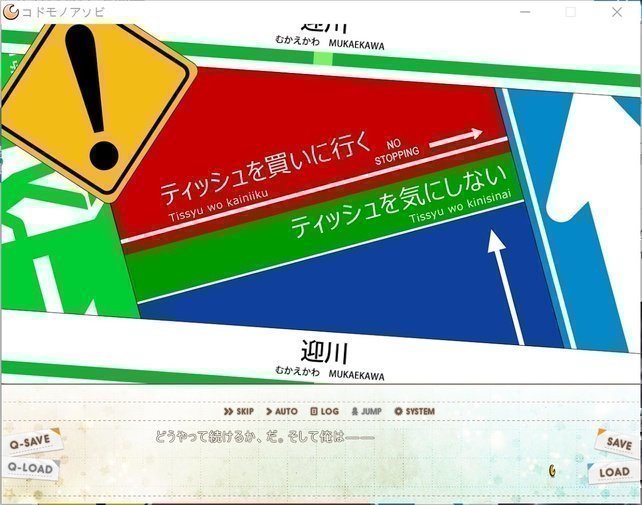
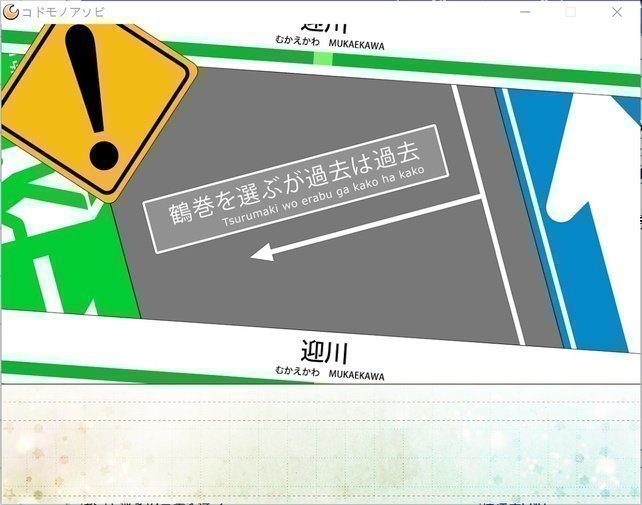
Looking at Lump of Sugar’s various gameplay gimmicks — watermelon slicing, keyword extraction branching — none of that could’ve been developed quickly. This game, though, just has the protagonist cursed with scenes that force him to choose, and the choices are simple: pick one of two. That’s no different from any ordinary visual novel. Sarah’s route just forces you not to choose, then presents new options and you pick again. No technical difficulty, no highlights.
Ah… maybe Lump of Sugar just doesn’t have the energy to do this properly anymore. The story is honestly fine — nothing outstanding, but it handily beats those two inexplicable earlier works. It just looks like it wasn’t made well.
And thinking about it more, from last year to now Lump of Sugar has put out three games in a row, and after Kodomo no Asobi they’ve already announced the homepage for a new one.
Normally a studio would spin off a sub-brand or something, but Lump of Sugar seems to keep everything on the main brand, at a high frequency — one after another, three games in a single year. That’s high output.
But high output inevitably means lower quality. Take Kodomo no Asobi: they got that hack Yasushi Hogari to write it, and the script is passable, but every other shortcoming makes the game look cheap. I figure most of the budget went to the OP…
This kind of high-frequency, high-output habit reminds me of Meizu. Back when Meizu put out one phone a year, the MX3 was usable. Later, Meizu’s marketing got lower and lower, quality dropped further and further, and the product line grew and grew — a launch event almost every month. Sure, Meizu’s sales were skyrocketing, but the old fresh-and-clean Meizu was gone for good.
Right now Lump of Sugar looks like the Meizu of eroge. Pumping out new releases, each one looking more mass-produced, more like a product line. Starting with Kodomo no Asobi, the interesting gameplay systems that defined Lump of Sugar have vanished… If it keeps losing what makes it special, it’ll just end up as another flavorless piece of garbage…
Comments are hosted on the Chinese main site. This mirror is read-only.