Aokana: Four Rhythm Across the Blue (蒼の彼方のフォーリズム) Review
Aokana: Four Rhythms Across the Blue
Honestly, I sat on this game for almost a year.
It’s a bad habit of mine. Whenever everyone else is playing something, I look at their impressions, their screenshots, and I can more or less reconstruct the plot in my head. Once I’ve got that rough grasp of what a game is, well — having that grasp means that unless I’ve literally got nothing better to do or some other factor kicks in, it never gets priority. Most of the time I’d rather spend my hours breaking new ground. That’s just how it is.
So I only remembered I still had this one sitting unfinished when the anime was about to air — literally, the anime was almost on — and finally started pushing through it. And because the game itself was so gripping, I took it slow, which meant that by the time I actually finished it, the anime was already two episodes in.
Hm? What did I just say? The game itself was so gripping?
Yes. This is a good game rich in positive energy, bright life-affirming values, and the ability to heal psychological trauma (adjusts glasses).
The studio behind Aokana is Sprite, the same company that made Love, Election and Chocolate. I can’t really say where they came from, but they feel like they’ve got money — enough money that their games don’t really go the body-fluids fanservice route, and they still sell well enough that they even spun off a sub-brand, Fairys, which put out an all-ages game, and that didn’t seem to do too badly either. If other galge can all be called “eroge” because they’re “sex games,” then Aokana honestly doesn’t count as a “sex game.” Sure, it has 18+ scenes, but those scenes are pitiful… each heroine gets just a tiny bit, and the game almost never veers into anything sex-adjacent. Most of it is straight-faced content, and there’s basically no dirty talk… to the point where sometimes I’d think…
“If an H scene didn’t just pop out right after the confession, I’d have assumed this was an all-ages game.”
Of course, the H scenes in this game aren’t entirely pointless — they do serve a narrative purpose. Each heroine gets maybe two, and once those two are done, it means the route is about to end…
See? At least it’s a benchmark… a timer… or a reminder.
The story itself isn’t complicated in outline. The world discovered anti-gravity particles, created portable flying boots, and around those boots grew a whole sport called Flying Circus (FC for short). The game’s story is about the protagonist, acting as a coach, guiding and leading a group of girls as they strive in FC competition.
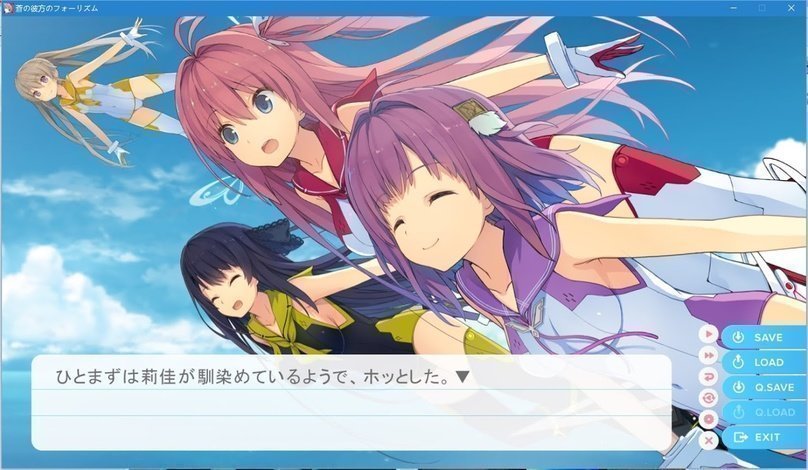
Since the title says Four Rhythms, the game has four romanceable heroines: Kurako Asuka, Tobisawa Misaki, Arisaka Mashiro, and Ichinose Rika. Each route is actually pretty different. Given that the anime’s direction is still unclear and it started making big changes to the game’s plot from episode two onward, the original assumption that “Asuka’s route is the anime’s main line” probably won’t pan out, so I guess it doesn’t matter if I spoil the anime or anything.
Common route:
The game’s structure is anime-style, split into chapters like “Episode 1,” “Episode 2,” and so on, each with a title and a next-episode preview. This isn’t the first time this has shown up in a game — the early Hoshizora e Kakaru Hashi did the same thing, though the most rigorous one was Mahou Shoujo Matsushima Michiru. Why, you ask? Because most of these “anime episode” divisions are just a facade. A proper TV anime season runs about 11 to 13 episodes, and the only one that stuck to that was Mahou Shoujo Matsushima Michiru — Hoshizora e Kakaru Hashi went off the rails long ago. Aokana isn’t rigorous either; each route is only eight episodes, and once you hit the end of episode seven it cuts straight to the final episode. Still, considering each heroine has her own route, the overall length of 6+4+1 for a final eleven episodes more or less works out. Of course, the idea was fine — the anime just doesn’t seem to be going that way.
The common route is fairly long. The protagonist, Hyouma Masaya, was once a very active FC competitor who racked up a ton of good results, and then for certain reasons he decided to give up FC. After that he never touched the sport again. The protagonist’s former coach, now his teacher, Kagami Aoi, hasn’t given up on him — she keeps trying to get him to participate in FC again, and keeps getting rejected.
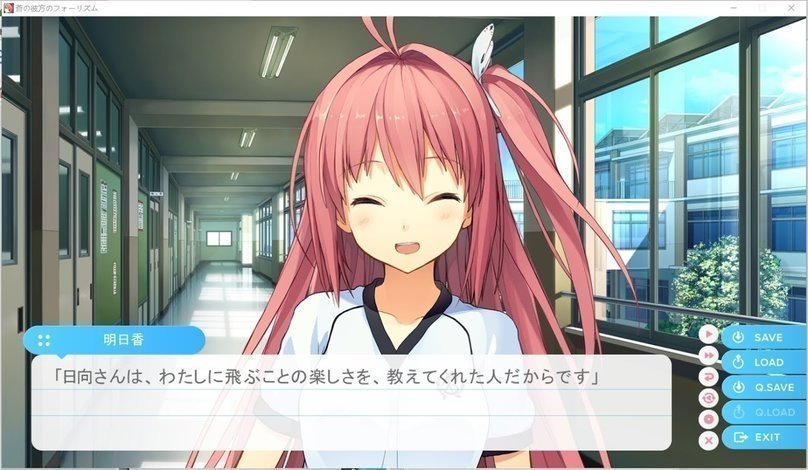
Until a new transfer student named Kurako Asuka arrives, accidentally shows off an incredible talent for FC, and gets roped by the dying FC club’s president into joining the club for the summer FC tournament. Actually, FC is more like… a turning race with fighting allowed, plus some fighter-jet-style combat elements — the hand-to-hand brawling in it is called dogfight. In the end, at Asuka’s endless pleading and Aoi-sensei’s egging him on, the protagonist — a former competitor who can’t stand watching the current FC training methods — decides to take the job of coaching the school’s FC club, training and developing everyone with the goal of winning the summer tournament (though at first I think they said making the top eight would be fine).
During training they hold a joint training camp with the neighboring school, Takafuji Academy, and get a taste of the school’s ace, Shindou Kazuma’s, fighting strength. Interestingly, Shindou Kazuma is more interested in the protagonist — whether in a gay way or an FC way… and he doesn’t hide his admiration for the protagonist at all, since the protagonist used to be an ace and a legendary competitor.
The summer tournament arrives quickly. The protagonist’s team enters for the first time and gets wrecked… the muscle-brained club president goes down in the first round, Mashiro goes down in the first round, Misaki goes down in her second match, and Asuka gets lucky, wins two matches against small fry, then runs into Shindou Kazuma and gets brutally, mercilessly destroyed. And the Shindou Kazuma in that match is nothing like the one from the training camp — if anything, the Shindou Kazuma at the camp was holding back, maybe out of courtesy, maybe other reasons…
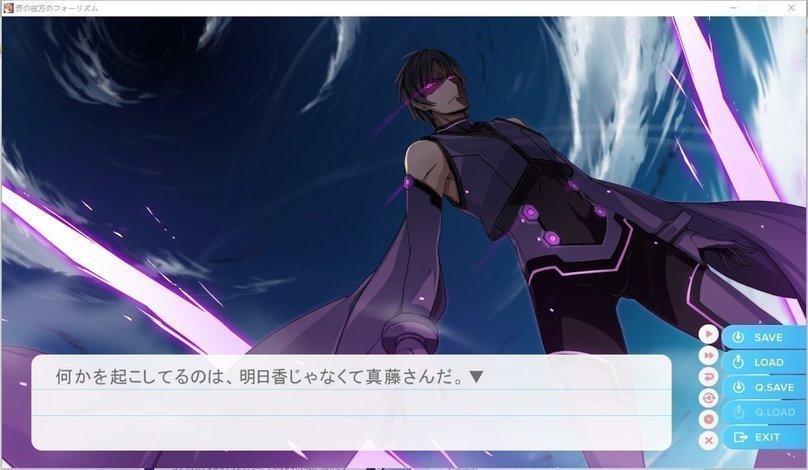
Anyway, the protagonist’s team is wiped out in short order, while Shindou Kazuma keeps winning and is on the verge of taking the championship — when a returnee competitor named Inui Saki shows up. In the finals, Inui Saki beats Kazuma by a razor-thin margin, but humiliates him thoroughly in the process.
Why humiliates? Because Inui Saki was completely “dominating the match.”
Unlike Dota’s “Dominate,” Inui Saki’s “dominating” is control over the entire match. Whenever Kazuma tries to score, Saki interferes; Saki herself doesn’t score either, and when Kazuma tries to attack Saki to earn points, he can’t land a touch…
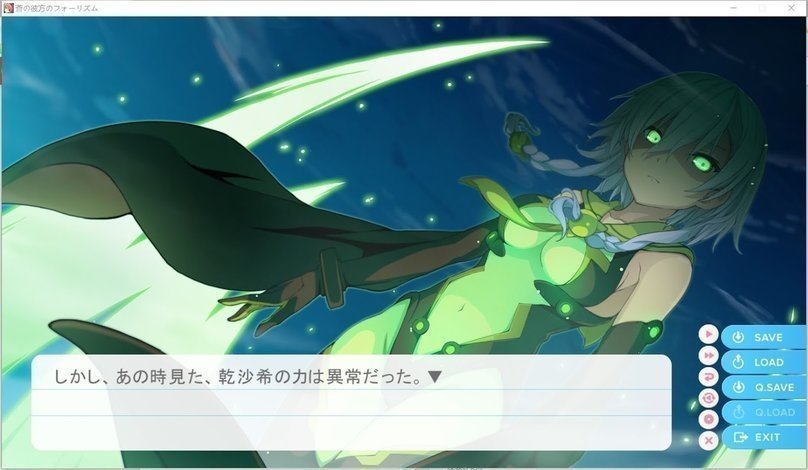
Simply put, Inui Saki controlled exactly how many points Kazuma could get. In other words, in that match she was fully capable of controlling the score — not just “winning when she wants to win,” but “winning by whatever score she wants.” It’s like the old Go saying: “beating someone” and “being able to control by how many stones you beat them” are completely different concepts. Saki has a massive advantage over Kazuma in ability, and Saki’s ground support and coach, Irina, calls this tactic “Bird Cage.” Kazuma was a bird locked in Saki’s cage, unable to move. The final score didn’t look bad, but Kazuma knew that score had been deliberately manufactured — the other side could humiliate him whenever she wanted…
In the end, obviously, Inui Saki becomes the champion, and Saki’s coach Irina appears before the protagonist, saying something meaningful. The gist seems to be that she came for the protagonist, and wants him to return as an FC competitor. Naturally, he refuses.
After that, the protagonist’s FC club wraps up its summer tournament activities, and with summer break arriving, the new autumn tournament becomes the next goal — marking the end of the common route.
Route: Kurako Asuka
Kurako Asuka’s route is the first to pop up after the common route ends. Asuka is a girl full of passion for FC, and she seems to have real talent — for instance, she can pull off a special move like Air Kick in her very first competitive match. And most critically, she has never once been afraid. When Inui Saki’s domination of the summer tournament had everyone terrified, Asuka actually looked excited — the feeling of seeing a strong opponent and wanting to strive and surpass them (I personally think it’s more like being thick-skinned and not afraid of death). Afterward she begs the protagonist to train her harder so she can surpass Saki. Meanwhile, the protagonist’s FC club makes a decision: abandon everyone else’s training, focus entirely on raising Asuka, with the sole goal of winning the autumn tournament — and the only obstacle in the way is Inui Saki. (Shindou’s already graduated, after all.)
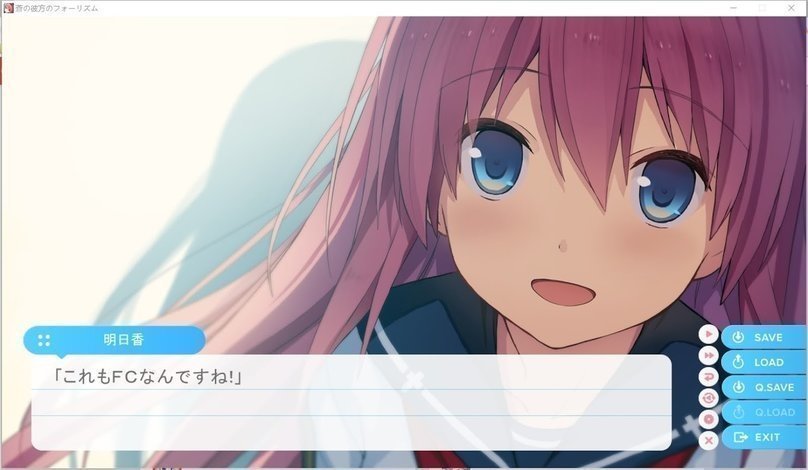
At first the training goes smoothly, but problems gradually surface. The training is too intense and Asuka’s body can’t take it — she suddenly falls ill… The protagonist is at a loss, planning to wait until she recovers before continuing, but waiting might mean missing the autumn tournament. Aoi-sensei shows up just in time and tells the protagonist what the problem is.
“You’ve been coaching Asuka for a long time now. How much do you actually know about her?” “What does she like? What does she like to eat? What does she like to do? Do you know any of that?” “What does she think about during training? Is she happy because of the competition? Does she gain confidence from competing and training? Do you know?”
The protagonist realizes he knows nothing about the girl he’s coaching, and decides to pause training to visit her and talk. In the end he and Asuka become lovers (damn that teacher and her professional assists), their bond deepens, the distance between them disappears, and training resumes.
Actually, a flashback is inserted here about the protagonist’s past. He was once a prodigy in FC, winning prize after prize, but as the awards piled up and the goals got higher, the pressure on him grew, and the joy he got from FC dwindled. His coach — the current Aoi-sensei — didn’t notice, and kept pushing him to train and compete. Eventually the protagonist couldn’t bear it anymore, and after one failure he broke down and gave up on FC entirely.
Just as Aoi-sensei urged the protagonist to understand everything about Asuka, she mutters to herself: “The things I couldn’t do myself — I’m leaving them to you.”
As the protagonist’s coach, Aoi-sensei failed to communicate with him properly, and she doesn’t want him to make the same mistake.
Training continues, and Asuka develops all sorts of tactics tailored to counter Inui Saki. The neighboring school, Takafuji, also comes to help, boosting Asuka quickly. Asuka’s ability is incredibly strong — unbelievably strong.
“Her biggest strength is her incredible mimicry, and she never makes the same mistake twice.”
That alone is enough for Asuka to grow at a monster-level rate.
At one point Saki’s coach Irina visits, trying to persuade the protagonist to give up and to recruit him as her own team member. He refuses; Irina sneers and says the protagonist and Asuka can’t beat Inui Saki in the final match.
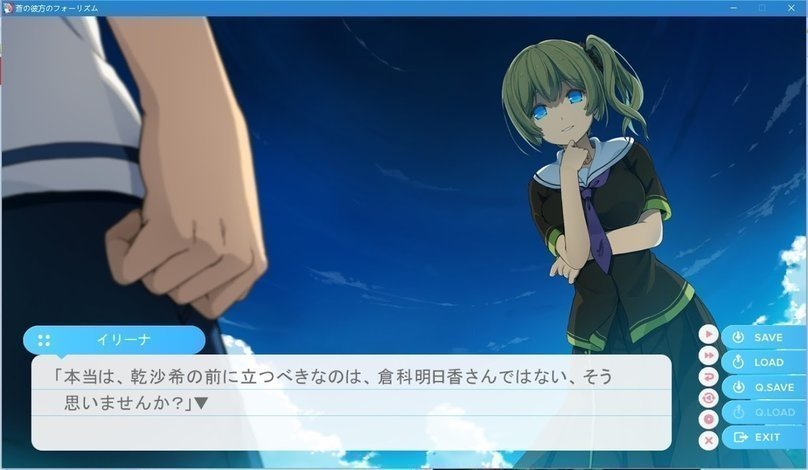
And a lot of what Irina says to the protagonist conveys one message: “Only I know what real FC is.”
Why would FC have a “real” version? After Aoi-sensei visits Irina’s training base, she tells the protagonist that Asuka probably can’t win the final match. The protagonist asks why; Aoi-sensei says she can’t say, and wants him to figure it out himself.
The final match arrives quickly. At first everything goes smoothly, but in the second half Inui Saki adjusts her flying boots’ parameters and changes tactics, catching Asuka off guard. Fortunately, time runs out and they end in a draw, going into overtime. In overtime the protagonist racks his brain and finally finds the key element to beating Inui Saki, wins the final match, and through his actions refutes Irina’s “real FC” — which is really about oppressing and dominating others — as a fake. In the end this triggers an FC boom across the whole country.
Honestly, Asuka’s route is extremely orthodox — so orthodox it doesn’t feel like a romance game. It’s pure hot-blooded shounen manga. The boss’s introduction, the progression of battles, the setbacks during training — it’s a standard competitive template plot. It’s very hype, but it also feels a bit fake. After all, a character like Asuka has zero resonance with reality — I mean, where do you find someone who gets more excited the more she’s put through brutal training, without a single complaint? You couldn’t even find that at Hengshui High, seriously.
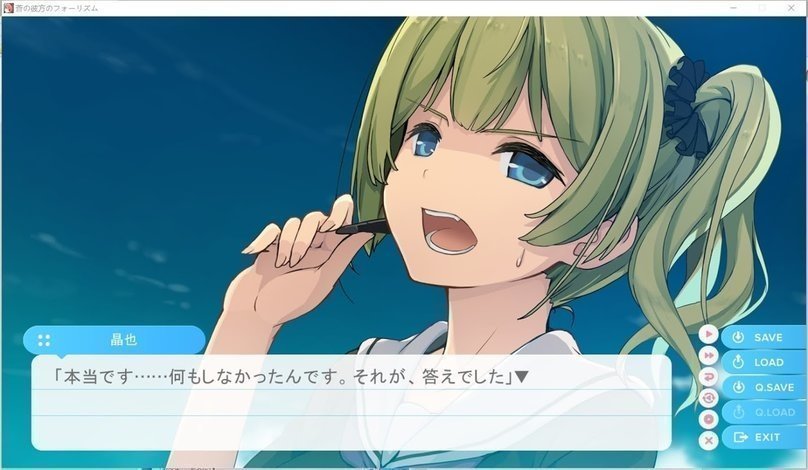
And Asuka’s ability to “just pick something up and surpass every professional competitor” is absurd — so absurd that no ordinary person could reach it. If anything, she’s just straight-up broken. Plenty of characters in the game call Asuka a bakemono, a monster. That kind of character is hard to make feel real, even if it’s satisfying to watch. This route is chasing one thing: hype. Even the final victory over Inui Saki has that anime-cliché pep talk in it — lines like “after the match, let’s be friends” that a lot of people have probably memorized… to the point where a lot of people feel this route exists purely to be “adapted into an anime,” though now that the anime is here, it doesn’t look like it’s going to follow this route at all.
Still, beyond the hype, there’s quite a bit of meaningful material in this route — like the protagonist’s dark past. The pain of losing yourself as you keep getting stronger and chasing fame and results, and the bewilderment of no longer being able to find joy in FC — those are major focal points. Of course, they’re not the focal point of this route, but still.
Route: Arisaka Mashiro
Arisaka Mashiro’s route pops up after you reject Asuka’s option, because when Mashiro joined the club, the protagonist said “I’ll definitely make you win,” and Mashiro took that as a kind of “promise.” In reality, Mashiro didn’t win at the summer tournament. Here, Mashiro hints at whether the protagonist still remembers that promise — if he does, you enter her route.
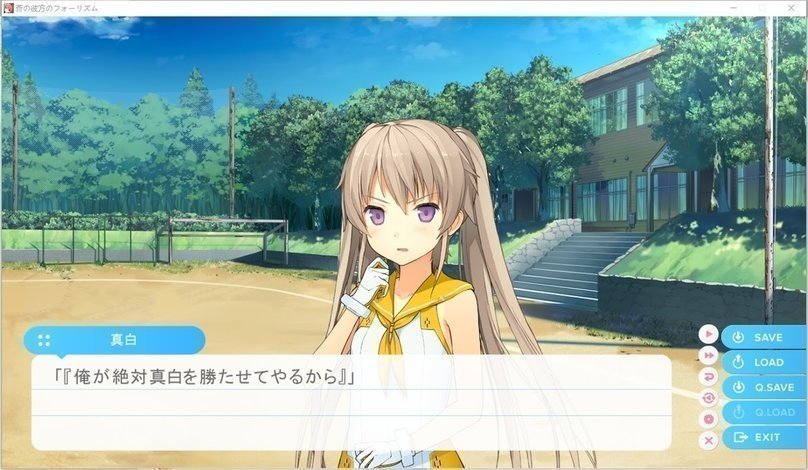
Remembering the promise moves Mashiro. “Winning once” might be nothing to other people, but to Mashiro it’s a “small wish.” Through his interactions with Mashiro, the protagonist gradually discovers her insecurities and her longing to become stronger. Mashiro is a homebody who likes to stay in and play games — average in every way, fond of fantasizing, fond of muttering little skits to herself. She has an inexplicable admiration for strong people like Misaki, and she’s not actually good at a sport like FC, but she still wants to win just once.
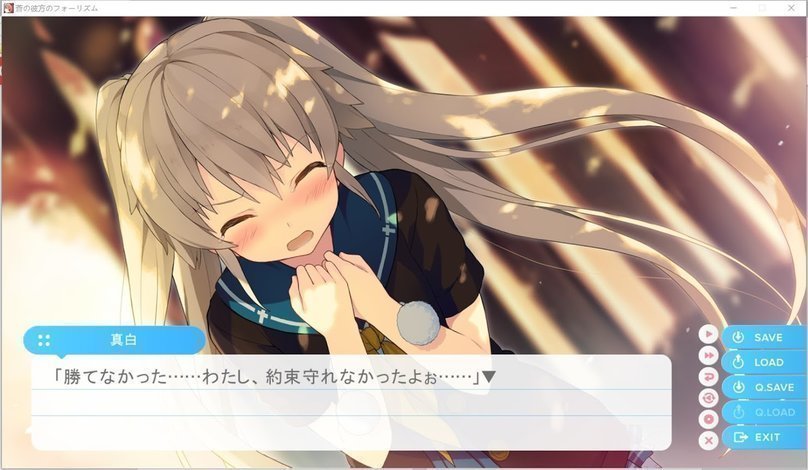
And what the protagonist does in this route is protect that “make you win” promise to Mashiro. Mashiro isn’t a great prospect as a competitor, but the protagonist chooses her anyway, because he promised to make her win. In the end, Mashiro wins once through her own ability, fulfilling her small wish.
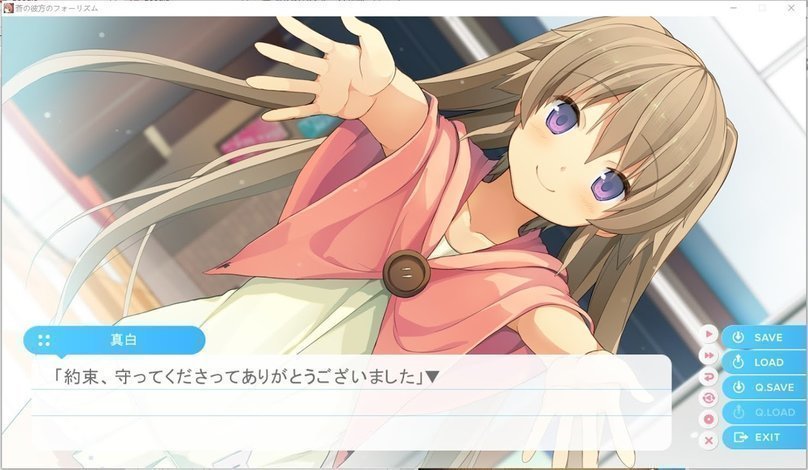
If Asuka’s route is hot-blooded, Arisaka Mashiro’s route is a classic romance route. There isn’t much FC combat; it’s more about fleshing out Mashiro, this emotionally complicated girl — she longs for love but has her pride, cares about small details, likes the protagonist but can’t say it and can only grumble about it at home. That cute element is a very successful portrayal of “a girl,” and no wonder Mashiro has so many fans.
Route: Ichinose Rika
I think Rika’s route is comparatively the weakest in the game. Comparatively, of course — there’s nothing really wrong with its quality, but its positioning is a bit unclear.
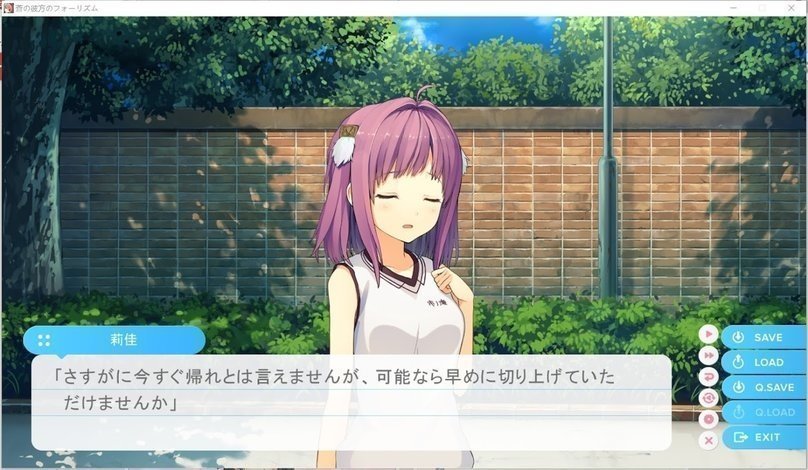
Ichinose Rika doesn’t go to the protagonist’s school; she just lives next door, their windows facing each other, and that’s it. As the protagonist’s junior, she doesn’t think much of his FC club at first — during the first training camp she even warns him not to mess around. Rika attends a school full of honor students, where the FC club is one of the best, so suddenly competing against a ragtag bunch like the protagonist’s team would just be bullying.
Soon Rika discovers that the protagonist is actually strong, and his club members are strong too, so she starts apologizing on her own and grows closer to the protagonist. Later, as the older members of Rika’s school graduate and the protagonist’s strong showing at the summer tournament, Rika is brought by Shindou to meet the protagonist, hoping the protagonist will personally coach her…
“Rika is an excellent competitor, but if she keeps training like this, she’ll probably never get past this level, never break through… you know what I mean?” Shindou leaves those words behind.
The protagonist understands perfectly — after all, that’s how it was when he debuted as an FC competitor. Without Aoi-sensei as his coach, he’d have been stuck at the same level as Rika is now, unable to break through.
The protagonist starts coaching Rika, and Rika trains seriously, but a series of practice matches shatter her illusions — she finds that no matter how hard she tries, she can’t beat certain competitors.
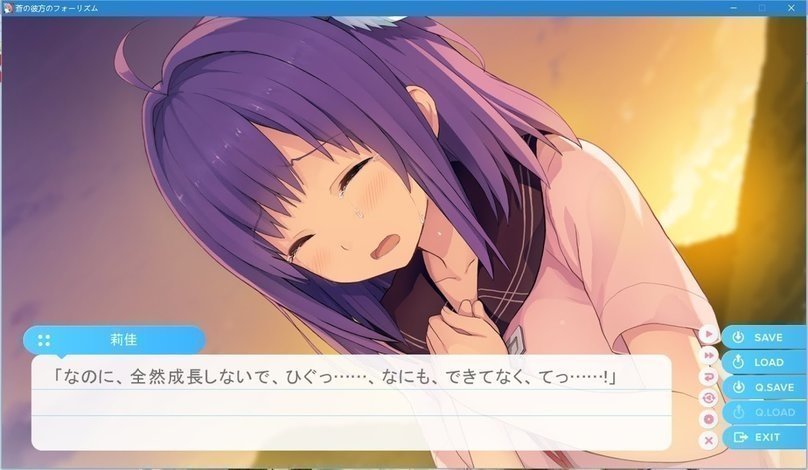
In other words, Rika’s barrier still hasn’t been broken. She starts doubting whether she really has what it takes.
Rika starts confiding in the protagonist, pouring out her inner pain — and at that moment, what comes to the protagonist’s mind are the words his own coach Aoi-sensei said to him long ago.
“Is competing tiring? Is it hard? If it’s hard, just say so — it’s okay to rest.”
Back then, the protagonist was afraid of disappointing his coach, shook his head, and insisted he wasn’t tired. And it was precisely that moment of forcing himself that led to his later breakdown and despair.
In other words, the current Rika doesn’t hide everything like the protagonist did back then — she honestly speaks up, avoiding the tragedy that befell him.
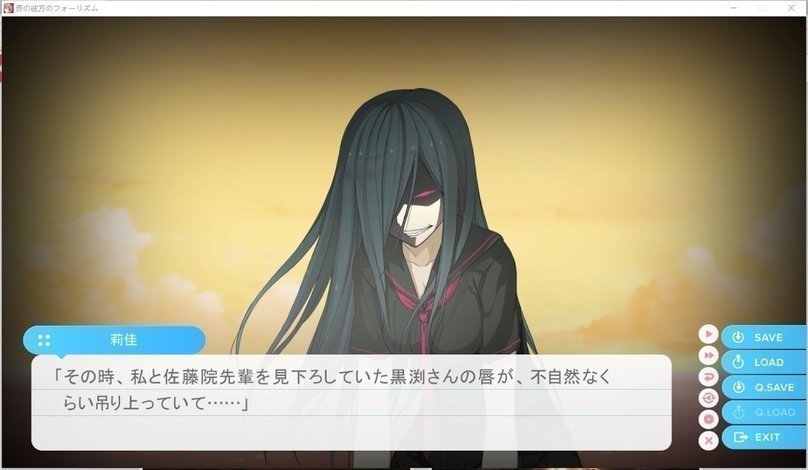
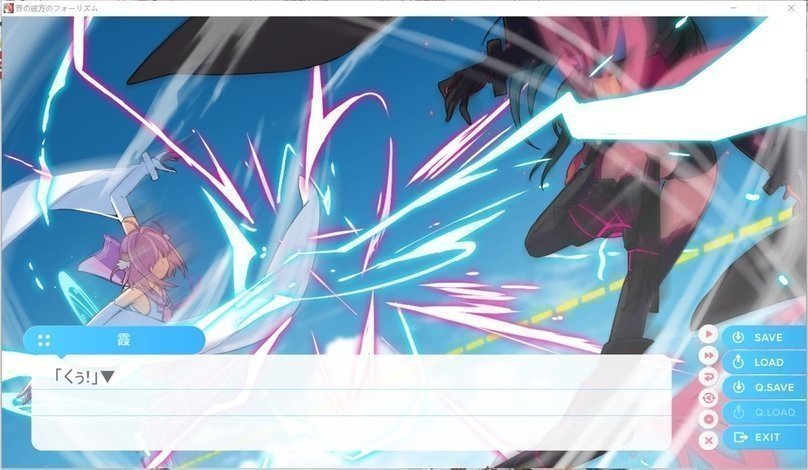
In the final stretch, the character Rika faces isn’t anyone too high-level — it’s a competitor named Kurobuchi Kasumi. Kasumi and Rika know each other from childhood; Kasumi was the one who brought Rika into the world of FC. Later, her family had troubles, which twisted her to the point of hating FC. During matches she cheats constantly — not to win, but to injure her opponents with brutal moves, and at one point she even gives Asuka a concussion. In the final match, Rika overcomes both herself and her fear of her former friend, defeats her, and also helps her reform.
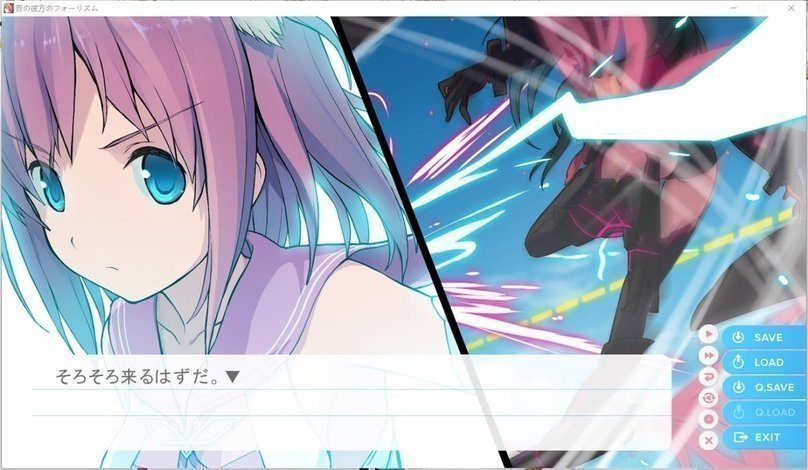
Simply put, Rika’s route is pretty average. The only valuable part is the protagonist’s flashback, his repentance over the past — why he chose to silently endure the pressure of competition instead of speaking up. But by the time the protagonist understands this, it’s already too late; all he can do is keep that tragedy from repeating with Rika.
Of course, I’ve always felt that Aokana is less a story about the heroines flying and more a story of salvation for the protagonist, a person who’s been hurt inside. Especially in the next route, Misaki’s.
Route: Tobisawa Misaki
Tobisawa Misaki is someone who usually has no motivation, but who really hates to lose.
Tobisawa Misaki is also someone with great athletic ability, well-suited to FC.
In the common route, Tobisawa Misaki acts all indifferent, but during training against Shindou, he throws out a few belittling taunts during the match, which successfully pisses her off — making her take the match seriously, and even putting Shindou in a tight spot for a while.
At that point Misaki probably thought, “Little Shindou’s nothing special. If I got serious, I could take him down.”
So at the summer tournament, when she meets Shindou again, Misaki loses — but not badly. Misaki doesn’t say anything, feels she did her best — Shindou’s a strong opponent, after all, and the score gap wasn’t big, she wasn’t that far from first place, good enough.
Then Misaki watches Shindou’s match against Asuka, and she’s furious.
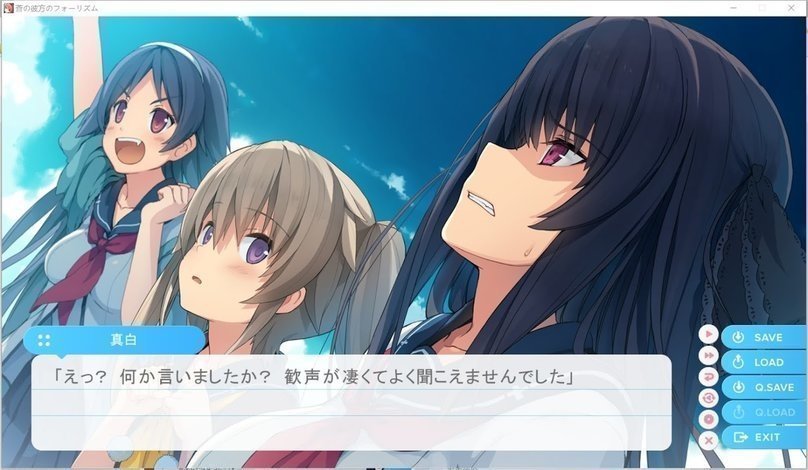
The Shindou who fought Asuka and the Shindou who fought her were not the same person. The Shindou facing Asuka was far more terrifying and serious. Only then does Misaki realize — Shindou never took her seriously at all…
A deep sense of humiliation at being thoroughly looked down on wells up. It’s like playing CS, going in fully armed and getting knifed to death by the other guy — that kind of humiliation.
Misaki’s eyes burn with anger while watching the match, and at that point Shindou hasn’t even fought Inui Saki yet. After watching the final match, Misaki decides: she’s quitting the club, done with FC.
The protagonist doesn’t understand and wants to find out why, but Misaki never comes back — no matter how he persuades, no matter how he pulls, she won’t come.
Aoi-sensei seems to understand the reason. She finds the protagonist and says he should stop being a coach — she’ll train the remaining competitors, and what the protagonist should do is focus entirely on tutoring Misaki.
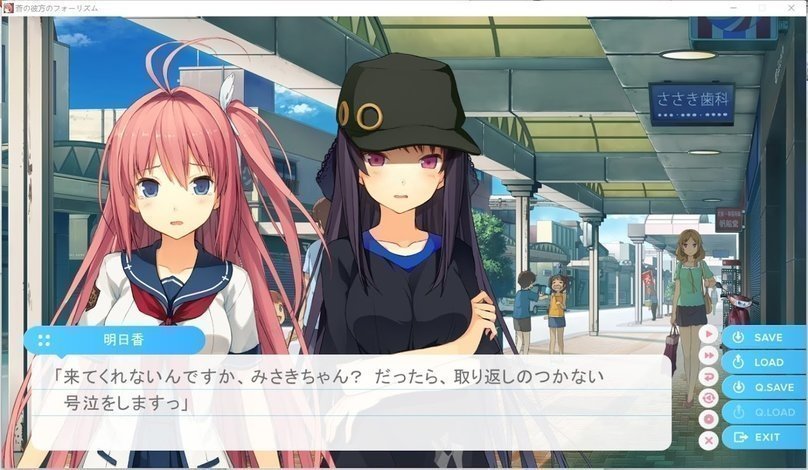
After enormous effort, the protagonist finally catches Misaki — literally catches her; she’s at the shopping district playing arcade games… He drags Misaki to watch other people train, and there he sees Asuka playing against Satouin, while Misaki watches the result coldly from the corner.
“Who do you think will win?”
“Satouin, probably.”
Misaki’s answer to the protagonist’s question is a bit odd. The result is that Asuka beats Satouin, and by a wide margin.
“Tch.”
Misaki is dissatisfied with that score.
“What’s wrong?”
“I don’t know why…” Misaki says slowly, “but I keep thinking… I want to see… Asuka lose…”
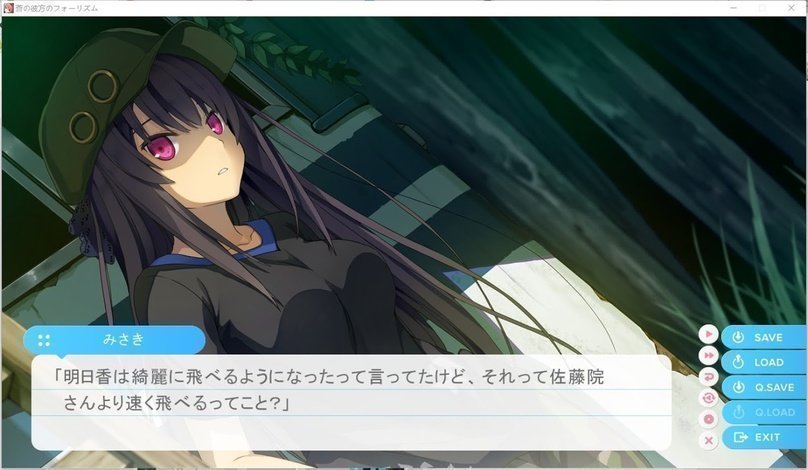
The protagonist’s heart skips a beat — he understands that feeling. He’s had thoughts like that too, sometimes.
In Asuka’s route, the protagonist once said Asuka was like a monster, terrifying…
Copying other people’s special moves instantly — terrifying.
Never making the same mistake twice — terrifying.
Learning FC so fast — terrifying.
And never knowing exhaustion, never knowing fear even against boss-level opponents — terrifying.
The protagonist realizes he’s harboring the same thoughts as Misaki, and he sort of understands why she doesn’t want to do FC anymore. In a match, forget Shindou — Asuka alone is already that terrifying, let alone Inui Saki, who’s even scarier than Asuka.
Misaki doesn’t know if this is jealousy, but she doesn’t hate Asuka either. She can’t name this feeling.

The protagonist then remembers something from his childhood. He was worn out from daily training, struggling to keep up with FC, and that was when he met a young Misaki… Misaki had never played FC before, so she asked him to play a round. He was a pro at the time, and she was a total beginner. At first she had no idea what she was doing — but before long, she’d quickly picked up everything he could do…
By the end, she had even beaten him, and he was completely lost. He’d trained for so long, and this kid had picked it all up effortlessly…
A fear and self-loathing rose up from somewhere deep inside him, and that was what indirectly led him to give up on FC entirely…
“Misaki is a talented player, but she’s also a very difficult one. She never has any confidence in herself.”
“Do you think Misaki is a genius?”
“A genius? …Maybe.”
The protagonist asks Mashiro what he thinks of Misaki. Mashiro has no faith in her at all and keeps pushing to develop Asuka instead.
Because the protagonist sees his own mentality reflected in Misaki, he has no intention of giving up on her. He tells her straight out: “You were the one who beat me when we were kids. You’re the reason I quit FC, so you’re responsible for me now.”
It’s a pretty childish request, but it works. Misaki says she’ll give it a try.
Once training starts, more and more of Misaki’s problems surface — mostly psychological ones.
“What if I lose the match?”
“Will practicing like this even let me beat Asuka?”
“Am I even cut out for this?”
“Is there any point in me keeping up with FC?”
Doubt and insecurity fill Misaki’s head. She starts avoiding things and shutting down, and the protagonist talks her through each one, one by one. Then one day, he discovers a flight technique that could break Inui Saki’s “birdcage” tactic — flying backward, face-up…
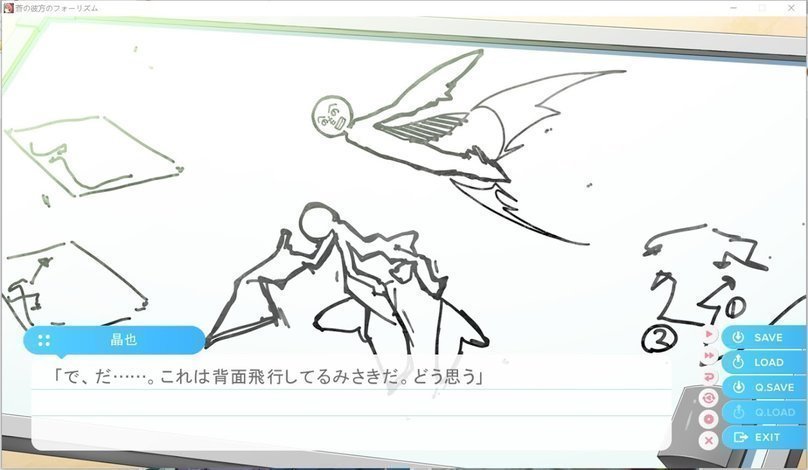
But practicing that flight style takes serious guts, and the group doubts Misaki can learn it.
“Let’s give it a shot.”
“The autumn tournament isn’t far off. At this rate, it’s gonna be rough.”
“I think she’ll be fine. In my mind, Misaki is a genius.”
The protagonist grows more and more confident in Misaki — so much so that one night, she figures out the flight style all on her own. That’s the moment he realizes Misaki really is a genius. She just never wanted to try. If she does, there’s nothing she can’t do.
At the autumn tournament, Misaki meets Inui Saki in the group stage and, after a hard fight, beats the previous year’s champion…
Saki can’t believe it. She never rated Misaki at all and never thought this girl could beat her…
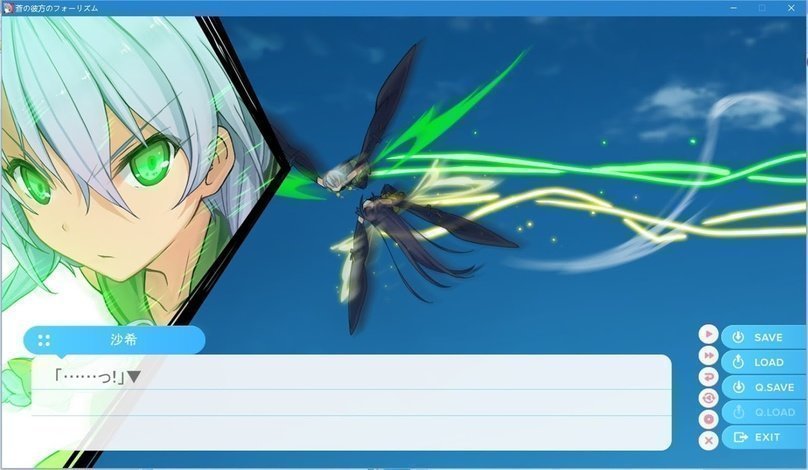
Then comes a string of opponents, until the final against Asuka. Under Aoi-sensei’s coaching, Asuka has become incredibly strong. Misaki has found her confidence back, and there’s nothing to be afraid of. Through her own effort, she beats the opponent who always made her feel inferior and insecure…
Misaki becomes the champion.
When the protagonist tells everyone who’d written Misaki off, Aoi-sensei and the rest all offer their congratulations.
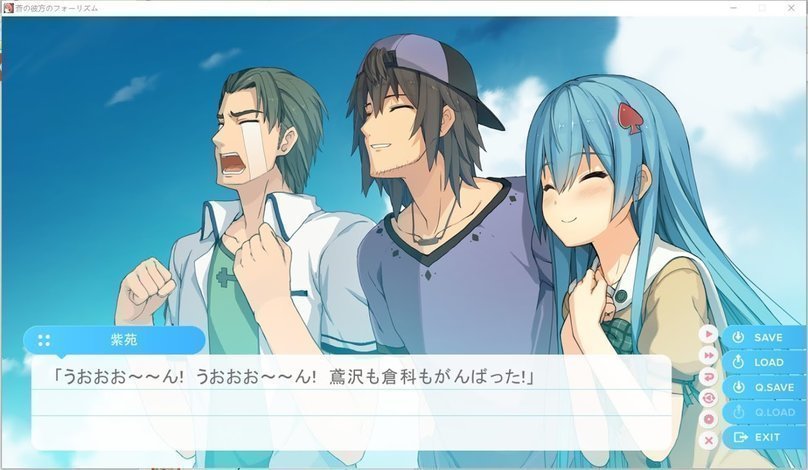
“You did it. You’re the one who turned Misaki into a genius.”
Unlike the championship in Asuka’s route, Misaki’s title carries more weight. Every one of her wins is earned the hard way, overcoming enormous pressure through tactics and sheer will.
“Talent earned through effort doesn’t fade easily.” Misaki won her championship through her own hard work.
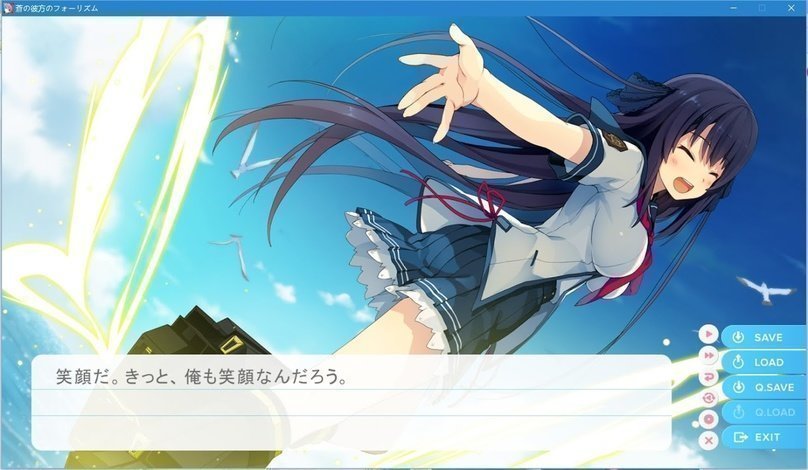
Maybe everyone is a genius. Most people just don’t believe it, so they never try, and they end up drifting through life accomplishing nothing.
Maybe everyone feels inferior to those geniuses, and maybe that inferiority makes them give up trying — they figure no matter what they do, they’ll never catch up. But when you actually put in the effort, you find that the things you thought only geniuses could do, you can do too. Maybe even better.
After all, everyone can be a genius.
Final Chapter and Conclusion
After clearing all four heroines’ routes, you unlock the protagonist’s final chapter. In it, Aoi-sensei has resigned from teaching and returned to being a pro FC player, and the protagonist too returns to the FC circuit, finding release in his life and healing his emotional scars.
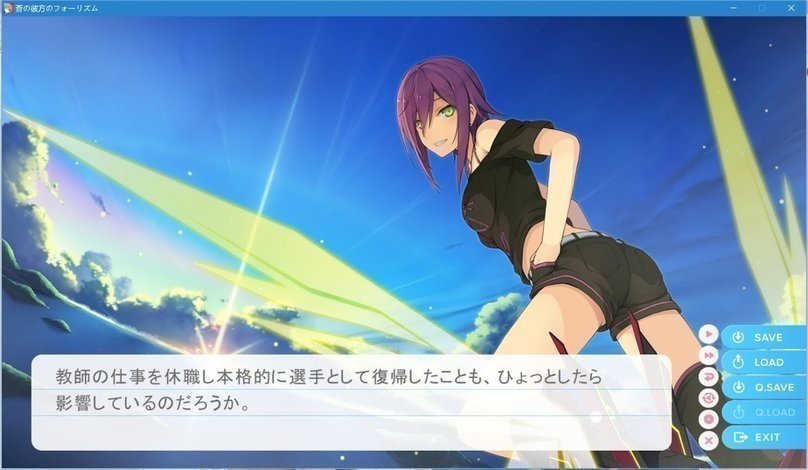
Hmm… actually, this whole game was built around “the protagonist’s emotional scars” from the very start. The game begins with his memories, and it ends with him finishing his recollections and heading off toward a new journey. Everything, all of it, is a confession between the protagonist and Aoi-sensei about mistakes made in the past.
Each heroine’s route corresponds to a shadow from the protagonist’s past. Asuka’s route is about the lack of communication between coach and teammates; Mashiro’s is about losing confidence in the future; Rika’s shows the anguish of swallowing your problems instead of speaking up; and finally, Misaki’s route is about the inferiority, self-loathing, and even curses you direct at someone stronger. These were all problems the protagonist once had, and as each route is resolved, they vanish, one by one. The protagonist himself returns to the circuit, finding freedom and release.
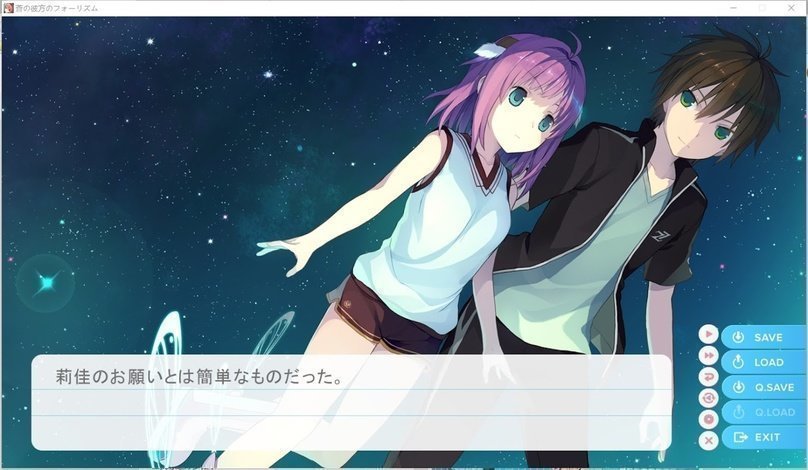
Aokana chose flying sport as its fictional theme, but the game says more than once that the joy of flying is freedom — and the longing for what lies beyond the blue sky.
“Fly to the far side. The answer is there.”
The game gives us a wonderful answer through one complete, moving story after another — an answer that stays with you for life, whether about daily life, the heart, or life itself.
An answer that has nothing to do with pressure, nothing to do with inferiority, nothing to do with promises, nothing to do with genius or talent.
Just a story about how to find “freedom.”
Comments are hosted on the Chinese main site. This mirror is read-only.