Xiaomi 99 Yuan Hybrid Earphones
I Bought Xiaomi's 99 Yuan Hybrid Earphones and Found They're Not as Bad as Expected
Buying these earphones was an impulse purchase. I was helping my mother buy a Xiaomi Mi Band, and I figured I’d add some Xiaomi batteries to the order. My hand slipped, and I bought a pack of AAA batteries instead. I only noticed the mistake when the package arrived.
Not that AAA batteries are useless to me. Thanks to that mistaken pack, the crappy TV in my room no longer needs me to hunt for buttons on the unit itself, because its remote’s batteries died long ago, and they’re AAA.
So I thought about ordering the Xiaomi rainbow batteries again, this time AA. But batteries are so cheap that shipping is never free, and shipping alone costs more than a battery, which is a bad deal. I figured I’d add something to hit the free-shipping threshold, and that’s when I saw the Xiaomi 99 yuan hybrid earphones.
I hadn’t looked into what the market thought of the Xiaomi 99 yuan hybrid. I’d only heard bits and pieces, and naturally none of it was good.
“For that money, go eat a nice meal.” “It’s just garbage.” “I pulled them off after 30 seconds.” “No sound quality whatsoever.” “Boomy, can’t hear the vocals at all.”
Anyone with even a passing knowledge of earphones would say the same. I was inclined to believe they were trash too, because at this price, unless it’s a specialist manufacturer, they’re all the same: boosted bass and nothing else.
But these are hybrid drivers, and I’d never heard a hybrid before. And… I needed something to pad the order. The power banks were out of stock!
So somehow I bought the Xiaomi 99 yuan hybrid. Or you could say I bought batteries and threw in a 99 yuan hybrid to hit the shipping threshold.
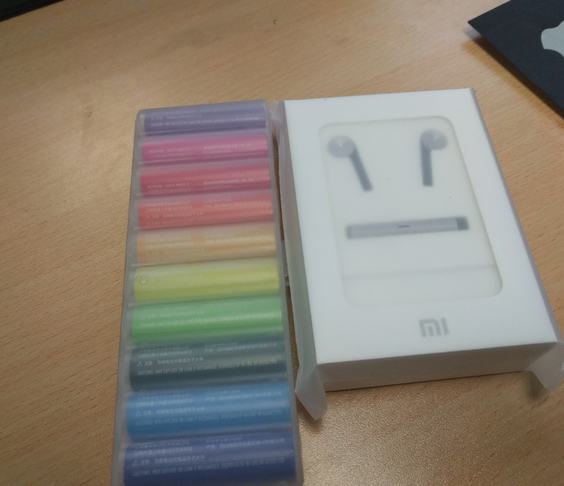
So the question is, how do they actually perform? I hate keeping people in suspense—as the title says, “they’re not as bad as expected.”
Of course, that’s my opinion.
The Xiaomi 99 yuan hybrid’s packaging is very simple but not cheap-looking. The included accessories are standard, mostly silicone tips—no legendary consumable C tips. I have plenty of C tips, but I never considered putting one on these; I didn’t think it was worth it.
The Xiaomi hybrid’s housing is a metal-plastic combination, and the cable is a braided-style material. Personally, I find this kind of cable pretty low-rent, like the brushed-metal finish that domestic brands have run into the ground—you see it enough and it gets annoying. I don’t think it looks good, either. Some people will like it; I just don’t.
Fit on the Xiaomi 99 hybrid isn’t what I’d call comfortable. The included silicone tips go into the ear canal easily enough, but they fall out far too easily. I tried wearing them on a jog and they fell out almost every lap. On top of that, the special cable produces a huge microphonic effect that can’t be avoided by wearing them over the ear—honestly, the design never really accounted for over-ear wear in the first place. If you’re walking quietly or sitting still, you probably won’t have any trouble. I just think Xiaomi should have included a cable clip to hold things steadier.
Whenever people talk about earphones, it usually comes down to four things: price, looks, fit, and most importantly… sound.
So how do the Xiaomi 99 hybrids sound? Having read plenty of rumors online, I went in expecting a joke. I’ve heard many earphones in the 100 to 200 yuan range, and they can’t compare to 1000–2000 yuan models at all. At best, one might match top-tier earphones in one specific area, or use an extremely skewed tuning to suit a tiny handful of tracks. All-round competence is impossible—the price is what it is.
A hybrid of dynamic and balanced armature drivers at Xiaomi’s 99 yuan price point shouldn’t even be possible. From teardowns and analysis online, Xiaomi used some lower-tier armature units to cut costs, which further lowered expectations—basically garbage.
So at first I picked some tracks with almost no point to them for listening. Later, as things went on, I picked some more meaningful tracks to work out the earphones’ range and where they actually sit in terms of sound quality.
For the source I used my usual FiiO X7. Many people say its tuning is bad, but I disagree—I think precisely this kind of untuned player better highlights the earphones’ own qualities.
Test track: TFBoys - 剩下的盛夏
This was the first track I listened to. The singers themselves have nothing going for them—three performers who look feminine but have a dick between their legs, with virtually no singing style and no vocal skill to speak of. Most of the time I don’t feel like they’re “singing,” just “humming.” For this song, the arrangement and style matter more—you’re listening to the melody itself rather than the singers’ skill.
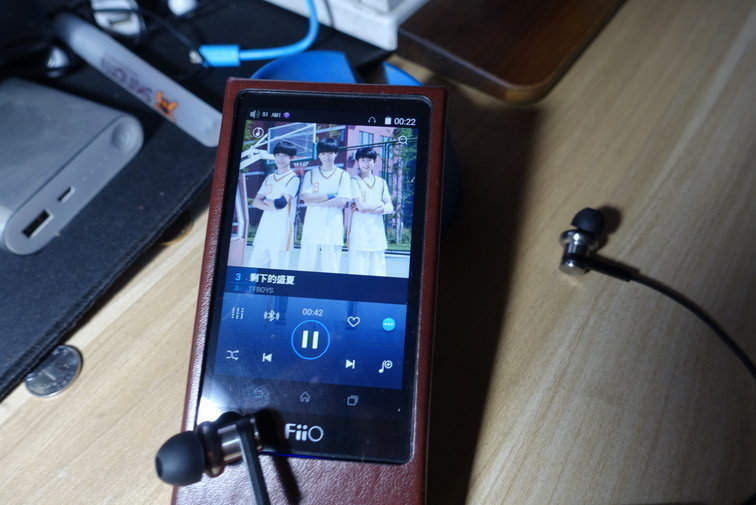
The composer of “剩下的盛夏” is Jay Chou, so TFBoys performing it feels like three people who can’t sing blindly imitating Jay Chou. But that’s beside the point—how do the Xiaomi 99 hybrids do?
“剩下的盛夏” doesn’t have much bass. In other words, it’s not a song sold on “boom-tish” beats; it’s rich in electronic sounds. The Xiaomi 99 hybrids seem to divide labor quite finely between their dynamic and armature drivers: all bass goes to the dynamic driver, and everything above the bass goes to the armature.
Frankly, the bass produced by the Xiaomi 99 hybrid’s dynamic driver is typical cheap boom-tish, and the so-called in-house armature is nothing special either.
But mixed together, they have one big advantage this price range shouldn’t have: separation. It’s there, though the effect isn’t great.
On “剩下的盛夏,” before the first bass beat hits, the song is calm and the electronic sounds are respectable—not muddy. But once the bass kicks in, a huge amount floods out and steals the show. Still, because the drivers are separated, I don’t hear vocals or highs drowned out the way I do with other bass-heavy earphones. Instead, they become an independent presence—slightly recessed, but clearly audible.
So it creates a rather strange musical effect: within the boom-tish, there’s another mid-high frequency presence that can’t be erased. It’s a bit unnatural, but after a while it’s strangely interesting. I have to say, even though the armature unit has no character, its resolution is on point. The overall impression of the song is very “clear”—you can hear the details while feeling the thick bass. That’s something other earphones at this price probably struggle to do, because… these are hybrid earphones.
As for the vocals in “剩下的盛夏”… forget them. I can’t critique the voices of people who can’t sing.
Test track: TFBoys - 青春修炼手册
I have to say, the vocals on “青春修炼手册” are much better—not that that’s worth praising, because the songwriting and arrangement are several tiers below “剩下的盛夏.” The song itself is the boom-tish rhythm-chasing type, with a feeling like the stock track playing in a dollar store between announcements of “the boss ran off with all the money and his sister-in-law.” It relies purely on heavy bass, rhythm, and catchy-as-spit melody and lyrics to make an impact. So how do the Xiaomi hybrids do?
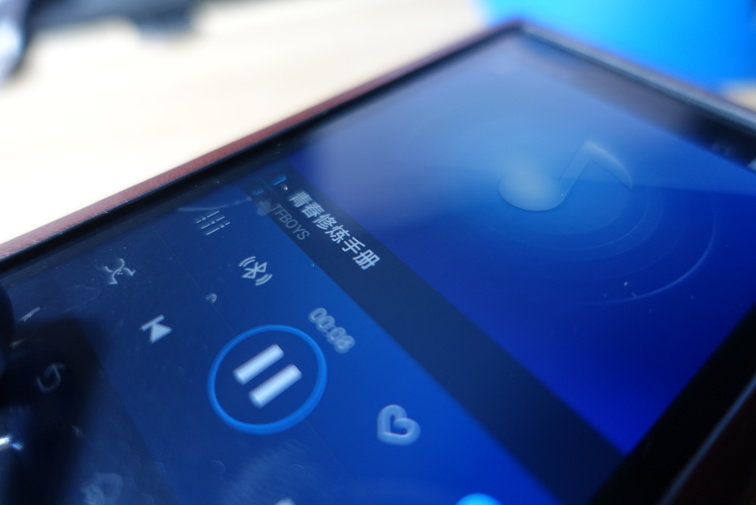
Just like the last song, separation is the highlight: amid the huge boom-tish atmosphere, the vocals aren’t drowned out. Everything else… the song is what it is. It’ll do.
Test track: TFBoys - 信仰之名
I don’t know who wrote or arranged this song. At first I thought I’d clicked the wrong track and landed on Sister’s Noise. The Xiaomi 99 hybrids aren’t suited to this song—honestly, no earphones are; they all just manage to “make a sound” with it.
Why? Because the recording and post-production are terrible, on par with internet songs recorded on a 5 yuan microphone. The three singers are just humming, and the song piles on a huge electronic effect. I switched to K701 on my computer and still couldn’t clearly make out which part each of them was singing; the lyrics were barely intelligible.
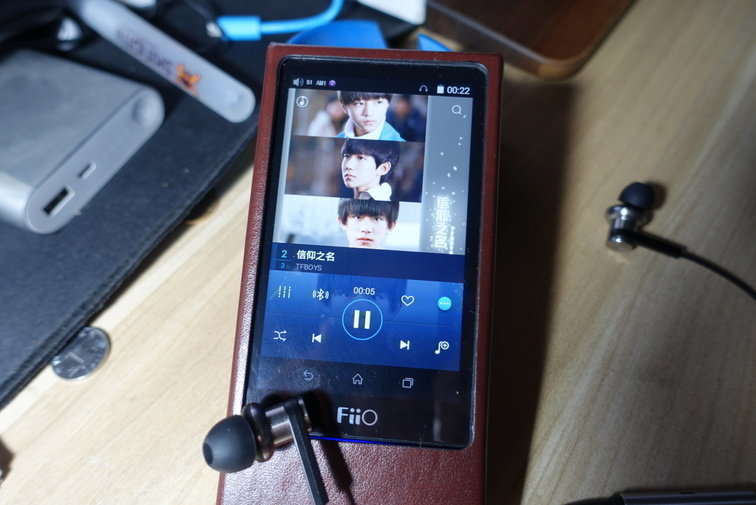
If Nanjō Yoshino could speak Chinese, she might save this song—after all, this melody needs a piercing female voice. But first, fix the recording quality, okay?
Test track: Nitta Emi - White Eternity
Back to the home turf with a song that’s fairly complex in arrangement. It’s from a game, but it uses a huge number of instruments. The Xiaomi hybrids don’t do very well here, because although the song has strong bass, Nitta Emi’s voice isn’t piercing enough—it needs separation from a hybrid like the Xiaomi 99…
But I forgot: the Xiaomi 99 hybrid earphones cost 99 yuan, and the armature inside is just a cheap part.

So the armature struggles when simply reproducing Nitta Emi’s voice, which means what I hear on this track is mostly thick bass, huge accompanying instruments at the edges, and vocals muffled behind a veil…
Maybe I should try tracks with fewer instruments.
Test track: mao - キミニエム
This is an acoustic track. There’s almost no bass in it; it relies purely on the female voice. In other words, there’s no question of the bass crushing anything.
Even so, mao’s voice still isn’t delicate enough.
The vocals are recessed, close to the back of my head, and the soundstage isn’t large (okay, finally a song where I can talk about soundstage). Resolution is as mediocre as ever.
It’s listenable, passable—but compared to the female-vocal poison I usually listen to, it’s far off. Then again, so is the price.
At this point I wondered: should I try a female voice with more range?
Test track: Hana - 櫻ノ詩
I was stunned from the first note. Excellent separation, just-right female vocals that don’t float too high like on other earphones, and bass in a drum-kit style that doesn’t steal the show. It actually had a huge “airy small-room” feel. After listening, I felt oddly good about it. Of course, on some high notes the sound starts to drift—frankly, it gets piercing.

By this point the Xiaomi 99 hybrid’s characteristics were basically clear: a huge low-frequency dynamic driver that only piles on quantity, and a very ordinary armature unit. Neither is impressive on its own, but since they’re two drivers mixed together—since it’s a hybrid—tracks with “no deliberately boosted bass and a high-range vocalist” produce a very interesting effect.
All I can say is interesting. I can’t say it sounds good; I wouldn’t say it sounds bad.
Afterward I tried “空気力学少女と少年の詩” and “さくらとことり,” and clearly the same characteristics held. Ah, maybe only this type of song can sound decent on them.
So I figured something out: the Xiaomi 99 hybrid earphones have two low-end drivers, but because they’re a hybrid they can easily do something mid-range earphones struggle with—like letting you hear the vocals clearly amid boom-tish, instead of nothing but skull-rattling bass.
I can’t speak to what others say about these, but at least those claiming “it’s all bass, vocals drowned out” are talking nonsense.
Is it worth 99 yuan? I can say with certainty: yes. More than worth it, actually. Last time I joked that making earphones these days is great—just hit the 200 yuan price range and you’re basically unbeatable. Everyone claims to be tone-deaf, but the moment they get one in hand they dash off a long write-up and end with “worth the price.” If you point out a weakness, one line—“at this price, what more do you want?"—shuts you up. Thank goodness the Xiaomi brand is tied to being low-rent; otherwise the piston buds would have sold through the roof.
Yeah, thank goodness Xiaomi is a brand synonymous with low-rent. Otherwise these earphones had the potential to be hyped to the heavens. Why? You know the AKG K374? It sounds exactly the same as these—or rather, worse. At least Xiaomi’s are a hybrid; the K374 is just an overhyped fake “little K3003” that only has looks.
In other words, if you’re thinking of buying the K374, save your money and buy the Xiaomi instead—they’re about the same. If you’re after prestige, forget it.
Many people are labeled from the moment they’re born. These labels mean nothing to the person, or are forced on them by someone’s narrow view, yet plenty of people still go along with them. Just as a person whose parents are thugs is assumed to be no different from a thug. More and more thinking like this creates more and more prejudice—regional prejudice, racial prejudice, gender prejudice. It fills every corner of our lives, even down to which brand we pick when buying a product.
The “Xiaomi” brand appeared alongside phones. When the first phone launched, many people were full of hope, because the market back then didn’t have so many blowhards or so many monkey-show sales tactics. People were more willing to believe a phone “could actually meet the hardware specs it claimed” than to worry about whether they could even buy one. Soon enough, people discovered the essence of Xiaomi’s hunger marketing, and fans turned into haters and started trashing it.
And Xiaomi’s biggest black mark: something that costs 399 to make is sold for 199, but the marketing hypes it as rivaling a 999 product.
Just like the Xiaomi 99 yuan hybrid earphones, which were directly hyped as a match for the 4999 K3003. Can it beat the K3003? Even a goose’s head knows that’s impossible—it can’t even touch the 1000 yuan tier. But this 99 yuan thing can beat some 399 low-end big-brand ripoffs. Trading 99 for 399 is still great value.
Xiaomi lied in its marketing, but setting marketing aside, the product itself is still worth it—that is, on the basis that you’re only spending 100 yuan.
Sometimes labels are just labels. Maybe we should be clearer about a product’s actual positioning and our own needs. For instance, I now often plug the Xiaomi 99 hybrid into my tablet to play games.
As the title says, I bought Xiaomi’s 99 yuan hybrid earphones and found they’re not as bad as expected.
Comments are hosted on the Chinese main site. This mirror is read-only.