Maggot baits Review
Maggot baits: A Curse for a Not-So-Wonderful World
Maggot baits was made by Clockup. If you know them—or if you were dumb enough to poke around—you’ll know they’ve put out a few hardcore titles…
So for Maggot baits, just taking the name at face value, you can probably guess what you’re in for.
Maggot: maggot baits: bait
Put it together and you get bait for maggots.
Given the game’s plot, that’s exactly right. There are tentacles, giant bugs, and the people devoured and gnawed on by those bugs—some called witches, some called hunters.
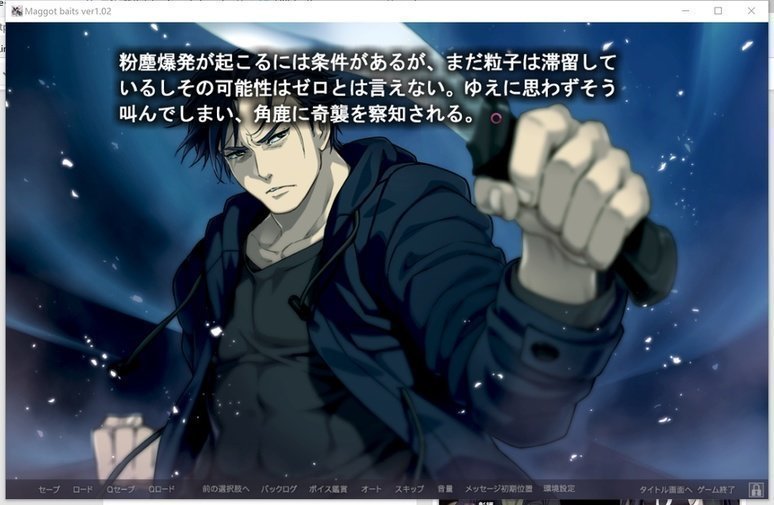
The story roughly splits into three parts: the initial worldbuilding, the flashback explaining the backstory, and the final ending.
The game is set in a lawless zone called the “Kanto Evil Arts District”—originally part of Japan, but after certain events it fell out of control and became a chaotic no-man’s-land nobody wants to touch.
The Kanto Evil Arts District is full of witches, monsters, and the thugs, hoodlums, and yakuza who couldn’t survive in mainstream society. It’s also spawned every profession imaginable: prostitutes, drug smugglers, money launderers, you name it.
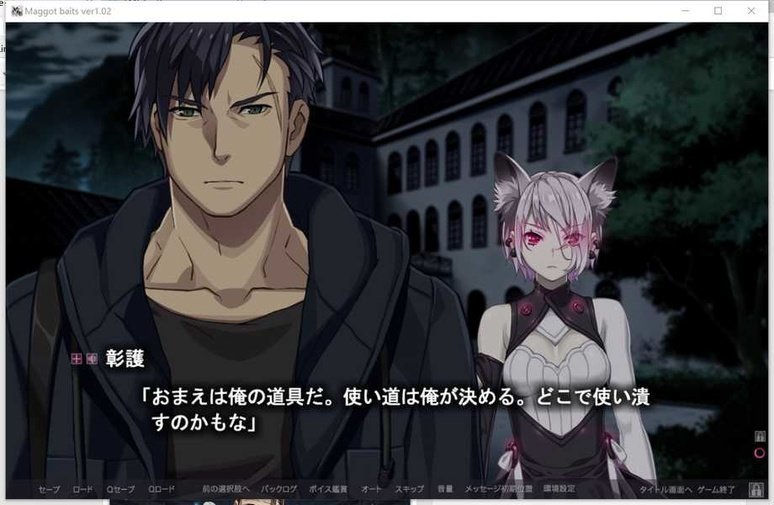
At the same time, there’s a “witch hunt” operation going on in the district. In the tallest building in the Kanto Evil Arts District, a group of people tortures captured witches in every way—gouging out eyes, cutting off hands, chopping off legs—all under the justification of “exterminating witches.”
Just as the “witch hunt” kicks off, the protagonist appears. Interestingly, he’s got several witches under his command—witches who obey him and act as his collaborators.
What’s more interesting is that the “witch hunters” side also has witches of its own. In other words, the Kanto Evil Arts District is home to all kinds of witches, and they’re even pitted against each other depending on who they serve.
But witches can’t die. Per the game’s setting, their bodies regenerate when nourished by semen. So ordinary dismemberment won’t kill a witch—only deeper torment will do the job. Captured witches get violated, abused, dismembered, and finally tossed into writhing swarms of bugs to be devoured to death by tentacles.
That’s the first part of the game: the Kanto Evil Arts District, a place that might as well be hell. Chaotic, lawless, full of witches and people who enjoy torturing them.
It also raises questions: What happened here? How did it end up like this? And what is the protagonist fighting for?
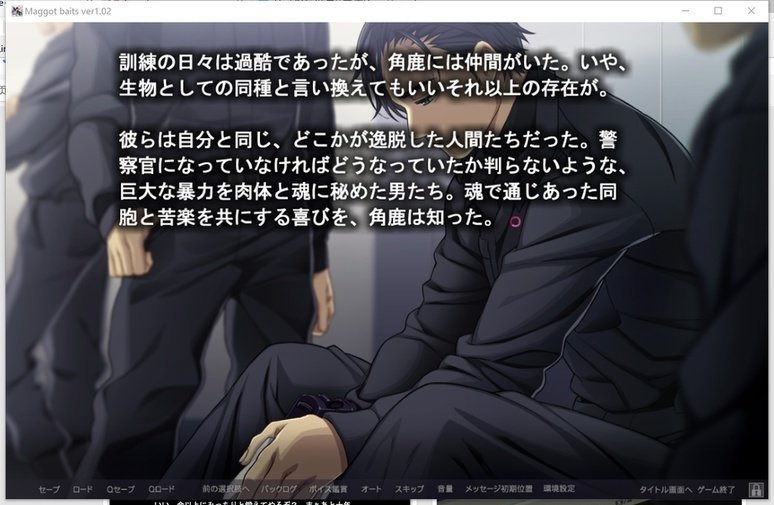
After the first part, the game shifts into the protagonist’s memories of his past. Turns out he used to be a special ops cop who wanted to be “a hero of justice.” One day, a mysterious string of girl disappearances occurred. An investigation revealed they’d all been abducted by a shadowy organization. The organization’s leader was in the tallest building—the same building that now stands in the Kanto Evil Arts District. When they raided it, they found it crawling with mindless, shambling creatures. After a fierce assault, the entire special ops team was wiped out—only the protagonist survived…
When he searched for survivors, all he found were the corpses of the missing girls, each horribly violated and mutilated to the point of being barely recognizable as human.
The girl he found was named Touko. She was still barely alive, but he couldn’t save her—he watched her die a gruesome death. In the end, all 26 abducted girls died. The protagonist, the sole survivor, witnessed the hellish scene inside and then passed out—for five years.
When he woke up five years later, he learned that the area had become a living hell: the Kanto Evil Arts District. The government couldn’t control it, not with the mysterious power there—witches—and all the various factions. So they just sealed it off and left it as a lawless zone. And the incident from five years ago was quietly swept under the rug with the conclusion of “no survivors inside the building.”
The protagonist isn’t willing to let it go, so he sets out for revenge. Re-equipped and ready, he heads back into the district. Right after entering, he runs into a witch named Carol who’s about to be captured during a “witch hunt” and saves her. Carol becomes his first subordinate witch. He then finds several other witches who haven’t been captured yet. After a few battles, he realizes the mastermind behind everything must be in that final towering building. He decides to launch a final assault.
Now, about the relationship between the protagonist and his subordinate witches—he’s portrayed as a man with zero emotions. His heart holds only revenge. He believes the mastermind behind the events five years ago must pay, and everything else can be sacrificed. So during the final attack, he coldly splits his witches into groups, has Carol follow him, and sends the others off as decoys to die.
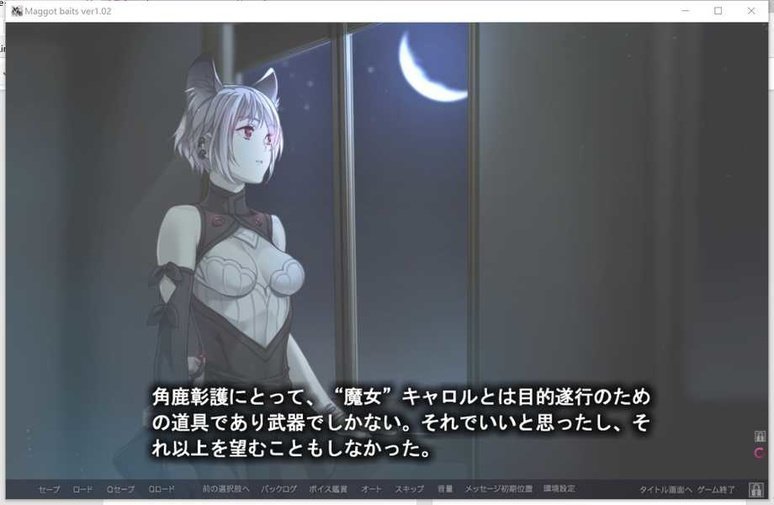
Carol, meanwhile, has an inexplicable fondness for the protagonist—she even likes him. The game spends a fair amount of time building this up. It’s similar to the dynamic in the Fate series between an emotionless Master and a Servant who has feelings for him. So in the final assault, the protagonist’s subordinate witches die as decoys, take bullets for him—he doesn’t care. They die, they die. If anything, he sees witches as pure evil, and when a priest gives him holy bullets, he doesn’t hesitate to use them to wipe out witches.
It’s only when he reaches the Boss that the protagonist finally understands the truth—and what he’s done wrong. That’s the third part: the final ending.
The game’s finale takes place at the mastermind’s hideout. The protagonist encounters someone called the “Nameless Witch.” At first he assumes she’s another one of the immortal witches, but she tells him that all the “witches” are resurrected dead women—and there are 26 witches, exactly matching the 26 girls who died five years ago.
The witch explains she created all of them. She created the witches, released them, gave them hope, raised them fat, then hunted them down and tortured them to death, plunging them into despair—all so she could siphon the energy between hope and despair using her giant tentacles and bugs. (Sound like QB much?)
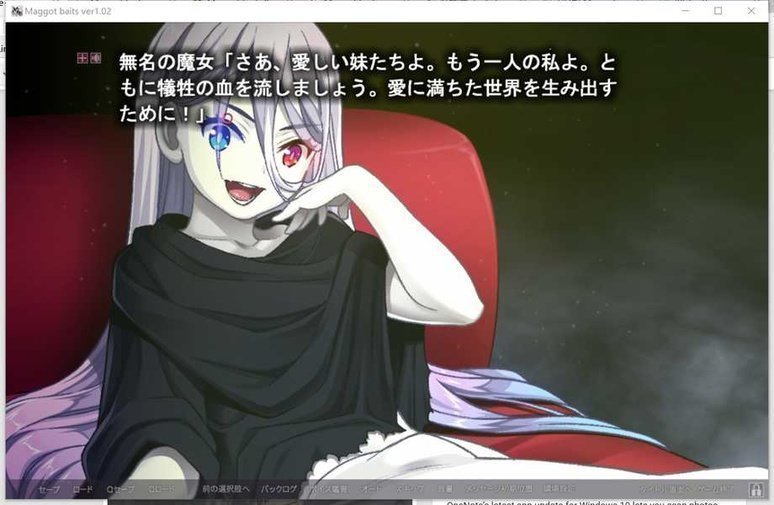
There’s an old man beside the witch—a priest she took in, who assists her. The witch says she was originally part of some church, and she’s the last witch in the world. Her past was full of bullying and torment. She despaired at the world, decided it had no light or love left, and resolved to unleash her magic to destroy the world and create a new one full of love herself.
Where does the witch’s power come from? That’s where this “sacrifice 26 women” spell comes in. Using the immortal witches as bait, she raises them, slaughters them, and absorbs energy over and over again. Now she’s just one step away: the old world destroyed, the new world born.
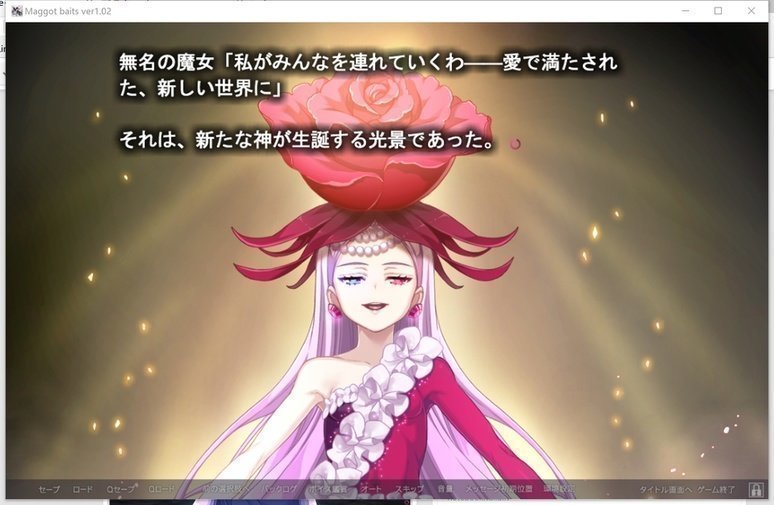
The protagonist faces the final witch—and… loses. He’s impaled by her tentacles. At the last moment, he shows a shred of compassion and saves his subordinate witch Carol’s life.
The witch forcibly drains Carol’s energy, obtains the crystallization of the final ritual, and creates a new world. A world without war, without pain, without conflict, without evil.
But here’s the interesting part: Carol, having had her energy drained, hates this world. She becomes a ghost in the so-called new world, starts rebelling against it, denying it—becoming the witch of this newly created world.
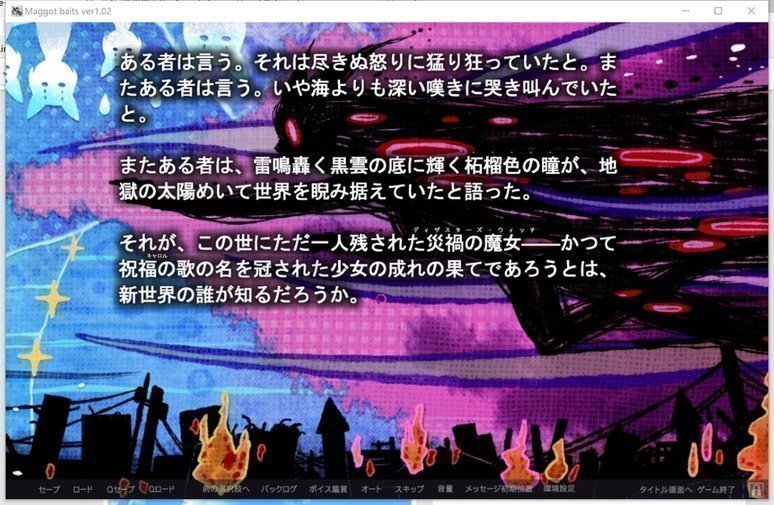
Roughly, it’s like the hope-and-despair relationship in Puella Magi Madoka Magica. Madoka creates a new world but also bears immense despair. That’s the idea.
The story basically ends there. It’s just about a witch who despaired at the world, decided to destroy it and create a new one, sacrificing other people’s lives in the process. The ritual succeeds and the new world is built. But the witch who created this world accumulated too much sin in the process, and the vengeful spirits of those sins become the resistance force in the new world. Evil still emerges. The so-called new world is still imperfect.
It’s a bit thought-provoking.
But the game isn’t over—there’s another ending, though I personally think it’s just okay.
The protagonist gives up on revenge at the last moment and chooses to save Carol. Even so, Carol still dies horribly. The protagonist then eats part of Carol’s body, gaining her power. From then on, every witch he kills, he merges with. By the time he reaches the Boss, he’s evolved into a monster.
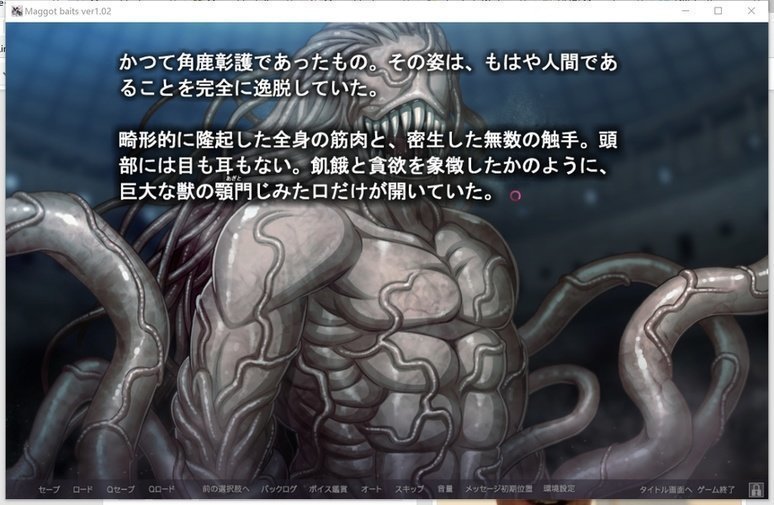
In the end, with the help of the witch’s priest and others, the protagonist stops the witch’s ritual, destroys the witch, and frees Carol’s body—only to discover that Carol was actually Touko, the very woman he once tried to rescue. Touko is revived, and the protagonist dies.
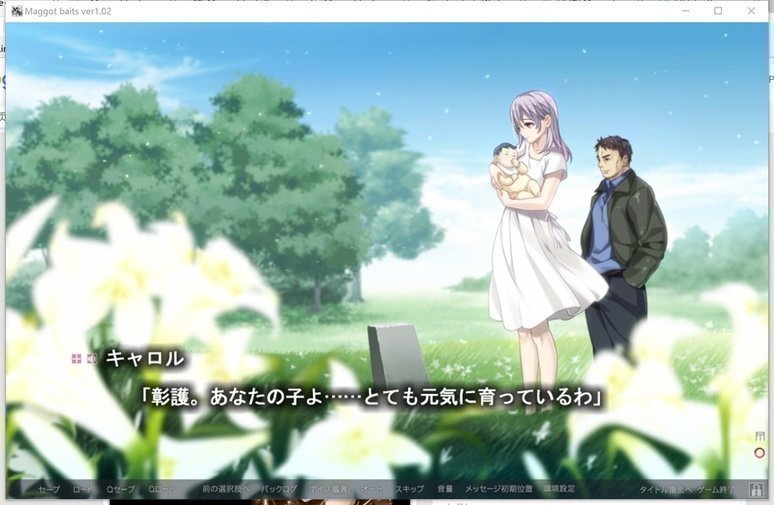
The final scene shows Touko placing a flower on the protagonist’s grave. By then, the Kanto Evil Arts District has returned to normal—but aside from a handful of people, no one remembers the protagonist.
Without a doubt, Maggot baits is a plot-driven work. I say that despite all the hardcore elements, because everything the earlier plot described—the “torture of witches to death”—is depicted in full, vivid detail in the game. It’s genuinely torture. If you don’t believe me, look at the CGs. I’m sure many people won’t be able to stomach it.
But setting aside the hardcore elements, Maggot baits’ story is genuinely solid. First, the worldbuilding of the “Kanto Evil Arts District” as a living hell gets a lot of screen time, enough for players to really feel the atmosphere. The prose uses a ton of kanji and is told entirely in third person. As a Chinese person, I have a huge advantage with kanji—I can guess a lot of the meaning just from the characters—but in Japanese it must read as a kind of “literary wuxia” style. And after building the environment, the game jumps straight into the main plot. The pacing is fast, no dragging. The exposition of past and future, the way despair is highlighted, all hit hard—not just because of the shocking CGs.
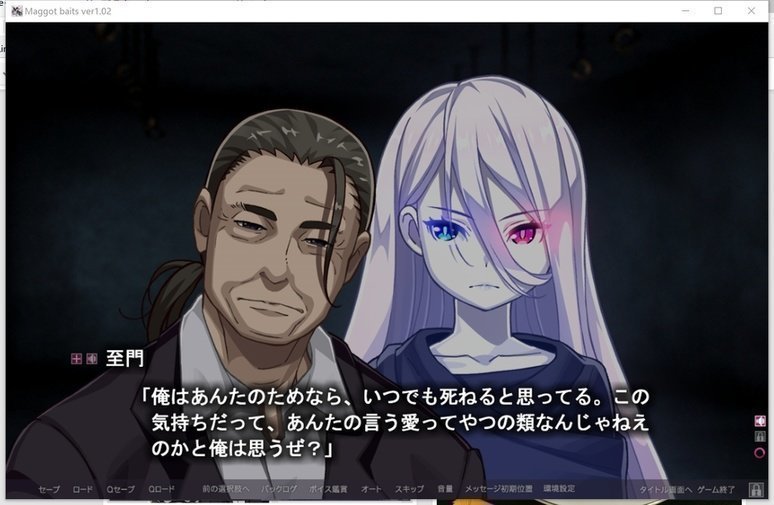
The music is excellent too. The disgusting parts are absolutely disgusting, and the enchanting parts are genuinely enchanting. The art needs no elaboration—the girls are beautiful, and when they’re being violated… also “beautiful.” The artist knows what they’re doing. I’m honestly impressed.
As I said before, the story poses the question: “Should you sacrifice the people of the present to create a new world according to your own preferences?” The game’s answer is no. After all, many people have their own happiness—you can’t drag others down just because you hate the world.
The Nameless Witch’s priest actually loves her. That’s why he obeys her commands unconditionally in the game, even though he ultimately tries to persuade her to stop.
“Qin Shi Huang sacrificed countless people for his goals. What was the result?” “The Roman Empire sacrificed countless people for its goals. What was the result?” “Hitler sacrificed countless people for his goals. What was the result?” “So, Your Highness, you’re about to sacrifice countless people for your goals. Have you thought about the result?”
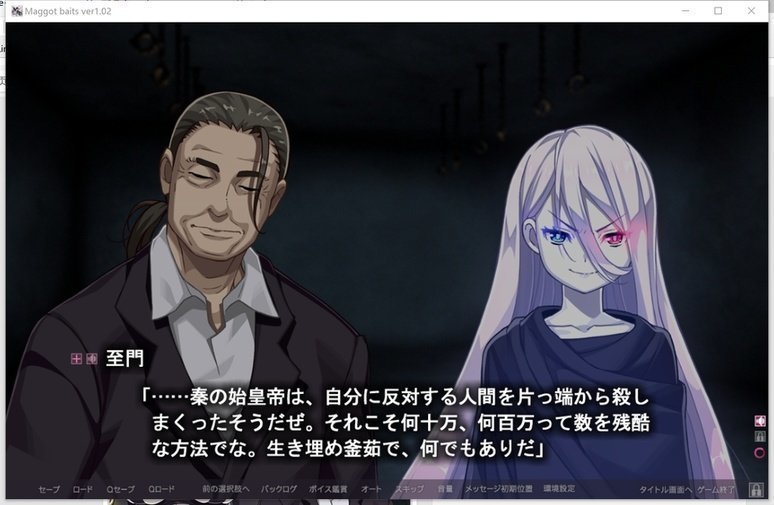
That basically lays out the game’s theme. The world is imperfect, but you can’t curse it just because you personally think it’s imperfect. Can you be sure what you’re doing is right? And you’re forcing yourself to take away other people’s happiness.
The developers consider the ending where the protagonist saves the world to be the True End. Personally, I find the ending where “the new world is created, and the vengeful spirits of the old world deny the new world’s beauty” far more interesting and meaningful. But maybe the developers felt that, in the end, there still needs to be a Happy End?
Not every story has a good ending, and not every story with a good ending is a good story. But making a few sacrifices to accommodate players who want a perfect conclusion—that’s understandable, I suppose.
Comments are hosted on the Chinese main site. This mirror is read-only.