Utate Meguri (うたてめぐり) Review
Fate, When You Get Down to It, Is Still Fate
There’s a fairly unique phenomenon in East Asian cultures: the concept of reincarnation. Of course, it’s not culture that decides this—it’s religion. Reincarnation is preached heavily in Buddhism, and a lot of Eastern countries are big on Buddhism, so naturally the concept gets accepted by more people.
What is “reincarnation”? Pretty much what it sounds like: after a person dies, their soul is reborn in another person’s body, sometimes with memories of the previous life, sometimes without. It’s got a bit of a “conservation of souls” vibe.
In most literature, reincarnation tends to get tied to romance. Lovers from a past life fall in love again in the next cycle. Over thousands of years of轮回, they meet hundreds of times—sometimes they end up together, sometimes they never truly do. Watching them flail around in an endless loop of rebirth makes us, the audience, sigh with melancholy.
Why the sighing? Because it’s just fate screwing with people, and you can’t help but think: this is destiny.
Funny thing is, “fate” here literally means destiny. For works pushing the “reincarnation romance” angle, what they’re really describing is more like “characters struggling and fighting within a pre-ordained destiny, trying to rebel against it.” In that sense, East and West actually agree. A lot of Western works are also about defying fate and seeking selfhood, even if most of them end up falling right back into the whirlpool of destiny anyway.
Oh, right—the West doesn’t really have a clear “reincarnation” setup. Most of the time they use “prophets” to inform characters of their fate. You often see oracle-type figures in Western fiction, popping up out of nowhere to tell characters what their destiny is. The character learns of a tragic future, chooses to fight anyway, and eventually wins their freedom and achieves their goal—though most of the time they sacrifice themselves for a better future.
But whatever. It leaves behind one hell of a story.
Both Eastern and Western cultures coincidentally use “fate” as a main plotline, so of course Galgame wouldn’t be an exception. There are way too many games dealing with fate—there’s even one literally called “Fate.” And way too many involving “reincarnation” too; you see “thousand-year love” taglines everywhere. Any plot involving reincarnation easily builds atmosphere. Everyone knows it’s hard to write two people going from meeting to falling in love, but if you say these two were lovers in a past life and throw in a past-life memory sequence, then any amount of insta-love suddenly becomes justified. Nobody complains—they just get more emotional. It’s such a convenient tool!
So another game used the reincarnation panacea. This time it’s FLAT, and the game is Uta te Meguri.
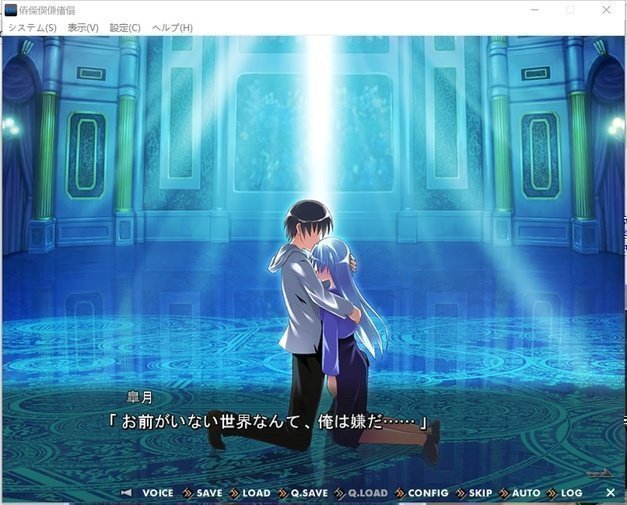
When I hear FLAT, my impression has always been various “Secret Game”-style battle royale setups. The company’s image is basically all about that type of game. I assumed Uta te Meguri would be the same at first—I mean, the game’s OP, Causal Chain, is way too similar to the Secret Game series… Combined with the OP title “Causal Chain,” it’s easy to imagine all sorts of mystery, deduction, and battles of trust between people.
Turns out after finishing it, the OP has a lot of false advertising… I mean the visuals. The OP lyrics, though, are actually a total spoiler for the whole plot.
Where to start… let’s go chapter by chapter.
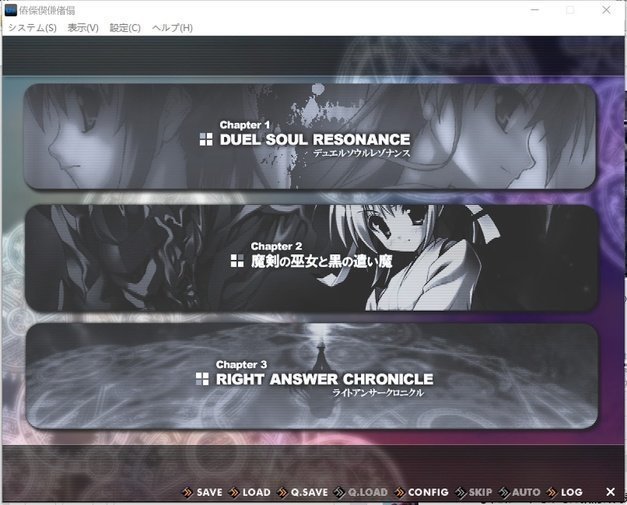
Chapter 1 is called DUEL SOUL RESONANCE. The protagonist’s school gets a weird foreign transfer student named Riberka. Later it turns out she’s with some organization whose goal is to exterminate “ijin”—what are ijin? Defined as non-humans with superpowers. They look human but aren’t. (I think of them as vampires or something similar.) One day the protagonist finds his childhood friend Renka dragged to the rooftop and killed by this transfer student, and he gets stabbed twice himself. The killer is Riberka. Then he miraculously discovers he’s not dead, and Renka isn’t dead either—and afterward Renka’s personality completely changes, becoming some kind of combat expert.
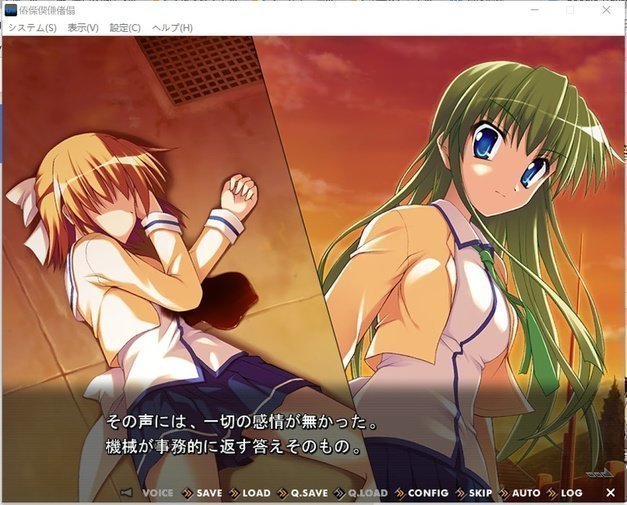
Changed-personality Renka declares war on Riberka right at school, saying she’ll meet her for a duel that night. The protagonist is stuck in the middle, totally confused—honestly I was confused too. Riberka says Renka is a “bakemono” and must die. Renka says her current personality is one of a split personality, awakened specifically to protect the real Renka. She fights Riberka at school every night, and the protagonist goes to watch twice, telling them to “talk it out, don’t fight,” and gets ignored by both.
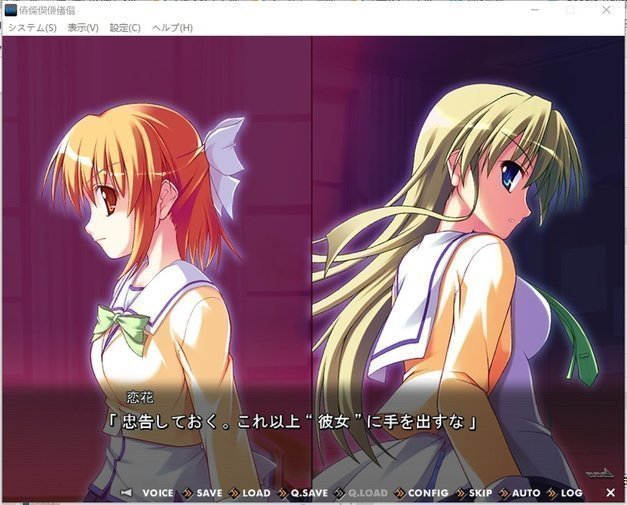
Funny thing is, Riberka mentions the school they’re fighting in is interesting—students aren’t allowed to stay at night, but no matter how much they wreck the place, everything’s restored by morning. So they go all out. Riberka is the weapon-user type—all kinds of guns and blades. Renka is pure hand-to-hand—all kinds of moves. They go at it with sparks flying and shit crashing everywhere.
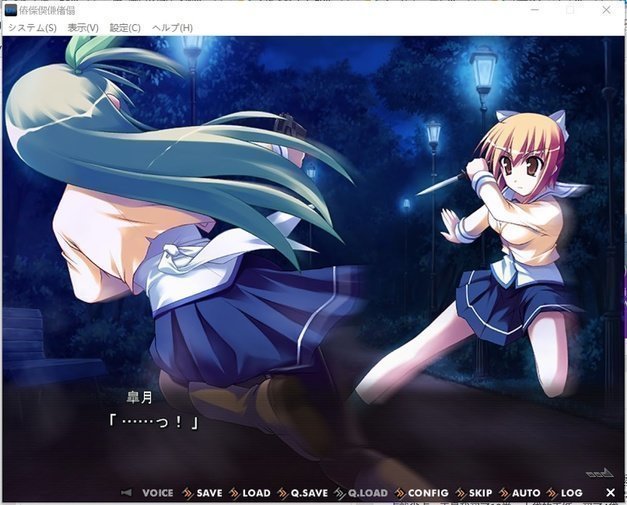
Finally one time Renka gets wrecked and runs off. Riberka gives chase. The protagonist, even more confused, asks Riberka why she’s trying to kill his girlfriend. Riberka starts telling her story: she’s a member of a German anti-ijin organization, her parents were members too. As a kid her body was genetically modified to be a cyborg soldier specifically for fighting ijin. But in one experiment her metrics were judged substandard and she was ordered to be sent to the front lines to die. Riberka’s parents were devastated—not just because the modification failed, but because they’d lose their daughter. Riberka herself was pretty chill about it.
“If I survive on the battlefield, then Mom and Dad won’t be sad, right?”
So through mission after mission designed to get her killed, Riberka survived. The lab started reevaluating this “failed modified human” sample. Her parents gained status too. Finally, Riberka got one last mission: complete this battlefield ijin-extermination op, and she’d be free—no more fighting.
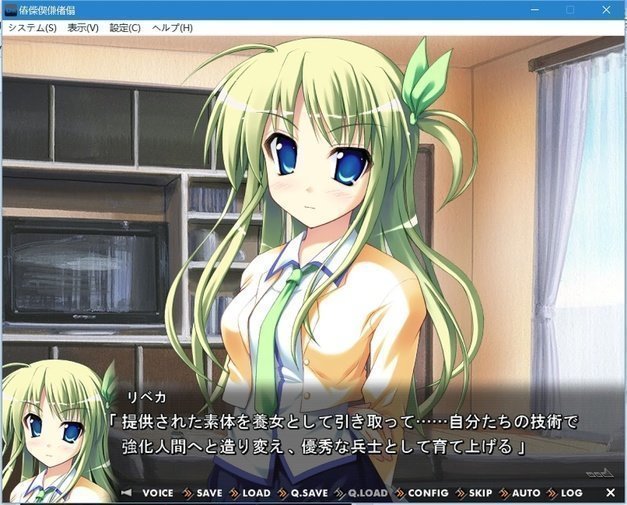
The battle was brutal. Riberka was the only survivor. At the end she found a little girl crying over her dead mother on the battlefield. The girl was an ijin. The mother was an ijin too, but dead. Riberka thought about her own situation and didn’t kill the girl—let her go.
After the battle, Riberka earned her rehabilitation. She went home to tell her parents the good news and found them dead. A little girl stood in their blood, smiling.
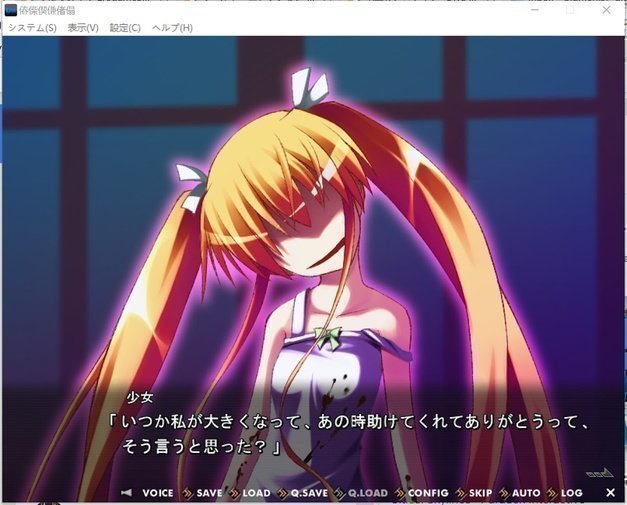
The girl was the ijin she’d let go on the battlefield. The girl said: “You killed my mom, so I killed your whole family. Feels good, right? Get angry! You think letting me go means I’d repay you? Think again! Ahahahahaha!”
Riberka furiously started blasting the girl. But the girl was an ijin—physically superior—and just ran.
After that, Riberka gave up her rehabilitation and returned to the ijin extermination unit, treating all ijin as enemies and killing without mercy.
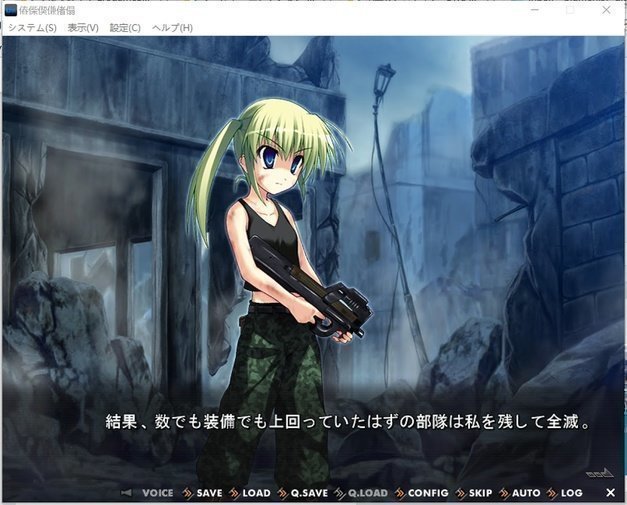
So she came to this school, discovered Renka is a half-ijin, and since she has ijin blood she must be wiped out—no mercy. Not just a mission, but her personal vendetta.
After the flashback, the protagonist says he understands why Riberka hates Renka so much, but still wants to talk her down and get her to accept peace.
Of course that fails!
Then they fight again. Basically the protagonist and Renka both get knocked down by Riberka, then a bunch of shounen speech power-up and they stand back up and slap her down. Yeah yeah yeah, you ever seen A Certain Magical Index? That kind of feel. In the end Riberka gets her face slapped and inexplicably accepts Renka, says she’s letting go of her massive grudge, and flies back home.
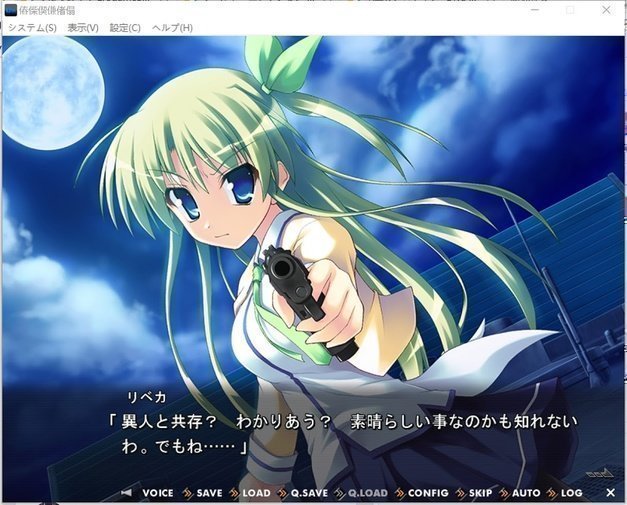
Chapter 1 done… on to Chapter 2.
魔剣の巫女と黒の遣い魔—the title is straightforward: The Demon Sword Shrine Maiden and the Black Familiar.
This chapter is yuri. The protagonist is still useless, same as Chapter 1… but it starts getting closer to the main plot. Yeah, Chapter 1 is basically pointless.
Story’s still at school. The protagonist finds a kyudo club underclassman: Kotoko. She’s from the big Kannagi family, and according to her she carries a heavy family mission, so she’s always working hard at school. Kotoko has a girl named Homura close to her.
One night the protagonist accidentally sees Kotoko in shrine maiden garb, wielding a giant sword, fighting a black beast-like thing—and she’s not exactly winning. After that he pays attention and realizes this kind of fight is routine for her.
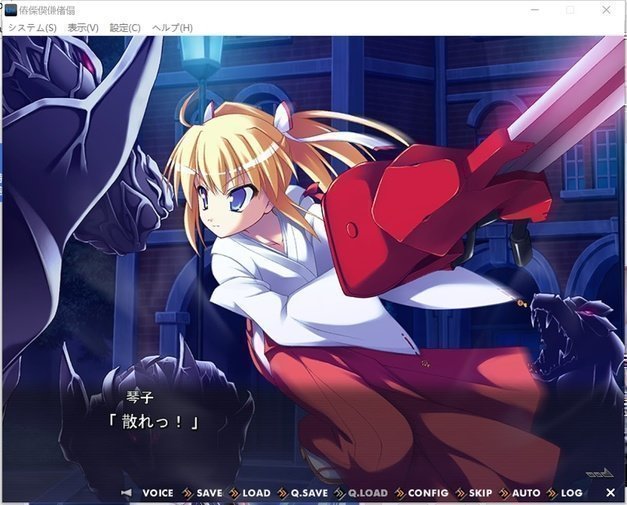
After some talking and schmoozing, Kannagi Kotoko tells him her deal. Her family, the Kannagi, are a lineage that opposes the world’s “oni,” responsible for generations of exterminating them. Her family is human but carries superpowered blood, which is why they can fight ijin. That’s the family mission. After some chit-chat it turns out “oni” here means “ijin.”
But unlike Riberka, Kotoko says the ijin are organized and have goals. They’re looking for the “Key Princess.” Through the Key Princess they’ll open the “Door” connecting this world to the ijin world, and then more ijin will pour through and turn the human world into hell.
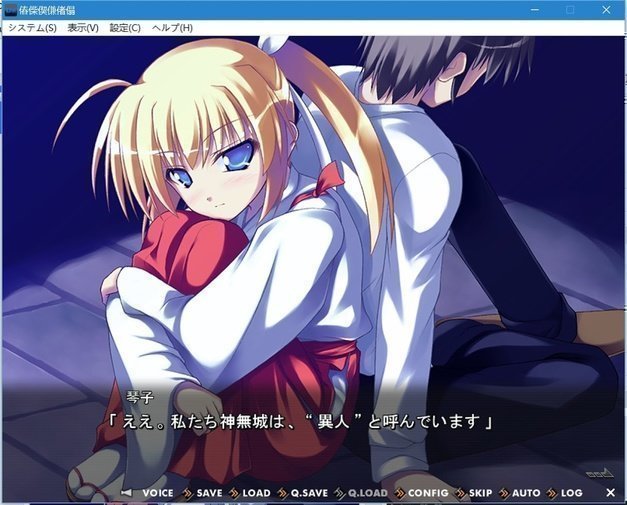
Kotoko says she’s discovered the Key Princess has recently awakened, and the Door is likely at this school too. Every night she fights the Key Princess’s “familiar,” searching for the Key Princess while trying to stop her from opening the Door.
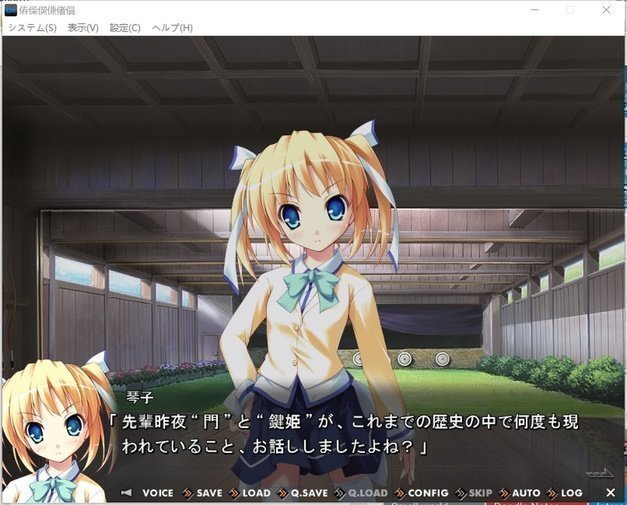
As the story progresses, Kotoko discovers the familiar’s controller is her good friend Homura—her close friend was a spy all along, an ijin organization member planted to cover the Key Princess’s opening of the Door. At the critical moment, the Key Princess appears, Kotoko goes to stop her, Homura shows up to block her. After a fight Kotoko loses to the familiar, but at the last moment Homura hesitates out of friendship and lets Kotoko go, which leads to her being wounded by Kotoko’s brother and then killing herself. Kotoko’s brother tells her he’s found and dealt with the Key Princess—it’s all over.
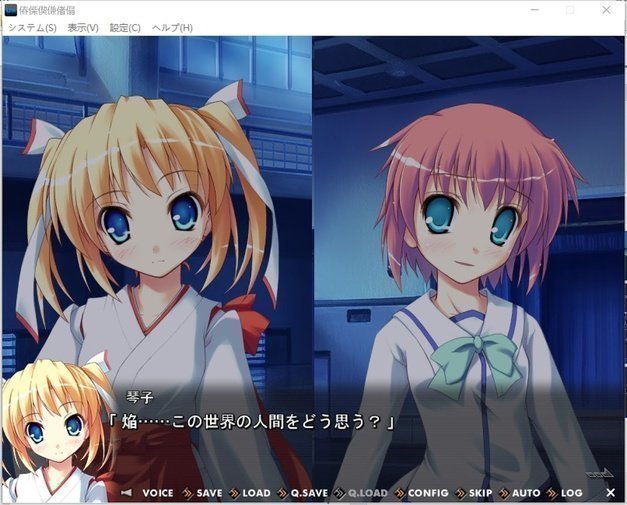
Final ending: Homura didn’t actually die, Kotoko completed her mission, and the two go back to being cheerful best friends… The protagonist basically just watches the whole time. Funny thing, at school he meets a male school nurse who tells him he actually has superpowers too—an ability called “転眼” that can copy others’ powers. Super strong. The nurse also says the protagonist and the Key Princess have met before—several times throughout history—and that many people have died because of the Key Princess, and the protagonist has killed the Key Princess several times himself, blah blah blah. When the protagonist asks for details, the nurse says “I just love that confused face you make when you want to know more but I won’t tell you” and walks off… Guess that mystery’s for the next chapter.
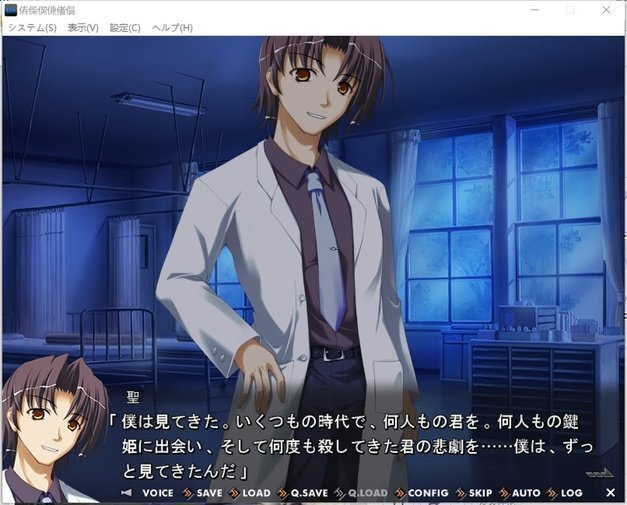
So Chapter 2’s main purpose is developing the conflict between the Key Princess and the Kannagi family, plus showing off some yuri. Next is Chapter 3, the Key Princess chapter—you still don’t even know who the Key Princess is after Chapter 2.
RIGHT ANSWER CHRONICLE is Chapter 3, meaning “record of the right answer.” At the start, the Key Princess appears: it’s Yui ne, the rich girl at the protagonist’s school who’s always absent due to poor health. After meeting the protagonist, he openly admits he likes her and confesses—and gets rejected (nice!!!). Yui ne shyly says she has a mission, a huge one, and probably won’t live long, so she can’t accept his confession, though she’s happy about it.
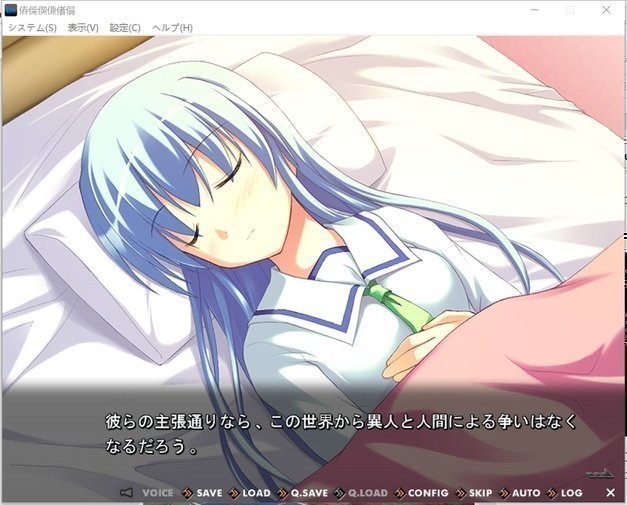
What mission? Yui ne explains the meaning of the Key Princess. There are two worlds: the human world, and the ijin world. Everyone in the ijin world has superpowers. Long, long ago—about a thousand years—some ijin crossed the Door into the human world and eventually clashed with humans. Humans began exterminating ijin, and the remaining ijin were displaced. So they need the Key Princess, who reincarnates endlessly. Her power is opening rifts in space-time; the ijin need her to open the Door to their world so the remaining ijin can return home and stop fighting humans.
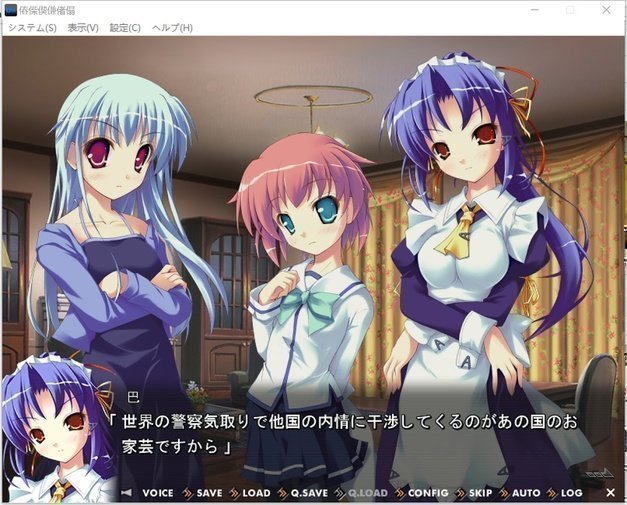
Yui ne believes this too—that opening the Door will bring peace. Naturally, Riberka doesn’t think so, and neither does the Kannagi family.
When Yui ne prepares to open the Door, she faces massive resistance. The protagonist tries to help but can’t do anything. The Kannagi family even resorts to forbidden magic to stop her, telling Yui ne that opening the Door will only bring war, not any bullshit peace.
Yui ne’s butler/maid Kamishiro Tomoe insists the Key Princess should open the Door—she’s the one who’s been saying it brings peace. Actually, Tomoe is an ijin herself, and the Kannagi family believes she’s deceiving the Key Princess.
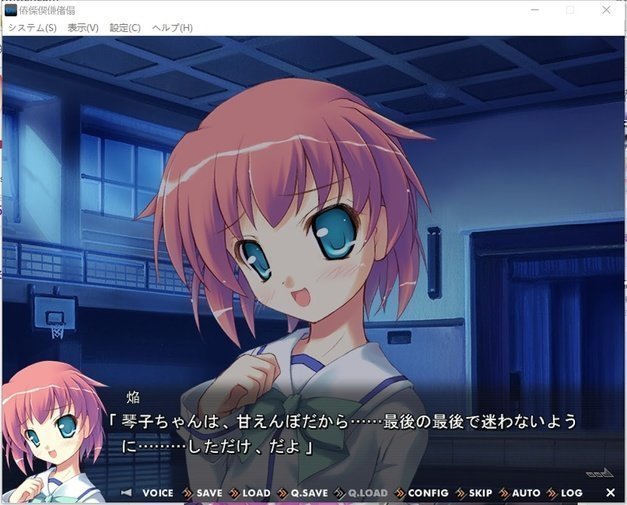
In the end, the Key Princess fails to open the Door—for now. Tomoe covers her retreat, the protagonist carries the badly wounded Yui ne to a flower field in the countryside, and suddenly feels a memory awakening. Chapter ends, next begins.
ANOTHER SIDE CHRONICLE is the final chapter, meaning “record of the other side.” It starts with a flashback—a thousand years ago.
The protagonist’s earliest past life was named Sou, and Yui ne’s past life was named Suzuyo. Back then a village was plagued by “oni,” and the village’s biggest family, the Kannagi, were exterminating them. Sou decided to become a retainer for that family and help kill oni. He met Suzuyo right away, and she immediately asked to borrow his sword, saying she had the power to protect everyone in the village. He laughed at her because she couldn’t even lift the sword…
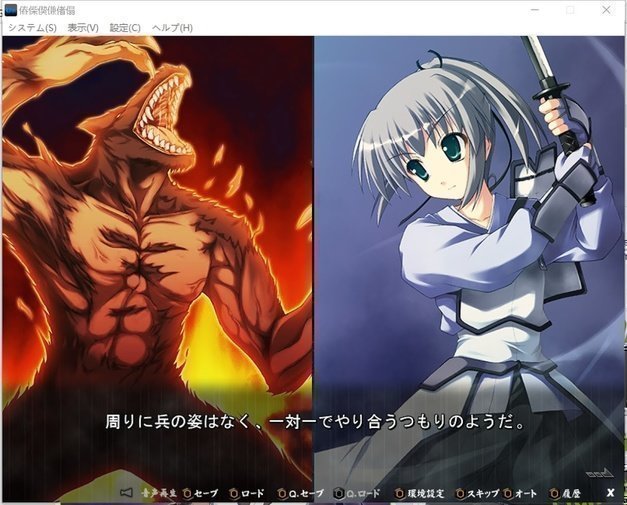
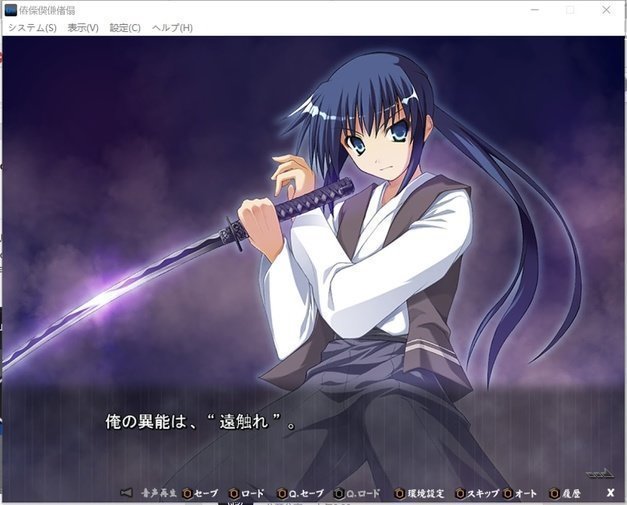
The story after that is long but easy to summarize. Sou also had the 転眼 power-copy ability. Suzuyo was the first Key Princess. The Key Princess is born from a human-ijin mix—Suzuyo’s father was ijin, her mother human. The “oni” plaguing the village were just familiars released by the ijin organization to lure out the Key Princess, find her, open the Door to the other world, and start a new war. After all, ijin have superpowers; humans are trash compared to them. Suzuyo knew her identity was important and mistakenly thought she could wield weapons freely, which is why she asked to borrow his sword.
Eventually the ijin organization found Suzuyo and learned she was the Key Princess. They started hunting her. The Kannagi family tried to stop them. After all the scheming, both sides were wrecked, but Suzuyo still fell into the hands of the ijin organization’s leader—an ijin named “Zero”—who sacrificed her own body to possess Suzuyo and control her to open the Door.
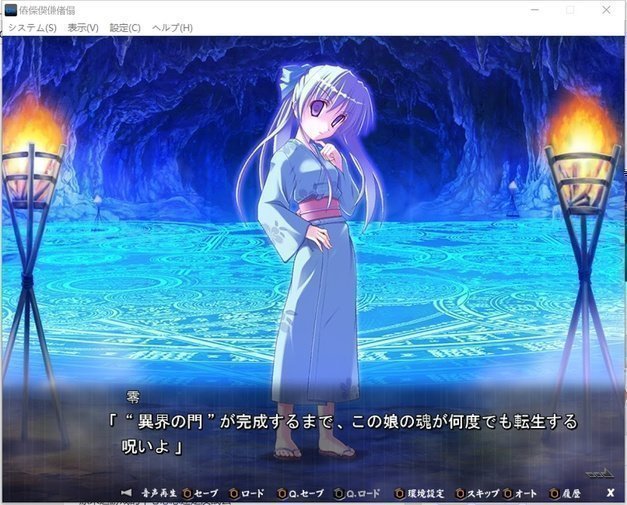
The protagonist confronts Suzuyo, now possessed. The controller loudly declares he must either kill his beloved Suzuyo to stop the Key Princess from opening the Door, or just watch as she opens it. The possessing ijin also says she’s placed a vicious curse on Suzuyo: if the Key Princess fails to complete her mission of opening the Door, her soul will reincarnate endlessly, each time continuing the duty of opening the Door until it’s opened.
The protagonist can’t bring himself to kill Suzuyo, and doesn’t want the Door opened either. He’s in agony—but then Suzuyo suddenly regains control and stabs herself with a knife. If he won’t do it, she’ll do it herself.
The dying Suzuyo knows she’ll reincarnate as the next Key Princess. The protagonist uses 転眼 on her, copying her reincarnation curse, and then kills himself too.
Two people cursed with reincarnation die, and fall into endless rebirth…
What happened over the next thousand years of reincarnation is unknown. The only one who knows is that guy called “Sei”—the later school nurse. Funny thing, this guy was already around a thousand years ago, calling himself an onmyoji back when the first Key Princess existed.
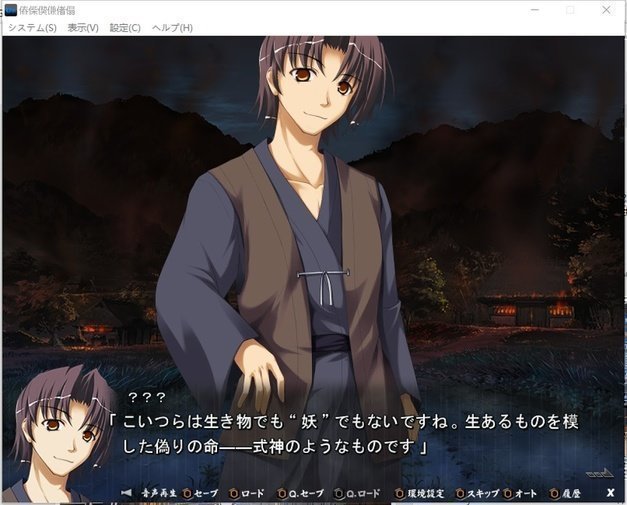
“Every cycle, you kill the Key Princess and then yourself to stop the Door from opening. Because of you and the Key Princess, a truly massive number of people have died.” That’s what the guy named Sei says.
The protagonist finally regains his past-life memories and understands what he has to do—and that the Door can’t be opened carelessly. Too many people have been sacrificed over a thousand years to prevent war. The game’s timeline returns to the present. Sei appears, and the protagonist asks where he’s from and what his goal is. He says he’s actually from the future, and to correct the mistakes humanity made before, he acts as an observer and corrector in the flow of time. I feel like that explanation is more for the player—the setup is similar to “The Sheepherder of the Great Library” or whatever.
Finally, the protagonist with his past-life memories faces the Key Princess in a final showdown. The Key Princess still bears the curse, but since the protagonist has awakened, the onmyoji “Zero” who possessed her and reincarnated with her appears again, revealing her true form. The protagonist fights and defeats Zero. Also, because Zero appeared on her own, the curse disappears—the Key Princess is no longer affected by reincarnation, the final curse is broken, and the protagonist finally saves his beloved, even if it took a thousand years.
“The problem isn’t over yet,” the Key Princess says. She has one more thing to do. She opens the Door and vanishes.
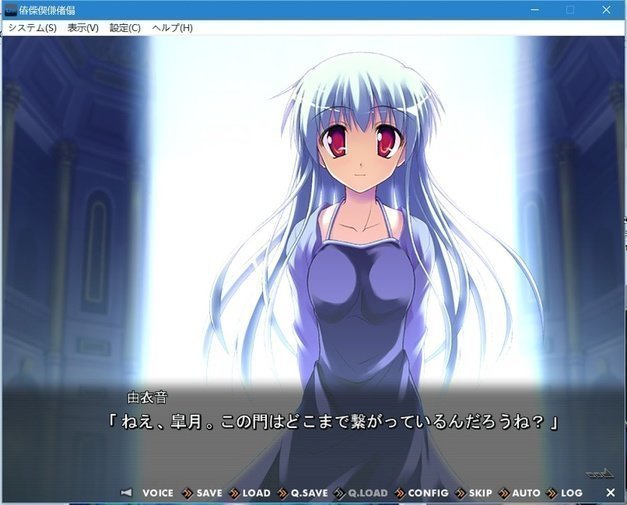
Where’d she go? She used her space-time power to travel to the ijin world and communicate with the ones who first came to the human world. Through her power, she stopped the original tragedy—meaning the Door never had to open in the first place, and she’ll still reincarnate and meet the protagonist again.
The timeline returns to where the protagonist first met her. He and Yui ne meet again, and the game reaches its Happy End.
Honestly… Uta te Meguri’s scenario is strong. Not just ordinarily strong.
It boldly chops the story into three parts, and interestingly each part is coherent and clearly explains a piece of the main plot. Then it assembles all the fragments and gives you that sudden clarity.
The last time I felt that was Sakura no Uta—it shows the writer’s skill at building a big story framework.
That said, the game has plenty of problems… The framework is good, but the pacing is a bit off… Oh no, it’s really off.
Chapter 1 clearly has a lot of immersion thanks to the OP, but it’s also the shortest. That’s awkward. Chapter 2 gets longer, and by Chapters 3 and 4 it keeps growing—but it drags. The past-life memory chapter especially wears down your will to keep reading. The dialogue isn’t very nutritious either. This is supposed to be the past-life flashback chapter, but it starts a whole “from scratch” romance with new characters and tries to develop them properly. That’s unrealistic, you know? As a player, I need the cause and effect, not another round of falling in love. The past life should be an appetizer; the main course comes later. But after the past-life chapter ends, the final duel is rushed—it just ends for no reason. The wrap-up after that is bad too, feels like a forced Happy End. Why does the Key Princess have to save the world again? The world’s already a mess. You spent all this effort preventing the Door from opening, and then the Key Princess just casually opens a portal and leaves. Too sloppy…
Not sure if it’s coincidence, but the game has a severe sense of déjà vu. If you’ve played Warcraft and then World of Warcraft, you’ll notice the story seems… a bit… familiar.
The orcs of Draenor, the humans of Azeroth, a Medivh who opens the Dark Portal, triggering war between the two, creating countless deep grudges, making the conflict between humans and orcs irreconcilable…
Just like humans and ijin in Uta te Meguri…
This strong déjà vu made the second half hard to read. I kept thinking of Medivh, Gul’dan, Draenor, Garona, etc. Almost every character has a counterpart in that story, doing roughly the same things.
I’m not saying it borrowed Warcraft’s worldview—Warcraft doesn’t have reincarnation—but still, it’s so… déjà vu.
Of course, the game’s final emphasis is on “reincarnation.” A thousand years of rebirth just so the two can meet again, break each other’s curses, and finally be together.
The title says it all:
うたてめぐり
うたて = 転 (reincarnation) めぐり = 巡り (cycling)
And the Key Princess’s final line—“I’m not interested in saving the world or building peace between the two worlds. What really matters to me is you”—nails the theme. At the end of the day, it’s just a love story built on reincarnation.
Still, thinking about it, this game and Warcraft/World of Warcraft are somewhat similar—except the former relies on reincarnation, and the latter on prophecies from various charlatans.
Reincarnation or prophecy, as I said at the start, the emphasis is on “fate,” and the stories of protagonists who either follow it or rebel against it.
Fate, huh. When you get down to it, fate stories really are the most interesting.
Comments are hosted on the Chinese main site. This mirror is read-only.