Ryuuyoku no Melodia (竜翼のメロディア) Review
竜翼のメロディア
Ryuyoku no Melodia (竜翼のメロディア) is an old game from Uzumaki-sha. Its themes are “singing” and “dragons” — same half-fantasy flavor as always.
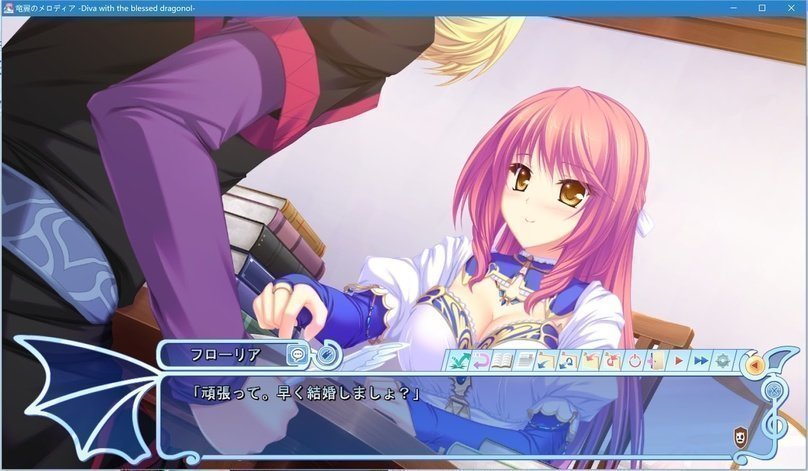
How should I put this game… it’s very… long-winded?
I’ll admit I played this for the voice cast. Nanjo’s in it, Fukada Ai’s in it, Kiriya Hana too, plus Fujisaki Usa, who I’ve been keeping an eye on lately. What I didn’t expect was for the story to feel so much like… one of those… black-and-white… Western… kind of languid… romantic love stories.
It’s not quite Romeo and Juliet, but going by the tag on ErogameScape, it’s Roman Holiday.
The story lays out its setting right from the start. Long ago, an evil dragon and a holy dragon fought each other, and in the end humanity chose to side with the holy dragon and defeat the evil one. With the holy dragon’s help, a king was established. By tradition, the princess appears every morning to sing a hymn and bless the people, and the whole kingdom says that music is the way humans and dragons communicate—which is why music is the most important thing in this country, to the point that even the schools teach music and singing.
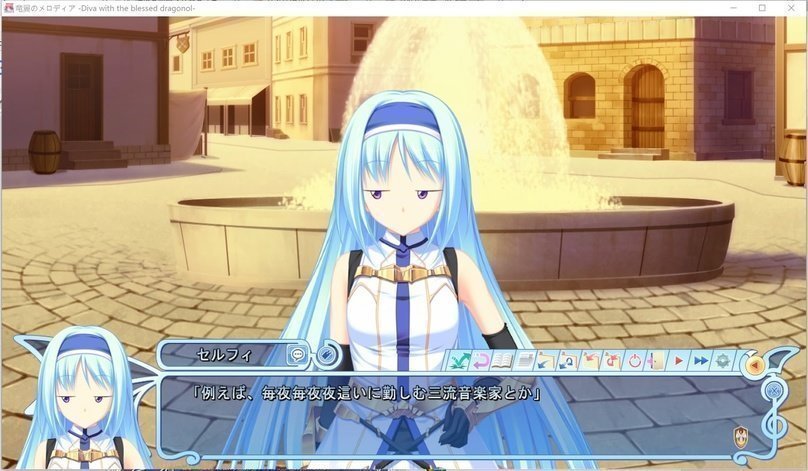
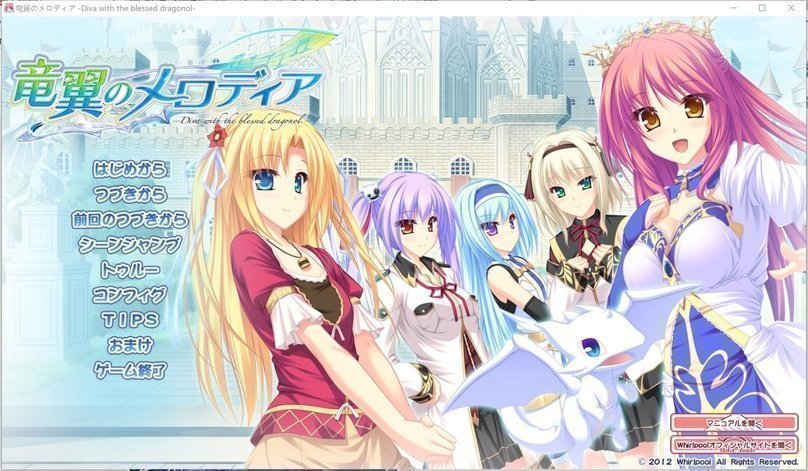
The protagonist is studying composition at a music academy somewhere in the kingdom, and the cast gets laid out pretty fast: Floria, a princess who transferred in under wraps; Cynthia, a senpai at the school; Mel, the protagonist’s little sister; Selfy, the princess’s lady bodyguard; and Chloe, who’s studying archaeology and engineering at the academy.
After that you basically stop getting any real plot momentum. What follows is a long stretch of school life and exploring the ruins near the protagonist’s house. The exploring doesn’t amount to much either. Days pass one by one, the protagonist coasts one day at a time. Honestly, this is the thing I dread most, because in a setup like this the game turns into a black hole—no route in sight, no end in sight. Who knows how much longer before the plot actually moves forward?
One thing worth mentioning here: you have to clear everyone’s route before the True Route unlocks, and that’s where the real story is. The individual routes, though… honestly there’s not much to say. I only did the princess route, and it’s basically the poor boy falls for the princess thing — she can’t leave the castle on her own, so the protagonist sneaks out at night for their secret meetings, that kind of deal. I figure everyone’s seen this setup a thousand times in classical romance stories, so I don’t need to spell it out again.
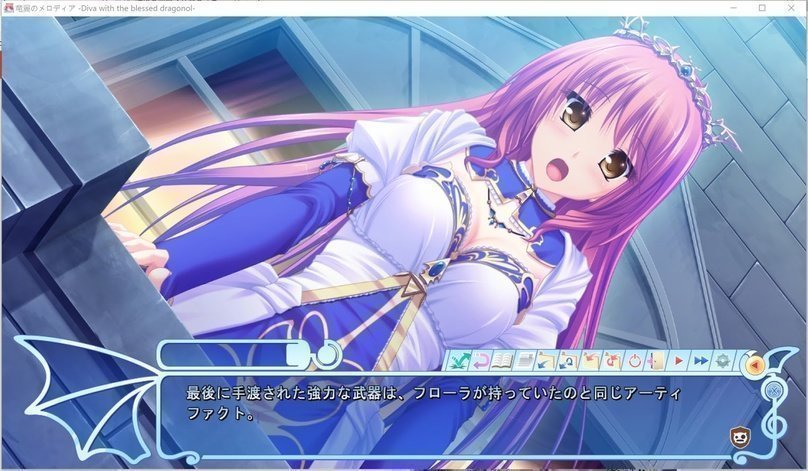
The only part really worth talking about is the True Route. The individual routes already hint at a fair amount of True Route content, they just never spell any of it out. The True Route is implicitly an independent line where “none of the individual routes ever happened” — meaning the protagonist never scored with any of the girls. In other words, you can skip the individual routes entirely and go straight for the True Route and it’ll barely affect your understanding of the story.
The True Route is all about solving the mystery. First off: why does the princess have to sing every day? Turns out the evil dragon that the holy dragon defeated years ago never actually died — it can’t die. It’s just sealed at the bottom of the castle, and the princess sings every day to keep that seal in place with her holy-dragon-blessed song. That’s it, that’s the whole reason.
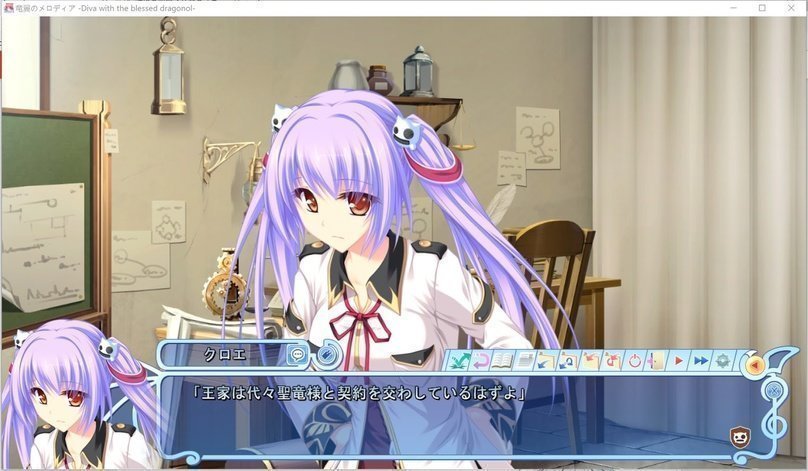
Every generation, the royal bloodline of the king makes a pact with the holy dragon and gains a blessed power, and they use that power to sing and keep the evil dragon sealed—passed down generation after generation. But when it came to the princess of this generation, there was a bit of a problem. The current princess has no holy dragon blessing, and her songs can’t seal the evil dragon. Of course, that’s not to say the princess’s singing is totally useless—it does have a life-reviving effect, and when she sings it can extend the life of the aged holy dragon. Unfortunately, the evil dragon gets revived by it too. In other words, not only does the holy dragon’s power recover—the evil dragon recovers as well.
So where is the person who actually has the blessing to seal the evil dragon? It’s the protagonist’s little sister. Why the sister? Because the protagonist himself is the very “Doragnol” everyone in the game has been desperately searching for—a golden one, at that. Who the hell knows why this guy lost his memories and ended up in human form living as an ordinary person. And because the sister is constantly around him, she picked up the blessing, which naturally gave her the sealing blessing too.
In the end, the protagonist awakens as the Golden Dragnoll, and with the blessings of a whole chorus of divas, he finishes off the resurrected evil dragon. Happy End.
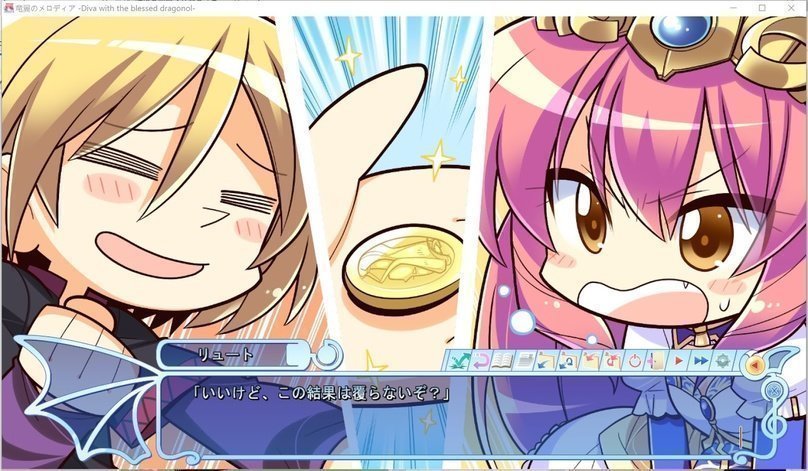
This game was a real grind for me. I’d been feeling like shit for the past few days, running a fever the whole time, and combined with the story being boring as all hell, my memory of it is coming back in fragments. The main plot only gets brought up in the True Route; everywhere else it’s just baffling. Not that it’s bad to look at, it’s just that it has basically nothing to do with the main story — like it’s a different story entirely. The routes don’t connect to each other much at all.
The game tries to pull off a big twist with its story foreshadowing, but every attempt fizzles out halfway. Take the aged holy dragon who hands the protagonist a little dragonling named Dora early on—he doesn’t think much of it at first. Only at the very end does the old holy dragon reveal that this little dragon is the child of the evil dragon, and that he hoped the protagonist would carry it out of the palace to live among mortals—partly hoping it could be reformed, partly out of fear that the little evil dragon would revive quickly under the influence of the princess’s singing.
Turns out Dora’s whole backstory blows up exactly once near the end of the game, gets talked down by the protagonist’s shounen speech routine almost immediately, and then it’s like none of it ever happened.
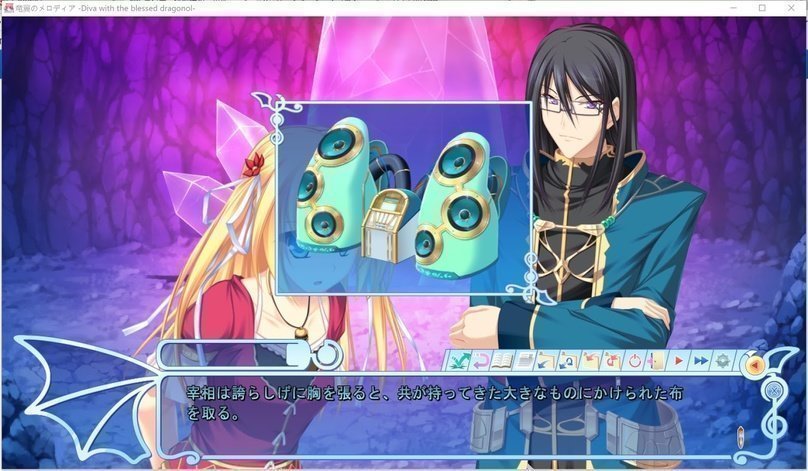
The game also brings up the Chancellor’s ideas about archaeo-engineering. He thinks it’s pretty bad that the royal family has a near-monopoly on sealing the evil dragon, and wants to develop something automated to replace them. He’s grinning the whole time he says it, too—looks ready to start a rebellion. In the end he even builds something like a radio, records the princess’s singing, and just loops it, so she doesn’t have to sing every day anymore.
But then there’s the chancellor at the end… nothing happens. Setting up foreshadowing like that and then going nowhere is pure blue-balling — it was genuinely painful.
The art style isn’t bad per se — it just doesn’t really feel Japanese. It’s very much that stiff “Westerner trying to imitate manga” look you see on Steam, half-East half-West. Given the setting, I get it. But the SDCGs are done in a standard Japanese style, and the switch between the two is jarring as hell.
The game has a lot of songs, and the music is genuinely good. The tracks for the princess and the little sister are both solid, and the final chorus ED is a nice listen too. As for the singing contest between Nanjo and Yui Sakakibara, I still lean toward Nanjo. None of that hides how monotonous the BGM is, though. Some tracks are just jarring — the tavern and the royal palace ones in particular clearly steal the spotlight, which is exactly what a BGM shouldn’t do.
I honestly can’t even talk about the game’s story. The main route is decent enough, but the main route is barely 30% of the game — the rest is a bunch of half-baked branches. The slice-of-life parts get a little boring, and even though there are plenty of heroines, none of them is a real “story engine.” They can’t carry the pacing, and it’s hard to stay awake for it.
As I said at the start, this game doesn’t actually take that long to finish, and yet it still feels so “drawn out.”
One more thing: the Japanese in this game has a ton of weird grammar and tone. Everyday dialogue is fine, but whenever the chancellor, the old holy dragon, or the heroine in princess mode starts talking, the phrasing and word choices are stuff I’ve never seen before, and most of the particles change too. Could be some old-fashioned way of speaking, or maybe it’s like a Japanese equivalent of “translationese.” I can barely work out the meaning from subject, predicate, object, and tense, but it’s still a real struggle. Which probably says something about how bad my Japanese is.
Comments are hosted on the Chinese main site. This mirror is read-only.