Nora to Oujo to Noraneko Heart (ノラと皇女と野良猫ハート) Review
Nora to Oujo to Noraneko Heart
Honestly, I didn’t want to play this game at first. The trial version had been out for ages and I kept skipping it, and I had my reasons.
First, the OP just doesn’t grab you. I’ve been burned by OPs before—more than once—so that’s probably a weak spot in how I pick games.
Second, the premise is way too light-novel. A princess from the underworld comes to the surface to destroy the world or whatever—how many times have we seen that? A heroine drops out of another world and runs into the protagonist? A dime a dozen.
Third, the art style. It’s just too… sultry. I really didn’t like the character designs. Every girl looks like a sexually frustrated female rapist. Maybe I’m better off as a simple moe pig—cute art appeals to me more.
So for these pretty dumb reasons I kept ignoring the game. But the game kept making moves—announcing an anime, running ads, going on sale. I started to wonder what kind of backing this studio had. Eventually I couldn’t take the flood of Twitter bombardment anymore and thought, fine, I’ll check out the trial…
And then I fell down the rabbit hole.
How to put it—the game is way, way, way, way better than I expected. Honestly, it’s a solid gem.
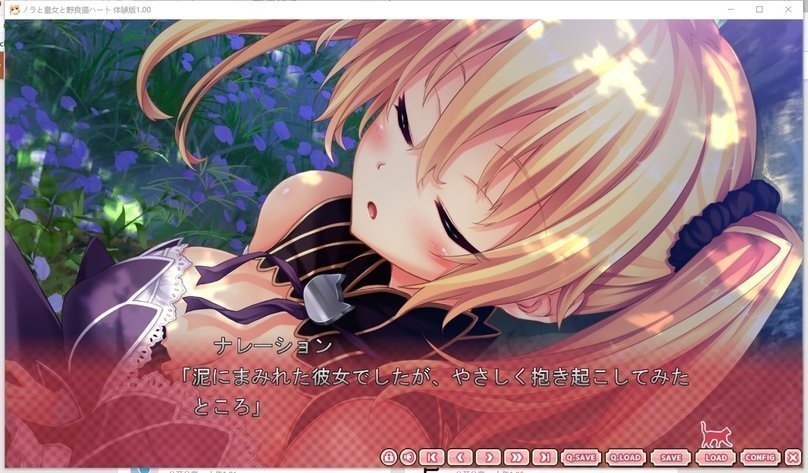
Just as I expected, the game unfolds like a light novel—no, actually more like a manga—and it goes the comedy route. And I have to say, that “comedy route” choice was absolutely right. If it had played it straight, this game would have died a horrible death.
At the start, the protagonist says he’s an orphan adopted by his foster mother, who during her life took in and helped a lot of people, including him and a girl of unknown background named Shachi who lives with him. Then the scene shifts to the underworld. The Mother of the Underworld thinks that people in the world of the living have stopped fearing death these days, that they’ve even started forgetting what death is. At this rate, the underworld is doomed, so she sends her daughter, the underworld princess Patricia, to the surface to cast a death spell and remind humans what death is and what it means (of course, that damn spell never actually gets cast, and I don’t know if the living world would be doomed if it were).
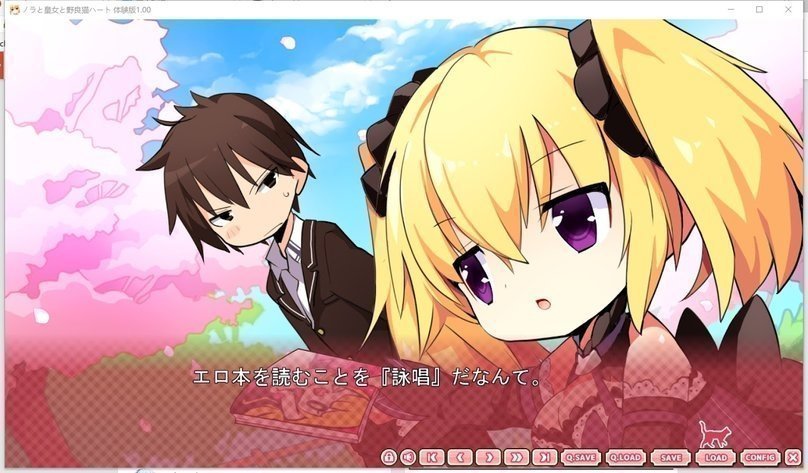
So soon enough the underworld princess arrives on the surface and meets the protagonist, Norah Sakata. At first the princess is a total idiot—well, she’s from the underworld, she doesn’t understand anything. She thinks everything she sees is magic, thinks everything is a conspiracy by the humans of the surface. She even picks up a dirty book and thinks it’s the Grimoire of Life, demanding the protagonist read it to her. More importantly, this princess is always flexing, thinking all humans deserve to die, that she’s above them, that the surface is full of danger—and she keeps making a fool of herself.
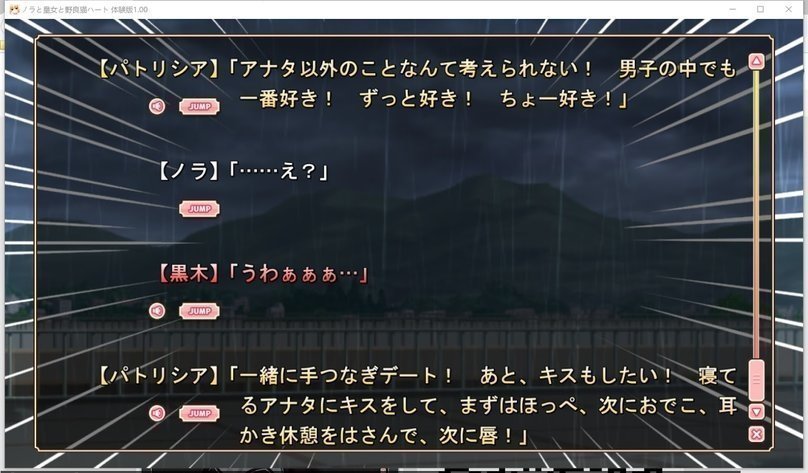
Then the protagonist runs into the disciplinary committee member Kuroki Michi at school. She says someone asked her to consult him about how to confess to a guy. The protagonist thinks she’s messing around and ignores her, but she’s got a one-track mind and actually writes him a long love letter to use as practice. But the letter is too embarrassing and she can’t bring herself to read it aloud. Just then the princess passes by, sees the letter, and thinks it’s a magic spell. She asks what it is, and Michi explains it’s a “confession.” The princess slaps her forehead: “Oh, so it’s a spell called kokuhaku (confession)! I must learn it.” So she imitates Michi’s practice and reads it out loud, having no idea what it means. But the people watching are so earnest it’s actually funny. After the imitation, the princess somehow feels her heart skip and gets embarrassed. She goes with the flow, imitates what she’s seen others do, and kisses the stunned protagonist. And then everything changes.
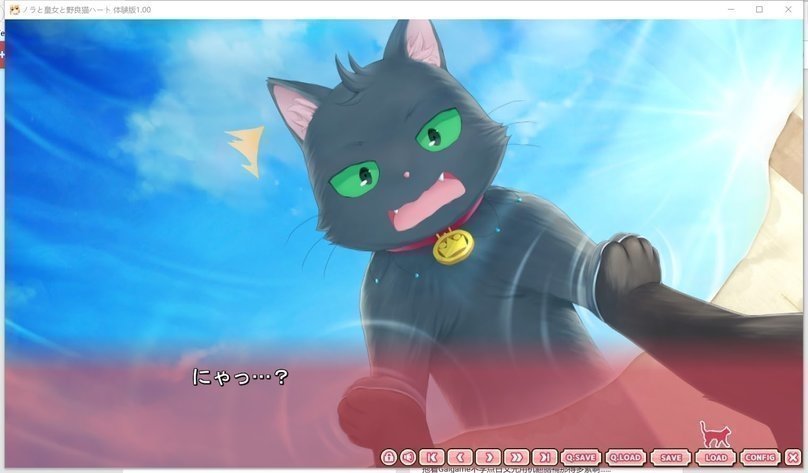
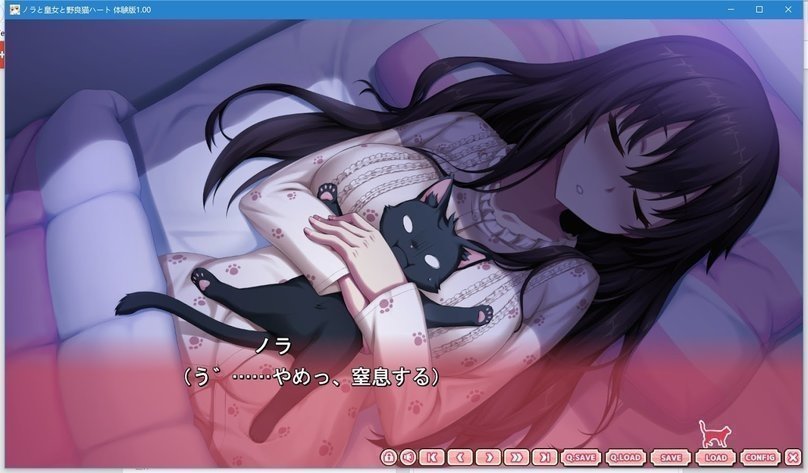
Why did it change? She’s the princess of the underworld. Kissing a mortal is basically forming a contract. The protagonist inexplicably becomes her servant—a familiar, basically the lowest rank of minion. But that’s not the point. The point is that after becoming a familiar, his body turns into a black cat, and no one can understand what he’s saying. He can’t go home and ends up wandering the streets. Eventually Michi finds him and takes him in temporarily. He knows exactly who she is but can’t communicate. As a cat, the protagonist is miserable—he doesn’t understand cat language either, so he can’t fit in with the cats. He’s stuck following Michi around, snarking about everything in his head.
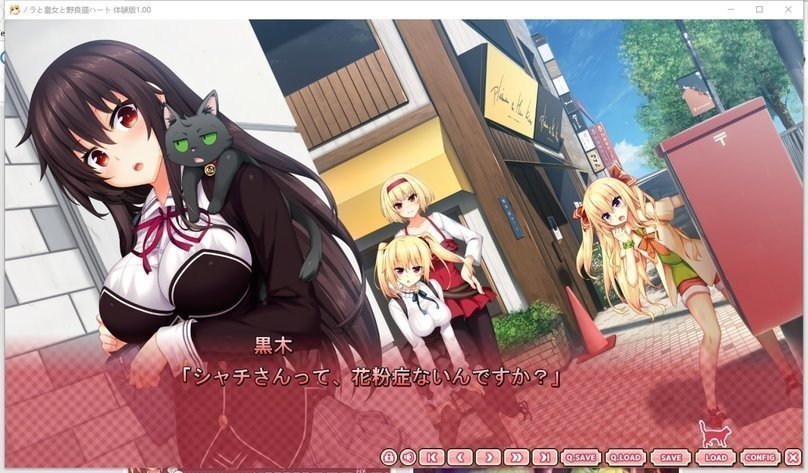
Eventually the princess realizes the protagonist is missing, but there’s a mysterious stray cat that can only talk to her. She figures out she accidentally took a familiar and turned him into a cat. She has to help him change back, and the method is simple: one kiss. So kiss to become a cat, kiss again to become human—you can switch back and forth. But even so, the protagonist is still her familiar, and that doesn’t change.
Later, the Mother of the Underworld asks the princess how the death spell progress is going on the surface.
The princess says she needs more time—“I need to understand more of the surface’s magic and conditions to cast the spell effectively.” She also claims she’s learned a lot about “life” and “death” magic in the human world.
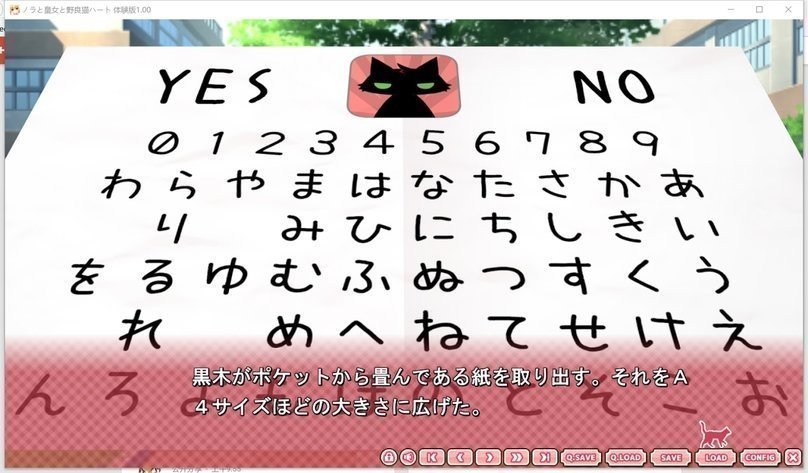
Since she’s the underworld princess and doesn’t know Japanese well, she stays at the protagonist’s house, learning human writing (which is just Japanese) and studying human culture and views on life. The princess works hard—she starts below elementary school level and improves quickly, learning lots of things the underworld doesn’t have. The most important event is the beach picnic the protagonist holds on his foster mother’s death anniversary. He gathers all his childhood friends—people his foster mother helped—and they eat seafood curry on the beach. The atmosphere is lively. The princess is confused:
“This is the day your foster mother died. Why are you all so happy?”
“Because she wanted us to be happy. If we’re all doing well and happy, she’d be glad too, right?”
“But she’s dead. She’s gone.”
“But we’ll always remember her. To us, she’s still alive.”
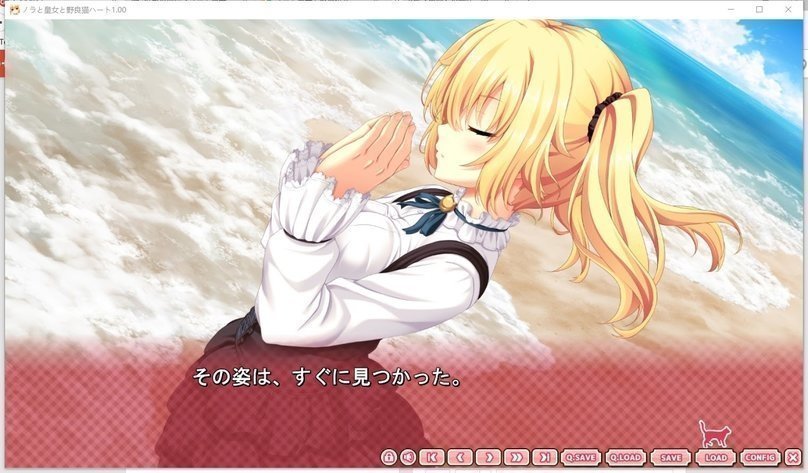
So the princess starts seriously thinking about how humans view death. As someone from the underworld, she always thought death was something humans fear, but she never imagined some could be so optimistic and calm about it. No wonder the underworld is so miserable.
As the princess spends more time with the protagonist and his friends, her view of the human world improves. Through the protagonist and his foster mother’s story, she comes to understand what life and death really mean.
“Maybe being alive or dead shouldn’t be measured simply by life or whatever. If someone dies but people remember them, miss them, then they’re still alive. If someone lives but no one ever cares or knows they exist, what’s the difference from being dead? Actually, they’re the dead one.”
The princess and the protagonist grow closer, and one day she realizes that when she faces him, her body starts to pound—from her chest.
Simply put, a heartbeat. But people from the underworld don’t know that.
Now the princess is starting to care more and more about the protagonist, but he also notices something strange about himself—or rather, others notice it.
The problem is simple: even though he’s back to being human, he’s acting more and more like a cat. He sits with his legs spread like a cat, hands on the ground. He starts watching cat videos on TV, stops reading erotic books, and starts collecting cat photo books. Finally, he starts feeding Persian cats and other breeds on the street and at school with a very abnormal look in his eyes.
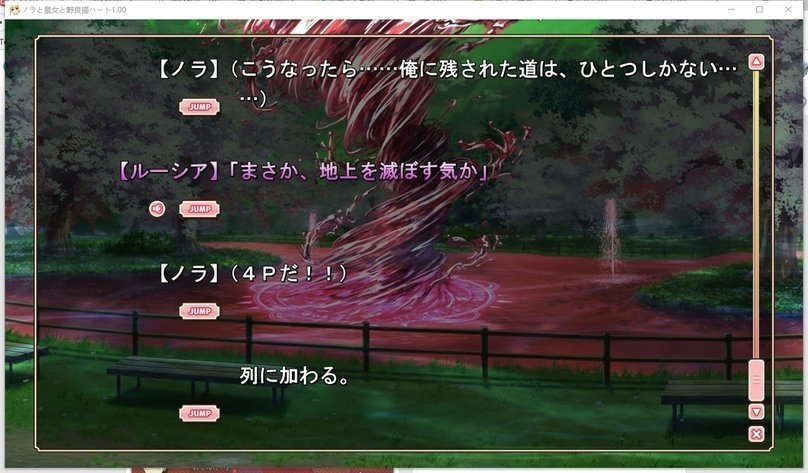
Everyone thinks he’s weird, and the princess especially thinks so—she even gets jealous. Eventually the protagonist decides he doesn’t want to be human anymore; he wants to be a cat so he can have a romance with his Persian cat girl. Even though that Persian cat girl is the 3P cumdump of the cat world, he insistently says “count me in for a 4P.” After all the fuss, the princess finally researches the origin of the underworld familiar magic and removes his familiar status. He stops wanting to be a cat, and through all this, the princess officially becomes his lover.
The two start dating and everyone congratulates them. But new problems arise:
- Because of love, the princess has a heartbeat and becomes a living person. She can never return to the underworld. She doesn’t mind—worst case, she just won’t go back, or she’ll go back when she dies.
- The underworld sent her to cast a death spell on the surface, but she’s been won over by the surface. The Mother of the Underworld is furious.
So the Mother of the Underworld sends the princess’s older sister and younger sister to bring her back no matter what.
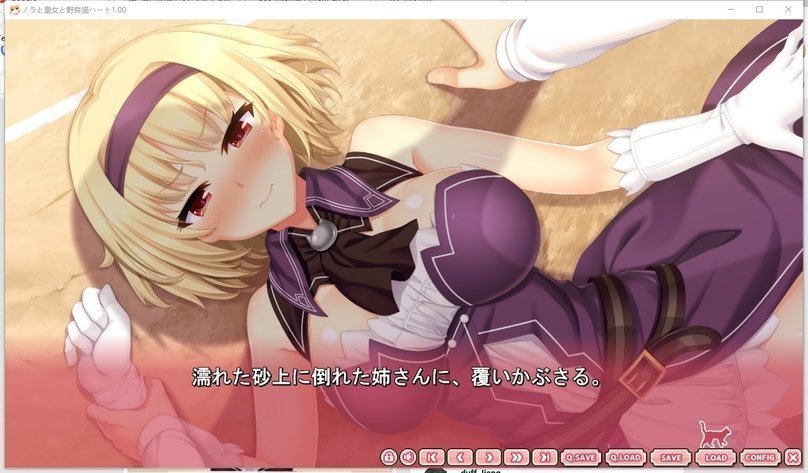
The older sister chooses to assassinate the protagonist. If he dies, the princess loses her love, her heartbeat stops, and she can naturally return to the underworld. But she’s defeated by the protagonist’s talk-no-jutsu.
Meanwhile, the younger sister chooses to castrate the protagonist. First she turns him into a cat and takes him to a pet clinic for neutering, but he finds out and escapes. Finally she just chants a spell and purifies him body and soul. After that, the protagonist is completely free of worldly desires—he’s become a saint. He speaks politely every day, has zero interest in sex, and treats everyone with respect. The princess tries everything, including seduction, but nothing works. Just when she’s about to give up, the younger sister’s magic proves unstable, and the last seduction attempt works. The protagonist is dragged back from saint to mortal, and the younger sister’s plan fails.
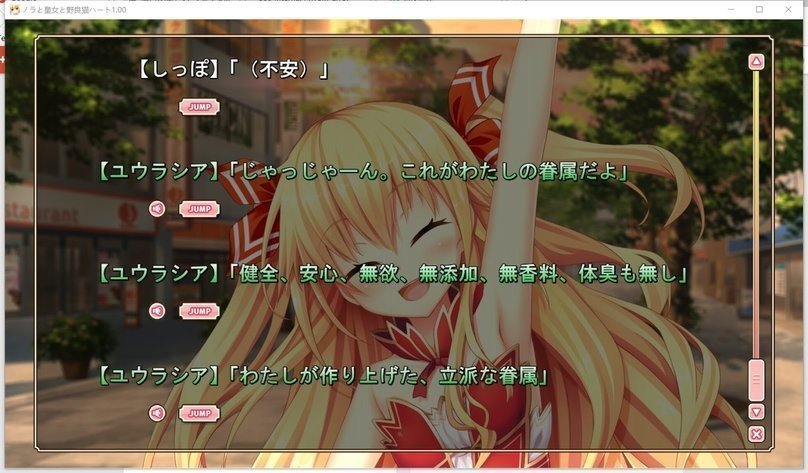
The Mother of the Underworld sent the princess to the surface, and she never came back. Then she sent the older and younger sisters to bring her back, and they never came back either. The Mother is panicking, so she goes to the surface herself. When she arrives, she finds her three daughters laughing and fighting happily with the protagonist and his friends every day. The princess introduces the protagonist to her mother as her boyfriend. The Mother also eats surface food and actually understands why her daughters don’t want to go back—the underworld is boring, the scenery is bad, the food is mediocre. But she’s too tsundere to admit it. In the end, the tsundere Mother still won’t give up. She crushes the princess’s heart, killing her, to take her back to the underworld. But the protagonist doesn’t give up—he kisses the princess, just like she kissed him to make him a familiar. A miracle happens: the princess’s heartbeat returns. The Mother is shocked, helpless, and even more tsundere. She temporarily lets the protagonist off but declares that her daughters must return to the underworld before the next full moon, or else.
Meanwhile, the Mother has a talk with the protagonist, explaining the relationship between the surface and the underworld.
The surface and the underworld are in a dynamic balance. The dead go from the surface to the underworld, and people from the underworld who die are just dead—they can’t freely go to the surface. There’s no such thing as someone from the underworld coming to the surface, developing a heartbeat, and staying there. That violates the laws and breaks the balance, which would cause chaos between the two worlds.
The protagonist realizes that ever since the princess got a heartbeat, strange natural disasters have been happening on the surface—constant typhoons, tsunamis, earthquakes, and so on. They existed before, but recently they’ve become more frequent, and rain doesn’t stop for long periods. The protagonist realizes he may have made a mistake. If this error is left unchecked, both worlds will collapse.
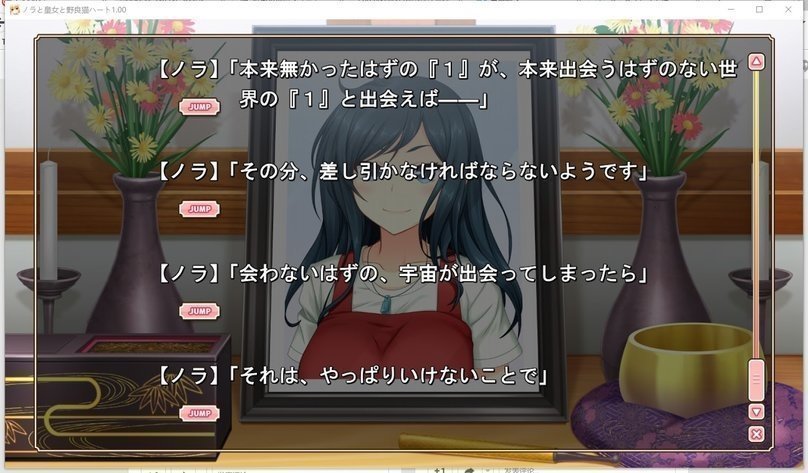
“One plus one equals two, one minus one equals zero. I’m not smart, I’m bad at math, but you taught me this, and I understand it. If someone from the underworld is reborn on the surface, then to keep the balance, someone from the surface must sacrifice a life, or everything falls apart. I might need to take a trip to the underworld.” The protagonist is now a cat, because after the princess’s heart stopped yesterday, his kiss gave his life to her. The princess became human, and the protagonist is technically dead—a cat of the underworld, only able to report to the underworld.
“I’ll work hard in the underworld. I’ll become strong enough there and come back to the surface as someone from the underworld.” Ignoring the princess’s pleas, he leaves for the underworld.
Finally, three days after he leaves, he returns from the underworld. He discovered that a thousand years in the underworld is only three days on the surface. He returns full of emotion, a sense of hisashiburi, but everyone around him thinks he’s crazy—after all, he was only gone three days.
The protagonist proudly says he trained for a thousand years in the underworld and has achieved enlightenment. He can now travel freely between the underworld and the surface, and more importantly, he can be with the princess again.
Finally, the princess asks what magic he learned after all that training.
The protagonist says he finally learned an awesome spell: freely switching between cat and human, and when he changes back from cat to human, he’s still naked.
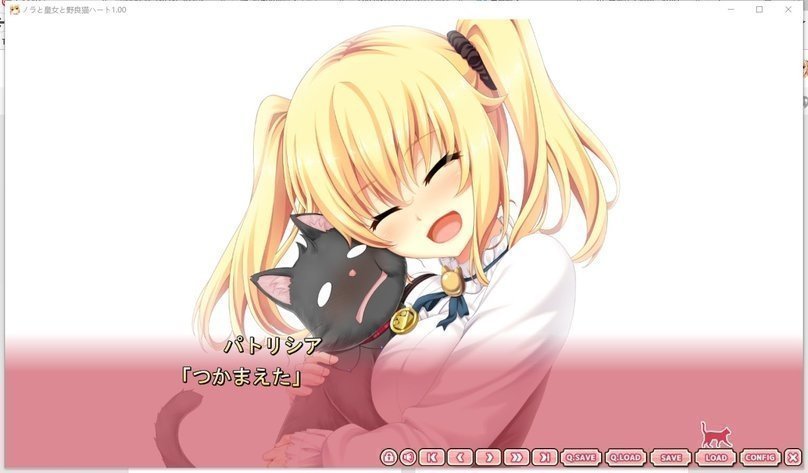
The princess doesn’t care about any of that. She hugs the cat protagonist tightly, and they reach a happy end.
-----------------
Ah, I’ve been seriously summarizing the story, but the selling point of this game isn’t the plot—it’s the massive amount of everyday comedy. Many people have probably read those romantic comedy manga. Hell, I only understood what “romantic comedy” meant after reading The World God Only Knows. Wakaki kept emphasizing his manga was a romantic comedy, and even a chuuni elementary schooler seriously analyzed what a “romantic comedy” is. Actually, that label is everywhere—manga with that tag are all over the place. Maybe Wakaki just wanted to emphasize that The World God Only Knows isn’t a mystery or action manga.
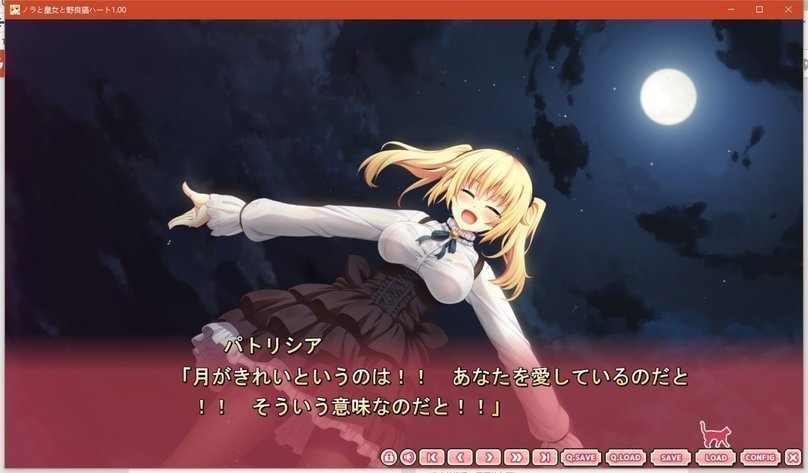
What is a romantic comedy? It’s everyday life full of lighthearted comedy. Nora to Oujo to Noraneko Heart’s comedy is top-tier. From start to finish, I never found the daily life boring. It’s not like Yukikoi Melt, which fills its daily life with dirty jokes. This game’s comedy is proper, youthful, and relatively wholesome. Sure, there’s a bit of borderline stuff, but that’s just your imagination. If I had to compare, it’s closer to Baka to Test to Shoukanjuu. The game is relaxing, doesn’t require much brainpower, and the main plot can be summed up in one line: an underworld princess falls in love with a mortal protagonist. The twists and turns along the way bring small climaxes (in a light, fun, comedic direction). You never feel the story is getting stale, and even when it’s heading toward a tearjerker ending, it hits you with a joke like “the protagonist was only gone three days.” The side characters’ snark is spot-on, and there are at least three characters driving the plot—way more than other games that only have one or two.
The OP isn’t great, and I don’t remember the ED much, but the BGM is very inventive. It’s not stiff background music. The characters have themes, though they’re subtle. What stands out is the music during comedic scenes—the off-key guitar fits the comedy perfectly. As BGM, it’s very well done.
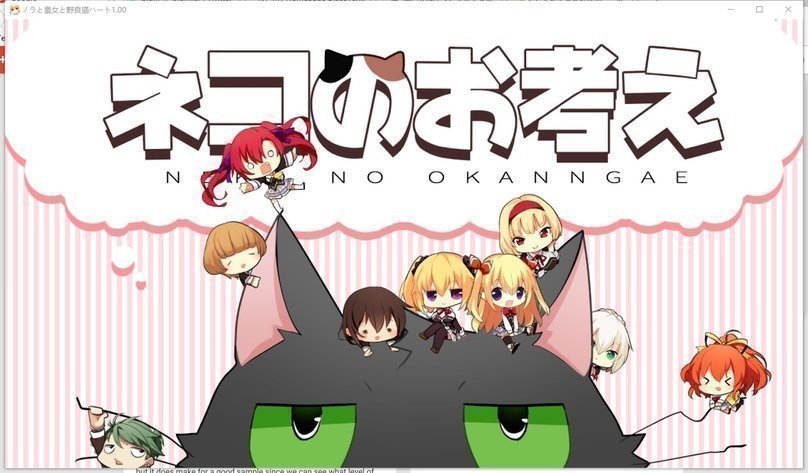
Of course, the game isn’t without flaws. Because it follows a manga-style structure, it’s essentially a single-route game. The title itself—Nora, the Princess, and the Stray Cat Heart—tells you where the main line is. The other branches, including Kuroki Michi’s and the part-timer Kiriya Hana’s routes, lose the “protagonist turns into a black cat and snarks” setup and become mediocre romance routes with no highlights. They’re not interesting enough to keep reading. And the main line is so rich—there are even four-panel comics, “Neko no O Kangae,” and a post-game “passerby hero” series, all very funny. Some of the four-panel comics are really high quality.
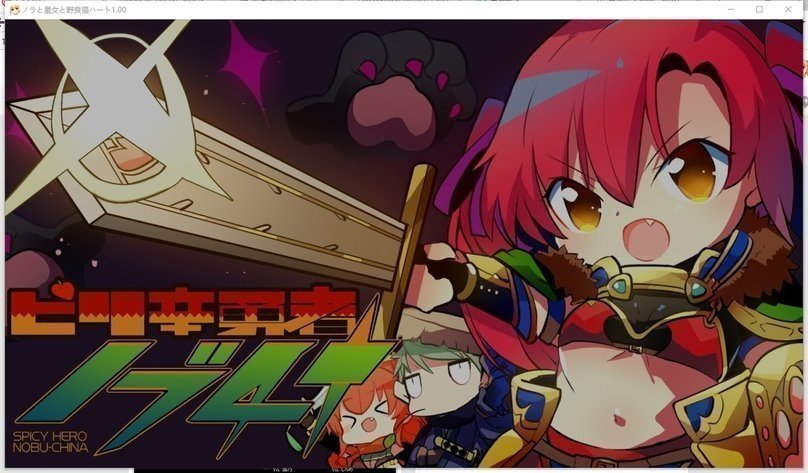
As for the art… I’m still not used to it, but after a while, it grew on me.
Also, the game sacrifices some plot logic for H scenes. For example, the older and younger sisters who come to take the princess back both end up getting deflowered by the protagonist… So much for pure love. But at least after that they stop complaining, so I’ll just treat it as fan service.
Overall, Nora to Oujo to Noraneko Heart is the first game released this year that I’ve seen—and the only one so far—with really high quality. It’s not about plot; it’s just telling a story in a comedic style, and telling it well. I enjoyed watching it. If I had to use a pretentious term like “game experience,” I’d say it’s excellent. Very worth playing. Just stick to the main line—I told you it’s a single-route game. After all, the title says it all: the protagonist’s name is Nora, and the “nora” in noraneko (stray cat) is pronounced the same.
Of course, this game is essentially a comedy, so naturally some players will be unhappy.
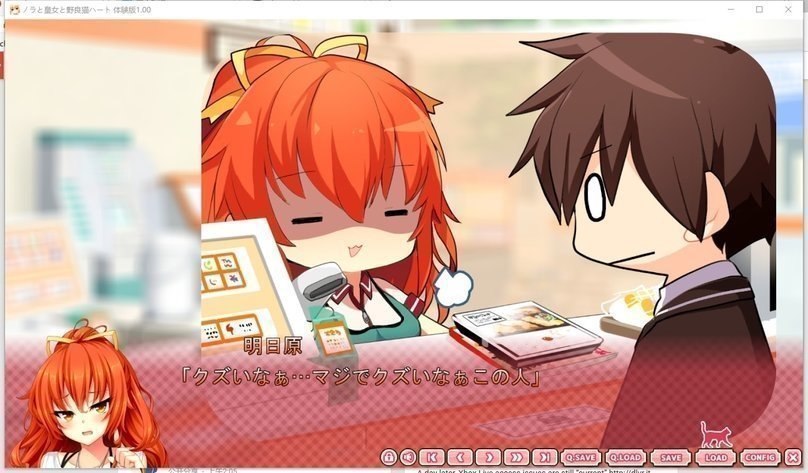
There are some weird reviews on ErogameScape. Someone wrote a long essay saying the game is good and fun, but it obviously looks like it was made for an anime adaptation, and “to cater to the masses for the anime, it lost some of its unique personality.”
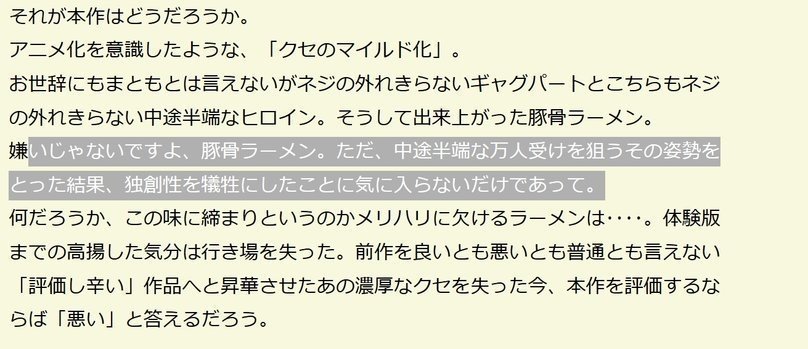
I don’t get it. What does “unique personality” mean? I see no problems with this game on any level, and the review starts by saying it’s good. So why give it a bad review when it feels good?
Another critic said, “It feels like a bowl of tonkotsu ramen. Oh, I’m not saying I don’t like tonkotsu ramen. But…”
I immediately understood. It’s like someone who likes instant noodles but feels instant noodles aren’t classy enough, so to flex, they claim, “I always eat Italian seafood pasta with red wine, I only occasionally eat instant noodles.”
I have to admit, there are people like this everywhere who love to flex. You know, being a maverick and thinking you’re a maverick are two different things. I don’t know when this trend started, but anything that “deeply explores human nature,” “has crazy plot twists,” “has characters dying and reincarnating,” etc., gets high praise in anime, games, and novels, but it’s critically acclaimed yet commercially unsuccessful. Meanwhile, the “comedic,” “hot-blooded,” “seriously telling an ordinary story” ones are commercially successful but critically panned, and often get labeled “mainstream shounen,” “toilet paper with illustrations,” “moe nukige,” etc. And the critics put on a superior, condescending air, acting like they’re the head of the industry, lamenting that they can’t find quality works.
A while back there was a 2ch discussion about Yuzusoft, saying different levels of eroge players have different attitudes toward Yuzusoft:
Eroge beginner: Yuzusoft is the best! Eroge intermediate: Yuzusoft is trash. Eroge advanced: Holy shit, Yuzusoft is the best!
Actually, those “advanced” players, when they praise Yuzusoft as amazing, still carry a sense of superiority. These people, overflowing with superiority and eager to lecture, getting off on verbal PvP, are everywhere in Japan and China—on 5ch, Twitter, and forums. They seem to talk a good game, but it’s just self-satisfied jerking off.
If you ask me to dissect this game, I’m too lazy. I just feel it’s relaxing, fun, enjoyable, interesting. Isn’t that enough? Must you elevate it to the level of human nature? Aren’t you tired? Do you eat red wine instead of fried dough sticks for breakfast, or do you analyze how many grains of rice are in your bowl every time you see a meal?
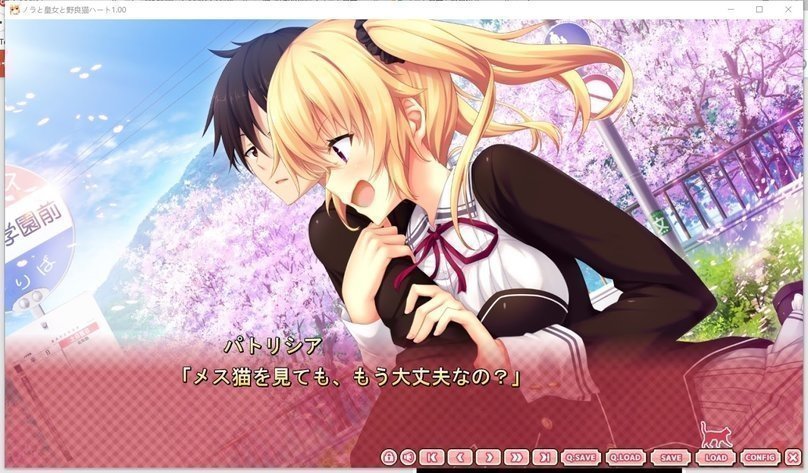
And I think people fundamentally misunderstand the game’s original intent. They keep bringing up the “anime adaptation.” According to the official website, it’s more likely to be a short anime—I personally think it’ll be a short-form anime, maybe 3 minutes per episode. Would the developers change the game’s style for a damn short anime? And the game’s style is clearly manga-style; even as an anime, it would be a manga-adaptation style. There’s no problem. No one said Galgames can’t do this. Most importantly, the story is well-written and very fluid—tight when it needs to be, loose when it needs to be. That pacing is great, way better than those games where the daily life puts you to sleep and then suddenly, like diarrhea, they hit you with a crazy plot twist.
And the game does tell you something meaningful, including views on life and death.
“Some people are alive but already dead; some people are dead but still alive.”
How many years have people been saying this? I don’t know why some people can still condescendingly criticize the story for not being pretentious enough.
It reminds me of a quote that some youngsters often cite while ignoring whether they themselves are in it:
“The masses love it, you don’t. Who the hell do you think you are?”
Comments are hosted on the Chinese main site. This mirror is read-only.