Maitetsu (まいてつ) Review
I Only Came Here to Talk About Trains
My grandma says I’m a train nerd.
I honestly had no idea.
So she started digging through the old almanac of my life, saying that when I was little I’d cry at the drop of a hat over nothing, so she’d dump me in a little pushcart and wheel me down to the bank of some river in downtown Zhengzhou, where I’d just watch the railway bridge crossing the river in the distance and the trains rolling over it. That was the only place I’d shut up.
I guess that tracks. But I don’t remember a single bit of it now.
So in the end I never became a train nerd. Though I have met one — recently, even.
A new junior joined our department, let’s call him W. He doesn’t look like a nerd at all, but he is a dyed-in-the-wool train maniac.
How deep does it go? One time he told me he wanted to burn paid leave to ride a newly-put-into-service green-car train from Zhengzhou to Luoyang.
“Wha? You’re taking annual leave… to ride that thing?”
I’ve ridden green cars. Early 2010, I took one to Beijing for a job interview, twelve hours straight. By the end I was a wreck. I cannot fathom how anyone gets joy out of that.
“Don’t you think green cars are gorgeous? Shame there aren’t any steam locomotives left. I’d love to ride one.”
“You’ve never seen a steam locomotive?” I was baffled. I saw them as a kid — rare now, sure, but I never thought of them as such an exotic thing.
“Nope~ Those are super rare now. I’ve never seen one, only heard about them.”
And then it hit me: there’s a massive age gap between me and today’s fresh graduates…
“So do you like trains?” I asked, dead serious.
W looked a little confused at first, then nodded fast. “Yeah! Love trains. Loved them since I was a kid.”
What really convinced me he was the real deal was after his leave ended — he grabbed me and talked my ear off for ages about how exciting the green car ride was, how fun green cars are, and how he’d joined the signing ceremony for that green car’s departure and return and got a badge as a souvenir.
Honestly, if he hadn’t told me, I wouldn’t have known such a thing existed, or that a whole crowd of train nerds follows this stuff.
But after that, even though I still couldn’t understand why train nerds are so obsessed, I could feel their passion.
Sort of like how I feel about Maitetsu (まいてつ).
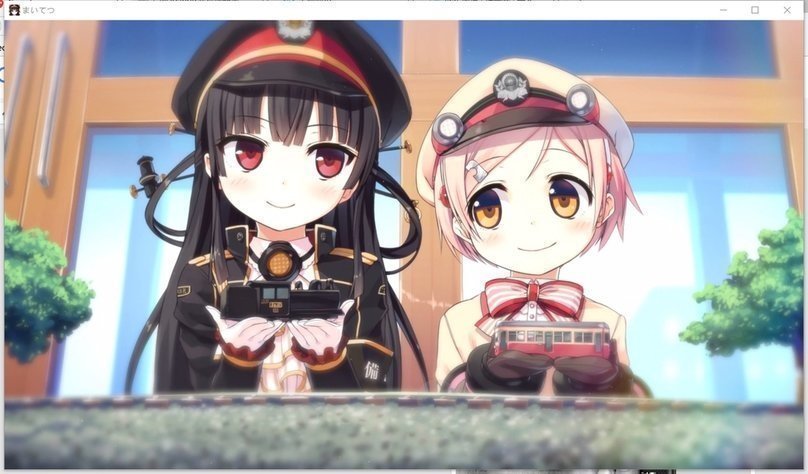
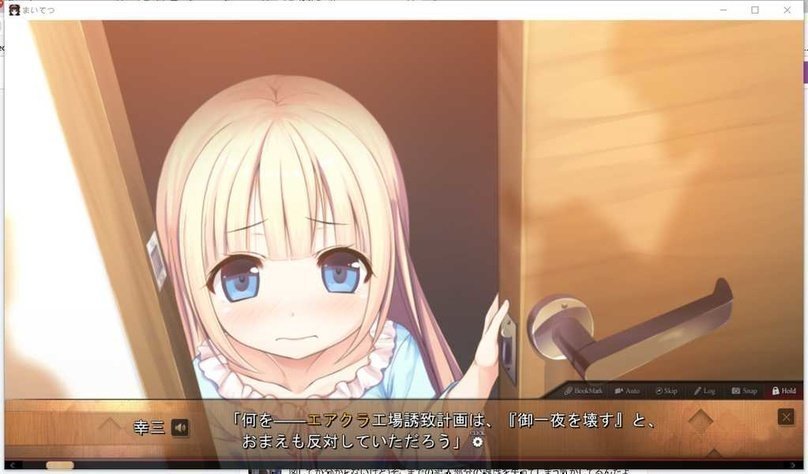
Maitetsu sells itself on “lolis” and “trains.” I didn’t pay it much mind before release, but it got weirdly popular — maybe because developer Lose has a big fanbase? I’d never touched Lose’s previous work either; I just knew the selling point was lolis and the reception was decent. I’m not a lolicon or a rail otaku, and on top of that the game uses E-Mote, which I hate with a passion, so I had zero desire to play it at first. But it was so hot, I figured I’d give it a shot. Maybe there’d be a surprise.
And there was. A big one. In every department.
First, the visuals and presentation. It’s E-Mote, yes, but this is the best E-Mote I’ve seen in a commercial release so far (Purely x Cation isn’t out yet) — no more heads wobbling around like balloons like in earlier games. Expressions, motion, lip-sync, all pretty solid and natural by current standards. But E-Mote brings its own problems: system resource usage explodes. When I ran the game, Firefox on my Surface Pro 4 got sluggish. This game actually demands hardware, unlike your average visual novel that runs on a potato.
Next, the art. I’d heard Lose likes selling lolis and their artist is good at drawing them, and sure enough. Heroine Hachiroku, little sister Hibiki, the mayor — no matter their age, they all have loli faces, and they’re all cute. Good for both moe and warmth. The kill power is real.
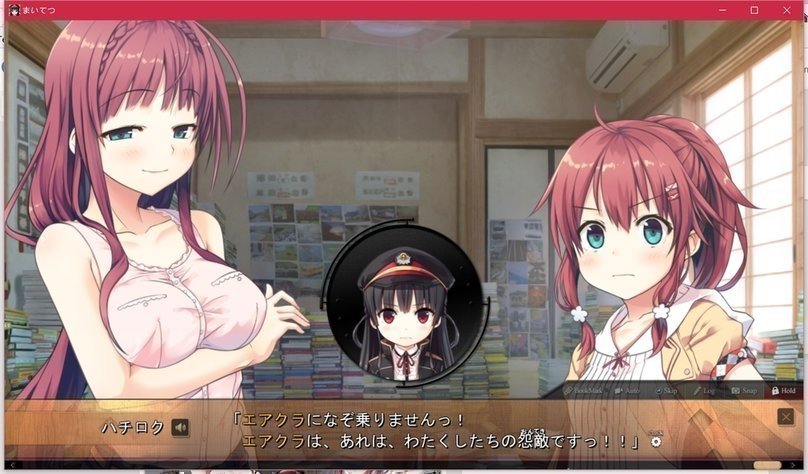
Then the music. I genuinely can’t fault it. It leans heavily on wide-stage ambient tracks, a fundamental difference from the electronic mush most visual novels throw together. Drumbeats, keyboards, the clang of struck metal, all sorts of environmental sounds — it gives the sense of a small countryside town’s openness and quiet, perfectly matching the theme. Every route and ending has its own OP and ED, each one a gem, each one easy on the ears. Even if you don’t play the game, you should at least track these down. Good tracks on their own, and they carry some genuine feeling even listened to in isolation.
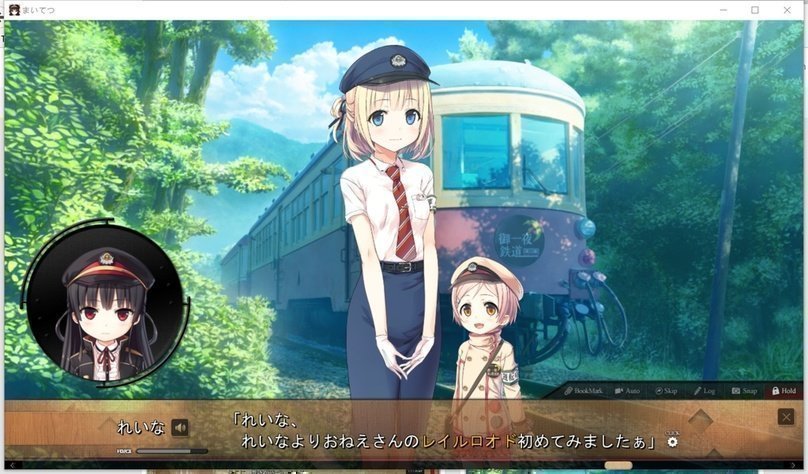
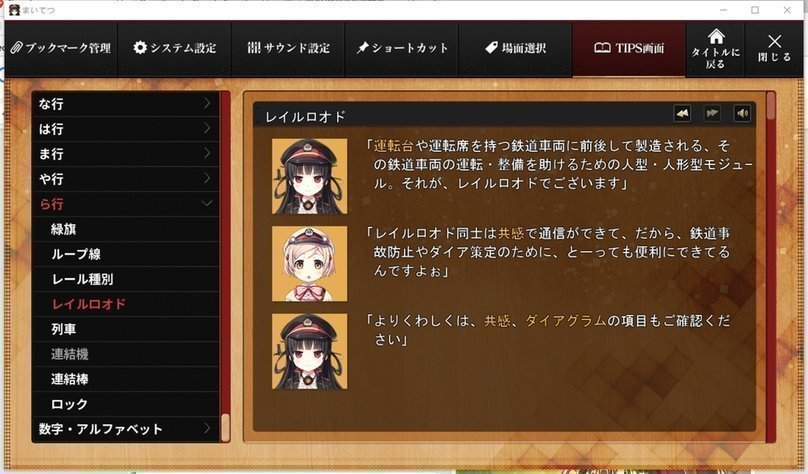
The system is built around convenience: save options, route switching, scene progress, everything’s there. When you save, you can see whose route you’re on, and route entry doesn’t mess with you — one choice decides it, no walkthrough needed. The game is packed with jargon, but it ships with a dictionary and term explanations, all fully voiced. Simple, brutal, and sincere. I have nothing to complain about. And for players who want to get off fast, Maitetsu has thought of you too: on first launch you can unlock every H-scene and get a look right away, no time wasted. Rare for a game to actually do that. No wonder so many people love this company.
And so… the story. This is the one place I can’t evaluate.
First, the game has three main routes: train Hachiroku, little sister Hibiki, and the mayor. Gotta take them one at a time. As the game’s biggest heroine, train Hachiroku is the most appealing route. And honestly, this route that people joke about as “fucking a train” isn’t all that special.
Why do I say that? Because the game is a fictionalized real world, and it makes huge contrived worldbuilding concessions just to make “fucking a train” plausible. There’s no Japan in the game, only Hinomoto. And the trains aren’t just the trains of our reality: a train that rolls off the production line has a physical body plus a humanoid Module — that little girl who calls herself a train, the one people mean when they say “fucking a train.”
In-game, this Module resonates with the train: it can feel the car body, the rails, even other trains.
Our protagonist, Futetsu, a top student at Teito University, hears his hometown of Goichi City is suffering from water pollution and comes back to investigate.
He learns a company wants to invest in an Aircla technology factory. If it’s built in Goichi, pollution will get worse — but Aircla is one of the best transport technologies of the age, and without it the city can’t develop.
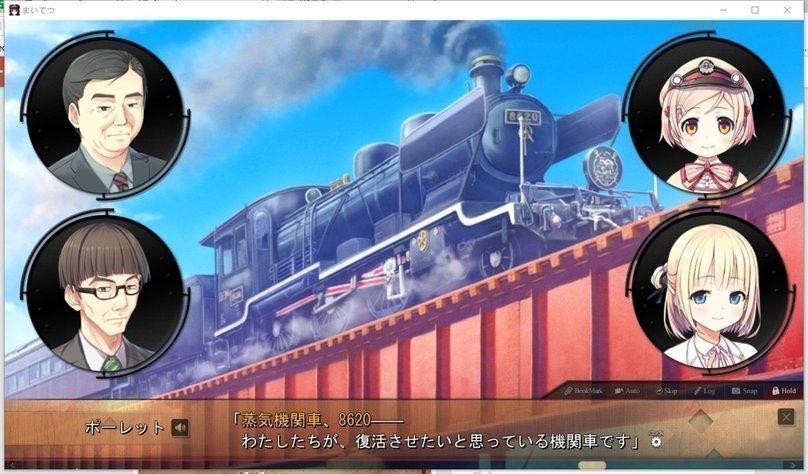
While he’s looking into it, a little loli in the house of the foster father he’s staying with wakes up. The tiny loli calls herself Hachiroku (from the Japanese for 8-6), and she’s the Module of the 8620 steam locomotive. She says she’s the train’s agent, that the protagonist’s foster father bought her, and that after a train accident the steam locomotive was deemed unsafe and gradually scrapped, and she fell asleep.
Now that she’s awake, steam trains and rail are on the verge of obsolescence. Aircla developed too fast, nobody wants to invest in trains, and rail construction is a money pit. Running at a loss. But even so, the awakened Hachiroku makes a request: she wants to run again as the old 8620 locomotive, carrying her former glory, putting her remaining life to use.
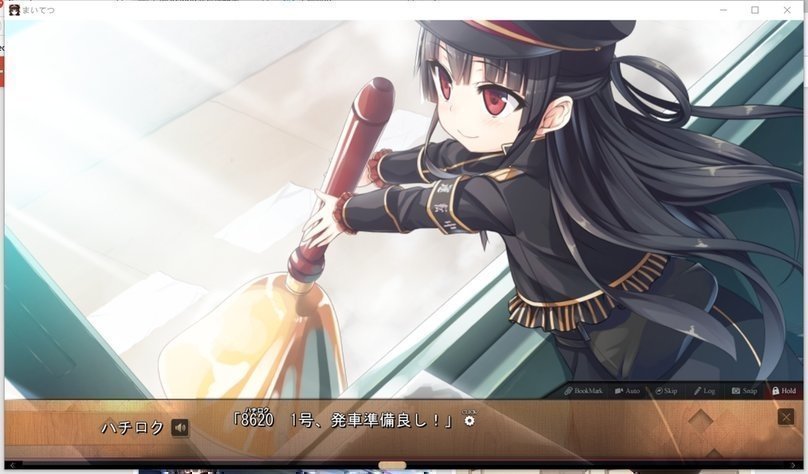
So the whole Hachiroku route is that story: the protagonist and a loli train, from finding the original car body to repairing it, to scraping money from everywhere, to firing it up.
The Hachiroku route leans healing. Step by step — finding the train, contacting the railway, planning the route, gathering support from all sides — it’s all methodical. Slow progress, but thanks to the excellent direction and the deep dives into “rails,” “operations,” “starting, braking, switching the train,” “track maintenance, upkeep, and the various costs” and so on, if you go in knowing nothing about trains and rail, by the end, with the detailed manual, you’ll feel some of the rails’ charm. Whether you become a rail otaku is another matter. I felt the scenario writer’s deep love for rail, but I still can’t understand why rail otaku are so fanatical.
The Hachiroku route is effectively the game’s only legitimate route — it’s tightly connected to the common route from the start, and it gets the protagonist’s memory flashback.
When the protagonist was a kid, rail hadn’t declined yet. He was riding home with his parents and sister; heavy rain, the train jolted, he got scared and ran around, and his sister grabbed him to calm him down. Then the train derailed and overturned. He survived; his parents and sister all died. After that, negative news about “trains being unsafe” piled up, and the rail industry declined, replaced by Aircla, and even now they keep pushing factories.
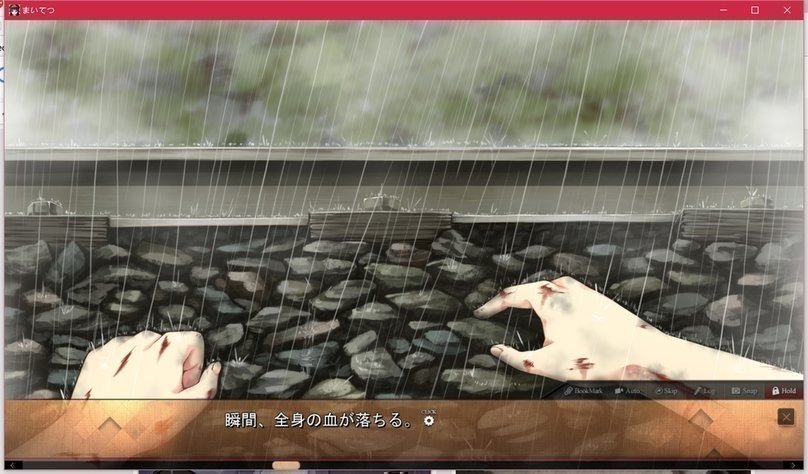
The protagonist has always blamed himself for his sister’s death — his blind panic killed her. But actually, the locomotive in that derailment was Hachiroku. The crash happened because of a problem with the rail bridge over the Kuma River up ahead; if they’d kept going through the rainy night, the whole train would’ve been lost. To prevent the tragedy, Hachiroku chose to derail, sacrificing a few to save the whole train.
He learns this when he helps Hachiroku run again. He tells her he’s a survivor of that crash and has always felt guilty toward his sister, and Hachiroku tells him the history. He learns the truth.
Funny enough, the man who adopted him was someone connected to the railway back then. The protagonist was orphaned by the crash, so the man took him in, and after the rail industry withered, the man bought Hachiroku, setting all this in motion. Fate, or something. Also worth noting: Hachiroku’s previous owner, the protagonist’s foster father, loves rail and trains, and the names of his older and younger daughters — and the protagonist too — are all railway-related (though the protagonist’s name is just a coincidence).
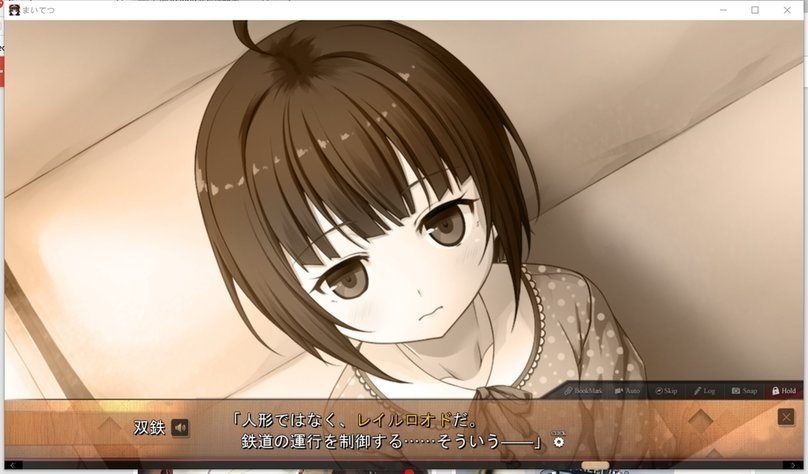
In the common route, the mayor of Goichi — also a rail enthusiast — reveals that Goichi’s rail operations are a money sink, constantly needing parliament approval for funding, barely hanging on. In the end, Hachiroku herself has a quality problem: a part breaks, and they can’t afford the repair. The protagonist nearly gives up, thinking the old 8620 should just be preserved statically for sightseeing. Then they find a solution: source the part from another statically preserved locomotive from the same 8620 production batch, ensuring the “steam train run as tourism” project can proceed properly. But the money to replace the old part still has to come from the city — the mayor fights for it in parliament, wins support, and pushes it through.
Finally, the protagonist and Hachiroku run the little train through Goichi to revive the old tourism industry and honor the 8620 locomotive’s glory. And at the very end, the protagonist proposes to Hachiroku (feels tacked on), and we hit the End.
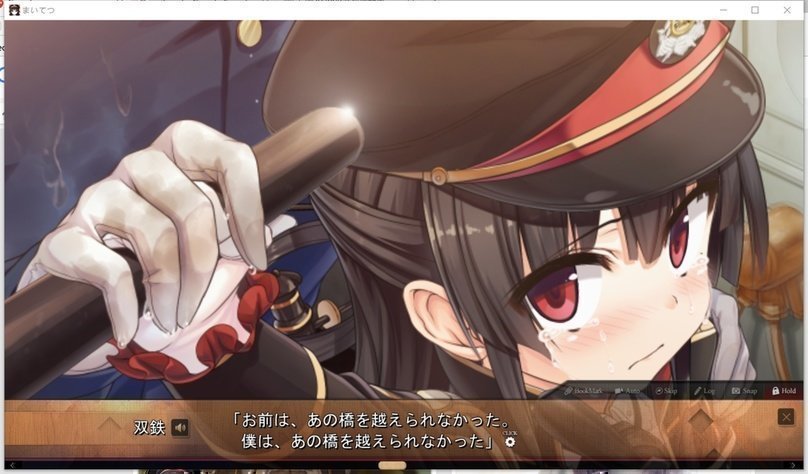
Looking at the Hachiroku route as a whole, it’s tightly connected to the common route, they chain together fine, and the story is clear. You can feel the writer’s love of trains. No big gasps or shocking twists, but healing enough. Not a minus. You could run around singing its praises.
If not for the extraneous business in the other two routes…
Yes, the game has three routes: Hachiroku, Hibiki, the mayor. And starting with little sister Hibiki, the route just goes wrong…
Hibiki is the protagonist’s adopted sister. She’s good at drawing, loves drawing, and often draws for people around the city. Nothing wrong with that, except the story drifts away from trains toward “how to protect Goichi’s culture and resist the Aircla factory.”
Midway through the Hibiki route, an upperclassman connected to the Aircla factory takes Hibiki to watch a parliament debate, where the mayor is arguing with councilors to secure rail operations, and the mayor gets so worked up she gets a nosebleed.
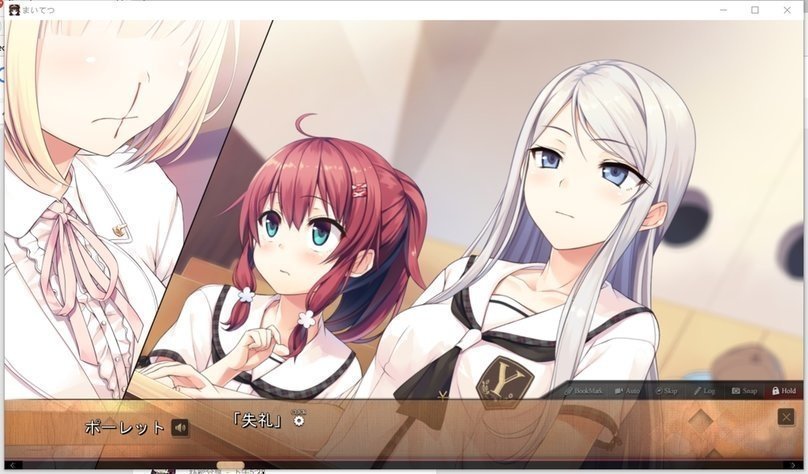
The next day Hibiki sees the news: “Mayor may resign due to poor health.” The mayor is on good terms with Hibiki. The mayor says that as the city rail operator she took sponsorship from the Aircla company — the sponsorship is just ads on the train, worthless city promotion, but it comes with a huge sponsorship sum, huge enough to keep the trains running. And the Aircla company is quietly suggesting the mayor step down. It’s less an ad investment and more a dirty backroom (beep——) deal.
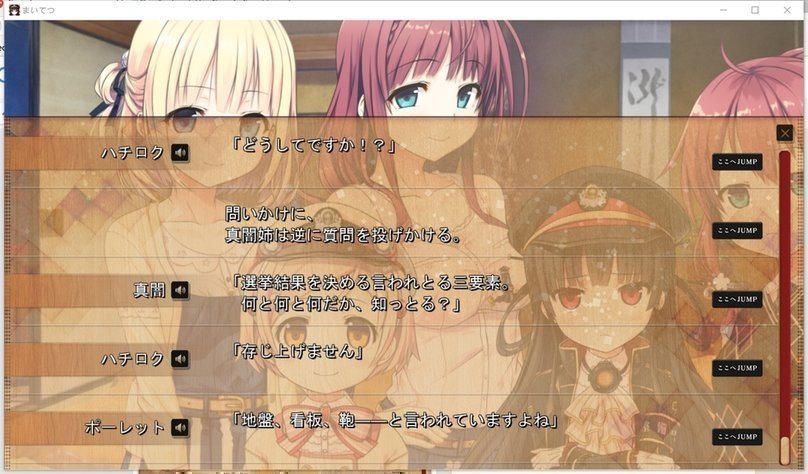
Hibiki sees the truth: someone behind the scenes is manipulating the media, using the mayor’s one nosebleed to hijack public opinion and demand her resignation, while privately offering terms — accept the sponsorship and you’ll still get money to play with trains, just stop being mayor. And the mayor’s term is almost up anyway; even if she doesn’t step down, the next term is likely hopeless.
Hibiki is furious, so she steps up…
To run for the next mayor…
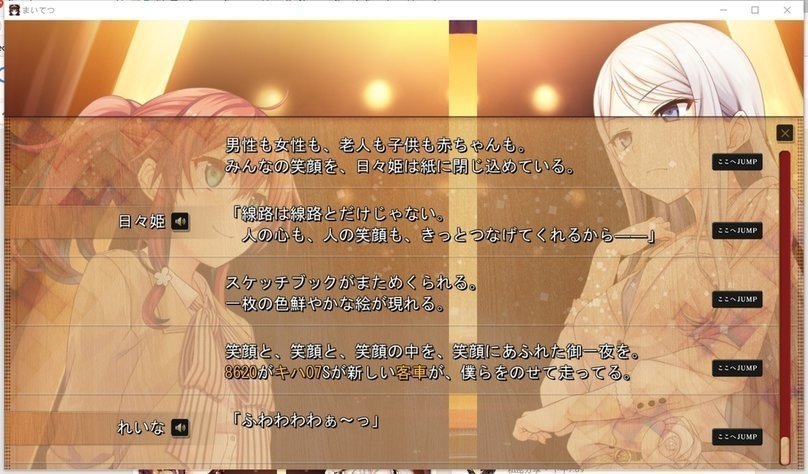
The campaign is too funny to describe… In the end she pulls out a diorama of her planned future for Goichi, wins the votes, and wins.
Set this route aside for now, let’s talk about the mayor route.
This route is also about reviving Goichi. One day the mayor and the protagonist discover the old coal mines dug back when Goichi built its railway, all abandoned after the rail industry declined.
The mayor is anxious. She talks with the protagonist: can they get these old mines registered as national heritage sites, or developed as tourist attractions? That way they don’t need the Aircla factory and can live entirely off sightseeing and tourism.
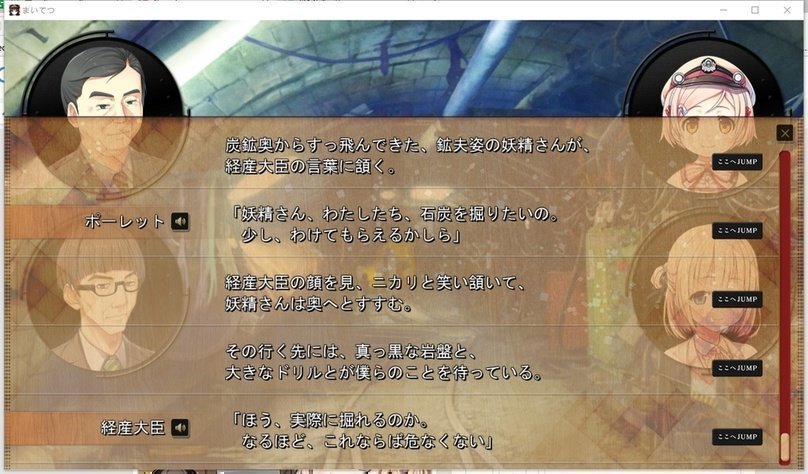
There’s plenty of cloak-and-dagger with the Aircla factory side, but it’s all low-tier. In the end parliament grudgingly agrees, and the higher-ups even send a cabinet minister to inspect the mines and see if they meet heritage requirements. And the mines have fucking fairies in them… The minister is shocked but decides the mines are seriously awesome. Everything goes smoothly: Goichi never builds the Aircla factory, no more fear of water pollution, just turn the mines into a tourist spot and the city can support itself, plus the big old 8620 train revival plan…
————————————
My feelings about this story are complicated.
The original story of reviving Hachiroku, I think that’s good.
But the later business of reviving Goichi City, I think that’s bad. Childish, even.
Since the routes depict the scheming in parliament as very dark, involving a backroom game of politics and money… yet the game’s protagonist side has zero connection to any of that darkness.
It’s like the other side is the big boss, your side does no work at all, and because you represent love and justice, you just flex a little and the boss dies. Especially since the story has a strong bias against Aircla: the city needs to develop, new tech is inevitable, clinging to old trains only works for tourism.
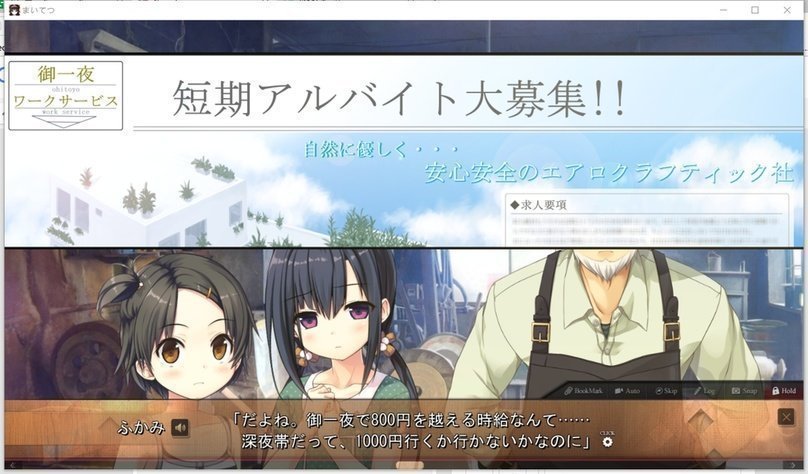
The game sets “new technology development” up as the enemy, waxing nostalgic between the lines — lamenting that the village alleys are empty because of planes and trams, that because trams and planes are so convenient no one appreciates the charm of trains anymore, that they even want to tear up the rails. Lamenting that Aircla is so dominant they’re going to build a factory and pollute our river. The protagonist says Goichi doesn’t need to change, doesn’t need to develop, just needs to stay its honest old self — worst case, when money runs out, they can do coal mine tourism…
As wistful sighing, fine. As politics and city planning, it’s driving in reverse.
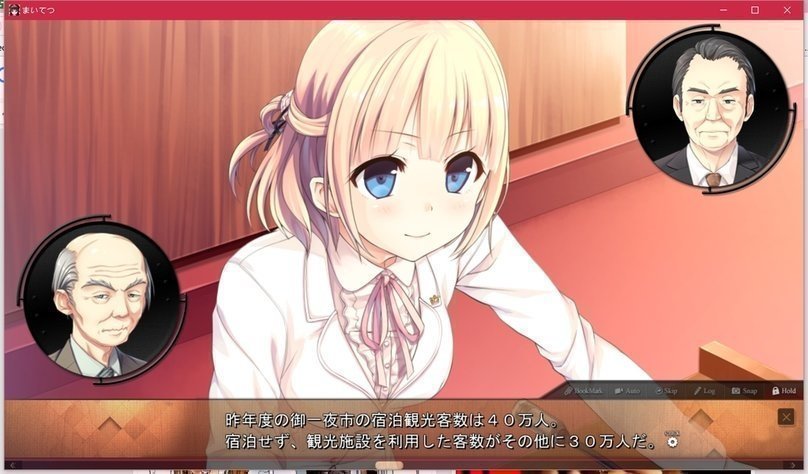
Especially the bit about developing the coal mines for tourism — saying last year the area guaranteed 400,000 tourists, so those people will definitely be interested in coal mine tours, so they can abandon the factory and go with coal mines… not mining coal, tourism. Where does this confidence to write such a thoroughly implausible setting come from? I have no idea.
It started as a nice healing train story. Why drag this in? Revitalizing the countryside, sure, but why make it so grating? The “villain” who wants to build the factory gets plenty of screen time, and isn’t demonized — the dialogue is normal — but then behind the scenes, out of sight, the villain is suddenly written as a black-handed schemer. What’s the logic?
Just because the villain’s girl is also romanceable? You want to blacken the villain but not the girl?
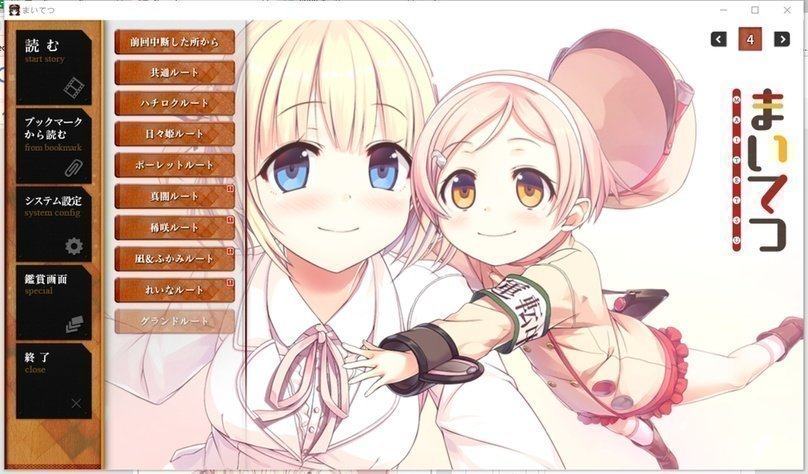
The game has many routes — almost every girl is romanceable, though H-scenes are outside the story and must be viewed separately. There’s also a harem ending at the end where every conflict vanishes, no pollution worries, no money worries for the train, everyone stops rushing and gets on together. The final Happy End.
I don’t know what to say.
The Hachiroku route is genuinely good, and with the other systems it’s a near-perfect game. The H content is cleanly separated; strip it out and a console port wouldn’t be a problem. You can tell the author wasn’t writing an eroge, but a story.
Except in the other two routes, the story not only has nothing to do with trains but is genuinely childish. Even Koi Suru Oukan to Chocolate (恋する王冠とチョコレート) does mature political commentary by comparison.
You might say it’s just a game, not a commentary. But it’s not that simple.
The game uses a “sort of fictional, not entirely fictional” setting: most cities have their kanji swapped or pronunciations tweaked, even America gets a mention, changed to Meikoku, Tokyo becomes Teito. Most place names can be traced to their real counterparts. The train knowledge, apart from the loli Modules, is all real. The darkness shown in parliament matches reality. And the protagonist’s Goichi is full of local dialect — I could barely read it, I nearly learned the accent myself, stopped using じゃ and switched to ばい. And the “factory building” and “villagers resist” setup makes me wonder if the writer is smuggling in some personal commentary. He’s so fixated on it. Reviving the village could be done other ways — a citizens’ petition, the protagonist appealing for understanding — so why force it into parliament, why force a mayoral campaign, and if you’re going to write a campaign, write it properly instead of making it so damn funny.
In the end I don’t know if the writer meant any commentary. Maybe I’m overthinking. Maybe the writer’s hometown had a factory that polluted the water and caused outrage, and he wanted to make a game to share that feeling so people could relate.
It’s just a shame he had to do it under the banner of trains. If you only play the train route, fine, but what are players supposed to think if they do the other two first?
I’ve always hated smuggled commentary in games. Whether what you’re saying is true or not, writing a novel or making a game is telling a story, and the story should be somewhat separated from its background. The era can decorate the story, but it shouldn’t affect the story’s quality. Just because you hang a bad story on some major event doesn’t gild it. And doing so easily forces a binding between the era and real events and your bad story.
What I mean is: you write a bad story, hang it on a historical or real event, and then I can’t say your bad story is bad — because if I say it’s bad, I’m criticizing the event, denying your right to express your view of the event through story.
Right? That binding feels great… solid as a bulletproof vest. Even if your story is a bad story, right?
And some stories are inherently sensitive. Lately there’ve been people who live off the “story binding” route. If you genuinely want to write about sensitive times and sing of the fluctuations of fate, I won’t say anything — I’d cheer you on. But if you’re always bringing up sensitive things, using constant brushes with sensitive material as your attention-grabbing trick, and claiming to be an envoy of some cause, saying your story is good means political correctness, saying it’s bad means denying the era you describe…
Ridiculous. Truly ridiculous. Frankly, it’s annoying. It makes me feel you’ve got no substance and can only drum up big news to grab attention.
Oh right, I didn’t say anything. Maitetsu is a good game. Apart from the two non-train routes straying from the theme, no big problems. Skim them and move on — the rest is terrifyingly high quality.
By the way, I told W about Maitetsu. He was pumped, really wanted to play it. I said it’s Japanese-only for now, but someday Seikai Project might put out an English version. W is looking forward to it, says he’ll definitely play then.
I gave him the rough story and W got even more excited. So excited that even after I added the unreasonable plots of the other two routes, he still said even if the other two routes are dogshit, as long as there are trains it’s enough. At that point I sort of understood how the ErogameScape crowd got so excited they gave this game high scores, even though they also found the other routes a bit unreasonable. Maybe it’s all out of love for trains, or understanding for the author’s own train love.
So let’s stop here. I really didn’t say anything else. I only came here to talk about trains.
Comments are hosted on the Chinese main site. This mirror is read-only.