DO NOT PLAY A GALGAME CALLED CHO SHOKU!
DO NOT PLAY A GALGAME CALLED CHO SHOKU! Don’t play a visual novel called Asairo!
If you’re thinking about hunting down a fan-translated visual novel to play, here’s my advice: don’t. Don’t get all excited just because this one got translated, or because a few articles on some well-known VN site recommended it to hell and back. Whether you’re the story-focused type or the fap-focused type, take it from me — stay away from this game, before it ruins your life the way it ruined mine! For a whole month, every single time I opened it, I felt waves of nausea. The tangled mess of its plot gave me the feeling of having drunk raw sewage, whether I skipped or not — the kind of nausea you can’t throw up. Since I played it, visual novels stopped being a way to unwind and became a form of torture. For a long time I was tormented by this game like having my dick and balls tied into a bow, and yet I couldn’t stop playing it! Only after a week of grueling effort, after I finally cleared it, was the curse lifted from my body.
If you read all that and you still haven’t given up on wanting to know about this game — if you’re still here, shamelessly wearing a Santa hat and clinging to people like an idiot shouting “I’m just curious!” — then maybe consider carefully reading the details below about how this game ruined my life.
(Brutal spoilers below)
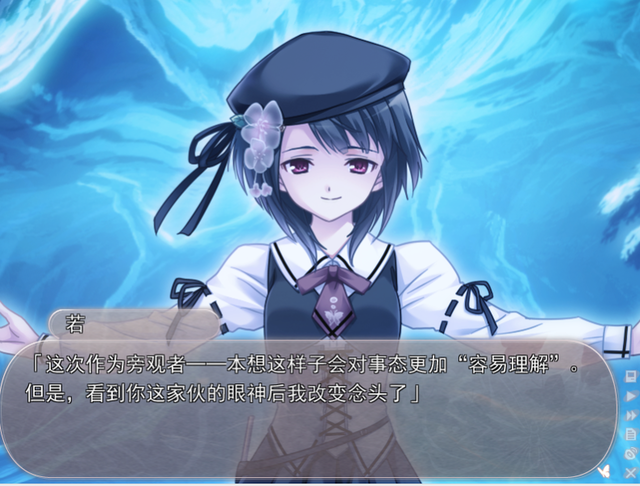
“Because we’re the Four Gentlemen~”
From the Moment the Clear Morning Begins to Color (hereafter “Asairo”) has nothing particularly outstanding in its systems or music, but nothing terrible either. My biggest complaint is the story. Oh, wait, thinking about it, it’s not just the story — what is it, mainly? The way the story is told!
A story needs words to be presented, so which method you use to describe the story becomes extremely important. And Asairo uses the dumbest, stupidest, most long-winded, most sleep-inducing method possible.
Asairo’s story is simple: a guy who committed a grave sin in a past life meets the descendants of that past life in this one, is resented by them, and eventually the hatred is dissolved. Oh, and he also gets to bang his past-life lover all over again in this life.
The game uses red as its main color, building the “Mugencho” academy for artists, and then a series of mysterious events unfold within the school.
Great setting, right? Typical location, right? School, reincarnation, mystery, past-life lover — all these elements mashed together, sounds like the makings of a masterpiece, right? But the game commits a colossal blunder in how it presents all this.
The game cruelly splits the story into four routes. Honestly, Asairo doesn’t have that much plot — the setting isn’t that big, there’s no combat, at most it builds mystery in the present life and then resolves it by looking back at the past life, heading toward the True End.
But! But! Asairo’s first route doesn’t mention past lives at all. At first glance it seems like they want to hook the player and then unleash a shocking twist. The protagonist starts rambling from the very beginning, saying he and Araragi-kun, Harutsuge-kun, and Kuchiki are the “Four Gentlemen,” that they’ve been together since childhood, that this reunion is definitely going to be great~ — on and on and on. After introducing the characters, the game begins its daily routine. What’s the daily routine? School should mean classes, right? Honestly, there are no more than three classroom scenes in the entire game, and that’s it! What else is there? Club activities? Dates? None of that! Just how the protagonist sleeps every night, and the question of “who’s cooking today,” and none of it has anything to do with advancing the plot. The protagonist also frequently drops random disconnected flashbacks, remembering how he and these girls were the “Four Gentlemen,” who was in the “Four Gentlemen,” what so-and-so did, what he did — rambling on like Xianglin Sao, endlessly. But aside from Kuchiki, none of these girls actually pay any attention to the protagonist! Honestly, even by the end of the game, the girls never clearly say they acknowledge the “Four Gentlemen” setup. I still don’t know why the protagonist is so obsessed with the “Four Gentlemen.” Did the writer think throwing in a setup like this would seem trendy and highlight the emotional routes?
But the actual emotional routes have absolutely nothing to do with the “Four Gentlemen”! After nearly two weeks of boring daily life, the game finally hits a main plot point: the school festival, the Saisei Festival. Mugencho is an art school, so the Saisei Festival requires art pieces. So the protagonist decides to lead the girls in reforming the “Four Gentlemen” (OMG, Four Gentlemen again). This Anohana-style friendship tearjerker vibe almost moved me to tears, but! But! From the start of preparing for the Saisei Festival, I! Did! Not! See! A! Single! Bit! Of! Anything! Related! To! Artistic! Creation! What I got was still the protagonist’s daily “who’s cooking,” “who’s cleaning,” boring daily conversations, with more flashbacks about the “Four Gentlemen” sprinkled in. How obsessed are you with the “Four Gentlemen,” seriously? I’ve never seen a game whose main plot is a club participating in a festival that never once describes what artwork they’re supposed to submit. Even Tenjin Ranman mentioned things like a haunted house cafe — at least say what you actually did! The first route’s project fails, and the protagonist tries to salvage it (please, just tell me what you made, what you were salvaging!). During this, the first route’s emotional line triggers, about Ran — Araragi’s route. Her name is written “Ran” but read “Araragi.”
The first route has H-scenes, with Ran. So how does Ran’s emotional line get established? First, someone maliciously sabotages other people’s artwork at the Saisei Festival, and the protagonist conveniently catches the culprit — the younger of a pair of sisters he knows. The protagonist decides to hand the sister over to the school for punishment, and then the sister suddenly realizes she was wrong. Then the protagonist says… “Since you realize you were wrong, I won’t report you.”
And then the good part: as the protagonist leaves, someone spots him and mistakes him for the culprit. The suspect is also present, and she turns it around and says the protagonist did it. The protagonist agonizes… over what? If he identifies the sister as the culprit, it would hurt her, so to avoid hurting her, the protagonist indirectly admits to being the suspect! And when he’s misunderstood and blamed by others, the protagonist starts getting sentimental, saying why do humans have to hurt each other…
Yeah, why do humans have to hurt each other? Why do you have to hurt me, writer Yū Shumon? It’s my fault for playing a pirated fan translation instead of buying the legit version, but this psychological attack is way too strong, okay?
So the protagonist is misunderstood, the girls in his group are misunderstood too, and then… the protagonist inexplicably goes to pour his heart out to Ran, then a bunch of random flashbacks, and the protagonist suddenly says he’s actually always liked Ran, and the two of them bang, Kuchiki watches from afar, NTR complete.
First route over.
If this tablet weren’t mine, I’d have smashed it on the ground.
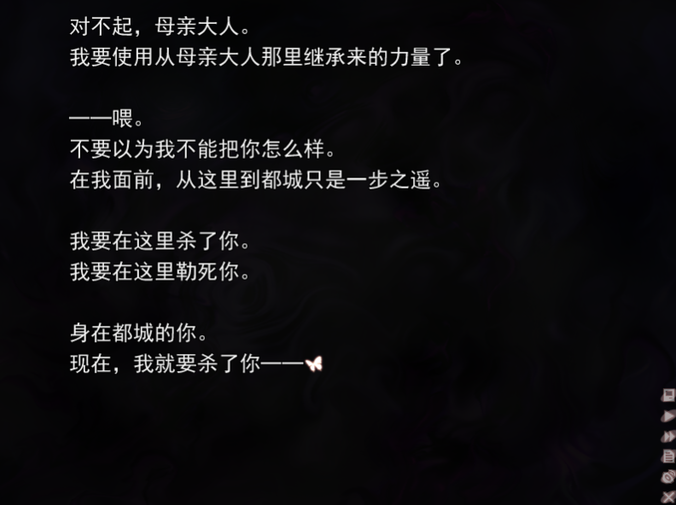
Humans as a species…
Once upon a time, Lord Mika said he hates people who start every sentence with “humans as a species,” because it looks pretentious — you’re a human yourself.
At the time my thought was, sometimes we need to step outside humanity and look at the world, including ourselves, from a higher vantage point.
But now I completely understand how Lord Mika felt, because research into human nature fills the entire game, and what’s even more absurd is how off-the-charts pretentious it gets. The content is right, but the timing is maddening.
As I said, the first route’s daily life is nothing but cooking, cooking… and chatting while waiting to cook.
Chatting about what? About human nature, about life, about “humans as a species.”
Every day. Endlessly. With plenty of cringeworthy comedy bits mixed in. Truly, genuinely cringeworthy. Each character’s setup is like a computer switch — if the protagonist calls him bald, he gets angry; if you don’t call him bald, he isn’t angry. Angry or not, it all hinges on whether you say “bald.” Oh fuck, is the protagonist’s logical processor a boolean? I guess that’s the extent of his intelligence.
From the first route on, whenever something happens, the story gets halfway through and then Harutsuge and company start discussing human nature with the protagonist, exploring life — and one of these explorations takes half an hour. So your half hour gets spent on human nature exploration and endless drivel, and the plot still hasn’t moved, not one bit. I think people play games to see the story, not to receive re-education on human nature. If you’re like me, constantly wondering what Araragi-kun said to the teacher, what Kuchiki did when she disappeared, what Harutsuge’s past was — sorry, before the third route, none of that gets revealed. That’s the writer’s malice, he’s doing it on purpose! Suspense should be built in a more rational way, not by deliberately withholding information for no damn reason!
Alongside all this human nature exploration, the second route finally brings some progress: the Saisei Festival succeeds this time, and the protagonist’s team wins the championship. I don’t even know what they made and they won… To tie into the title, they say the artwork is called “Asairo”… made me sick… completely unbearable. Then rumors start that a virus is spreading through the school, making people disappear. I got a little excited — finally, the real main plot!
But! But! The virus hits, Mugencho Academy’s exits are sealed off, a locked room, conflict — the perfect time for the story to shine. What’s the protagonist doing?
Still chatting every day, still bonding with the various heroines over small talk, striving to restore the “Four Gentlemen”… my god! Shouldn’t the proper route be the protagonist working to uncover the virus’s secret and find the mastermind? And now you start talking about feelings? So each girl gets conquered, then disappears after being conquered. Kuchiki is conquered last, her H-scene plays, she disappears, second route over.
By this point I seem to have forgotten that the school is supposedly facing a virus crisis. What crisis? Did you even really look for a solution? The protagonist has met the mastermind, but every time it’s just nonsense about milk tea and little theatrical performances. Fucking hell, writer, if you want to kill me please be efficient about it, don’t do it this way, okay?
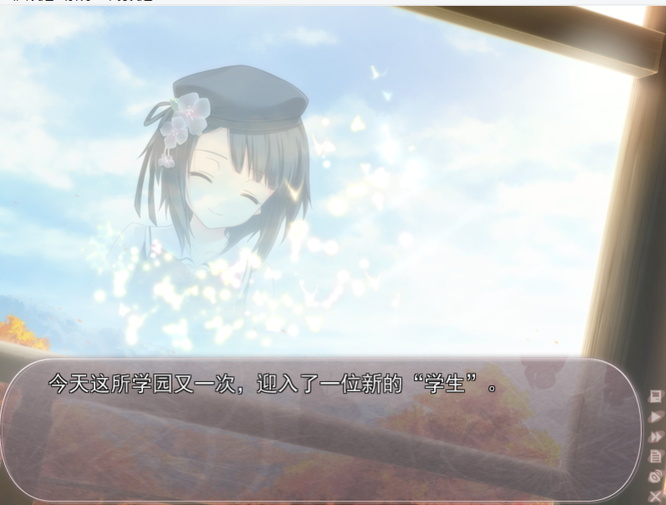
Once upon a time there was a ghost
Now we’re at the third route, and things finally start to change. The protagonist discovers the school’s secret room and finds the mastermind, Waka. This is where the mystery-solving arc begins, but at the very start the game still has to flex with some text:
“The story is already over. What follows is some superfluous content. Yes, truly superfluous.”
You’re telling me the solution arc is superfluous? Are you self-deprecating or just flexing? So the entire solution arc becomes brutally simple and blunt, using boring dialogue to explain the protagonist’s origins: Waka, Momiji — the daughter or granddaughter of the protagonist’s past life — became a ghost-like being through suffering, created Mugencho Academy here, pulled everyone she missed into it, trapped them there, forever.
At this point the game’s presentation becomes incredibly boring, and the story’s delivery turns simple and crude. I don’t know if the writer ran out of energy or ran out of ability to flex — I believe the latter.
The solution arc is mostly black screens, voiceless memories: once upon a time there was a ghost, and the ghost did this and that… if you’re not a total idiot, you know the ghost is the protagonist’s past life. Then finally Waka, the mastermind, appears and admits her identity — another black screen, the story of Waka, blah blah blah. No drivel, no boring comedy, no “humans as a species.” Most of it doesn’t even have voice acting, just long-winded setting dumps. When it’s done, the protagonist and Waka reconcile, Waka lets go of her hatred and decides to spare the protagonist, and the third route ends.
Then the fourth route: the protagonist returns to Mugencho Academy and sees everyone reborn. No conflict, no virus, no disappearing people, everyone living in harmony. The mastermind, the granddaughter of the protagonist’s past life, disappears after letting go of her hatred. Meanwhile the protagonist’s past-life wife, Kuchiki, remarries the protagonist and they’re together. The game ends.
That’s it!!
So what was the point of the first route? What was the point of dragging it out so long? What was the point of stuffing in all those life discussions? What was the point of all that boring comedy? The third route is the important part, so where’s the presentation? Where’s the voice acting? They didn’t even want to draw extra CGs — I never even got to see what Kuchiki’s past life looked like. Hatsuyuki Sakura showed us what Tamaki Sakura looked like alive. This production team? By the third route there’s nothing, just endless black screens with white text… a true electronic novel.
One last thing worth mentioning: the game’s title isn’t the full name. Each time you clear a route, the title gets longer. It’s interesting, it’s trendy, but — forgive me — the added length has absolutely nothing to do with what happens in that route. It just looks like they wanted to finish the sentence. Just flexing for the sake of it.
A game ruined entirely by its story
If my description above was full of emotion, let me now calmly evaluate Asairo.
The voice acting in Asairo is mediocre. Kuchiki reads her lines flat the entire time, not much emotion, and her pronunciation has a heavy nasal quality — very immersion-breaking. Ran’s voice actress is okay, but her character design was maliciously given blush marks, which I can’t accept. Aside from Ran, none of the other character designs are particularly good. Actually, the teacher’s design is the best-looking, but she barely gets any screen time.
The music is actually not bad, but it isn’t well used in-game. Put plainly, the main theme — the one on the title screen — gets overused, and it grates on you after a while. There are plenty of gentle melodies, but they’re never used well, so nothing leaves an impression. The OST is worth picking up.
Looking at the story as a whole, it’s good, no problem there. I can only say the way it’s told ruins everything, and I’ve already covered the specifics. It’s clearly a game with a setup similar to Hatsuyuki Sakura, but Yū Shumon flexed too hard and turned it into a foot-binding cloth. If they could compress the story into two routes, cut the boring flexing at the start, and strengthen the virus suspense later, this could still be salvaged.
My final advice: if you see this game and really like the character designs or the voice actresses, you can try it — just remember to use the skip button liberally. Basically, whenever a standalone CG appears, the story is worth reading; everything else doesn’t matter, skip away boldly, it’s all filler.
If you don’t like the voice actresses, don’t like the character designs, and just heard this is a masterpiece and want to play it?
Read the title carefully:
DO NOT PLAY A GALGAME CALLED CHO SHOKU!
Comments are hosted on the Chinese main site. This mirror is read-only.