Chrono Clock (クロノクロック) Review
ChronoClock: 20 Hours of My Life, Gone
One line: I don’t think much of this game.
“I wrote this shortly after finishing the game, so there may be some grammar or common-sense errors in here. The writing was affected the whole time by ‘I just finished the game and I’m a bit emotional.’ As usual, there are spoilers, but not much more than you’d get from playing for half an hour. Here is my detailed explanation of how I write these impression posts. Other than that, this is a ‘write whatever comes to mind’ piece, probably not very organized, and it doesn’t dig all that deep into the game itself.”
When I write an opening, I usually want to produce something that sounds profound and sums up the game, just to flatter myself. From experience, after looking into the game itself, I first have to make sure I actually have something I want to write, and then while writing, keep some timeliness and quality. That’s why White Album 2 is right up my alley — I always have endless impressions to write about it. Unfortunately, it’s the exact opposite with Purple Software’s new release ChronoClock: I have no idea what to write at all.
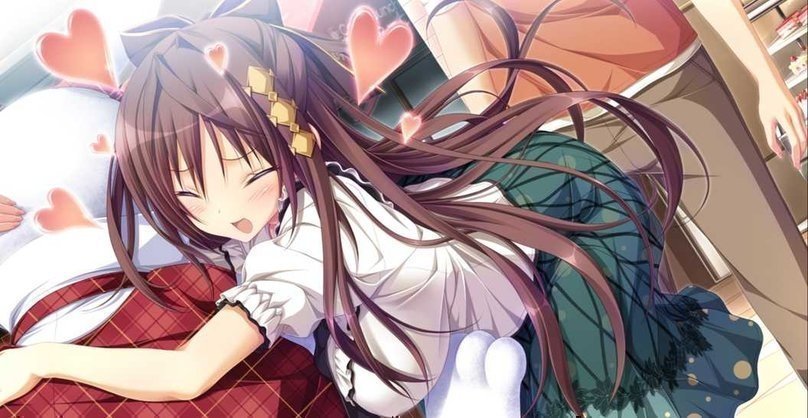
This should count as a character-driven game, with story elements tossed in as an afterthought. Most of the content is distributed across the individual routes, and it’s tightly tied to each character’s route alone… well, there is story development and such, just barely, and it doesn’t matter much. The game has six heroines; the first five each get a full individual route, and ironically, in the final “true” heroine route, the protagonist and our “true” heroine display their grand love — but that route is only ten minutes long, and the way they present the romance is a bit of a stretch. Sure, from the very start there’s foreshadowing and setup for this route, plus some characterization of the true heroine (her background, her misfortune, etc.), but none of it amounts to anything. This “True End” route feels more like a combination of the game’s other elements meant to tie into the theme “ChronoClock.” I don’t think it’s a good idea, or even a good way to highlight the theme, unless you sit there crunching numbers after finishing the game and maybe figure something out. To be clear, after finishing each route the game gives you a little mark or something like an achievement system — pointless for a visual novel, sure, but it does let you see which routes you haven’t done. For instance, the True End heroine route only unlocks after all the others are cleared. So as far as I can tell, I’ve cleared everything and haven’t missed anything.
But as I said before, most of my complaints are about the story — though as a character-driven game, it doesn’t necessarily need to keep pushing plot-driven developments to give the characters their sugar. Looking back after finishing, it hit me: all of this is because I presumptuously treated ChronoClock as a story-driven game.
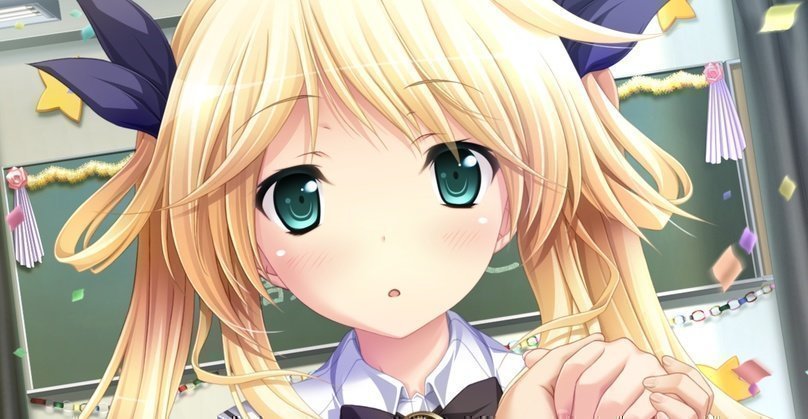
The heroines are all very typical in setup and execution. They drift through the story exactly as I expected — blandly, predictably, with a presence that’s meaningless and doesn’t even help the plot move along. These heroines are as template as template gets. But honestly, the fact that one of the heroines is a worn-out, cliché-to-the-bone tsundere still surprised me (I’d rather not have been surprised like that). Let me clarify: I’m not saying “typical setup” and “template” heroines are bad. I personally like the airheaded, clingy, slightly pushy little-sister type — that’s my thing. It’s just a shame that I can’t even remember the name of the heroine I thought was decent, even though I finished her route. Like the true heroine’s route, the other heroines all have something meant to set them apart from “the standard template heroine” — a delinquent background, a British transfer student, a violinist, whatever. But those elements just sit there; the story doesn’t touch them much, and in the end those quirky settings stay on the surface. Everything goes back to the “standard template” heroine. And of course, our protagonist is the standard protagonist setup too — mediocre, with nothing distinctive.
As for the heroine routes, I don’t think much of most of the individual stories. The little-sister route’s plot logic in particular is just bizarre. The second-to-last route isn’t much better either, and a mythology setting pops out at the end. At first I thought each route had some kind of purpose, since I figured everything was building toward the final True End. While going through the other routes I even had doubts about the overall story, and then when I finally reached the True End, I found the ending felt more like a relief to me (only ten minutes, after all — just endure it). From a time-travel standpoint, the game never really connects much with that setup by the end, though in small places it hints at a theme: “don’t get lost in the past, look forward” or something. The mechanical device that presents this… the mechanical girl… or rather, the watch — it barely has any important role in the common route, and on some heroines’ routes I even forgot that setup existed.
As for overall artistry or anything like that, there’s almost nothing to talk about. It’s probably the mass-market style. The music left no impression, and the game’s engine is trash — it looks ugly and outdated.
So that’s everything about ChronoClock.
Author: mdz http://mdzanime.me/2015/05/07/chrono-clock-twenty-hours-forever-gone/
Good thing I said I’d cut my dick off if I ever played another game from Nakige-sha or one of those dumbass Nakige-sha projects again.
Comments are hosted on the Chinese main site. This mirror is read-only.