Himawari no Kyoukai to Nagai Natsuyasumi (向日葵の教会と長い夏休み) Review
What Changed... and What Didn't...
Recently I got stranded out of town — no internet, no supermarket, no Oriental Leaf tea, no grassy field, no stick-man, no bros. All I could do was thank myself for bringing the Win8 tablet along, so I started playing a visual novel: Himawari no Kyoukai to Nagai Natsuyasumi (向日葵の教会と長い夏休み). Three days, main route cleared. What can I say — some things in my chest got moved, and some things I really need to get off said or I’ll be uncomfortable.
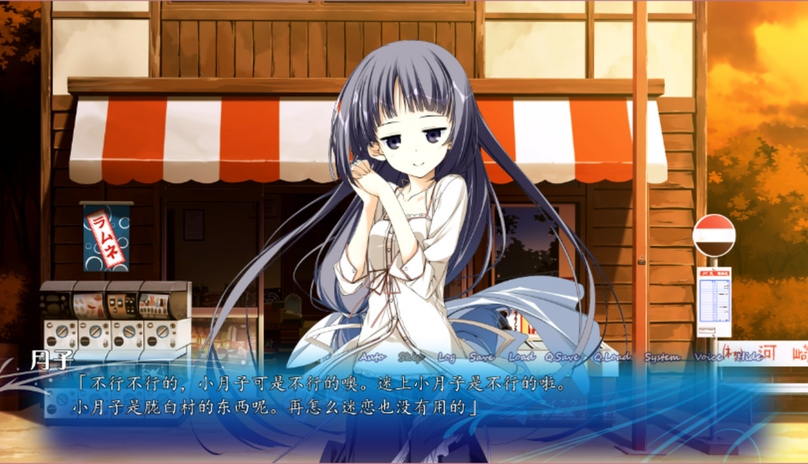
《向日葵的教会与长长的暑假》 is about a summer—a summer break that belongs to the protagonist who’s come back to his hometown. Playing a game like this right now, in this season, feels pretty fitting. According to what the game’s writer said on Twitter, Yui and Hina’s routes are the main ones, so I went through those two first. Only after finishing did I realize the story is way more… complicated than the blurb makes it sound. Rather than “a story that happens during summer break,” it’s more like what the game’s OP says: “a story about change, and about things that don’t.”
To preserve what little dignity this blog has left — and to save myself the effort — no spoilers this time.
The Nagisa route and the Hina route each tell part of the story from two different angles: one is about a girl giving everything for the protagonist, the other about the protagonist giving everything for a girl. The former is Natsuzaki Nagisa’s route, and the latter is Nonohara Hinasakura’s route.
The Natsuzaki Yomi route reads much closer to your typical visual novel development, and it’s also everything you’ll find online if you search for impressions of Himawari no Kyōkai to Nagai Natsuyasumi (向日葵の教会と長い夏休み). Probably most people playing this are younger and prefer that “a girl who gives everything for you” feeling. The Yomi route has a fair bit of mythological flavor, but its flaws are obvious too: it leans on descriptive deception early on — basically withholding chunks of the story on purpose until it finally dumps them on you at the end. The game that used this trick most memorably for me was Sharin no Kuni, and I don’t like it. I prefer the “unexpected yet entirely reasonable” kind of reveal, and the only ones that pull that off well are Hatsuyuki Sakura and Aiyoku no Eustia. Honestly, for someone like me who’s seen plenty of wild twists, this route is pretty conventional — but in the end, Taguchi Hiroko alone carries the whole thing with her insane acting chops, so I can’t give it anything but a decent score.
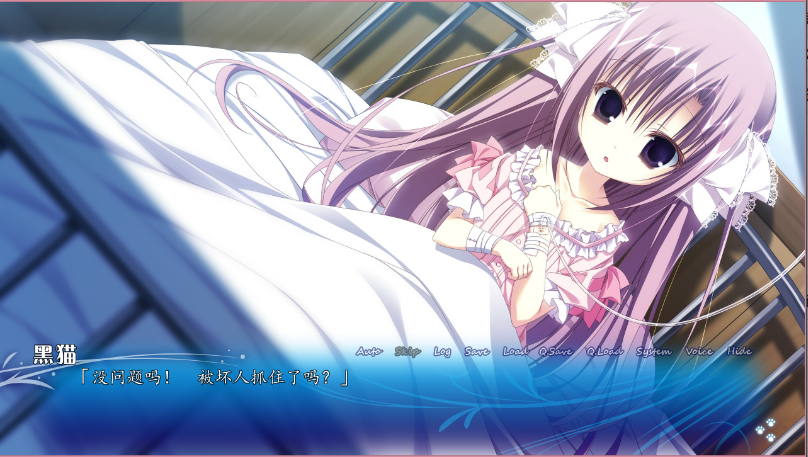
Nenohara Hina’s route is the centerpiece of the game—its storyline alone spans eighteen years. The game locks it down front and forthrightly: you can’t get into Nenohara Hina’s route without clearing Natsusaki Uta’s route first. Hina’s route splits into two big parts. One is the loli-era story, still following the protagonist and Hina through their good times that summer. The second part jumps straight into the True End, telling the story of Nenohara Hina ten years later, all grown up.
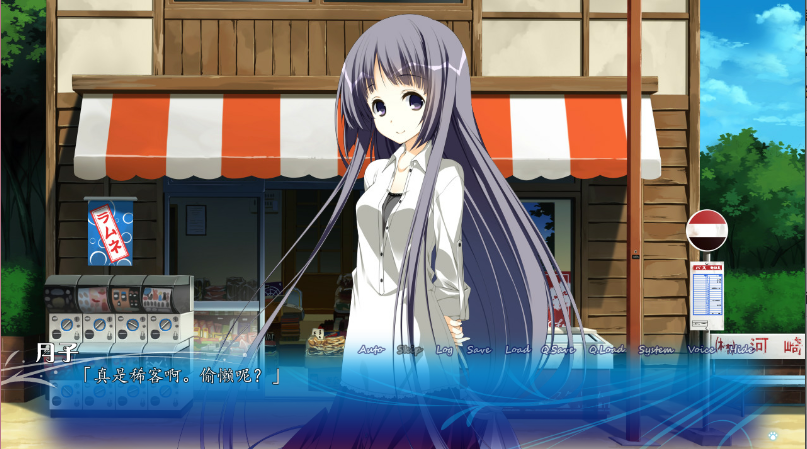
How should I put this — the story after they grow up is long, really long, and you’ll see familiar faces show up again ten years later. The plot developments line up one-to-one with that summer vacation ten years earlier. Seeing the grown-up Kotsuki and the way she treats the protagonist hit me hard, honestly. The ten-year-later part swings back and forth and is sour and sweet in equal measure. I don’t know if it’s because I’m getting older, but I find myself really relating to where that part of the story goes. Maybe I’ve reached the same age the protagonist was then — the grind of daily life, the warmth of family, the answers people search for, the kindness you show others, and the longing to build a home of your own. These are the things that land hardest at the age I’m at now. A lot of the people playing this are probably young and can’t wrap their heads around how the protagonist felt back then. Maybe I’m just old, and I’m the only one who’d get moved by a story like this…
Can you still remember what you were doing 10 years ago? That summer, that summer vacation—were you playing with your childhood friends, did you make a promise with them that couldn’t be broken, do you… want to go back to those days? Honestly, the only good time I can recall is the summer vacation of 2003. That was probably the last holiday I could fully enjoy. After that my life went dark, and the friends I’m still willing to talk to now are only there because of a promise made back in that good time.
Time passes. Ten years have gone by. I’m old now, and the friends I played with back then have scattered — some went abroad, some are working, some got married. People say Chinese folks are reserved, and that getting too weepy about the past just comes off as mawkish. Maybe you’ll never actually see someone cry over the past, but you can’t deny it: those good times are always carved into some corner of our hearts.
Just like the protagonist’s summer break, that secret base they built, the beachside shack, the endless field of sunflowers—all of it belongs to his good memories. But a game is still a game. A while back I saw someone on Reddit snarking that anyone hunting for meaning in a fictional story must be pretty damn pitiful. Sure. But even the most fictional thing was still written by a person. If a human made it, then it stands for some truer, better vision—and trying to understand what’s hidden behind that vision, I figure… that’s not such a bad thing.
Himawari no Kyōkai to Nagai Natsuyasumi (向日葵の教会と長い夏休み) is a game steeped in summer air and the healing of memories. If you’ve seen Anohana, you might get moved by it too. Whether it’s the Natsusaki Yomi route or the Nonohara Hina route, what it hands you is a quiet pang of regret over how things have drifted, and tears over the feelings that somehow stayed the same after everything else moved on.
Last thing… one last thing… let me ramble a bit more. The game does have its flaws. For one, once the main story wraps up it just dives straight into shameless territory — a flood of H scenes you can’t keep up with, and the art being too realistic actually made me kind of sick watching it… Also, Nonohara Hina’s route touches on the father-daughter marriage thing, so if that’s a moral dealbreaker for you, maybe think it over before playing.
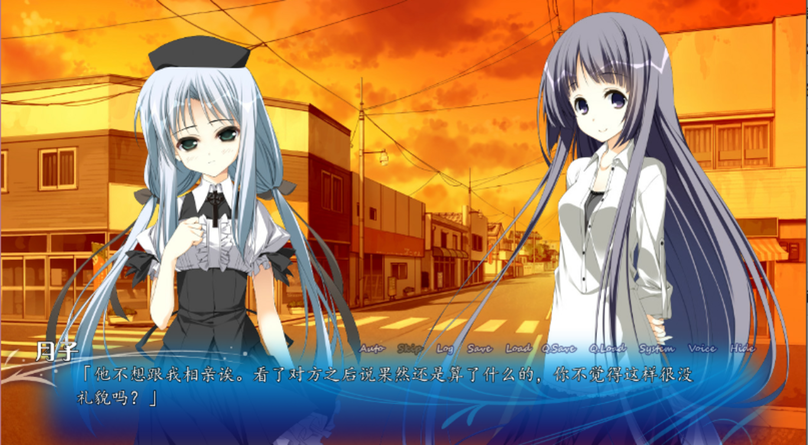
And last but not least—I love you, Kotsuki-chan! If the protagonist won’t take you, I will! God, please send me a girl just like Kotsuki!
Comments are hosted on the Chinese main site. This mirror is read-only.