Akeiro Kaikitan (あけいろ怪奇譚) Review
"Evil Spirits Don't Deserve Sympathy"
I’m personally a huge fan of horror-mystery stuff. Honestly, it’s exactly this kind of work that got me into reading in the first place. Why? Because horror-mystery always dangles a hook in front of you, pulling you along, making you curious enough to keep going. Compared to other works where you have no idea where the plot or story is headed, this is way better — it completely saved middle-school me, who’d just read a few modern novels and gotten his face caved in by those fantasy-ass books with no discernible main storyline.
So from middle school to high school to college, and even now, I’ve always leaned toward seeking out mystery stuff. Whether it’s actually scary or not doesn’t really matter anymore — I’d already read a ton of web novels on Tianya’s ‘Pengla Ghost Tales’ board back in high school. But once you’ve read enough of this stuff, you start noticing patterns… Broadly speaking, horror-mystery novels split into “has ghosts” and “no ghosts,” and the difference is huge. Personally, I think writing a “no ghosts” mystery is harder, and the most profound level you can reach is a mystery that “looks like there are ghosts, but in the end there aren’t, and the explanation is completely reasonable.” That kind of work involves misdirection and deception, careful control of pacing, and a god-tier twist at the reveal that makes you slap the table. Getting all of those right at once is super rare. I think Cai Jun came closest with his recent ‘Murder in the Fleeting Years’, but even that doesn’t really have “ghosts” — it’s just mystery. Of course, works that establish “ghosts exist” from the start aren’t necessarily bad — they just lack that layer of misdirection and deception. But with effort you can still write something readable, like the protagonist digging into a ghost’s past, or the protagonist fighting a ghost solo. There’s also the “giving up entirely” style — I once read a book that started with a demon king appearing, all super badass, then halfway through a Taoist priest pops out of nowhere, the protagonist joins the priest’s faction, there are tons of priests, and it devolves into “massive priest army” VS “massive demon army” for no goddamn reason. I mean, nothing wrong with that per se, but that kind of work belongs in the hot-blooded action section — don’t hog the “mystery” slot, okay?
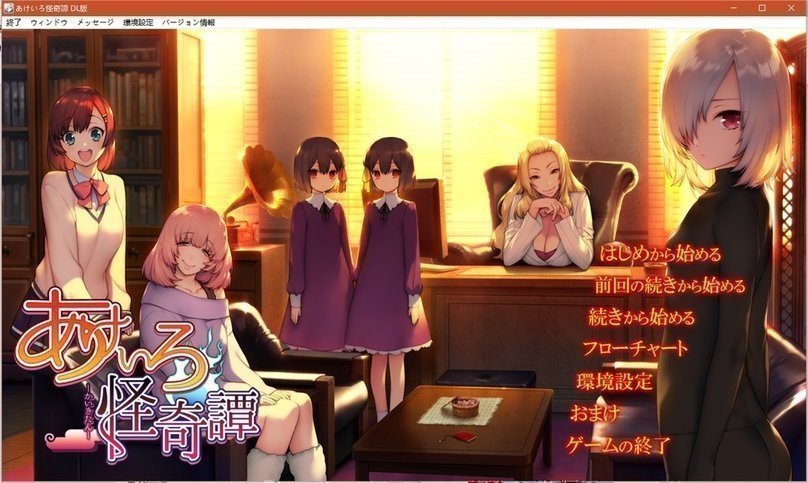
For visual novels, there are plenty of mystery titles, but horror + mystery hybrids are relatively rare. Early stuff like Hatsuyuki Sakura sort of counts setting-wise, and Midori no Umi, Sora no Hana, whatever, those count too. But this month a game caught my eye: Akairo Kikitan. Unlike your typical so-called mystery game, where the OP just splashes some blood and shows a few darkened CGs, this OP straight-up shows evil spirits and imagery that’d scare kids — which massively boosted my interest. Horror VNs, honestly, all claim to be scary, but few actually are. The only thing that ever jumpscared me was that one sudden CG in 3Days. Since Akairo Kikitan is built around the protagonist encountering evil spirits, it’s definitely got both “horror” and “mystery” elements, so I excitedly started playing. The process was rough — so rough I forgot how long it took — but I eventually finished it. My feelings afterward are complicated. How to put it… the game has good parts and bad parts, but I can’t even tell if the “bad parts” are really bad. Anyway, let’s take it slow.

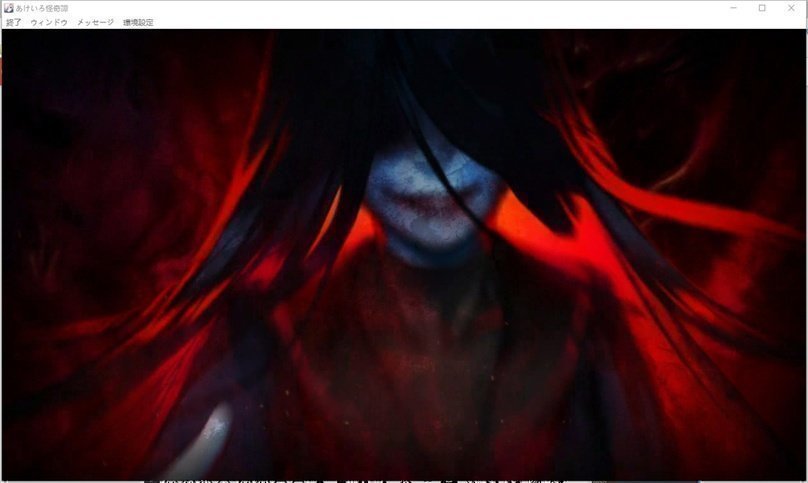
The setup of Akairo Kikitan: the protagonist’s school has four female students dying in mysterious succession. At first the protagonist just brushes off the rumors, but his childhood friend Kana is super interested in the case. Meanwhile, the protagonist meets a mysterious white-haired girl at school who calls herself Velvet. She warns him to be careful, or he might be the next to die.
The protagonist is freaking out, but soon something else happens at school. Staying late one night, he finds himself in some dark barrier-like space inside the school. He hears a woman’s whisper — “Saa, ikimashou” (Come, let’s go together~) — and is guided to the school rooftop, where he sees Velvet being embraced by a female ghost as they jump off the building.
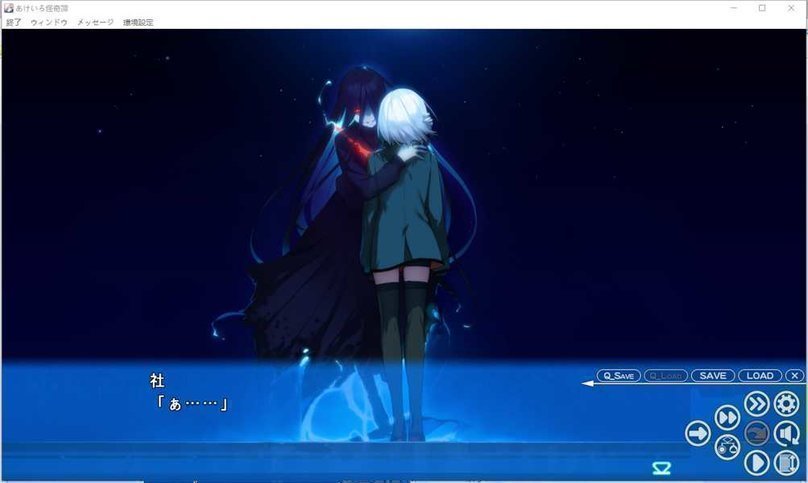
The protagonist thinks Velvet is dead, but when he goes downstairs, she’s already gotten back up. He learns Velvet works for a paranormal detective agency and came here to deal with the school’s evil spirit problem. She warned him because his body is the type that attracts evil spirits — Velvet has the same constitution, but she’s something like a vampire, so she doesn’t die easily and can regenerate her body. That’s why she can use herself as bait to lure out evil spirits. The protagonist’s childhood friend Kana is also interested in the ghost, and the protagonist keeps seeing a spirit resembling that female ghost in his dreams, so he wants to get to the bottom of the school haunting. After some persistent pestering, he joins the paranormal detective agency and begins investigating the school’s haunting.
The investigation starts with no clear direction, so they begin with the school’s “Seven Wonders.” One rumor says if you put a note with the name of someone you want dead in a certain shoe locker, an evil spirit will kill that person for you. Another is about a little girl in the bathroom. The protagonist searches around and encounters the evil spirit multiple times, but can only run away.
After some investigation, they learn the evil spirit is a student named Akiko from thirty years ago. Rumors say she committed suicide after a teacher-student romance was exposed and the pressure got to her. But interestingly, more detailed records about her are gone — apparently destroyed. And Akiko’s vengeful spirit has also killed the teacher involved in the affair and her own best friend. Hard to believe — why kill the two people she was closest to?
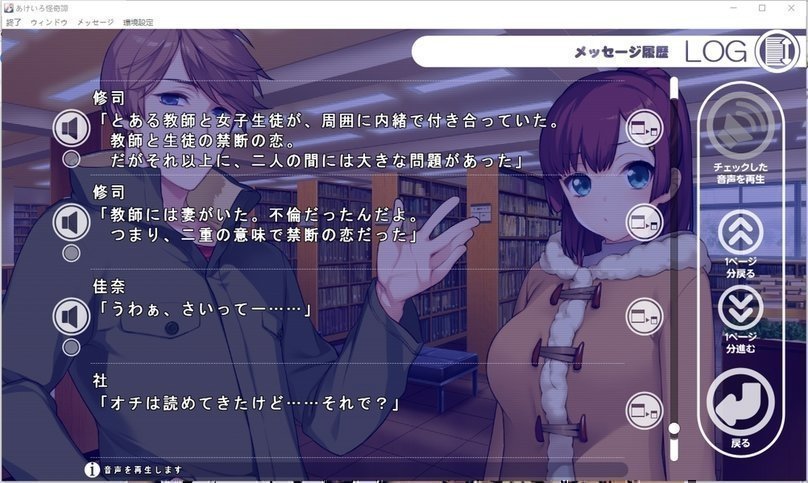
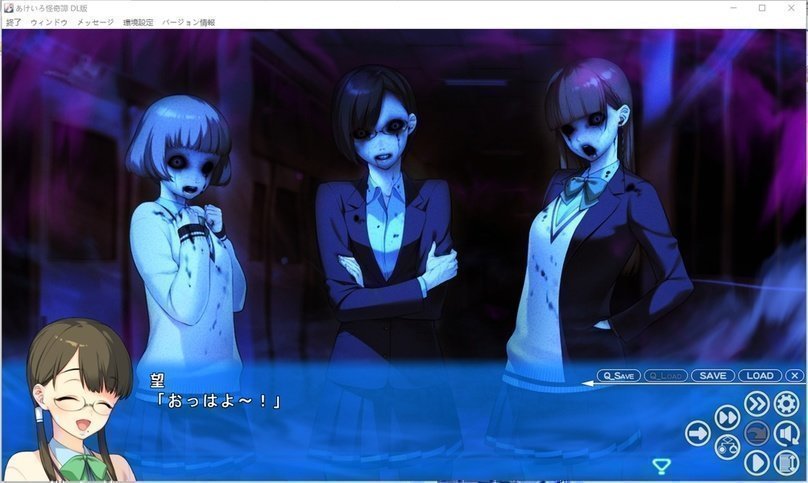
Meanwhile, Kana and the protagonist use their ability to see ghosts to find one of the female students recently killed by Akiko — Nozomi Harada. Interestingly, this student’s ghost has been wandering the school too, but among the four dead students’ ghosts, only Nozomi can be found. Nozomi is dead but still cheerful and loves cracking jokes. But when asked if she remembers how she died, she says she doesn’t. When asked where the other three ghosts are, she says she’s never seen them…
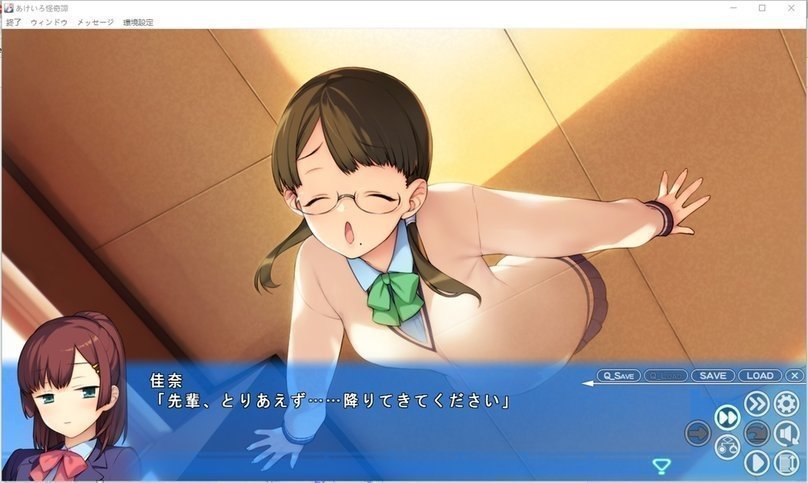
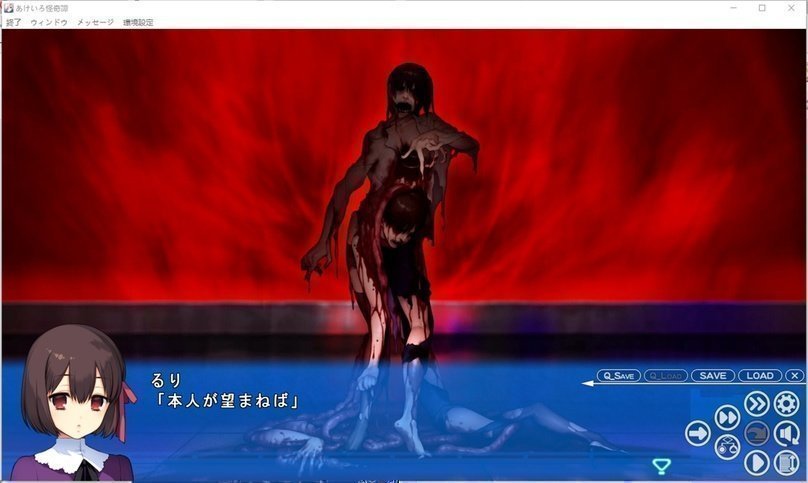
Eventually the investigation hits a dead end, and they’re running around blind. One day, Akiko attacks again. While fleeing through the ghost’s territory, they stumble upon a lump of flesh on the rooftop — it looks like a person, but it’s actually two bodies stitched together. The corpse can talk, repeating things like “forgive me.” That’s when a breakthrough happens: Velvet points out that when the haunted Akiko appears, the space is actually an inherent barrier, and that barrier’s space might be frozen in time — frozen on the day Akiko killed herself. So they charge into the library inside the haunted barrier and dig through the newspaper clippings. Sure enough, they find records that don’t exist in reality, plus a suicide note Akiko left behind.
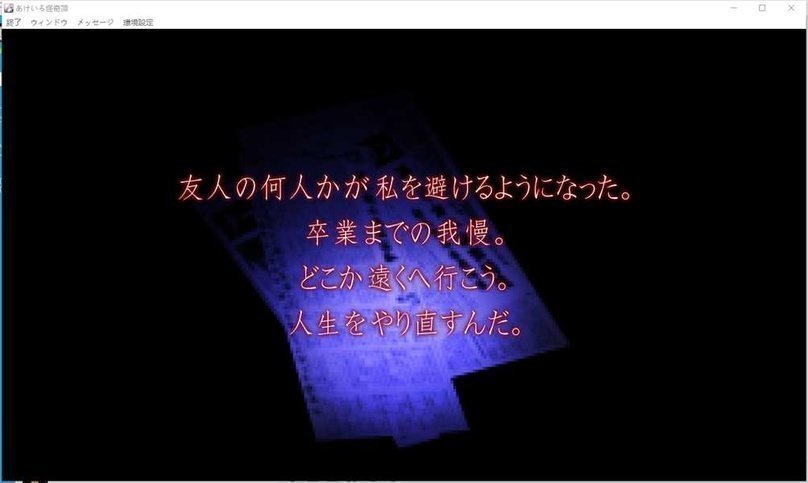
The note says several things:
She hates two people — one called F, one called H — who destroyed her formerly peaceful life. She thought of F as a friend, but F betrayed her. She was defiled (汚れてしまいました). She got pregnant. The child is innocent, but she doesn’t love it. She hates F and H, and swears they’ll pay in blood.
The protagonist and the others realize the lump of flesh they saw on the rooftop is probably F and H, endlessly tortured by Akiko in that barrier. They also realize the “teacher-student romance” from thirty years ago might have a hidden side. Meanwhile, Velvet communicates with the local twin land gods and some woman called Madam, and learns that Nozomi and the other three students might have accidentally triggered Akiko’s evil spirit and gotten killed. Their four souls wandering the school unable to pass on is also because of Akiko’s evil spirit. So they decide to talk to Nozomi first and work together to resolve Akiko’s evil spirit, so they can all be freed and ascend to heaven or whatever.
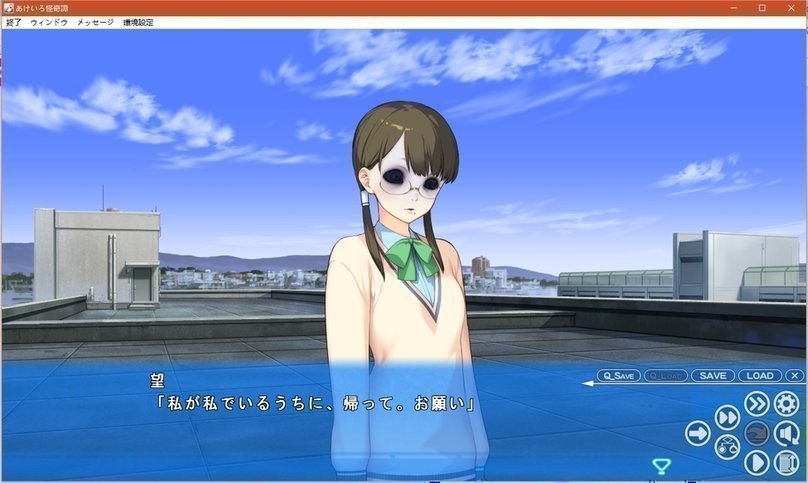
But here’s the funny part: when the protagonist goes to Nozomi’s ghost and explains that she was killed by Akiko’s evil spirit, Nozomi’s ghost turns hostile, becoming an evil spirit herself. The protagonist is too scared to approach. He starts noticing something off: why would Akiko, who’s supposed to be avenging herself on F and H, reappear thirty years later to kill four random female students? He goes to find the other three ghosts, and after a long search, finally finds them. They look nasty — like three female thugs. And the moment they hear about Nozomi, they all panic. With Velvet’s help, the protagonist discovers Nozomi’s death has another hidden side.
Nozomi and the other three students actually knew each other, and their relationship was bullying — Nozomi was the victim. Velvet says Nozomi, driven by the bullying, was forced to play some game that put her in contact with Akiko’s evil spirit, and was killed by Akiko. Akiko was thus released and killed the other three. The protagonist indirectly confirms this with the three thugs’ ghosts.
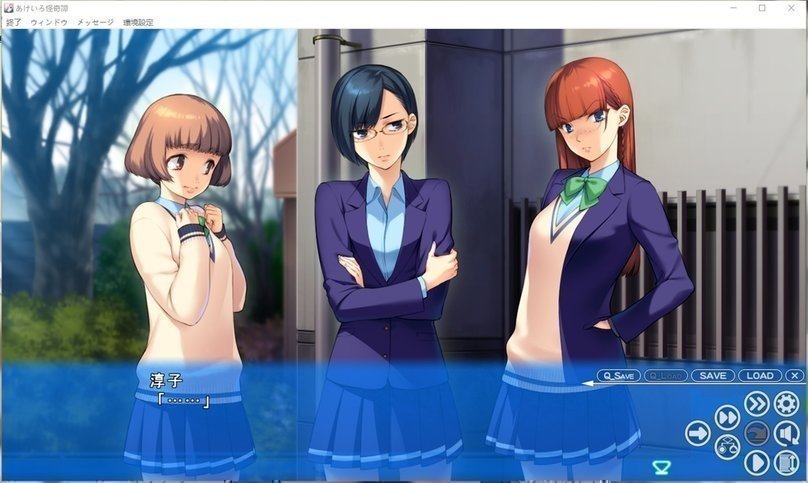
Finally the protagonist goes to see Nozomi again. After some explanation, Nozomi accepts his account and says that’s how it was. She also says she has one wish before helping the protagonist let the ghosts here pass on — she wants him to go on a date with her. The protagonist thinks, well, if that’s how it is, fine.
But the moment he agrees, Nozomi forcibly possesses him and drags him into the ghosts’ inherent barrier.
That’s when the protagonist hears the words Nozomi spoke when she died:
“Ghost of the old school building… if you pity me… then lend me the power to kill those three bitches!”
The protagonist finally realizes: Nozomi didn’t die from accidentally contacting the evil spirit — she actively sought it out to borrow its power. The three students were killed by Nozomi after her suicide.
In the ghost world, Nozomi drags the protagonist through repeating days. There’s no one else at school — just the few dead wandering ghosts and the corpses of F and H, killed by Akiko. The protagonist also sees Akiko there, and Nozomi’s dreams from when she was alive.
Akiko was a student at this school over thirty years ago. Her life was normal and peaceful, until one day rumors spread that she was having an affair with a teacher. Akiko was distressed — she knew the teacher; he was a relative of hers, and maybe because they knew each other as family they talked a lot, which led to misunderstandings. Akiko asked him to clear things up, but he just said “yeah, yeah, I know” and did nothing. Akiko confided in her best friend Yukako. Yukako said she supported Akiko to her face, but the moment Akiko left, she badmouthed her. Why? Because Yukako was actually the one sleeping with the teacher. Yukako and the teacher spread the rumor that Akiko was involved with him to cover up their own affair.
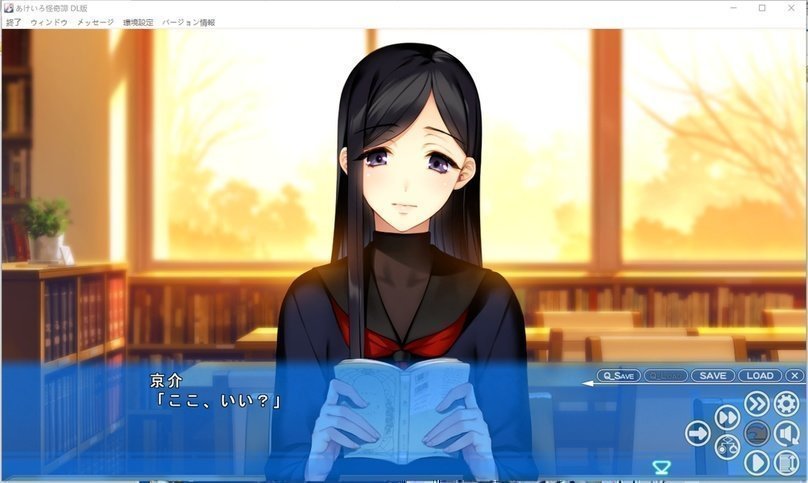
Akiko didn’t think much of it at first, but eventually noticed. The teacher refused to clear things up — was he hiding something? Finally Akiko went to clear her own name. The teacher was furious. Yukako was furious too, but kept up appearances and stayed friends with Akiko. Then one day, the teacher raped Akiko. “If you’re denying we’re involved, I’ll just sleep with you! That way my thing with Yukako won’t be exposed.” After the assault, Akiko went to Yukako and said she’d been raped by the teacher. Yukako acted surprised. Akiko said don’t bother pretending — I already know you and the teacher are involved. Yukako immediately dropped the act and viciously said she was the one who told the teacher to rape Akiko, because she’d hated Akiko for a long time.
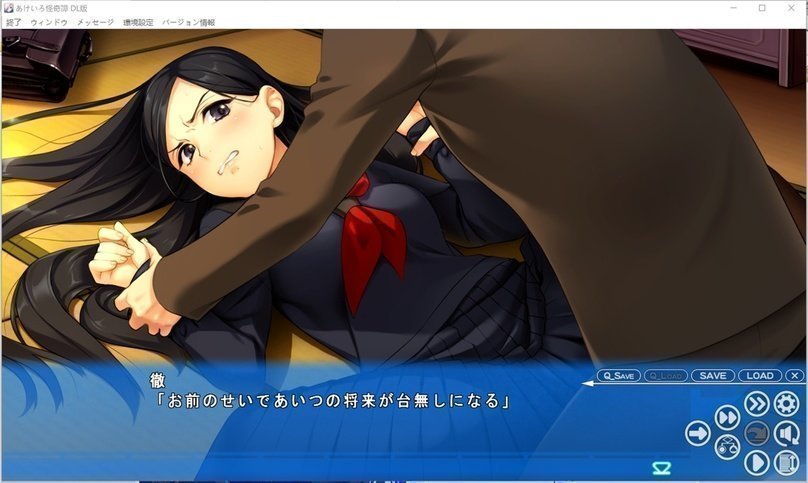
Raped by the teacher, betrayed by her best friend, Akiko was full of resentment. Soon after, she was found to be pregnant from the rape. Yukako, knowing Akiko was pregnant, still had people beat her up. Akiko decided on revenge — she wanted to have the child to humiliate the teacher and Yukako. Yukako panicked a bit, and the teacher panicked too. Yukako started frequently spreading rumors to smear Akiko, but the more she did, the more suspicious she looked, and public opinion gradually shifted. People started wondering if Yukako was the one involved with the teacher. Enraged and embarrassed, Yukako invited Akiko to the rooftop, planning to make her get rid of the baby and stop causing trouble. But instead of teaching Akiko a lesson, she got mocked by an furious Akiko:
“Oh, your boyfriend? He’s a premature ejaculator.”
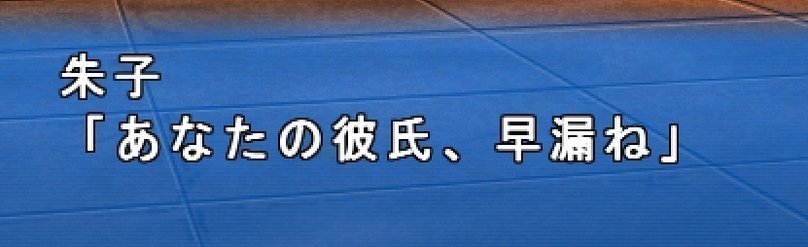
Losing her mind, Yukako pushed Akiko off the rooftop. Akiko died instantly. Now it’s clear: the two people Akiko hated — F is Yukako, H is the teacher.
After Akiko died, the teacher pulled strings to have her death ruled a suicide, and framed it as a suicide over a teacher-student romance. All records were erased, and Yukako graduated without issue. But Akiko died with enormous resentment and became a vengeful spirit. Eventually, the vengeful Akiko killed the teacher and Yukako, and trapped them in her barrier, endlessly falling from the rooftop where she died. Even after becoming lumps of flesh, they keep falling, never finding release. Because Akiko’s resentment was so great she couldn’t pass on, the local land gods put her to sleep temporarily. But after all those years, Nozomi woke her up again.
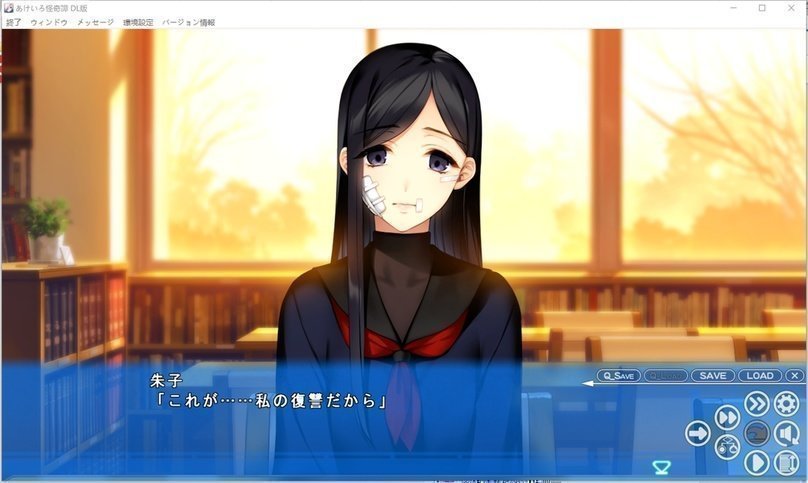
Nozomi’s memories are simpler. At school she was endlessly bullied by the trio. Her mom’s packed lunches were thrown in the toilet, her money stolen, her textbooks taken, and she was forced to do all sorts of things. Nozomi was too weak to fight back and just took the abuse. Eventually the three escalated. One day, one of them suggested Nozomi go investigate the school’s Seven Wonders — one of which was the shoe locker with the female ghost. Write your wish in it and the ghost would grant it.
One day Nozomi came to school and the trio looked disappointed. “What, you’re not dead? Guess the rumor was fake after all.”
Nozomi was confused. Finally she checked the shoe locker and found a note from the trio to the ghost: “Please kill Nozomi Harada.” Nozomi despaired. She was tired. She took the ghost’s letter and killed herself, awakening the real evil spirit Akiko. Akiko saw this girl was just as pitiful as herself and granted her wish, lending her power. That leads to the game’s opening: four female students dying in succession — Nozomi first, then the other three killed by Nozomi.
So the truth is Nozomi, unable to endure the bullying by the three delinquent girls, went to the school library and dug up Akiko’s old curse letters, killed herself with them, and awakened the sleeping Akiko. In the end, Nozomi grew tired of the killing and looping in the ghost world too. With the protagonist’s encouragement, she goes to confront the trio’s ghosts. If the three apologize to Nozomi, she’ll let them out of the barrier to pass on.
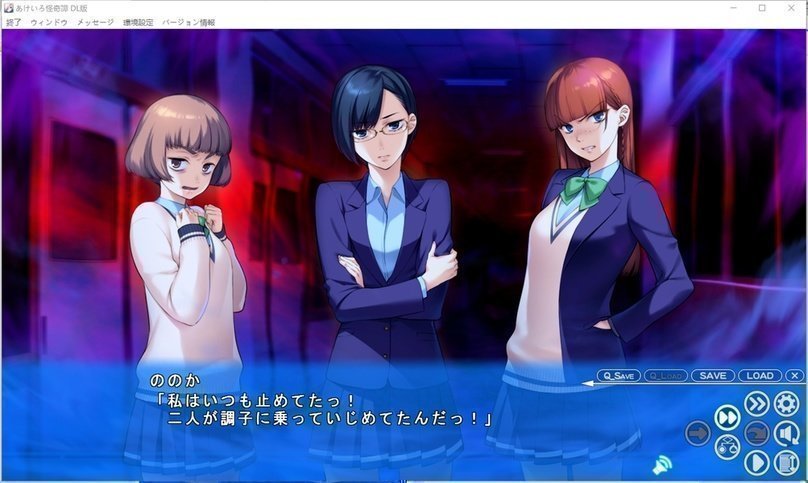
When they meet the trio again, because Nozomi is weak, the three have no intention of apologizing. They just toss out a casual “gomen nasai” and call it done. They even say that because Nozomi went crazy, they died for nothing and now they’re stuck here forever, so it’s all Nozomi’s fault — she should be the one apologizing. They even stress that they were “just protecting their friendship with Nozomi in their own way” and that this is how they always played around, and Nozomi is so petty she can’t take a joke.
I have to say, these three are absolute scum. Even dead, they’re scum. Nozomi finally snaps and yells at them: if you won’t apologize, stay here forever. The three instantly get scared… they even start infighting. Nozomi loses all faith in these pieces of trash, but she’s yelled at them and seen them scared, which she finds ridiculous and pathetic. She decides it’s enough — they’re trash, why bother. Nozomi tells the three scum to get lost, get out and pass on. And she herself chooses release after talking with the protagonist.
In the end, the protagonist sees Akiko in the barrier once more. Akiko admits she approached him because he looks so much like a boy she knew back in school — someone she should have ended up with, but everything was destroyed by the teacher’s rape and the framing. Why does the protagonist look so much like that boy? I guess he’s a reincarnation. Finally Akiko decides it’s all over, it’s enough, and tells the protagonist to release the corpses of the teacher and Yukako endlessly killing themselves on the rooftop. The protagonist asks Akiko if she wants help passing on.
Akiko smiles: “I’m an evil spirit who’s killed a lot of people. I can’t pass on. Maybe I’ll go to hell or somewhere.”
“Even though I lent Nozomi my power, the people she killed should probably count as my doing too. I saw my pitiful self in that child, so I chose to help her.”
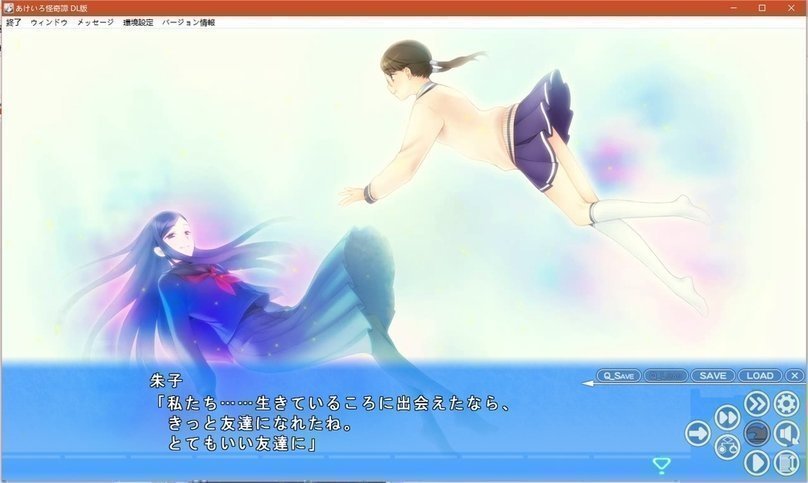
In the end, Nozomi and Akiko meet again. “If we’d lived in the same era, we might have been good friends.” Then both ascend. Whether to heaven or hell, who knows.
The story wraps up with the school returning to peace. But the protagonist is left with some thoughts: if Nozomi had been a little stronger back then and yelled at the trio, if Akiko had chosen to call the police instead of stewing in resentment and seeking revenge, maybe none of these tragedies would have happened, and so many people wouldn’t have died.
Honestly, Akairo Kikitan is pretty strong in its mystery-reveal process — especially the three twists. At first it makes you think everything is Akiko’s fault. Then you find out Akiko was awakened by Nozomi. Then you find out Nozomi isn’t so innocent either. And finally you learn Akiko’s past. Each twist is a rush, and there’s plenty of foreshadowing — like the whisper the protagonist hears from the female ghost, “Saa, ikimashou.” You think it’s Akiko, but it’s actually Nozomi. And the weird behavior between Nozomi and the three ghost girls is a hard-to-guess setup too.
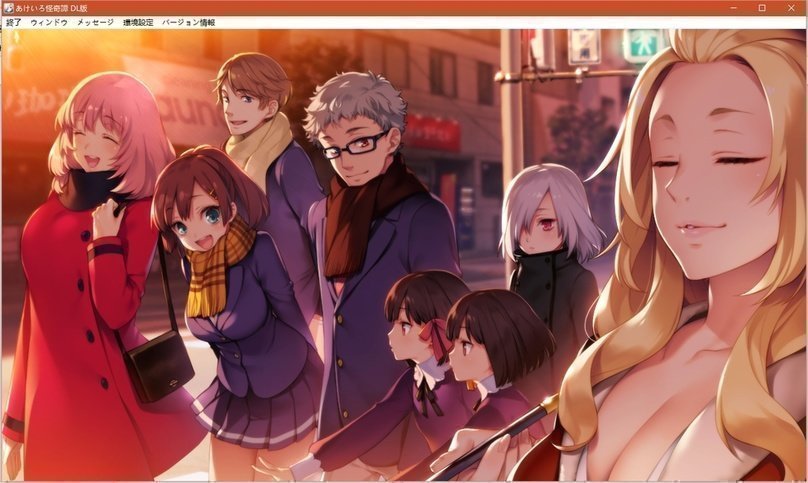
But as good as the reveal is, the reveal section takes up way too little of the game. From the moment the game establishes the school ghost’s existence, most of the investigation is running in circles and slice-of-life banter that has basically nothing to do with the main plot. There are tons of routes, and the final route involving Akiko and Nozomi only unlocks after you’ve cleared everyone else’s routes. That’s insane, because I think this one story is actually good, but making you sit through so many other stories for it is over the top. And don’t forget, the real climax only starts once you enter Nozomi and Akiko’s route. The other routes aren’t the core and don’t fully reveal the school ghost’s past or the reason for her existence.
Like I said at the start, Akairo Kikitan fully uses the “ghosts exist” and “ghost hunter” setup, meaning the mystery level isn’t great. Most of the solving isn’t done by the protagonist but by supernatural powers — like having the “ghost hunter” investigate, or having the ghost hunter’s underling summon the souls of the dead and just ask them what happened. Way too easy and way too convenient. The protagonist himself has no presence — aside from some personal routes, he’s basically useless, just a bystander watching the story. The game is long, but little of it is core. Trimmed down, it’s basically a short story from Tianya’s ghost tales board. Stretching it out this long is really something.
The game puts a lot of effort into building horror atmosphere, but that atmosphere is limited to when the ghost Akiko appears. The dynamic backgrounds convey the protagonist’s panicked running, and Akiko’s sudden appearances do have a real horror vibe…
But that’s it.
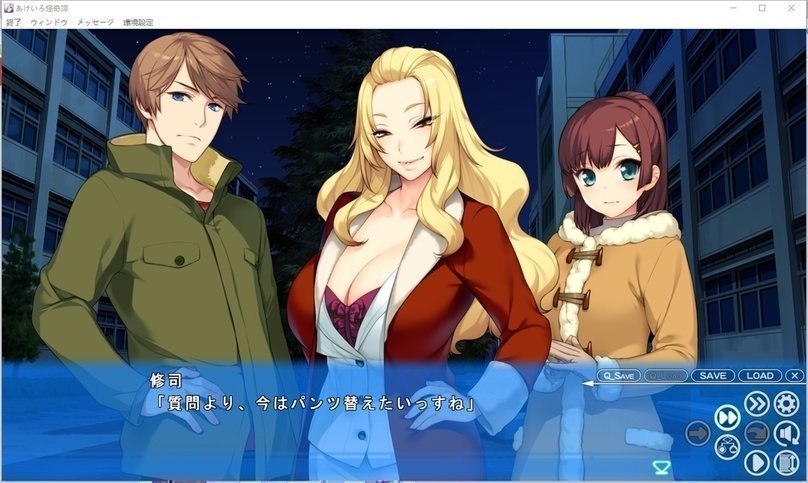
I’ll admit the game nails the horror scenes, but 90% of the time it has nothing to do with horror. The story is just a paranormal detective and the protagonist investigating a ghost. No suspense — it feels like you can just tag along and beat the boss. In that respect this game is way worse than Midori no Umi. Midori no Umi has no ghosts, but the whole game gives you an eerie atmosphere, keeps you tense and frightened. Actually, Midori no Umi’s music does a lot of the heavy lifting. By comparison, Akairo Kikitan’s music is complete garbage — nothing like what a horror game should have. The key atmospheric moments rely on the ghost’s whispers instead. All in all, as a game marketed on horror, Akairo Kikitan doesn’t quite deliver. It just skims the surface to scare you and that’s it. It doesn’t make your heart tremble. At its core it’s just an ordinary revenge mystery. Maybe to build suspense and horror, the game insanely makes all the female ghost’s lines voice-only — no subtitles, no sprite, just voice! Good thing my listening is decent and the vocabulary isn’t hard, or I’d have been totally lost.
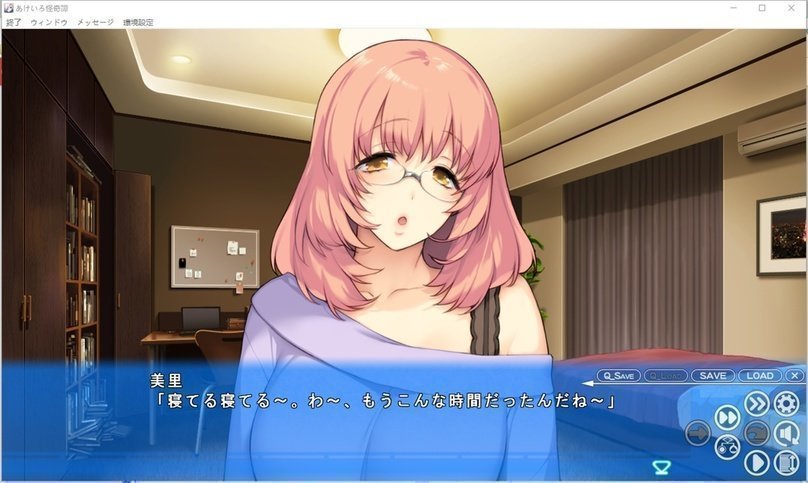
Akairo Kikitan has other complaints too. For example, it spends a huge amount of time introducing characters from its predecessor Nanairo Reincarnation, but they’re just support. Also, I personally don’t like some of the character designs. And the CV for the older sister — her cutesy voice is like Lin Chi-ling, and the sister herself is drawn like a sow. A sow Lin Chi-ling character. Listening to it made me want to turn off voices entirely. Unbearable. The game itself is buggy as hell — tabs freeze and you have to restart, errors pop up and the game won’t continue, forcing you to redownload. I ended up with both the download version and the package version, and had to install several patches just to finish. Mentally and physically exhausting — that’s part of why I said the game was “rough” to get through.
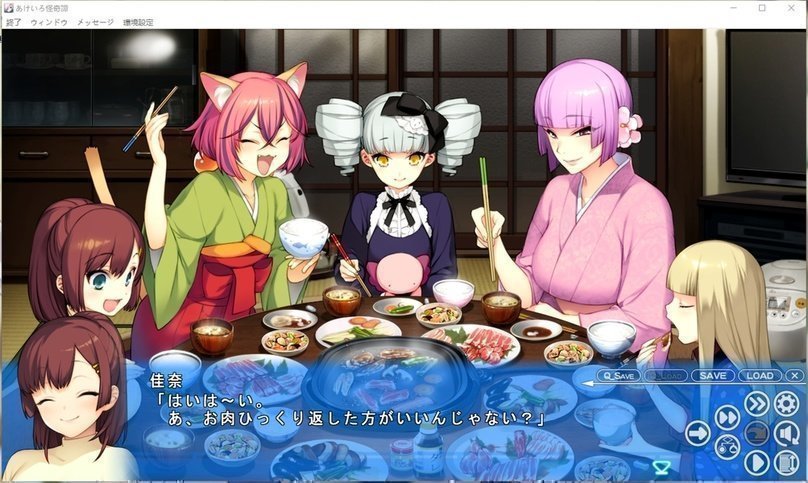
Overall, Akairo Kikitan as a horror-focused mystery game does deliver on the core mystery and horror parts, but the whole thing is way too bloated. The common route is way too fucking long, and most of the investigation has nothing to do with the main plot. Maybe you could extract just the main story and it’d be fine, but the non-main parts are really hard to sit through… I don’t know if it’s because I’ve read too many horror novels that I have zero interest in those developments…
There’s a line in Akeiro Kaikitan (あけいろ怪奇譚) that I found pretty interesting. After the protagonist learns about Akiko’s past, Kana expresses sympathy for her, but Berubetto the vampire spirit hunter says flatly:
“Evil spirits don’t deserve sympathy.”
And when Akiko finally decides to give up on being an oni, she admits it herself: she’s an evil spirit, there’s no need to pity her or save her.
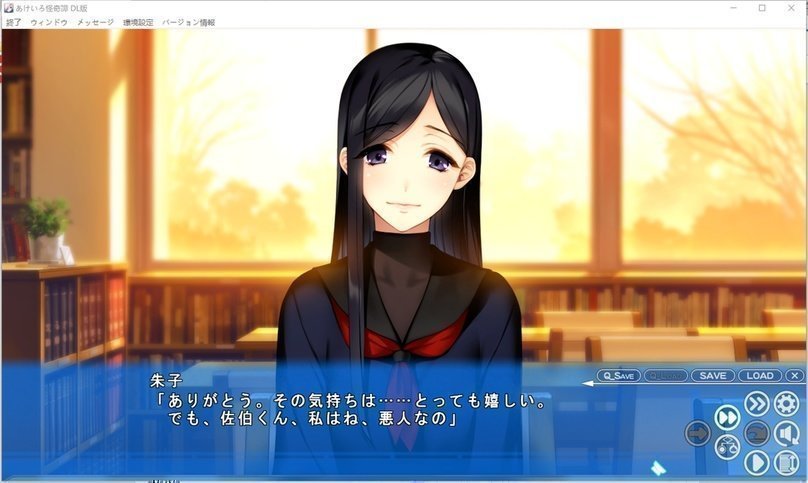
The same thing happens with Nozomi Harada. In the end she realizes that if she’d just been a little braver, maybe she wouldn’t have died, wouldn’t have ended up like this. The protagonist says much the same thing: “If she’d understood that sooner, it wouldn’t have come to this.”
This reminds me of a quest I used to do back when I played World of Warcraft, in Duskwood: The Legend of Stalvan. Stalvan, tutor to the daughter of a noble house, fell in love with her one-sidedly, found out she’d been stringing him along, and killed her for revenge. Maybe Stalvan is pitiful, but when the commander denounces him, there’s not a shred of sympathy in it:
“Stalvan Mistmantle is an evil man. Many innocent people have died at his hands. There’s no doubt he’s committed countless crimes and brought yet another threat to Duskwood. You must put an end to him, hero.”
So when I found that little cabin and took out Stalvan, who’d already become something neither living nor dead, all I could do was sigh.
“Things never should have gotten this bad.”
Evil spirits really don’t deserve sympathy. But they shouldn’t have become evil spirits in the first place.
Comments are hosted on the Chinese main site. This mirror is read-only.