Living with Chord Mojo
Chord Mojo
The Chord Mojo is a DAC/headphone amp combo that’s been getting a lot of buzz lately, mostly because it’s tiny yet supposedly packs a serious punch.
According to Digital Multi (数码多), the Mojo’s whole deal is its technical sophistication and advanced build, which is how they got it so small. Science and technology are the primary productive forces, as they say, and I couldn’t resist the temptation to grab one — at the very least it takes up less room in my backpack.
Honestly, after getting my hands on it, it feels like a solid deal. The sound is decent, and the tinkering potential is through the roof.
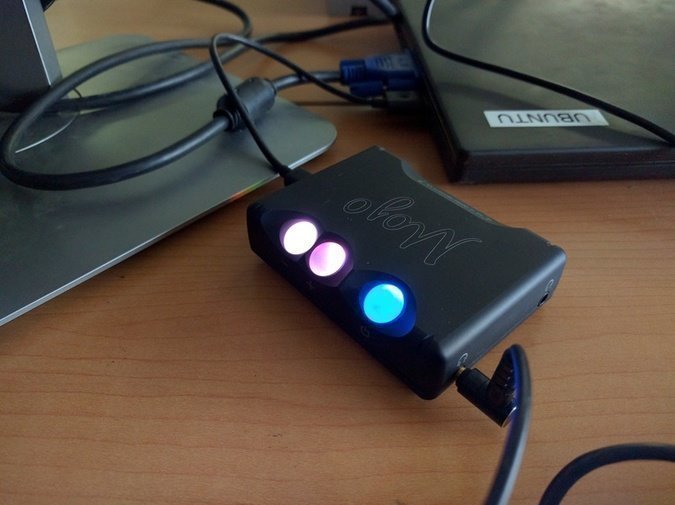
Let me start with a quick word on the sound. To my ears the Mojo leans toward “lots of power, coarse delivery,” though it’s not quite like desktop amps either — with similar output it gives the midrange a fair boost. There are piles of mystical audiophile write-ups about it online, and I’ve reached the point where literary-flavored audiophile prose makes me want to throw up, so I won’t rehash it. Go read the audiophile forums yourself. As for the Mojo, I haven’t dug too deep into the sound — it sounds good enough, the ample power makes a lot of headphones behave properly, it’s small, the glass ball is fun to play with, and as a DAC it’s genuinely strong for the price. That said, the sound isn’t fixed, because it changes with whatever source you pair it with, and there are a hell of a lot of sources to pair it with… I spent a few days trying it with a laptop, a Walkman ZX1, a Google Pixel C, a FiiO X7 and a desktop sound card (the Xonar), and picked up some notes and experience along the way.
First, pairing it with a laptop. The Mojo has two MicroUSB ports: one for charging, one for USB DAC. Meaning when you use it, you’re running off the Mojo’s own battery — if it dies, you have to go find another cable and plug it into the charging port.
It’s not quite that absolute, though. You can use a split cable to charge and play at the same time.
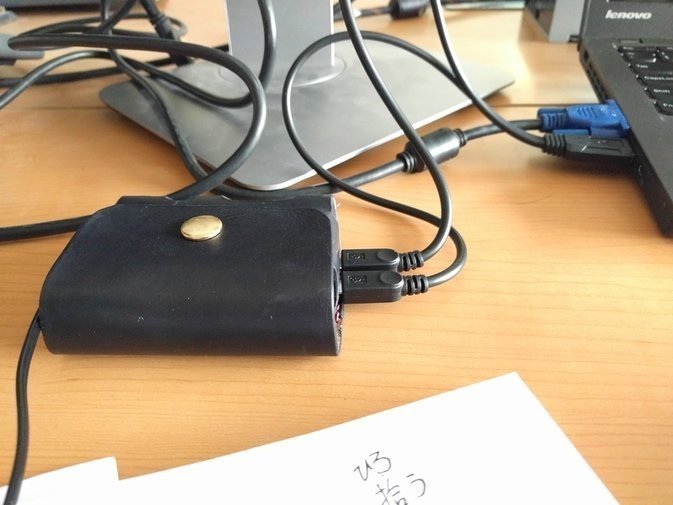
Only one of the two plugs on that cable can carry data; the other is charge-only, which mirrors the Mojo’s two ports nicely enough. Not bad.
With the FiiO X7, the best connection is coaxial — but the coaxial port isn’t something you can just use. It needs a specially made cable, and the damn thing is directional: one end goes into the FiiO, the other into the Mojo’s coaxial input. You also have to switch the X7’s system setting from the default LO output to coaxial.
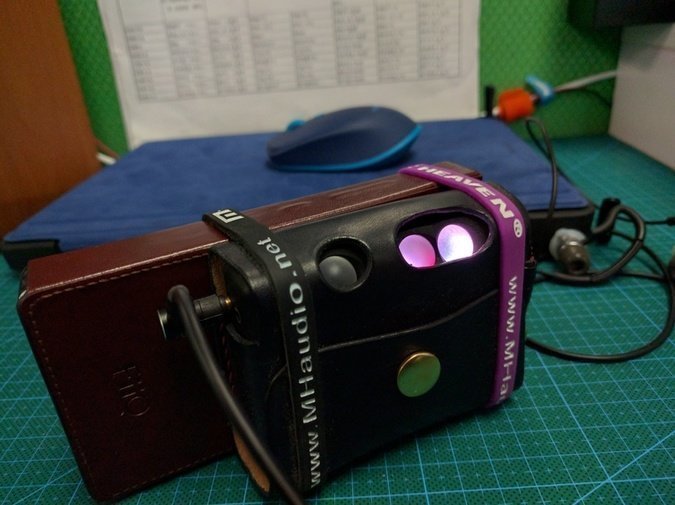
The result is very good, though the amp module on the bottom of the FiiO X7 goes to waste. I hope FiiO releases a battery module at some point and just boosts the battery life directly. Speaking of which, the Mojo’s battery life is good: rated at 10 hours, and in actual use it’s around 10 hours — better than a certain PHA-2 with its inflated specs.
Connecting the Mojo to the Walkman ZX1 is more of a hassle. Per a certain Japanese audiophile site, the best approach is to use Sony’s own adapter cable:
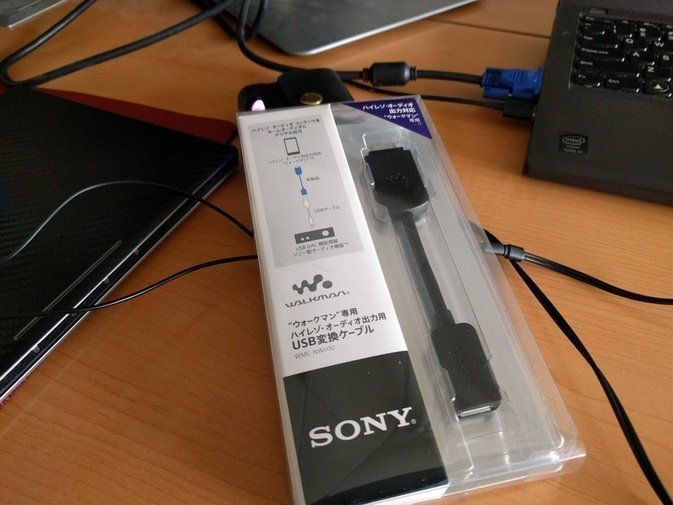
No problem with the signal path — plug it in and it works. It just looks ugly…
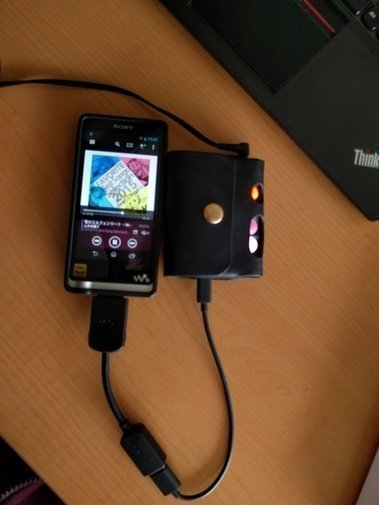
It also supports HiRes — you can tell from the green light, for instance.
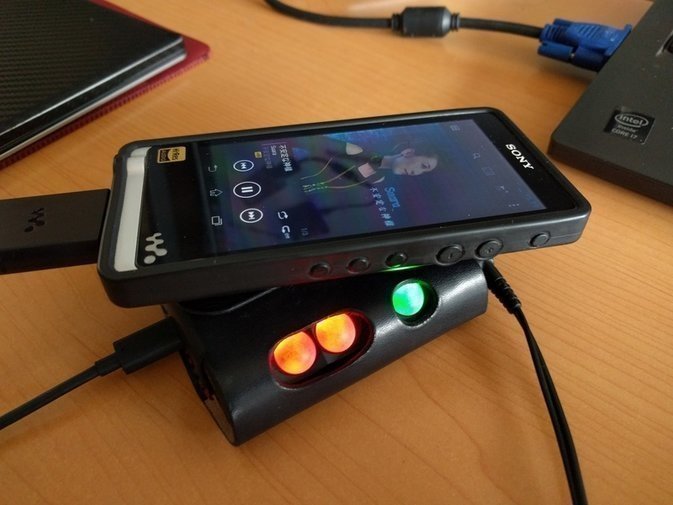
For something like the Pixel C, you need an OTG adapter. There are plenty of cheap Type-C ones, and adapters exist for other connectors too — though the default blue light at 192K caught me off guard.
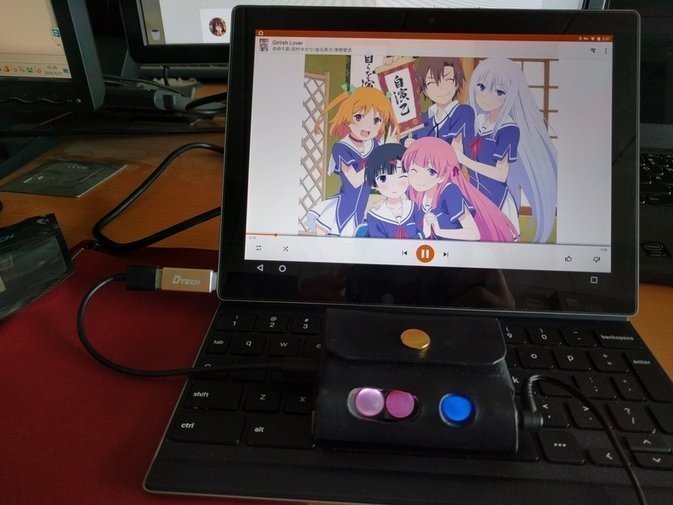
With a desktop’s optical output it’s even simpler: just go from the sound card to optical. Standard port, nothing to talk about.
Worth mentioning is that the sound changes noticeably depending on how you connect the source. Using it as a DAC gives roughly one sound, coaxial shifts it a bit, and optical seems to as well. Sometimes it’s just fun to grab this thing and hook it up to some device to see whether it works.
As for the Mojo, I think it’s pretty good. Enough features, plenty of power, can’t really say the sound is great but at least it’s not bad, and the range of expansion is wide. I’ve seen people on a certain forum (打架坛) use it as part of their desktop setup, so the tinkering potential is high. I sold off my pile of Onkyo gear and the PHA-2 to get this, and I don’t regret it.
Comments are hosted on the Chinese main site. This mirror is read-only.