Sen no Hatou, Tsukisome no Kouki (千の刃濤、桃花染の皇姫) Review
Apples on a Daffodil
Play enough visual novels and eventually some questions start nagging at you. Stuff like this:
“What the hell kind of setup is this? Is the scenario writer an idiot?” “The earlier part was written well enough, so why the hell does it suddenly turn to shit and go full retard in the back half?” “Why is there such a forced, moronic turn of events? You couldn’t write this even if you thought with your asshole. This is a mistake not even an elementary schooler’s essay would make, okay?”
That’s why I’ve got plenty of complaints about a lot of the stories in these games, even though they’re mostly decent. Right now visual novel plots always feel a bit off—like movies from mainland China. If one can just tell a complete, coherent story, you should be thanking your lucky stars. Usually it’s good up front and then tacks on a dog’s tail of an ending; the better ones just flip that around.
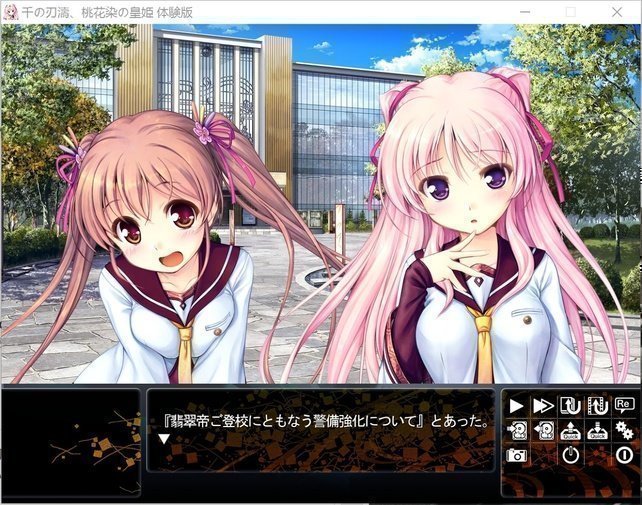
A while back I played the trial version of August’s new game, Sen no Hatou, Tsukisome no Kouki (千の刃濤、桃花染の皇姫), and my feelings about it are… complicated.
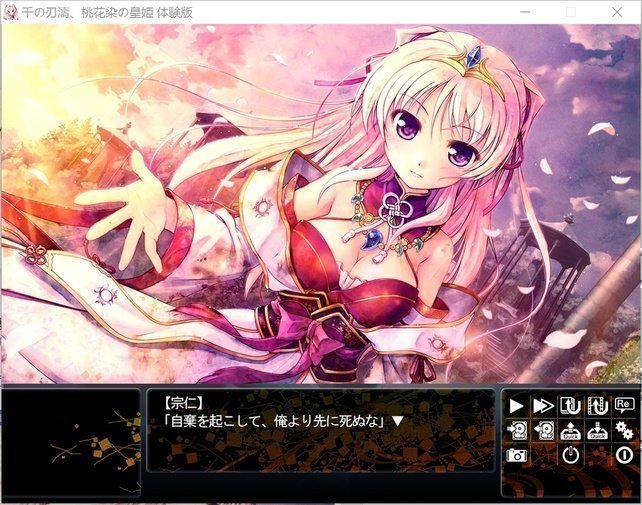
I usually don’t write impressions for trial versions, but recently I read a pretty interesting blog that covered some behind-the-scenes stuff about eroge production and development. Looking at it alongside this August game, I can’t help but feel a bit of déjà vu…
Since this is a trial version, I won’t say too much about whether the story ultimately turns out good or not, but this trial isn’t exactly short either — it’s already long enough to cover a full route in your average slice-of-life Gal. Honestly, I’ve always had a soft spot for August — everything they make feels polished, and the writing has real substance to it, never hollow. A lot of people call Daitoshokan no Hitsujikai plain water, but the daily-life parts are actually a lot of fun, and it’s a slice-of-life work to begin with — the fact that they push that to its limit already leaves me with nothing to complain about. (And hey, it sells well — come fight me if you’re mad about it.)
I’m not going to get into the whole plot, but my mixed feelings about Sen no Hатō, Toukaden no Kōki (千の刃濤、桃花染の皇姫) do come back to the story in one way — the setting.
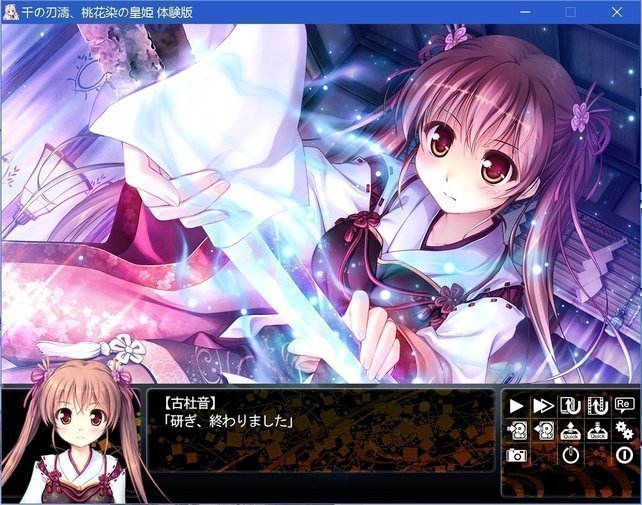
The game is set up as a revenge story about the princess of a fallen nation. With the country on the brink of collapse, the chancellor flips and becomes a collaborator, the royal family is almost wiped out, and the princess is left homeless. The country later becomes a colony, the chancellor props up a puppet emperor, and the princess sets out to assassinate him for revenge. The protagonist is just positioned as a warrior of the fallen nation.
This setup feels a lot like Xuan-Yuan Sword 3 Gaiden: The Scar of Sky, but nobody says you can’t use the whole “fallen kingdom seeks revenge” routine, and The Scar of Sky wasn’t the first to do it either. Still, it feels really familiar—the three sacred relics of restoration and all that always makes me think of the Nuwa Stone, the Kongtong Seal, the Xuan-Yuan Sword. The title also spells out some of the game’s elements: restoring the imperial kingdom requires gathering warriors to fight, and the weapons they fight with are “juto”—swords with souls possessing them. The game stresses that there are only 2000 of these swords in the world, or was it 1000? So it’s not hard to understand what the title means: Sen no Haitou, Toukaden no Kouki—it’s about those thousand cursed blades carrying the souls of the dead, and the imperial princess who wants to restore her kingdom.
Looking at it this way, there’s nothing really wrong with the game. If anything, it’s swinging for the fences in a weird direction, and that honestly makes it more exciting. The opening is genuinely striking, too — August actually went and used effects, and the video-plus-CG combination looks great, so you can tell the production is solid. The dialogue is as good as ever. Right up until I saw the setting for the other country…
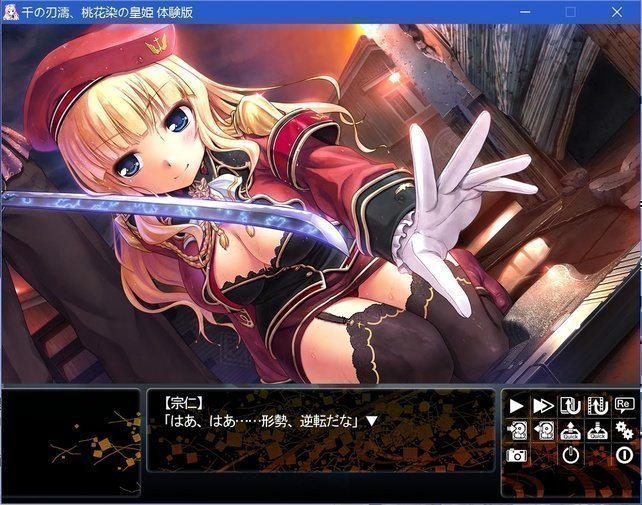
The Republic, the enemy nation in the game, is somehow depicted as a highly developed modern society — they’ve got trains, guns and cannons, an actual political system. By any measure they’re on a whole different level from the imperial family. Then again, this kind of thing isn’t unheard of in history (think Qing dynasty…). I actually figured the game would use that contrast to say something more interesting, but the plot just kept getting more absurd. Eventually it got to the point where the protagonist, the princess, the puppet emperor, and the daughter of the rival Republic were all going to go to school together. And some rebel leader turns out to also be the Republic’s idol.
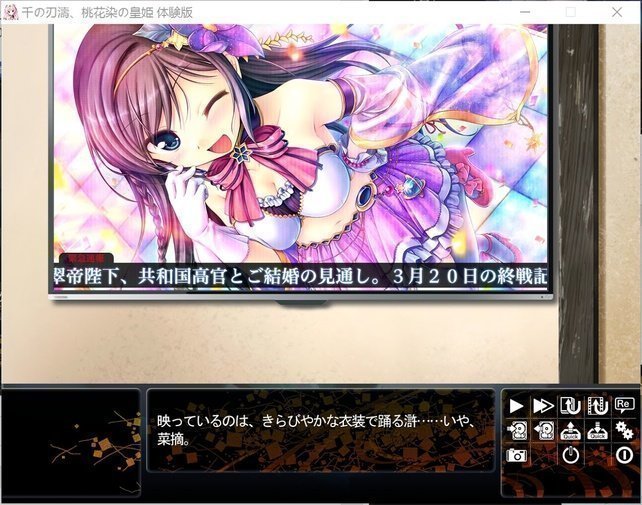
What the hell, I’m completely baffled. This was supposed to be a nice little tale of a princess’s revenge, a grand sweep of loyalty and righteousness and unifying the realm under one banner — and then they shoehorn in a school setting at the end? What even is the point! Dirty Wings didn’t pull this crap either. Where’s August’s basic self-restraint?
There’s a decent amount of school stuff, but it barely moves the plot forward at all — just cute-girl fluff, filler, and slice-of-life padding, and then it has the nerve to try and set up a student council arc. The huge disconnect in this part of the story threw me off badly. I’d thought August had gotten their pacing back, but this chunk that feels force-fed into the script is genuinely baffling.
But now I get it, after reading a blog post explaining why weird eroge exist.
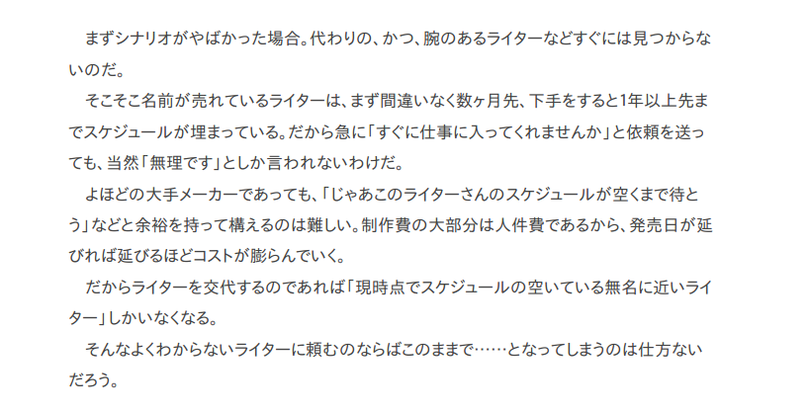
You can see that the Japanese basically run everything assembly-line style. If one link in the chain breaks, they have to find a replacement right away, or the whole process gets delayed. The schedule is already locked in; a single slip means paying a massive price in money.
So when it comes to a game’s scenario, most of the time you hit scenes where you can tell things are going sideways while you’re still making it—but production has to keep moving or you lose money, so you just let that kind of story keep rolling. The original piece also mentions plenty of scenario writers going AWOL or straight-up vanishing, leaving no choice but to bring in some no-name second-rate hacks to fill the gaps.
The original also has a pretty funny metaphor for how game planning works. The scenario writer has to write the script according to the director’s wishes and whatever the project plan says, but during production that person’s position isn’t fixed. In other words, partway through, the plan can easily get partly overturned, or even entirely overturned, because the director got swapped out. The writer doesn’t have the energy for that either, so they just patch things up here and there, and what you end up with is some four-legged, snout-faced chimera of a thing.
Looking at August’s game again, I get this feeling of “yeah, I felt that.”
Thinking about it, that’s just how the Japanese do things, so I can sort of understand it. But even so, the game still looks weird as hell—an old-fashioned setting with modern visual novel school-life antics jammed in, complete with idols and a student council president. It’s like an elegant daffodil that shoots out long stems and leaves, and at the tip of those leaves bears an apple.
Still, August handles everything outside of school pretty well. In other words, strip out the elements that scream “this isn’t how school works” and what’s left is a game of no small quality. I just hope that when it actually ships, this weird premise doesn’t drag the whole thing down into stupidity… An apple growing on a daffodil — worst case I’ll just pluck the apple off and keep the daffodil.
Comments are hosted on the Chinese main site. This mirror is read-only.