Miagete Goran, Yozora no Hoshi o FINE DAYS (見上げてごらん、夜空の星を FINE DAYS) Review
They Know You'll Buy, So They Sell
A while back I was reading some stories on a blog by a guy who claims to be an eroge-industry insider, and I came across this:
つまりシナリオとは発売後に作品を支える要素であり、昔から初動の売り上げにおいてはイラストの方が重要であった。
Advertisement
(The initial sales of a game are mostly about the character designs and art style; the scenario is just one element that supports a game after release.)
And then something even better:
(So at planning meetings people literally say things like “as long as the player can flirt with the characters, the story doesn’t need any substance,” and even “if Mr. XX is doing the original art, sales are guaranteed, so who cares about the scenario as long as it doesn’t turn to shit.”)
Of course, none of that beats this:
ゲームの傾向も変わってきていて、2004年頃は「エロなんかいらねぇシナリオの質が重要」なんて一部で言われていたりもしたが、今企画会議でそんなことを言おうものなら袋叩きにされる。 理由は簡単で、シナリオを重視した作品よりもキャラクター性を重視した作品の方がグッズの売り上げがいいからである。
(The direction of games has changed too. Around 2004 some people were saying “who needs porn, what matters is scenario quality,” but if you said that in a planning meeting now you’d get beaten to a pulp. The reason is simple: character-driven works sell more merch than scenario-driven ones.)
Well… what can you say? That’s reality, I guess?
So with that in mind, looking at the recently played fandisk Miagete Goran, Yozora no Hoshi wo FINE DAYS, I started to understand something.
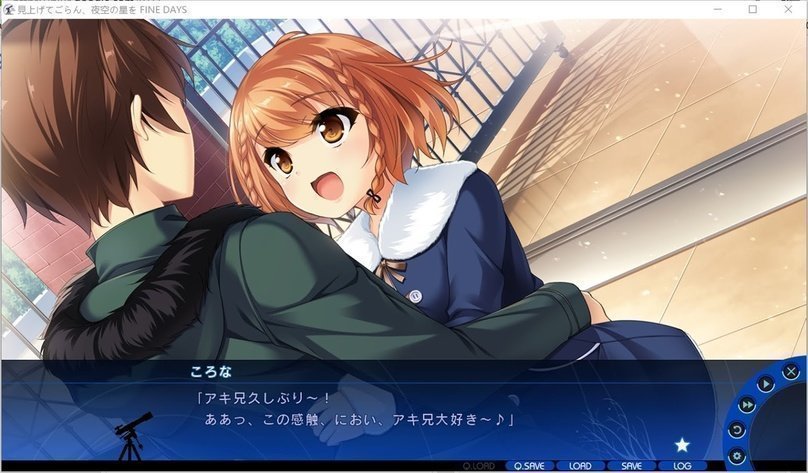
Miagete Goran, Yozora no Hoshi wo came out at the end of last year. I actually thought the game was pretty good, but when I try to break it down I can’t pinpoint what was good about it. The only thing I can say is that even though the game bills itself as being about “astronomical observation,” the actual story isn’t really about stargazing—it’s more about the emotions and love triangle that span past and present. The art looks neither good nor bad, the music is neither good nor bad, the voice acting is neither good nor bad, but put together it has charm. I once summed up this effect as “cinematic direction,” but that phrase is more like mysticism—it’s there, but I can’t say what it actually is.
So thanks to Miagete Goran, Yozora no Hoshi wo FINE DAYS, I now understand what the strengths of the main game were.
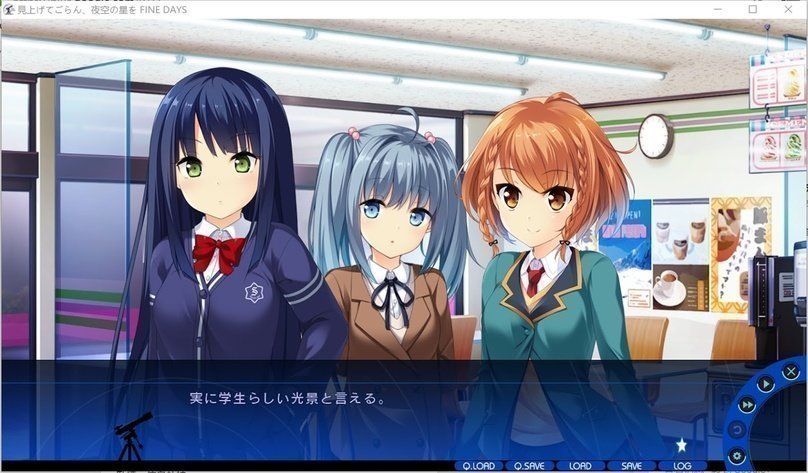
Normally, when a game sells well, they put out a fandisk aimed at the fanbase, continuing to milk money by including extra stories. Maybe my understanding of fandisks differs from most game companies, but the fandisks I’ve played mostly have real content—additional routes, prequel stories, content not explained in the main game, and so on. They’re not just pure flirting and sex scenes; even when romance routes are added, the slice-of-life is usually not too boring, or at least it’s short.
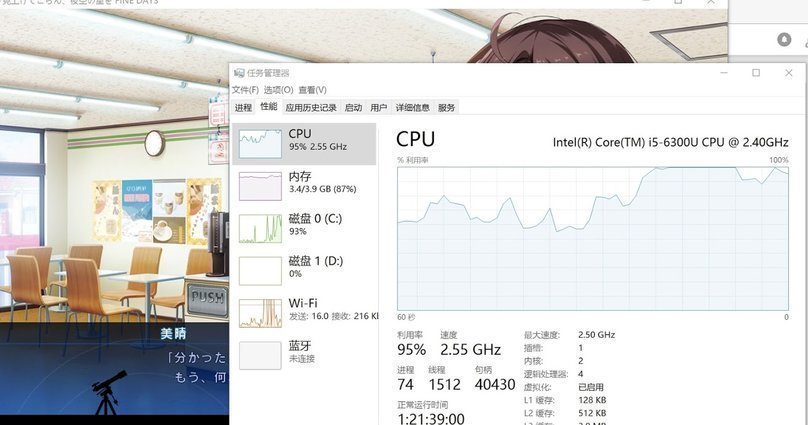
Miagete Goran, Yozora no Hoshi wo FINE DAYS has none of these qualities. First of all, the game is 4GB—which is huge for a fandisk, and awfully generous in a sense. And the game forces you to use pixel shader 2.0 or it won’t even start. If the game had cool effects, fine, but all I see is twinkling stars and my CPU about to explode. I remember the main game could use software acceleration to reduce load, so it’s baffling that the fandisk raises hardware requirements without a corresponding bump in quality.
The content of the fandisk isn’t exactly long, though it’s not short either. But for 4GB it’s definitely not enough. Still, thanks to that 4GB, the “cinematic direction” that once puzzled me gets completely dissected in this fandisk’s content, and you can see where each element comes from.
Think about the touching scenes in the main game: night, starry sky, stereo sound, interwoven flashbacks, three people watching the stars together. None of that exists in the fandisk. I get it (it’s an after-story, after all), but the biggest strength of the game was exactly what these after-stories lack. Almost every story in the fandisk follows the same pattern: the heroine and protagonist are already dating, the heroine encounters something and wants to start an event or take action, the protagonist supports her, the event succeeds, the end.
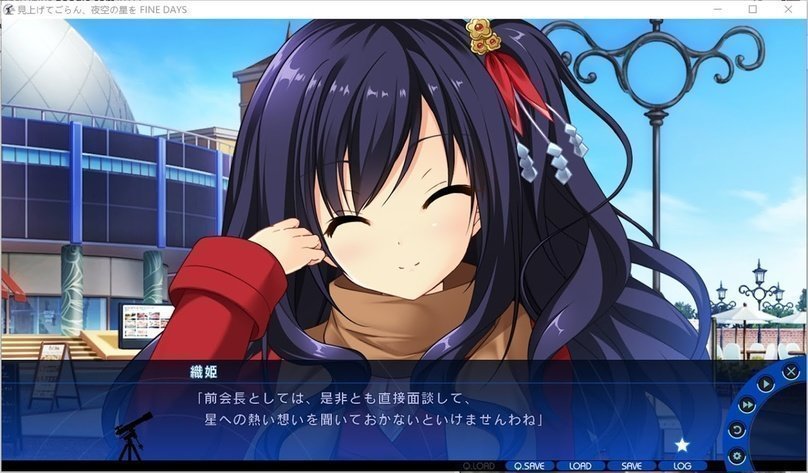
Saya’s route is a little different, and it’s probably the only good one. The route for Miharu-sensei that I had high hopes for is surprisingly half-assed. Why did sensei become a NEET? Because after her old school got shut down, she felt she wasn’t competent enough to be a teacher and just gave up on herself, freeloading at home. And in the end, she starts dating the protagonist with “everyone says we’re dating, so let’s just date then”—so forced.
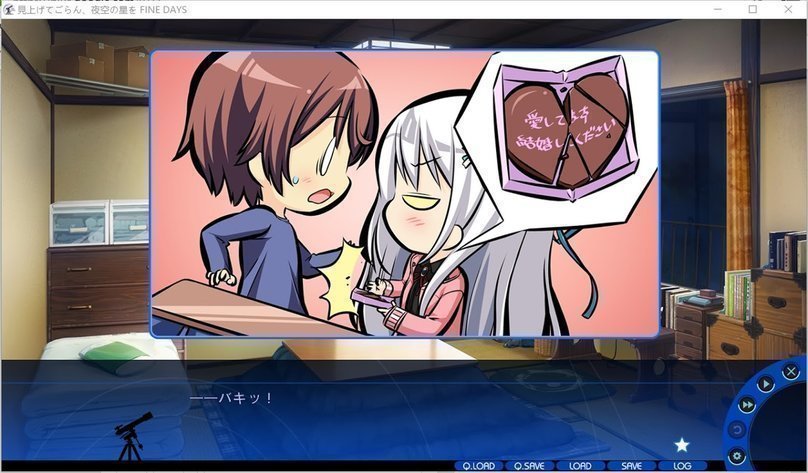
The story is bland and ordinary. In the fandisk, the student council president is replaced by the former vice president, who is so boring she’s like a block of wood, and many of the event slice-of-life scenes are just as dull. That’s when it hit me: most of the wonderful scenes in the main game were just the protagonist, Saya, and Hikari together under the quiet night sky. And the soundtrack then wasn’t so noisy—in fact, most of the time there was no BGM at all, just dialogue. The music would slowly rise when they look up at the stars or when the story reached a climax, combined with the stereo effect—that was the real cinematic direction.
Of course, I said earlier, none of that is in the fandisk. Just ordinary music, ordinary sound effects, ordinary story, and ordinary clichés.
I’ve seen this style of story before—in August’s After Stories for each route, except they included them in the original game, while Pulltop sold them separately. And not cheaply.
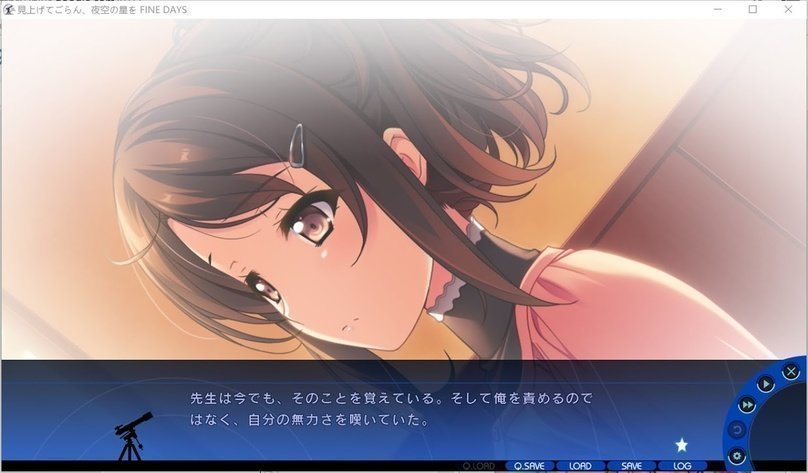
Thinking about it, a lot of things were deliberately held back in the main game—including sensei’s final meeting with Morita-san, and her hope of working again. These were intentionally cut off, then forcibly extended and packaged as a route in the fandisk. Some routes that were clearly concluded in the main game—like Saya’s, which even went as far as her becoming a teacher in the future—suddenly start writing about ordinary daily lovey-dovey stuff. Sometimes I can’t help thinking this fandisk was planned from the start, and when the game got a good reception they immediately pulled it out, patched together some leftover scraps, and put it on sale.
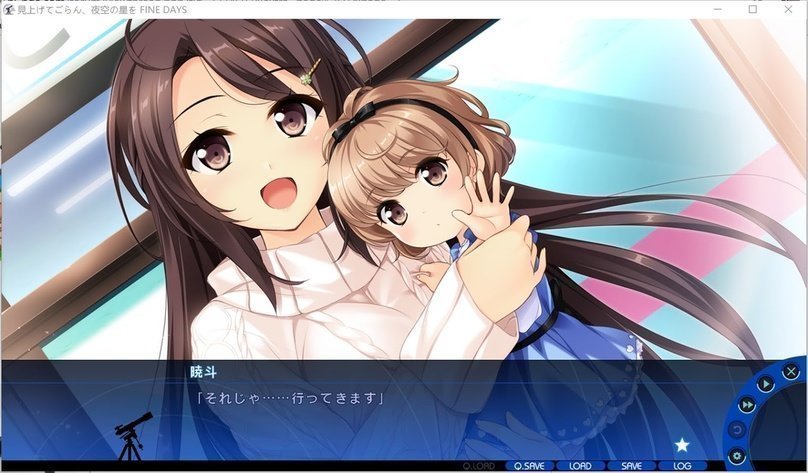
Given how fast this fandisk came out, there’s a good chance that’s the reason—or rather, Pulltop had been planning this money grab from the very beginning.
But so what? The main game felt good, so they put out a fandisk to milk your wallet, because they know the fans will buy it.
Going back to those quotes at the start, I don’t know how many Japanese otaku who loved the main game were fans of the story where Saya, full of memories, confesses to the protagonist, versus how many just liked the characters they created. Either way, Pulltop did exactly what was described: “throw together a bunch of pre-designed characters and sell them to you.” Sure, story is what sustains a game after its initial release and extends its lifespan, but for a fandisk that problem shouldn’t exist, right?
Sometimes I think Urushihara Yuu gets unfairly criticized. At least he seriously makes standalone story fandisks and doesn’t fob you off with half-baked, plain stories. Even if Shinku ends up in the hospital again, at least the story has ups and downs. Back in elementary school, my teacher said that a story without a proper beginning, development, twist, and conclusion is basically dead.
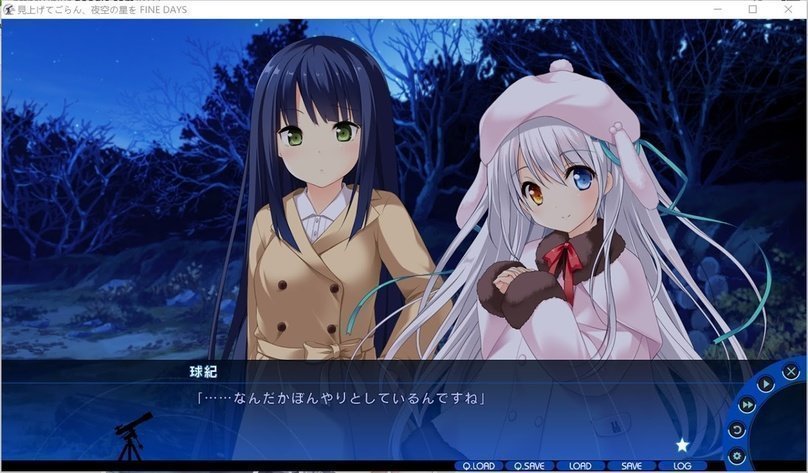
Well, dead is dead. They know you’ll buy it anyway.
Comments are hosted on the Chinese main site. This mirror is read-only.