Sakura no Mori Dreamers (サクラノモリ†ドリーマーズ) Review
Sakuranomori†Dreamers
I’d had my eye on Sakuranomori†Dreamers (サクラノモリ†ドリーマーズ) ever since before its release — the premise was dark as hell, the OP absolutely slapped, and going by the description it looked like it was going the horror route. Unfortunately the release got delayed, so I had to push it back on the list. I can’t say playing it felt bad, but it definitely wasn’t pleasant either — though half of that “not pleasant” is in the good direction. If I could get enjoyment out of a horror game, I’d probably be one step away from a jail cell…
This game’s hard to rate. I lean positive, but I honestly can’t point to anything that absolutely backs that up. Maybe it’s just that I personally like this style of game, and it falls “just a hair short” in every direction…
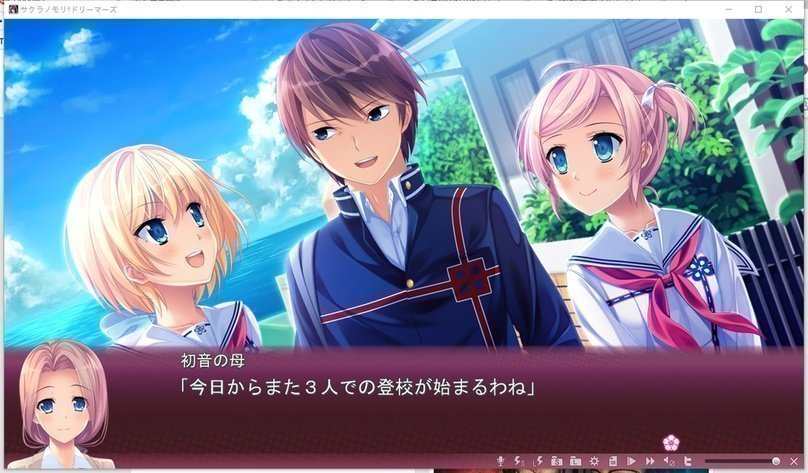
This game has a ton of chapters. If you go down the main route you’ll need thirteen of them, and the main route is really just Kiyomi Sae’s character Tōon Kureha (桐遠暮羽). But the actual story has nothing much to do with her — going her route is just the way you unlock the True End.
The prologue is a love story. The protagonist lost his parents in a plane crash some time before, lives alone, and is looked after by his cousin. Across from him lives a girl named Madoka; the two get along well. He likes riding his bike, and Madoka rides with him too. They have a good time together. But then all sorts of murders start happening around town, and he begins frequently seeing “evil spirits” appear in the town.
The protagonist has a special ability: he can see “evil spirits.” And he knows that every time he sees them, nothing good follows. Before his parents’ plane crash, he had seen a huge swarm of evil spirits aboard that plane. So he figures all sorts of things are about to go down in this town—especially once the spirits start closing in on the people around him, like his cousin Fukiage Hatsune.
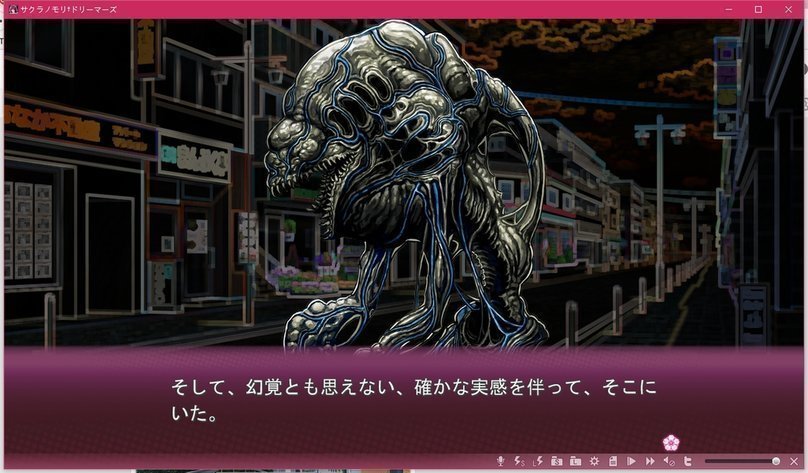
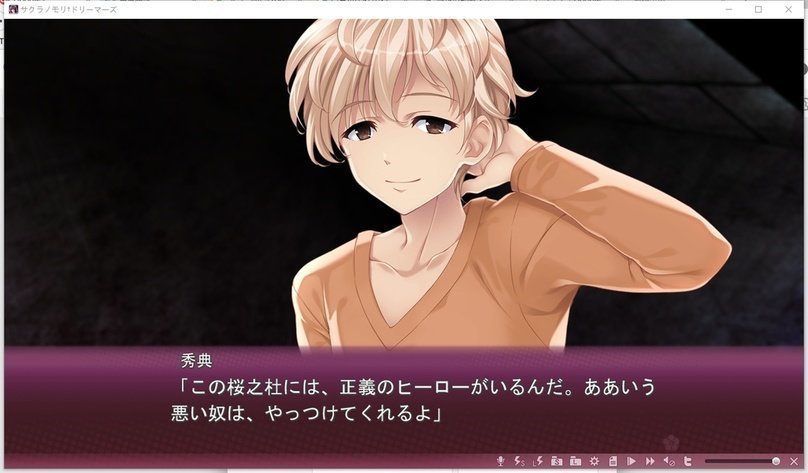
The protagonist grows more and more uneasy about the evil spirits that have started popping up around him so often. He’s seen two deaths caused by them with his own eyes, and one time while he was riding his bike the brakes suddenly failed and he fell, nearly dying. So he tells Madoka that he can see evil spirits, and the two of them investigate together. He also visits a detective agency near his place; the head detective and the part-time guy Hidenori listen to his story and go “whoa, that’s insane,” but they can’t really help. Hidenori, though, is super interested in the protagonist, calls him a true “正義のヒーロー” (hero of justice), and cheers him on.
But then things stalled. The town kept having incidents, and Madoka’s parents said they were moving; Madoka told the protagonist she was leaving. When it came time to part, he finally realized he liked her, so they agreed on one last bike ride. At the end of it, he confessed, she accepted, and she was overjoyed. On the way home she told him she wanted to be alone for a bit because she was a little embarrassed and asked him to go on ahead, saying she’d catch up soon.
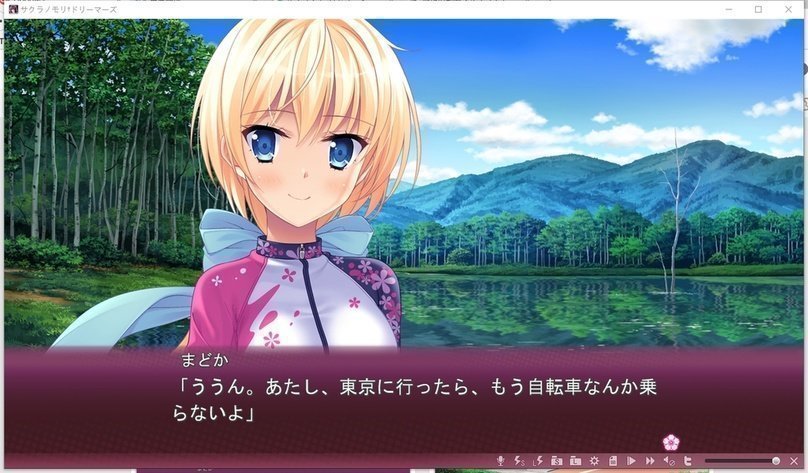
Then the protagonist goes home. Late at night, he realizes Madoka still hasn’t come back… A bad feeling sets in, and he heads out to search together with Madoka’s parents. They find her drowned in the very lake where he confessed to her. The ruling is that she was murdered.
And just like that, the protagonist’s world fell apart. The girlfriend he’d only just confessed to, barely a day together, was dead. He completely broke down—couldn’t eat, couldn’t think about anything. He’d already lost his parents, and now his girlfriend too. Spiritually, the guy was dead. One day he goes back to the lake where Madoka died and spots a weird shadowy figure. He chases it; the shadow vanishes fast, and in his gut he figures this has to be the one who killed Madoka—though he can’t tell if it’s one of those “evil spirits” or not. Furious, the protagonist resolves to get revenge for Madoka, and to stop moping around for good.
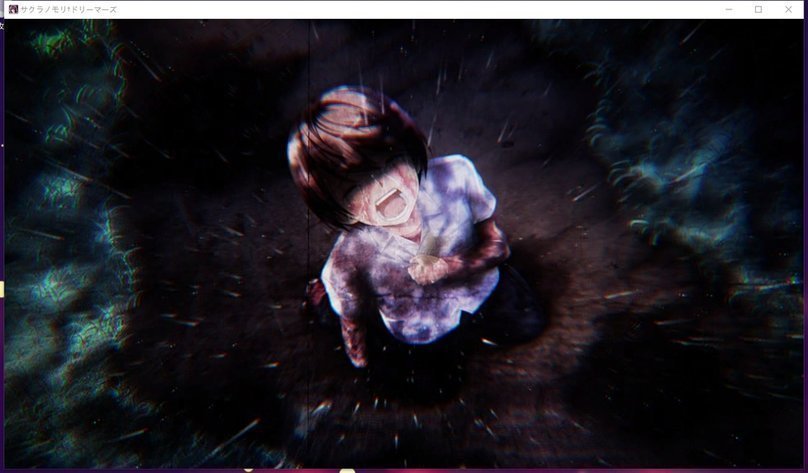
After that, the protagonist regains his composure, but the only thing keeping him going is a single conviction: “avenge Madoka.” His cousin sees that he’s at least functioning again and drops the subject. The protagonist also goes back to attending school and living a normal life, while at the same time investigating the evil spirits around him. He’s convinced that whoever killed Madoka is connected to the evil spirits.
The incidents keep piling up. The protagonist learns that a girl in his class named Tōno has gone missing, but he sees Tōno’s ghost. He knows the girl is already dead, her body just hasn’t been found yet, so he starts asking around about her. A lot of people give him bits of info, but nobody’s sure of anything. Then things get interesting: a girl in his class named Kiridō Kureha starts getting close to him. Kureha introduces herself and says she can also see “evil spirits,” and she invites him to join her family’s organization called “Sakuranomori†Dreamers,” which has taken it upon itself to exterminate “evil spirits” and save humanity. She also gives him a crash course on “evil spirits.” The “evil spirits” (Boddach) come in two types, blue and red. The blue ones are actually harmless—they only show up when a human is about to die, kind of like the “Black and White Guards of Impermanence” from Chinese ghost folklore. The red ones are the harmful ones. A human possessed by a red one goes berserk and turns into a murderous maniac, and after the red evil spirit possesses them it also devours their soul. So “Sakuranomori†Dreamers” exists to wipe out the red Boddach and save those humans. Since they’re called Dreamers, everyone the organization recruits shares one thing in common: they can see “evil spirits” and have special abilities. The protagonist can not only see evil spirits but also ghosts (including the ghost of the dead Madoka), which makes him a member too. The organization operates by going to sleep late at night and diving into dreams, finding out what’s going on inside a possessed person’s dream, descending into the deeper layers of that dream, and destroying the red evil spirits down there.
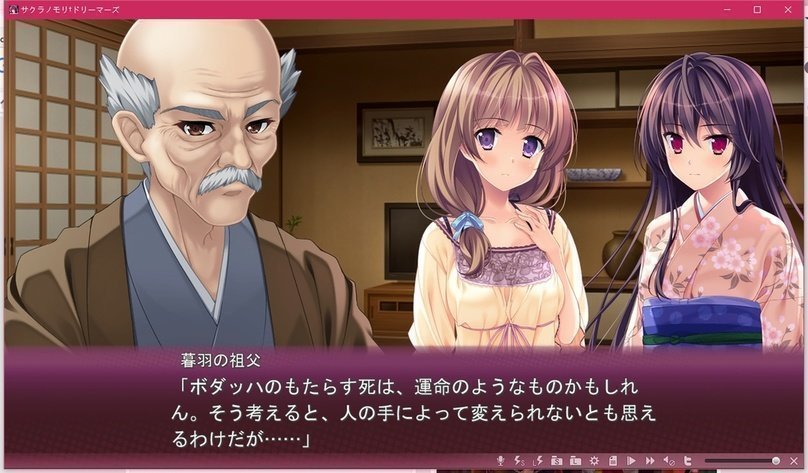
The first person I looked into was Toono, the girl who’d gone missing from our class. Digging around turned up that she was probably killed by the chef at some little diner she frequented, and further investigation made it clear the chef had been possessed by a red evil spirit. I went into the dream and sure enough, the chef was messed up. The protagonist fought him off and drove the spirit out, but it was too late to save the chef — his soul had already been eaten clean, and he just died. The dead girl wasn’t coming back either.
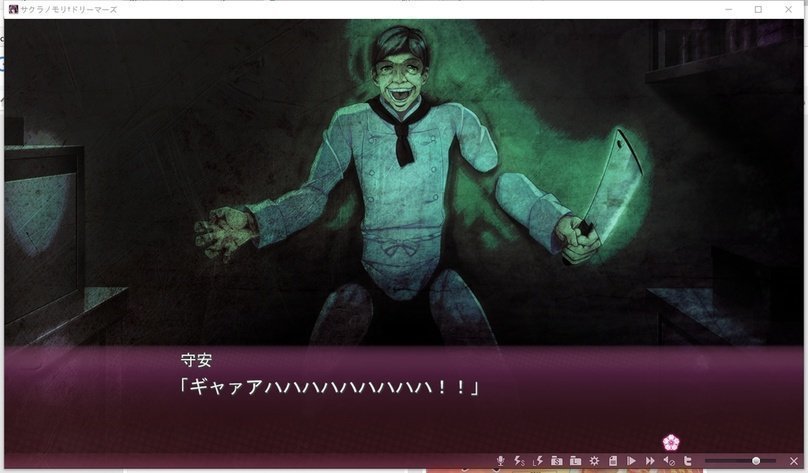
Kureha tells the protagonist that, on top of people possessed by red evil spirits turning into killers, once they’ve killed someone they directly convert the victim’s corpse into a blue evil spirit—the body itself vanishes and no evidence is left behind. That’s why Tōno’s body is gone, though in the end she did come to the protagonist to express her thanks.
The protagonist is surprised — why is there even a corpse left after Madoka was killed? Kureha explains that it depends on the circumstances, and that besides the red evil spirit, there’s also a killer called Joker (ジョーカー). Joker is a murderer in its own right, and whether it has any connection to the red evil spirit is still unknown. Madoka might have been killed by that Joker.
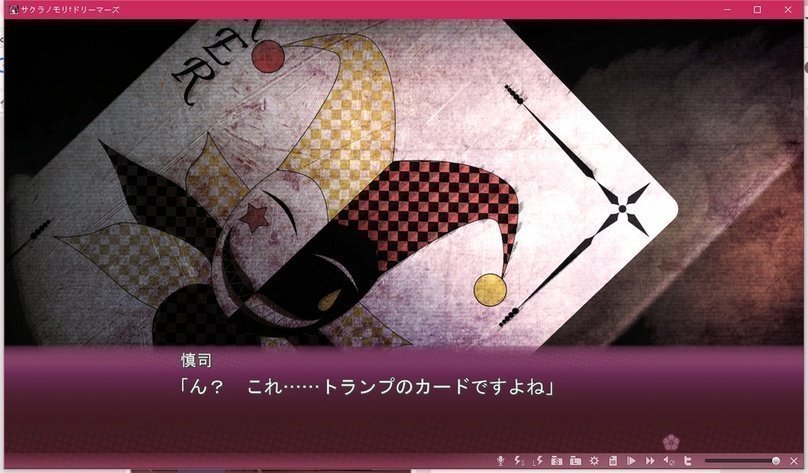
And so the first case wraps up just like that. The protagonist never finds the one who killed his girlfriend, and can only keep searching.
After that, a few more “red evil spirit possession incidents” got taken care of, including a guy in the class named Kumegi Tomonari, and a seriously sneaky girl named Tanozawa Arisa. The protagonist kept thinking either of them might be Joker, but in the end both turned out to be nothing.
Madoka’s ghost tells the protagonist that she didn’t see who the killer was when she died, but one thing’s for sure: the killer has a tell. When they kill, they make this “hehehehe hohohoho” sound — laughing and crying at the same time.
The protagonist notices that his homeroom teacher Ryohei Tsukada’s laugh sounds a lot like that, so he gets suspicious and starts poking into the guy’s life on his own. Turns out the teacher’s biggest crime is holing up at home late at night jerking off to gay porn—nothing really over the line. But the protagonist still isn’t convinced, keeps digging, and eventually goes so far as to search the inside of the teacher’s house.
A quick search turned up way more than I bargained for. The teacher was not only gay, he was a gay rapist — he’d sodomized a bunch of young guys, and if that wasn’t enough, he’d kept videos of it, to rewatch and jack off to whenever he felt like it. His finances looked suspicious too: a steady 100,000 yen going out every month, plus a bunch of weird expenses. But the guy’s life was dead simple — teach, go home, jerk off, pretty much nothing else. So why was he burning through that much money?
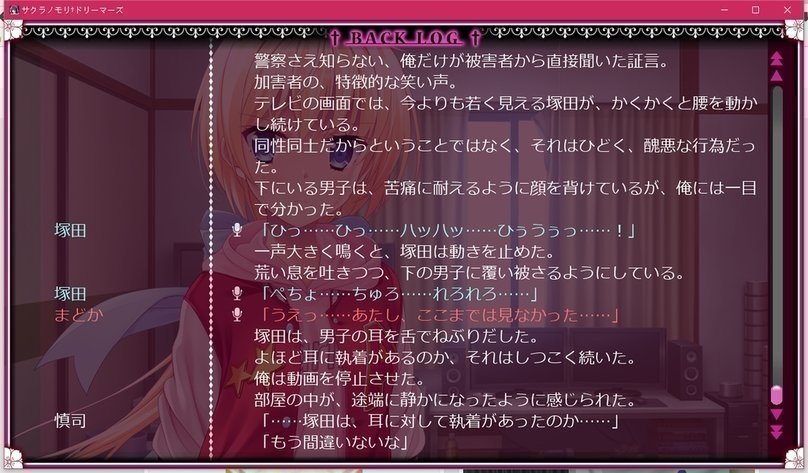
Later, the protagonist finds a video in the teacher’s gay porn stash of him raping someone — and the one being raped is none other than Hidenori, the little boy he’d seen at the detective agency. Sympathizing with the kid only makes him hate the teacher more. He figures that with that many fixed expenses, it’s got to be tied to the Joker’s identity somehow. So in the middle of the night he sneaks into the teacher’s dream to confront him. The teacher panics and rages at having his secret exposed; after the protagonist beats the shit out of him, he dives into the teacher’s dream — and finds absolutely nothing deep inside.
In other words, the teacher is just a plain old perverted gay guy — he’s not some Joker, and he’s not possessed by a red evil spirit either…
The protagonist is beyond disappointed. He chased this murderer for so long and got jack shit, and honestly he’d given up hope entirely by the end — until someone pulled him back. One day he visits the detective agency again and runs into Hidenori. He says he sympathizes, tells him he knows Hidenori was raped by a man. Hidenori takes it calmly, but he’s clearly let down too:
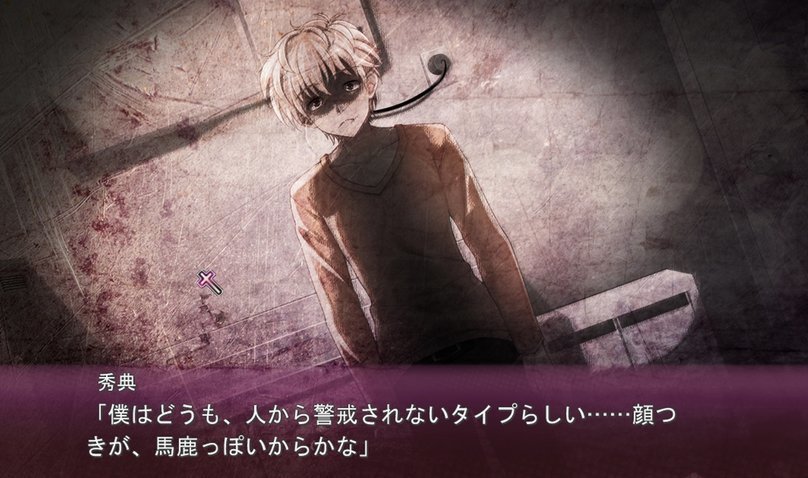
“Ah… anyone but you, I just don’t want you finding out about that one thing of mine~”
Then something even more shocking happened — Hidenori started to lose it, making this “hehehehehehe” sound, laughing and crying at the same time.
The protagonist asks: Hide, why did you imitate that teacher?
“Huh? I wasn’t imitating anyone. If anything, he was imitating me, lol.” Hidenori laughed. “That guy who raped me — at first I was the one being raped, but then it started feeling good to me too, so I began hitting him up for sex whenever I felt like it, and I even threatened him into giving me money. Working at this detective agency, there’s no way I could support myself.”
“Me? I’m Joker. And your girlfriend? I killed her.”
The furious protagonist tries to go beat the shit out of Hidenori, but gets thrown into the wall in one move and knocked unconscious.
After that, the protagonist starts chasing after Hidenori’s traces and goes to the teacher’s house, only to find the teacher dead in a gruesome state — Hidenori killed them, and he’s cackling madly. Hidenori no longer looks human either; he’s covered in tentacles and has turned into a monster.
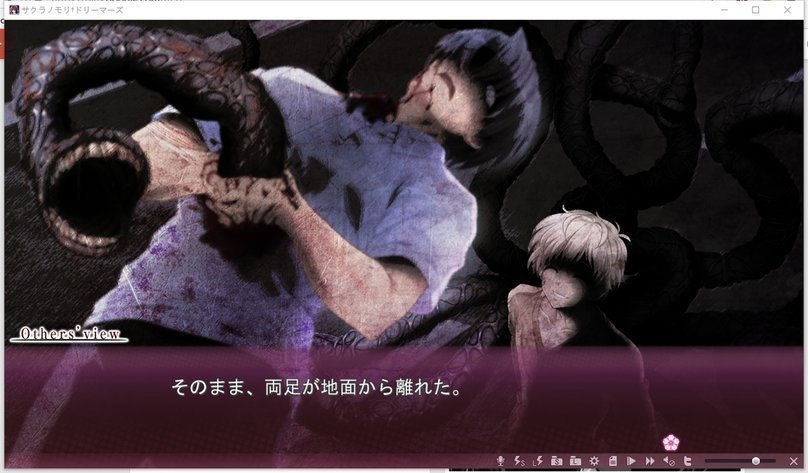
“Being possessed by a red evil spirit means your soul gets devoured. How long have you been possessed?” the protagonist asks.
“No idea. Must’ve been over three years now,” Hidenori answered quietly.
“Three years and then some—do you still have a soul?”
“I dunno. I don’t think I got swallowed up — feels more like I fused with the red evil spirit!” Hidenori starts going berserk, and now he can’t be killed anymore. Kureha’s sister shows up to help and cuts the monster clean in two with one swing — and then the damn thing just comes back to life.
“Joker can’t be killed. Only a righteous hero can kill me.” Hidenori faces the protagonist. “Come on, righteous hero. I’ve been waiting for you to kill me all this time!”
Later the protagonist clashes with Hidenori several more times, but he never throws a punch himself — every time it’s his helpers doing the fighting (the guy has basically no combat ability of his own). Kureha’s older sister sacrifices herself, burning Hidenori to ashes. The protagonist thinks it’s dead, that he’s finally achieved his life’s goal, and a wave of exhaustion hits him all at once. Then the story moves into a calm, lovey-dovey stretch, where he lets go of the baggage from his ex-girlfriend Madoka and chooses a new romance or whatever… And then, somewhere, Hidenori shows up again.
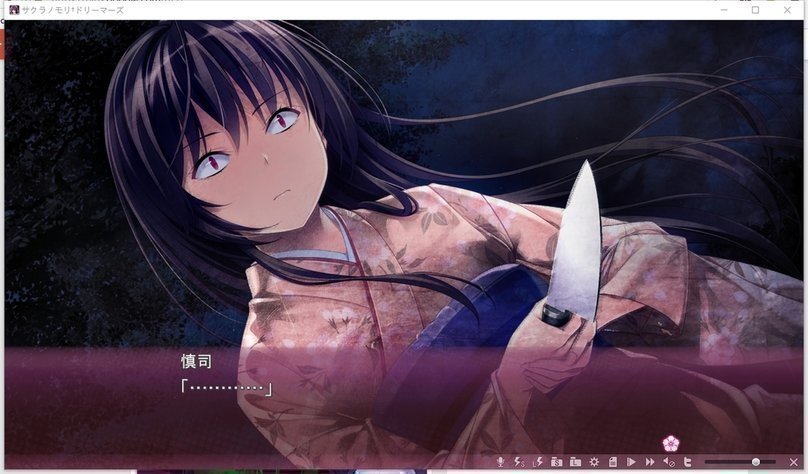
This time, Hidenori has become a true evil spirit that can possess anyone, anywhere. He jumps from person to person to challenge the protagonist—classmates, teachers, cops, even the protagonist’s own lover.
The protagonist understands. He knows that in the end, he still has to settle things with Hidenori once and for all. He goes back and gathers Hidenori’s ashes, preparing to seal them away—but that very night, Hidenori slips into his dream.
In the dream, Hidenori tells the protagonist about his past, and man, this kid’s backstory is seriously convoluted. It’s kind of like the Joker’s monologue in Batman—though honestly, I’ve always felt this Joker character’s setup was already a bit of a rip-off of the Joker to begin with. Eventually the conversation circles back to the question Hidenori has for the protagonist.
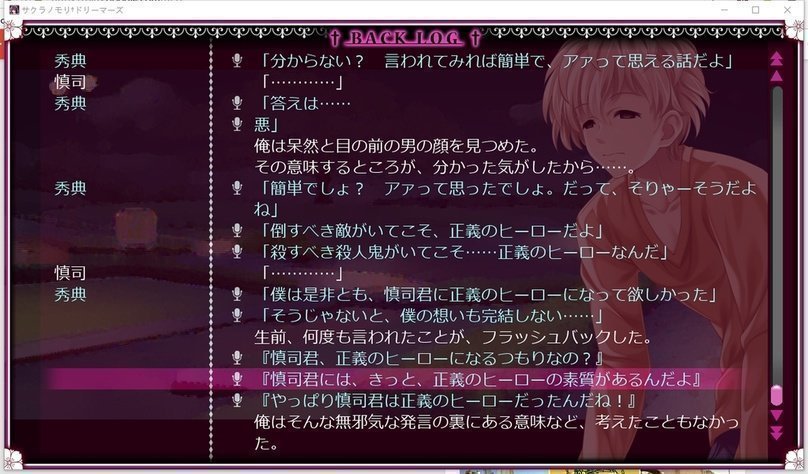
Hidenori figured that he’d lost his parents, and the protagonist had lost his parents too. He’d once lost his reason to keep living, and the protagonist had once lost his reason to keep living too. He could see “evil spirits,” and the protagonist could see “evil spirits” as well. So he—he had to be the same kind of person as the protagonist.
Hidenori admired “heroes of justice,” but Hidenori himself had killed people in the past and could no longer become that kind of person, so Hidenori chose to make the protagonist into a hero of justice.
To become a “hero of justice” you need a villain to play off of, so Hidenori chose to become that “evil” himself. That’s why he killed the protagonist’s girlfriend, killed the people around him, killed those close to him, and kept challenging him over and over—hoping that he’d be the “evil” and the protagonist would kill him and become the “hero of justice.”
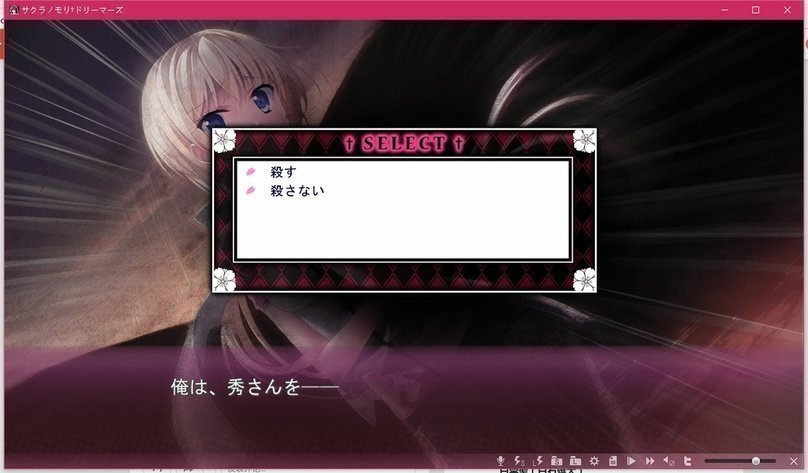
Sort of like the Joker’s challenge to Batman in Batman. Batman can’t kill—if he kills, he’s no longer justice—and the protagonist, just like Batman, doesn’t choose to kill Hidenori.
The protagonist’s disregard robbed Hidenori’s evil spirit of any chance to take hold, and it was sealed away forever in the depths of the dream. And so the story reached its ending.
The story in Sakuranomori†Dreamers (サクラノモリ†ドリーマーズ) honestly isn’t all that great. Personally I think it follows the same formula as Batman or Fate/Zero — the whole “ally of justice and the opposite of justice” thing. Sure, it preaches less than those do, but the pacing is just plain bad.
Yeah, the pacing is genuinely terrible. How bad? Roughly six chapters in the middle are pure side-route material, barely touching the main plot at all. And then when the key story beats finally arrive at the end, it still doesn’t have the punch to carry the finale. Four words sums it up: strong start, weak finish.
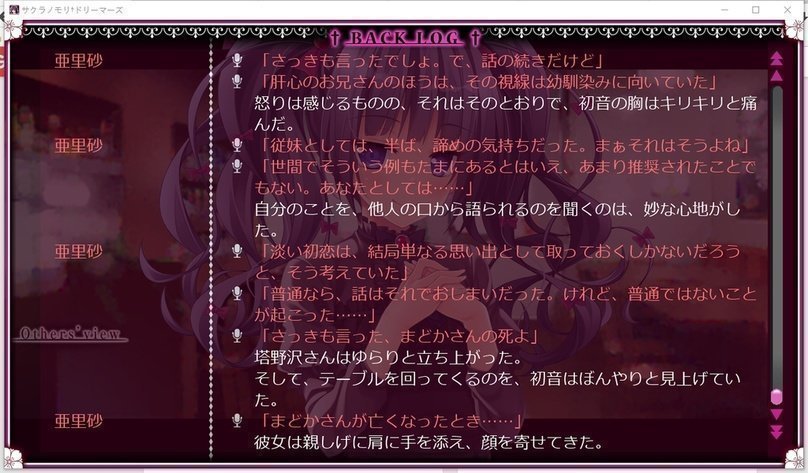
The prologue is actually pretty good — up to the moment the protagonist snaps after his girlfriend gets killed, and that whole burst synced with the OP genuinely hits. After that it’s downhill all the way to the ending. The game sets up a bunch of heroines, but the one with the most screen time in the prologue, Madoka, isn’t among them — she’s already dead, after all. The other heroines barely matter in the main story and get almost no time for their feelings to develop. I get it, the game is about revenge at its core, but then why force in dating and swimsuit scenes “because you need routes”? Talk about jarring. The story itself is slow to get going in the middle, the heroines are near-useless in fight after fight, and the protagonist is the only one carrying everything on sheer “belief in revenge.” Cramming romance into an already diluted story like this just kills any motivation to keep going. Honestly, a Madoka route would’ve been better — she’s the one who was by his side the whole time.
From the mid-game onward, the story puts serious effort into building up the villain Hidetaka Yatsuka (八束秀典), including inserted scenes of him talking to some unnamed ghost when he was a kid. But it never actually tells you who that person is…
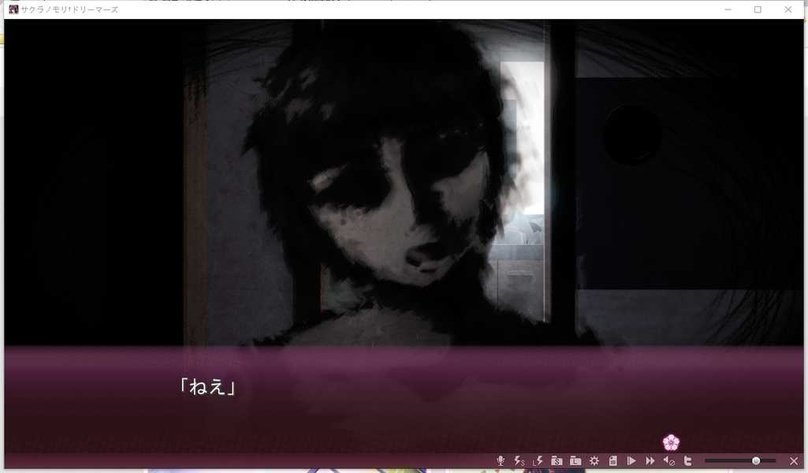
Then the story suddenly pivots and just flat-out reveals who the mastermind is, and right after that reveal it speedruns the whole thing, turning this final-boss-tier character straight into ashes… and the kicker is, the boss is already ashes, and then the plot pivots again into a second round of character-building for the boss’s past. Badly done, too — not through the protagonist finding out, but partly through the detective club’s investigation and partly through the boss’s final monologue… By this point the player has been worn down so much it’s hard to have any patience left for it, and on top of that, the game ends not long after the boss finishes recounting the past…
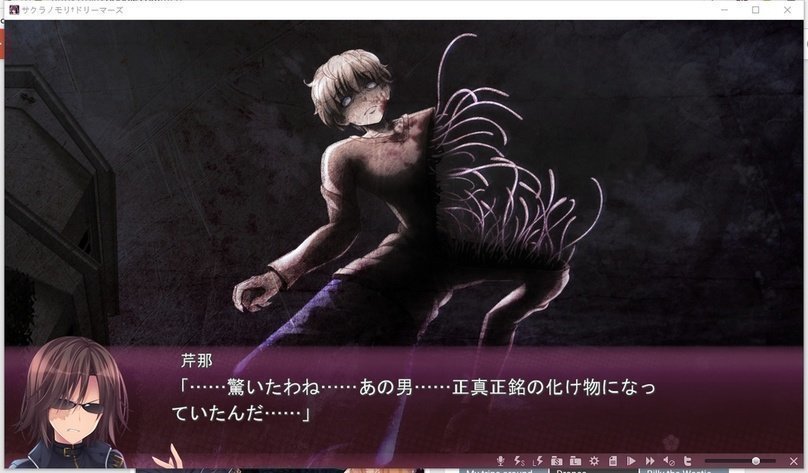
The game isn’t without its strengths. I’d give the direction a perfect score — this is professional-grade horror AVG staging. The sheer variety of CG differentials, that wild art style and coloring, plus the music pushing it all along, it’s dripping with dread. I got scared silly more than once. Compared to that, あけいろ怪奇譚 from a while back isn’t even close. Speaking of the music, I have a love-hate relationship with it. It splits into “dream tracks” and “everyday tracks.” The everyday stuff is genuinely bad — generic electronic fare — while the dream tracks are terrifyingly high quality. Hell, you could say this game operates on two completely different levels when it’s “staging a horror scene” versus “staging everyday drama,” and the former is way above the latter. That’s exactly why I’m so torn on this game at every turn…
Yeah, it’s full of conflict everywhere.
The story setup is solid, but the whole thing gets ruined by that aggressively padded middle section and the limp final confrontation. The music works, but the BGM during the slice-of-life parts is just way too cheap-sounding. The art style is passable, I guess, but those “profile shot with bulging eyes” CGs whenever a character goes all dark and twisted look absolutely fucking stupid. The prologue animation is good, but what’s the deal with the two EDs at the end — one has no subtitles and the other just isn’t any good?
And the game has plenty of “knockoff” traces, including the spinning top from Inception, the hand-possession monsters from Parasyte, the Joker from Batman, and so on and so forth—though honestly none of that’s really a big deal. Overall, after finishing it, emotionally I still liked this game, so much so that after playing the trial version I went and bought the OST right away, but the final result still left me pretty disappointed…

Disappointing as it was, I kept feeling this urge to “defend the game,” but no matter how I looked at it, there really wasn’t much to defend. Every aspect of it falls a bit short, and there’s just no helping that…
Comments are hosted on the Chinese main site. This mirror is read-only.