Satsukoi ~Yuukyuu Naru Koi no Uta~ (サツコイ ~悠久なる恋の歌~) Review
Too Much Sugar in the Mermaid's Tears
Alcot is supposedly on its deathbed. First the pillar of the studio, illustrator Yushi Ninomura, up and quit — went home to play gacha games. So this year Alcot put out nothing but a cash-grab FD for LoveREC with a handful of new CGs, plus an even more blatant cash-grab, Clover Days Plus, which is just the HCGs converted to Emote. The Chinese patch shipped same-day, if that tells you anything.
But even if the main studio is finished, they’ve still got the sub-label Alcot Honey Comb, which tends to put out bolder stuff. I’ve played plenty of theirs — Shunkai Gentei, Mujikaku Mirai, that sort of thing — and this time we get something with a very different flavor: Satukoi Yuukyuu Naru Koi no Uta.
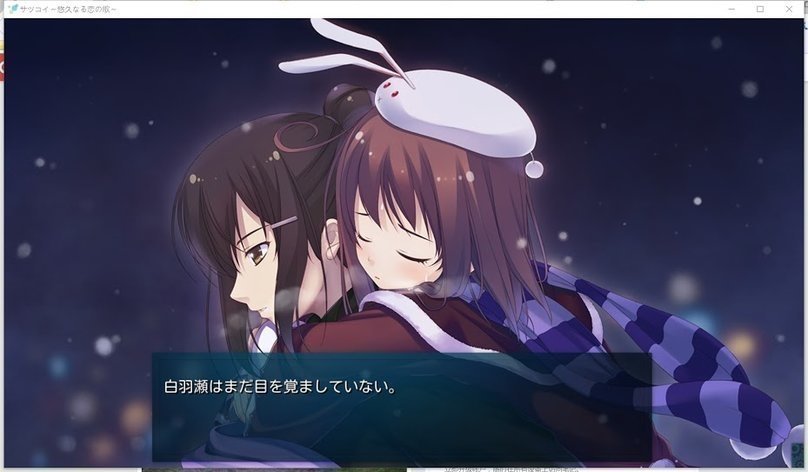
I say “different flavor” because most Alcot games give off a slice-of-life, comedy-heavy vibe. Genuinely sad ones are rare (not that they don’t exist — that Shinigami no Kiss thing at the start probably counts as sad too). So Satukoi Yuukyuu Naru Koi no Uta shows up waving the banner of “a romance between predator and prey.”
Everything up to here was made up. I can’t keep it going, so I’ll just be honest: the reason I’m playing a 2014 game is that I was bored listening to music on YouTube, heard the OP, thought it sounded interesting, and picked it up.
Satukoi Yuukyuu Naru Koi no Uta does some actual worldbuilding. It posits a human society that also contains a “mermaid tribe” — visually indistinguishable from humans, but with mermaid traits like regeneration and hardening of the limbs. The tribe has females and males, and the males exist to protect and support the females’ growth. In other words, the females run the show. When a female mermaid comes of age she goes through a “becoming an adult fish” transition, which demands a huge amount of nutrients, so… she has to hunt. The prey can be human, but the ideal target is a pureblood male mermaid.
So within the tribe: while a female is still immature, the male protects her. The moment she matures, the male offers himself up, lets her eat him for nutrients, and she successfully matures into an “adult fish.” That’s the setup.
You’ve probably guessed it. The protagonist is himself a male mermaid, and his little sister is a female mermaid on the verge of coming of age.
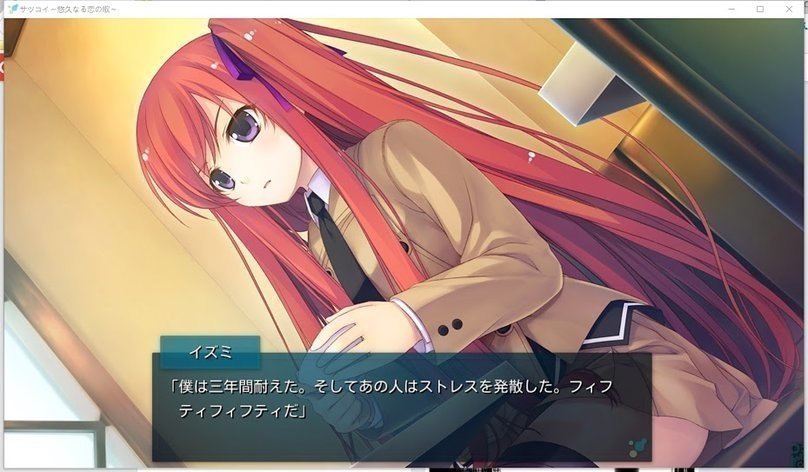
The game opens with the amnesiac protagonist being rescued and taken in. He remembers almost nothing except that he has a sister and needs to find her. The girl who saved him, Yuu, claims to be a mermaid and says she only rescued him because he looked tasty and she plans to eat him later. Naturally he doesn’t take her seriously and assumes she’s insane. But as he attends school, he starts hearing rumors that mermaids in this town eat people.
Then he starts noticing people around him disappearing, TV reports of missing persons pile up, and the rumors of mermaids hunting humans get worse. He tells the girl who saved him — Yuu — that the rumors say mermaids eat people, and asks if she’s behind it. She’s furious, says she’d never do that, insists it must be a “half-breed,” and declares she’s going to catch the culprit.
She goes out a few times and catches nothing. The protagonist even starts organizing a search-for-mermaids activity in the school club.
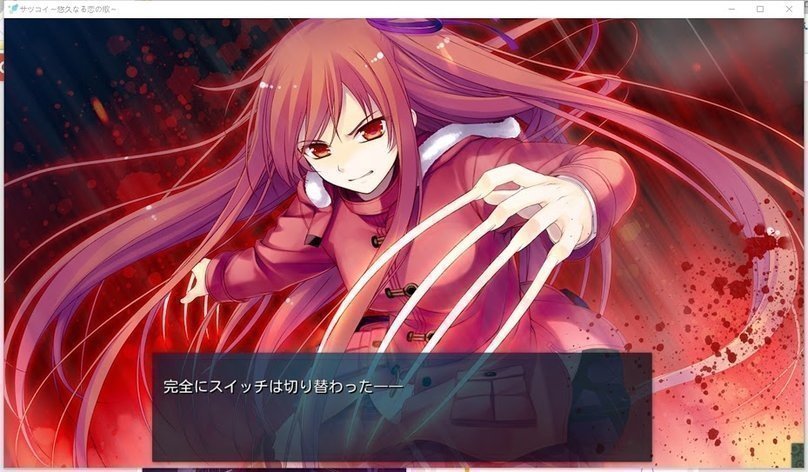
That’s when upperclassman Nitta Ruri, who he meets at school, approaches him and indirectly reveals she’s also a mermaid. She explains a lot of the setting — the relationship between male and female mermaids, the “becoming an adult fish” process. The key point: Nitta says the current “mermaid murders” are probably the work of some mixed-blood mermaid, a cross between mermaid and human. Not pureblood, but still needs to devour humans for nutrients, even to get through the maturation stage. But being a half-breed, devouring humans doesn’t give enough nutrients, so it needs to feed repeatedly — and to get enough in one go, eating a mermaid outright is best. Nitta also drops more info: Yuu, the one who took the protagonist in, is actually her little sister, and she’s worried because her sister isn’t mature yet and could well be the half-breed’s next target. She asks him to keep an eye out.
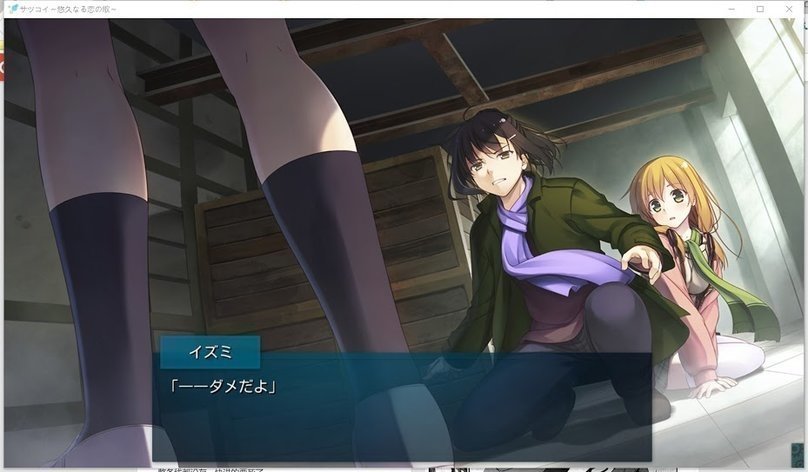
Before he can keep an eye on anything, Yuu vanishes. He finds her kidnapped in a warehouse, along with the culprit half-breed mermaid — who turns out to be his good friend and classmate. The classmate says he doesn’t actually want to hurt anyone; he’s doing it for his own biological sister. Just as the protagonist is about to be beaten to death by this half-breed classmate and lose his sister, he awakens his mermaid physical abilities, beats the classmate, and saves her.
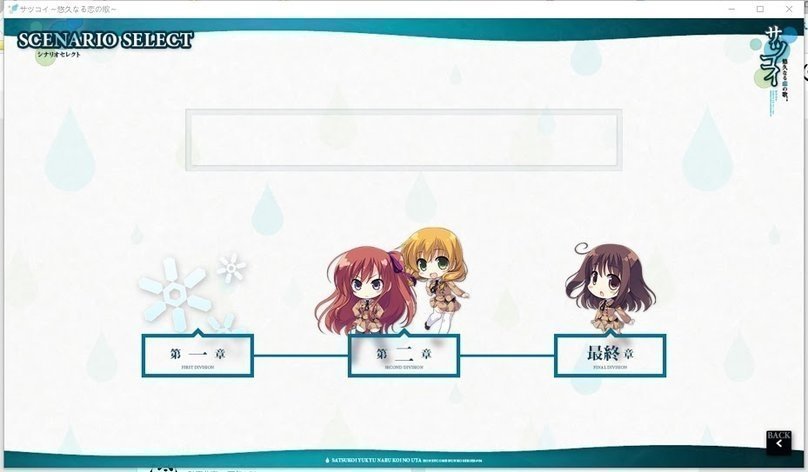
After that the story branches by route. First is the older sister Nitta’s route, which is clearly meant to carry the main exposition. On Nitta’s route the protagonist learns that he, Nitta, and Yuu are all children of the same mother, all carrying mermaid blood. Nitta is his older sister, Yuu is his little sister, and he should have had an older brother — except Nitta ate him, and that’s how she became an adult fish.
Then, as a male mermaid, he naturally faces the question of whether he should be eaten by his little sister as nutrients for her maturation. Nitta’s route doesn’t actually resolve any of this — the protagonist just falls in love with his older sister Nitta, and meanwhile the mother of the three shows up. The mother says she’s lived for many years as a mermaid by eating various mermaids, even her own children, to extend her lifespan. By now she’s gone completely mad and lost any shred of humanity. This mad mother says she’s got her sights on her own children: pureblood mermaids, so eating them will surely yield more nutrients. The youngest, Yuu, becomes a target of this insane mother.
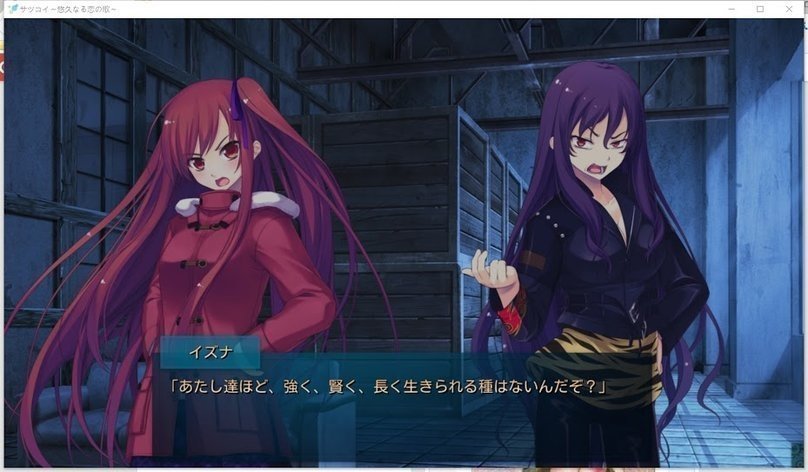
Nitta’s route ends with Nitta going to war with her mother to protect the protagonist and her little sister, and ultimately crushing the mad mother. Whether Yuu can actually mature is left unaddressed on this route.
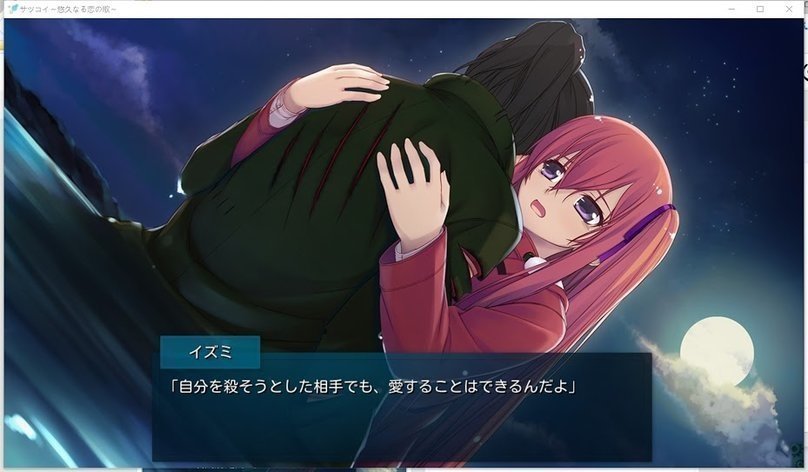
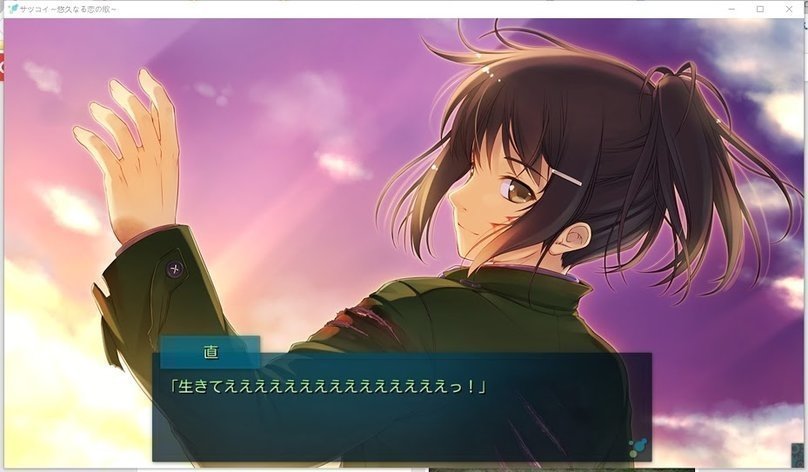
Besides the older sister Nitta’s route, there’s another for classmate Kawashima Nao. This one is all recollection, filling in the protagonist’s past. It turns out that although he, Nitta, and Yuu were all born to the same mother, the mother’s departure left them orphans, adopted into different families. The family that took in the protagonist was a single man who didn’t treat him especially well — to the protagonist it was plain abuse, so he has no fondness for the man and only stayed as a temporary foothold while searching for his sister. Following this man, the protagonist moved to this town and transferred into this school. He knew no one there except Kawashima Nao, who approached him on her own. They soon fell for each other. But the protagonist felt he wasn’t good enough for anyone, was busy searching for his sister, and being a mermaid, suffers a condition where his memories reset as he ages. So the whole thing got awkwardly shelved. Kawashima Nao figured he’d dumped her, but she never gave up. The route ends with her confessing to him again, and the protagonist saying he’s a mermaid, that he might be eaten and die someday — could she still love him anyway?
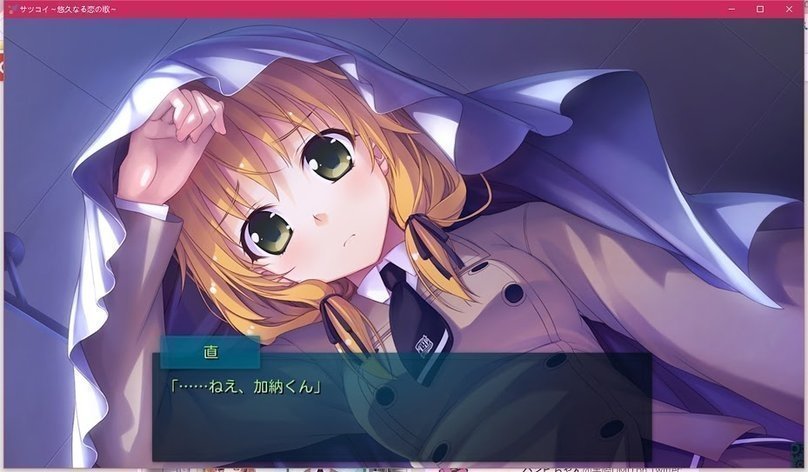
The answer is yes. Unfortunately it’s not a happy end. The protagonist tells Kawashima Nao he has to leave to take care of something and will come back, then drops off the face of the earth. The game doesn’t say where he went, only that he found some way to keep living with her. It ends with Kawashima Nao alone, staring blankly at his contact in her phone.
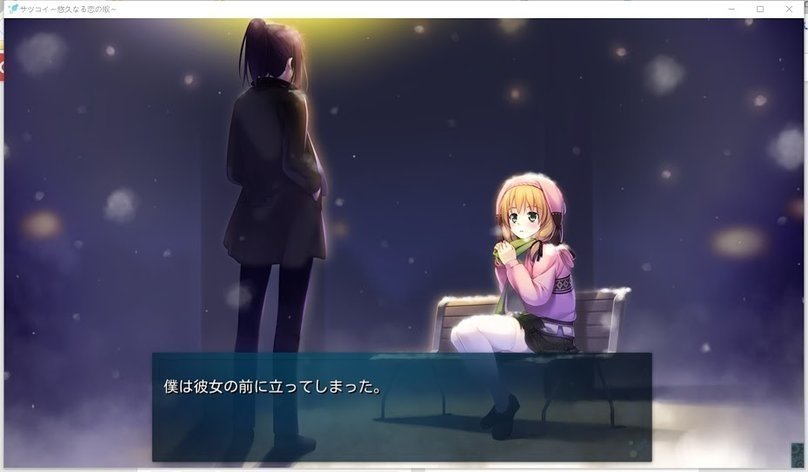
Clearing both routes unlocks the final little sister Yuu route. There’s not much to say about it, honestly — the setting and the surrounding story have all been laid out on the other routes. The route is the protagonist and his little sister falling in love and becoming something like a couple, but the end of that relationship is coming fast. Per mermaid tradition, the female eats the male closest to her as nutrients to become an adult fish. That means Yuu might eat the protagonist. Otherwise he dies, and she dies too.
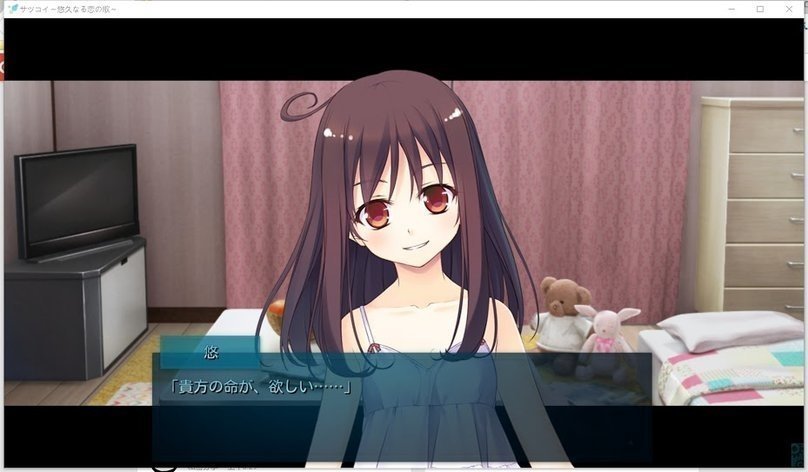
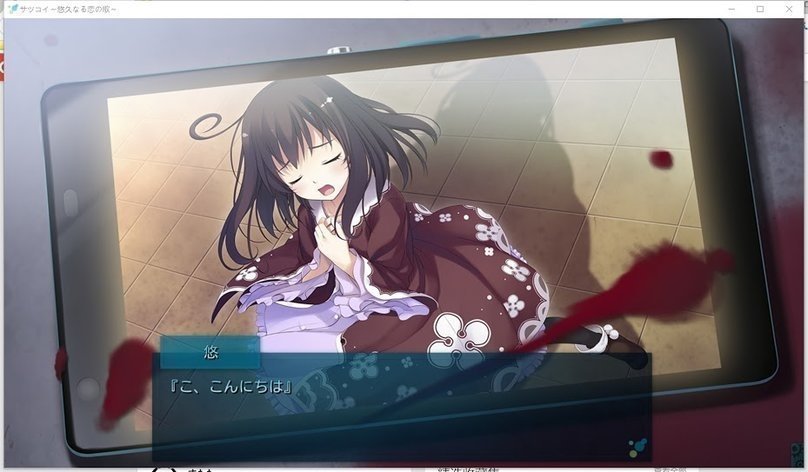
The ending: Yuu refuses to eat him, and the protagonist’s body weakens day by day due to male mermaid biology (which conveniently makes them easier for females to hunt). Then the mother of the two appears and announces, “Fine, if you won’t eat him, I’ll damn well do it myself.” The protagonist fights the mother to protect Yuu, spends his last bit of life persuading her, and the mother gives up hunting her own daughter, regains a shred of reason, and stops being insane. The protagonist dies in the warehouse facing his mother, watching on his phone as his sister, on the other end, sings a final song for the brother she’ll never see again. Game over.
So what is this game saying?
It’s saying the conflicted relationship between the protagonist and his sister — mermaid siblings, once they come of age, the sister has to eat the brother to keep growing, and the brother as a male mermaid has no future. Yet in this story, the siblings fall in love.
That’s the common thread in most games with an intriguing premise: they build a “contradictory” setup to lure players into speculating about the ending. Brother and sister in love, but the sister has to eat the brother to survive, otherwise both die. This kind of “every road is a dead end” setting makes you curious — curious how the ending will handle it, curious whether some have-your-cake-and-eat-it miracle will show up.
But in Satukoi Yuukyuu Naru Koi no Uta, no miracle shows up. The protagonist still dies, and whether the sister lives long is left unknown — she probably still has to keep hunting.
After finishing it, I thought about how this game resembles Hatsuyuki Sakura in some ways. A protagonist with a special identity, a girl he was taken in and lives with, and a route about someone he loved in the past but forgot for various reasons. The difference is the former is genuinely sad, while the latter just doesn’t land, even though both are set in winter.
Thinking more, it’s a bit odd. This story should be a tragedy, but for Satukoi Yuukyuu Naru Koi no Uta it doesn’t count as a tragedy at all, because from the very start the game goes off the rails in places.
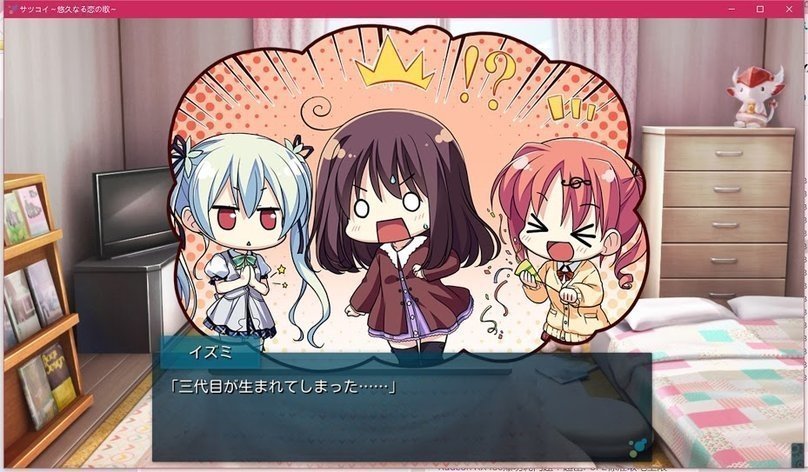
I think the blame has to fall on planner Seo Jun. Not that Seo Jun is untalented — it’s just that this guy can’t change his nature.
Seo Jun has been involved in planning and scripting plenty of games. If you ask me, what he’s good at is daily-life banter: comedy, little skits, lowbrow and borderline dirty jokes — he handles all of it with ease. But this isn’t a comedy game! Maybe the writer came up with a sad, moving script, planned the three routes and the story’s presentation, but then his true nature leaked out as he wrote… He stuffed all kinds of gags into the daily scenes. I’m not saying gags are bad. In most visual novels the main plot is just a stretch, and daily dialogue has to be padded out anyway, so throwing in some gags to keep things lively isn’t a bad thing.
But this guy keeps inserting gags at the critical moments, at exactly the wrong time, and it wrecks the mood.
Kawashima Nao carries an emotional element of the protagonist’s memories of the past, yet in the common route she’s already been turned into a comic relief character by all the gags. Then her recollection route starts going for melancholy, and before long it’s gags again and she’s comic relief again, then it hits the key moment and goes sad, then near the end more gags restore the comic relief, and then at the ending the protagonist is hastily made to vanish in a half-finished ending that tries to force onions out of the player but reads more like a botched landing.
The character whose route develops similarly to Kawashima Nao is Kousaka Aya from Hatsuyuki Sakura. Compare her characterization — was Aya ever turned into comic relief?
Finally, the so-called True End, Yuu’s sister route. From the common route through to the end of the sister route, the whole thing is the little sister being cute. Cute is fine — in a bro-con studio’s game, a bit of that is expected. But don’t forget this isn’t Shunkai Gentei or Mujikaku Mirai. The sister herself exists in a relationship with the protagonist that can’t coexist. Maybe all the cheer up front was supposed to contrast with the sadness of the final parting between brother and sister, but once they learn they’re opposed, why are there still gags? This causes a more serious problem: the final atmosphere never builds. It feels like “this game is still being funny” right up until the very, very end, when the writer seems to remember, “Oh shit, this game is ending and I haven’t laid any foreshadowing,” and hastily bolts on a setting where the sister who never went to school suddenly wants to go to school and suddenly wants to play piano and sing with her brother. After barely any rehearsal, she sends her brother off to the final boss fight with the mother, and in that fight he doesn’t even beat the mother — a few words of talk-no-jutsu convince her she was wrong and she turns and leaves…
The rushed final act sends the game’s sadness crashing down. I have to suspect that Seo Jun can only write gags and genuinely can’t write a proper sorrowful story. Though, come to think of it, Shunkai Gentei was apparently supposed to be a sad story too… and it turned into a total comedy, even though its OP is so sad…
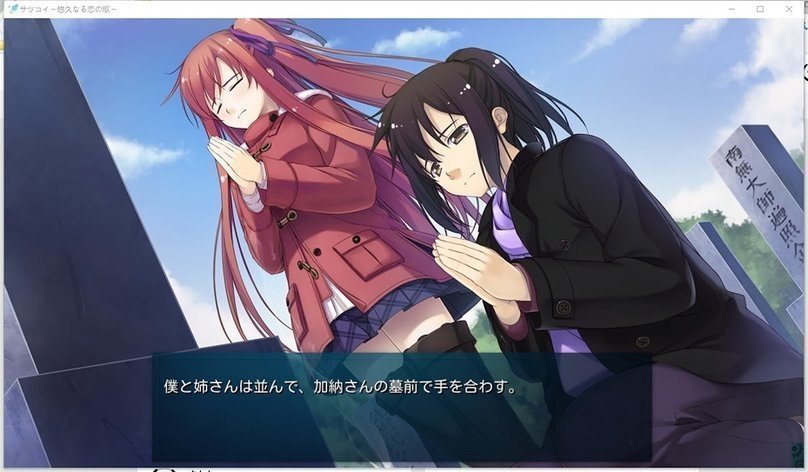
The game does show what it wants to say in plenty of places, including redeeming the protagonist’s adoptive father. He seems to abuse the protagonist and mostly doesn’t care about him, but it’s an adoptive relationship, and over time feelings develop. The protagonist even says, “He treated me badly and I hate him, but while I hate him, I also love him.”
The game also spells out the predator-prey relationship: “Even though you’ll kill me, I still love you deeply.” The mission of a male mermaid is to protect the female, and when she comes of age, to offer up his own life.
It should be a moving setup, but the pacing really doesn’t carry it. Most of the time it still looks like a comedy game; every now and then the BGM turns and it’s sad for a moment, then it turns again and it’s back to comedy… which directly dilutes the atmosphere.
So for Satukoi Yuukyuu Naru Koi no Uta, it might look no different from Shunkai Gentei and Mujikaku Mirai and the rest, except it’s wrapped in a mermaid predator setting and a brother dies at the end. But at least 70% of the daily scenes are still gags, and the voice acting is worse than before too. Ishihara Mai’s take on the bratty little sister is a fair bit weaker than Uehara Aoi’s or Kiritani Hana’s.
The music is solid — plenty of tracks fit the game’s atmosphere — and the presentation is passable, at least the snow looks nice. But the mermaid-on-mermaid battles are painfully bad. Alcot really can’t do combat… The art isn’t all that cute, but it isn’t that bad either; the highest quality is actually the HCGs, which makes me think the artist would be better off drawing doujinshi…
None of that is the big problem, though. The big problem is the game’s loss of control over its pacing. The premise was clearly meant to be a slightly sorrowful story, yet it got written as a work that’s more than half comedy, the final atmosphere never builds, and the protagonist dying to save his sister leaves you cold. I’d call it a failure.
In Shunkai Gentei there’s no “you must die” contradiction, and in Mujikaku Mirai there’s no “you must part” problem, so those two being cheerful and then wrapping up at the end is fine. But this work chooses a “non-human” direction from the very start and deals with life and death, and you still pull this stunt and get so carried away you can’t pull it back. I really can’t approve.
It’s like a mermaid’s tears. They’re supposed to make you feel the bitterness of extreme sorrow, but you dumped a pile of sugar in them. Tears that sweet can’t resonate at all.
Comments are hosted on the Chinese main site. This mirror is read-only.