Yome Sagashi ga Hakadori Sugite Yabai (嫁探しが捗りすぎてヤバい) Review
Yome Sagashi ga Hakadorisugite Yabai
I honestly have no idea how to translate the title Yome Sagashi ga Hakadorisugite Yabai, because of that ヤバい in there. According to some Japanese department professor’s explainer article, writing yabai in katakana is a trend among young Japanese people, and it means the thing has the opposite meaning. やばい originally meant “oh no,” while ヤバい carries the same double-edged opposite sense as badass, meaning “so good it’s kind of alarming.” Honestly, translating this やばい as “insane” fits better, because whether something good or bad happens to you, you can just say “well, that’s insane.”
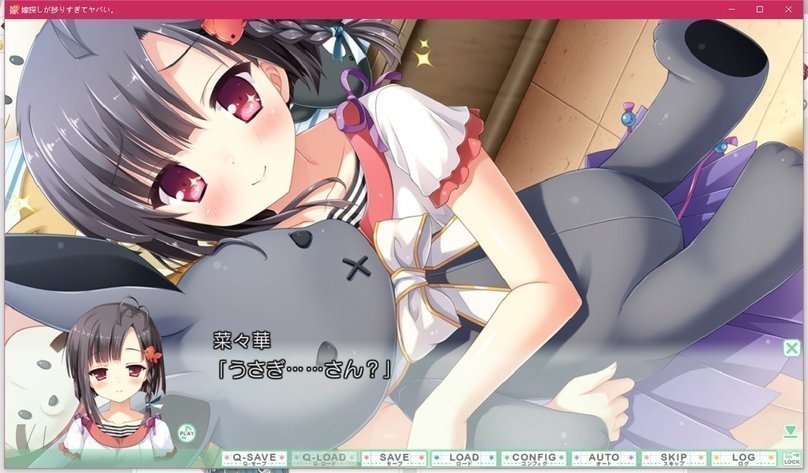
So at first Yome Sagashi ga Hakadorisugite Yabai should mean something like “the wife hunt is going so well it’s insane.” Then I played the game and realized I’d overthought it. Better not jump to conclusions about that やばい.
I’ve been going on about the title this whole time, and that’s because the game itself is so by-the-book there’s nothing else to complain about.
I said before that the Japanese eroge industry is all about building characters and selling characters now, so Yome Sagashi ga Hakadorisugite Yabai is just another one of those chara-ge.
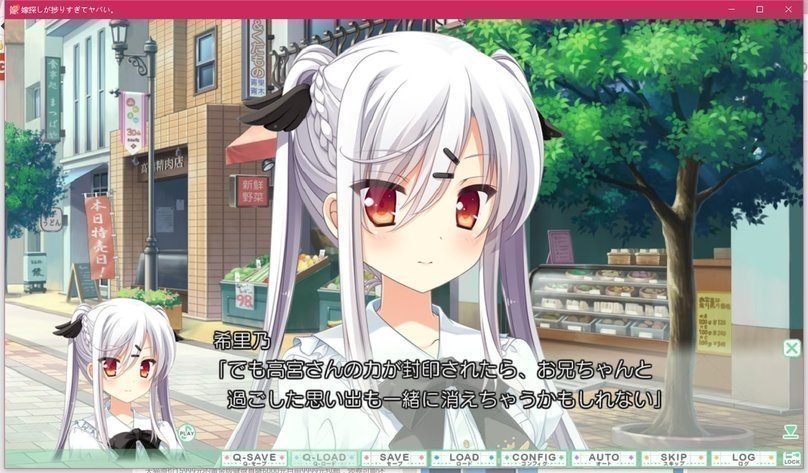
The setup: the protagonist grew up in some divine village where everyone has supernatural powers. When he was a kid he made a pact with a girl that she’d be his wife someday, but then she went off to the city. Now he’s grown up, and his little sister and the village granny tell him it’s time to go to the city and find that promised wife, or his family line in the divine village will die out.
The sister says the girl’s family name was apparently “Yagami.” Our village boy heads straight into the city to find the Yagami household, and when he gets there ready to meet his wife, it turns out the Yagami family has three sisters… He can’t remember which one it was, and he’s completely lost. So under his sister’s arrangements he stays at the Yagami house for a while, observing and searching for which one is the fiancée he promised himself to as a kid.
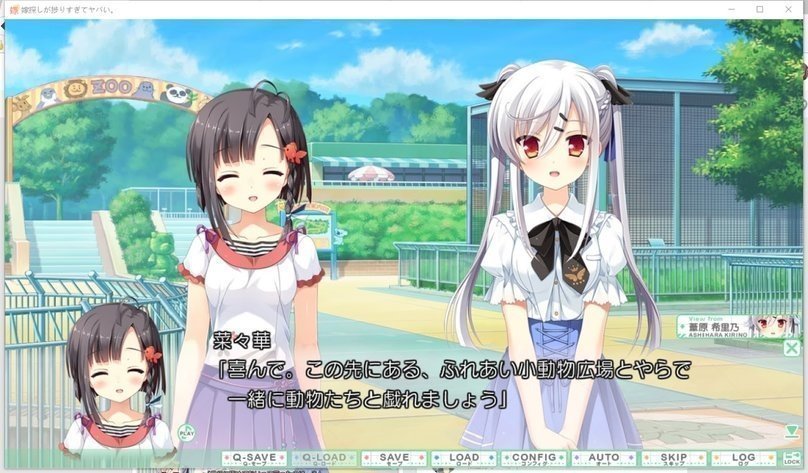
That’s what the 嫁探す in the title means: the village guy comes looking for his childhood-betrothal fiancée. But here’s the funny part — right up to the end, the game never clearly tells you which one was actually the girl he made the promise with.
The game has seven romanceable characters: the three Yagami sisters, the protagonist’s biological sister, the school’s Nanaka-senpai, the part-time maid at school, and the protagonist’s loli teacher… plus a harem ending at the end.
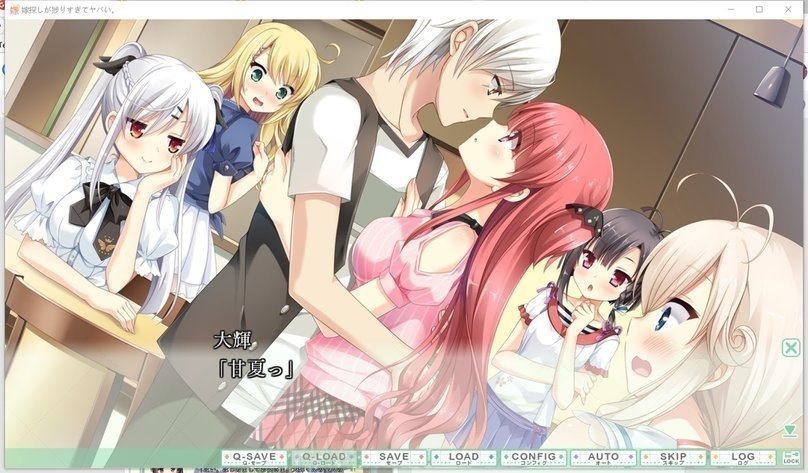
So many romanceable characters, and yet there’s an incomprehensible route lock. First playthrough forces you onto Yagami Kanka, voiced by Mizawa En. After that you unlock the other Yagami sisters and Nanaka-senpai. After clearing Nanaka-senpai you unlock the biological sister’s route. Clear everyone and you unlock the teacher and the maid. Why it’s incomprehensible: there’s no causal relationship between the characters. In other words, whether you pursue someone or not, the story doesn’t progress.
Or rather, the game doesn’t really have a main plot. The main plot is the protagonist finding a wife, and once he finds her he goes back to the village and gets married. No hidden conspiracy, no other obstacles. So just pick whichever character you like and go. No need to worry about missing some story.

Yagami Kanka’s route is mandatory, yet it has zero sense of being especially worthwhile. Everything goes smoothly: the protagonist says his childhood-promised wife had the surname Yagami, Kanka figures it might be her, confesses to him on her own, and they get together. The one twist at the end is that Kanka realizes the girl the protagonist promised himself to as a kid wasn’t actually her — he picked the wrong person and chose her as his wife. Kanka feels guilty, wants to hide away, feels she stole someone else’s happiness.

Which brings me back to why I said at the start that I don’t know how to translate やばい. Because here, やばい really does mean the protagonist’s wife hunt went so smoothly that something’s gone horribly wrong.
As for the end of the story, naturally the protagonist decides to roll with the mistake, declares that choosing true love is what matters, and the village granny and his little sister both understand. Happy End, obviously.

Nanaka-senpai’s route is similar to Kanka’s. Nanaka-senpai comes onto the protagonist right away when she meets him, and tells him she actually has divine powers too, but her mother and generations before her ran away from that divine village… so she’s thrilled to meet him, and to continue her divine bloodline she really wants to make babies with him… (I…). Naturally, after a lot of wearing him down, they become a couple, have sex, and the final twist is also by-the-book: the village granny shows up and says “I thought we agreed you’d find the Yagami girl, why did you pick this one?” Naturally true love conquers all, the protagonist and Nanaka-senpai end up together and plan to have two kids.
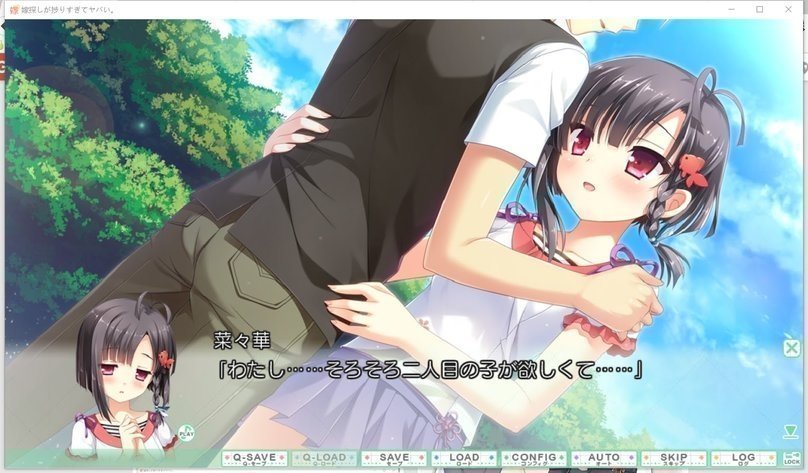
You can basically see the game’s routes are all like this. The divine village setting is just a pretext; at heart it’s a romance game, and the wife-hunting setup is probably just there to make the romance easy to set up. I really had no interest in walking the other routes, but I checked reviews on ErogameScape, and the youngest Yagami sister’s route apparently has big ups and downs — someone’s near death. It’s still a Happy End, but some Japanese players have already said they hate that route’s writer.
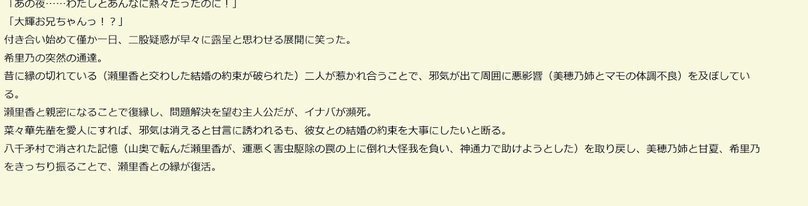
So it’s a chara-ge that sells characters. But don’t be too quick to be disappointed — it does have its merits.
Yome Sagashi ga Hakadorisugite Yabai’s individual routes are fairly long, and 80% of the content focuses on the emotional exchange between you and the corresponding heroine.
What does that mean? It means in the individual routes, you’re almost always having conversations about love with the girl.
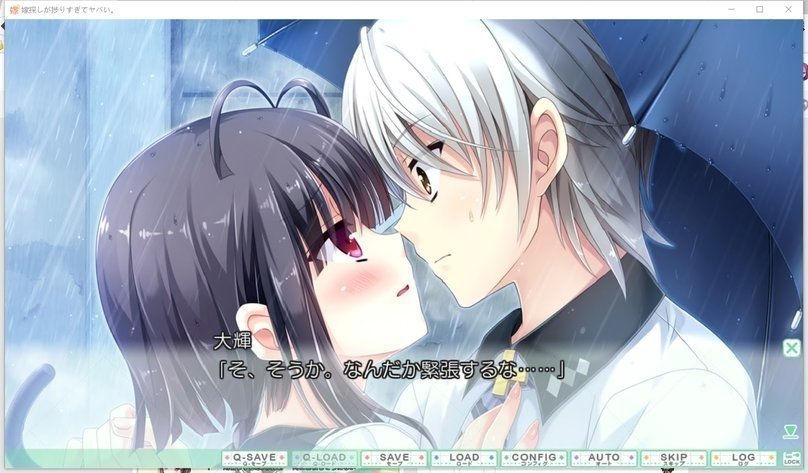
Yeah, no damn foreshadowing, no damn ups and downs, no bullshit three-way conversations — just one-on-one, long romance talks. This comes through most clearly in Nanaka-senpai’s route. If you’re a voice-actress otaku, Kiritani Hana’s performance in the individual route will have you shouting for more.
The benefits of this kind of dialogue are hard for me to put into words; you just have to feel it yourself. That feeling of chatting with a girl until dawn is probably the same kind of excitement. Sometimes the girl will show all kinds of shyness toward you and make your heart race. The catch is you need to find a girl you like. Kanka’s Mizawa En, for instance, doesn’t do much for me — she always reminds me of Setsuna. But Nanaka-senpai felt great. Good thing the game has so many characters to choose from; there’s bound to be one that suits you.
And Nanaka-senpai really is cute!
The music is average. The art is by Ikegami Akane, and, well… you can’t say the art style is good, and you can’t say it’s bad either. Just be careful following her on Twitter, or you’ll get an eyeful of the BL merch she posts.
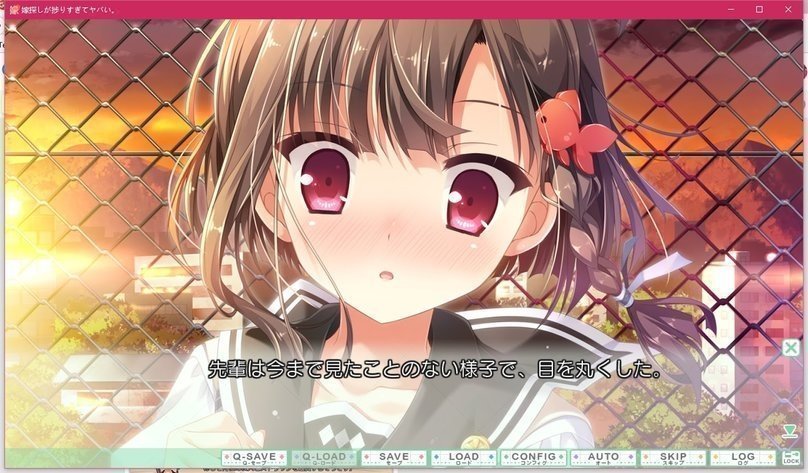
All in all, Yome Sagashi ga Hakadorisugite Yabai feels more like a non-toxic, pure, standard romance game. Most of its content is everyday small talk with the girl, like she’s being affectionate with you. You can’t say it’s great, and you can’t say it’s bad. But if it has a CV and character you like, playing it won’t feel like a waste of time, and once you get into it, it really does give you the feeling of being in love.
But then again, for a Galgame, isn’t chasing the feeling of love the original goal?
Isn’t that a kind of “never forget your original intention”? Haha.
Comments are hosted on the Chinese main site. This mirror is read-only.