Senren * Banka (千恋*万花) Review
A Little More Surprise, a Little Less Formula
Back in school I took a course called Software Engineering, taught by an old lady who could not stop singing the praises of the Indian and Japanese software industries. She’d go off on long tangents in the middle of lectures, and you can probably guess the gist: strict adherence to “standards” in the development process, “modularization” with “high cohesion and low coupling,” that sort of thing. Some of it was honestly overblown, borderline bullshit.
“India’s software industry is very advanced. Their professional programmers write code so standardized that a hundred people all produce the exact same thing—even the comments look identical.”
“The more standardized and regulated things are, the faster you can throw together solutions when requirements come in, like stacking building blocks…”
“Once everything is standardized, every person is like a cog in the machine, running efficiently and fast…”
She kept escalating into more and more mystical territory, piling on the bullshit, and since I was always late to that class I ended up sitting in the front row. The old lady kept fucking asking me questions, and sometimes I’d push back…
“But wouldn’t programming be super boring like that? Everyone turns into a robot.”
“That’s called efficiency. The efficiency of a big company delivering solutions fast. You want to be an individual, go work solo…”
Back then I only had a vague grasp of this stuff. I figured “standardization” and “assembly line” were indeed probably very efficient… But after starting work and dealing with some small and mid-sized domestic software companies (not internet companies), I found that my contrarian comment actually had some truth to it…
The people there really are boring… the stuff they make is boring too… but it does “work.”
The assembly line can solve problems, but it always feels like it’s missing passion and fun, like it lacks color…
Of course, work doesn’t need color, right… It’s just that games can’t be like that, can they…
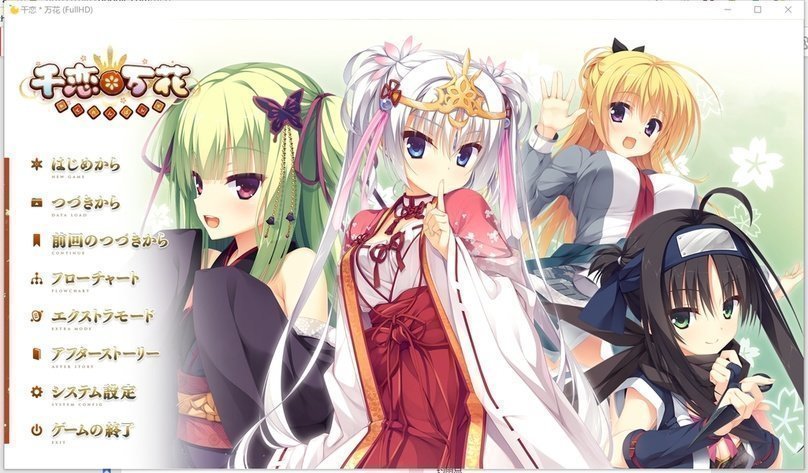
Yuzusoft’s game from last year, Sanoba Witch, I thought was pretty good—just missing that certain something. The main issue was that Nene’s route wasn’t particularly fleshed out; otherwise there wasn’t much to complain about. So when they announced this year’s new title, Senren * Banka, my first reaction was still disappointment…
The reasons for disappointment are the usual ones: too clichéd. A fiancée setup again? Light novels don’t even use the fiancée trope anymore these days. I always thought visual novels were ahead of light novels, and here they are using it too. Really…
Afterwards I tried the trial version and found it wasn’t especially good, nor especially bad. It’s a popular title after all, so I figured I’d just play through it—at least it won’t put you in a bad mood, right…
After finishing it, my impression: first, it’s definitely an improvement over Sanoba Witch, but it’s still missing that one breath… no, actually several breaths. The game’s story is okay; with some rewriting it could leap out of the moege category and become a solid plot-driven title… Of course, the game didn’t do that.
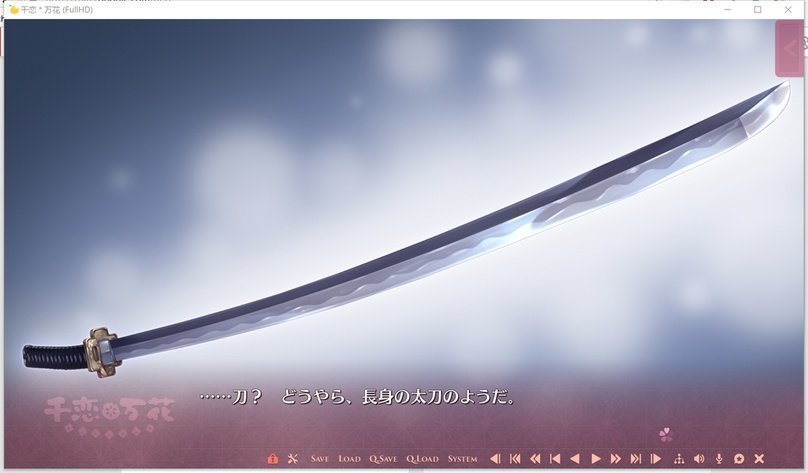
The setup: the protagonist goes to school in the countryside and visits a local shrine, where he sees the “sacred sword” enshrined there. The sword is a display piece that no one can pull out, but the protagonist gives it a curious tug and it slides right out… Then the shrine’s head priest pops out saying this is a big deal—anyone who can pull out the sacred sword must be a chosen one, so hurry up and marry my daughter…
And then a bunch of stuff happens, and the protagonist somehow ends up engaged to the shrine maiden, Asami Yoshino. Thanks to pulling the sword, he also discovers Murasame, the guardian spirit bound to the blade, plus Yoshino’s family servant and female ninja, Hitachi Mako, and Lena Liechtenauer, a Finn who just moved here from abroad. A classic one-guy-four-girls harem eroge setup unfolds…
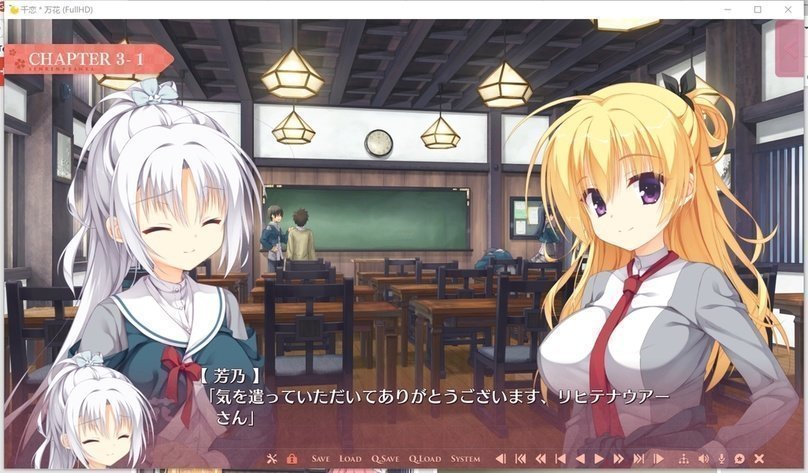
I say classic because it really is. The first half of the common route is pretty much indistinguishable from previous Yuzusoft games—daily banter and bullshit. But thanks to the sacred sword setup, a few plot mysteries actually surface.
Yes, holy shit, a Yuzusoft game has foreshadowing! That’s rare…
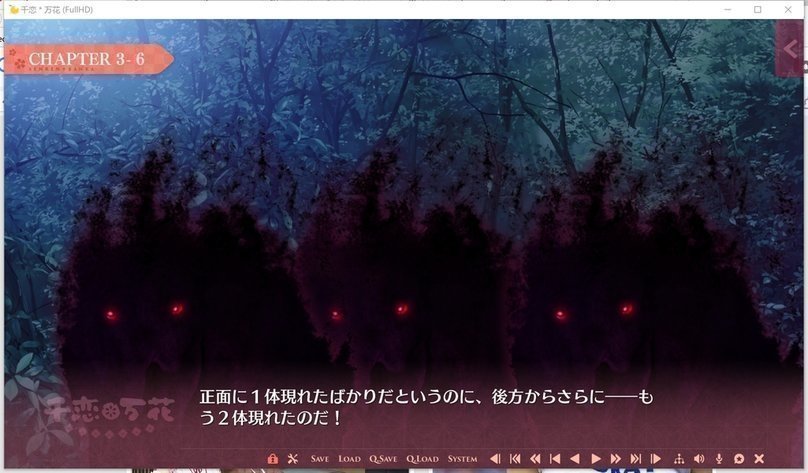
Yoshino says she’s cursed—or rather, the Asami family is cursed. Generation after generation, they can only bear girls, and every girl born must become a shrine maiden and never lives long. As the shrine maiden, Yoshino’s duty is to perform a ritual dance at set times every day to pray for the gods’ protection and prevent disasters, and occasionally go to the back mountain to exorcise demons; otherwise the curse makes her grow a pair of ears. The ninja Mako is a sort of “retainer” to the Asami family—serving them, protecting the shrine maiden, and joining the exorcisms. And the protagonist, having broken the sword’s seal, starts wielding it in battle alongside them…
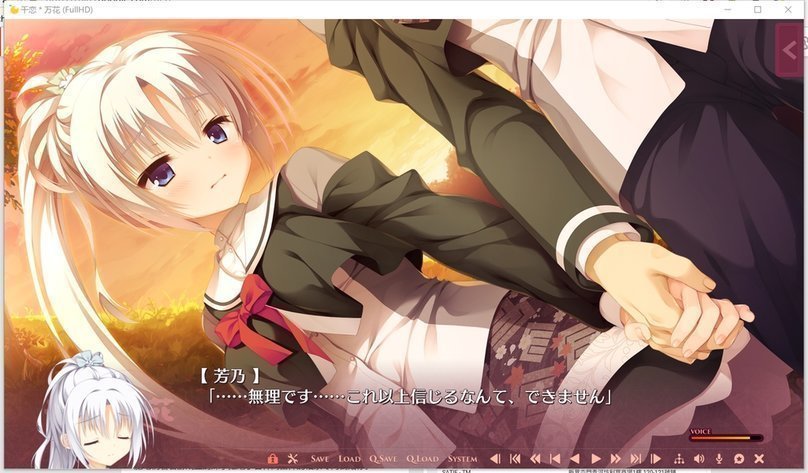
Where do these “demons” in the back mountain come from… why are they here… nobody knows… All we see is that after exorcising them they drop sparkling fragments, which get collected and automatically merge together. Yoshino, clueless, can only assume collecting these fragments might somehow solve the problem… So the group goes to school during the day and occasionally sneaks out at night to kill monsters and collect fragments. That’s the daily routine.
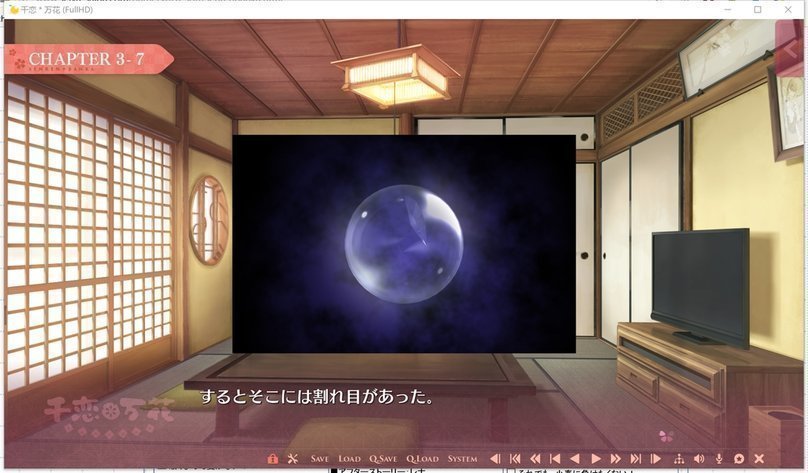
The game has four main routes, one for each heroine, leading to different endings.
Since she’s the main heroine, let’s start with Yoshino’s route. In Yoshino’s route, the fragments are finally all collected, and during a shrine ceremony they’re sealed away again, lifting the curse. Yoshino starts thinking about her “engagement” to the protagonist—something her father forced on them—and they start spending time together. Over time, they genuinely fall for each other… and the fake engagement becomes real. But then Yoshino suddenly discovers the curse hasn’t fully disappeared… she starts growing ears again, and begins dreaming of her mother, recalling memories of her.
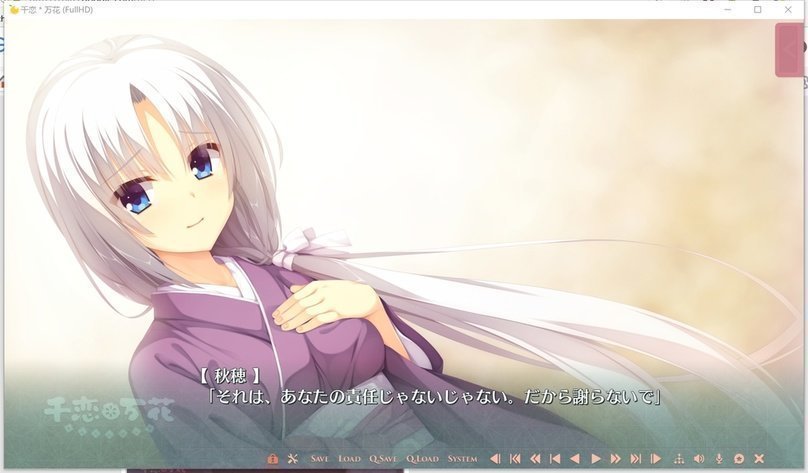
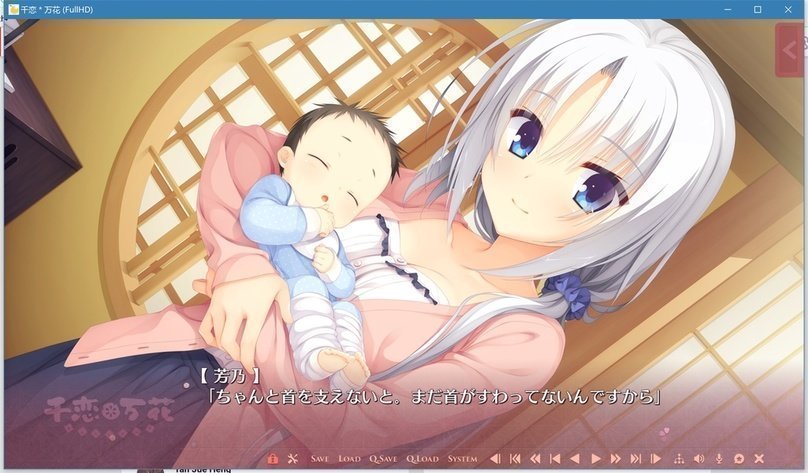
Her mother was the shrine maiden when Yoshino was little. To live up to her mother’s legacy, Yoshino practiced shrine maiden skills every day, but in the end still failed to seal the demons. Her mother always wore a sad expression watching her, and Yoshino assumed her mother was dissatisfied with her… After a bunch of angst, arguments, and flashbacks, Yoshino finally understands: her mother never blamed her. She was ashamed of the fate that forces Asami women to live short lives as shrine maidens generation after generation, and believed her daughter should go out and enjoy life instead of being tied down here until death… They reconcile, the demon appears again, Yoshino cuts it down with the sword and seals it for good. Her curse is lifted, she marries the protagonist, and they have a son. The birth of a boy means the family’s “only girls” curse is truly broken—Yoshino is free, and so is the whole family.
Murasame’s route is completely different. Again the fragments are collected and sealed in a ceremony, lifting the curse (and this time it’s really gone for good). The protagonist’s engagement to Yoshino is also called off. Then he notices the countryside has become depressed—turns out because he pulled out the sacred sword, the shrine lost a tourist attraction, and the foreign visitors who came to see it stopped coming. The local economy is doomed… So the protagonist starts taking Murasame around looking for ways to revive the local economy. They find nothing, but end up sightseeing all over with the sword’s guardian spirit, and start developing feelings. Eventually he confesses out of nowhere, but Murasame doesn’t really accept it—she’s a 500-year-old guardian spirit, and he’s just a mortal.
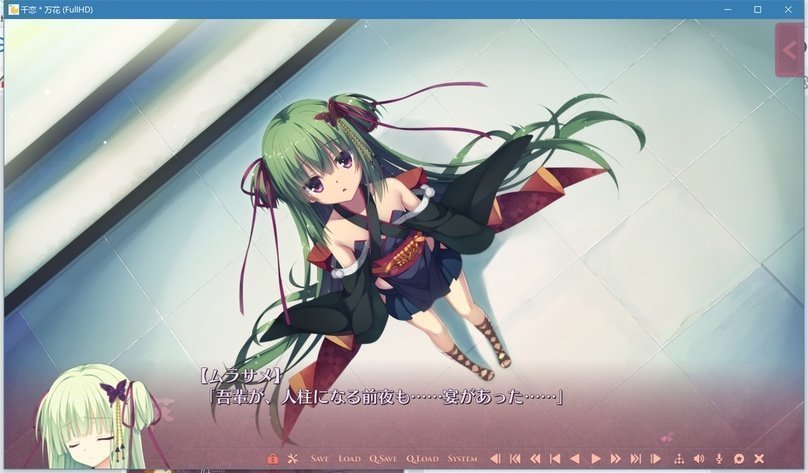
Then one day a coffin is found under the shrine, containing Murasame’s corpse. It turns out Murasame was a human sacrifice, buried alive under the shrine as a “hitobashira” 500 years ago; her body was preserved by the seal. She was the sacrifice made when the sacred sword was created. The protagonist and the shrine people suggest Murasame return to her body and revive, but she says they shouldn’t do that casually—after all, she was used as a sacrifice because she had an incurable disease 500 years ago. But a diagnosis reveals that “incurable disease” was just pneumonia… Once back in her body, it’s easily cured. Murasame now has a physical body and becomes the protagonist’s girlfriend, leaving one last problem: what should replace the shrine’s “sacred sword” attraction?
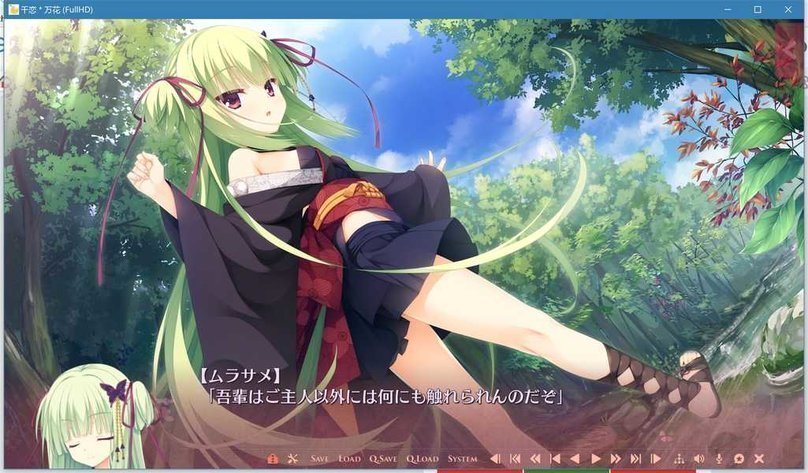
The protagonist thinks, why replace it? Now that Murasame is revived, just stick the sword back in.
After some preparation, in a final ceremony the sword is separated from Murasame’s soul and inserted back, and Murasame lives on as a girl with a physical body, becoming the protagonist’s girlfriend.
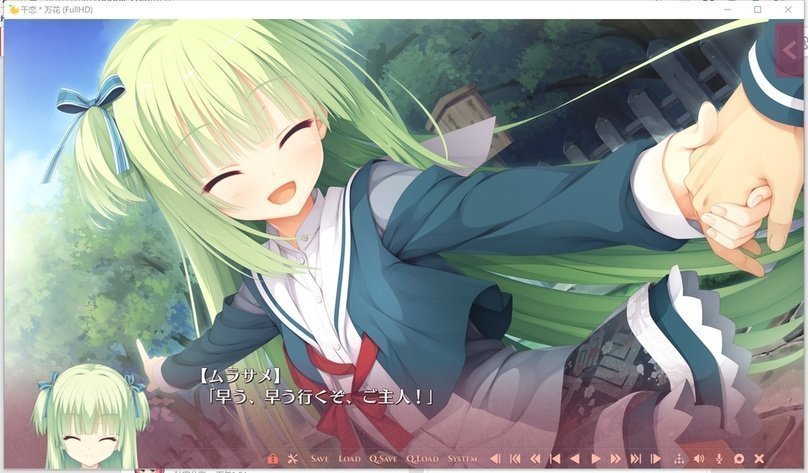
Hitachi Mako’s route starts edging closer to the main plot. Again the fragments are collected and the curse lifted, and Yoshino asks Mako whether she should break off the engagement with the protagonist. Mako says Yoshino needs to figure out if she likes him; Yoshino doesn’t know how, so Mako feeds her a bunch of stuff she saw in shoujo manga. The result is that Yoshino breaks off the engagement, but Mako catches the protagonist’s attention instead. He starts approaching Mako and discovers she lives at the far edge of the village, and that she seems to long for romance but has given everything up to be Yoshino’s attendant.
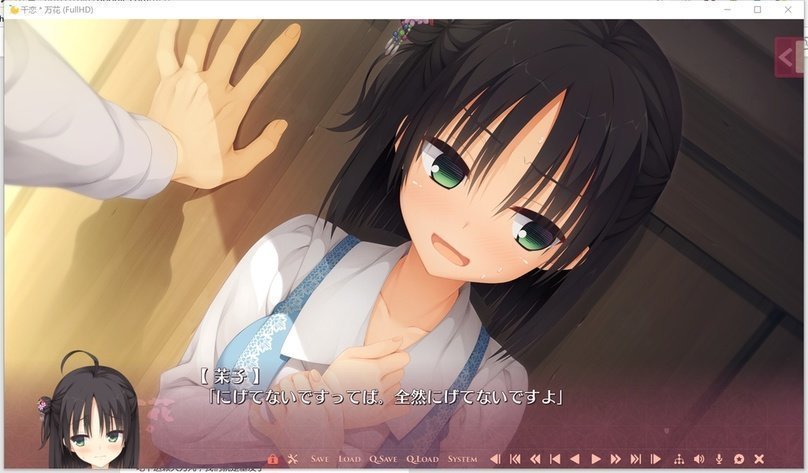
The protagonist starts dating Mako, Yoshino supports them, but Mako lacks confidence and is shy. Then trouble hits: the curse that disappeared from Yoshino transfers to Mako… Mako occasionally turns into a dog, and only a bath can change her back. She also meets the deity that cursed her in a dream; the deity says it has no ill intent, it just wants to possess Mako to feel “what it’s like to love someone.” Mako is baffled but goes along with it. Eventually, as her romance with the protagonist heats up, the deity says it now understands “what it feels like to love someone.” Mako asks why it did this… The deity doesn’t explain much, just says that once someone sacrificed themselves for the Asami family, and the deity didn’t understand that person’s actions. The person explained, “If you fall in love with someone, you’ll understand what I did.” So the deity came looking for Mako to experience that…
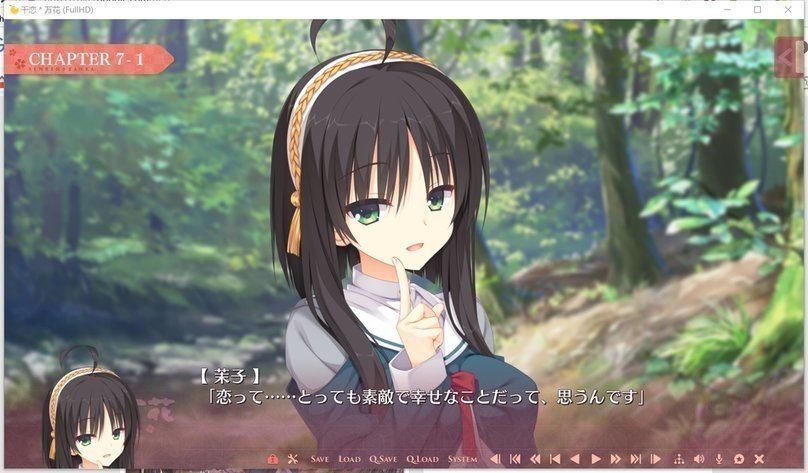
As for why Mako is cursed to turn into a dog: her ancestors once fought the Asami family in an internal conflict and were exiled, doomed to serve as the Asami’s servants forever, down to the present. Now they’re just helpers, really… The deity also says Mako’s ancestors offended it, but it has forgiven them now, and asks them to exorcise it.
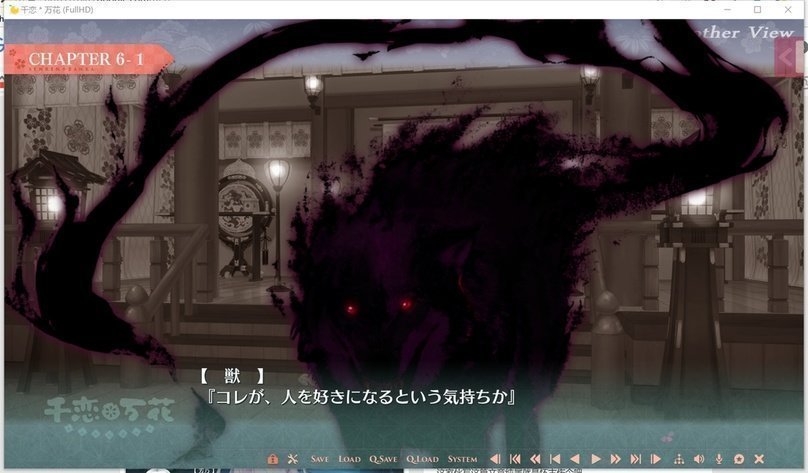
The ending: Mako and the Asami family exorcise the deity together, and peace returns.
The last route is Lena’s, the foreigner. Hilariously, for a character who looks like she was tossed in to fill the roster, her route is the most True End-like.
Lena came to the countryside to work part-time while going to school, but suddenly she starts having strange dreams. In them, many foreigners come to this countryside to build a railway, but the construction fails, the villagers reject it, and they have to leave. Interestingly, the protagonist appears in the dreams too—they’re both in the same dream…
Lena believes the dreams are someone guiding her. The protagonist wonders why he shares them. Yoshino investigates and learns Lena has an heirloom gem, which is actually a fragment of the demon from the back mountain. Lena thought it brought good luck, but it’s actually ominous.
So the question: Lena is a foreigner—how does she have this fragment? And she just arrived, so it can’t be a family heirloom…
The answer is in the dream. Lena dreams again: the same foreigners building the railway. She suddenly recognizes them—a German and a Finn—as her great-great-grandparents. The Finn, hating this place, wandered into the back mountain one day, was attacked by a demon, and rescued. But she picked up a fragment from the ground, thought it was a lucky treasure, and kept it…
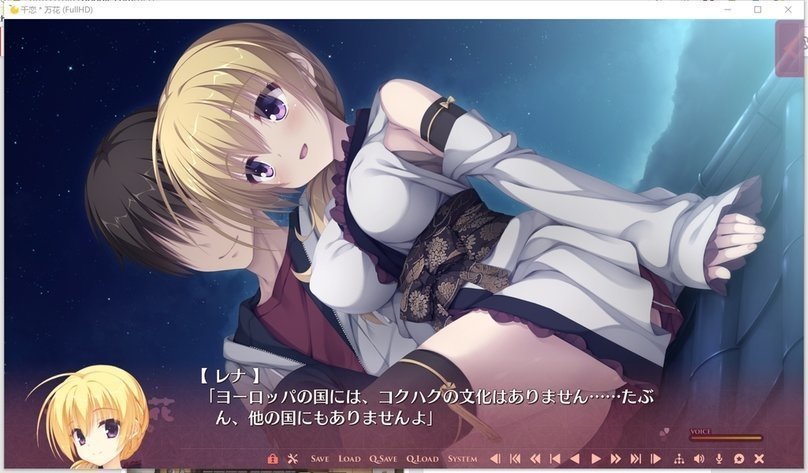
So the fragment traveled back to Europe with the Finn, passed down to Lena’s grandfather, and then to Lena…
Lena is shocked to learn it’s a demon fragment and wants to see the back mountain. She goes and gets attacked by a monster…
After that, Lena has another dream… set even earlier… and in it, the secret of the Asami family is revealed.
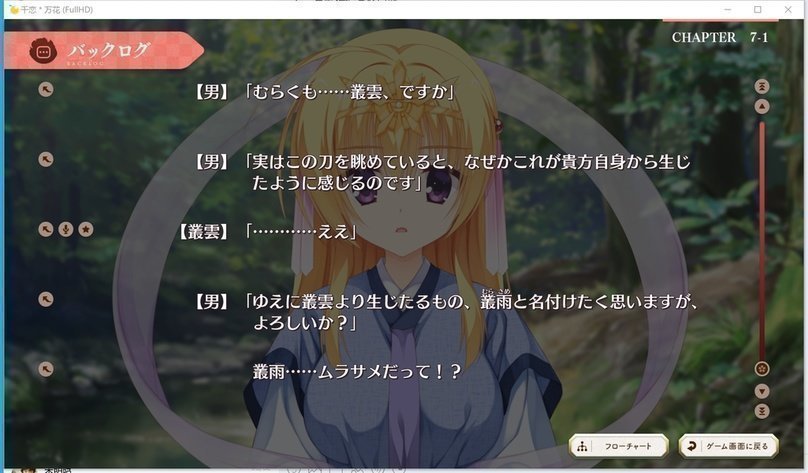
The back mountain once had a mountain god, who had a daughter named Kirigumo or something… (I forget). The mountain god’s daughter was walking on the mountain when she saw a young man practicing swordsmanship.
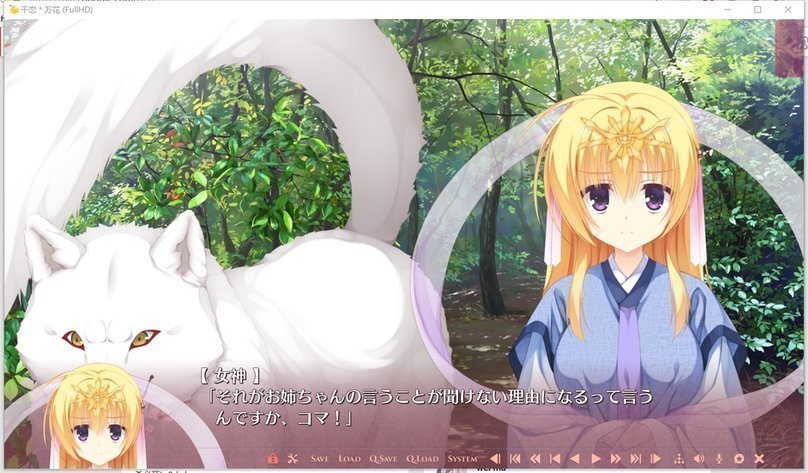
She asked why he practiced, and he said he wanted to be a samurai and kill enemies. The mountain god’s daughter fell in love at first sight and watched him every day. She wanted to help him, and even took out one of her own bones to make a sword for the warrior, telling him to use it to slay enemies and be invincible.
Beside the mountain god’s daughter was a white wolf, her guardian beast. The wolf didn’t understand why she loved a mortal so much and warned her not to fall so deeply. She didn’t listen and kept watching over the warrior.
The warrior took the divine sword to war, indeed slaughtered everyone, became famous, achieved success, and established his own house. He went up the mountain to return the sword and thank her, hoping to marry her. The mountain god’s daughter smiled and refused—one is a god, one a mortal; it’s impossible.
In the end the warrior fell on hard times, married another girl, and founded his family.
The mountain god’s daughter watched from the mountain. The white wolf beside her was confused:
“He’s with another woman, he betrayed you—why are you still so happy?”
“Seeing him happy makes me happy,” she said.
Later the warrior’s wife became pregnant, and during childbirth she had a difficult labor…
The mountain god’s daughter couldn’t stand by. She decided to act again, to steal the god of death’s treasure to ease the labor.
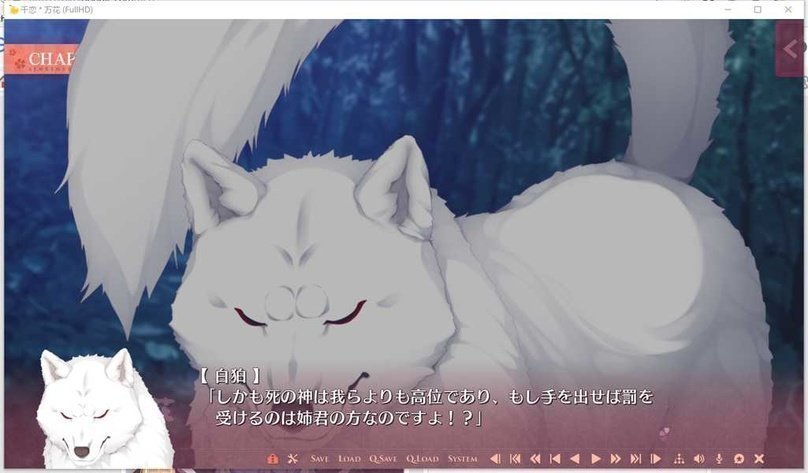
“Are you insane? A mountain god picking a fight with the god of death—you’ll be doomed forever,” the white wolf said, shocked.
“When you fall in love with someone, you’ll understand,” she explained. “After I die, remember to protect them for me.”
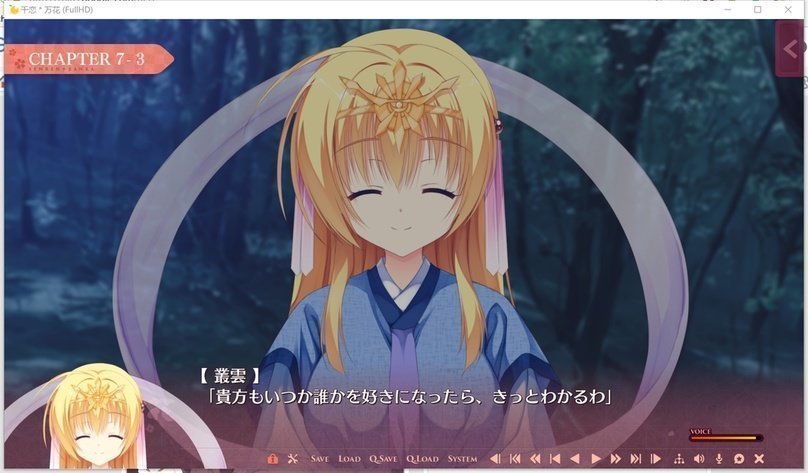
The result: for interfering with life and death, she was turned into a stone on the mountain, stripped of divinity, never to rise again.
The white wolf didn’t understand but followed her instructions and continued protecting the warrior’s family. That family’s surname was Asami… the ancestors of Yoshino’s family.
The warrior’s wife survived the difficult birth and gave birth to a daughter. The warrior was overjoyed, believing the sword had protected them, and enshrined it as the “sacred sword.” Under the white wolf’s protection, the Asami family had easy births and everyone was healthy. But the white wolf, missing the mountain god’s daughter, wished for her reincarnation, which caused the family to always bear girls.
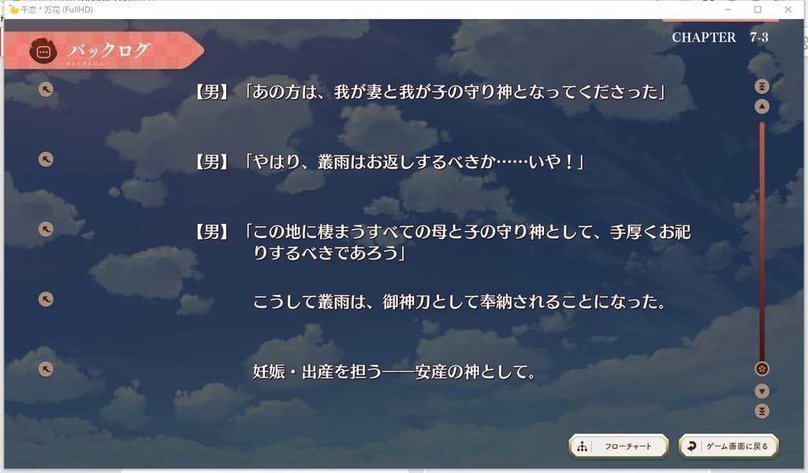
The good times didn’t last. The family split, a faction rebelled to seize leadership, and war broke out, spreading to the back mountain. The Asami saw the white wolf there and thought it was cursing them. The leader took the sacred sword and killed the white wolf. The wolf had protected the Asami for generations, watching over the mountain god’s daughter, only to be killed by the very sword she gave them. Its resentment gathered, its blessing turned into a curse, its body shattered into fragments scattered across the mountain. The Asami lost their protector and gained only a curse: they could only bear girls, and each generation lived short lives… to this day.
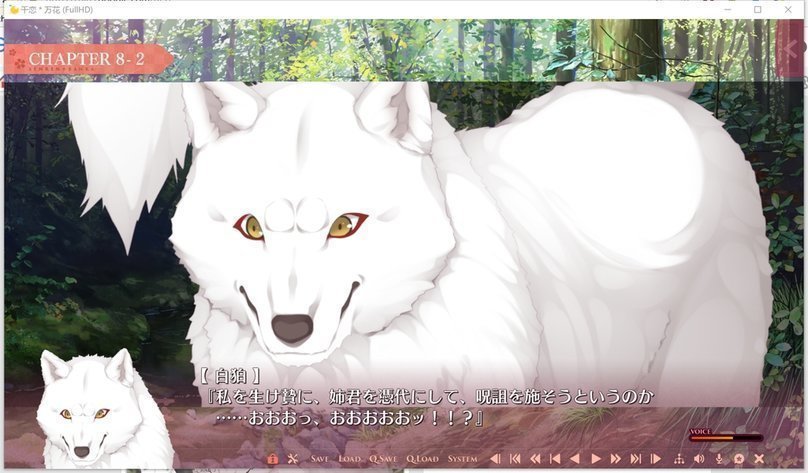
The rebellious faction was driven out and renamed Hitachi, serving as the Asami’s servants for generations.
Lena learns the whole truth of the Asami family in the dream… but wonders why an outsider like her would dream of this.
The white wolf’s spirit appears, saying Lena looks almost exactly like the mountain god’s daughter—likely her reincarnation. The wolf wants Lena’s body to revive the dead daughter.
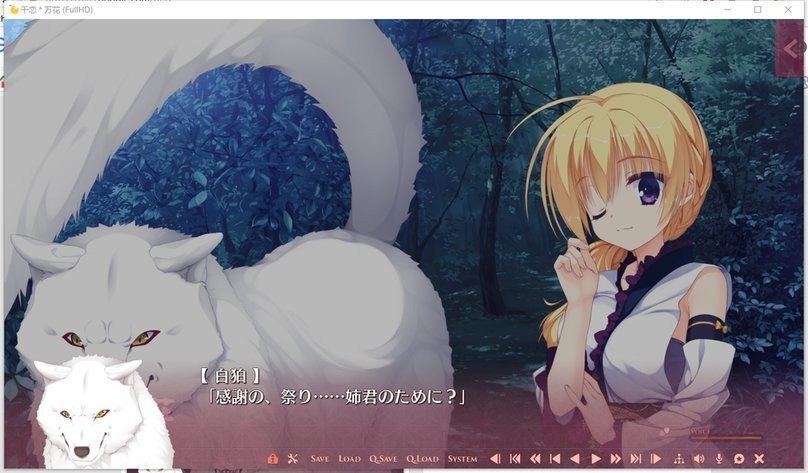
Eventually, after arguing and struggling, the wolf gives up. It also reveals that through certain means, it learned the meaning of the daughter’s words, “When you fall in love with someone, you’ll understand,” and came to understand the hardships of the whole village. The wolf is just a bit annoyed: why did humans, after all these years of protection, not thank it but kill it?
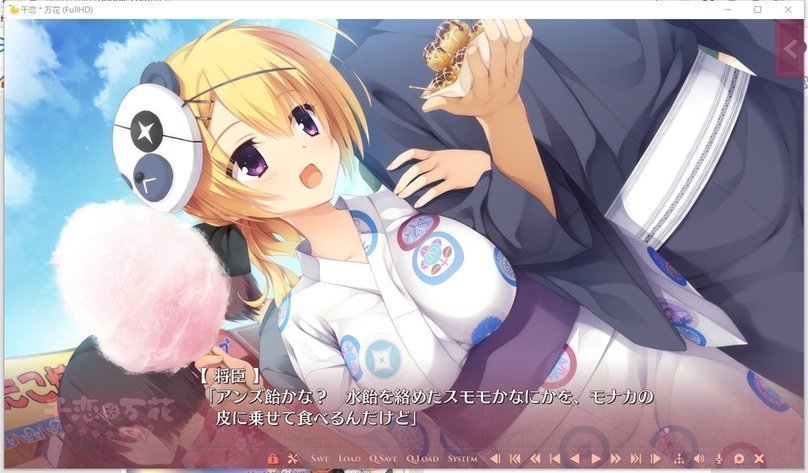
Lena explains that the villagers haven’t forgotten the gods’ blessings, and together with the Asami family, they call for an annual festival to thank the mountain god for its protection. The white wolf chooses to believe her and departs happily. The curse is gone, and Lena ends up with the protagonist.
Honestly… Senren * Banka’s story is a mess… but it can be pieced together. The whole framework is in Lena’s route.
Chronologically, everything starts with the mountain god’s daughter falling in love with the Asami ancestor. Then the Asami family is founded, the daughter sacrifices herself to give them eternal blessing and protection, and finally the family split leads to someone killing their protector god, turning the blessing into a curse—down to the present.
Murasame’s story happens 500 years ago, when the cursed Asami family established the sacred sword to enshrine at the shrine. After that comes Yoshino’s mother’s story as the previous shrine maiden.
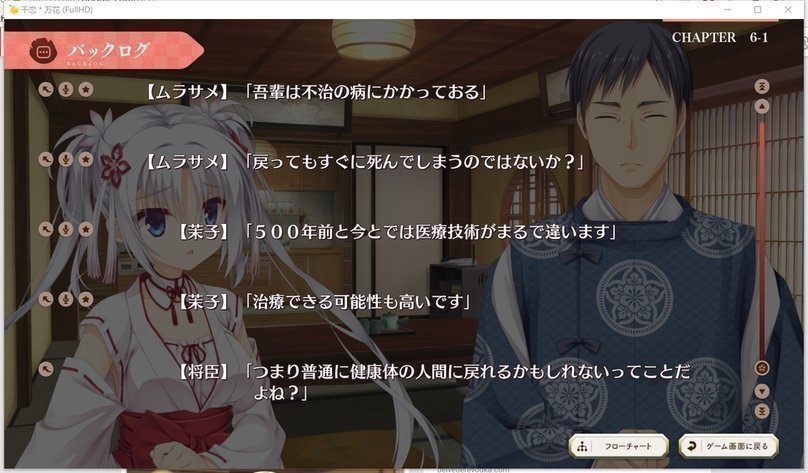
Mako’s route is also connected to the main plot. The deity in Mako’s route is actually the mountain god’s guardian white wolf. The line “When you fall in love with someone, you’ll understand” was what the mountain god’s daughter told the wolf; the wolf just wanted to confirm it.
So there’s a complete timeline starting from a god-mortal romance a thousand years ago, and when strung together it’s not bad…
But Yuzusoft didn’t do that. They chose to forcibly split each route apart…
Diluting the story and increasing the moe elements—that’s the problem with many of this game’s routes. Compared to Lena’s and Mako’s routes, Yoshino’s and Murasame’s routes are still stuck in the stage of forcing cuteness through verbal tics and dumb reactions…
The highest level of character building is through story and emotion, making you feel the character is real, maybe even reminding you of someone around you. The lowest level is giving a character triggers and verbal tics. Everyone knows what a verbal tic is; “trigger” here means overly formulaic and symbolic. Yoshino’s route’s flustered tsundere act… feels so fake, like acting, like the writer thought “ah, Yoshino should be tsundere here” and forced in a segment. The character doesn’t feel alive, just stiff… The same problem appears in Murasame’s parts—as a heroine route, Murasame appears less than side characters in her own route… What the hell. Mako’s route is a bit better in character writing, but the random car accident twist at the end is a needless ruin. The only one worth reading is Lena’s route, but!!
But!!
Lena is a foreigner! Is it really okay to give the historically weighty, True End-style flashback to a foreigner?
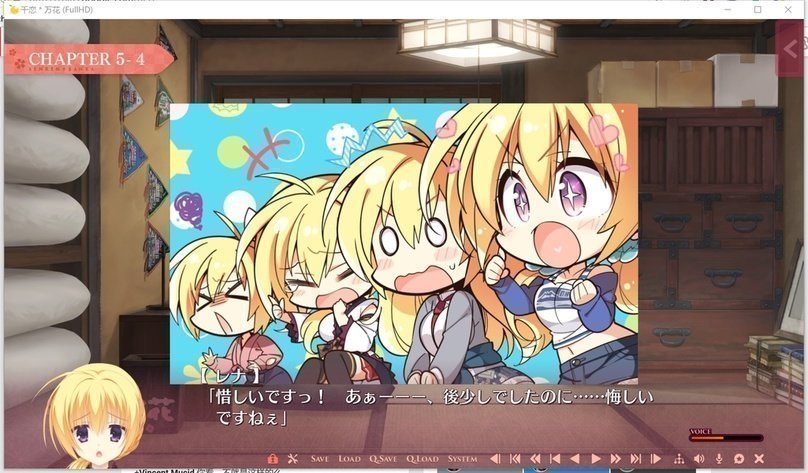
If I were the producer, I’d delete Lena as a character, merge her story into Yoshino, and lock it as the game’s True End.
But Yuzusoft really doesn’t want to do that. They’d rather strip out the connections between routes and split a story-driven plot into a character-gee, than add a route lock…
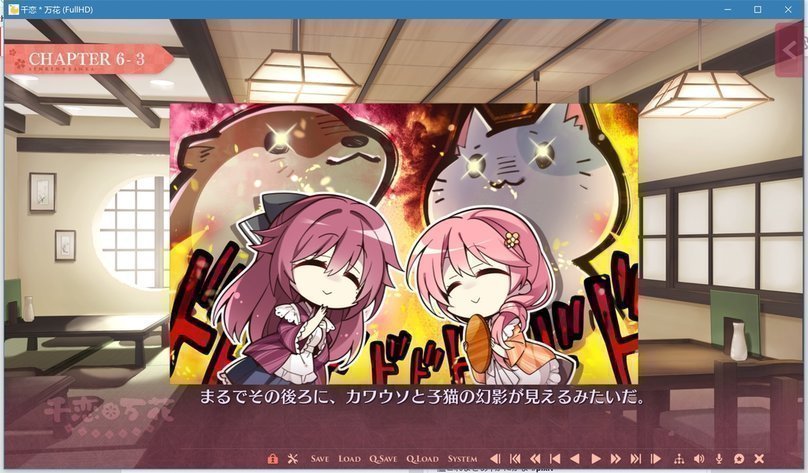
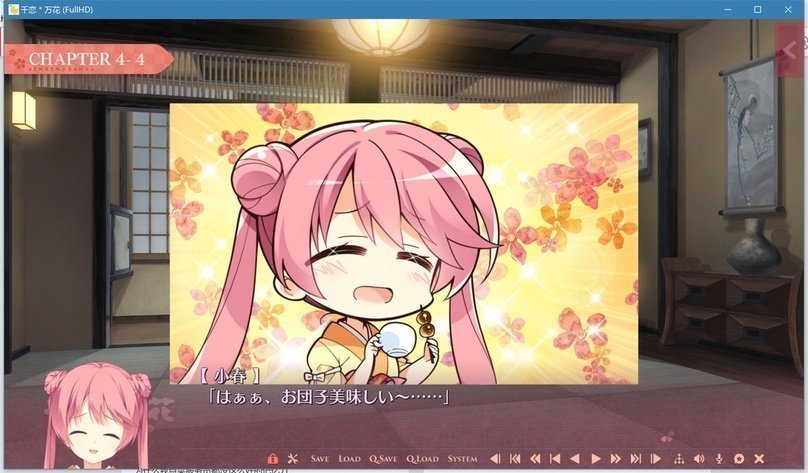
Oh wait, the game does have route locks—for the two side heroines, Kurama Koharu and Maniwa Rokа. Their stories are unrelated to the main plot, but unlike the previous game’s throwaway routes, they’re actually sweet, with a love triangle, making for a rare set of bonus routes.
By the way, Lena’s route was probably written by Touta. His skills seem to have improved noticeably in recent works—he also did that angel game a while back. I’m starting to see him in a new light.
I don’t know how to evaluate Yuzusoft’s Senren * Banka. It’s not bad, it could just be better… I don’t understand why it actively gives up on being a “plot-driven game.” It would get more praise if done well—why not do a little more? This reminds me of what I said at the start about “software engineering.” In a way, Yuzusoft’s game production has become an assembly line.
The art style is always those two people—that’s the foundation.
Then before release they announce the setting, post a series of “X days until release” countdown videos on YouTube every day, reveal character songs, then remix each character song’s main melody and insert it into the game as character theme music, make a separate ED for each route with a song, partner with the eternal AngelNote, co-promote with the eternal Saga Planets. It’s like you can see through this release that Yuzusoft has mastered the marketing of a game launch…
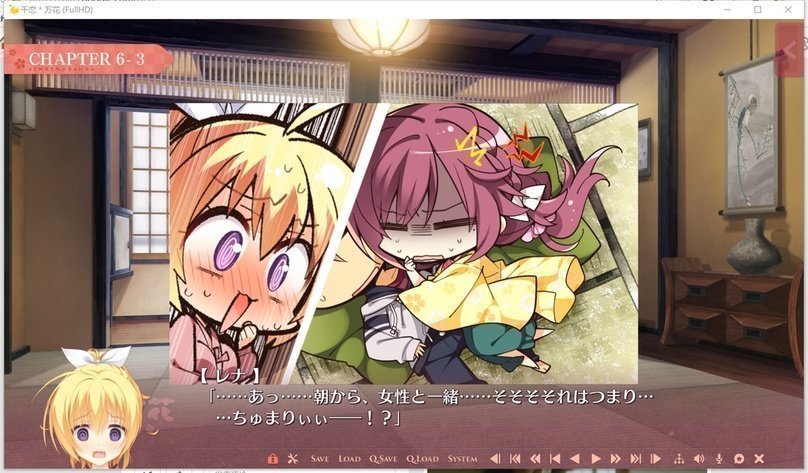
But doesn’t this overly assembly-line approach feel a bit boring?
Yuzusoft’s art style, after all these years, is cute but always feels familiar. And this game’s CG is lacking—many key story moments have no CG, while HCGs are abundant…
Yuzusoft’s writing, after all these years, has improved but still refuses to abandon the character-gee approach.
Yuzusoft’s music… ever since Natsuzora Kanata (夏空カナタ), it feels like it’s been stuck in the exact same formula forever. OP gets an arranged version, character songs get arranged versions, ED gets an arranged version, the character songs never get sold separately, each CD gets one track, fully factory-line at this point…
I can say this much: if Yuzusoft puts out a game next year, it’ll probably be the same formula. The setting changes a bit, maybe they’re not miko anymore, maybe it’s some other setup—could be athletes, could be crossdressing, could be ojou-samas, could be idols… but it all comes back to the same thing in the end: a charage that sells moe and sells characters. No big foreshadowing, no crazy twists, still just lazing along…………
Before release, sell the character songs first, then cram the arranged character songs into the OST, and finally the usual YouTube countdown of “X days until release”…
After release, it’s still the #1 seller of the year…
Maybe Yuzusoft really does have confidence in being #1 in sales. I believe they can be #1 too, but isn’t this all just a bit too formulaic? Or too comfortable… No surprises, no willingness to break out of their own mold. Is that really okay long-term?
The moe pigs haven’t gotten tired of the Yuzusoft face yet, but who knows when the times might change? Or if something happens with the artist?
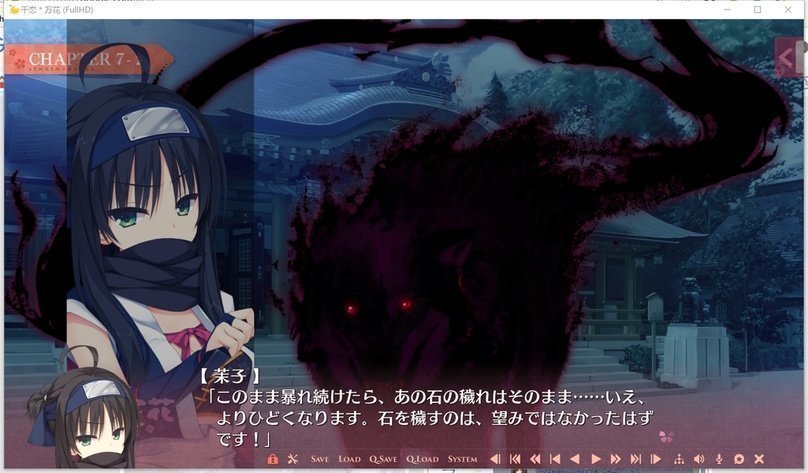
Might as well try breaking out a little. Starting a sub-brand is worth considering too…
More surprises, less formula.
How nice would that be…
Comments are hosted on the Chinese main site. This mirror is read-only.