Watashi ga Suki nara "Suki" tte Itte! (私が好きなら「好き」って言って!) Review
If You Like Me, Say "I Like You"
Lately I’ve been really into pure-love confession games. Probably because pure me is just too pure.
Watashi ga Suki nara “Suki” tte Itte! (私が好きなら「好き」って言って!) is exactly that kind of confession-raising game. To borrow the words of the well-known bishoujo game voice actress Kyoka, this one’s a “恋愛シュミレーションゲーム” — a love simulation game, basically. I’ve played a few of those before. The deal is that it isn’t structured like a novel; the heroines’ affection shifts dynamically based on what the protagonist does, and at the end whether you end up dating depends on how much affection she has for you…
That’s the formula from Purely X Cation, Pure X Connect, and the older Fureraba. No real story, just pure romance — and school life, of course.
But If You Like Me, Say “I Like You” has a couple of things that set it apart: the story and the system.
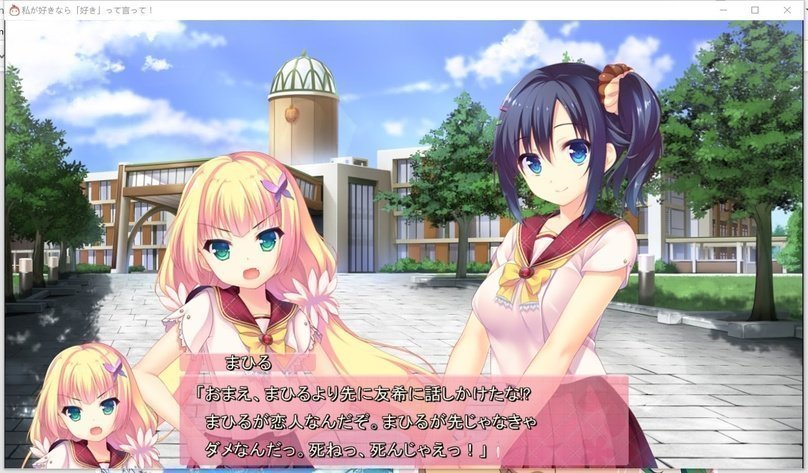
The setup is absurdly simple. One day the protagonist meets a self-proclaimed love fairy named QP under an apple tree at school. QP offers to help him get his romance going and can even check each girl’s affection level for him. Then the whole love journey kicks off with this unreliable little shit’s help.
If you’ve played something like Fureraba, you probably get it: the story is segmented. Nothing really connects; affection is what drives everything, and the scenes are chopped into fragments and inserted into each day’s choices. If You Like Me, Say “I Like You” works the same way — except the fragments are really high quality…
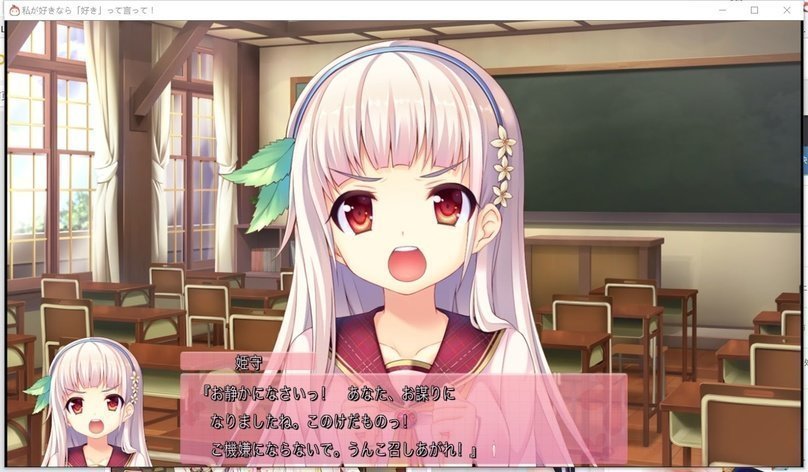
Pretty funny, right? As if I were saying Fureraba’s fragments were bad. That’s not what I mean. I’m saying the daily conversation fragments in If You Like Me, Say “I Like You” are the best I’ve seen in a raising-style romance game. They really show off what the writer can do.
In other words, the writer is great at dialogue and at building characters. Talking to the girls each day is genuinely fun. The scenes don’t connect into a continuous story, but the daily life still feels like a good time. It’s not quite four-panel manga style — it’s more like… sitcom style.
Yeah, something like those sitcoms you’d see on TV: I Love My Family, The Big Bang Theory, that kind of thing. Within the basic framework, you get daily conversation scenes, and it doesn’t really matter which one you see first. That fragment-based structure is exactly what fits the game’s system so well.
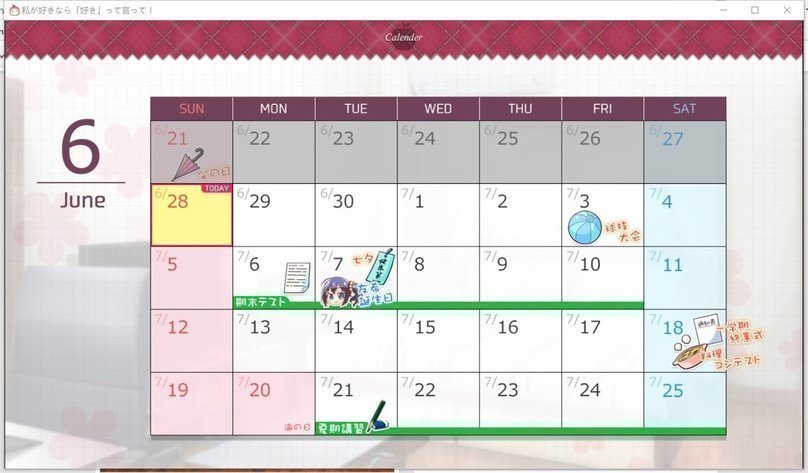
There are tons of choices: a weekly “自室モード” (your room mode) plus the daily walking route.
“Your room mode” is basically a weekly summary — you can check your current affection with each girl and decide whether to confess. The daily walking route choices are full of randomness.
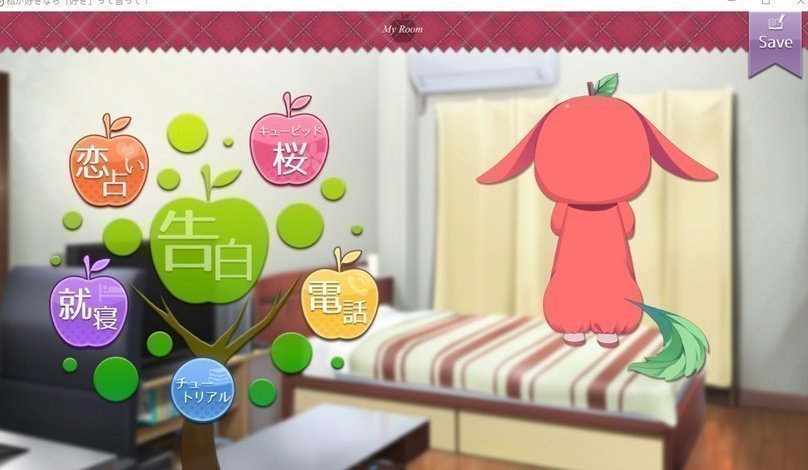
Random, but there’s a bit of a pattern. I like to call this system “drawing cards.”
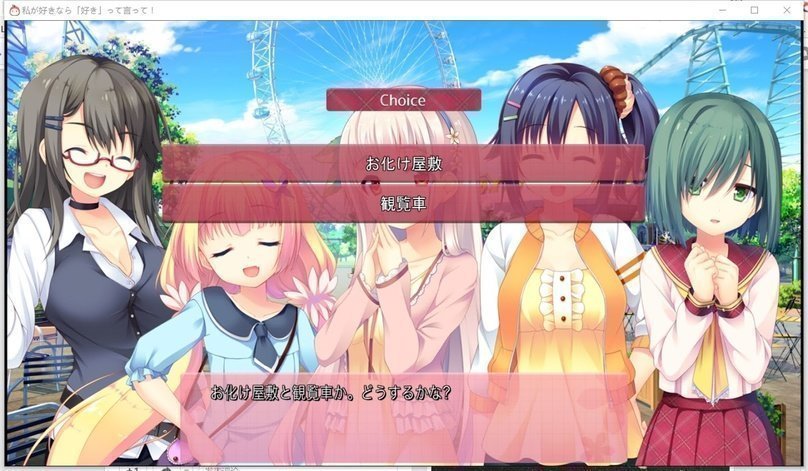
Each day has 12 options. One is “go home and rest”; the rest are little scenes that trigger events with different girls. These scenes are arranged randomly, but when you pick one, that scene disappears and a new one refreshes in its place. If you pick “go home and rest,” it seems to refresh a few scenes and replace them with new fragments.
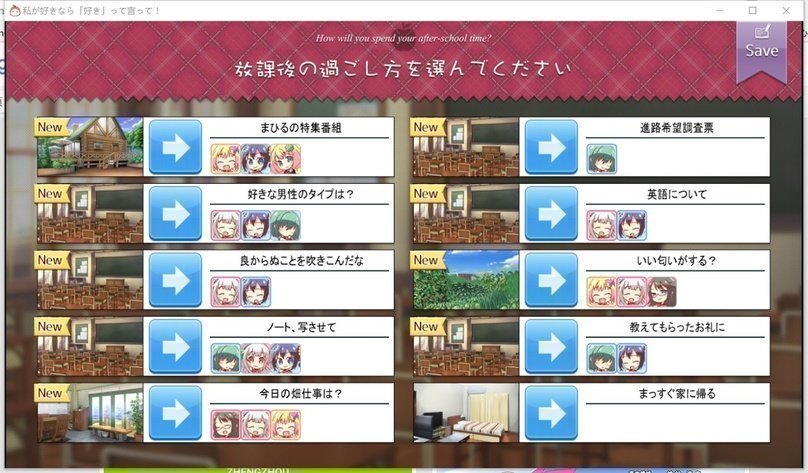
Just like drawing cards — pull one and a new one appears. Going home is like shuffling. That’s why a proper walkthrough for this game is basically impossible; it’s all random card draws, and what refreshes depends on what you pick. The general direction is simple, though: just look for the portrait of the girl you’re going after and pick her over and over…
Also, some scenes are continuous. Say you promise a heroine you’ll do something the next day — the promised event will show up in the next day’s cards. Remember to keep picking it, or you’ll waste the chance and lose the affection gain.
There are at least five romanceable characters, but only two are available at the start. You have to keep affection with those two from getting too high before the first semester ends to unlock Mahiru, and then the little sister later on. Sometimes “maintaining a delicate balance” is the real difficulty here. How the hell are you supposed to know whether the scales of affection have tipped when you’re picking left and right?
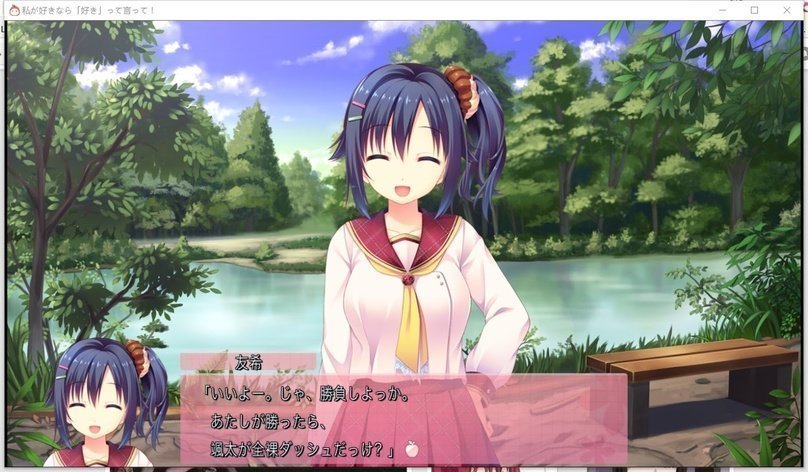
I went for Mahiru. She’s got a good personality — a loli… no, wait, a petite girl. She’s set up as the protagonist’s ex-girlfriend. When they were kids, his childhood friend pushed them into dating. She’s actually pretty small-minded, and when she noticed the protagonist and his childhood friend laughing together all the time, she felt like she might be the odd one out and broke up with him. Later she transfers into his school again, and the protagonist wins her over a second time. Even after that, Mahiru stays small-minded and gets jealous often. In the end, when the protagonist helps his childhood friend once, Mahiru asks to break up again. Fortunately, he manages to talk her down.
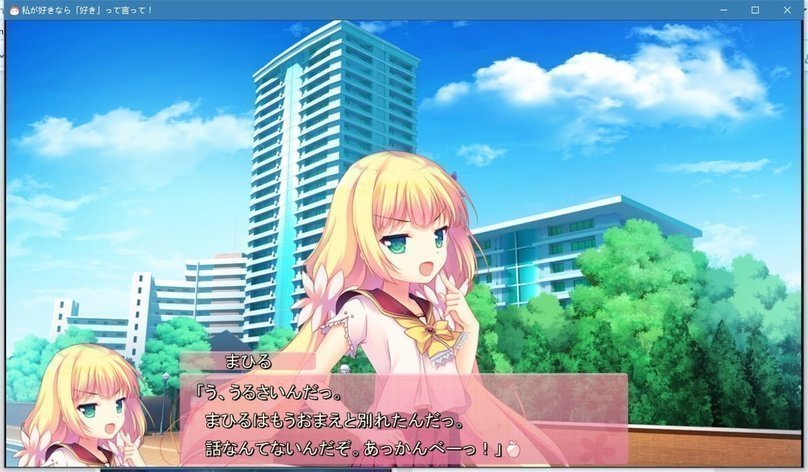
Honestly, from the start I felt Mahiru couldn’t leave the protagonist alone. Total princess syndrome.
I actually used to like girls with princess syndrome. This game slapped me in the face. Holy shit, what a pain — you have to do everything yourself every day, constantly coax her, and any little thing sets her off threatening to break up. Exhausting!
The card-draw system makes getting onto a route easy, but the game has two endings. One is a reverse confession: once your affection for a heroine maxes out, she confesses to you. The other is you confessing yourself — there’s an animation under the apple tree showing your words and the girl’s reaction.
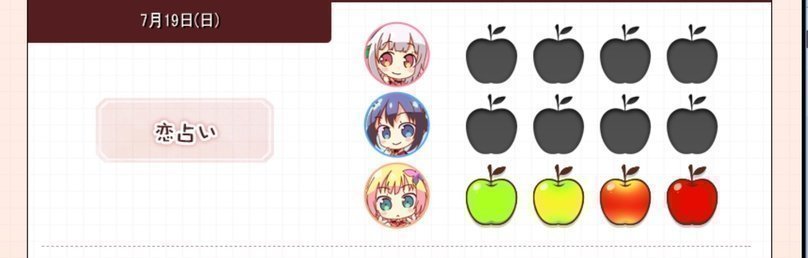
But that animated part is the one that feels like the real main course! It’s also hard as hell. You need the girl’s affection to be just right. There’s a “school trip” event in the middle. If a girl’s affection is high during the trip, she’ll ask if you like her. Pick “yes” and it’s a reverse confession. Pick “no” and it’s an instant game over — her affection drops to zero, and you won’t be able to build it back up in the two weeks after…
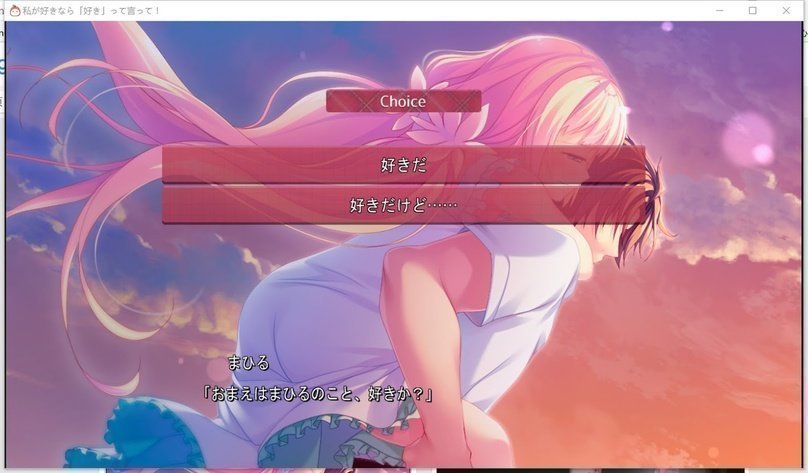
So you have to keep affection from being maxed out during the school trip, but still high…
Holy shit, that’s hard!
No worries, though. Open the game folder, find the Movies folder, and watch the main feature yourself. The confession videos are all in there, wmv format, watch as much as you want… Apart from that, the rest of the scene is the same as the reverse confession.
Not sure if that counts as cheating?
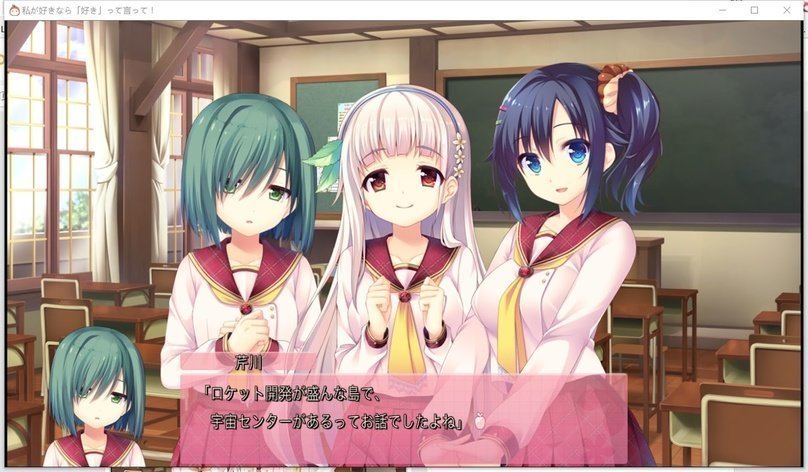
Worth mentioning: the school trip section is basically a full ad for the developer’s previous game. The protagonist and heroine of Ano Harewataru Sora yori Takaku both show up, and the place they visit is Ten no Shima — same world as Ano Harewataru Sora yori Takaku. A little easter egg.
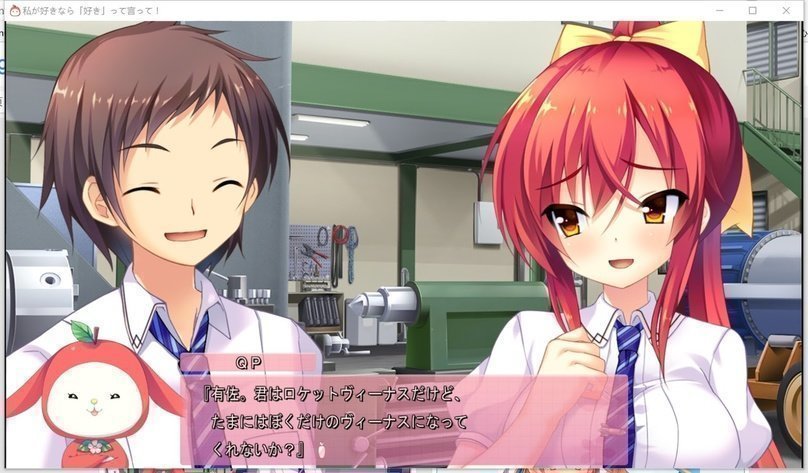
This game is pretty relaxing. The daily stories are fun, like watching a sitcom. Everyone has a distinct personality, the romance scenes are sweet, and the art has no real flaws. The OP is also really, really good. The card-draw-style choice system is fresh too, and other games in the genre could learn from it… A PSV version would be nice too… It’s got the potential.
Still, what moved me most was the confession dialogue under the apple tree at the end — not the protagonist’s, but the heroine’s.
Mahiru’s lines:
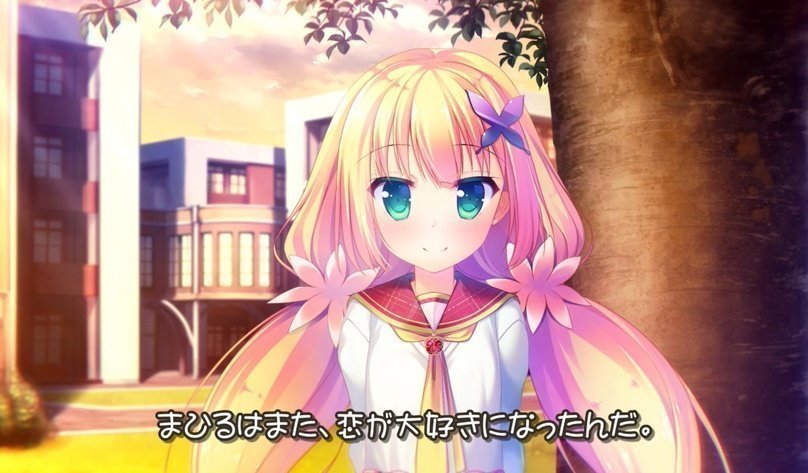
“We broke up in the past, and after that I thought I might never fall in love again. But I always wondered if it would’ve been better if I hadn’t done that… I hate you more than anyone in this world, but in the end I still love romance the most. And I love you the most.”
What hit me hardest, though, was Yuki — a character I didn’t even pursue. Honestly, Yuki has a huge role in the whole game and shows up a lot even if you don’t romance her. As the protagonist’s childhood friend, she’s always making dirty jokes and not treating him as a man. If you translated Yuki’s confession into Chinese, it’d be enough to flex on those literary/emotional forums on Douban for a week…

“Strange, isn’t it… All this time, I’ve just been ‘your childhood friend.’” “We’ve done so many things together.” “Ate together, played together.” “I never thought much about it. I always saw you as a childhood friend.” “Sometimes I think… if only the two of us could stay like this forever…” “Yeah… stay like this forever.” “Not changing anything, just staying like this forever.” “Until we grow up, until our hair turns white…” “If that happened…” “Then these feelings… maybe before I knew it…” “would have become something called ’love.’”
If more childhood-friend heroines in light novel adaptations said that, would they still get wrecked so hard by the sudden-new-girl heroines…
Comments are hosted on the Chinese main site. This mirror is read-only.