Sen no Hatou, Tsukisome no Kouki (千の刃濤、桃花染の皇姫) Review
千の刃濤、桃花染の皇姫
I’m not really a fan of “guns, cars, and balls” games—I find they get old fast. After all, run-and-gun always boils down to the same few formulas, so even during the years when CS was huge, I didn’t play it for long.
If I had to name what I genuinely enjoyed playing the most, it’d be Chinese RPGs. Like everyone else, my first was the Xianjian series. Before RPGs I never read the story — the run-and-gun stuff wasn’t translated back then anyway, but it had GPS-style navigation: open the map, follow the route, kill whoever you run into. RPGs don’t let you skip the story, though. It’s a narrative, and no walkthrough is gonna sit there and recap the plot of every game you’ve played the way I stupidly do.
So starting with the “Xianjian” series, at first I was mashing Enter to skip every conversation with anyone in Yuhang County, until I got to Suzhou City, where I started actually reading the story properly. Bit by bit I settled into it, and felt the pull of “game plot” for the first time. Of course you can’t say the “guns, cars, balls” games of that era had no plot — it’s just that games back then didn’t say much about their plots. How was I supposed to know that Delta Force 3 Land Warrior had a cute little sister character named Mako who nearly got killed off… the game didn’t mention a damn thing about it.
What I’m actually getting at is this: riding that wave of Chinese RPGs, I started playing games “as stories to read,” and somewhere along the way RPGs drifted apart from the whole “guns, cars, and balls” crowd. The latter chases a “rush”; the former chases a “read.”
Chinese RPGs had a golden age once. Plenty of them, even now, could wipe the floor with a lot of Japanese visual novels — China’s history is longer than Japan’s, after all, and there’s a lot more material worth showing off. Even if the cultural climate on the mainland keeps getting worse, at least the Chinese-speaking world still has Taiwan. The Xuanyuan Sword (轩辕剑) series counts as a pretty unique presence in Chinese-language RPGs: it was the first to fuse “history” with “mythology,” and the side stories in particular weave “emotion” into the mix.
Plenty of people have probably experienced the Xuan-Yuan Sword (轩辕剑) series at some point — whether it’s “The Other Side of Clouds and Mountains,” “The Black Dragon Dances and the Clouds Fly,” “Dance of the Maple Leaves,” or “Scar of the Sky.” These are games old-timers can’t stop talking about. When we talk about them, we might get hung up on the distinctive “special techniques” or the inventive “Demon Refining Furnace” system and how fresh it all felt. But mostly it’s the story and scenario. You play some unremarkable protagonist, step into the long river of history, feel the course of it moving, and more or less leave your own mark on it — that’s a pretty good experience in itself.
I actually played “Black Dragon Dance, Clouds Fly” before the earlier ones. The earliest, Xuanyuan Sword 4: Black Dragon Dance, Clouds Fly (轩辕剑肆 黑龙舞兮云飞扬), is set in the Qin dynasty. Fun fact: aside from leaning hard on “mechanical beasts”—basically mecha NETA as combat units—the story holds up pretty well. The devs even put out a setting book, plus various branching endings and character portrait art. Not that I had a choice, really, since it was the first 3D game in the series and making out anyone’s face was rough. Even now, looking at Japan’s The Legend of Heroes: Trails of Cold Steel, the faces still don’t hold up to 2D art.
Looking back now, that sales model was basically the same as Japanese eroge… or rather, it was an all-ages galgame with combat. The more Japanese eroge I play these days, the stronger that feeling gets — especially when a story pits “one’s life” against “the greater cause,” I always end up thinking of Xuanyuan Sword: The Millennium Destiny (轩辕剑:苍之涛).
「苍之涛」应该是我心中评价比较高的一个存在,也和我这个人没什么对抗倾向有关,游戏主题为反战,以及反对不同人之间,站在不同立场之间的无所谓的对抗,你死我活之后,什么都没有留下,做到了极致,也莫过于只是历史沧海中的一朵浪花罢了。
I think about this a lot… if the original DOMO crew had stuck it out to today instead of cycling through several different generations of staff, maybe the Xuan-Yuan Sword and Xianjian series could have become the benchmark for “Chinese-style galge,” and we wouldn’t have to crawl through ErogameScape every day reading Japanese people’s endless persecution-complex fantasies about some tiny nation standing up to a big power in an isekai world.
Yet that wish ain’t happening. Chinese visual novels may look like they’re booming lately, but the scene’s flooded with clumsy copycats, project plans full of deranged “spiritually Japanese” rants, and a market drowning in softcore porn. Leaning on “history” alone is just a niche gimmick now… whatever, if it’s dead, it’s dead.
Still, I sometimes wonder why the Japanese can’t make a game in the style of the Xuan-Yuan Sword series. They always love to fabricate some broken European-style world, with painfully long katakana names, striking the pose of spiritual European aristocrats while delivering the dialogue of a Japanese tsundere schoolgirl. They’ve been doing this for years, and they’re still hooked on it. You rarely see them portray Japan’s own historical atmosphere (very rare), and the occasional one that does is neither a hit nor a miss, or even a landmine. Some say Japan’s own history has little worth digging into, others say the Japanese themselves like the European knightly style—anyway, it’s all a mess. Few people work on this subject.
But this time someone finally did it — Orchestra, no less. AUGUST (八月社). I’ve got a good impression of August; whether it’s the early Yoake Mae yori Ruriiro na or the later Ika no Eustia, plus their previous game Daitoshokan no Hitsujikai, what August gives me is a sense of “steadiness.”
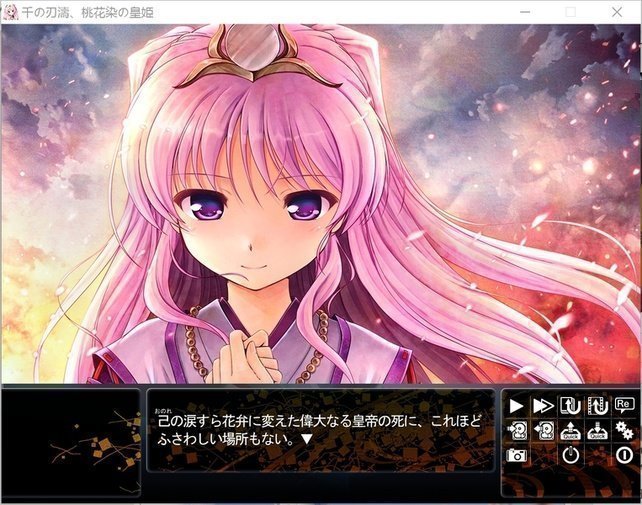
Right — very serious and grounded, with that Japanese “artisan” spirit to it. Once they lock in a style for a work, they carry it all the way through. The “August face” gets memed on, sure, but the art really is gorgeous. I’ve always thought that August-face style is perfect for drawing ancient nobility. No need to even mention the music — seems like they’ve got a fixed team for that too — and the scenario writing has always been dead serious.
Serious is serious, and August always gives you this feeling of being “reliable.” Yoake Mae yori Ruriiro na is a story with a clichéd plot, yet it still manages to lay out its theme clearly and steadily by the end — you can’t pull that off without some real storytelling chops. Never mind the wall-to-wall seriousness of Aiyoku no Eustia, which genuinely reads like a novel. And with Daitoshokan no Hitsujikai, the theme switches to a laid-back school vibe, so the story sticks to that style, absolutely refuses to step out of bounds, and pushes the relaxed school direction as far as it’ll go.
So when August announced their new title Sen no Hatou, Tsukisome no Kouki, I was hyped. The style was already locked in — classical Japanese setting — and with a title that grand, it clearly wasn’t going to be some “chill slice-of-life” thing. So I waited, and waited, until the trial version came out. After finishing it… I had mixed feelings.
I already talked about how I felt about the trial version, and my feelings are honestly all over the place. I figured this game probably wouldn’t turn out to be much, but at the same time I kept thinking — how did August, a studio that’s always been so “serious” and “reliable,” suddenly crank out such a messy pile of junk… Unbelievable!
So before I even got to the full release, I’d already lowered my expectations for this one in my head. Especially after seeing what Yuzusoft and SAGA PLANETS put out. August didn’t really promote their game either — no promo videos on YouTube, no release countdown skits. Business as usual, it seemed. “Steady” as ever.
这让我更迟疑了,发售当天等到放流就开始打了,坦诚的说这应该是我今年肝的第一个游戏,之前的都没这么用力,去年的サクラノ詩我也没这么猛。
The route structure is the same as in Imawabi no Eustia (穢翼のユースティア): one main line all the way through, with the other heroines as side branches in the middle, so you could also see it as a single route. As a True End loyalist, I didn’t give a shit about the rest and just went straight down that one line to the end.
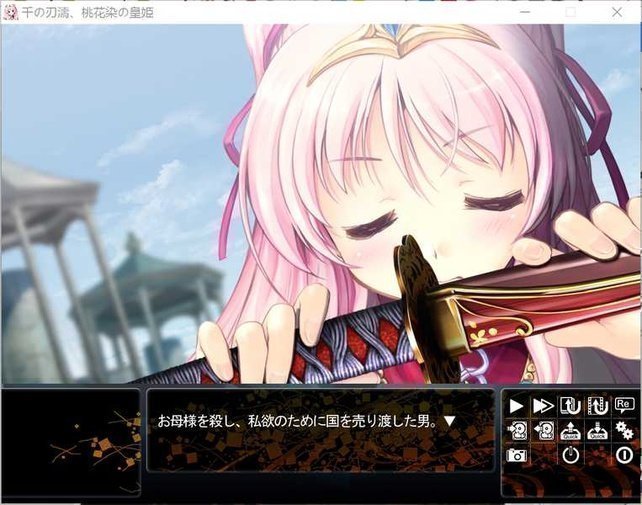
The setting: the country where the protagonist lives, the “XXXXX Imperial State” (those ridiculous kanji are impossible to remember), gets attacked and wiped off the map by the “XXXX Republic,” which has a more advanced political system and better tech.
When the nation was in peril, the Imperial State’s sacred defensive barrier, the “Curse Wall,” failed, the guardian artifact vanished, and the chancellor, “Okomi Tokihiko,” suddenly turned collaborator and sold the entire country to the Republic. The Empress died in the war, and her successor, the Imperial Princess “Miyakuni Akari,” became a princess in exile. Before the palace of her fallen nation, the princess swore to take revenge, kill the traitorous chancellor, and restore her country.
The chancellor had turned traitor and guided the enemy in, so the Republic saw this as the Empire surrendering outright and didn’t bother fighting further. They just had the chancellor install a puppet emperor, grandly titled the Empire’s “Jade Emperor.” Which meant the whole Empire was basically reduced to a colony of the Republic, with a puppet emperor on the throne — the Empire in name only.
The princess hides her identity and trains in the sword, hoping to sneak into the palace and kill the chancellor — but she’s not strong enough, and she’s nearly beaten to death by the guards. The protagonist sees it happen and saves her without a second thought. Afterward, once he’s heard her out, he believes unconditionally that she really is the princess, and even introduces her to Inoue Hakai, leader of the imperial underground resistance group the “Hōtōkai.” Turns out that even though the empire has forgotten, the “warriors” who once gave their lives for it never died out — they’re plotting to gather the “curse blades” tied to the imperial family, waiting for the day they can rise up, restore the Ming and slay Wu Sangui… oh, sorry, overthrow the puppet emperor and kill the traitorous chancellor. The protagonist is one of the warriors too, except he has no memories of the war that destroyed the nation.
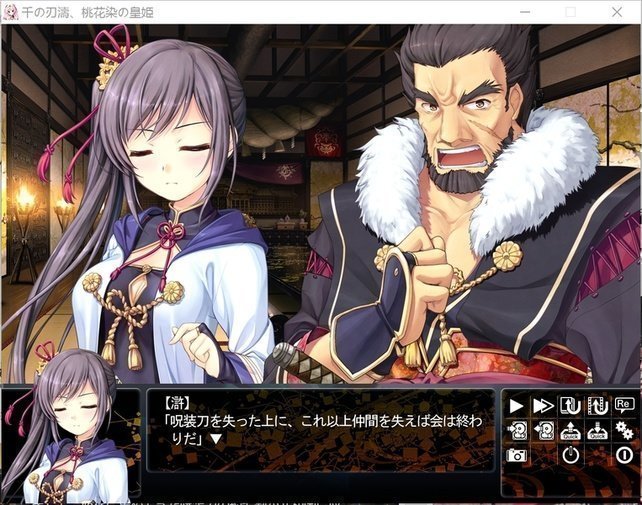
But that alone isn’t enough people to start a rebellion. The “Houtoukai” leader, Inou Kō, keeps insisting she’s only the acting head—the real chairwoman was captured in some past raid when the Republic found their base and wiped them all out, and her fate is unknown. She could take over as chairwoman, but she doesn’t think she’s up to it. She doesn’t have what it takes.
“Inō Hakari” is the chairman’s daughter, and the big job’s been handed to her — but she’s still just a young girl, so winning people over is an uphill battle. And “Inō Hakari” herself has no confidence in becoming the head of the “Hōtōkai.” She screwed up badly once before: during one of the organization’s operations, her own mistake got the entire squad under her command wiped out…
The leader of the “Hou Tou Kai” herself had no real confidence in the role, and she was just a young girl besides. On top of that, the group had spent years hiding under false names and rarely acted at all, so plenty of warriors were starting to chafe. The loudest of them was a certain warrior chief named “Makikazuma”—relentlessly provoking her, mocking her, even demanding that “Inou Kō” face him one-on-one to see what she was really made of. For the sake of holding things together, “Inou Kō” had no choice but to grit her teeth and endure it.
Then, during one of their events, a warrior leader named “槇数馬” openly kicked up a fuss, saying he was quitting the “奉刀会” — he couldn’t stomach taking orders from this spineless little girl. Before long, “稲生滸” discovered that “槇数馬” had thrown in his lot with that traitorous chancellor, and had even ended up as a guard in the palace dungeons.
Then word got out that Inou Kō’s father was locked up in the palace dungeon, still alive. Inou Kō decided to go rescue him, and ran into Maki Kazuma along the way. When he got there, all he found in the cell holding his father was a corpse. Maki Kazuma said he’d cut the man down himself, then had the nerve to sneer, “If you’ve got a problem with it, come fight me!”
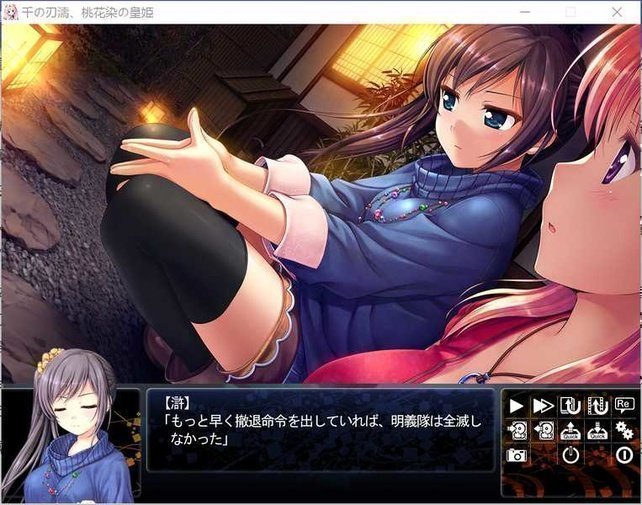
The furious “Inou Kō” finally drew the cursed blade her father had left her, “Shiranui,” and defeated “Maki Kazuma” in their duel. She soon discovered that the corpse in the cell was not her father. Only then did “Inou Kō” realize that everything had been “Maki Kazuma’s” act of kindness. “Maki Kazuma” had seen the young leader’s inner hesitation and lack of confidence, so he used every means to force her to take up the cursed blade that symbolized the chairwoman’s authority and face him head-on. He wanted to see whether she truly had the ability, and in the end he found that she was indeed a leader worthy of trust. He was sincerely convinced, and his rebellion had been nothing but an illusion—in his heart he remained a loyal retainer.
“Inou Kō” forgave the old warrior, came to understand his own responsibility, stopped losing confidence, grew more resolute, and formally became the head of the “Hōtōkai”—the warrior band grew more united than before.
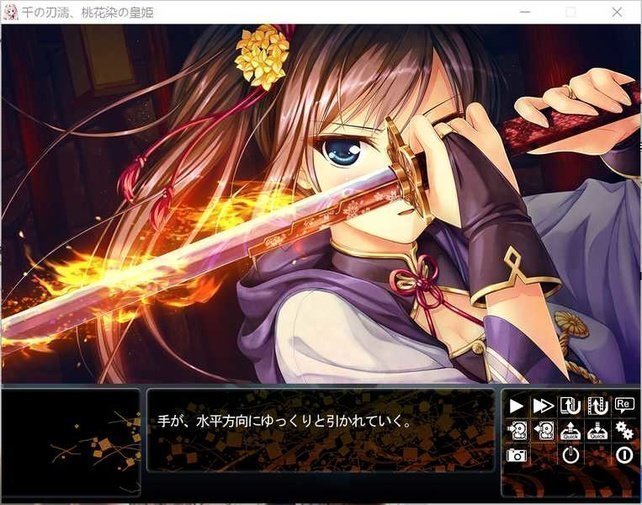
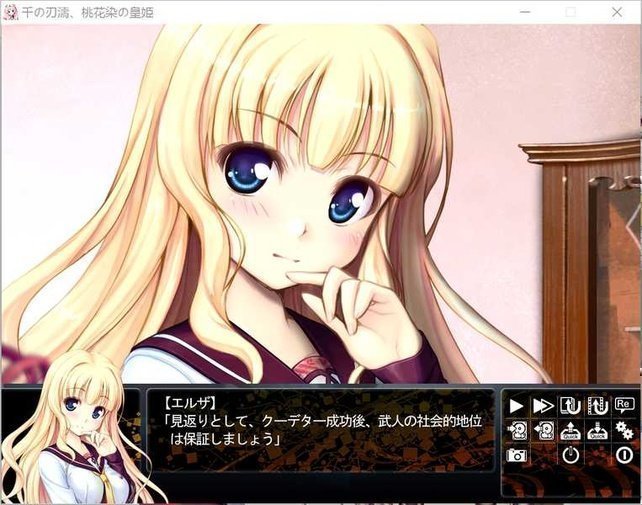
On the other hand, the Republic had assigned Colonel Elza to keep watch over the puppet emperor at the imperial palace, Emperor Hisui. Elza is a Republican; though she belongs to the invading nation, she’s naive at heart. She believed the Republic had only helped the imperial state overthrow its imperial system, and that it should bring them freedom, democracy, and more besides. Elza discovered that Emperor Hisui was nothing but a pitiful puppet, with real power in the hands of the chancellor, and deciding this couldn’t stand, she lodged a protest with the Republic’s leader—her own father.
Turns out my father laid it out plainly: we’re invading their country, and a pliant puppet is necessary. The chancellor has been paying us tribute in silver every year — sure, he squeezes it out of the common folk, but as long as we’ve got money and power, who cares. Democracy and freedom? Not my problem. We’re not here to liberate the empire, we’re here to colonize it.
Elsa was pissed off, so she decided to be petty. She secretly contacted the Jade Emperor and told her, why not launch a coup yourself, get rid of this chancellor (Oboi?), and stop being a puppet? The Jade Emperor said she had no troops, so Elsa said, you can mobilize your samurai, can’t you……
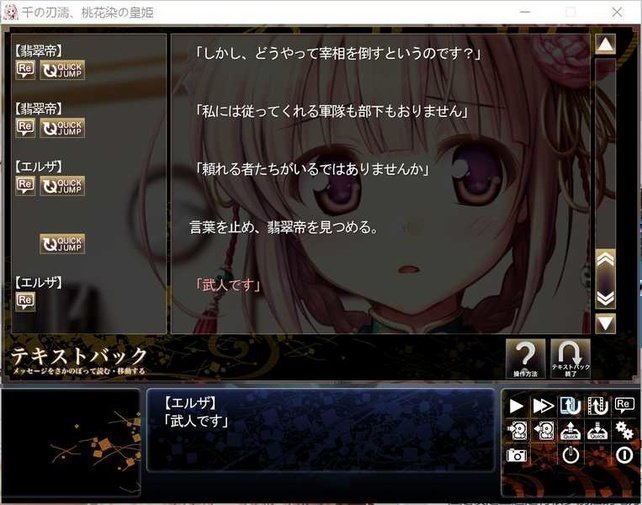
So Elza got in touch through the Jade Emperor and the protagonist’s warrior circle. The Houtou-kai was wary — the Republic would actually agree to let them kill the treasonous chancellor? Elza laid out her thinking: she herself wanted to bring democracy and freedom to the Empire, along with peace, and she didn’t agree with what her father was doing. The protagonist, for appearances’ sake, went along with it. But the Jade Emperor said that once the coup succeeded, he’d abolish the imperial system — and the protagonist could only agree on the surface.
The Hōtōkai and Elza were both scheming. Elza figured that once the Hōtōkai took out the Chancellor, she’d turn around and wipe out the Hōtōkai too — after all, they were a resistance group the Republic hated. The Hōtōkai, for their part, planned to depose the Jade Emperor once the Chancellor was gone, since he was just a puppet emperor (and actually the protagonist’s adopted sister). They could put the real princess on the throne and declare independence while they were at it, telling the Republic to get lost.
So the two of them were each scheming away in their own heads, and the day of the uprising arrived.
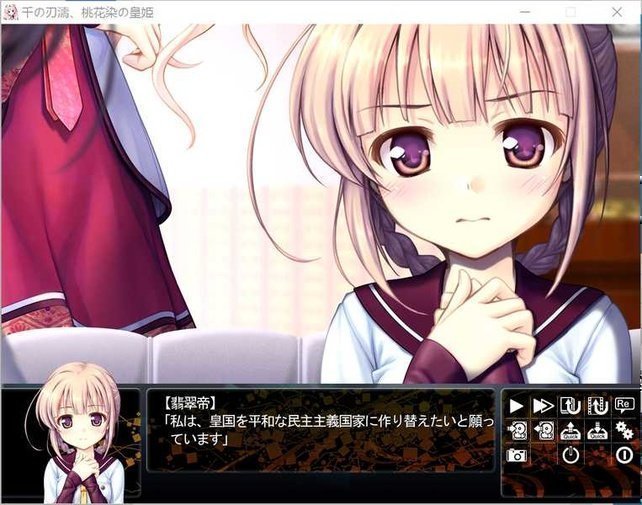
The plan was for Elza to reinforce the palace guard with troops, securing everything except the dungeon, while the Houtou-kai would storm in through the dungeon and take out the chancellor directly. Then, one hour before the uprising, Elza’s father called: he’d launched an air raid on the Houtou-kai’s base village.
The airstrike meant the warriors there would die, and the civilians too.
Elza is thrown into a panic — now they’re killing even commoners. Then Elza’s subordinate Rochelle shows up and freely admits it: all the snitching was his doing.
Elza immediately dispatched troops to the airstrike site to warn the civilians to evacuate, but the protagonist’s Houtoukai didn’t trust Elza’s forces either. They never assembled at that airstrike location—in fact, they’d already arrived at the imperial palace ahead of time. As expected, the palace was packed with troops, helicopters, and even tanks. The martial artists wielding cursed blades could use their curse power to stop bullets (or maybe even deflect them—what are you, Genji?), but they were no match for heavy weapons.
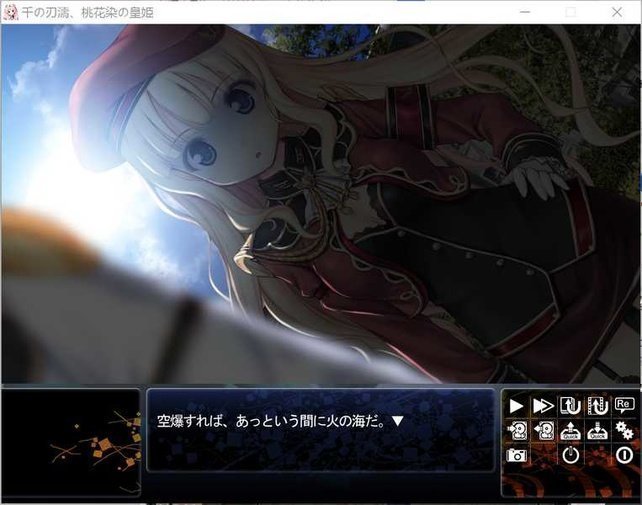
Of course, it ends badly: the warriors are almost completely wiped out, while the protagonist and the princess fight their way into the imperial palace. There they find the chancellor—and over the course of the conversation, they realize he was a loyal retainer all along.
So it turns out the Chancellor surrendered to protect the “Three Sacred Treasures of the Nation” (Kunlun Mirror, Nüwa Stone, Xuanyuan Sword…). No wait, my bad, it’s (Tianji Mirror, some Gou-something Jade, and some kind of Imperial Sword). And the Chancellor knew where the Hou Blade was all along—the flower shop owner who adopted the protagonist was one of the Chancellor’s men, and the Chancellor had actually been secretly helping the Hou Blade recuperate and rebuild this whole time. The puppet emperor was just a placeholder waiting for the real princess to return, and so on and so forth… (The whitewashing is such a goddamn rollercoaster I can’t be bothered to spell it out—just know the Chancellor was actually a good guy). In the end, the Chancellor gets crushed to death by a pillar knocked down by cannon fire. Right before dying, he tells the princess where the Three Sacred Treasures are. The most important one, the “Heavenly Imperial Sword,” he doesn’t reveal—he just says to be sure to have the shrine maiden polish the Heavenly Imperial Sword the same way she polishes the cursed blade, and only then will it reach its full power.
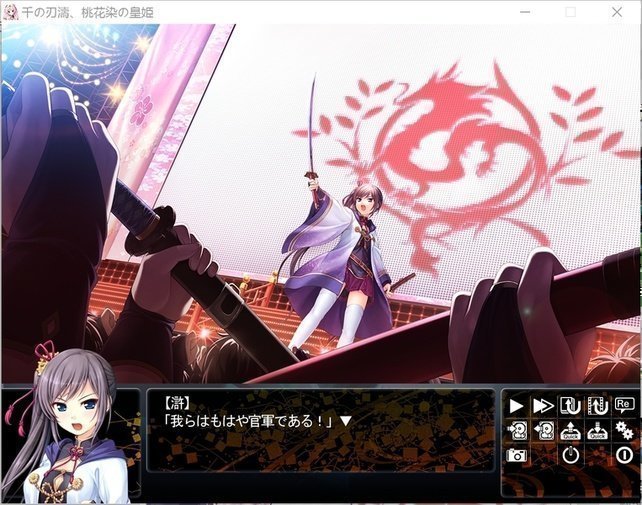
The protagonist and the princess run for their lives, the Republic’s army chasing them for all they’re worth. In the end, after the protagonist pulls some bullshit, throwing his sword to blow up two helicopters and slashing a tank clean open, he’s badly wounded. He falls into a coma, and the princess, with help from the surviving shrine maiden “椎葉古杜音,” hides away in a village in the mountains concealed by curse arts.
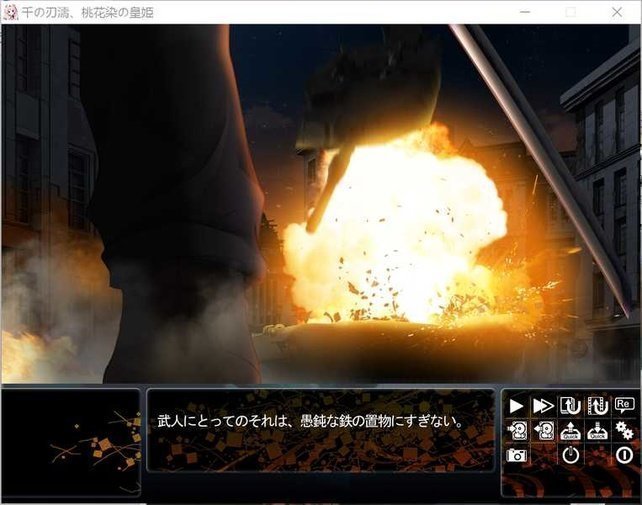
And so the uprising ultimately failed. The warrior leader was captured, most of the warriors died in battle, and Elza was forced to acknowledge the empire’s act of rebellion, placing the Jade Emperor under house arrest. Control over the empire grew even stricter, and things got worse.
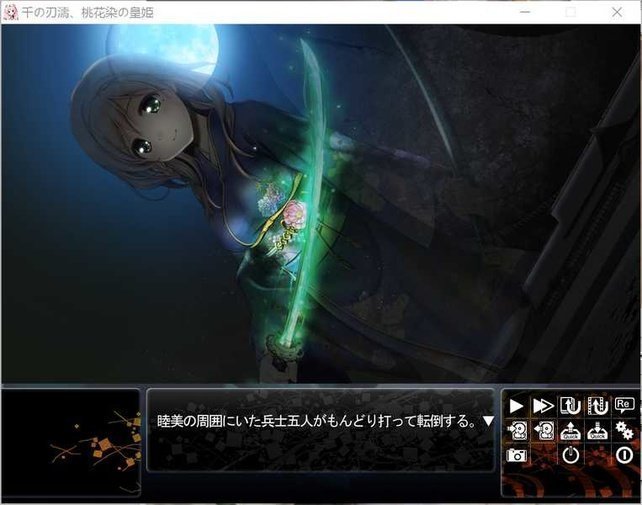
While the protagonist is unconscious, he sees a long dream. The game’s chapter is called “Handan no Yume” (邯郸之梦), a term that comes from China — it means the same thing as “a pipe dream.”
In the dream, the protagonist is some kind of thing called “Mitsurugi” (written in kanji as 御剣), created by the empire’s founding emperor through curse magic for the purpose of protecting the nation from invasion.
The ancestral empress was a powerful woman who wielded curses. She gathered shrine maidens and used the power of those curses to unify nearly thirteen countries. And to create the protagonist as a “sword to be wielded”—a Giken—she sacrificed a full eight hundred eighty-eight shrine maidens’ lives. Incidentally, the imperial family’s curse blades are all obtained by sacrificing shrine maidens; when each maiden’s soul is bound to a blade, that blade gains immense power. Only warriors equip curse blades, and they do so to protect their liege.
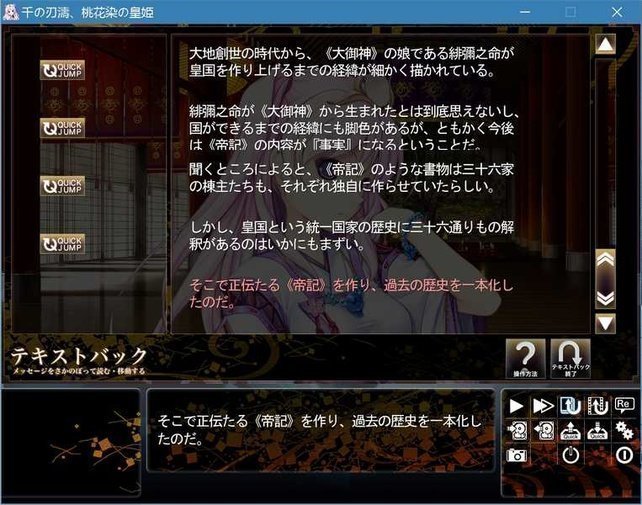
The Founding Emperor said he unified the country to bring peace, and after unification he began compiling the “Imperial Records,” gathering the words of the hundred schools, collecting history, and leaving it for later generations. At the same time, to spread the “Imperial Records” he had compiled, he set up various academy-like institutions to bring culture to the common people.
At the same time, when the Ancestor Emperor unified the realm, the fighting against the neighboring “Hu Kingdom” was pretty intense. After unification he declared he wanted to guard against trouble before it arose, and decided to build the defensive “Curse Wall.” Building the Curse Wall meant draining even more money from the shrine maidens and the common folk, but the Ancestor Emperor said he was doing it for future safety—and he’d go through with it even if the people’s grievances filled the streets.
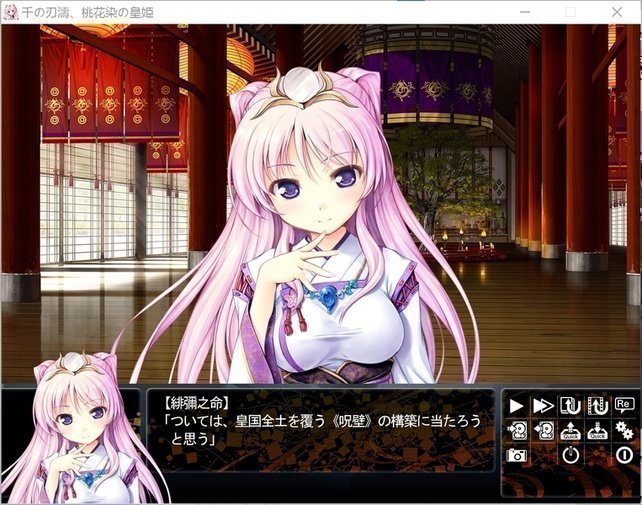
Soon after, the construction of the curse walls and all sorts of forced cultural promotion stirred up plenty of resentment. Some people tried to rebel, and the protagonist and his crew caught them. As a guard, the protagonist asked the Ancestor Emperor how to deal with them, and the Ancestor Emperor had just one word: 斬る。
So basically every opposing faction got cut down on the spot by the Ancestor Emperor without a shred of mercy. One of the guys he cut down was in a really bad way — he was laughing right before he died, saying he’d be back again, and that he’d definitely make the Ancestor Emperor pay.
Later, the Ancestor Emperor says his lifespan is running short—he’s used too much curse magic, and curse magic eats away at your life. He decides to do two things: leave behind an heir, and use the shrine maiden to extend his own life. The Ancestor Emperor starts holding matchmaking meetings to pick a man, but he’s satisfied with none of them. Truth is, there’s only one who satisfies him—the Mitsurugi he built himself. Nominally artificial, sure, but still a living being.
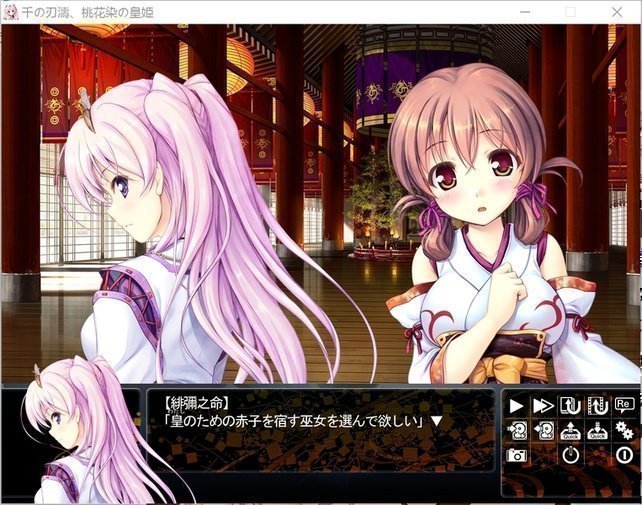
At the end, Mitsurugi fucks the Ancestor Emperor — she gets pregnant, and the Ancestor Emperor uses curse magic to transfer the child into a shrine maiden to serve as a surrogate, while simultaneously setting out to find shrine maidens to cast the curse on and cling to life.
Then one day, the shrine maiden who’d been acting as a surrogate went insane… She stabbed the ancestral emperor, and when the protagonist arrived she was laughing hysterically at him — the same laugh as the rebel she’d cut down back then, the one who swore he’d “come back.” That’s when it hit him: she’d been possessed by something nasty.
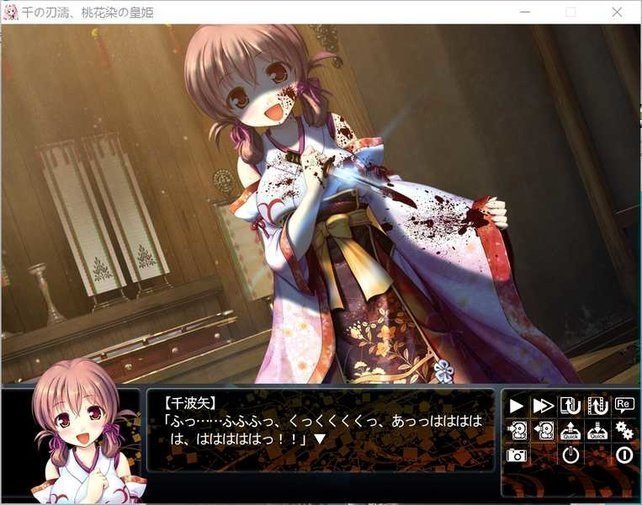
The miko is cackling, telling the protagonist to cut her down, or else she’ll keep stabbing the Ancestor Emperor. The protagonist hesitates for a moment, then kills the miko.
In the end, the Ancestor Empress’s life-extension ritual fails, and so does the seed-leaving; she dies in the protagonist’s arms. She tells him that though her bid for continued life failed, she will one day be reborn through reincarnation, and that he must wait for her—and until she returns, he must serve with all loyalty, must give his all for the Imperial Nation. At the very end she also confesses her love, saying she loves the protagonist deeply, and the protagonist loves the Ancestor Empress deeply too. She also says she has left behind the national guardian treasures: one is the mirror confiscated after defeating the Kingdom of Hu, another is the jade she carried on her person, and the last is the protagonist himself—he himself is the sword among the national guardian treasures.
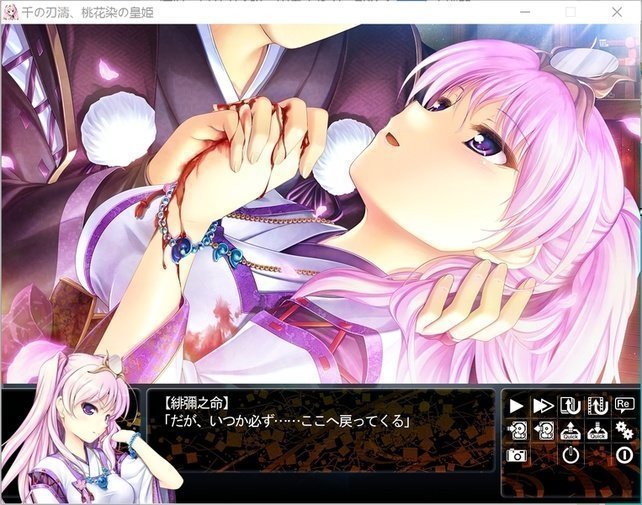
男主把太祖皇帝的要求牢牢记在心里,不过话说回来,后来发现那个代孕的巫女死在了某个角落里,砍太祖皇帝的应该是个冒牌货,死在角落的巫女肚子里居然生下了孩子,也算是奇迹了吧。
So over these long years, the protagonist served as the nation’s warrior, loyally guarding the country all this time. But every so often he’d run into that wandering spirit that had once possessed the shrine maiden—each time showing up before him in a different form, each time taking over a different person, and each time getting cut down by him. And every time it was slain, it came back stronger. He called it “Calamity” (or maybe Disaster—whatever). Meanwhile, the protagonist just kept waiting for the Imperial Princess to return.
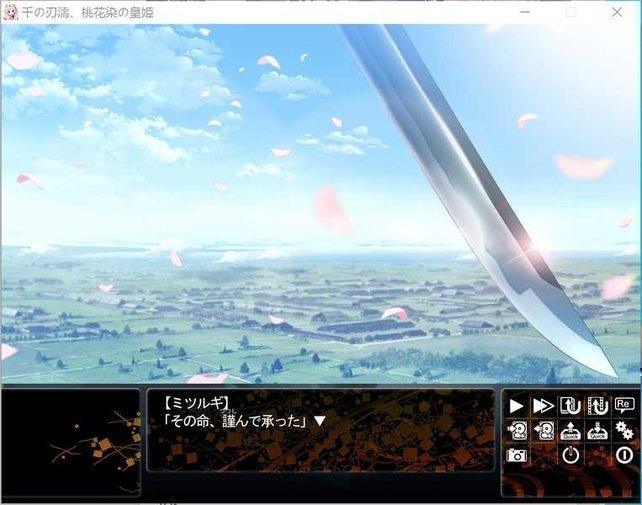
Two thousand years later, when the princess was on the verge of losing her country, the true reincarnation of the founding emperor was born: the princess Shuri. And the protagonist himself was never fully human to begin with, so being ageless and undying is only natural. On the brink of the nation’s fall, the protagonist appeared and protected Shuri—only to be blown to pieces by the Republic’s artillery. Because the protagonist is himself one of the national guardian treasures, his body regenerated, but he lost all memory of his past. He was taken in and given the name Sōjin Tokita—this is the protagonist from the very start of the game.
The pipe dream ends, and the protagonist remembers his mission—and realizes that the current princess is the reincarnation of the old ancestral emperor. But he no longer has the combat power of that national-protecting divine artifact from the past (even though he can already cut tanks in half with a sword), and the princess isn’t the terrifyingly strong curse-caster her past life was. All they can do is hide in this mountain valley under the shrine maiden’s protection and recover. The uprising has already failed. He’s got nothing left.
But the place where the protagonist was hiding was discovered soon after, and the Republic sent people to attack.
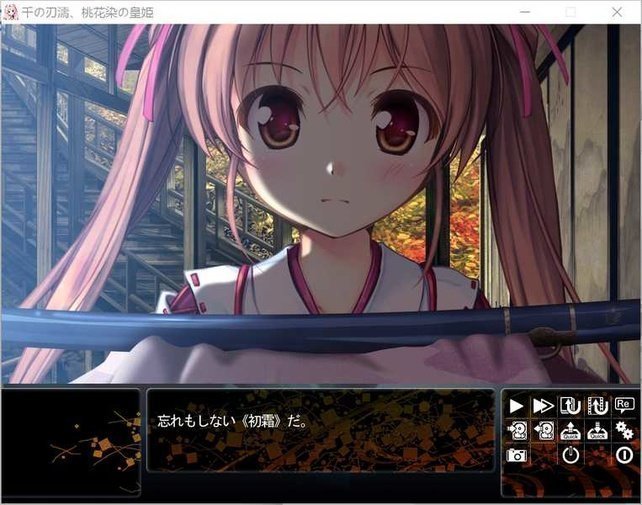
The protagonist is shocked to discover that the Republic has someone who can use curses — a woman named Yagami Yukihana. She takes the lead in breaking the concealment curse the protagonist and the Imperial Princess had set up, and cuts her way straight to him. Yagami Yukihana was once a shrine maiden of the Empire too. She’s confronted: why, when she was named a shrine maiden of the Empire, would she know curse arts and then run off to become a traitor helping the Republic?
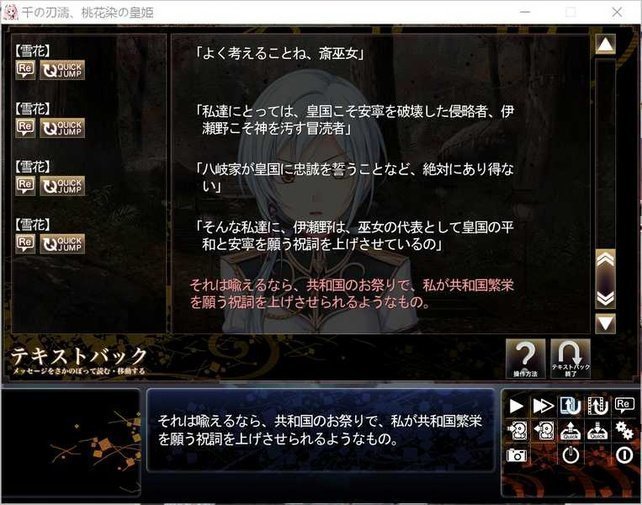
Yukika starts talking. Her ancestors were from the “Hu no Kuni,” and the founding emperor of the protagonist’s empire, in order to unify the other nations, invaded their Hu no Kuni, stole their sacred treasure (that mirror), and forced Hu no Kuni to convert to his own faith, oppressing the maidens of their country. The worst part is that every time the previous emperor cast a curse, it produced a massive side effect—meaning that whatever curse power he created, an opposing power would also appear, and that opposing power was dumped onto Hu no Kuni like garbage. The maidens of Hu no Kuni were dragged off to be sacrificed too, used to cast curses for the previous emperor, and of the eight hundred eighty-eight maidens sacrificed to create the protagonist, a good number were probably from Hu no Kuni. Yukika says her country’s grudge will never be forgotten, so when the imperial family had the republic beating down their front door, she promptly became a collaborator and even destroyed the empire’s defensive “curse wall.”
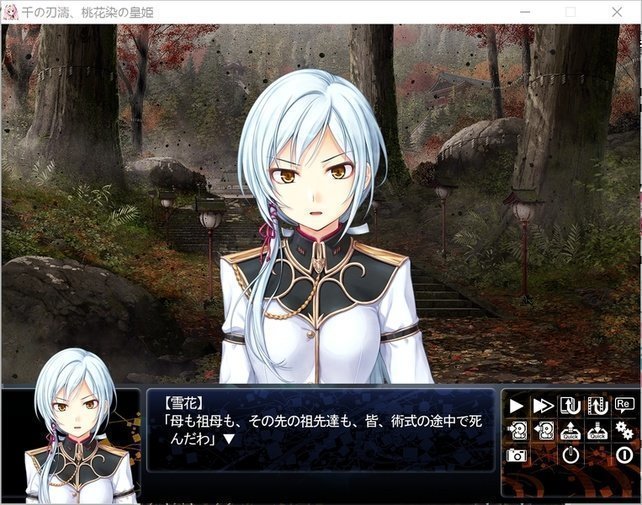
The protagonist remembers what the founding emperor once said with a sigh: to unify the land he killed many, ruined many, and many hated him for it — but there was no other way. Only through unification, he believed, could peace come.
The Snowflakes are just one of the races that got screwed over by the Ancestor Emperor’s unification.
At the end, Yuki and the shrine maiden Kogoton had a little scrap. Kogoton won, but the fight broke some seal anyway. Seal gone, the mastermind shows up: Rochelle, the Republic colonel’s aide, walks out grinning. And Yuki recognizes that grin — it’s the same wandering spirit, the “Calamity,” that he cuts down every single loop. This time it’s possessing a Republic soldier.
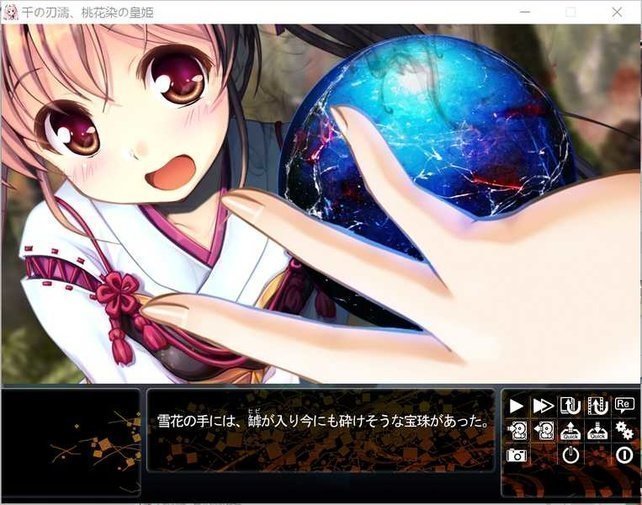
Rochelle freely admitted it, saying all the aggression against the Empire was his doing—hell, the Republic itself was something he’d created back in his past life, all for the sake of wiping the Empire out. He’d orchestrated the infighting within the imperial family, he’d orchestrated the Republic’s inhumane offensive, he’d orchestrated Yukika’s hatred of curses, and on and on. Anyway, bottom line: it’s all this bastard’s fault. He absorbed the power of the seal, and just like that he got stupidly OP.
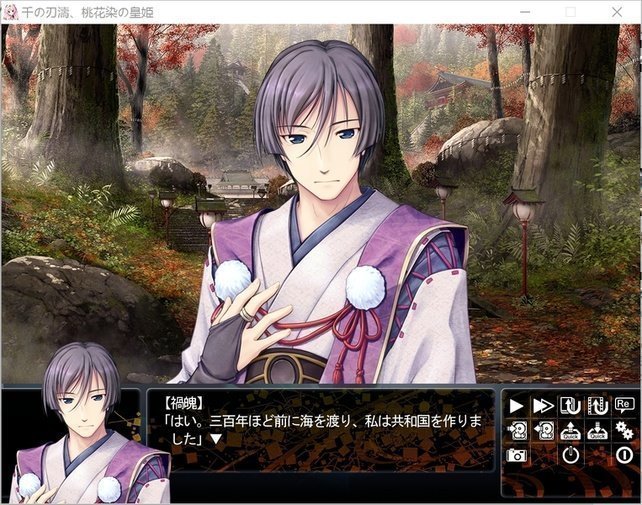
The protagonist heads off to kill him, only to find the guy literally can’t be killed. Just as the protagonist is about to die, the shrine maiden Kokoto remembers what the chancellor said before he died—that the “Sword” has to be polished to draw out its immense power, and that the protagonist is the Sword himself. Quick-thinking shrine maiden that she is, she casts the polishing spell on him. The protagonist unleashes his sealed power, gets a massive boost, and drives the freak off. Except the guy isn’t even fazed—he just skips away, telling the protagonist they’ll have their rematch another time.
After that, the protagonist tells the princess about what he saw in his dream. She in turn realizes that her past life and his past life (sort of? maybe?) had something between them. The shrine maiden says the princess has a seal on her, and that removing it might let the power of the previous princess come out…
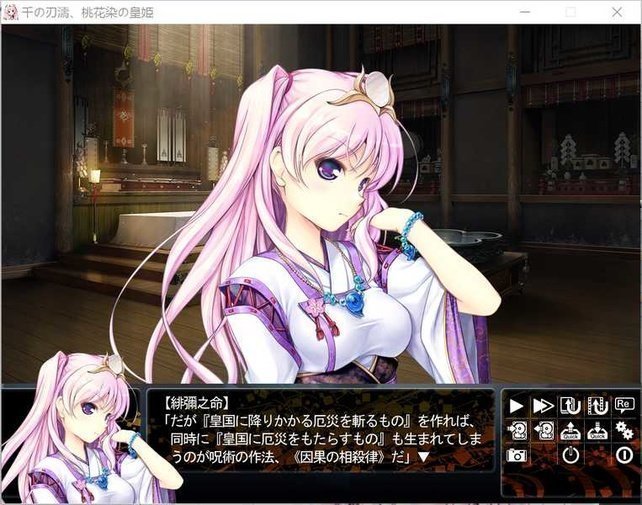
In the end the power was still lifted, and after two thousand years the former empress met the protagonist again… He asks her why that ghost can’t be killed, after two thousand years of killing it.
The former princess says that casting curses comes at a price — to keep things balanced, whatever you create generates its opposite. The shrine maiden sacrificed 888 people to create the protagonist, all to protect the nation; and correspondingly, a vengeful spirit that exists to “destroy the nation” gets generated too. That’s exactly what the “Calamity” is.
Put simply, the protagonist is immortal, and so is the Calamity. He respawns endlessly — and so does the Calamity.
The princess’s final request was simple: the only way to beat that calamity was to pay back the sins committed back then.
To unify the country and take the throne, the former princess used forbidden arts over and over, and countless people suffered for it. Her sins were deep. She asked the protagonist to cut her down—only by killing her could the full power of her curse be inherited by the current princess, and only then would the protagonist gain all that strength to stand against the calamity’s soul.
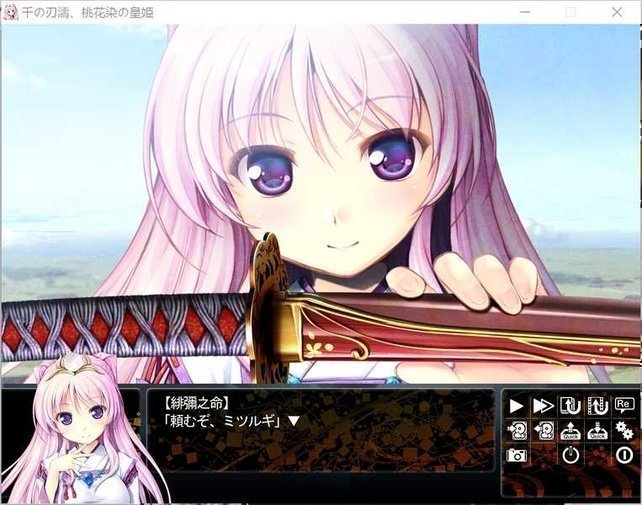
In the end, the former empress dies by the blade of the very sword she created, saying she leaves everything to the current empress.
After that, the princess gained power, and the calamity that had taken the form of Rochelle returned to the imperial capital, seized the sacred relic of the Hu Kingdom—that Heavenly Mechanism Mirror or whatever it was called—and used it to turn the entire nation’s cities into a sea of fire and a living hell, attacking everyone indiscriminately, whether they belonged to the Empire or the Republic.
Even so, the head of the republic still isn’t ready to send troops — meaning, basically, what happens in the colonies is none of my damn business…
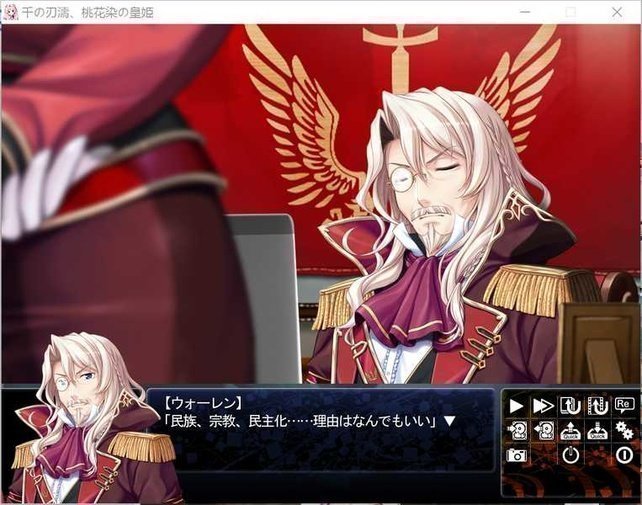
Elsa panics and ends up shooting her own father. As Rochelle gets ready to turn the whole empire into hell, Elsa decides to team up with the empire’s warriors once more to fight this madman. Put simply, the warriors and the republic go after the shrine maiden called Yuki-bana, while the protagonist and the princess take on the final boss, Calamity.
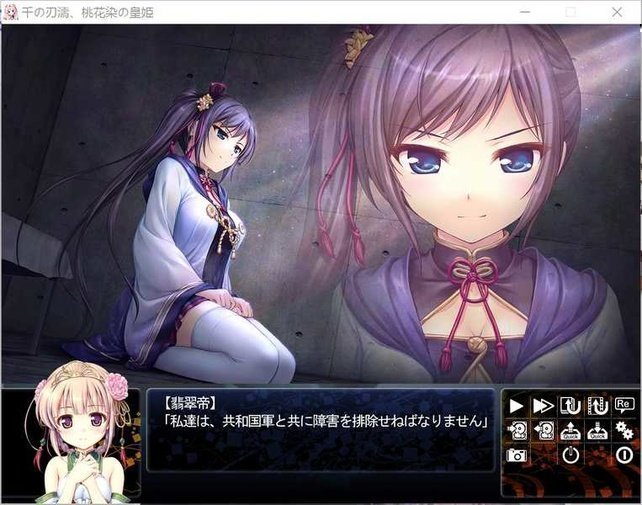
Empress Hisui and Elza freed every imprisoned warrior, handed them juzu blades, and Elza brought in the republic’s army to fight this lunatic Rochelle together. After one brutal slog of a fight, Rochelle just wouldn’t die — no killing him, no matter what. The protagonist goes full cheat mode, the princess goes full cheat mode, and the bastard still won’t die. Instead he activates the mirror, that divine artifact, and summons the greatest heavenly god of the land of Hu…
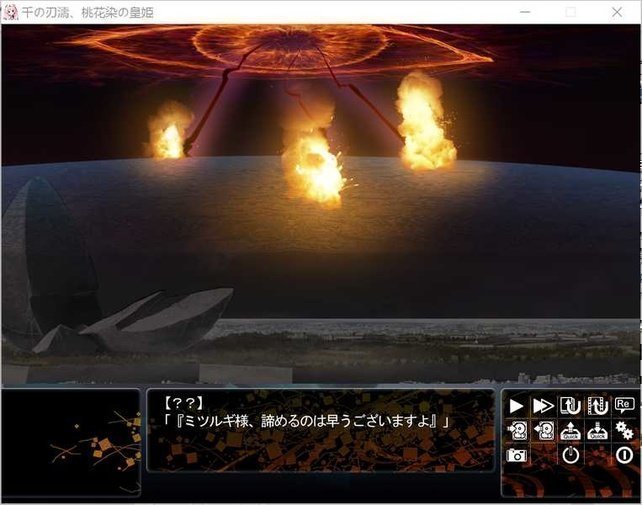
The gods opened an eye in the heavens and fixed it on the mortals below. For so long, the Imperial Kingdom’s use of curse arts had stoked their wrath, and now they lashed out in every way — the world was on the brink of annihilation… The protagonist remembered the former princess’s words: he himself had been bought with the sacrifice of many shrine maidens of the Hu Kingdom, and his very birth had given shape to that calamity. In other words, to calm the gods’ fury, he would have to offer himself up as atonement — and if he perished, the opposing calamity born alongside him would die with him.
In the end, with the princess’s power, the protagonist holds onto the calamity and sacrifices himself alongside it to the god of the heavenly land of Hu.
The world was at peace, and the calamity was gone.
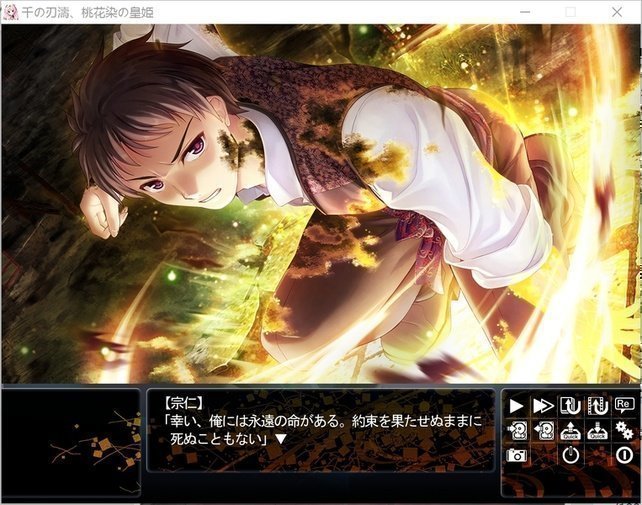
The ending is a good one: the princess takes the throne again, the Republic stops its invasion and chooses to respect the Empire’s decision, and the whole world is at peace. Then it forces a Happy End on you — the protagonist had already sacrificed himself, sent forever into the dark world of the land of Hu, but thanks to the princess’s prayers the gods of Hu pardon him and send him back alone. He meets the princess again, they embrace, and the game’s over.
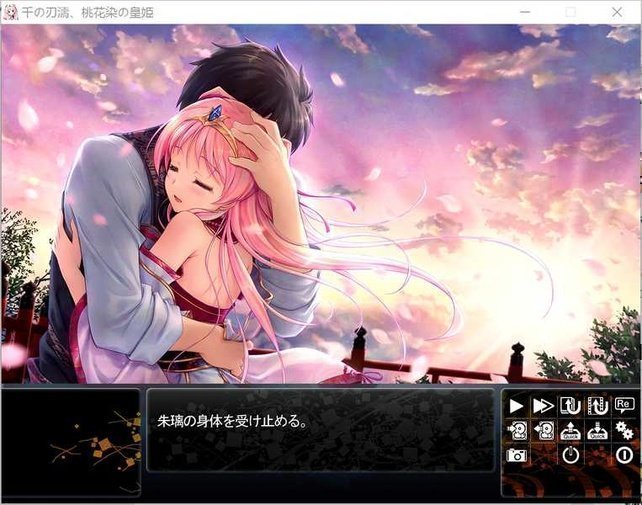
How should I put this…
After finishing it… my first reaction was disappointment. Then I thought about it, and there’s really nothing to be disappointed about. August did a solid job — they just didn’t pull off anything spectacular.
To put it with a word I just picked up: “hana ga nai” — no flower to it.
When August was promoting this game, they pitched it as the story of a “fallen princess restoring her kingdom,” and they leaned hard on the word chuugi — loyalty. Honestly, right up through the game’s midpoint, through that Huangliang-dream sequence, the concept holds up completely. The game probes “what is loyalty” in more than one place. Elza, from the republic, doesn’t really get it — why do the warriors of the empire obey their sovereign so unconditionally? Shouldn’t they have more of their own opinions? The protagonist gives a solid explanation of chuugi, and one that differs from the warriors’. The warriors figure loyalty means obeying without question — if the sovereign tells you to die, you die. “The lord bids the vassal die, and the vassal must die.” The protagonist’s take is that loyalty means being loyal to the sovereign, yes, but if the sovereign is wrong, you point it out — you keep them from drifting further down the wrong path, and you don’t follow blindly. The idea of loyalty even extends to Elza’s stance toward the ugly shit going on inside her own republic: she keeps a kind of chuugi spirit there too. In her own words, it’s about “staying pure to some degree while remaining loyal to the darkness of the state” — sort of like the “round outside, square inside” of our country’s officialdom.
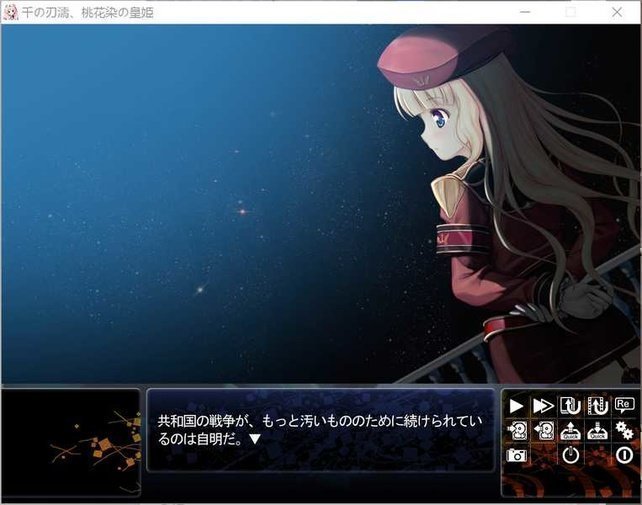
But once you hit the mid-game, it starts thinking about “nation,” “war,” and “peace.” The previous empress unified the sixteen kingdoms and believed she did it so the common people could live in peace—except it brought them even greater suffering. The protagonist, a national-treasure weapon forged through the shrine maiden’s curse arts and sacrificed to protect the realm and its people, ended up being the biggest calamity of all. The curse wall surrounding the country became a crushing burden on the populace too. Only at the very end does the previous empress admit, helplessly, that she was nothing more than a tool who did evil for the sake of the nation.
Truly, “in rise, the common folk suffer; in fall, the common folk suffer.”
But then the game hit the final disc…
How should I put it? All of a sudden the story’s scope keeps shrinking smaller and smaller.
All that earlier stuff about the greater good, the nation, all those angles — gone. What’s left is just a princess from two thousand years ago paying for the mess she made with a curse. Plus that unkillable boss and the endless reincarnation loop. What am I supposed to say about that? You can’t call the story incoherent, but it instantly wrecks the “grand” tone it built up earlier, and the ending is just ridiculous. Right up until Yuki shows up the pacing is like a roller coaster, and the name Yuki itself was never even explained — sure, she shows up in chapter one and feels like the mastermind, but it’s purely symbolic. You spend all that time talking about “restoring the nation,” all that “greater good,” and I kept thinking the ending would be political intrigue, or the princess and the protagonist having to choose between the country and the people. Instead some third party pops out of nowhere as the boss, and it has nothing to do with “restoring the nation” or “the greater good” — it’s all about curses and reincarnation… That setting where the curse creates hope and correspondingly generates despair had me thinking nothing but magical girl Madoka the whole time.
It’s not like I haven’t seen the reincarnation-and-lovers-turned-enemies plot before — on that front I think a game called うたてめぐり does it a bit better. Compared to that one, August’s whole game here gives off the feeling of starting out as a conflict between nations, then narrowing, narrowing, narrowing, narrowing down into a personal grudge — and a personal grudge from before the year 2000, at that.
One last thing I have to bring up: the oddly out-of-place “idol” and “school” and “student council” elements in this game.
In short, two words: sick in the head.
I don’t know which dumbass insisted on cramming these elements into the game. At first I figured they must be there for some big payoff, but honestly… once you’re a third of the way through, these elements just stop having any reason to show up again. If they’re gonna be that minor, why even put them in? A princess trying to restore her country goes to a rival school? A puppet emperor joins the student council? And a whole bunch of them are chatting and laughing it up in the school cafeteria? Are you shitting me?
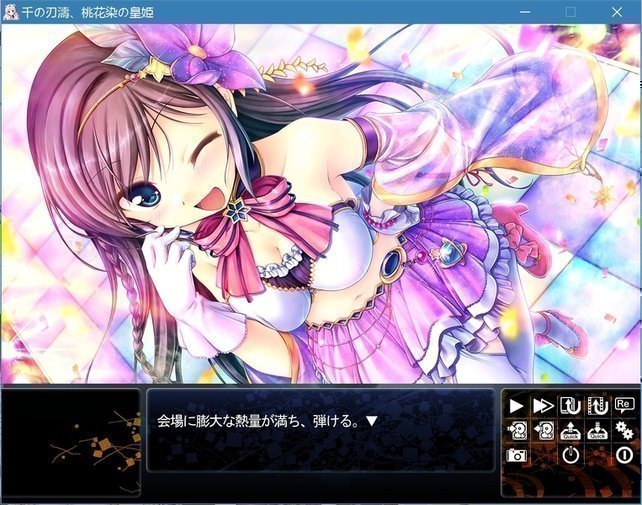
Then there’s that plotline where the Hou-tou-kai president becomes an idol. I was cringing so hard I damn near popped a vein. I’ve racked my balls raw trying to figure out what the hell the point of that was. Is it because idols are hot right now, so you just had to shove one in? Crossdressing is hot too — why not make the protagonist crossdress while you’re at it?
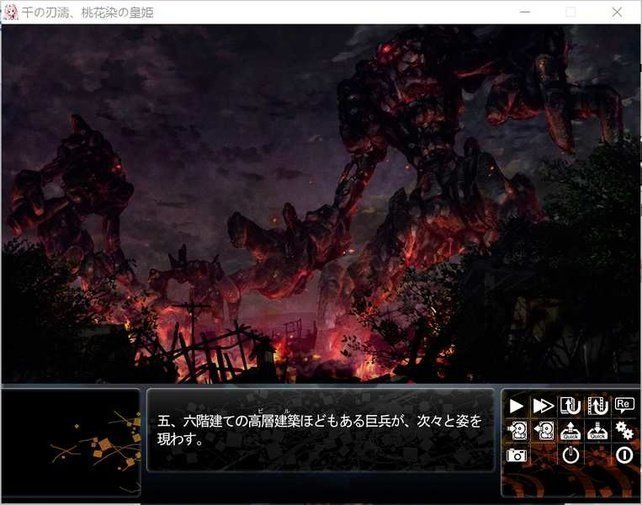
The game is awkward in more ways than one. The final battle—Snowflake summoning that Western-style rock golem—had me cracking up. Am I watching Lord of the Rings? The protagonist cutting down helicopters and tanks with a sword is one thing, but that mishmash worldview I just can’t accept. The other side has tanks and assault rifles, while the empire over there still has warriors and curses. They’ve got a president, and you guys still have an emperor? Would it kill you to consider the course of history?
The story flows well enough, but there are still some things to snark about. The most obvious one:
People drop dead at the drop of a hat, then just as easily come back to life.
There are several times in the game where a character gets stabbed, badly wounded, about to kick the bucket — looks like every Dead Flag is raised — and then not long after, the guy’s back on his feet like nothing happened. In the first branch, I thought Musashi the old man had died for real after all his careful scheming; I was just starting to feel sad, and then he’s alive…
The third branch of the second fork: the hotel proprietress makes a badass entrance, goes on an absolute rampage, has a glorious death scene — and then, of course, she’s alive again at the end. Bruh.
I’m not even going to bother ragging on Koto’s miko dying and coming back and dying again more times than I can count. Same with the villain, Yukika — she straight-up looked like she’d croaked, to the point where I was sitting there thinking the late emperor was a real tyrant and Yukika’s Land of Snow was just plain pitiful. Then she dusts herself off, stands up, and turns into the final boss. At that point I didn’t even know how to say “give me back my tears,” seriously.
Where’d you learn that trick, scenario writer? Gintama? So from now on in August games, whether someone gets stabbed, shot, or even hit by a cannon shell, as long as they don’t say they kicked the bucket, you could chop them into ten thousand pieces and they’ll still come back alive the next chapter, huh?
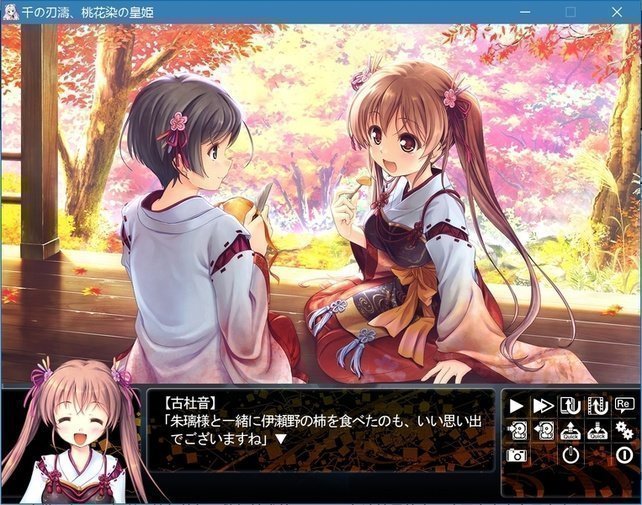
As for everything else, it’s the usual August quality. The music… it’s fine, I guess, but nothing stuck with me. The voice cast is the highlight. Japanese players were surprised the protagonist even has voice acting. I thought his voice was a bit off at first, but once I learned his backstory I got why they cast Watari Wataru — the guy starts out with no emotions and later becomes known for his loyalty and decency, so a deep, solid voice is basically required. Eri Sendai’s voice though… I got sick of it… she’s everywhere, and honestly I’m sick to death of it. Still, her portrayal of the former empress is great; that kind of presence is one of a kind. Everyone else is so-so. Kugimiya… no wait, Kiritani Hana’s 2000-year-old shrine maiden — I caught it after like one line. Didn’t expect her to be in this at all.
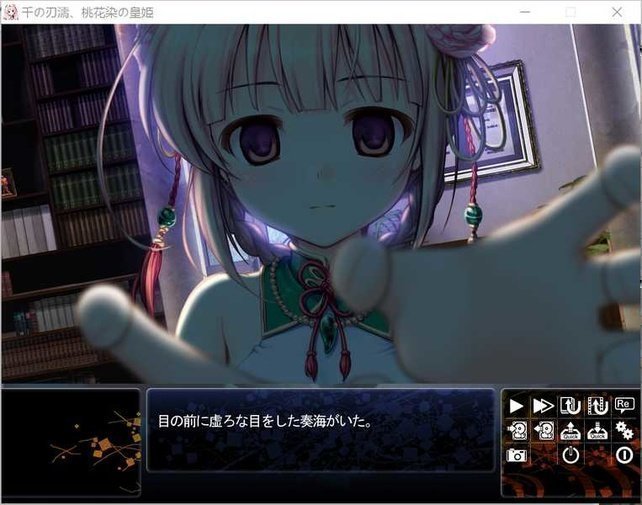
Oh, and the game’s OP is cheap as hell. The song’s fine, but they had no budget for the OP itself. I could forgive the engine not supporting HiDPI scaling, but your OP is worse than Daitoshokan and Dirty Wings — where’d the money go? Blown on a concert?
Overall, this game is maybe pretty good — above average, the prose flows well, the opening is fucking great, and the pacing holds up nicely until a bit past the midpoint. Shame the ending is so damn cliché. Yeah, not bad exactly — just way too cliché. I’ve seen this “Earth is about to be destroyed, hurry up and fuck the Boss” setup way too many times; from the early days of 11eyes to earlier this year’s 聖鍵遣いの命題, the endings all run the same formula. The funny part is that 聖鍵遣いの命題’s ending got trashed by Japanese players as cliché, boring garbage, and now August’s ending pulls the exact same stunt and those same Japanese double-standard dumbasses all shut right up. Really shows how disgusting the double standards of fanboys are!!!
If this game had come from some brand-new studio, I’d say they did a solid job — nice, creative, got a future. Too bad it’s August. August used to put out stuff like Dirty Wings and Daitoshokan, and it’s pretty much the same core staff, so I figured they’d have some standards, some pride. Didn’t expect them to not only fail to break new ground this time, but actually lose what made them them.
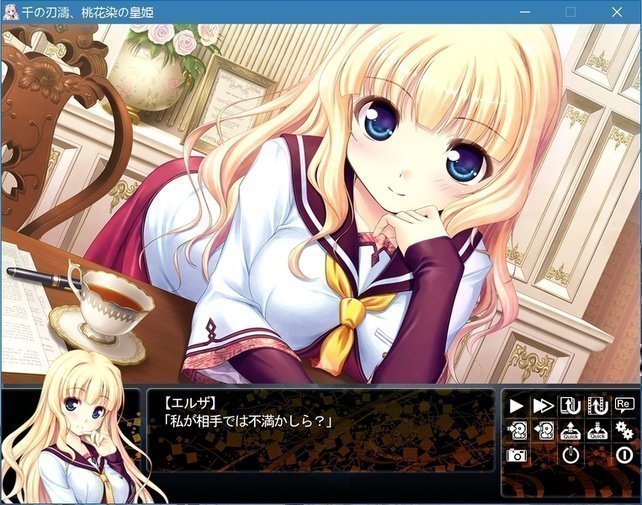
If Haseo no Tsubasa was the pinnacle of selling a story, and Daitoshokan was the pinnacle of selling characters, then Sen no Hatou, Tsukisome no Kouki ends up selling characters worse than Yuzusoft, and selling a story… probably worse than Floral Flowlove. I can already picture the year-end sales chart with August getting their face ground into the dirt by Yuzusoft.
Maybe I’m asking too much of August. Or maybe August itself has lost the plot — I mean, look, they’ve thrown in idols AND a school setting. If that’s not losing the plot, what is…
One last thing: playing Sen no Hatou, Tsukisome no Kouki kept reminding me of certain Chinese RPGs. I doubt I’m the only one who noticed — a lot of its plot beats have already been done in Chinese RPGs. A giant eye opening in the sky and monsters raining down? All that’s missing is a red comet streaking across the heavens to set up The Scar of Sky. The flashback section especially — the founding emperor unifies sixteen kingdoms and builds a defensive barrier, which reads a hell of a lot like building the Great Wall. And the Great Wall screwed over its fair share of commoners too. The founding emperor’s crew also compiles the “Imperial Records” — no idea if that’s a riff on the Shiji.
The most “you know what” one has to be that “Country of Hu”… you can probably guess what that’s supposed to mean.
Thinking back to the plot of Xuanyuan Sword: The Scar of Sky (轩辕剑:天之痕), it’s also the story of a prince of a fallen kingdom restoration, and in the end the millennial demon envoy Dugu Ningke stirs up trouble from within, and the final boss is also an incarnation of Satan. Must be a coincidence. This formula in Sen no Hatou, Tsukisome no Kouki (千の刃濤、桃花染の皇姫), Chinese RPGs were already doing it ages ago… I don’t know whether to call it national pride, or should I say… pitiful? After all, how many years have passed, and our Chinese RPGs have made no progress at all. New releases don’t even bother, they’ve gone full-on selling fujoshi bait. Sometimes I rant about it: how did our Chinese RPGs go from galgame to BL game…
Call it a coincidence, but you can only sigh at this point — the Xuan-Yuan Sword (轩辕剑) series is basically dead and buried… It’s still putting out entries, sure, but the story’s got nothing worth watching anymore. Good thing we can still look back. At least we can comfort ourselves with the thought that at least in The Scar of Sky (天之痕), Chen Jingchou didn’t end up at the same school as Dugu Ningke and Yuwen Tuo, joining the student council together. At least in The Millennium Destiny (苍之涛), Che Yun didn’t spend her free time being an idol (lol…)
Comments are hosted on the Chinese main site. This mirror is read-only.