Hatsuru Koto Naki Mirai Yori (果つることなき未来ヨリ) Review
From the Future Undying
We’ve always said the Japanese have an island mentality.
What does that actually mean? It has two senses. One is the textbook island mentality — a reluctance to take in culture from the outside world. The other is the one we toss around online when talking about Japan, which is sort of the opposite but comes from the same root: the feeling that you’re on a tiny patch of land with no resources and no long history, squeezed on one side by America and on the other by a rising China, with things not exactly peaceful at home either. So you’re always on alert, feeling like you’re at rock bottom in the dark, on the edge of being ruled by someone else, and you’d better be ready to suffer.
Honestly that sense of crisis is correct. The old saying goes, “Born in adversity, die in comfort.” Which is why the Japanese work so hard — and at least on that count, I’d say it beats China’s habit of being woken up from its “celestial empire” daydreams by a slap across the face.
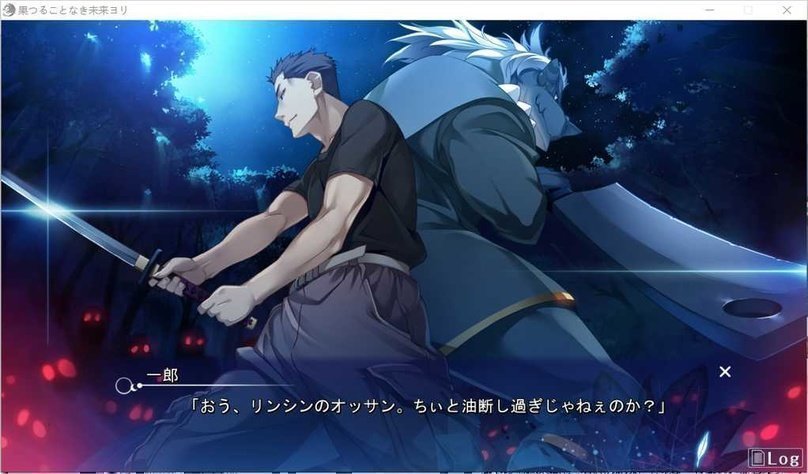
But “island mentality” isn’t a nice word. It’s distorted, a little forced, and a little delusional, and it shows up in Japanese culture and all sorts of works. You’ve seen it in anime — Japan gets colonized, Japan needs a revolution, Japan gets surrounded like livestock, the world ends with Japan at the center. Etc. Etc. (I’m just talking off the top of my head. I didn’t name Guilty Crown, I didn’t name Code Geass, and I certainly didn’t mention Attack on Titan.)
And by extension, of course there are visual novels that display the same mentality. Like the one I played this time… From the Future Undying.
The marketing for From the Future Undying pushed the lineup hard: the original team behind The Fruit of Grisaia. What’s The Fruit of Grisaia? A masterpiece. What does “the original team behind it” mean? This must be another masterpiece.
Then the setting came out and my interest dropped by half. Of all things, an isekai adventure. I’m not big on isekai settings — they feel like the transmigration-harem formula from Chinese web novels, where a scheming protagonist gets isekai’d and bulldozes everyone with his superior intellect. I read one once called Three Kingdoms: The Schemer Chronicles. Frankly it was dumb as hell, especially since the author wouldn’t shut up about how good it was, and in the end the formula didn’t change — the protagonist kills Cao Cao right after transmigrating, and then some guy just as treacherous as Cao Cao pops up as the final boss. Same soup, new bowl.
Still, if it’s the Grisaia team, even a dumb setting should at least have a readable story, right? But the game came out around the time Sakura no Uta dropped last year, so I didn’t have time for it, and I checked Japanese impressions: “the common route is really long…” with a “really” at the end. I remembered my miserable time with Grisaia — that game’s roughly 50-hour common route took me about three months, and it turned out to have almost nothing to do with the individual routes. Not that that’s bad… but I’m at the age where I’m being dragged into arranged marriage meetings. I don’t have that kind of time to waste. So I could never work up the courage to start this game. Too long.
Then I got dumped by a string of women from those matchmaking meetings recently, and in my heartbroken state I finally started playing.
Once I did, I found the story wasn’t that long. At least there’s a designated main route, which saves people like me who beeline for the main story.
The story is set during World War II. The protagonist is a Zero fighter pilot. A comrade dies during an operation, and before dying entrusts his little sister to the protagonist. The protagonist feels he failed her, but he’s about to go to the front himself and has a premonition he’ll die in action too (I’m guessing Midway). He sorties anyway.
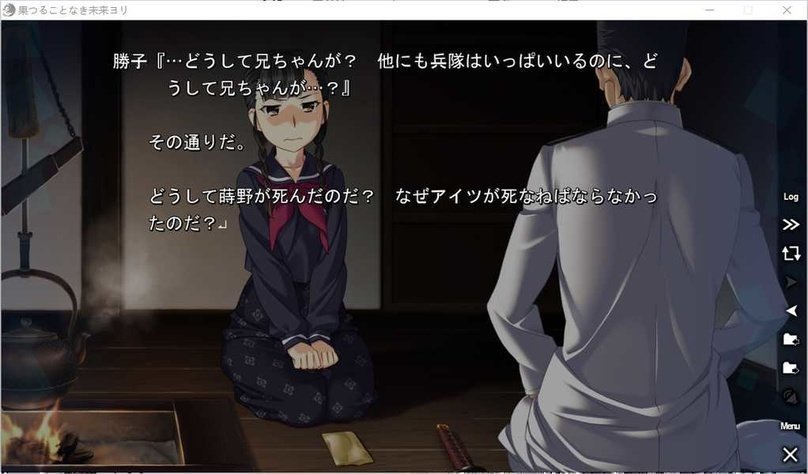
So before heading out he gives the comrade’s sister a whole pile of death flags, and sure enough, the moment the fighting starts his plane gets shot down and he’s done for.
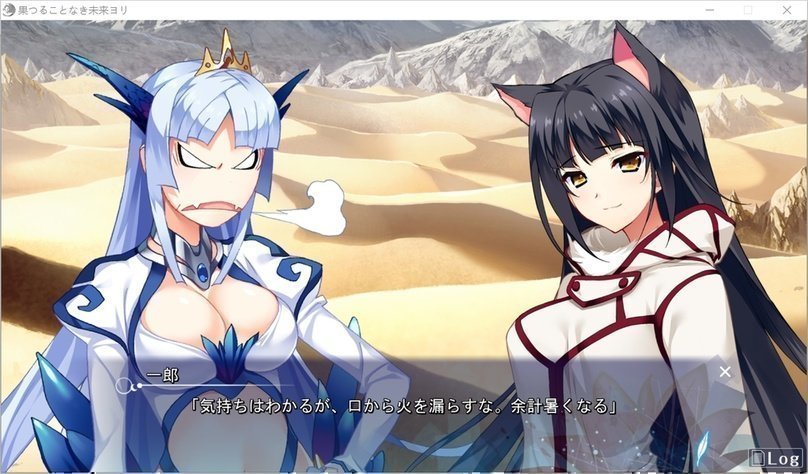
After the crash he wakes up and finds he’s not dead — he’s in a desert, where he meets a dragon girl who claims to be a dragon princess. After some confused back-and-forth, he learns he’s landed in another world…
What’s this other world like? Kind of like World of Warcraft. There are dragons, humans, catfolk, dogfolk, merfolk, undead, dwarves, and some trolls and other miscellaneous minor races. The dragons once ruled alone, but the technologically advanced humans quickly crushed them. The human nation is now the strongest power and still expanding, and the dragon princess — the heroine who saved the protagonist, named Yukikaze — is scheming to unite the dragons with the other races against the ever-growing human nation. Seeing that the protagonist comes from another world, she figures he’s a powerhouse and drags him along to lobby other countries for an alliance.
After that the game becomes chapter-based: one chapter per country, solve that country’s problem, move to the next. Very RPG-ish. Very road-movie-ish.
First stop is the dogfolk. And the dogfolk story, oh boy…
I did not fully understand it!!!
The whole thing is way too literary, with a bit of English pastoral flavor. The dogfolk have a prophet-like figure called the “Clear Eye” who claims to see the future. This prophet says humans are operating near the dogfolk nation and have built a cursed tower, and asks the dogfolk warriors to go scout it out and figure out what the thing is.
In the end the protagonist joins a dogfolk expedition, fights in it, and destroys the human-built tower — defense tower or magic tower, whatever it was. The dogfolk thank him and agree to ally with the dragons.
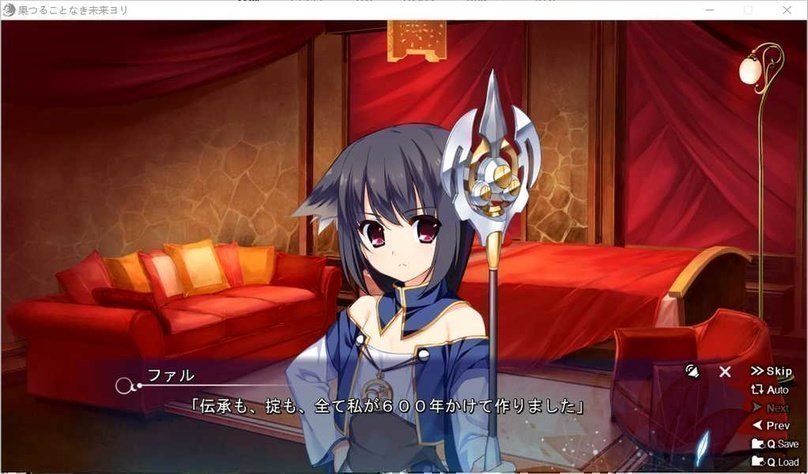
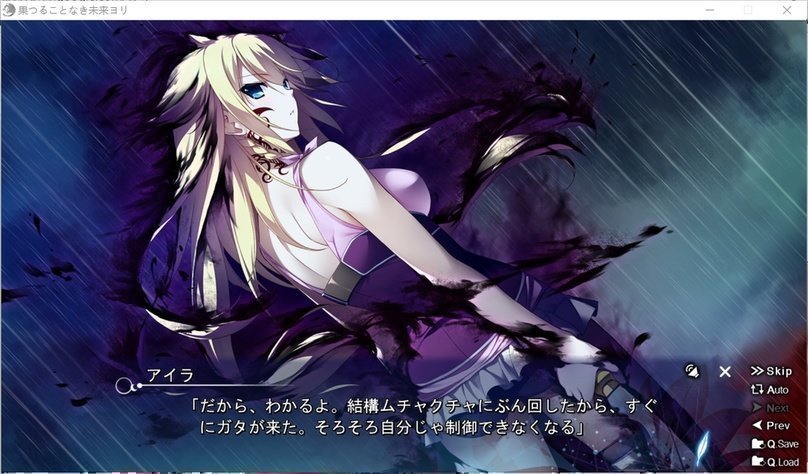
That’s the surface. Inside it’s not so simple. There’s the relationship between the dogfolk and the catfolk, and the love-hate bond between the dogfolk warrior Aira and the cat girl Curio she adopted. Curio was rescued from slavers by Aira, freed among the dogfolk, treated kindly. Unlike the dogfolk, who pursue strength, the catfolk apparently lean toward wisdom, so Curio starts reading the dogfolk prophet’s books. Her reading speed is absurd — she finishes them in no time and even gets into books on dogfolk history, learning about their past and the truth of the prophet: the prophet’s power was granted 600 years ago by some great sage, the current prophet has been alive and unaging for 600 years, the prophet herself has no power, it’s the eye possessing her that has the power, etc.
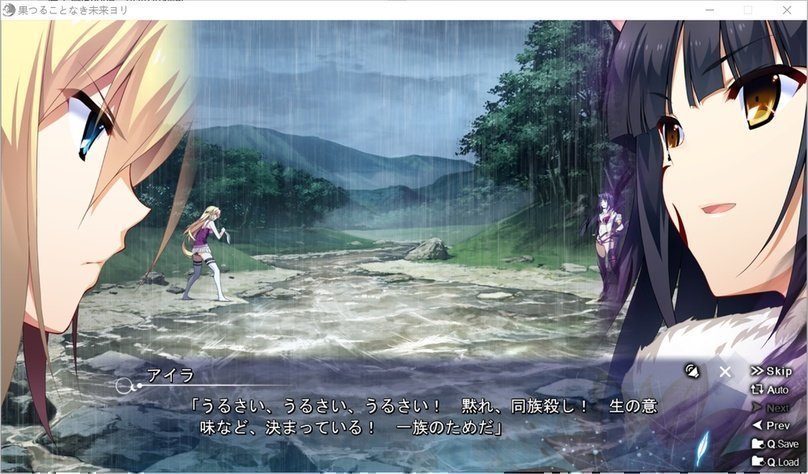
Then out of nowhere Curio the cat girl betrays them and ends up opposing Aira. Aira demands to know why — I saved you, fed you, clothed you, gave you books, and you betray us? Maybe she read too much. Curio spouts stuff like “You don’t understand, you understand nothing, do you know what wisdom is? Do you know what the world is?” — pretentious nonsense that leaves Aira baffled. And annoyingly, Aira often can’t beat the cat girl, who can also use magic, eventually gets into forbidden magic, and even teams up with the human forces on that magic tower. Of course the dogfolk win in the end. Curio loses, but she manages to kill the dogfolk prophet, and after the final duel, when Aira demands to know why she betrayed them, Curio gives two answers: one, “My thirst for knowledge is huge, I really wanted that treasure possessing the prophet,” and two, “I just like watching you frustrated because you can’t kill me.”
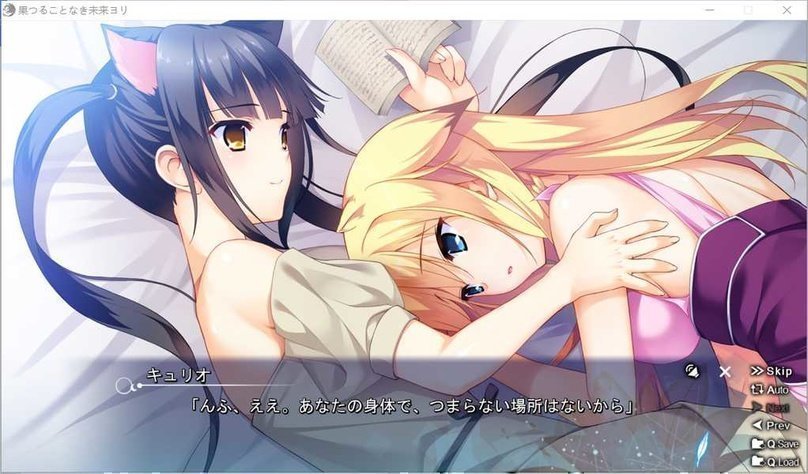
What the hell is this?
So basically this chapter is the dogfolk cleaning up the humans near their country who were preparing to Tower Rush them, intercut with a dogfolk warrior and her best friend’s love-hate relationship. The love-hate stuff is described very literarily — metaphors, flashbacks, fairy-tale allegories, poetic parallelism. I understood every sentence, but put them together and I had no idea what you were trying to say. In the end it’s just “I like messing with you,” and I felt like I’d been messed with too…
Then Chapter 2 is much easier to explain.
In Chapter 2 the protagonist and company arrive in the merfolk nation. The merfolk are also threatened by the humans, since they control the sea routes.
The dragons ask for an alliance, the merfolk are conflicted and put on a fake show of cooperation. After some investigation, it turns out the merfolk’s sacred domain has been taken over by a giant squid-like monster, and the humans say if the merfolk open their sea routes, they’ll send human elites to clear out the squid. The dragons hear this and get angry — no need for humans, the dragons will clear it out, and then you’ll ally with us, right?
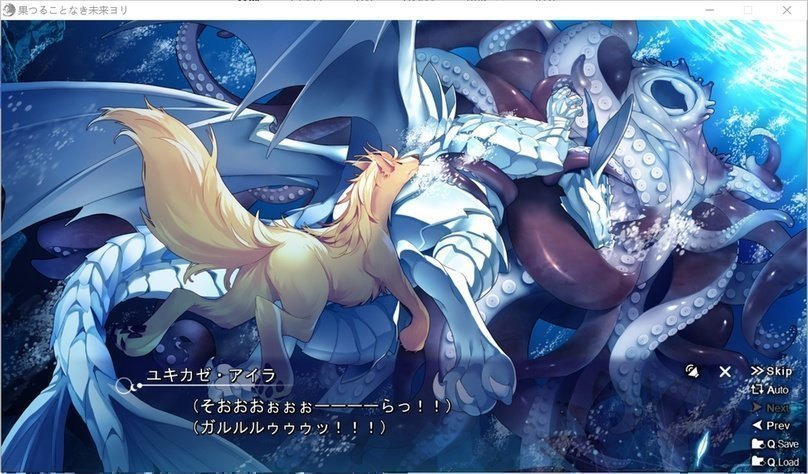
So the protagonist, the dragon princess, the dogfolk warrior and co. form a party, run the underwater dungeon, kill the boss, and win merfolk support.
It covers the past of the merfolk character Meltina — raised in the sacred domain, her mother dying in the first expedition when the squid brought a horde of troll monsters into the domain…
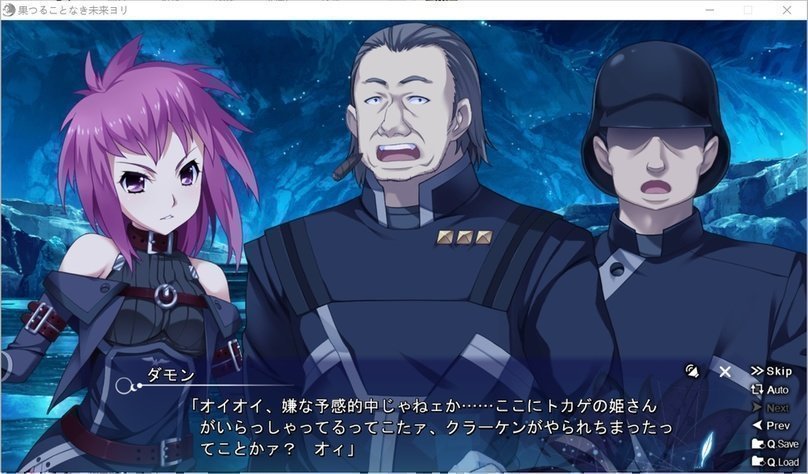
Worth noting: the giant squid was released by the humans themselves. They let the monster loose and then offered their own help as a bargaining chip. Chapter 2 takes another swipe at the humans.
Chapter 3 is even more straightforward. The dragons were supposed to trade with the dwarves, who mine ore and sell it to them, but the dwarves recently said they can’t mine anymore. The protagonist and dragon princess go investigate, and the dwarves say the mine is full of giant ants and poison gas — go in and you drop dead, no mining possible. While exploring, the protagonist finds not just ants and gas but undead, and organized undead at that, led by a necromancer.
After investigating, the necromancer turns out to be a girl, and the undead girl Lia contracted to another necromancer is also a loli. The necromancer Ozos tells the story of herself and Lia.
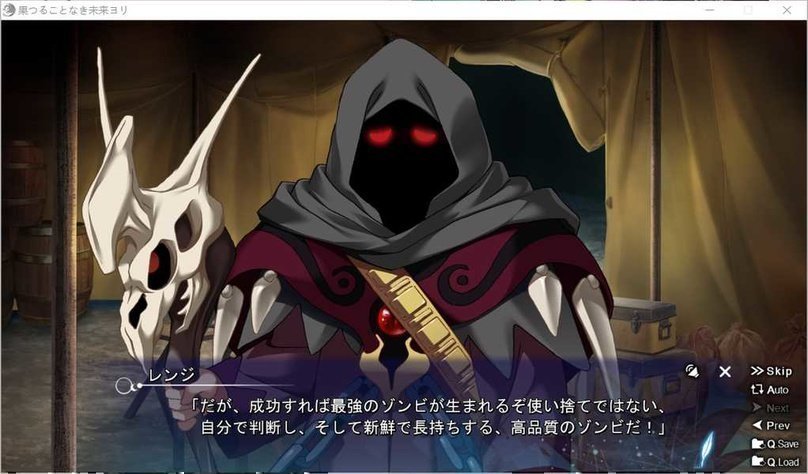
They and all those undead zombies used to be a magic race somewhere, each with runes on their bodies to cast magic. Once, a human necromancer passed through their village, found this hidden paradise, was taken care of by the race, and left. He kept the secret, but a human officer still found traces of the place. The officer had been using the necromancer to revive dead dragon warriors as zombie dragons for war, and thought: why not use the necromancer to modify this magic race too? Then we’d have undead soldiers.
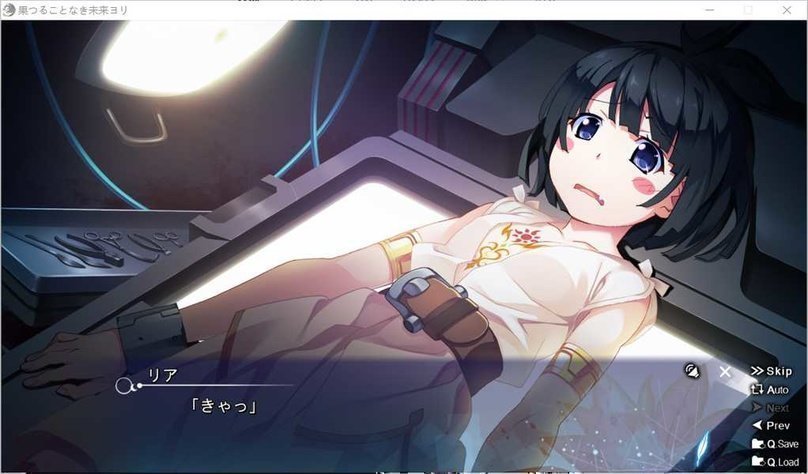
The human forces rounded up the entire village and forced the necromancer to modify the magic race. Almost all of it failed — every villager became an undead. The loli Lia, the necromancer couldn’t bring herself to do it and left a back door, so Lia became undead but kept her consciousness, and another villager, Ozos, also retained hers.
The entire magic race was wiped out. The only ones left with consciousness were Ozos and Lia. So Ozos put on the necromancer’s robe, posed as a necromancer, and led her fellow villagers — a horde of undead zombies — around looking for a place to belong. Ozos doesn’t know necromancy, only healing magic; she just patches up whichever villager’s zombie is about to rot. They came to this mine because they heard it had poison gas that humans can’t enter, while the undead are unaffected. They thought they’d found a home.
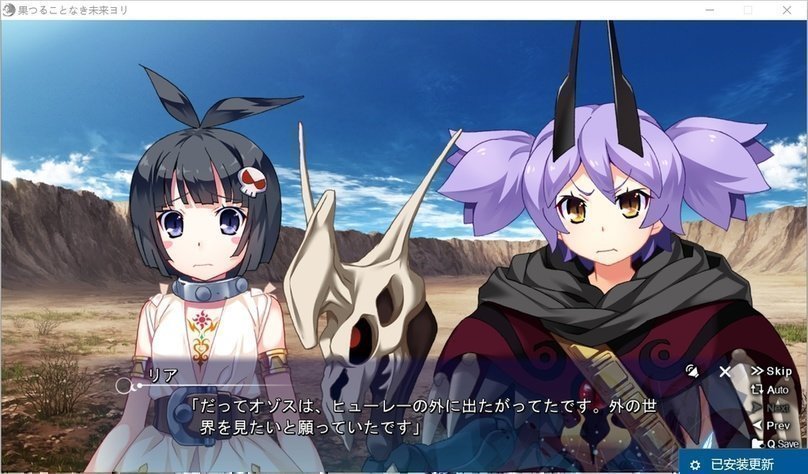
In the end the undead help the protagonist and dwarves clear the ants out of the mine, then the humans launch a surprise attack. Half the undead are wiped out, Ozos dies in battle. The dragons take in the remaining undead led by Lia, but without Ozos’s healing magic they all rot, and there’s nothing to do but bury them. In the end Lia is the only undead left, though she joins the party.
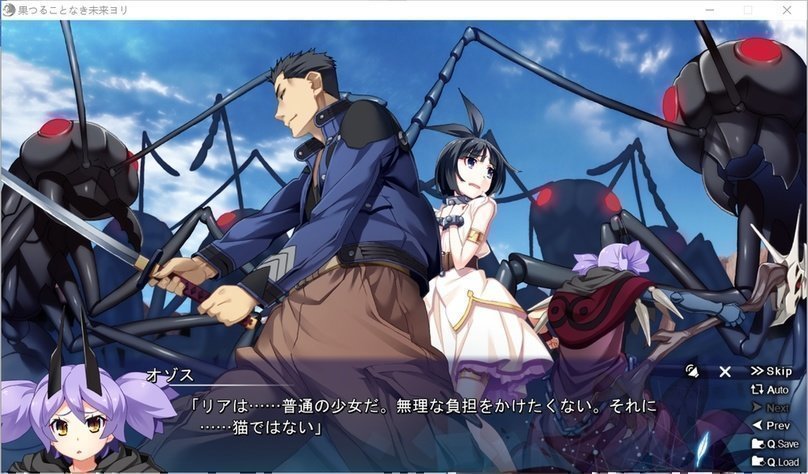
The first three chapters are “world exploration” plot, unrelated to the final story, but after them you can enter the last route: the final war with the humans.
After Chapter 3 comes the explanation for why the protagonist was transported.
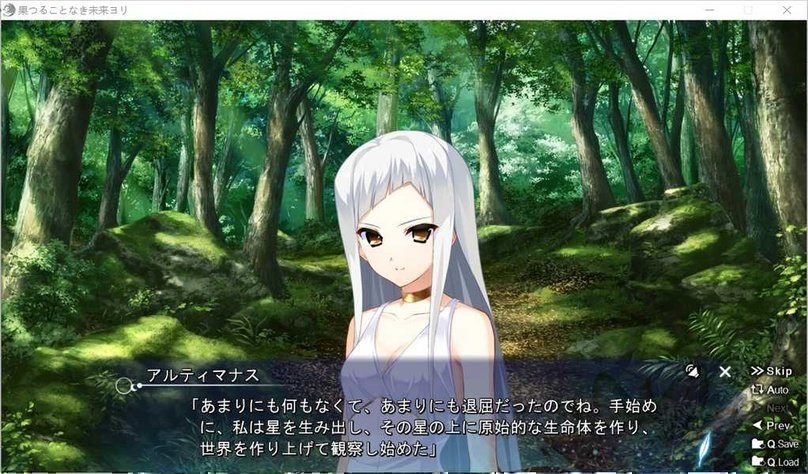
The protagonist dreams his way to a god’s place, where someone claiming to be the creator god explains why he ended up in another world.
The world itself was created by a bored god. The god creates worlds and observes their development, from biological evolution to the rise of civilization. The god also made several worlds — one where the dinosaurs went extinct (our world), and one where they didn’t (the world the protagonist landed in). But the god got bored creating worlds alone and made a copy of itself to play against. The copy soon diverged on the meaning of “creating a world.” The copy thinks that since it’s a god, it can interfere with and guide the worlds it creates, try out possibilities, and if it breaks one, just destroy it and make another. The original god thinks that once a world is created, you shouldn’t abandon it so easily.
So in this world, the god’s copy secretly helped the humans, granting them all sorts of black technology — airships, fighter planes, firearms, combat tactics. The god also whispered to the human leader that “the other races are trash, humans are the future, you need to unify the world,” whipping the humans into racism, and the human nation began疯狂 expanding and invading its neighbors.
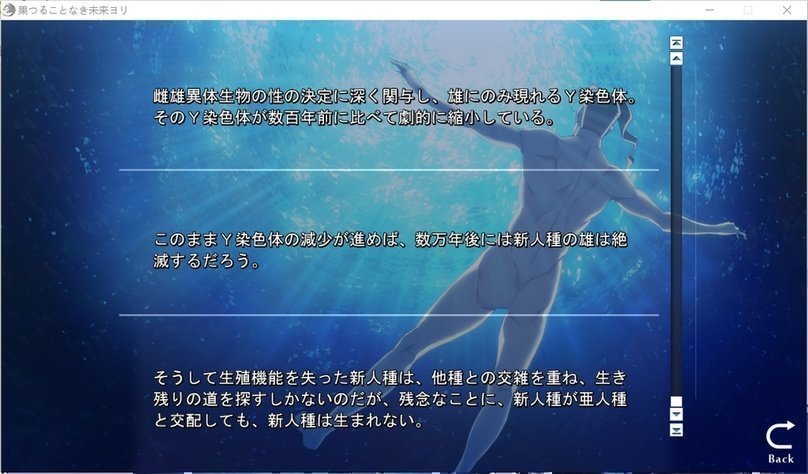
Then the god tells the protagonist he’s the chosen “savior,” pulled from another world to help the dragons and other small races fight the humans and end the war maniac.
Finally the god tells him: end this war, and I’ll send you back to your original world.
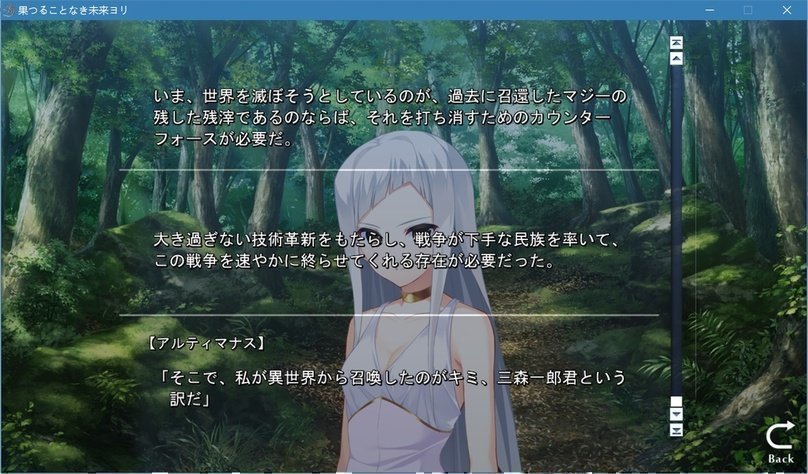
Meanwhile, the humans begin invading neighboring countries. They drop a bomb on a neutral country called the “Magie Sun” — leveling the entire nation (it’s a nuke), and declare that next they’ll attack the dragon capital and drop a nuke there too, unless the dragons disarm and disband their forces.
The dragons are terrified by the nuke and disarm, disbanding their army. Then they intercept intelligence showing that whether they disarm or not, the humans are going to nuke them anyway. So they hurriedly regroup, bring in the protagonist as their ace, and start planning.
The dragons and humans fight an air battle. Hopelessly behind in technology and numbers, they foil the human scheme, and the protagonist kills the human war maniac.
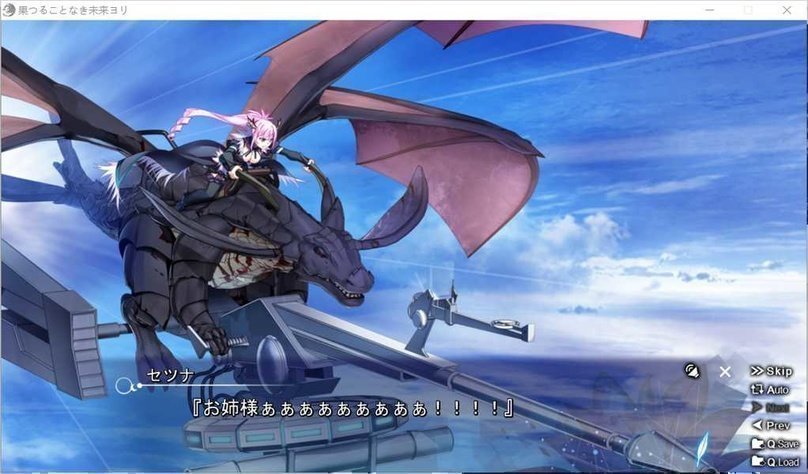
The war ends, the humans back off, the dragons win against the odds, small nation beats big nation, and the protagonist faces a choice: go back to his old world, or stay. It’s just one choice. If he goes back, the dragon princess bears his child and he becomes a legend in this other world (oh right, I forgot this game has a romance between the protagonist and the dragon princess — they sleep together). If he stays, he lives here with the dragon princess. Nothing else.
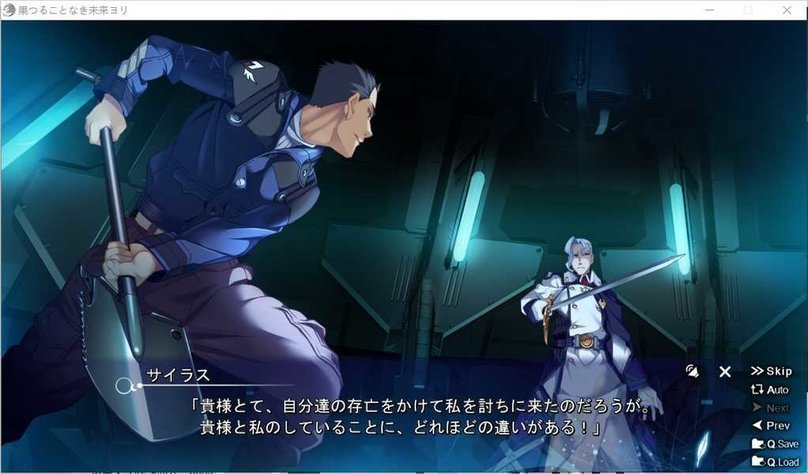
That’s the main route. If you pick the other routes, they’re almost identical to the main line — humans start the war, drop the nuke on the neutral country — except the team the protagonist assists is different. The dogfolk warrior Aira’s route is ground combat with the dogfolk army, crushing the human ground forces. The dragon route is the air battle. The merfolk route is internal racial conflict in their country. The undead route… I didn’t play.
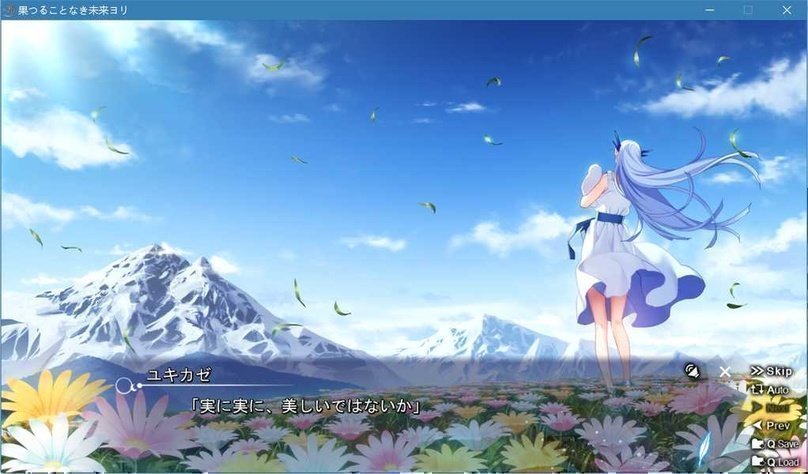
Before the impressions, some other notes:
The art style carries over from Grisaia, same artist, but I see plenty of lazy shortcuts. Expressions look copy-pasted in places, though you could call it the artist’s style. Nothing to say there. The BGM is serviceable, but the OP and several EDs are genuinely great. The voice acting is average — Mizuhashi is the best, everyone else is meh, not enough personality to carry the game as a character game, though that’s not what it’s going for anyway.
The system is the usual Frontwing system, but I still want to complain: how the hell do you disable that stupid double-tap-the-screen-pops-up-backlog feature? I wanted to curse it out back in ISLAND too.
Now the story impressions:
But before I evaluate this game, I have to list a few complaints…
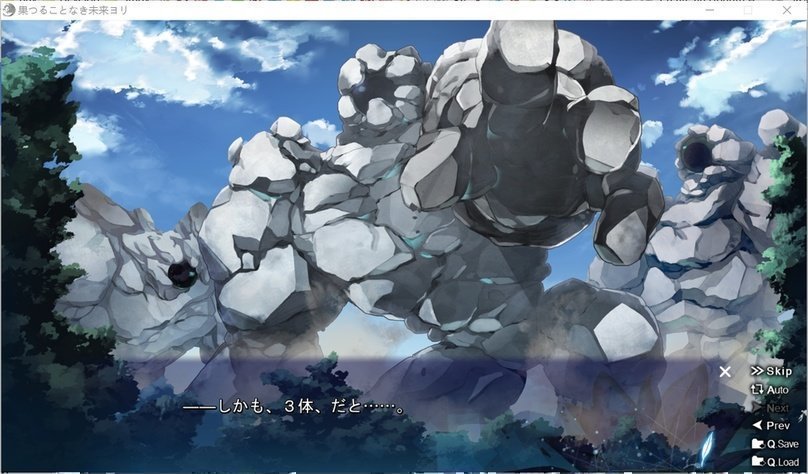
The main one is the dragon-vs-human part.
If you pay attention while playing, you’ll notice that the “dragons” map onto Japan, and the “humans” opposite them map onto America.
The nuke the humans drop during the invasion corresponds exactly to the atomic bombs America dropped on Hiroshima and Nagasaki.
The dragons, terrified by the atomic bomb’s power, disarm — that’s WWII history again.
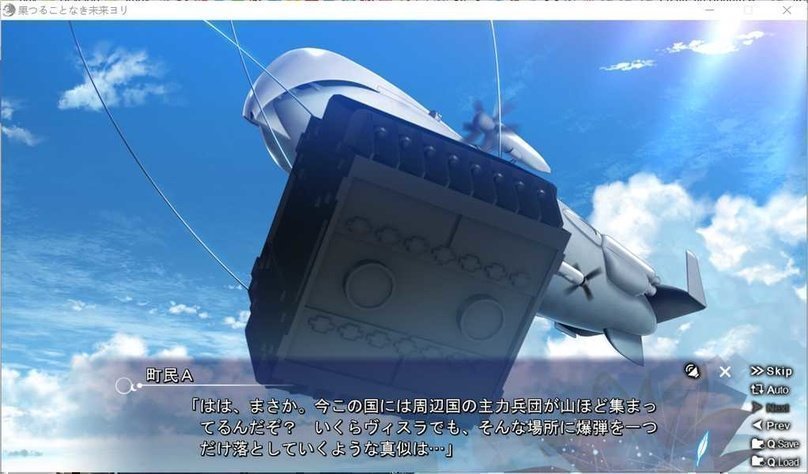
And the “Flying Dragon Squad” the protagonist trains among the dragons corresponds to Japan’s “Kamikaze” units in WWII. The absurd part is that the Kamikaze weren’t exactly a great unit in real history, but in this game the Flying Dragon Squad is ferociously brave and completely heroic.
In the final dragon-human showdown, the dragons show strength in weakness while the humans show arrogance and hubris. Or rather, the game already established in earlier chapters that the humans go around sticking their noses into everything like the world police — exactly like America today.
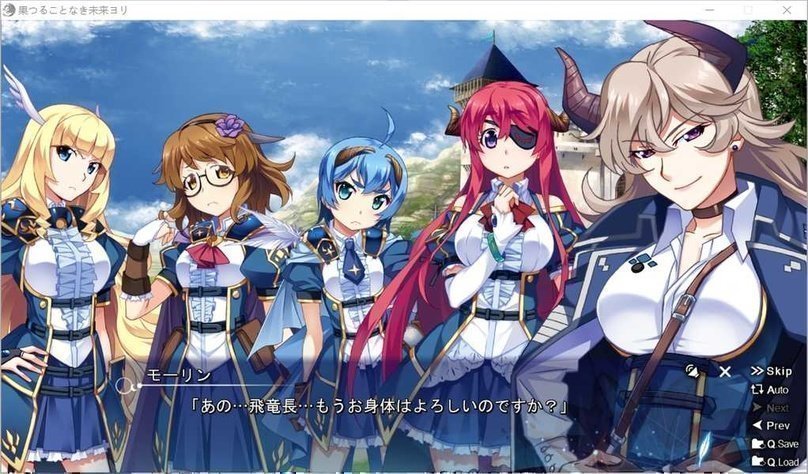
So the dragons repel the humans in the final battle, winning against the odds. Logically it should be thrilling and satisfying, and it is… but something feels off.
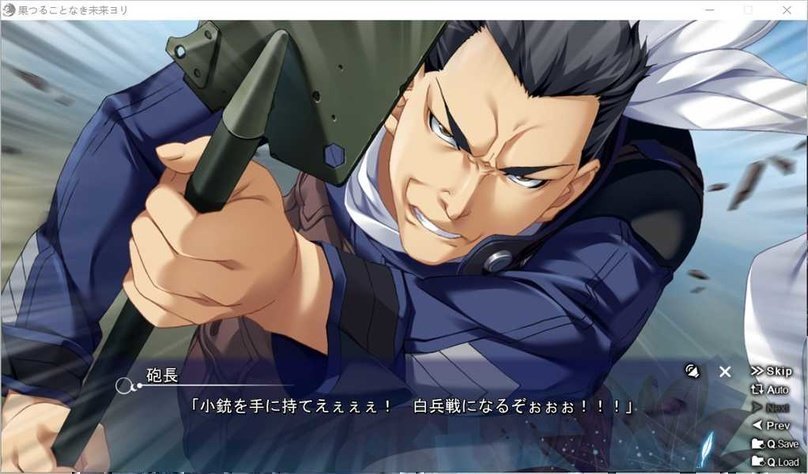
What’s off? It feels familiar. The enemy always acts stupid, our side is always amazing. Then I saw the protagonist’s entrenching tool and I understood…
I remembered an anime called Aldnoah.Zero. The battle rhythm is identical. That poker-faced guy gets in a training mech and suddenly enemy IQ drops across the board. Here the protagonist has an entrenching tool and after a few swings the final boss is forced to transform.
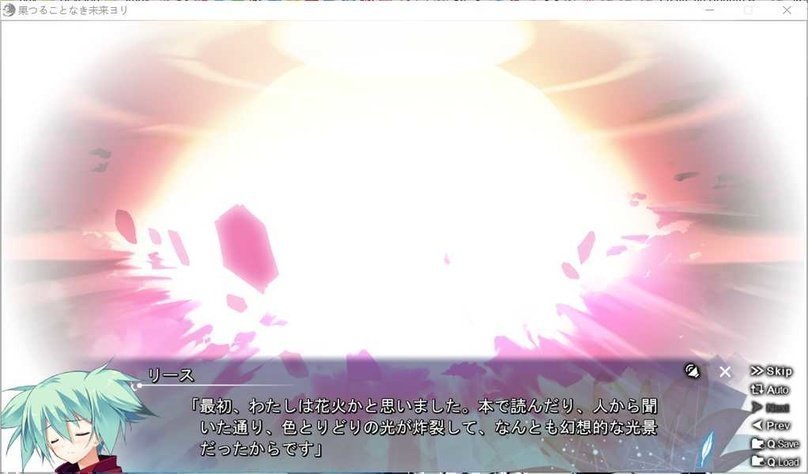
So the last chapter and ending look good, but only good. It’s a popcorn flick, it’s masturbation — you feel good, you laugh, you get hyped, and nothing’s left afterward. As for the Grisaia-level depth I was hoping for at the start, I was kidding myself. This ending is closer to The Labyrinth of Grisaia — no, it’s not even as tight or interesting as Labyrinth. Labyrinth was at least an American blockbuster; this degrades all the way into a Japanese anime, and the kind written by Ichiro Okouchi, with a Tetsuro Araki feel. Wasn’t there that Kabaneri of the Iron Fortress a while back? Probably that flavor — great visuals, one-sided story, and the only saving grace is that it doesn’t feed you shit.
So how should I evaluate this “ending”? A Japanese self-insert “anti-American propaganda epic”? I kind of understand why Frontwing didn’t dare push this game on Steam and rushed to push ISLAND instead. Imagine an American playing this. They’d laugh themselves to death.
I’m not saying the game has no story value. Aside from that final ridiculous propaganda-epic battle, the other writing is decent. The cat girl and dogfolk part is very literary but overdone — I couldn’t understand it. I thought my Japanese was just bad, but other people’s write-ups also seem to say they couldn’t grasp the cat girl’s motive for betraying them. It has a bit of that failed attempt to imitate Eileen Chang’s pretension. The merfolk plot feels like a WoW dungeon quest. The undead part is mostly standard visual novel pacing.
Thinking about it, there’s nothing special here… The slice-of-life bits aren’t as good as Grisaia, the final character writing isn’t as good as Grisaia. It’s mostly just telling a story, and the story doesn’t even have a fresh angle — the final battle actually turns ridiculous, becoming an anti-American propaganda epic. Which brings me to the game’s highlight: its central theme. (Does this feel like an elementary school reading comprehension question?)
Even though the whole game feels fractured — every chapter has a different story style, and the finale is anime-style — leaving me not knowing what to make of it.
But! The game does have a central theme! From the Future Undying is an anti-war game. Yes, the theme is anti-war.
From the first chapter to the last, the writer goes to great lengths to depict how bad war is. The protagonist’s memories of WWII, his feelings as the invader, and the dragon side’s feelings as the invaded — all of it portrays the tragedy of soldiers who don’t want to die but have to for their country and to protect their families.
The game paints the human kingdom as utterly black, but also uses it as the war maniac foil to show war’s cruelty. The merfolk sacred domain’s bloodshed, the dogfolk dying for their honor, the undead as experiment victims (let’s talk about Unit 731) left homeless — all well conveyed.
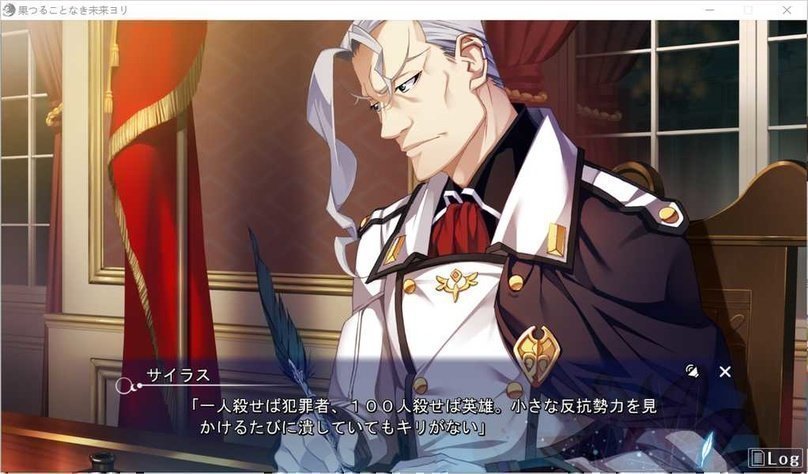
But the strongest expression is the nuke’s explosion. The game pours everything into it. Maybe the Japanese, as a nation that got nuked, find it easier to understand and empathize, and they often start from there to write about suffering, using the nuke to highlight war’s horrors and achieve an anti-war message.
Unfortunately, doing it this way is really mawkish.
Or rather, strip away the isekai flavor, the setting, the banter, and look at the main story: it reeks of mawkishness, of “you’re always bullying us, starting wars for no reason. We’re good kids, we don’t want to fight, we only fight because we have to for our families.” It’s unbearably awkward…
Which is why I mentioned “island mentality” earlier. This game absolutely has that flavor.
I’ve laughed countless times at Chinese TV’s “anti-Japanese propaganda dramas,” but I never imagined Japan could produce an “anti-American propaganda epic.” Then again, how many anime have this kind of plot?
This timid, half-hearted anti-war stance — why not write it with more grandeur? More tragedy? Claiming to be the weak side while steamrolling the enemy the whole time — what’s the point?
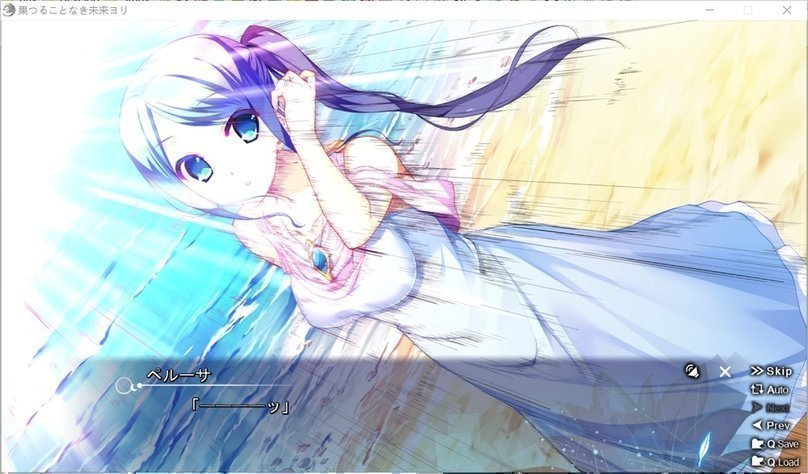
Seeing that Japanese players are handing this game scores in the 70s, I figure sympathy points for the atomic bombings — plus that complicated feeling toward the US — probably make up a decent chunk of it.
Bruh, in a forced attempt to demonstrate the power of the nuke, every route just swaps in a different girl to get forcibly nuked. I’m done. All that’s missing is a nuclear explosion theme song.
Comments are hosted on the Chinese main site. This mirror is read-only.