Tsukikage no Simulacre (月影のシミュラクル) Review
Tsukikage no Simulacre
Tsukikage no Simulacre is a free game. I was pretty surprised when it got announced. My first thought: when a Japanese company suddenly announces a free game, 99% of the time it’s a card game. Turns out nope, not a card game — it’s basically galge-style content.
Then I figured, if you’ve got the balls to make it a galge, are you gonna charge me for every choice?
And then the bastards went and slapped “完全無料(ゲーム内課金無し)” on it in giant letters.
So now I’m even more confused. Everyone says the eroge industry in Japan is dying — since when did they start doing charity? And isn’t the standard playbook for disruptive low-price launches to hold a press conference like Meizu used to?
Whatever. Just download it and see. It’s free anyway. Gotta hand it to those dumbasses in Japan and their bargain-bin servers — the official site went down almost immediately, the Dropbox links blew through their traffic cap right after, and only the Google Drive one still worked. As expected of the almighty Google.
Is it really that hard for you Japanese to rent a VPS??
The game is from Apprinkle. I’ve heard of a lot of their games but played very few. I never got around to their earliest one, 黄昏密薬, and back in the day I played 花の野に咲くうたかたの, and I’ve watched other people play 時を紡ぐ約束. Honestly, 花の野に咲くうたかたの was a pain in the ass for me to read. Imagine a Japanese beginner trying to deal with Kiri Tsuki’s writing, which gets melancholy every few lines, throws in a twist every few lines, and flexes every few lines (in a good way). Back then I was still identifying a lot of sentences by ear, comparing them to lines I’d heard in anime. Eventually I started thinking this style of description was a lot like some asshole named Cai Jun. But as a Japanese scenario writer, Kiri Tsuki has one advantage: he loves kanji. In Japan, kanji signals literary sophistication — and for me it means fewer dictionary lookups. I have to praise this high-quality behavior of making things easier for Chinese readers and harder for Japanese ones. Still, the dialogue in this game reads like a novel, not like real life, so it’s not exactly easy to follow. Actually, thinking back on his previous games, yeah, the dialogue was never lifelike. It’s like theater. Not that that’s a bad thing — not everyone wants to play something where the dialogue sounds like a variety show.
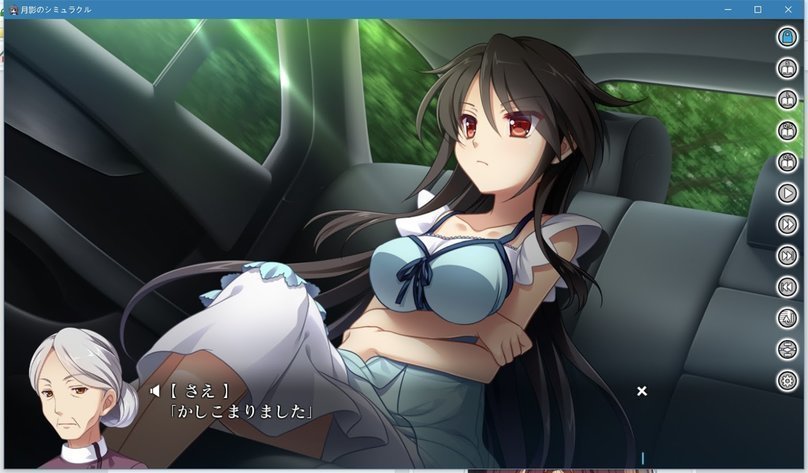
The story itself is theoretically not long at all — should be about ten days’ worth of events — but the writer’s very… literary style made it feel long. The plot: the protagonist is invited to a distant relative’s house to attend some kind of ceremony. The relatives are the Kisaragi family, a line of doll makers going back generations, masters of doll craftsmanship — “doll artisans,” to use a trendy term. The Kisaragi family has a very mysterious work: a legendary “living doll,” 生き人形. There’s also a ritual where this living doll is treated like a real person, and at a certain age she’s given a marriage ceremony, with the other party being the head of the family. So the protagonist goes this time because the head of the Kisaragi family isn’t available, and they want him to stand in and marry the doll.
Why isn’t the head available? Easy to understand. One look and you get it…
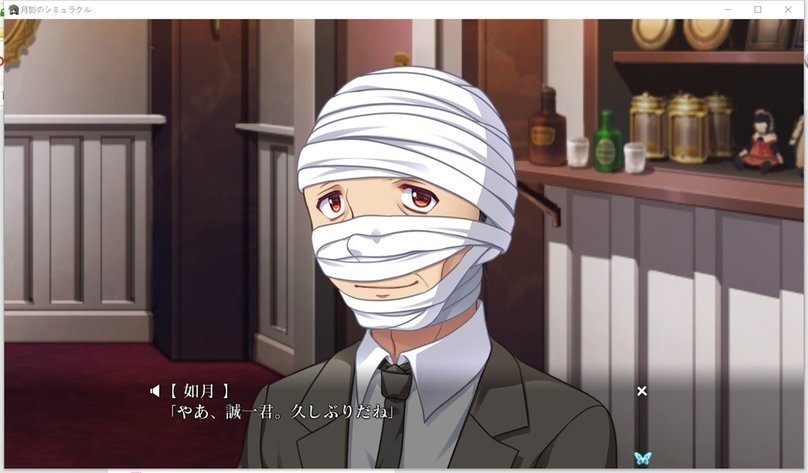
So the protagonist wants to see this legendary living doll first, but gets blocked. The Kisaragi family’s young lady, Rei, says the ceremony is only a few days away, you’ll see her then, don’t be so impatient. The ceremony is mostly a formality anyway — don’t worry, just go through the motions and it’s over.
Then the ceremony arrives. It’s dark, but he does see the legendary living doll. And holy shit — isn’t that the Kisaragi family’s young lady, Rei?
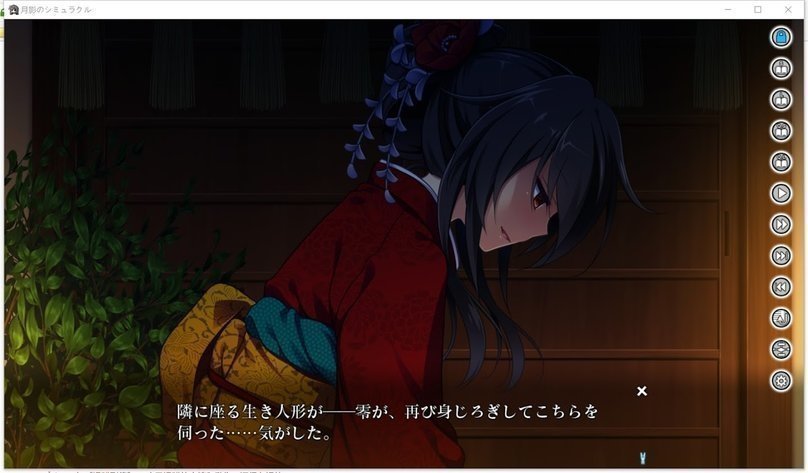
And the doll seems to be smiling.
The protagonist is scared shitless. He finishes the ceremony and hurries back to his room, but can’t sleep that night, so he wanders out and somehow ends up in another room. Inside is the same living doll from that morning.
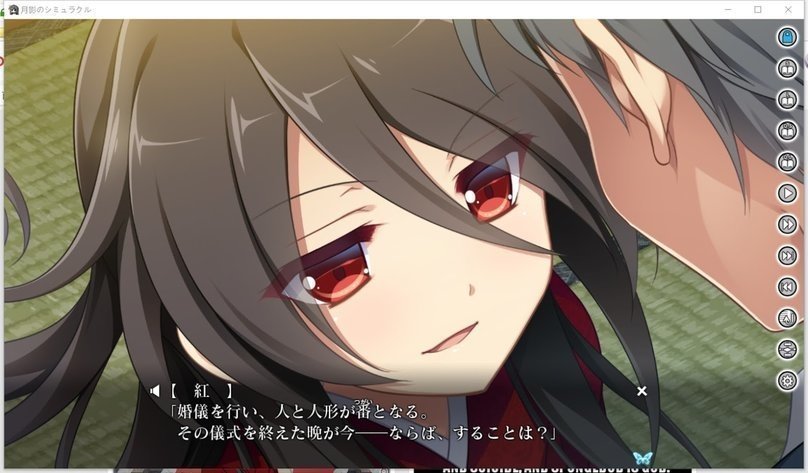
The doll says she has no name. The protagonist reads a character off the wall — 紅 (Kurenai) — and the doll says, well, if you say so, I’m Kurenai now. Then Kurenai says, we got married today, so shouldn’t we do the real business tonight? The protagonist tries to run, but the doll bites his neck and drinks some blood.
The protagonist suspects the so-called doll is actually Rei in disguise — they look too alike. But the doll’s grip is absurdly strong, and Rei is small and slight; she couldn’t have that kind of strength. And the doll also asks: do you know how a living doll is made? You inject a human soul into a shell, and it becomes a living doll.
The protagonist runs off. The next day, Rei asks what happened to his neck. He half-suspects she’s the one who impersonated the doll, so he tells her about last night, skeptically. Rei says she doesn’t understand — she was asleep the whole time — and takes him to the doll’s room, where the doll is indeed sitting there… completely motionless.
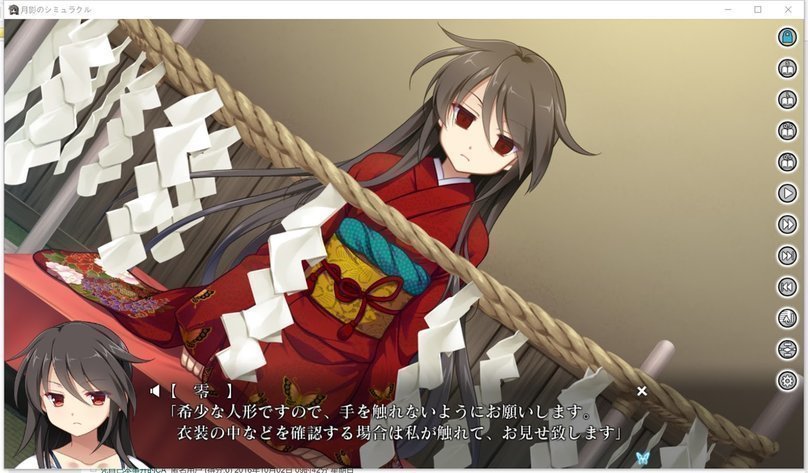
She also explains that the doll looks like her because it was made based on another relative in the family, so it just happens to resemble her. She adds that this room is a locked room — she’s the only one with the key. The protagonist couldn’t have gotten in last night, and even if he had, no one could have locked the door from the inside. She explains the “marriage ceremony with the doll” is just lighting a candle in a dark room, draining your energy until you get woozy and maybe hallucinate that the doll came alive. So last night was just a dream.
But that still doesn’t explain the bite marks on his neck.
The protagonist remains unconvinced, but the doll never moves again — until one night, the head of the Kisaragi family is murdered. No one saw who did it.
The police suspect someone impersonated the doll, but there’s no obvious motive, and most importantly, the doll’s room was properly locked — though the protagonist did notice some suspicious marks near the doll.
A few days later, the Kisaragi family’s old servant is also killed. This time, while searching for the missing servant, the protagonist runs into the living doll again. The doll mocks him and tells him to search outside. Outside, he finds Rei — and the murdered old servant.
So they reason it out. It looks like the living doll did it, but no one except the protagonist has seen the doll alive, and no one believes him. Back inside, there’s blood on the doll’s clothes…
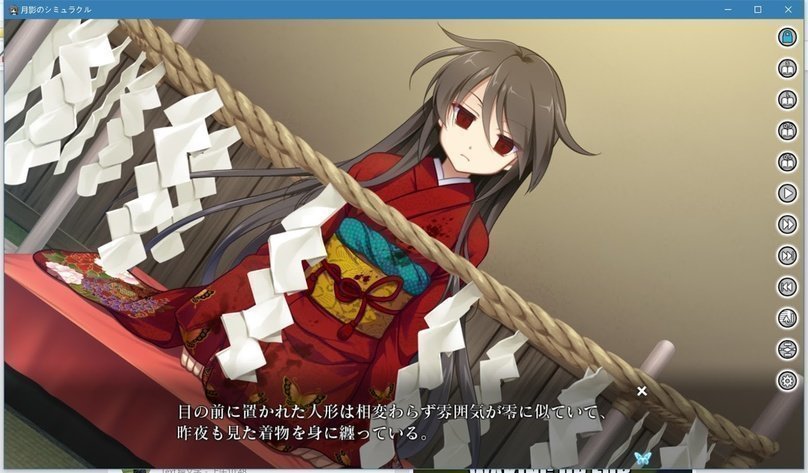
So the whole thing is full of holes. Who actually did it? Was it really the living doll? Interestingly, the protagonist also goes into town and meets some friends. They say the Kisaragi family has had a rough few years — there was a big fire before (the family head’s appearance is the result of that fire), and there are rumors of vampires and other nonsense in the house.
At the end, the protagonist meets the living doll again. Not long after, he sees Rei — and Rei sets her own house on fire…
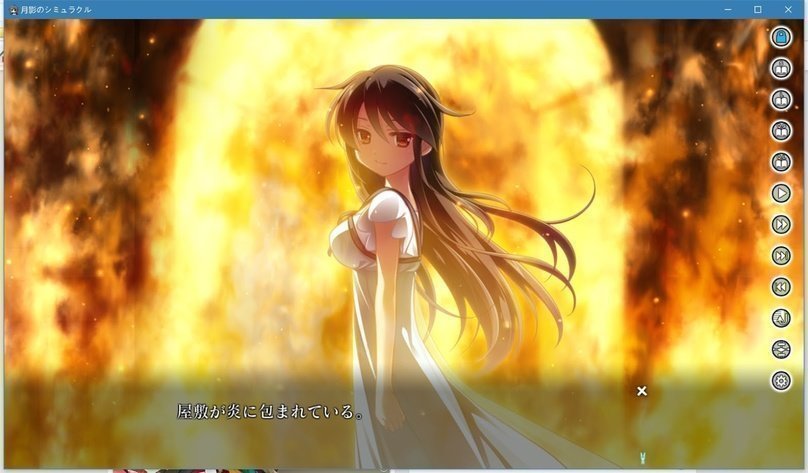
If I read it right, Rei dies in the fire too. Suicide? Or maybe I misread, and she didn’t die, just left. But the story just ends, out of nowhere.
The protagonist leaves with the question of whether the Kisaragi family’s living doll was real, and the whole thing becomes an urban legend. The ending has him spotting a suspicious person on the street whose way of speaking is exactly like the living doll’s. Maybe after the fire, the living doll didn’t die and got out.
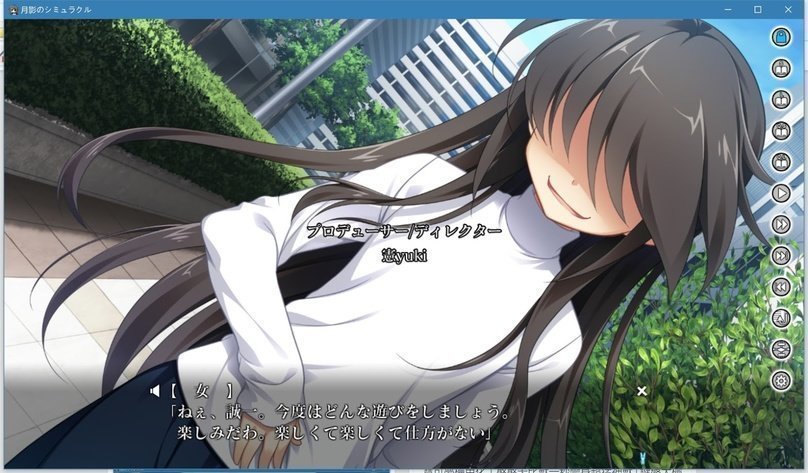
A lot of Japanese players rated this game “well, it’s free.” The story is like a demo — nothing’s explained clearly. Was the killer the real living doll, or Rei impersonating it? No clear answer. Honestly, I don’t think that’s a problem. These headless, tailless little stories are a dime a dozen in the “蓬莱鬼话” section of Tianya. If you want to build a horror atmosphere, leaving the mystery hanging without explanation is actually the best approach. Better to just treat it as a legend about a living doll gaining freedom. It’s basically the same as that Cai Jun novel 病毒, which was also about an undead person infected with a virus.
As for the demo-like unfinished ending — think about it and it makes sense. It’s free, released to hook you. The main game is presumably going to be sold. The official site even explains why it’s free: the point is the projects related to this game that come after. In other words, this “doll” legend may be backstory for some future game, just a setting used to build a world. Though the character design sheet shows the doll and the young lady are the same person — maybe that’s a spoiler?
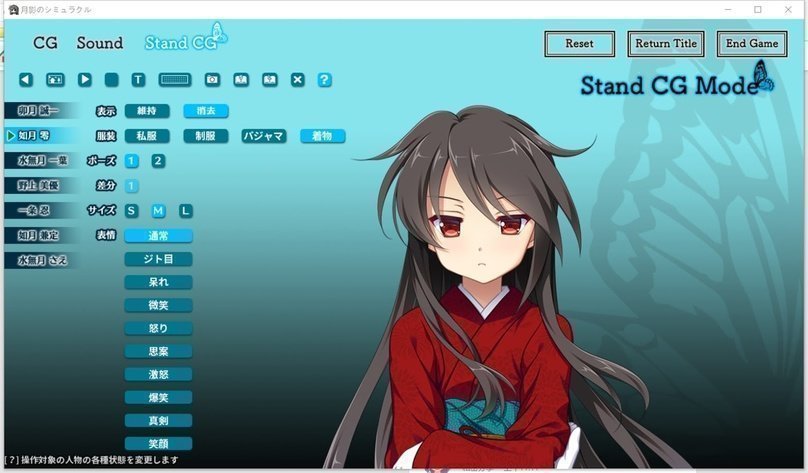
Hard to say, though. The title: 月影のシミュラクル — “Tsukikage’s simulacre.” The latter is a French word; I don’t know how to render it in Chinese, but it means something like “no substance, only appearance.” Probably refers to the living doll.
As a free game, at least the art and music are on par with paid games. So is the script. The heroine’s collarbone is drawn so good so good so good so good The music almost single-handedly carries the atmosphere of the whole game — music is a big highlight. The script, well, still that theatrical style. Reads lazy, but at least it’s not like that game last time where the protagonist opened Sargeras’s eye and several routes were completely pointless. This time the foreshadowing actually pays off, though there isn’t much of it.
The game’s CVs are undisclosed, but one of them is definitely Mariko Honda. Some Japanese person said the main heroine is Haruka Sora — I suggest he get his ears checked. The game is currently all-ages; maybe the CVs are hidden because they’re considering an 18+ version later? Or they’ll decide based on reception whether to go 18+ or all-ages, so they’re keeping it under wraps for now. Anyway, various reasons.
Last but not least, the most legitimately criticizable part of this game: the programming.
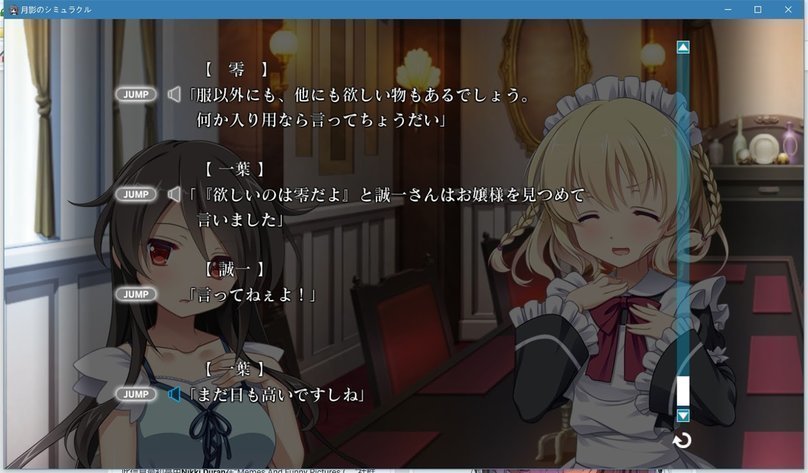
I don’t know about other versions, but the Windows version has a huge bug: character voice doesn’t play automatically.
So the game is fully voiced except for the protagonist, but other characters only speak their first line in a scene, then go silent. At first I figured it’s free, maybe there’s no voice — didn’t think much of it. Then I clicked the little speaker icon and holy shit, there was voice. That’s when I realized it’s a bug: you have to click manually, otherwise they don’t talk.
What does that mean? If I want to hear the voices — and as a seiyuu fan, I want to hear the voices — I have to click Repeat line by line to hear the characters read, because it won’t play on its own.
Fuck me. Some Japanese reviewers failed this game. You want my score? I’ll fail it too. The programmer should be strung up and lit on fire, their dick clipped off with nail clippers. What era are we in, and this kind of bug still exists? It’s agony, seriously.
The game also has an ED, but it’s not in the game itself. You have to go to the official site and submit your impressions, and they say they’ll email it to you two days later. I still haven’t received it…
Comments are hosted on the Chinese main site. This mirror is read-only.