Magical Charming! Review
Probably the Best Galgame I've Ever Played
For a long time, one of the big reasons galgames get doubted and looked down on by a bunch of hardcore princess-type players is this: the damn thing doesn’t count as a game.
Honestly, I don’t think it counts as a game either. At best it’s an audiobook. I’ve said more than once that when Westerners talk about Japanese eroge, the word they use is always Visual Novels. When our local Japanophile shut-ins are solemnly announcing “I’m playing eroge again this month,” the Westerners are all saying What are you reading?. Of course, galgames themselves have increasingly become novelized, gradually turning into commercial products that sell purely on art, story, music, porn, or even just first-press bonuses. Development costs aren’t high either—plenty of small doujin circles start out as galgame companies, and it has that vaguely Chinese-youth-startup vibe.
But this thing wasn’t like that in the past.
The earliest galgames were probably things like Tokimeki Memorial—date-sim style. They really were games. The focus was romance, romancing girls, achieving the goal of romancing a girl in the game. Even the eroge direction was more like strip mahjong—meaning there was entertainment value baked in. Probably the rise of RPG-type games killed the market for these, and everything went full character-selling novelization. Even so, some early galgames still had game elements designed to make you feel like this thing was a “game.” For example, Alcot’s first game in 2003, Clover Hearts, had different routes and branches for collecting items, and ultimately unlocking a puzzle on the main menu as a collection element. Another thing: old galgames had tons of choices. They leaned toward AVG elements—deciding the course of the story through different actions is the standard AVG method. Even now, Western AVGs follow this principle, except nowadays they’re competing on graphics and various 3D realistic scenes, even combining VR tech with simple action elements… Meanwhile Japanese galgames, aside from prettier girls, bigger tits, and more explicit porn… the systems have barely progressed in terms of gameplay—in fact they’ve regressed massively… Tons of choice branches are gone, basically one choice determines the story’s direction, and there are even “one-way street” games. Fuck, a game with zero choices isn’t a game anymore…
Even so, the Japanese galgame industry cries about decline every year like the anime industry, yet new releases keep pouring out every month. There’s a whole pile of proper company games, not to mention the pure porn products. Sendai Eri was on a radio show and got asked “What do you think about your husband still playing eroge after marriage?” She straight-up lumped it together with AV. Basically, forget treating eroge as a game—even treating it as a novel for reading stories is a minority within a minority… In the end it’s become an unspeakable hobby. When a girl at a matchmaking event asked what I like to do, I could only say I like watching Japanese anime. Then she asked what shows I’m following, and I hadn’t watched a single fucking one… I can’t exactly say I like playing porn games, right…
Ultimately, I’ve always felt that Japanese eroge needs a proper direction for development. Either you honestly become a novel and get the hell out of the game industry, or you properly add entertainment value. It’s not like nobody’s tried adding entertainment—Cross Channel / Hana Hime, or the PSP/PSV Danganronpa and Fortissimo series—but none of them show much of a distinctive character. No clear direction… Cross Channel’s combat is fun, but you should’ve just made an RPG, right? Danganronpa’s mystery-solving is a bit forced, and Ace Attorney already exists, so it’s nothing new. Fortissimo is fun when you’re shouting skills, but the system itself is a weird hybrid with no real fun. Too hard without a guide, too braindead with one—you can’t feel any sincerity in it. In the end it’s still lost.
So what is the correct direction for galgames? You ask me? I don’t know either.
This question bothered me for a long time, because galgames are more character- and story-driven. Most games have characters and stories. Western AVG-leaning games have combat—more combat makes it an ACT, more turn-based combat makes it an RPG. It’s hard to define what a “text AVG” can do to blossom. But it’s not impossible—which brings me to the Lump of Sugar, which I complained about a few days ago.
I’d encountered a few games from Lump of Sugar before. Honestly, the systems were well-made and looked like they had a real idea, but the stories were incredibly stupid, which made the system unfun too. At the time I complained: why spend so much effort on this system instead of fixing your stupid story? Even in consecutive releases like Unmei Senjou no Phi and Rensou Relation, why put effort into the system instead of the story? What caused Lump of Sugar to have such an obsession?
So I started digging through Lump of Sugar’s past releases, and a game called Magical Charming! appeared before my eyes. ErogameScape gave it a score in the 80 range. An old game getting 80 on ErogameScape—and a moege at that—means a lot of people rated it around 80. Keep in mind that even Yuzusoft games, when a bunch of ugly shut-ins are praising them to high heaven, will only get 70 out of face, because political correctness demands acknowledging that it’s not like 5pb and its ghosts, or KID and its ghosts, or garbage like White Album. Because you’re a moege, not some big production—just selling cute girls—so you’re around 70. And this one got 80, proving it’s not simple.

But as everyone knows, there are three unreliable things in the world:
- Head-Fi gaijin
- Reddit Sony fanboys
- ErogameScape Japanese
Even so, this game is worth a try…
The setup is extremely cliché. The protagonist is captured and taken to a magic academy, a place where only people who can use magic attend. And in this world, only women can use magic. The protagonist is the only male who can use magic—extremely rare—so he’s forced to attend school there.
The person who captured him is the princess of the country the academy belongs to. The academy is on a floating island. The princess explains that people who can use magic all have a huge wish they couldn’t fulfill, which is why they learned magic. The protagonist is a rare male—he must have a huge unfulfilled wish too, otherwise he couldn’t be a mage. So she asks what he wants.
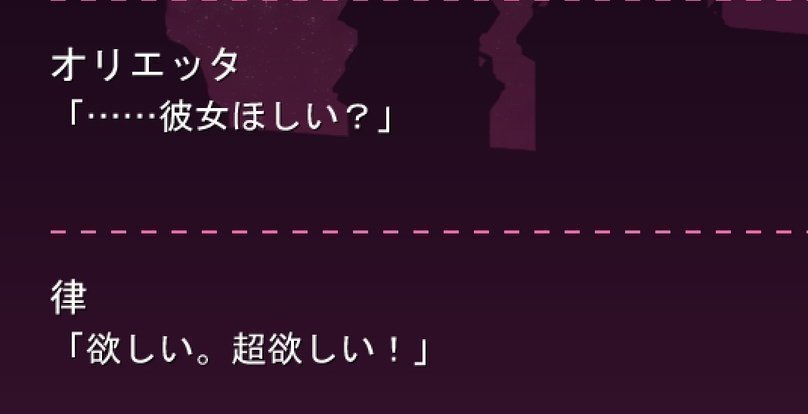
The protagonist thinks for a moment and says: I want a girlfriend!
The academy princess Orietta says: fine, then hurry up and find a girl. Once you find one and your wish is fulfilled, your magic will be removed and you can go back to the human world and stop staying at this academy.
And so the story begins, with the protagonist starting his girl-chasing journey as the only male in school.
Now I need to explain the game system. The game has a card system. Every keyword mentioned in dialogue with each heroine or NPC—whether a location, a function, or magic—gets collected as a card. It’s kind of like “keywords.” The interesting part is cards have color attributes and also levels: C cards, R cards, SR cards (you know, sadly no SSR).
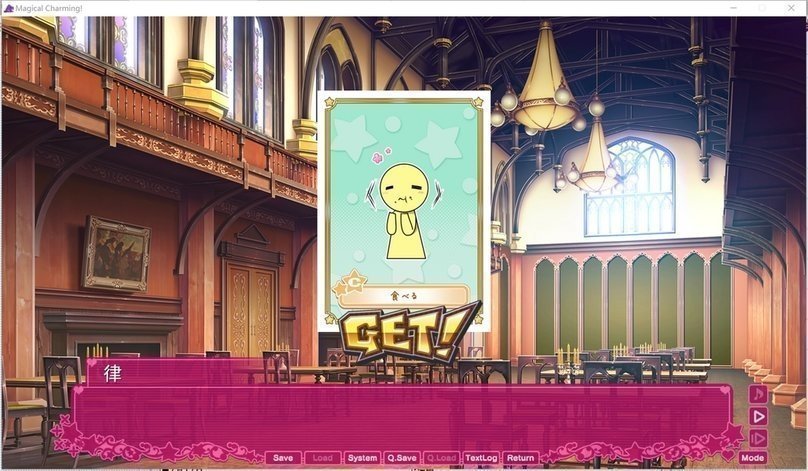
But what can these cards do? The game says mages use magic by using cards, but in the game these cards seem to do nothing—they’re just options during dialogue.
Each day the protagonist must choose who to see. To see someone, you pick their card, and then trigger an event with that person. During events you obtain various cards, and after obtaining them, those cards get used in the events you continue afterward. Be sure to use them correctly.
I need to mention that many places have card chains. For example, when dating Orietta, later on she’ll ask “Where should we go on a date?” If you haven’t talked to her before, you won’t know where she wants to go, so there’s no correct answer among the cards—because when Orietta said she wanted to go to the “aquarium” in earlier dialogue, you’d have collected an “aquarium” card.
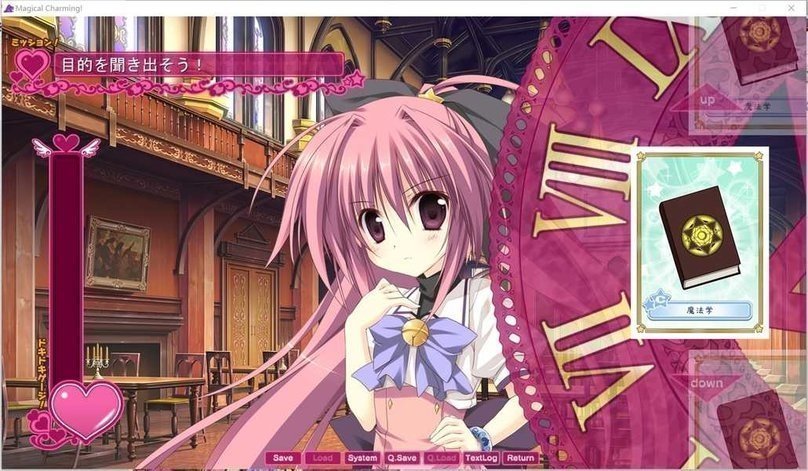
In other words, the choices in the game are all cards. Many cards need to be obtained through dialogue. If earlier dialogue didn’t progress successfully, you’ll have no cards to choose later. The game also has an HP system—that heartbeat on the left. There are several key choices: choosing correctly increases HP, choosing wrong deducts HP and gives you another chance. HP hitting 0 is Game Over.
Starting to feel this game is interesting? Me too. I already thought this game was creative. You can pursue four girls: academy princess Orietta, the protagonist’s sister Natsumoto Fuuka, his childhood friend who crossdresses as a boy to attend school with him, Hayama Akane, and his senior Shirakami Hiyuri. The way you pursue each is similar to traditional games—whoever you want to pursue, go see them every day. But it’s not that simple. On each route the heroine will continuously ask you questions—where to go on a date? What to eat? What do you think of her?—but these questions don’t come out of nowhere. They have context. If you actually read the dialogue, the heroine told you her preferences beforehand, whether intentionally or not. If you don’t read carefully, miss the card, and lose mysterious HP, then you’re a dumbass.
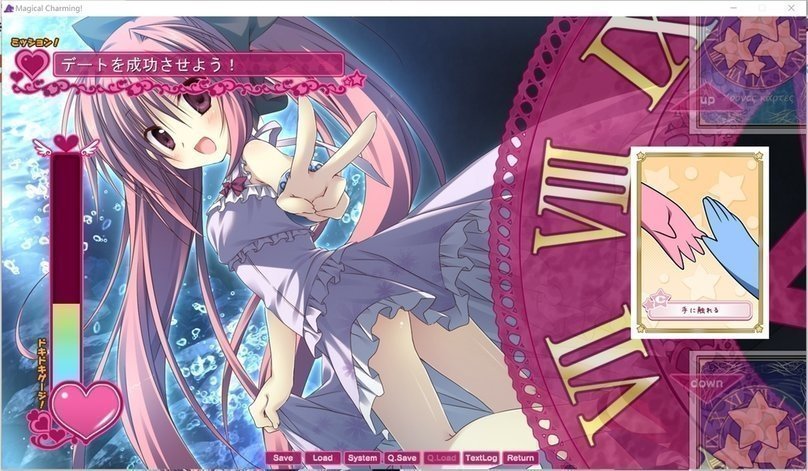
The protagonist emphasizes his view on romance: “stage by stage, step by step.” I forgot what his wish was exactly, but he says romance must go from meeting, to knowing, to loving, to confessing, to being together—no skipping in between, must go step by step. Worth noting: this is also a reference for the game’s choices. Several times you’ll encounter “Should I just kiss the heroine?” options. Get excited and pick the Kiss card, and you might go straight to a Bad End.
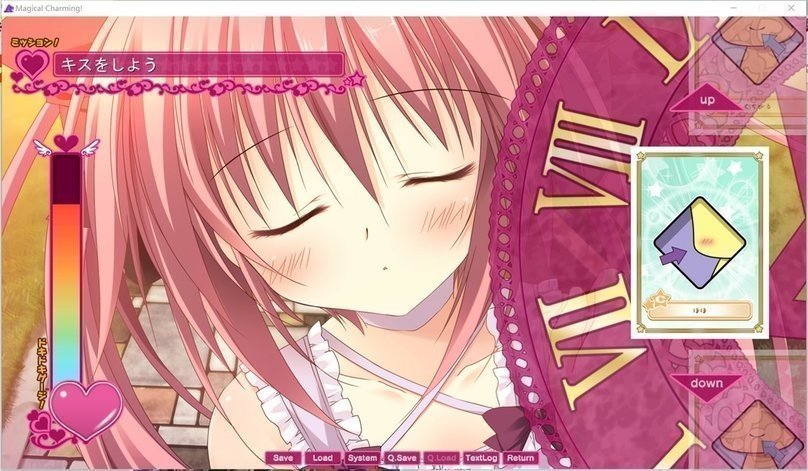
Each character’s route has tons of choices, which looks troublesome, but “it was all told to you beforehand” is precisely this game’s defining feature. That’s right—all choices were more or less clearly hinted at beforehand. Not reading carefully, not thinking carefully—that’s your own fault.
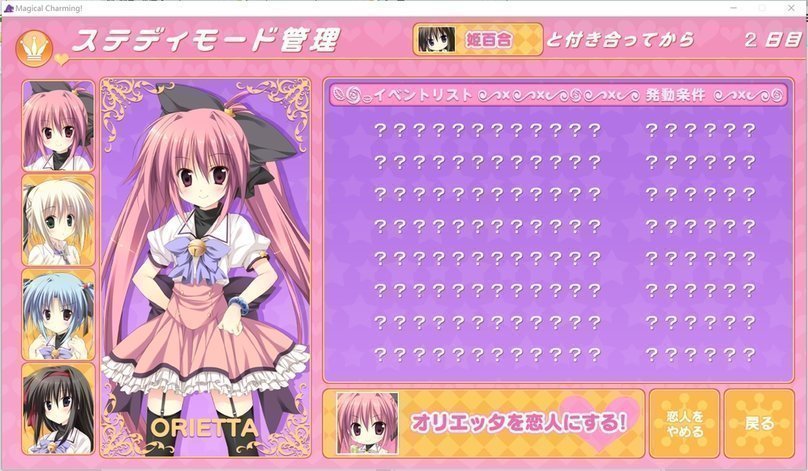
Besides pursuing girls, there’s a card collection element. Each day, besides seeing girls, you can choose to visit the teacher first and ask questions. The teacher will seriously explain the magic subject she knows, and sometimes give you a magic card. The game has four heroine routes. After clearing each heroine’s route, you unlock Steady Mode, where you choose to become lovers with one girl. The game’s theme voice changes to that girl, and it records how many days you’ve been lovers. Yes, time is real time—you can open the game every day to check in. But that’s not all: on specific holidays, your in-game lover will trigger special events with you—like an extra Valentine’s Day scene, or a one-month anniversary scene after 30 days of dating. After the scene there’s a chance she’ll give you a card. Fucking creative.
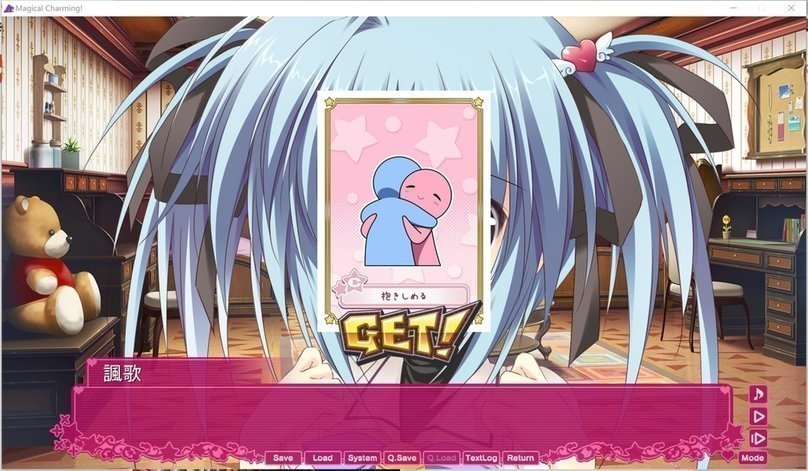
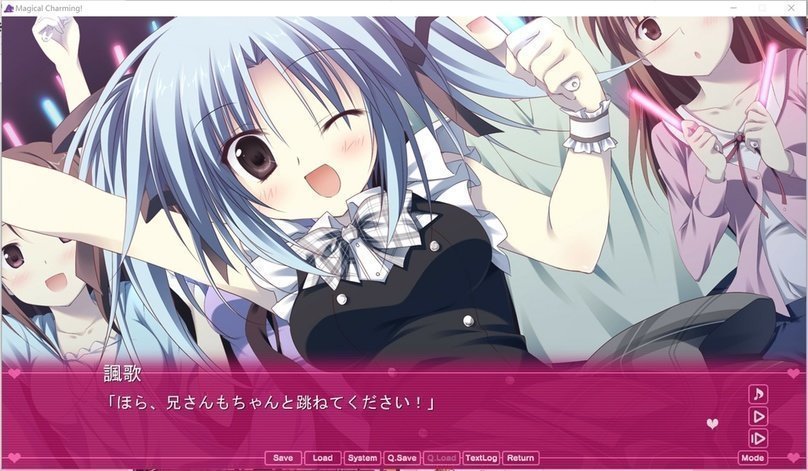
Although the game looks like it has a lot of card collection elements, the romance stories themselves are good too. Not exactly full of ups and downs, but sweet and steady, with some small foreshadowing cleverly recovered. The girls are portrayed very cutely, with plenty of heroine POV. Most importantly, the romance stories are practical.
Yes, practical. There’s a lot of dating advice in there—like always remembering where the girl said she wanted to go, paying attention to her preferences on dates. There’s even a teacher in the game who calls herself a love mentor; before each date you can choose her card and consult her. Besides drawing cards, you gain some life experience. There are also plenty of small branches for collecting minor cards, and the branches include some crude humor and joke endings—like a gay ending, a gender-swap ending, an ending where the protagonist acts like a creep and becomes the heroine’s familiar. Just from this, I think the game is already quite good as a light, cute romance piece. Actually, it exceeds expectations.
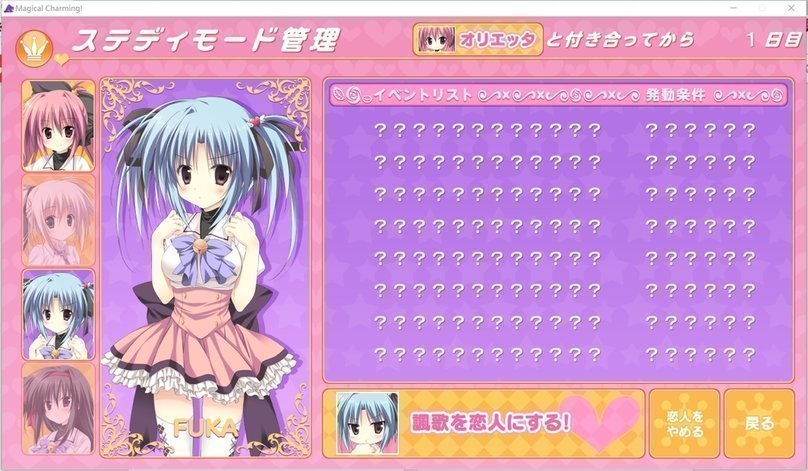
The official marketing kept stressing that this game has an amazing card system, but I didn’t take it seriously. From the start I thought it was purely for collection freaks… useless. Although the game has all sorts of lore about cards—teachers explaining card attributes, the difference between R, C, and SR, card magic calculation, card summoning familiar magic affinity—it’s all bullshit lore in the end. After listening you get a card, which is just collecting cards, like those people who always chase 100% read in galgames to satisfy OCD…
Of course the game has plenty of highlights. The sweet romance story, choices with HP, losing HP on wrong choices—that alone is enough for me to hype it up first. As for the cards? Just choices in another form.
But soon… reality slapped my face.
Remember what I said earlier? This game, when you hit a difficult point, you’ll look back in shock and realize “it already told you beforehand.”
After clearing all four heroine routes and collecting the SR card from each heroine’s romance END, I discovered the game has a True End. Unbelievable—a moege romance game with a True End.
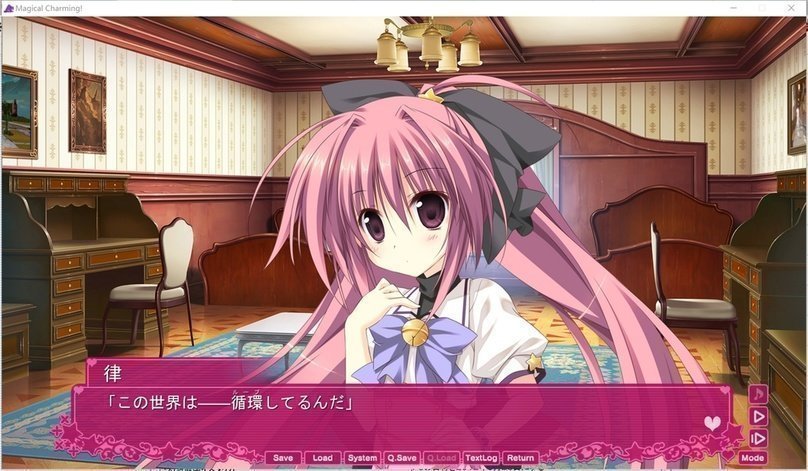
The way to enter the True End is simple: play another playthrough, and at the point in the first playthrough where you take off your clothes, choose to show the heroine the SR card from her romance END. Because at that point the protagonist hasn’t confessed yet, but he’s already holding a card from after the confession ED—creating a contradiction.
The heroine is surprised: he hasn’t dated her, so how does he know this card exists? The protagonist goes to the other heroines and shows them the SR cards from their romance endings, receiving various reactions of confusion…
The heroines also gain memories from these SR cards, remembering their romance stories with the protagonist. But there’s a contradiction—how did those things happen? Parallel worlds? Different world lines?
Academy princess Orietta senses something is off, creates a card herself, and uses it on the protagonist to try to awaken his earlier memories.
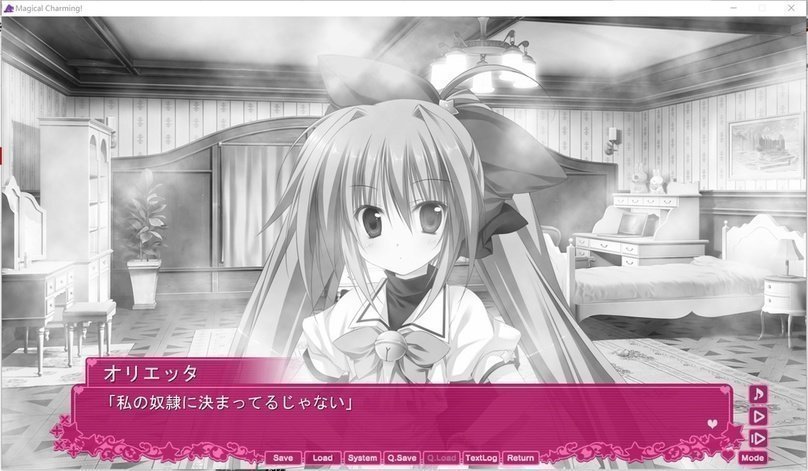
And so the game enters a flashback arc. But I have to say, this flashback is explained very unclearly. In the flashback, the protagonist is a familiar summoned by Princess Orietta. Princess Orietta has been receiving magic training, and it’s said that the magic academy’s island will soon collapse from insufficient magic power. A new princess must inherit the throne and use magic to keep the island from falling… Then a bunch of messy stuff happens, and the protagonist inexplicably perishes from magic loss…
Then comes the second flashback. In this one the protagonist doesn’t die—rather, nobody recognizes the protagonist, and beside Orietta there’s another woman whose face can’t be seen.
The flashback ends. Actually, it leaves you with a lot of suspense. You think the story continues? Wrong. The fucking main part of the game begins.
What main part? The Q&A phase. The heroine starts asking you about the people who appeared in the flashback—what their relationships might be, why the protagonist in the flashback was a familiar, why the protagonist was summoned in the flashback… etc., etc…
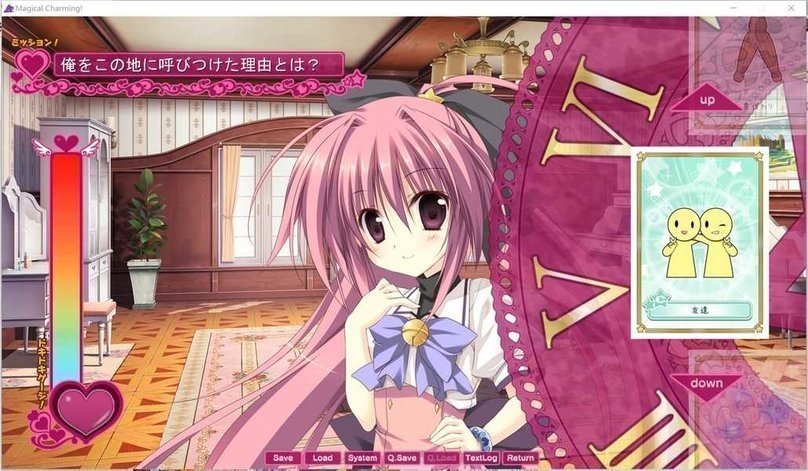
Answer the questions with cards. Wrong card answers deduct HP. HP depleted is game over. 気をつけてください.
What does this remind you of? Reading comprehension, right?!
The flashback is literally a reading passage, and at the end a teacher asks you what the flashback said, what it implied… Worse, there are landmines in these questions. Some are clearly misleading, and you’ll get screwed over and over.
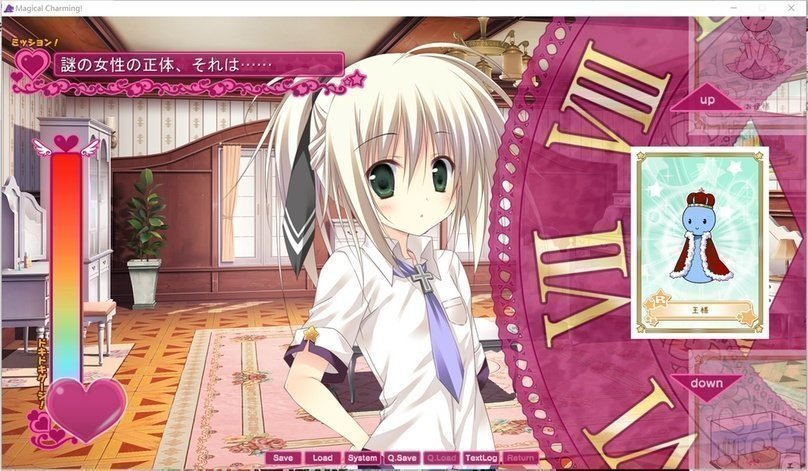
For example, you deduce that the faceless woman might be the current king, and who is the king’s retainer? Normally it’d be the heroine Orietta—if she weren’t the retainer, why would she receive education to inherit the throne?
Wrong answer. It’s the three teachers. As was said in earlier dialogue, the teachers are all the king’s familiars, and familiars are retainers…
I was like @)(#×…@#()¥×@…#¥, it felt like being killed by the examiner’s questions in an English reading comprehension test back in the day. But you can’t do anything about it—the game did say it. I just didn’t read carefully…
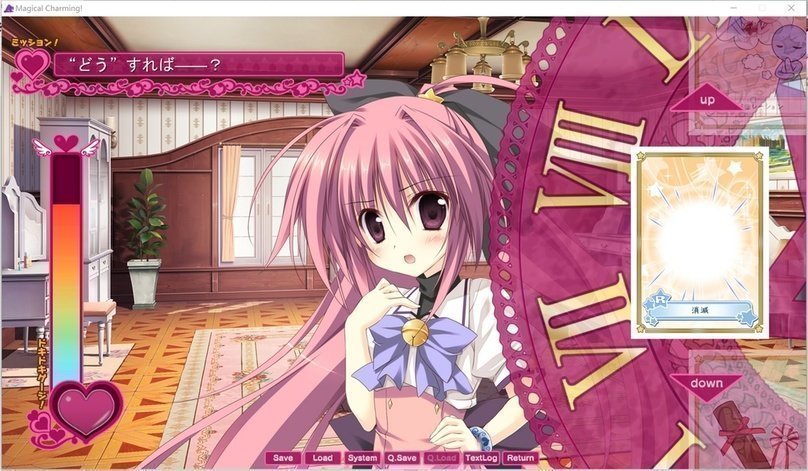
By the way, there are also double-select fill-in-the-blank questions here—put 「XX」 into 「xx」, and both must be selected before submitting. Fuck, this cost me half my HP bar. I kept thinking the first one was correct.
If you’re lucky enough to get through the reading comprehension phase, you learn that the current world is one the protagonist has looped through several times. He used a time magic card to reset multiple times. The protagonist was indeed originally summoned as a familiar—he’s still human, of course. This small island is indeed losing magic, the magic spring is drying up, and the island will fall. The heroine Orietta was indeed going to sacrifice herself as a human pillar in the spring to keep the island afloat. But in the end, who went?
The heroine’s sister. The heroine mentioned having a sister (mentioned earlier, and you definitely didn’t notice, just like me). The heroine’s sister became the island’s magic source for her sister’s sake, sustaining the island’s existence. The three teachers at the island academy are the heroine’s sister’s familiars, specifically teaching and maintaining the magic academy’s operation.
After all, people in the world keep awakening to magic and getting sent here to study. After graduating, their magic disappears and they return safely. Without this island, many people couldn’t control their magic, causing world chaos (this was also fucking mentioned in the common route—the teacher even lectured about magic control and magic suppression—who the hell listens? I thought it was all bullshit). The sister felt this magic school must exist, so she sacrificed herself to sustain the island.

But Orietta remembers: to keep the magic source from drying up, you don’t need a dead person—you need someone soaking in it. So the sister might still be soaking in the spring beneath the island. Princess Orietta still plans to go save her sister.
Of course saving the sister isn’t simple. The three teachers as familiars will definitely interfere. The first teacher jumps out—the one who taught familiar summoning in class—and immediately summons a familiar to battle you in a familiar duel.
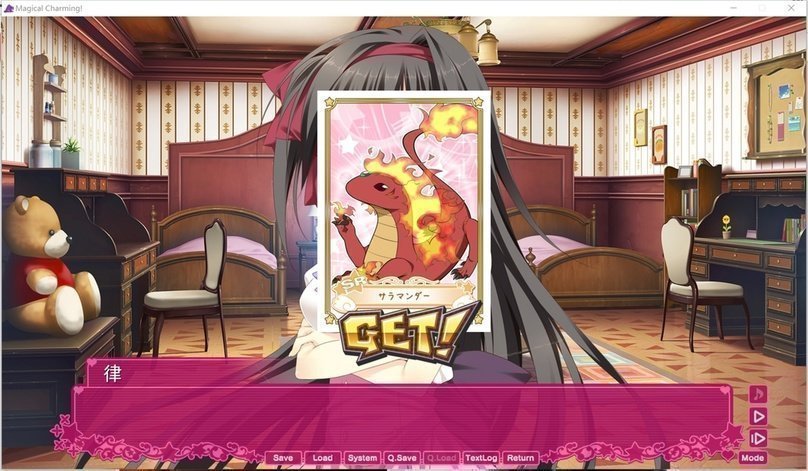
Familiar battles are simple: wind beats earth, water beats fire, fire beats wind. That teacher said this in class during the common route!!! But who pays attention? I still treated it as bullshit!!!
What? You find you don’t have a pet card?

Sucks to be you! Go back and draw cards!
On each of the four heroine routes, the day before the confession has a branch where you can draw cards independently. Each draw has a 30% chance to summon a pet card. But this is a single-player game, not a gacha—Save and Load lets you redraw. A 30% chance and I had to draw five fucking times! I’m probably hopeless with gacha games.
Go back for a second playthrough, collect all pet cards, then challenge this pet battle teacher. Use attribute advantage to win.
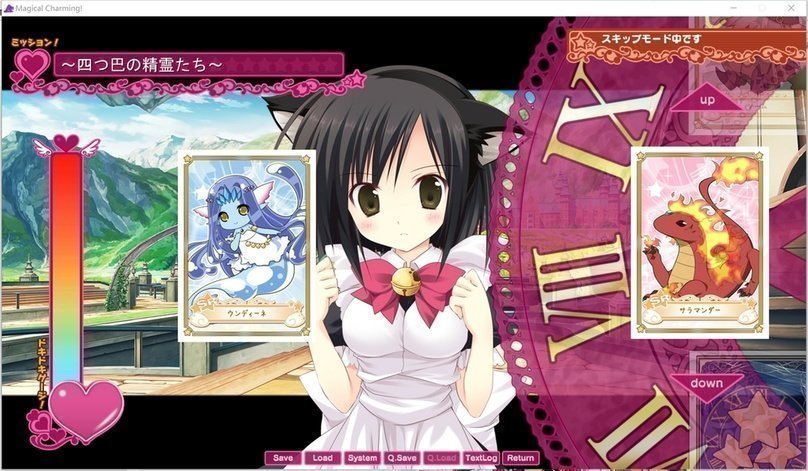
Then comes the second teacher battle: word chain. The teacher gives the pronunciation of the first character, like さ, and you need to find a card starting with that sound, like さいふ (財布) wallet.
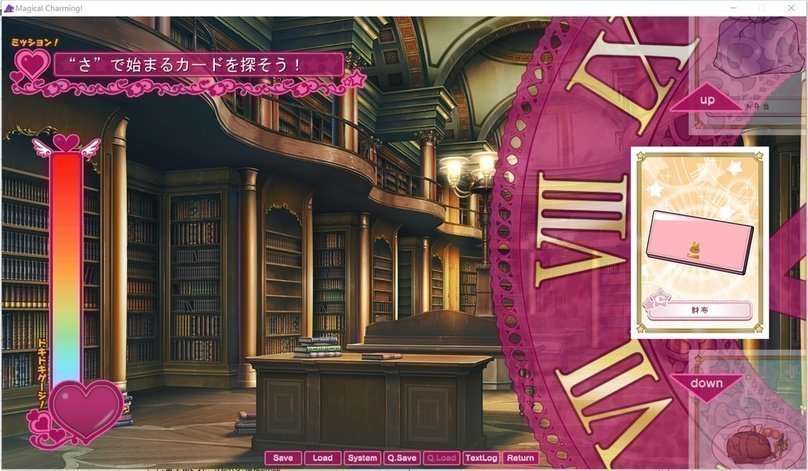
However, this teacher finally gives you ば, and you still don’t have a card.
Remember something? Before entering the True End, the heroine said the protagonist needs to explore 5 possible endings, and I’d only done 4 possible romance endings. What’s the other one?
バッドエンド Bad End!!
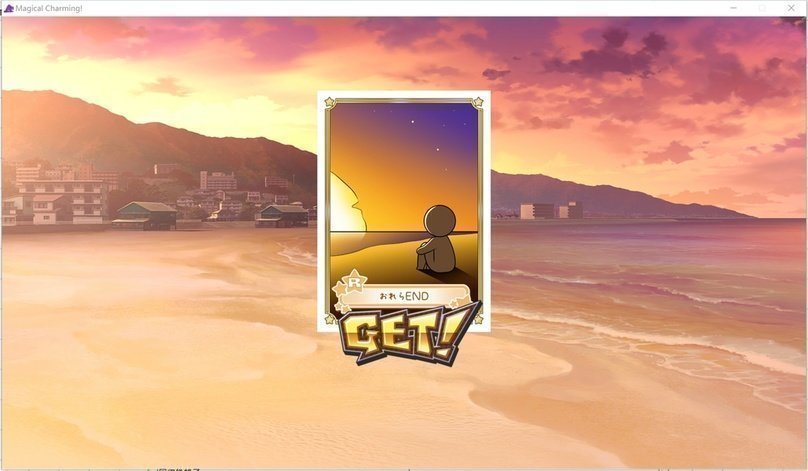
Go back and specifically play through the Bad End. In the Bad End the protagonist lives a lonely life, and there’s an independent miserable ED. After the Bad End you get a Bad End card.
So now you have a card starting with ば: ばっどえんど, バッドエンド.
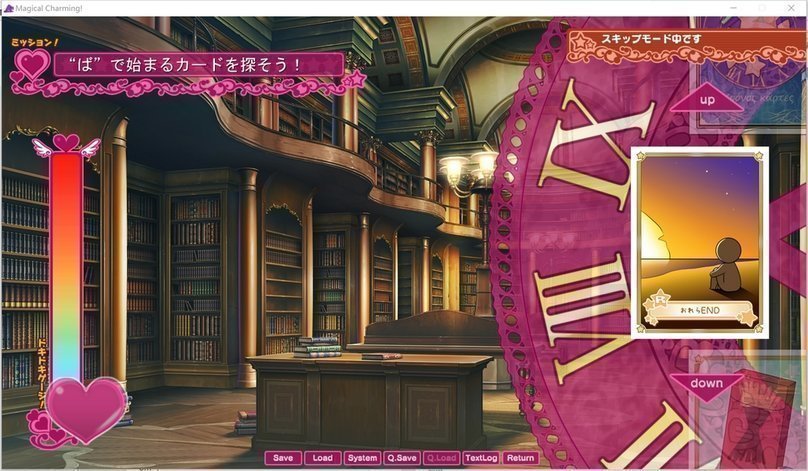
Second Boss cleared.
Then comes the third Boss: the Magic Scale.
So what’s the “Magic Scale”? Stumped, right? In the common route the teacher explained it in class. You definitely didn’t listen, just like me…
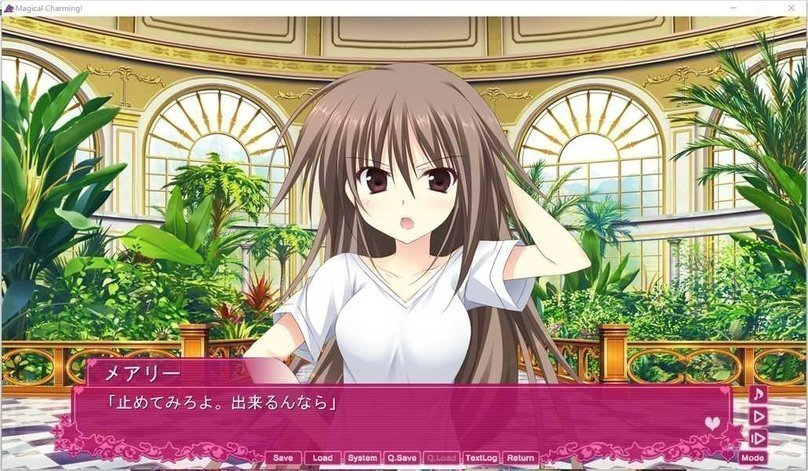
Every card has a C/R/SR attribute. The attribute has a base value, and the card’s nature (location, person, action, emotion) represents a multiplier.
The card’s magic power equals attribute value × multiplier. The teacher explained the specific numbers in class. You didn’t listen? Go check the guide.
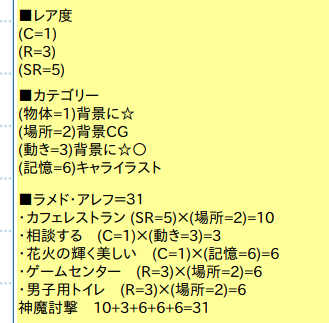
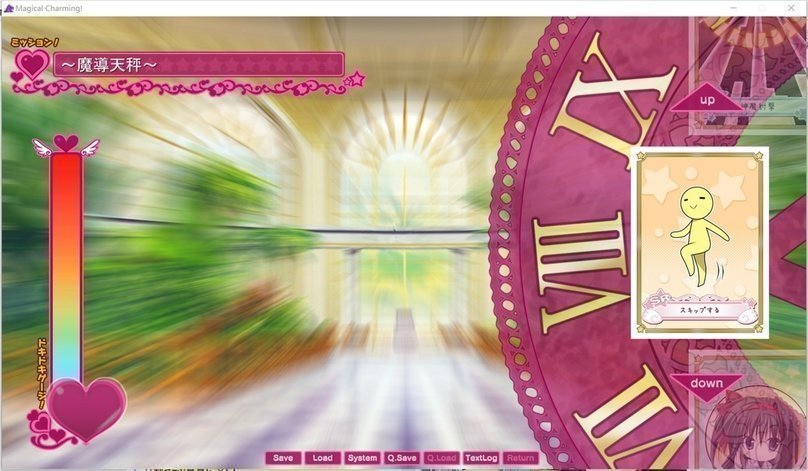
The teacher randomly produces 9 moves, each corresponding to a magic value. After the teacher’s move, you need to use cards in hand to combine a value equal to the teacher’s move, using the finishing move 神魔討撃.
If both values are equal, the round succeeds. After three consecutive successes, the Boss battle is won.
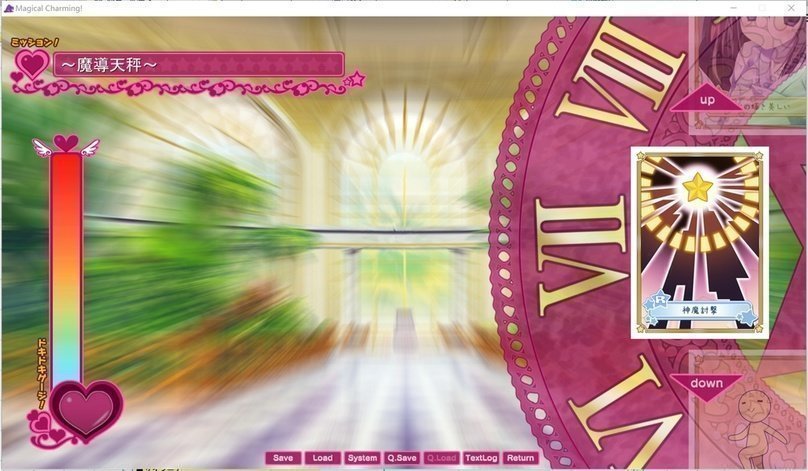
It’s like the teacher gives you a number, say 31, and you have a bunch of 5s, 6s, 3s in hand—combine them so they add up to 31. Of course, you need to look up the values for SR, R, and C yourself…
If you’re really dumb… just consult a guide. Each guide lists a set of cards for each move; just follow it. Of course, calculating it yourself is also fun—I suspect this might be some board game mechanic being borrowed.
This also tells us that SR cards in the game are genuinely useful… not just for show.
After the third boss fight, the game pretty much stops being difficult. It still throws a lot of choices at you, but most of them you can just accept the default on. Even if you pick wrong and lose HP, you won’t actually die. The ending: the protagonist chooses to destroy the source of magic itself. The whole magic system runs on sucking up human memories and giving you magic in return—people keep offering their memories, and the spring just keeps taking. So the protagonist teams up with the sisters to wreck the whole spring, smashing every last magic card in the process. They free the two sisters and everyone else who was tangled up in magic. The group escapes on an airship as the island is about to collapse—a full-on great escape.
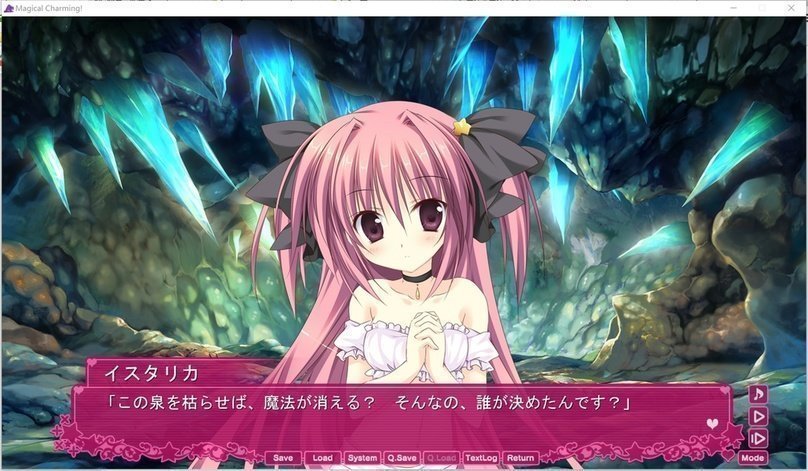
After that, the protagonist and crew return to the human world. No more magic. Just a quiet, ordinary life.
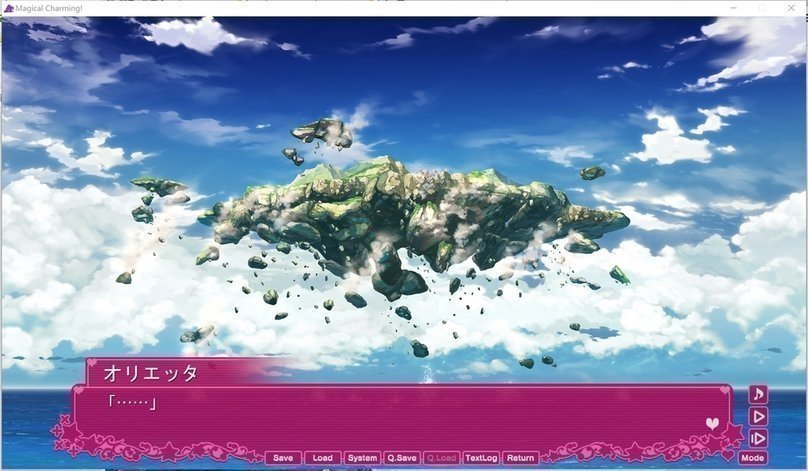
The end.
Remember what I said earlier? About what a correct direction for galgame development actually looks like?
I think Magical Charming! has already given me a damn good answer.
The entertainment value of a text AVG shouldn’t be about chasing combat—it should return to the text itself… I never thought that a reading-comprehension style approach combined with card collection could be this fun. The random elements plus fixed question-answer sets fuse into something that genuinely feels like an Adventure Game.
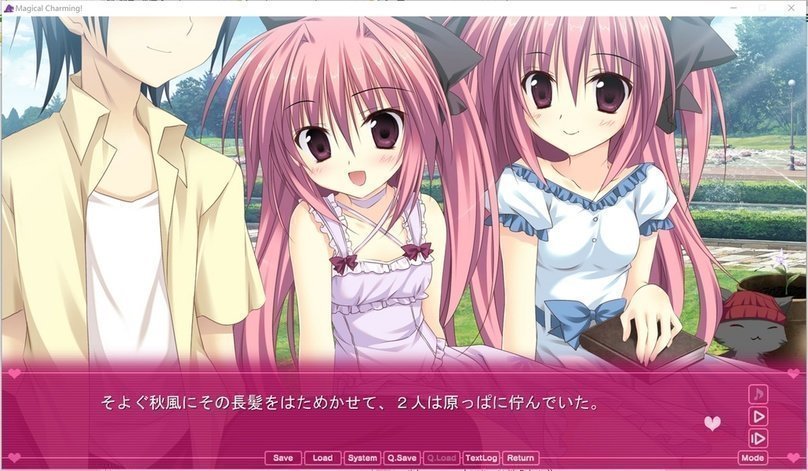
And as a text AVG, there’s plenty of room for variants—card battles, word chains, and finally the magic scales. Galgame gameplay can absolutely be combined with tabletop game mechanics, and Magical Charming! does exactly that. You collect cards during the daily segments, then use all that collected material in the final battle. Not a single thing goes to waste. Think about it—any AVG is built this way. Even Western 3D adventure games follow the loop of gathering clues and keys to open the final door.
That said, another game has done something similar: Danganronpa.
Danganronpa mixes daily life segments with non-daily ones—on one side you’re goofing around, on the other you’re collecting evidence and assembling truth bullets, then firing them off into battle. It’s basically the same structure as Magical Charming!. And judging by the reception Danganronpa got, it seems to work pretty well.
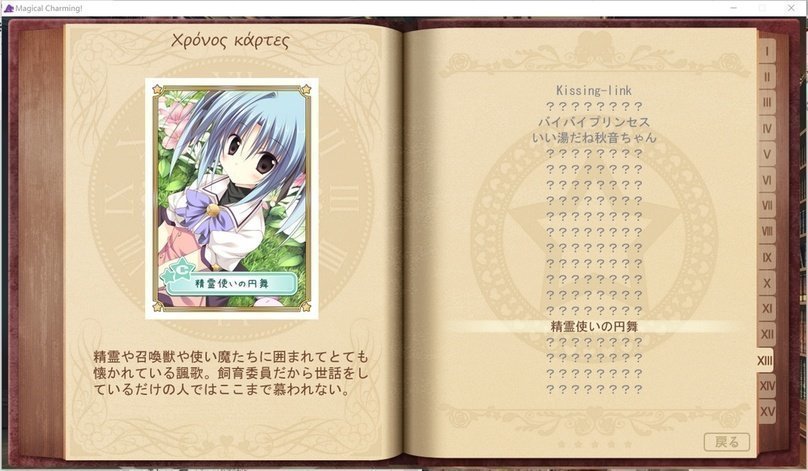
But I’ll say it anyway: Danganronpa isn’t as good as Magical Charming!.
Magical Charming! is fundamentally a romance AVG, and I’ve already said it does the romance part well enough. Never mind the sweetness in the individual routes—just look at the life lessons in the romance tutorials, and the Steady Mode check-in system for when you become a couple. That alone is fucking insane! Meanwhile, Danganronpa lets you just点击 around the scene randomly to collect everything, and the final truth bullet firing is just trial and error. It’s honestly not as interesting as Magical Charming!.
And story-wise, Danganronpa gets shit on plenty. Unless you’re a diehard fanboy, nobody thinks the forced explanations behind everything are remotely reasonable—it’s just a minigame collection. That’s why Danganronpa 3 straight-up ditched the class trials and went full anime.
I know romance games are a look-based genre, and Magical Charming!’s killer weapon is Riko Tsukieda (捆枝りこ). That’s gotta beat Danganronpa’s dead-eyed art, right?
Maybe Danganronpa and Magical Charming! are heading in the same direction as AVG games, but on that front, Magical Charming! actually delivers at the level it should, while Danganronpa has already started shamelessly milking its fans.

Sometimes I think about those reading-comprehension quiz options in Magical Charming!—the ones that are pretty hard and deliberately misleading. You can tell someone put real thought into them. They know what players might pick, and they drag you straight into the ditch. Then after a few smoke-bomb options, they suddenly throw in some ridiculously easy questions. They look like freebies, but if you’re too suspicious, you’ll keep falling into traps. You have to admire how ruthless the designers are. Even the card system has subtle chains—if you don’t get card A, you can’t get card B, and the way to get card A is hinted at when you obtain card C. These little details are everywhere. The biggest foreshadowing in the whole game is what the teacher says in class. Most people probably skip it as daily-life filler, but those lines are actually the key to the final boss fight. Who would’ve thought? When you’re flailing against the boss, that familiar “the teacher covered this, why weren’t you listening” advice finally hits you.

So for Magical Charming!, I think it has almost no obvious weaknesses. It’s clearly not a Visual Novel—it’s a Game. It’s a Galgame. It’s what Japanese developers have been calling “romance AVG” for years, a label that’s practically dead. It showed me hope for the industry—there are still people who can make something that actually hits. Funny thing: the game is R18, but the R18 content sits in the diary entries after you’ve romanced a character, not in a way that ruins the sweetness of the romance route. It doesn’t violate the protagonist’s “romance staircase theory” of pure love, and it still caters to people who want HCGs. Absolutely superb.
But these kinds of games have an obvious nemesis: walkthroughs… If you read a walkthrough and follow it exactly, you lose 80% of the fun.
By the way, the music is another highlight. The BGM is spot-on—rhythmic yet leisurely. The OP is addictive, and ED2 has a NETA. Everywhere you look, you can feel the designers’ little touches. Truly a labor of love. The voice acting is solid across the board, especially the main heroine Airi Sakura (愛理サクラ). Her voice is adorable and the character is vivid. Shame she didn’t do many more games after this—otherwise I doubt Akino Hana would’ve had much of a career.
After playing Magical Charming!, I have to say: this might be the most fucking incredible Galgame I’ve ever played.
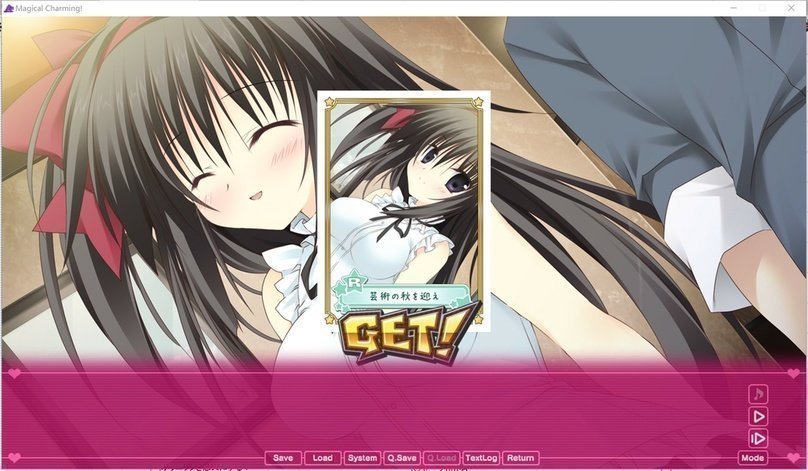
It’s got a random independent card collection system, a daily check-in system for lovers, special events for specific holidays, card draws for SR cards, romance stories that teach you life lessons, sweet confessions, great music, cute art, awesome girls, and finally combat and a god-tier twist. The systems are intricate but interlocking…
So many elements, everything you could want. Like I said, no obvious weaknesses.
Most importantly, you can have fun with it. Not “fun” from funny dialogue—actual game fun.
Magical Charming! is a Game. A Game released in 2013. Compare it to Amaenbo*Air Notes, another moe game from the same year, and you’ll realize that thing is…

Even if you compare it to this year’s “moege” releases, you’ll find those games are still…
Honestly, now I understand why Lump of Sugar was so obsessed with strengthening their systems in later titles. They’ve been sticking to this path—trying to make their games “true AVGs” instead of just visual novels banking on erotic边缘球…
Unfortunately, an AVG also needs strong story backing. Magical Charming!’s romance story is solid on its own, and the foreshadowing is just right. But those strengths don’t carry over to Unmei Senjou no Phi or Koisou Relation. I think those two games have genuinely amazing systems…
So Lump of Sugar gave up on systems too… and went back to traditional games. That’s this year’s Tayutama 2.
Maybe they haven’t given up. Maybe I can look forward to their next title?
I hope this isn’t the last time I play something this incredible.
Comments are hosted on the Chinese main site. This mirror is read-only.