Gakuou (学☆王 + PSP Ver) Review
So-called Gakuen☆Ou... is like your life...
Honestly, at this point I’ve basically turned into a pure moe-otaku.
What’s a moe-otaku? It means I no longer care about plot or story direction. As long as the girls are cute and the voices are nice, I’ll fucking say the game is good, and if someone says it’s not, I’ll fucking find excuses to say it is, and so on and so forth…
But you can’t really blame me, right? This is a world that judges by looks.
Don’t doubt it — there are actually all kinds of reasons why this world judges by looks.
I remember back when I was a super fat guy, a girl said this to me:
“You can’t judge a person by appearance alone — you should look at their inner qualities more. But, you know, having a good appearance is what sparks other people’s interest in getting to know your inner qualities.”
Hearing that, my nose stung and I felt a kind of despair about life.
“Of course, bad inner qualities can negate all beautiful appearances,” she quickly added. “So inner qualities still matter more.”
At that point, images of countless wolves in sheep’s clothing, smiling backstabbers, and two-faced bitches flashed menacingly through my mind — and it felt like I’d gotten a little closer to truth, goodness, and beauty, so I was instantly comforted.
Seeing that she hadn’t sunk me, the girl turned and bolted.
Watching her sprinting back, I remembered: while we were talking, she hadn’t looked me in the eye even once.
And then years later, I saw this same girl on X (Twitter) thirsting over Eddie Peng…
Lots of girls will publicly condemn Ma Rong, but inwardly they despise Wang Baoqiang — because he’s ugly!
So in the end, no matter who tells you “inner qualities matter more than appearance,” remember to first check whether their boyfriend/girlfriend is some hideous monster with only inner qualities and no looks.
So in the end, in this world, there’s nothing wrong with being a moe-otaku — it’s just human nature.
So in the end, it’s totally understandable that I got drawn into playing Gakuen☆Ou — at least it satisfied my requirements for characters, the CVs are good too. As for the plot… what the hell is that…
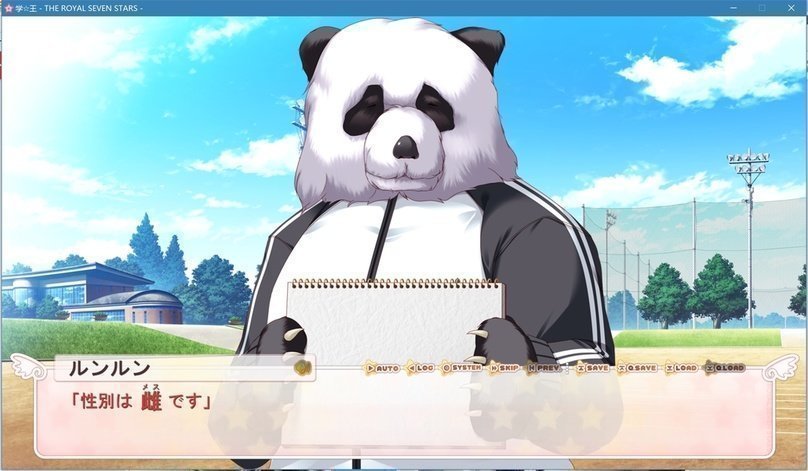
But when I actually saw this game’s plot, I was still shocked and couldn’t help shouting things like “what the hell is this.”
Gakuen☆Ou is still a Lump of Sugar work, and an early one at that — though counting on my fingers, it’s not that early. For this game, the selling point is moe, moe characters, you know how it is. The artist is Riko Korie, so our general expectation for the plot is just a bunch of people at school chatting, fooling around, joking, cracking gags, forming a harem, and happily getting to the啪啪啪 part and so on.
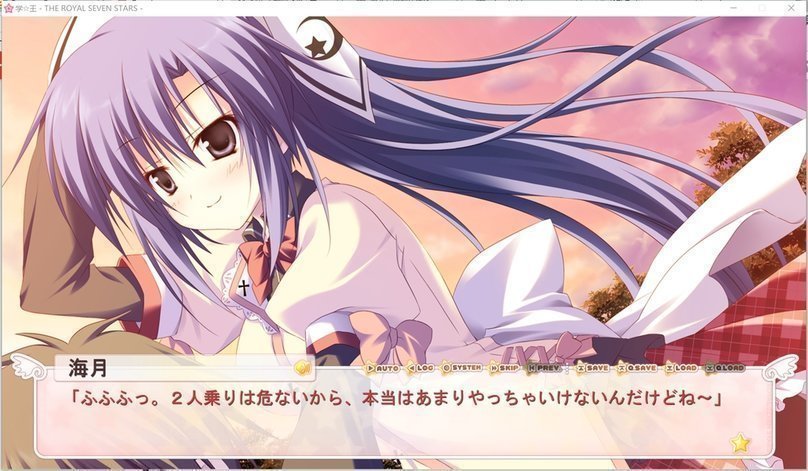
And then the game shocked me right from the start — it just comes out and says the protagonist is an alien who came to Earth pretending to be an exchange student in order to invade it.
Then in this game’s setting, the world is ruled by “exams” and “studying” — meaning any problem can be solved through a “試験” (exam).
The protagonist, an alien prince, transfers into an Earth school and discovers that including himself there are only seven students. Meanwhile, the higher-ups hand down an ultimatum: if the school’s students can’t pass their exams, the school will be shut down. The school leadership’s relative, Konoe Kōri, as the only person who’s actually good at studying, is propping up the school pulling up the school’s average score to keep it from being shut down. So the higher-ups have a countermeasure too — they send out the “11 Masters,” eleven demon teachers, who come to the school to test these students in all sorts of subjects, trying to make them fail. In the end, of course, the protagonist and friends’ love and friendship conquer all, and the demon teachers naturally fail.
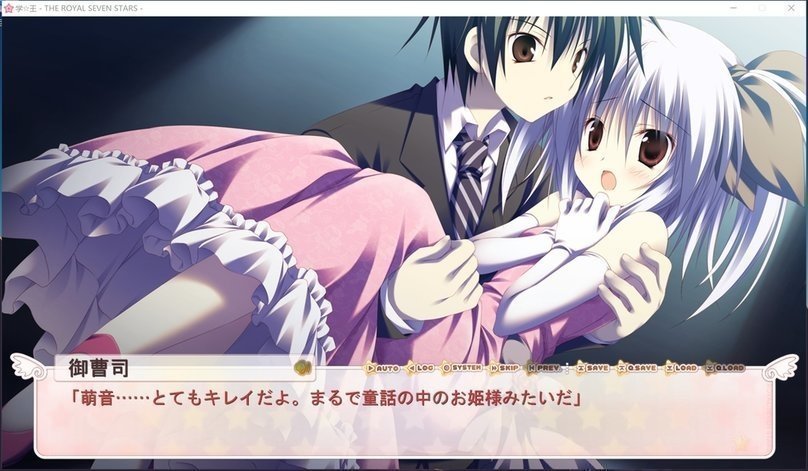
Near the end of the story, Konoe Kōri takes the protagonist and the schoolmates to challenge the final subject — win and the school won’t be shut down. Unfortunately Kōri fails, but the protagonist, through long exposure to the school environment, has become the top scorer and saves the school. By the end, the protagonist and Kōri also realize that the person who’d been pressuring the school and trying to shut it down was actually the one who wanted to protect it — constantly pressuring the students and forcing them to study, otherwise they’d never have achieved today’s results, and so on…
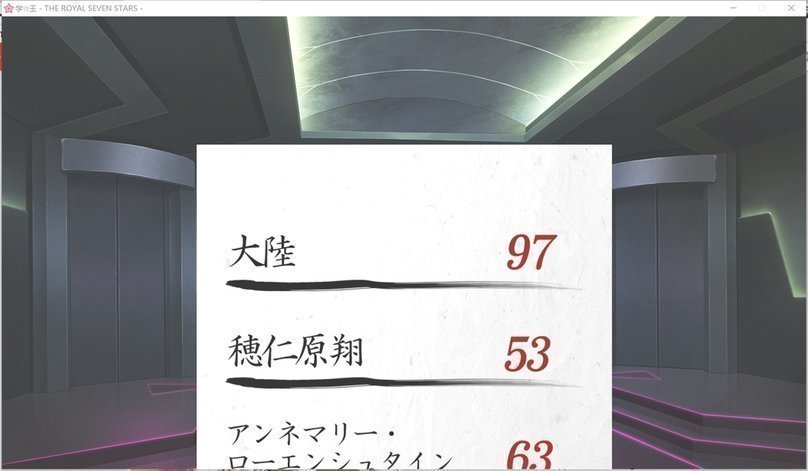
So basically it’s a bunch of people at school studying, taking exams, studying, taking exams, studying, taking exams… final exam, pass, the end. That kind of development…
So what’s the daily content? Dialogue… and gags, plus banter with the teachers. Honestly… the quality of this game’s daily content has a very obvious staircase pattern…
The game starts off pretty fun — the protagonist acts like a country bumpkin who just wandered into a village, since he’s an alien who’s never seen Earth, and the school dialogue is pretty funny too, with a bit of a four-panel manga feel. Every time there’s an exam, the other students spout nonsense with a totally straight face…
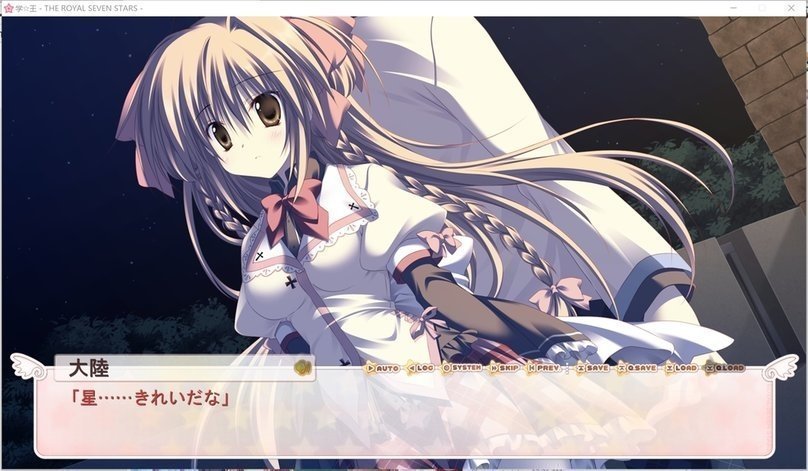
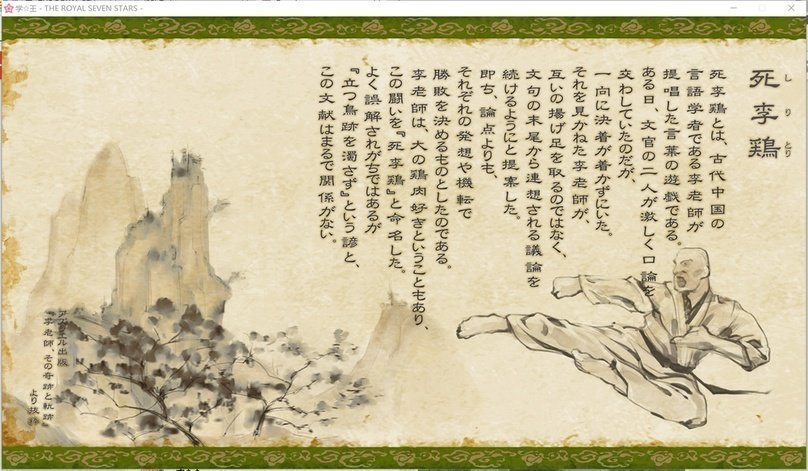
Yeah, spouting nonsense with a straight face is a feature of this game. It’ll tell you all sorts of trivia, but all of it is bullshit. Actually at first I believed it, until I saw the “Teacher Li eats chicken” bit and realized — goddammit, you’re all making shit up… and after making it up you even say it originated in China…
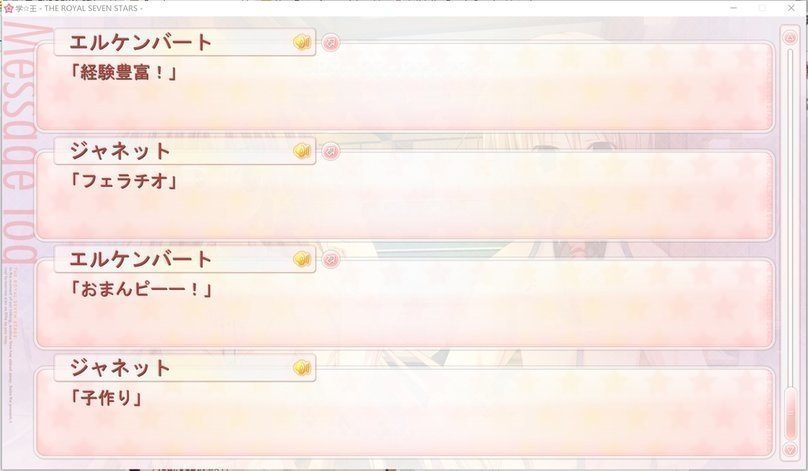
Another plot engine in the game is Eroken, voiced by Ryōta Ōsaka, a master of dirty jokes who basically drives the story’s rhythm. His dirty word-chain game with Janet-sensei (this character also appears in Lump of Sugar’s later game Magical Charming!, still as a teacher, same CV) is also pretty fun, and then… that’s probably the last of the fun parts.
How should I put it — after the Janet-sensei chapter ends, the game’s daily content clearly declines. There are supposed to be 11 Masters, and after Janet there are at least several more, but the writer seems to have run out of gags, so the pacing gets faster and faster, the content gets drier and more formulaic, and by the time you reach the final boss, it turns out they haven’t even made up the promised number of Masters, so they hastily add a few, hastily make some noise, and it’s over…
The character routes… are even more formulaic. As the first heroine, Konoe Kōri’s confession is so sudden I was caught off guard. The common route doesn’t really say anything about romance — at most there’s a hint of feelings — and then suddenly the protagonist sees Konoe Kōri masturbating, suddenly Konoe Kōri confesses to the protagonist, suddenly the two start banging, suddenly they’re a couple, then it’s dating, announcing the relationship, confronting the boss, a bit of ED epilogue, and then it’s over.
So how should I put it… the first half of this game can be read as a funny four-panel manga, and the second half… is just above the passing line, I guess… which makes me miss Inoue Kenji-sensei — if he’d written the second half, it might have been much, much, much better, since the setting is similar.
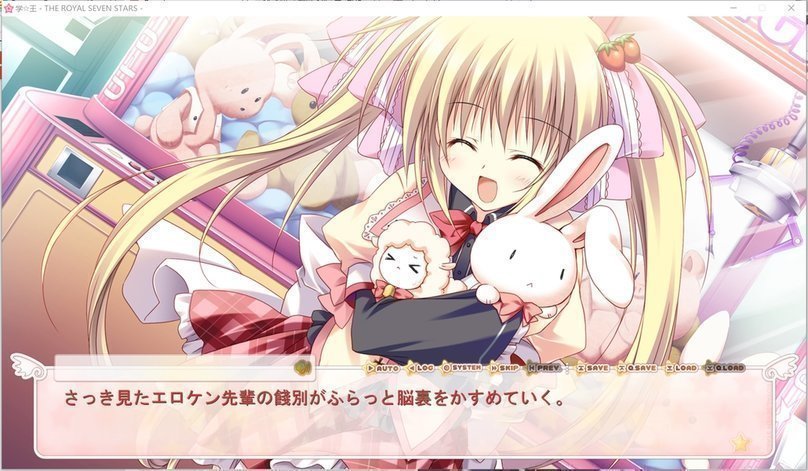
I said earlier that the game advertises studying, but it never presents any actual study content. That is, the study parts in Gakuen☆Ou never feature obvious subject matter like chemistry problems, history problems, or language problems — it’s all just silly bullshit, where a totally straight-faced explanation suddenly pops up, and it’s still nonsense. I don’t know what Japanese teenagers think (though I hear 18+ teens can’t buy it anyway), but as a foreigner I got thoroughly tricked and had to debunk it myself — eventually I just stopped believing any of it.
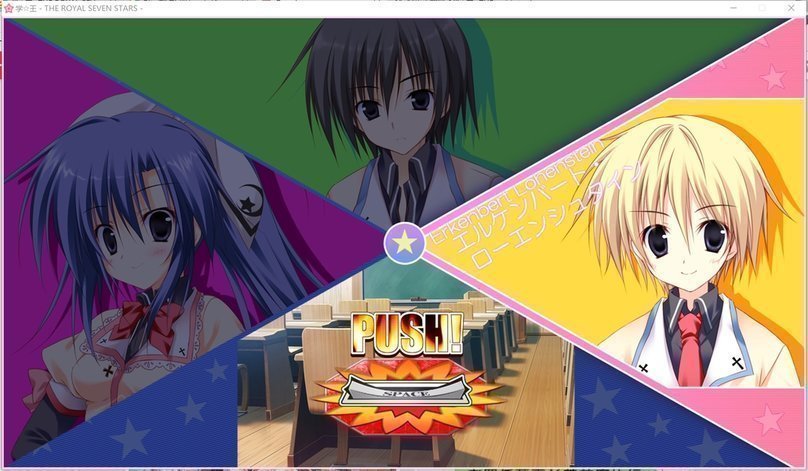
So thinking about it, in a setting where “exams” are the way to solve problems, Inoue Kenji’s Baka to Test to Shōkanjū might have done it better, huh?
Worth mentioning, Gakuen☆Ou also has a PSP version, which added the protagonist’s little sister, Sora no, as a romanceable character…
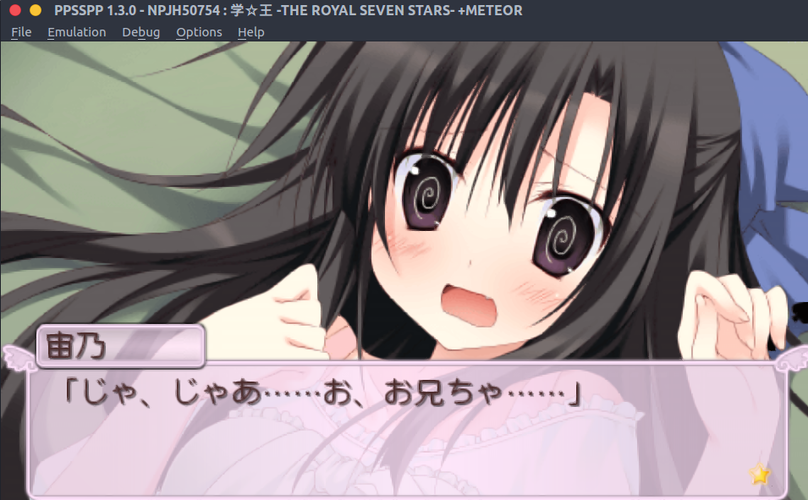
So how’s this little sister’s route? I can only say… same as always, above the passing line. ギリギリだね (barely)…
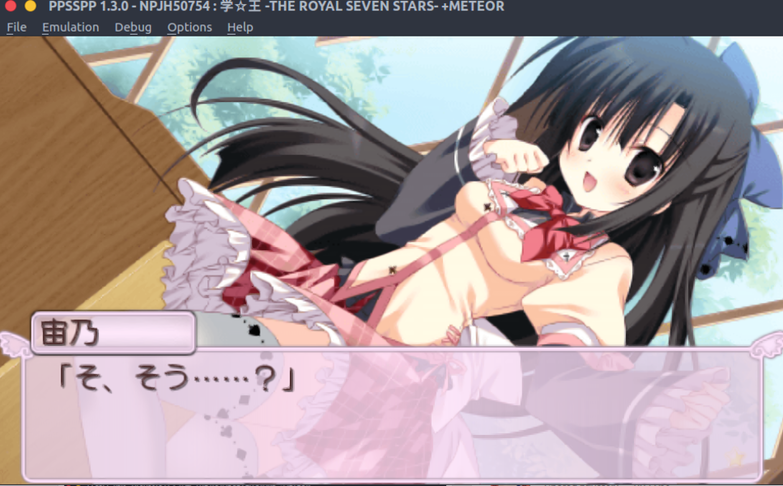
Sora no comes to Earth for her queen training — basically to broaden her horizons — and secretly meets up with the protagonist. In the end, of course, sibling romance isn’t allowed, so the protagonist says he’ll become king of his own country and then come back for Sora no, blah blah blah. Even though this story has a main plot, for this game the main plot is just too superfluous — there’s nothing worth seeing. Most of it is daily dialogue, and Sora no’s route’s daily dialogue is really… not very interesting. Just above average. Another reason is Sora no’s CV, Yuka Iguchi — though she uses the Index voice from A Certain Magical Index, it’s a timid voice here, and it seems Iguchi isn’t particularly good at figuring out how to voice games, which makes the character… not very cute… at least I found her very fake… a bit forced.
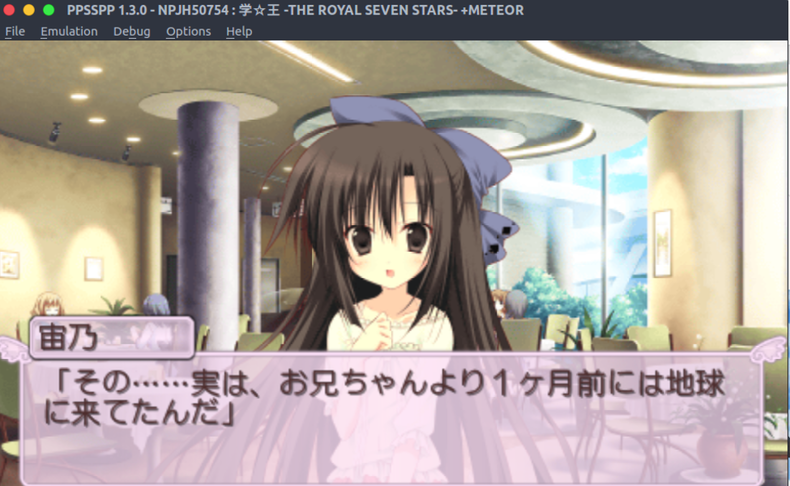
In Sora no’s route, the principle that “anything can be solved through 試験” is completely abused — every other moment a boss says take an exam, which is really dumb… I know it’s the setting, but… couldn’t they write it more entertainingly? A bunch of people seriously studying for an exam — so stupid!
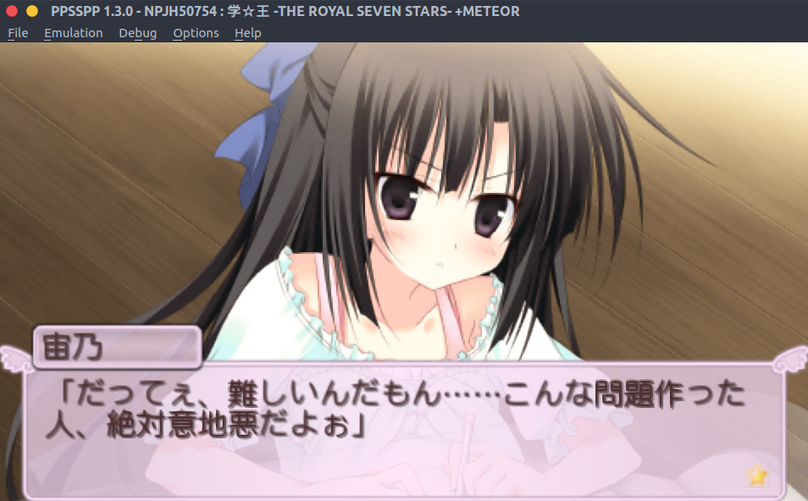
The PSP version is all-ages, so naturally you can’t bang Sora no. But the game’s plot actually does the deed — Sora no asks the protagonist to leave her some loving memories before he goes back, and the next morning the two’s state suggests they definitely banged, but that part… isn’t in the game! Hehehe…
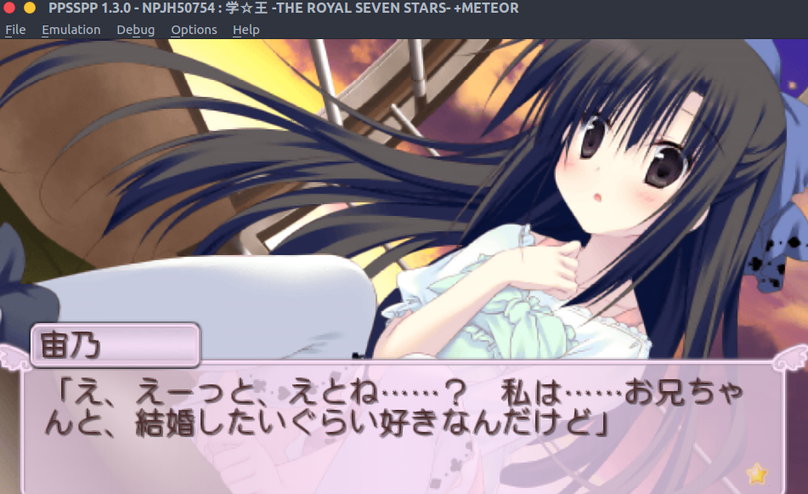
Thanks to being all-ages, the PSP version removed the HCGs from the other routes; some were replaced with individual events, some just had a CG swapped and the plot changed. For example, the scene where Konoe Kōri masturbates while murmuring the protagonist’s name was toned down in the PSP version to her quietly looking at the protagonist’s photo at night…
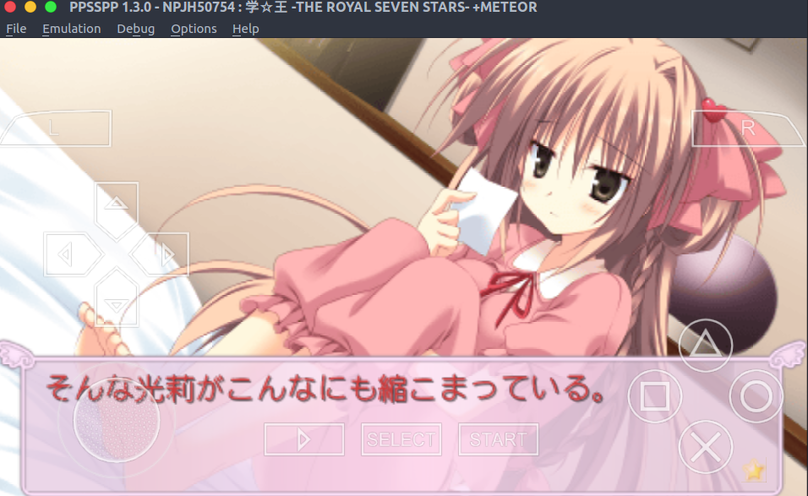
How weird! Just looking at a photo — aren’t you going to do something, ojōsama!
The music in Gakuen☆Ou is interesting — actually pretty good to listen to. The OP is addictive as always, not good to listen to too much, gets you hooked… The game system really puts on a badass act, saying you need to press the spacebar a lot, but in the game there’s only one time where you repeatedly press space to make the heroine stand up; the rest of the time spacebar just confirms choices, and the wheel for confirming choices spins so slowly that unless you’re an idiot you’ll get it right. Other than that, the spacebar system has no other use…
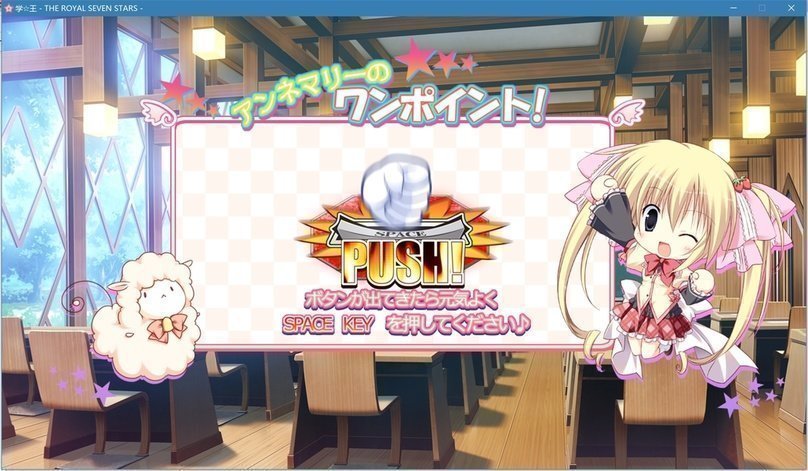
So… the system is still traditional choices, just in a different form…
If I had to objectively evaluate Gakuen☆Ou, it’d be about: excellent visuals, good music, average system, passing-grade plot. Of course the plot isn’t without highlights, it’s just that the highlights only exist in the first 30%…
After finishing the game I felt a bit wistful — why did I play this? Was it because the girls are cute?
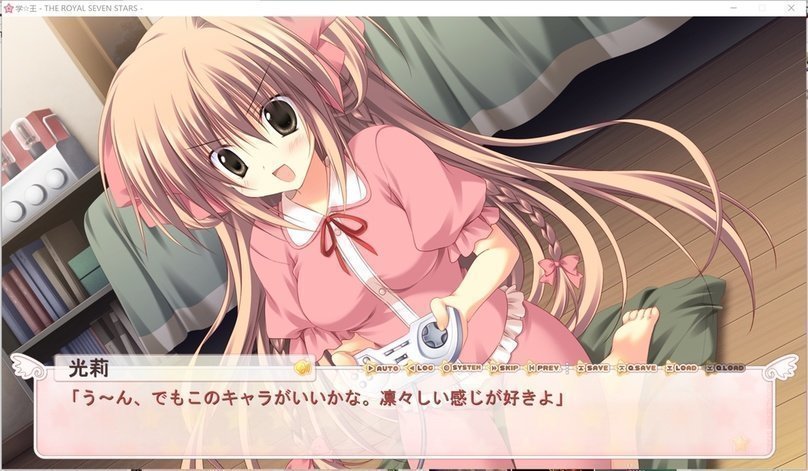
Thinking about it, yeah, it probably was. The girls Riko Korie draws are petite and delicate — my type. Also, among the CVs, Natsumi Takamori’s performance in this game was surprisingly good — maybe because this was her first game after going into eroge, and she’d been pent up from not working for so long… As for the scenario and plot, I stopped caring much after the second half — I was just watching the girls’ expressions and listening to their voices…
While browsing reviews, I saw a Japanese person comment this…
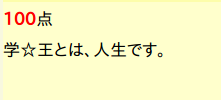
Looking back at the game’s setting, I feel like I’ve understood something.
I never took this game’s setting seriously — anything can be solved by exams, isn’t that bullshit? How many years has it been since I graduated? I rarely take exams anymore. But thinking about it carefully, isn’t our life just going through one “試験” after another… The game doesn’t stick to exam content — there are even things like how to conquer a female teacher, or how to make someone happy — aren’t these just mappings of the challenges we face in life…
Life is: after winning one challenge, you face the next, and when you no longer have the strength to win any challenge, what finally defeats you is death.
So-called Gakuen☆Ou — it’s just like your life.
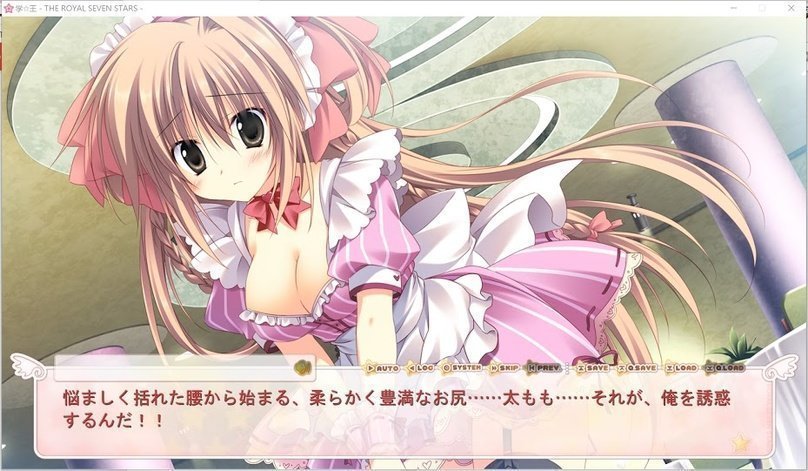
Goddammit, this last forced bit of elevated bullshitting really does live up to my moe-otaku heart.
Comments are hosted on the Chinese main site. This mirror is read-only.