Gusha no Kyōben (愚者ノ教鞭) Review
Your Dream, My Dream, and His Great Dream
I figure everyone’s got a dream, but it keeps shifting with age and circumstances.
The very first one we ever had—aside from those endless dumbass questions teachers ask, “what do you wanna be when you grow up”—was probably always school-related, deep down.
A buddy of mine, Crab Boss, his dream was to open an internet cafe right across from the school.
“I’ll open a net cafe right across from school, rig it with the sickest machines, run the sickest membership perks, pull in the sickest kids, and piss off every last one of those dumbass teachers.”
Crab Boss really loved hanging out at net cafes back then. Hmm… sometimes he’d drag me along too.
Another friend, Tao-san, his dream was to bang every woman on earth.
Now don’t get the wrong idea—by “bang” he meant pin them on the ground and beat the crap out of them. In school Tao-san loathed those insufferably melodramatic girls. Couldn’t stand the sight of them. He’d declare with a straight face that he’d never marry, ever.
I asked him, “You hate women—is it ‘cause you can’t stand those few lady teachers?”
“No! Women are just annoying, plain annoying, nothing to do with teachers!”
But it sure looked like he was just sulking over being disciplined by those tsundere lady teachers…
Then he seemed to start chasing girls the moment high school ended… which only proved my point. He just couldn’t stand the lady teachers.
Mr. Xu was another friend, and his dream was more realistic.
“I’m gonna be Minister of Education and squash these dumbass teachers.”
Xu was kind of a problem kid, always getting his parents called in, so he was full of hatred for teachers.
And honestly, Xu had the chops for it. We all knew back in school—his parents were loaded. No power, though. If they’d had power, the teachers wouldn’t have dared call them in so relentlessly.
Kidney was another guy I knew. His dream was probably to become an esports pro.
He claimed he worked hard, grinding War3 every day, constantly reading motivational fluff and esports hustle articles to pump himself up. His Discord status was plastered with “Fighting” this and that. He already figured he was the chosen one—all he needed was effort, and surely he’d become an esports star.
Best he ever managed was, what, third place in the city? By now Kidney’s probably given up.
Funny thing is, Kidney couldn’t even beat Tao-san at War3, and Tao-san wasn’t even pro. Meanwhile Kidney was roughly on par with Crab Boss—and Crab Boss’s older brother was a pro esports player… who’d even won a WCG championship.
So given all that, from then until now, whenever I see those esports motivational pieces, I can only laugh. A crowd praises the glamour of getting paid to play games, never knowing how many die on the road to success. Only one guy like Sky makes it—and Sky had played StarCraft in a net cafe across from Zhengzhou University. I even saw him there… who’d have known he’d make it after that?
So that first dream of life, most of the time it’s just something to daydream about.
As for my own dream in school, it was probably just having a computer I could use without anyone bothering me, or having all kinds of fun digital toys. Yeah, that pure. Back in school I couldn’t even game—if I used the computer more than 30 minutes, my father would start hovering and nagging. Same few lines every time:
“Sure, use the computer, but make sure you’re doing something meaningful.” “Whatever you do, don’t play games. So-and-so’s kid played games and wasted away.” “It’s not that I’m forbidding games—I’m not that unreasonable—but you’ve gotta limit your time…” “What are you doing right now?” (stares…
So the result was: if I browsed the web, he’d nag those same lines endlessly or just stare at me until I couldn’t take it and shut the computer off.
If I played a game, he’d switch to “super nag mode” and drone those lines until I turned it off.
Which is why even now, if he catches me gaming, I still feel uneasy all over—even though he doesn’t bug me anymore.
I guess my dream sort of came true, though looking at it now it’s really… ambitionless.
Anyway, that first dream we ever conjured about the future—more or less it always involved our parents, our teachers, the people in charge—and it always had a rebellious streak.
Not wanting to be controlled. Wanting freedom. That was our biggest wish back then.
I never tried arguing with my parents—too costly, too much hassle. Some friends tried running away from home; they were back within a day.
But you can’t say this “conflict between kids and adults” doesn’t exist, or that it’s meaningless. Quite the opposite—it matters enormously, and it exposes the huge rift that a lack of communication and trust between generations creates in education.
Then finally someone dared to turn that into a game… and that’s The Fool’s Teaching Whip (愚者ノ教鞭).
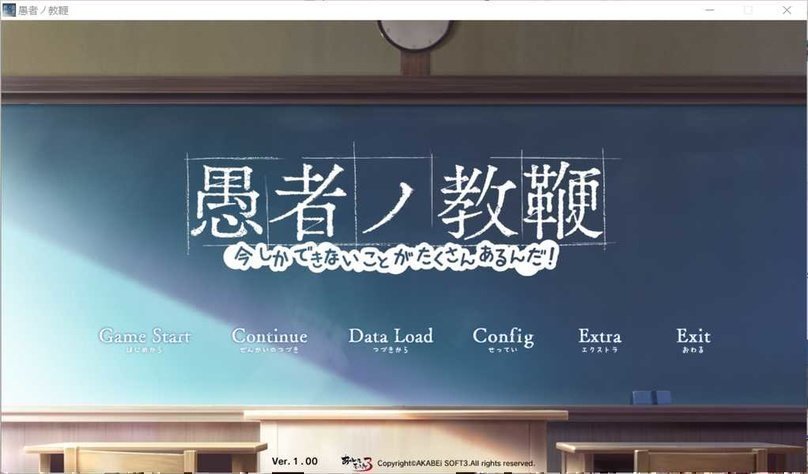
The tagline for this game was a riot. I remember Dengeki Hime hyping it up hard—something about 子供達と大人の戦争, a war between kids and adults… War, huh. My brain conjured kids wielding AK47s, hoisting RPGs and blasting away, tactical knives in hand, slashing it out.
But the game isn’t like that at all…
Everything only left me dumbfounded once the subtitle dropped. What’s the full title?
愚者ノ教鞭 今しか出来ないことがたくえさんあるんだ! (The Fool’s Teaching Whip: There’s So Much You Can Only Do Right Now)
What the hell is this?!
So I had to re-examine the game, and found it was very different from the “war” I’d imagined. The story’s actually dead simple… roughly three parts:
First, the usual everyday prologue—the protagonist and his friends going about their school days, summer break approaching, everyone discussing where to go and hang out.
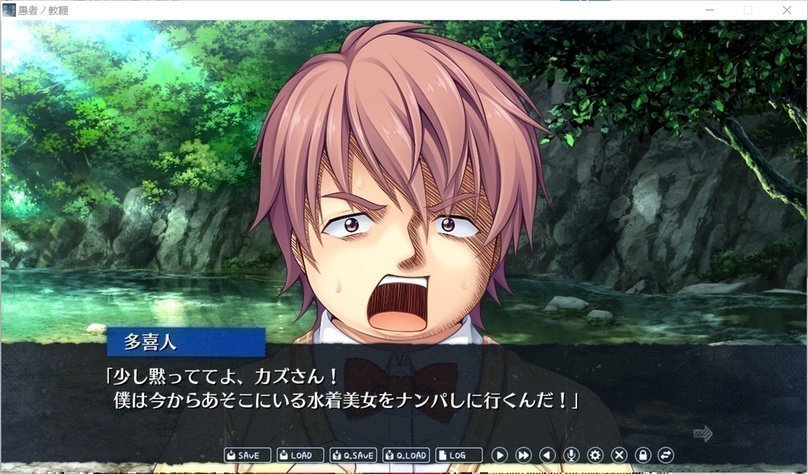
Then as summer arrives, one of the friends gets into trouble. A girl named Namizumi, also the protagonist’s friend, is molested by a teacher at school. The sudden bell saves her—the rape attempt fails—but little Izumi is left traumatized.
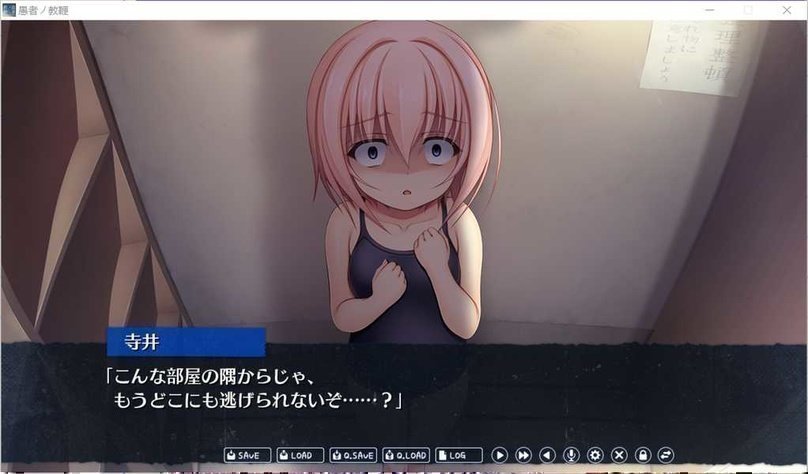
Izumi can’t tell her parents, only her friends. The friends go together to the principal and tell him. The principal is warm and enthusiastic, promising to investigate thoroughly and, if it’s true, to punish the teacher severely.
The next day, the teacher’s gone… said to be ill. Only the protagonist and friends know why. The protagonist waits for things to develop, for the principal to find the truth and give them justice. He waits and waits—and a week later, the teacher is back teaching again…
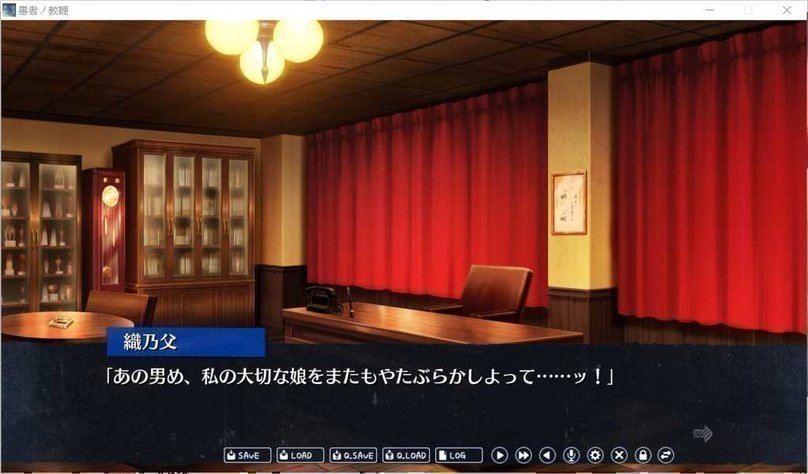
The molester teacher looks at the protagonist and friends with utter contempt—meaning, the storm’s passed, I’m still here, what’re you gonna do about it?
Furious, the protagonist goes to the principal. The principal says, “Ah, we looked into it, but there’s no evidence, it’s hard to act… we’ll keep investigating…” and sends them off.
So the protagonist and friends gradually realize the principal can’t be trusted. They go to reporters in town, but the reporters see they’re just kids and can’t be bothered. The protagonist goes to his parents, who say why the hell do you care about this trivial crap, just study.
Most shocking of all, the protagonist realizes the principal knows about it and wants to bury it. After all, it’s a small rural school—if a “teacher molests a student” scandal blows up, the principal’s job is gone…
Finally, with nowhere left to turn, the protagonist decides to join forces with his friends and wage a struggle against the adults.
Through exploring, they discover on the other side of the woods an abandoned hotel… a love hotel, actually… but never mind the details.
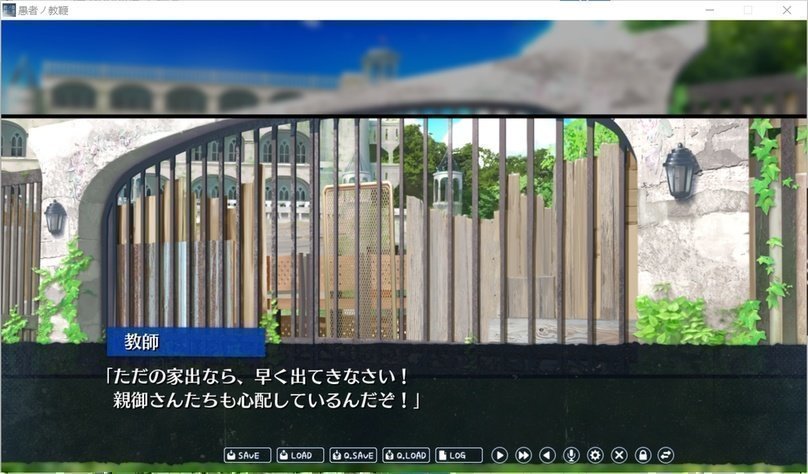
The protagonist and friends hash out a plan. Each of them has this or that friction with their parents—some over-controlled, some distrusted, some smothered and craving independence, etc. They hit it off instantly and decide to flee under cover of night, escaping the adult world, with that abandoned hotel as their base…
They prepare notes—one for the parents, one for the principal. The one to the parents explains what happened to Izumi at the teacher’s hands; the one to the principal tells him of their anger.
So one night, they get ready, slip out, and launch their great escape—evading the adults’ pursuit, heading for that mysterious hotel. They start their own life, and their struggle against the adults.
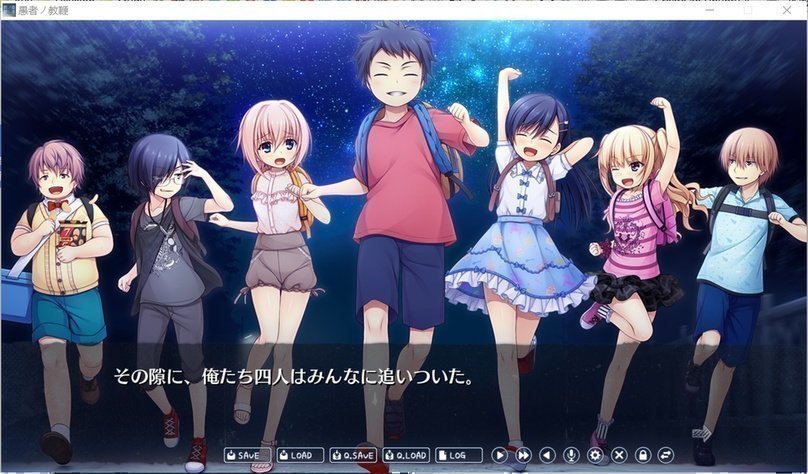
Sounds pretty badass, right?
But isn’t it really just a simple runaway?
So the main plot is: a kid gets molested by a teacher, no one believes her when she reports it, so they decide to run away en masse and kick up a huge fuss to force the principal to admit his mistake.
Once the escape succeeds, the story gets kind of dull… every day it’s just a bunch of kids eating, drinking, playing, having fun. Meanwhile the principal is being pressed by parents asking what’s up with the kids, and what about that molestation incident?
The principal obviously doesn’t dare call the police, so he tells the parents the molestation was just an excuse those mischievous students cooked up—they wanted to run off and play, so they fabricated the incident. Don’t believe it, just get the kids back first.
The kids camped at the abandoned hotel set traps deep in the woods. Finally one day, the adults come looking…
The kids fight back with water guns, water balloons, rocks, and traps, saying they won’t go back and demanding the principal apologize.
The parents naturally don’t give a damn about the kids, refuse to believe them, and the principal keeps up his “just surrender” act. No one takes the kids’ cause seriously—it’s all just childish nonsense.
Then one night, the principal sneaks in. He tells the protagonist and friends that tomorrow’s Saturday—the parents and teachers will gather and storm this place. Digging more traps won’t help. If you’re caught and dragged out, you’ll all be disciplined, and some parents will bring reporters—this’ll blow up. After the punishment, wherever you go in society you’ll be mocked as bad kids, and you’ll drag down every other student at school. Your little stunt has already caused a widespread bad influence; the other students will suffer for it too. You’ll regret it when it’s too late. Besides—will your parents even believe you?
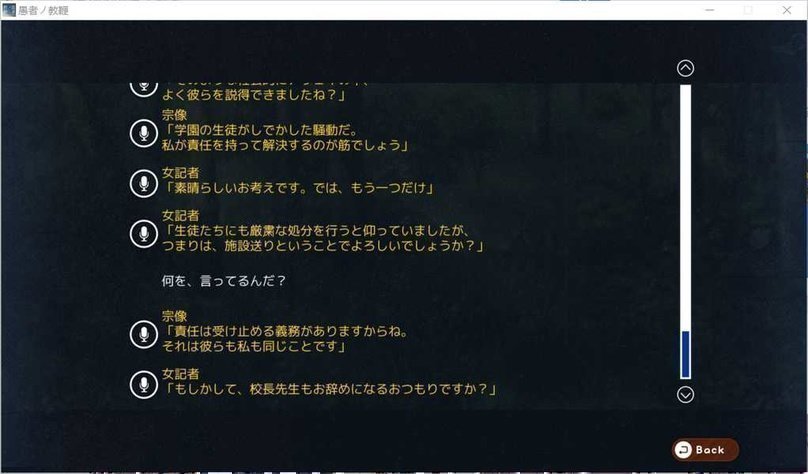
The principal proposes a deal: come out tomorrow, go home voluntarily, and he’ll let it slide given your good attitude. That teacher’s already been fired—you’ve achieved your goal. Let’s settle this privately, don’t blow it up, it’s better for everyone.
The protagonist thinks it over and accepts.
The next day, the protagonist and friends come out. Waiting for them is the principal—and a reporter…
The principal is being interviewed, and when the protagonist hears the content, he’s furious.
The principal says he guided them well, went through untold hardships to find these mischievous children.
He adds that although the kids running away had nothing to do with the school, as educators they’re responsible to the parents and the children, and they absolutely had to find them…
In short, the principal shifts all the blame cleanly away. The protagonist’s been played.
Angry, the protagonist leads his crew back to their base and rejects the principal’s terms.
Finally the day of the assault arrives. The protagonist’s goal is clear: take down the principal. Using props, water balloons, super glue—they subdue him.
In the end it does blow up, but the result is different: the principal’s cover-up of the bad teacher is exposed, the kids become heroes. Years later, the grown-up kids reunite, reminiscing about that feat with mixed feelings. They say they really did something “only possible back then,” proving the worth of children themselves. One of them says he’ll write the story down—how about calling it The Fool’s Teaching Whip…
This plot is basically the game’s Normal End, though each romanceable character has her own End. I just think the Normal End is the game’s main story.
What can I say about this game—while playing it I kept laughing, and the reason’s simple… it’s just so absurd.
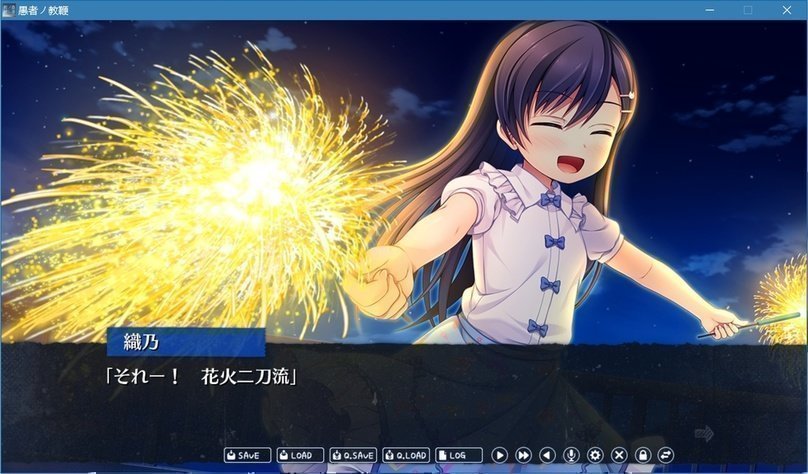
How could a bunch of kids survive out in the wild? Sure, it’s an abandoned hotel, but where’s your electricity? Your fire? Your bedding? Everything inside must be rotten, right?
Can a bunch of kids really hold adults off with just water balloons and traps? You kidding me? If I were an adult I’d have marched in and dragged them out.
Can a bunch of kids really take down the principal like that? Where’d they get giant super glue? Is there a Doraemon in the hotel?
Anyway, when the story describes this so-called “war between kids and adults,” I found it hilarious. What could kids ever achieve? What power could they have to push adults to this point?
And the biggest joke: it’s just a bunch of kids running away from home, and they have to call it a war… bullshit.
It wasn’t until my second playthrough, watching the OP, that I realized my snarking was kind of ugly…

How is that thinking of mine any different from the game’s villains—the “adults”?
If they’re elementary or middle school kids… all they can do is exactly that much… water balloons, traps, climbing, running, etc… Could a kid really handle an AK47? Then the story would be fantasy… or set in the Middle East…
When I think back carefully on the plot, I find the game’s central message really isn’t wrong. It captures well how adults dismiss children—“they can’t amount to anything,” just “little brats”—so they casually trample their dignity, steal their trust, and do as they please with them.
I saw an article recently that said, “When adults talk to children, please crouch down to their height.” I couldn’t help but sigh—maybe I’ve grown old, no longer a child, so I’ve got the villain’s mindset from the game… If I were a kid in the game, maybe I wouldn’t even have the courage to fight back.
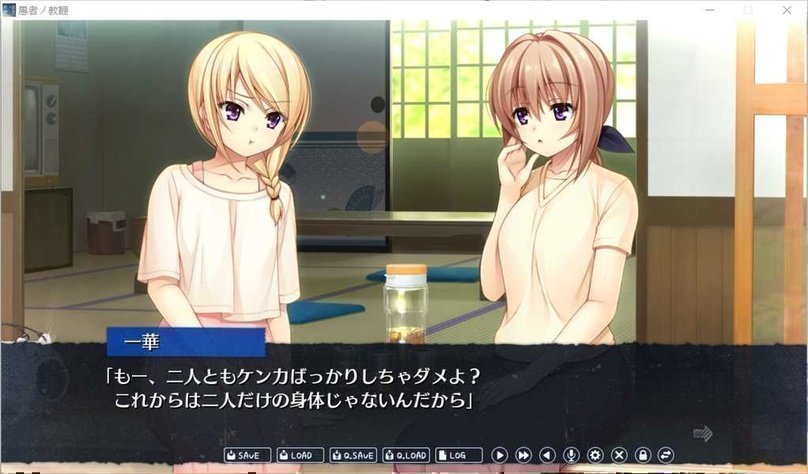
Still, the game has some problems. The key issue is it’s 18+. How old are the protagonists? They look like elementary schoolers to me… The h-scenes in the individual routes are really uninteresting, jarring as hell… so I think the individual routes have no value. The Normal End is probably the best choice for plot-focused players.
But one person’s route is worth mentioning—the heroine Takano Hara Reina’s route. It’s probably the most creative storytelling I’ve encountered in a game this year.
Reina’s route uses lines from the English fairy tale The Ugly Duckling as interludes. What’s interesting is that each line from the tale can correspond to something in Reina’s situation and her current predicament.
Reina was born into a single-parent family. Her mother dotes on her endlessly, always saying she’s the best—but one day Reina learns she’s adopted, not her mother’s biological child. There are rumors about her outside too, yet her mother still dotes on her, still believes in her, saying Reina is her daughter and the best…
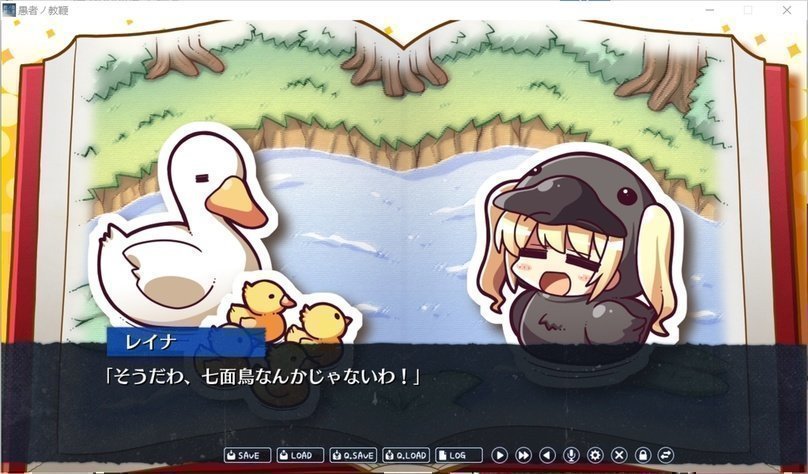
“Lots of people say you’re no good, say you can’t do it, but Mom believes you’re the best. One day you’ll prove it to them.”
In The Ugly Duckling, the duckling’s mother believes in it the same way—and the duckling isn’t her biological child either.
Reina reads the tale and starts thinking about her situation, like that swan raised among ducks. Should she distance herself from her adoptive mother? Because her mother praises her, and she doesn’t want to disappoint her, she wants to grow up independent, like that creature in the tale—run away from home, gradually grow, and transform into a swan.
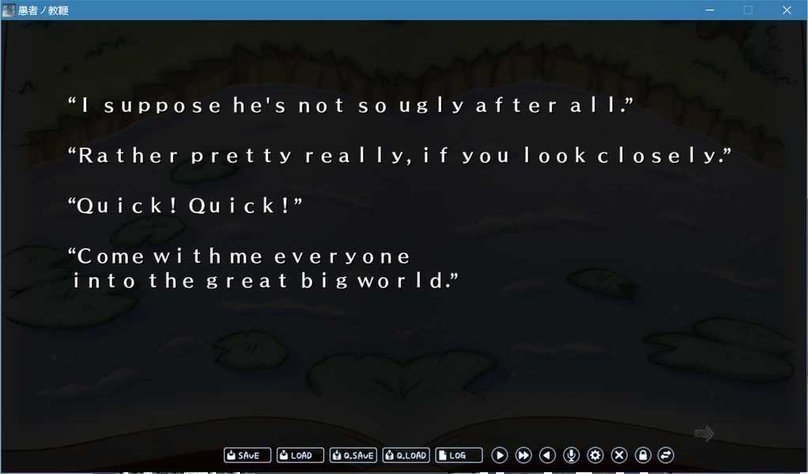
Reina starts teaching herself English, keeps studying, works hard in every way—yet deliberately distances herself from her mother.
Joining the protagonist’s runaway plan is the same—to become independent, to escape the embrace of the mother who dotes on her.
In the end the story reaches its conclusion: Reina and her mother come to understand each other. Though not biologically mother and daughter, they’ve formed a bond beyond that.
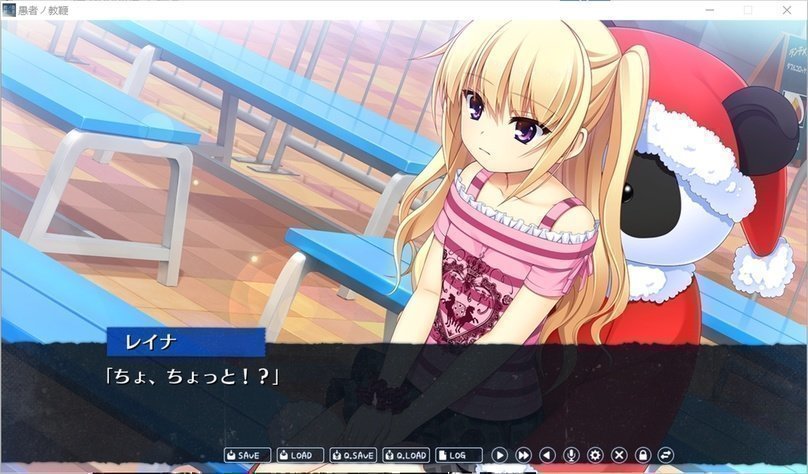
Still a mother-daughter story, but the Ugly Duckling interweaving gives it real creativity and depth. It even made me go back and read the full version of The Ugly Duckling.
How do I rate The Fool’s Teaching Whip? My feelings are complicated…
First, the concept is good, but it shouldn’t have been an 18+ game. It should’ve been a film, an anime, a manga. As an 18+ eroge, it doesn’t fit—it really doesn’t.
Second, the story’s depiction is very realistic—it basically shows “what kids would actually do” and “how adults would actually react.” But once the plot gets that realistic, there’s not much to look at. We’d rather see kids with guns brawling with adults. Too realistic, too close to fact, and it’s hard to stay interested. Only those artsy films dare use this subject matter—but artsy films are on a whole other level from your eroge… is there even a comparison?
Also, limited by budget, the game is extremely cheap. The key boss, the principal, doesn’t even get a sprite. Incomprehensible.
Finally, the game does have highlights. The Ugly Duckling interweaving makes Reina’s route the only individual route with real merit. The others are just quick humping followed by making up with the parents… totally formulaic.

So this game… it’s a decent premise, I’d say. It has contradictions. If the kids’ rebellion is written too fantastically, it becomes another piece of trash light novel—illustrations with toilet paper attached. But if written too realistically, the daily life feels boring—genuinely boring. A bunch of kids talking—as someone over eighteen, would you find that interesting? Are you watching Where Are We Going, Dad?? And there’s the unavoidable point: kids can’t beat adults. However you write it, if you want the kids to win, there’s a fatal flaw…
Despite all the contradictions, I think the game still has meaning…
We’ve all grown up, but this game reminds me of me, and my friends, and the good old days… and… our great dreams…
Every kid’s first great dream is probably to challenge the adults, to seize control of the world. Every kid wants to grow up fast.
And now that I’ve actually grown up, I just wish I hadn’t—I wish time would linger a little longer…
Sometimes I think we lose that childhood innocence as adults. We watch kids’ dialogue and find it childish, and we’ve had our edges worn down, lost the courage to rebel.
At least this game reminds us that you, me, and him—we too once had a great dream of challenging the adult world…
Comments are hosted on the Chinese main site. This mirror is read-only.