KareNai Sekai to Owaru Hana (枯れない世界と終わる花) Review
This World Needs Fairy Tales
Kareni Sekai to Owaru Hana is a game I had mixed feelings about from the start — both anticipation and a bit of fear.
Anticipation because the premise is intriguing, almost giving away nothing about what kind of story it’ll tell, and the art, character designs, and even the voice cast all felt really comfortable.
A bit of fear because of the planner/scenario writer: Yukihito. Who is this Yukihito? You might not have heard of his other works, but there’s one you definitely know…
Nekopara. English title Nekopara, and I don’t know the Chinese name, but I know its nickname: “Catgirl Porn” — it sold like crazy on Steam.
He also did two nukige with Sayori, an artist from China, so when a writer like that suddenly drops a new title with what looks like a very abstract, artsy premise, how could you not suspect it might be a landmine?
But after playing the trial last month, my doubts got even worse. Because the trial still explained almost nothing — what the game is trying to say, what the theme is, all still unclear… The world setting feels like a fantasy, and while that’s not uncommon in games, it’s everywhere in Japanese anime. The most recent example is Kowareta Sekai to Garasu no Hana — and the title format is suspiciously similar, which only deepened my suspicion that it might just be pretentious bullshit that ends up saying nothing at all…
Of course, after playing it, those worries vanished. Or rather, I had it wrong — this isn’t some “artsy pretentious” game, it’s more like a fairy tale.
Yeah, a fairy tale — the kind a mother tells her kid before bed, the “Long Long Ago,” “むかしむかし,” “once upon a time” kind…
No wonder the world and scenery in this game feel so “fairy tale.”
The story is simple if you say it’s simple, complex if you say it’s complex. But it’s worth noting the game uses a typically slightly deceptive narrative trick when unfolding the plot.
At first, the protagonist Shou arrives in a small town and meets a little girl, Ren, on the way. The protagonist seems to know her, and she seems to know him. They don’t say much and head into town.
There they find a café run by three sisters — the eldest Kotose, the middle Haru, and the youngest Yukina. The protagonist inexplicably says he’ll help out at the shop, bringing along the girl he just met, Ren. Honestly, the plot up to here is pretty baffling, and both the protagonist and Ren say they have something very important to do, which is why they’ve “come back here again.”
The protagonist tells others he’s here to find an “angel.”
Then one night, the protagonist walks to a flower field far from town. In the middle is a large tree, and he finds the middle sister, Haru, casting a spell on a townsperson. The person turns into a flower and is planted in the field, becoming one of the flowers. Haru notices him and admits she is the “angel.” The angel’s duty is to take those “chosen” to “disappear” to the flower field and turn them into flowers planted there.
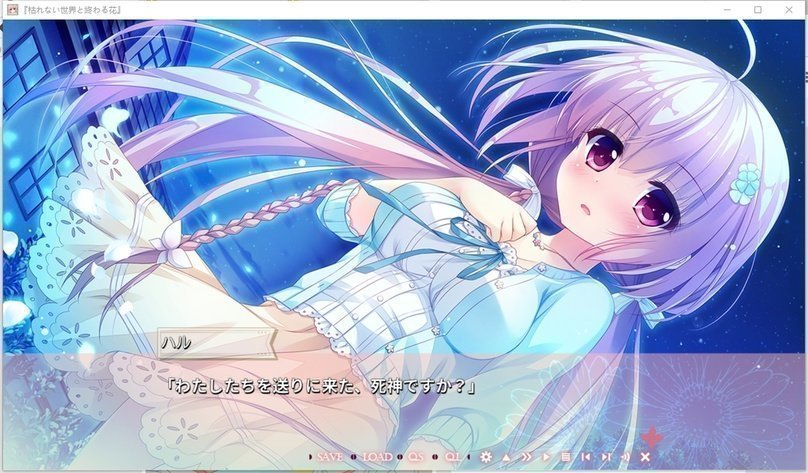
“You said you were looking for an angel, right? So now that you’ve found one, what are you going to do?” Haru says meaningfully. “Someday, maybe I’ll turn you into a flower too. Maybe you’ll hate me. But either way, I have to carry out this duty and keep living, because the world turns because of it, because that’s the rule of this world.”
After that, Haru acts like nothing happened, keeps working at the café, and talks normally with her sisters and the protagonist. Then he discovers that the “angels” aren’t just Haru — Kotose and Yukina are angels too, all with the duty and power to turn “those who will disappear” into “flowers.”
The player also learns more from the protagonist: after becoming an “angel,” the angel’s heart gradually erodes, losing various emotions and feelings. He notices Kotose has lost “sadness,” Yukina has lost her “attachment to family,” and Haru has lost her “memories of important things.”
Then the protagonist decides to take them down one by one, helping Kotose recover her “sadness” by taking her angel power and transferring the corroding force onto himself.
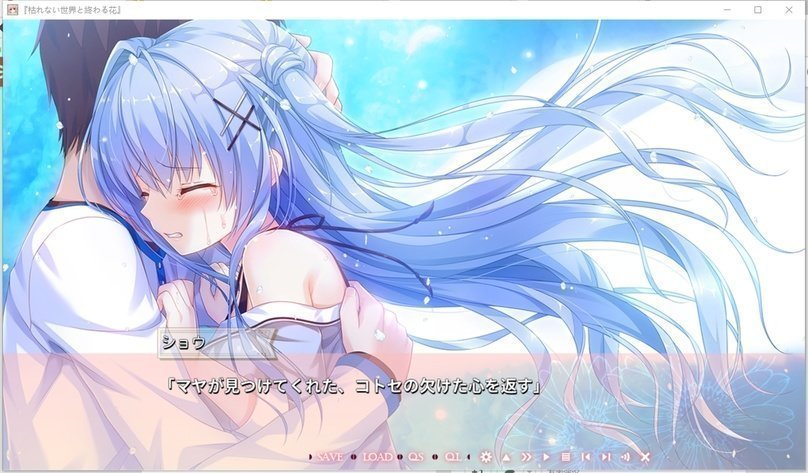
He does the same with Yukina, restoring her “attachment to family” while taking on a second dose of angelic corrosion.
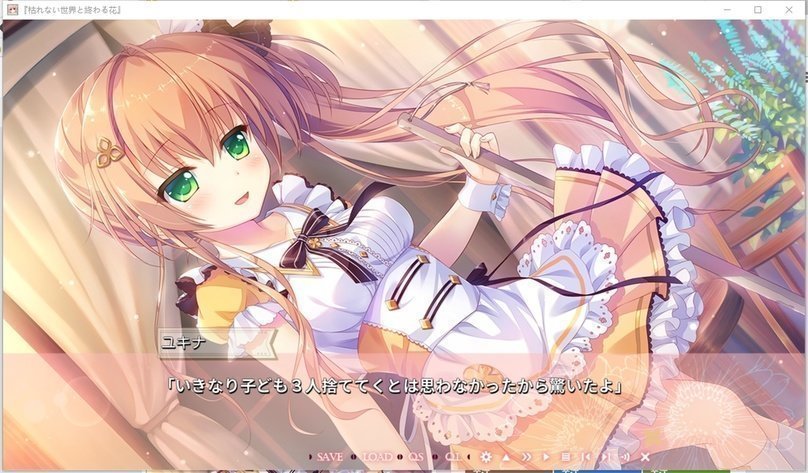
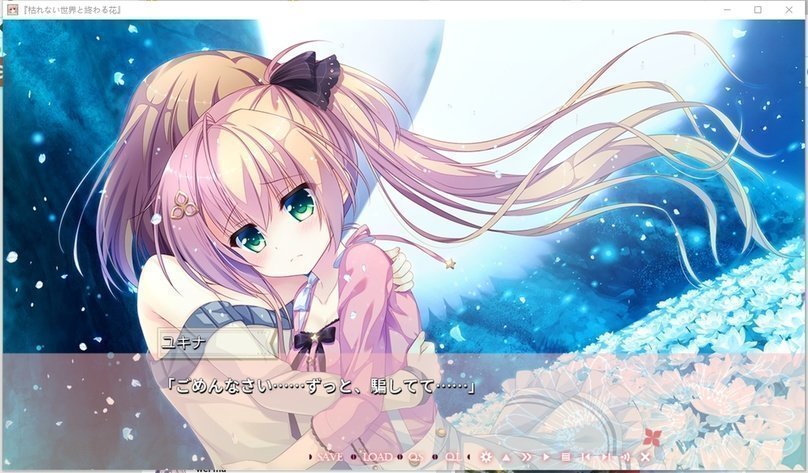
Finally, when he takes Haru’s angel power, he meets huge resistance. Haru suddenly says she remembers the past. She says there was once someone with the same name as Shou who was kind to them, who took them in, who was like a mother — but one day that person left without a word, abandoning the three sisters.
Haru was supposed to have lost her “memories,” so she shouldn’t remember, but the protagonist finds she does. Later it’s revealed she writes in a diary every day and gets her memories from it (this trope is so common I probably don’t need to explain).
So what happened in the past? Here we have to mention a “flashback” interspersed in the story that explains the protagonist’s origins.
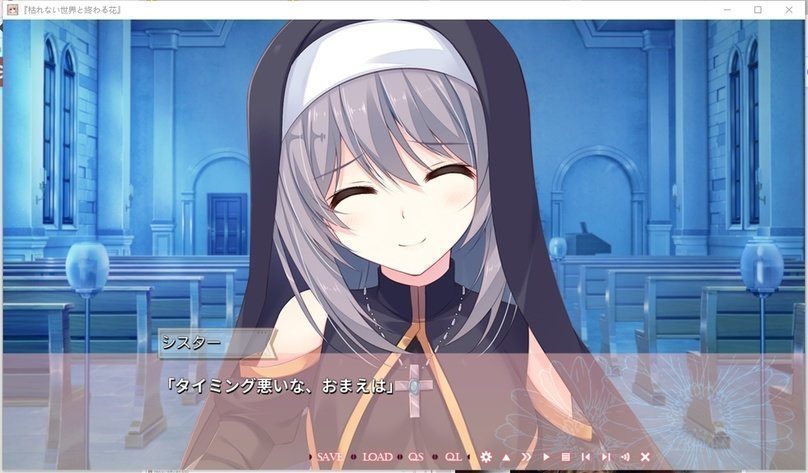
In the main story the protagonist’s name is Shou, but in the flashback, Shou isn’t a man — it’s a nun, a nun who loves to drink. In the church, she carries out the duty of “angel” — yes, turning dying people into flowers. While serving as an angel, she also took in four orphans: Akito, Haru, Kotose, and Yukina, who had been wandering and wanted to be a thief. The nun Shou gave them their current names, told them the church was their home, and that from that day on they were family (かぞく). The nun Shou was poor and could only feed them bean soup every day, but they were happy.
Soon, the nun Shou’s angel power began to corrode her heart more and more deeply. She realized she didn’t have long to live and planned to quietly find a place to die. Akito happened to see her…
The nun Shou had always liked Akito because he always emphasized “we’re all family, we should love each other.” She told Akito she wanted him to take care of the three sisters, that she might not be able to anymore.
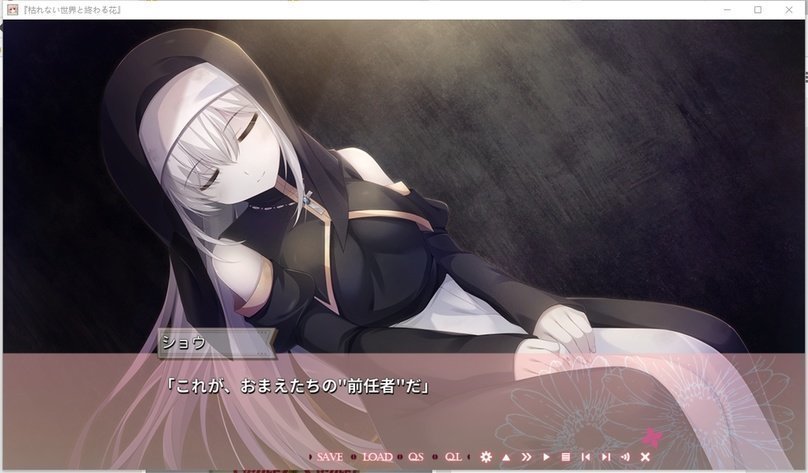
Akito agreed, and soon after, the nun sent him away and sat alone in the church basement as her body turned gray — completely corroded by the angel power.
Later, Akito lied to the three sisters that the nun Shou had gone out for something. They believed it, but soon she never came back, and Akito couldn’t take care of them either. The sisters started going hungry, getting sick, dying… and so on.
Then Akito remembered what the nun Shou had once told him: “This world has a god. Angels exist to assist the god. Every moment someone disappears, and the disappeared become a flower, becoming part of this world. Because people disappear and become one with the world, the world keeps turning. People constantly disappear and are constantly born — that is the rule of this world.”
“The world’s rules turn like a giant gear, and to assist that gear you need small gears. Angels are those small gears.”
“This world has a god, you know. At the top of the big tree in the flower field, where all the disappeared gather. The disappeared form the god.”
Akito decided to ask the god for help.
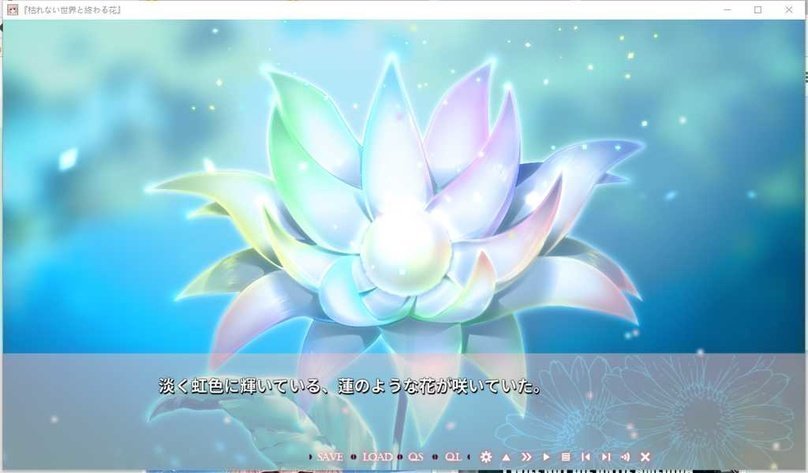
Eventually Akito reached the top of the tree, met the god — which turned out to be a rainbow-colored lotus. Akito begged the god to save the three sisters. The god said saving them required a price: the three sisters were originally supposed to die and become flowers long ago, but the previous angel forcibly interfered to let them live this long, and they couldn’t be interfered with anymore.
Akito pleaded that he’d do anything for them. The god said, “Then I’ll take what’s most important to you in exchange for the sisters’ continued survival. How about that?”
Akito agreed.
In the end, the three sisters became the next “angels,” sharing the corrosion of the angel power that the nun had borne alone, and Akito lost… his “bond” with the three sisters.
“They are angels now, no longer human, so the rule of human disappearance no longer applies to them, so they can continue to live.”
Having lost his “bond” with them, Akito returns to the church and finds the sisters don’t recognize him at all — they treat him as a stranger…
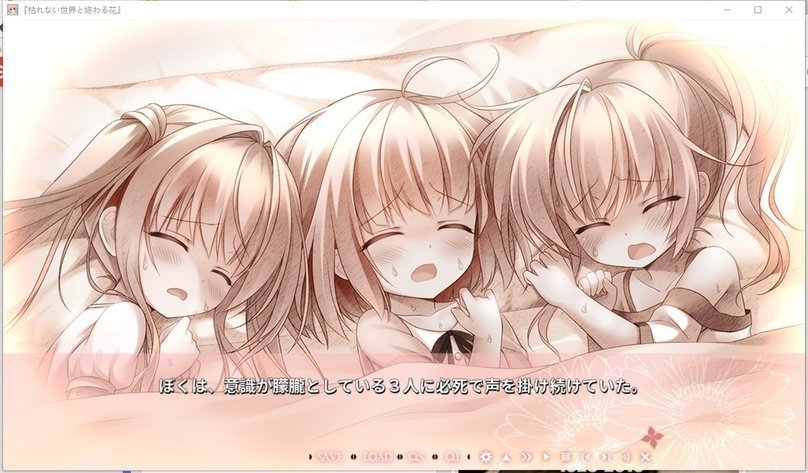
Akito is heartbroken, realizing that the sisters who survived are just living dead… They only survived, but sooner or later their hearts will be corroded by the angel power, becoming emotionless, their bodies turning gray and dying like the nun. Most importantly, as their hearts corrode, they’ve lost the concept of “family” — they don’t remember the protagonist, and the sisters even start living apart.
Akito goes before the god again, begging for help once more.
“You have nothing left worth sacrificing,” the god refuses.
“Then can I trade my life to free the sisters from the angel power?” Akito keeps pleading.
Finally, through sheer will and begging, the god compromises and agrees to give Akito some time to go back and collect the sisters’ “angel power” and liberate them. After that, he must return here and sacrifice himself.
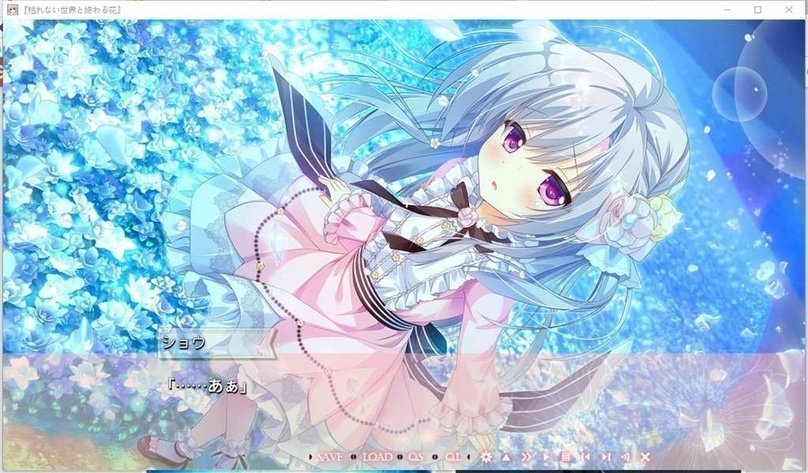
So many years later, Akito awakens again, and his name is no longer remembered by the sisters. He decides to inherit his foster mother’s name, Shou, and returns to the town. On the way, he meets Ren — her Japanese kanji is probably “蓮” (lotus), representing the rainbow lotus god’s avatar. Ren is probably there to monitor him and urge him to finish the task and return.
As mentioned earlier, the protagonist collects the sisters’ angel powers one by one. After taking Haru’s, he’s nearly dead and slowly returns to the top of the tree, where he sees the rainbow lotus withering — after all, he’s taken all the angel power, so the world is doomed…
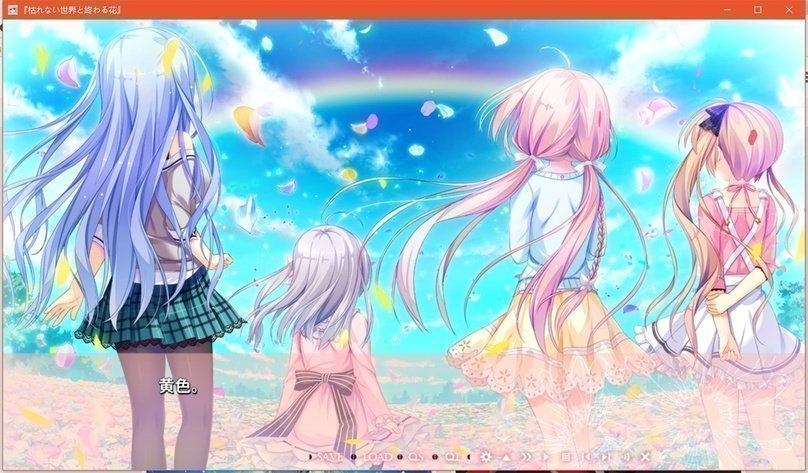
Then, as agreed, the protagonist should die, but the story pulls a forced “Happy End” — the god takes pity on him and lets him go. In short, the protagonist doesn’t die, the world doesn’t get worse from losing the angels — it becomes a better world where no one is randomly taken away. The sisters remember the protagonist, the orphans reunite, remember they are “family,” and the story ends with these children adopted by the previous angel nun Shou placing a wreath on her grave.
So the story seems not very rigorous — many things unexplained. Why doesn’t the world end? Why can angels just disappear? Why did the original world require angels to take lives? Why are some people randomly “chosen to disappear”? Why did the god spare the protagonist?
And so on…
The most common Japanese complaint: is this town the only place in the world?
So… think about it — it’s just a fairy tale…
A story about an angel who takes in orphans abandoned by the god as family, the angel dies, and the remaining orphans beg the god to save them, and the god takes pity and spares the children.
The game is filled with fairy-tale-style descriptions in every aspect, especially the writing… so many kana. The flashbacks, half of which are children’s dialogue, probably take up more than half the text, and the worldbuilding is only explained as “this world needs angels to send the chosen away and turn them into flowers.”
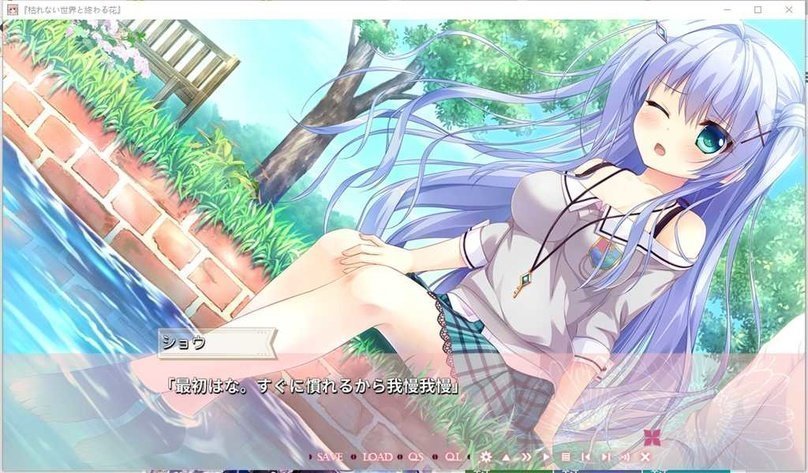
The writing is emotional, relying heavily on music and voice acting to build atmosphere. The game does play tricks with suspense, but doesn’t hide things deliberately — like the protagonist’s name in the flashback not being a man, which you can notice if you look carefully. The misdirection isn’t strong, or maybe they didn’t intend to mislead. More ink is spent on “the world’s unreasonableness” and “family bonds.”
About the world’s irrationality — it’s clear: birth, aging, sickness, death — that’s the rule. People are born and die constantly. The chosen are those poor souls randomly invited by death, dying from various misfortunes. The game mirrors the suddenness and “unreasonableness” of death.
Characters sigh more than once: “Why me? Why do I have to disappear?”
And the angel always says: “That’s the rule of this world. You have to follow it.”
Sudden death of a loved one is also the rule — the dead can’t come back, you have to accept it. Same logic.
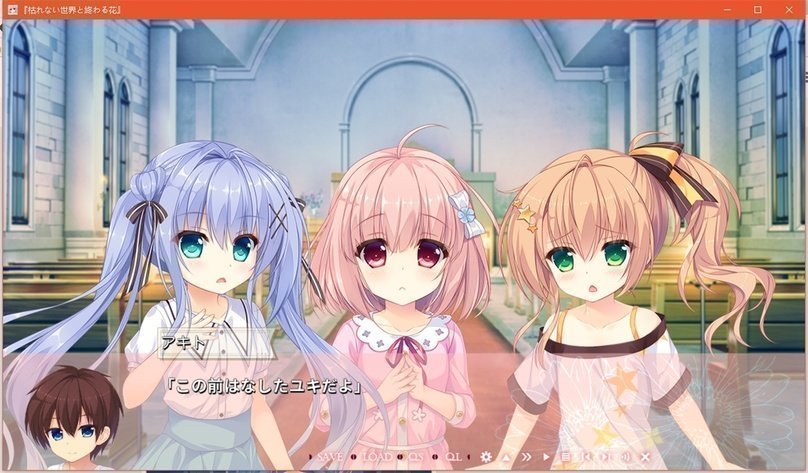
The game’s description of life and death, survival of the fittest, is reflected in the angel’s frequent saying: “Just as you eat chicken to gain strength to live, this world can only run by constantly absorbing the power of those who disappear and become flowers.”
“Those who become flowers become part of the world and nurture new life.”
Combined with the angel planting flowers, it’s probably a metaphor for burial after death.
What the game really wants to express is “the unfortunate’s resistance to fate.” Many characters say, “Can’t help it, that’s the rule, we give up.” Only the protagonist refuses to accept it. He believes people can’t just die for no reason, the world’s rules can’t just be accepted, people keep disappearing, dying, families keep leaving — the world is too sad, so he wants to “end this unreasonable world.”
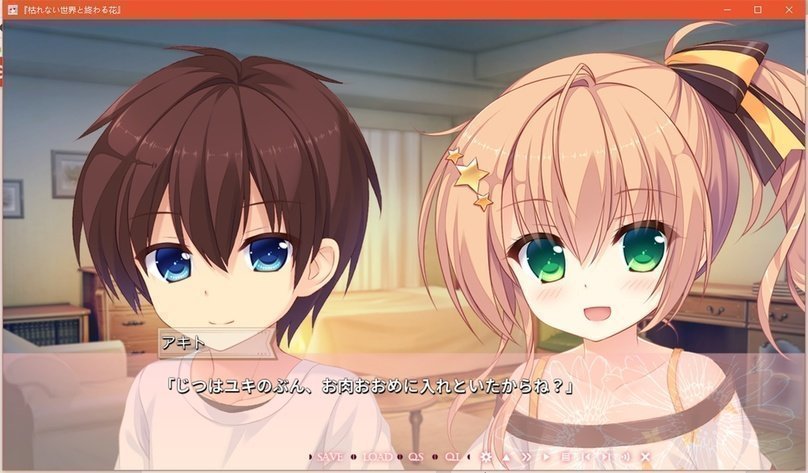
And he does — he creates a “world without sadness.” Of course, a cold shower: such a world doesn’t exist… which is why I say it’s a fairy tale.
Not that the plot is flawless — the depiction of the sisters’ missing emotions is weak, and the final Ren route is too rushed. The flashbacks add many small details to deepen bonds but lack an overall climax. Fortunately the music is powerful, and the game is short — “shortness covers a hundred flaws” — so it’s forgivable. At least there’s no discomfort while playing.
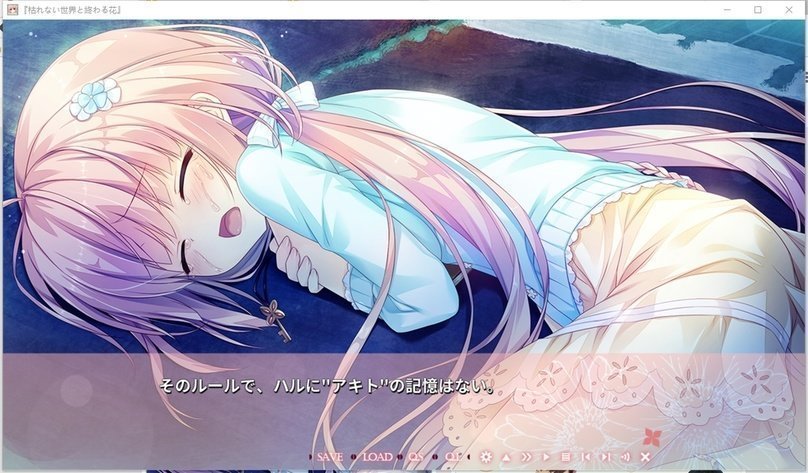
The art is flawless, perfectly matching the atmosphere. The voice acting is also impressive — hearing Kiritani Hana’s tearful voice again after years was satisfying. Most notable is the soundtrack — calling it “god-tier” isn’t an exaggeration. During tense scenes the music stops, then as the plot unfolds, a sad, soulful piano piece slowly rises, playing a huge role. At least 60% of the performance and emotional impact comes from the music — without it, the game would lose its soul.
As an 18+ eroge, it might fail on that front: the protagonist doesn’t express “love” but “family affection.” Although they’re orphans, the warmth of family is the theme. By the end, there’s no kiss, no confession, no H-scenes — not even fanservice. This shows the game’s tone: it’s not going the erotic route, just telling a fairy tale.
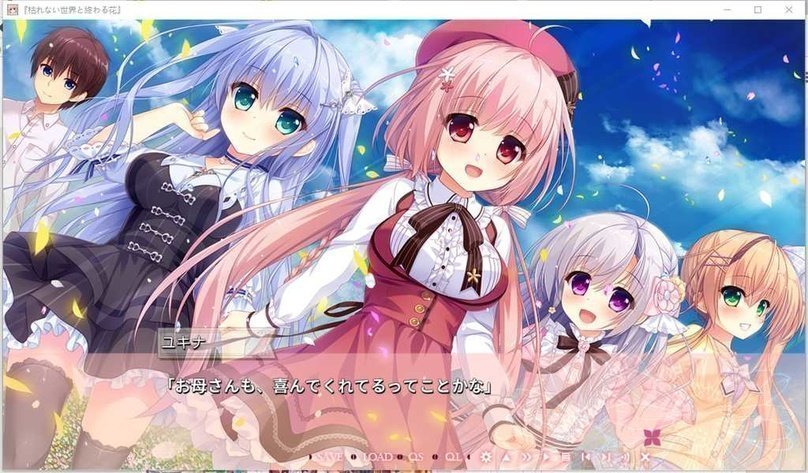
From a fairy-tale perspective, the game’s message is more like a child learning that people are born and die, that life and death separate us, thinking that’s too bad, and asking the god to stop people from dying — then the world would be better.
Ridiculous, but not for a fairy tale — call it a beautiful wish. Like fairy-tale endings: the prince and princess live happily ever after, families are always together.
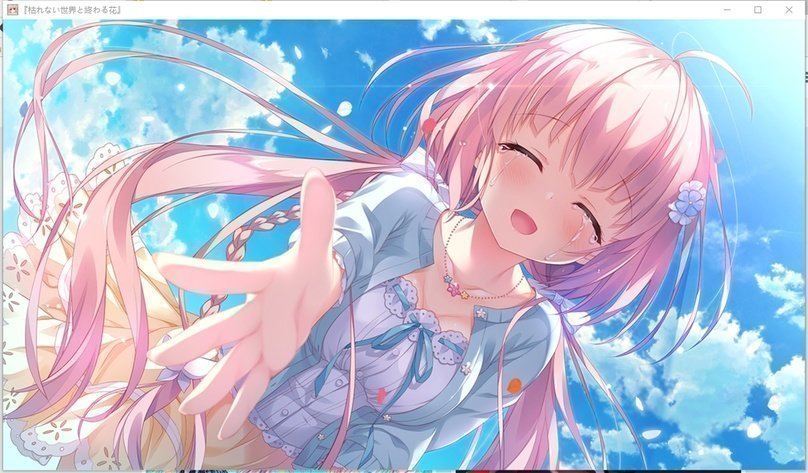
Even though we’ve grown up, even though fairy tales are lies, this world still needs them. After all, fairy tales represent beautiful hope — unreachable, but they guide us.
Comments are hosted on the Chinese main site. This mirror is read-only.