Danzai no Maria (断罪のマリア) Review
God, Please Close Your Eyes
I once saw some otaku girls who play otome games complaining: “In most galgames the heroine kicks the bucket at the drop of a hat, and in otome games the heroine also kicks the bucket at the drop of a hat. Man, male-oriented or female-oriented, the heroine always has it rough. You get used to it.”
Thinking about it, that’s pretty much true. In a lot of stories women are painted as fragile things that need a man to protect them. Even the “senpai” type in galgames tends to get a later scene revealing she’s not actually that strong and is secretly fragile inside. It feels like something baked into the gender roles themselves. But every so often a game tries to change that.
Sure, seeing the heroine carry the hero the whole way through in a male-oriented game is unrealistic. Everyone knows the protagonist is “the weakest” by default, and, well, by the end he’s always some broken-ass cheat character anyway. So all we can do is look at female-oriented games and see if any of them dare to make the heroine the strongest.
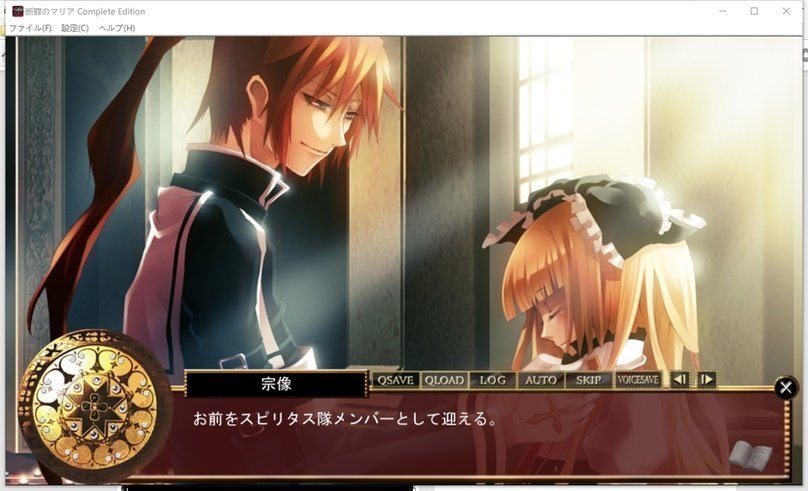
So 断罪のマリア (Maria of Condemnation) might be one of those games. Not entirely, but it’s close — at the very least, the heroine’s combat power is the strongest in the game.
Maria of Condemnation is an otome game, but it’s all-ages, and it’s fully voiced — meaning the heroine has a voice too. Funny thing, I’ve noticed a lot of otome heroines are voiced, even in 18+ titles, while male-oriented protagonists rarely are. Makes you think fat nerds are harder to please than teenage girls. The lead, Maria, is voiced by the famous 阿澄佳奈 (Kana Asumi), and you’d probably recognize the other heroines’ VAs too — 本多真梨子 (Mariko Honda), for one… though she hadn’t gone into eroge yet at that point.
The story is hard to talk about, honestly. From the opening to the midpoint to the ending, my feelings were a rollercoaster.
The game goes for a dark style. The heroine Maria is set up as a woman “possessed by a demon,” and she’s also an exorcist.
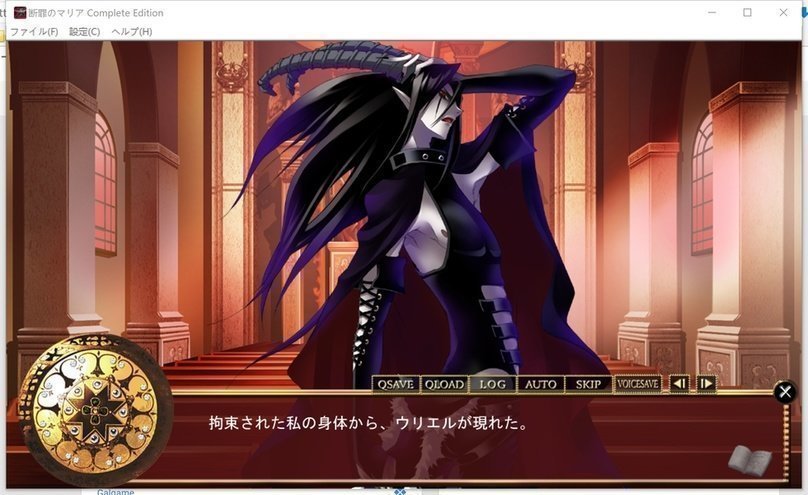
Yeah. A demon-possessed exorcist. That’s the contradiction, and the start of Maria’s tragedy. Maria gets sent to a church school in Japan — officially to study, but really to deal with a demon-summoning ritual on Halloween. Supposedly someone’s going to summon the demon アザゼル (that’s Azazel, the cute one who gets kicked all the time) in Japan on Halloween, and Maria’s there to stop it.
Maria’s mother, and her mother before her, were both possessed by the same demon. Neither managed to stop the summoning ritual on Halloween, so both were cast into hell. Maria inherits the same mission, just to find some kind of release.
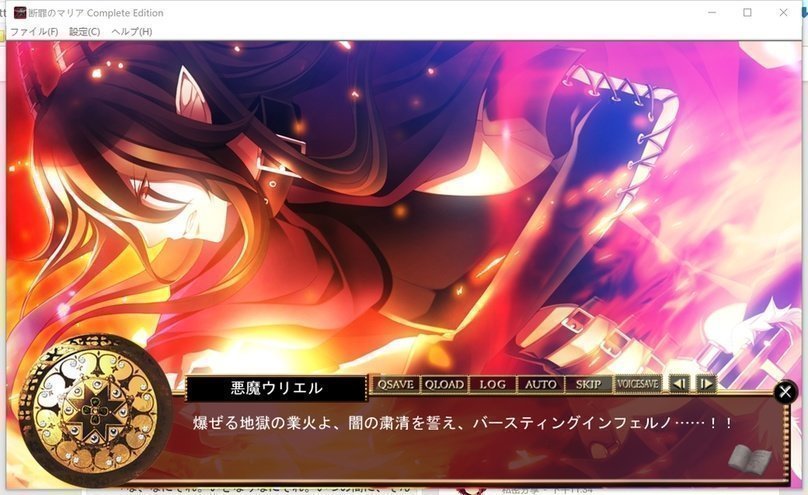
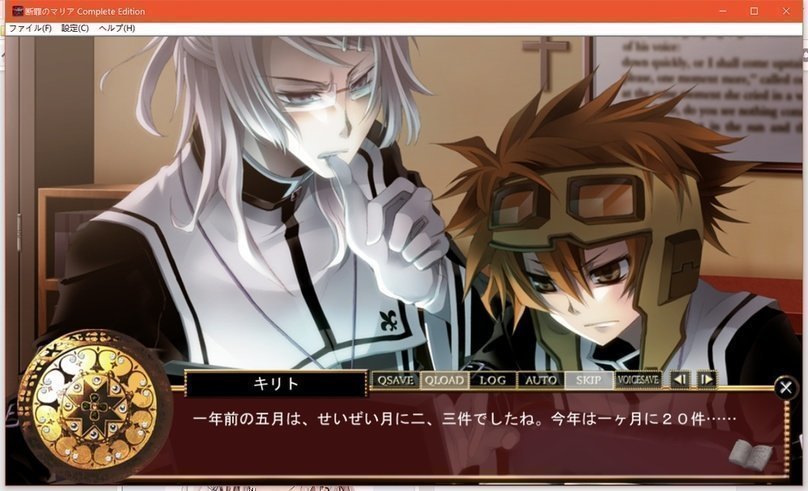
As an exorcist, Maria’s method is unusual. Other exorcists sprinkle holy water, pray, and the fancier ones summon angels to drive the demon out. Maria just summons the demon inside her — ウリエル (Uriel, voiced by the same guy as Itou Makoto) — drags the target demon out and rips it in half. The demon inside Maria is genuinely powerful, so her exorcism is inherently violent. Kind of like a Warlock in World of Warcraft, enslaving demons to fight demons.
Because Maria has a demon inside her, once she arrives at the church school the male students get suspicious. Right — as an otome game, her classmates are naturally all guys, and every last one is devoted to God, praying daily, “God bless you” this and that. At first they welcome Maria, until they find out she’s got a demon in her, and that her exorcism method is summoning a demon to tear other demons apart… total mindbreak across the board.
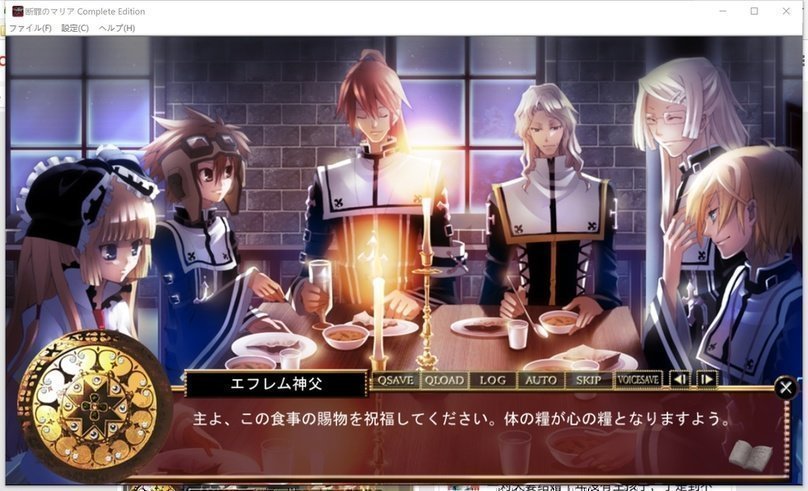
After the mindbreak comes the whining, naturally. Everyone’s all “I can’t accept this!” “Even if you’re a girl, we can’t accept a girl with a demon inside her!” Some even give the heroine the cold shoulder.
In the end the heroine holds up under the pressure and proves herself through sheer ability, joining several exorcism operations and earning the acknowledgment of those tsundere dumbass guys.
Honestly, the strongest fighting force in this whole game’s exorcism efforts is the heroine. Every operation, those dumbass guys do nothing but pray and sprinkle holy water and solve exactly zero problems. Only the heroine summons her demon and rips things apart — fast, clear, efficient… I genuinely don’t know why those self-righteous types insisted on hating her.
And as the story goes on, the heroine gets more and more hated, precisely because of the demon inside her.
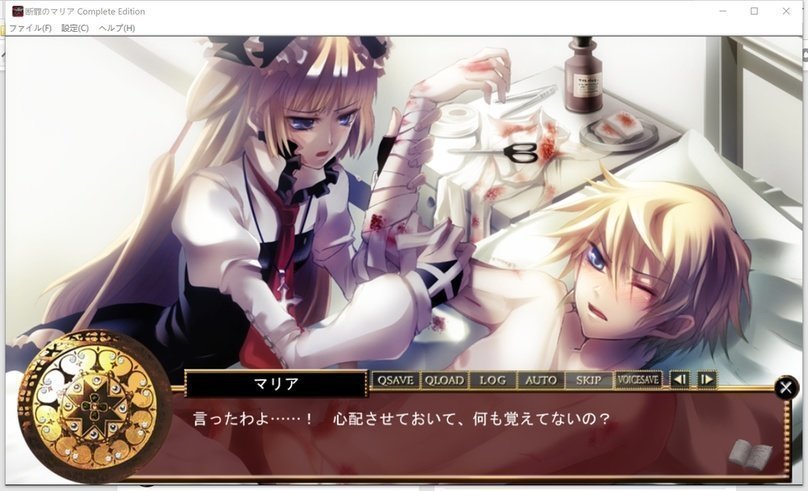
Maria’s investigating the Azazel summoning when an organization called the “Society” shows up. The Society worships demon power — though they want to enslave demons and take their abilities — and they’re also planning to summon Azazel.
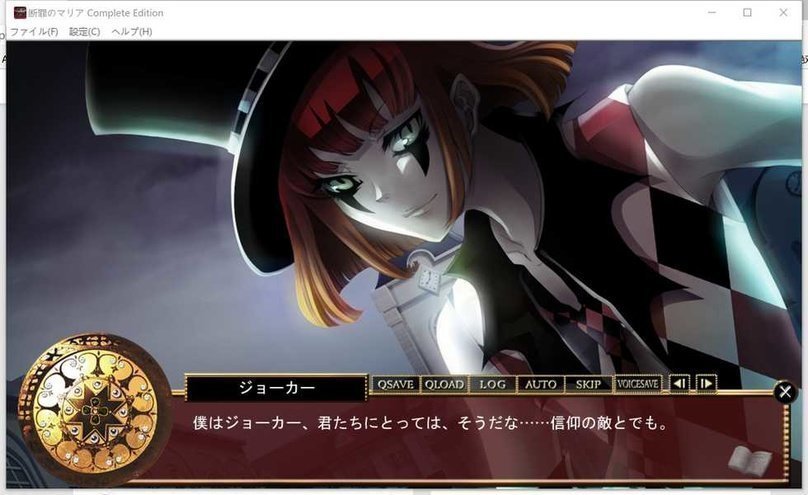
The church has to stop them, of course, but once the Society shows itself, they seem to look down on the church people, and they really like Maria. Because Maria carries demon power, you see. The Society’s envoy Joker says Maria belongs to them — if the church won’t accept her, then she should join the Society.
Maria’s an exorcist, so obviously she refuses, but the other men at the church are already doubting her. Then the Society decides to pull some shit: at the school festival they summon a demon themselves, Maria has no choice but to summon her own demon to fight it, and her secret gets out. The incident gets resolved, but Maria becomes the scapegoat — every demon roaming the city, every demon any student runs into, gets blamed on her. A demon-possessed woman in a holy church school? Unacceptable. The students protest, demanding Maria get out.
Maria’s dormmates (the romanceable guys, that is) at first think she’s pitiful and want to defend her, but soon they split too. Two of them straight-up lose it, deciding to tie Maria up and force an exorcism on her — if they drive the demon out, problem solved, right? They summon two angels. The angels say the demon’s too deeply rooted in Maria and the exorcism might kill her. Those two guys say they don’t care, God will protect Maria, she definitely won’t die, please force the exorcism.
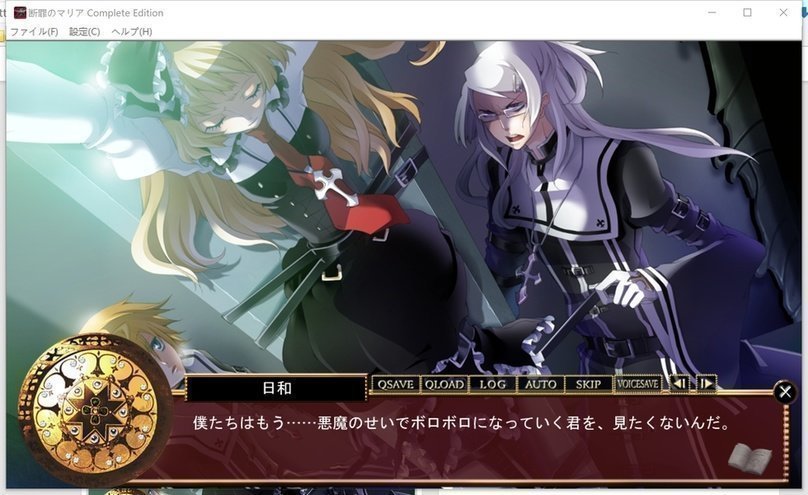
At that moment the demon inside Maria emerges, furious that she’s about to be killed, goes berserk, and instantly starts fighting the angels. One angel gets wrecked in a second; the other takes one look, turns tail and runs, telling its summoner “This is all your fault — you mortals can die on your own, don’t drag me into it.”
The priest shows up and stops the fight, and Maria remains unconscious. The demon inside her stands up to protect her — “Touch her and you die” — which only inflames the church crowd further.
Then the church suddenly collapses, revealing an underground passage.
A few of the church students head down and find a ward deep in the passage, with all kinds of dying people in the beds. Every one of them has angel wings.
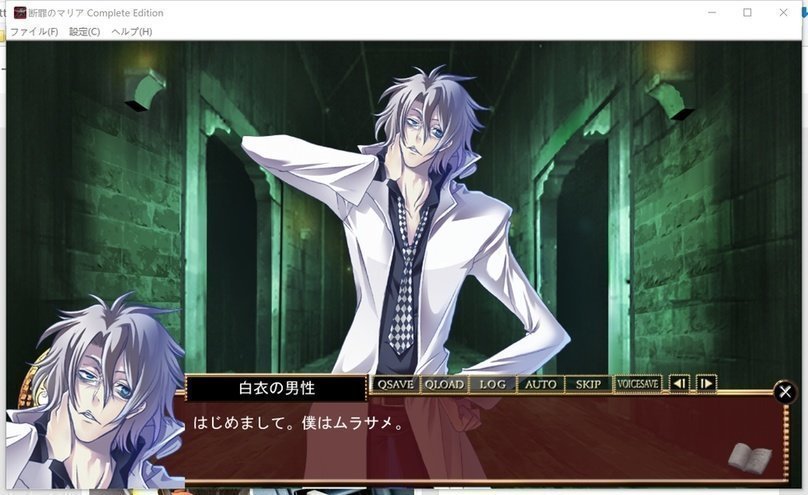
A doctor appears and explains the situation. The people in those beds are all church students who joined exorcism work after graduating. Because of their devotion to the angels, they get granted wings — but the wings consume their life force. They keep summoning angels to exorcise until their lives run out. That’s called serving the angels faithfully, blah blah blah…
The students are shocked. Holy shit, the angels possess humans and drain them to death too? How is that different from demons?
And the students realize the angels never give a damn about the possessed person — they’re always like “this one’s too far gone, no saving them, just kill them.” Not a shred of pity. Whereas Maria’s demon can summon another demon out and tear it apart to solve the problem.
The students ask the priest whether what the doctor said is true…
The priest nods, and says Maria will be locked in here too, for treatment.
Treatment means exorcism. The demon inside her must be driven out.
Naturally Maria resists and fails. In the end the furious demon, fed up with those hypocritical angels and the useless men of the church, takes Maria and escapes the passage. After that Maria can’t go back to the church, so she decides to try her luck with the Society — not to actually join, but to go undercover and see whether she can stop the final Azazel summoning herself.
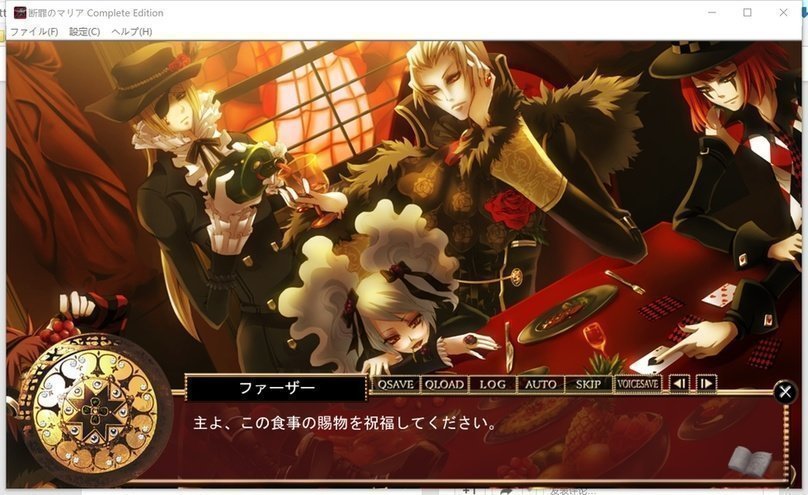
So Maria joins the Society and finds it heavily guarded. The Society’s leader is a guy called Father, who’s all smiles that never reach his eyes, and keeps hinting to Maria that betrayal means endless nightmares.
Eventually Maria discovers the Society isn’t any good either — they plan to sacrifice living Society members to summon Azazel. Maria can’t stand for it, so she rebels together with the pitiful sacrifice, and the church crowd storms in too. Azazel gets summoned anyway, but Maria’s demon and the angels summoned by the church people team up and take it down…
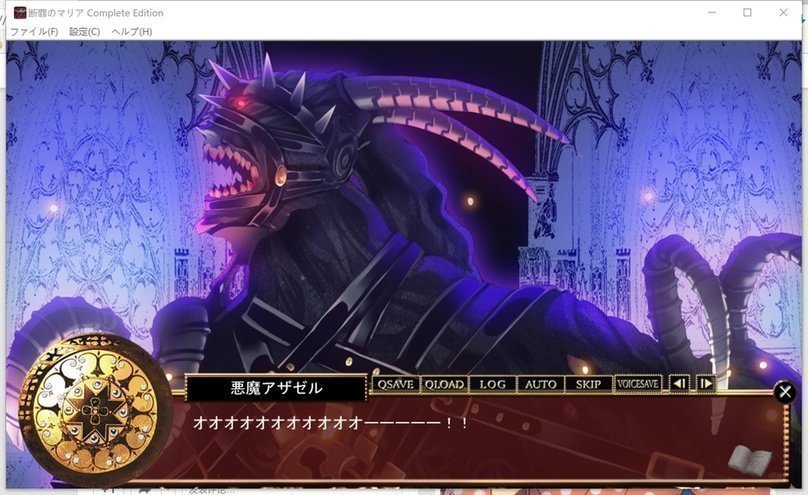
Azazel dies, and Maria is freed. From there the route you picked decides the ending — you can side with the demons or the angels. Either way Maria is freed and lives happily with one of the male leads; the difference is that if you pick a church-side character, the demon inside Maria tells her “You don’t need my protection anymore” and leaves her for good.
The story isn’t strictly linear; it broadly splits into a “demon” branch and an “angel” branch. Basically every man in the game is romanceable, though it doesn’t seem to matter much — most endings are about Maria finding release anyway.
The game’s theme is both obvious and not. The best part is the midpoint — Maria and the demon inside her fighting the church’s hypocritical dumbasses and the even more hypocritical angels, that’s when it’s most satisfying. After all, the game doesn’t portray “angels” positively; here they come across as bastards who’ll trample human lives for the sake of their so-called “justice.” I figured the game would end with “demon beats the shit out of hypocritical angels,” but then it shifts to the Society arc and tells you the demon-enslaving guys aren’t good either, and the demons themselves are still evil — the only non-evil one is Uriel, the demon possessing Maria…
Which makes the story really weird. In this whole world nobody’s reliable, and Maria should be deep in despair, yet at the end angels and demons inexplicably team up to kill Azazel, and Maria can go back to the church and hook up with the psychos who wanted to “exorcise” her, or even kill her — that I just can’t understand.
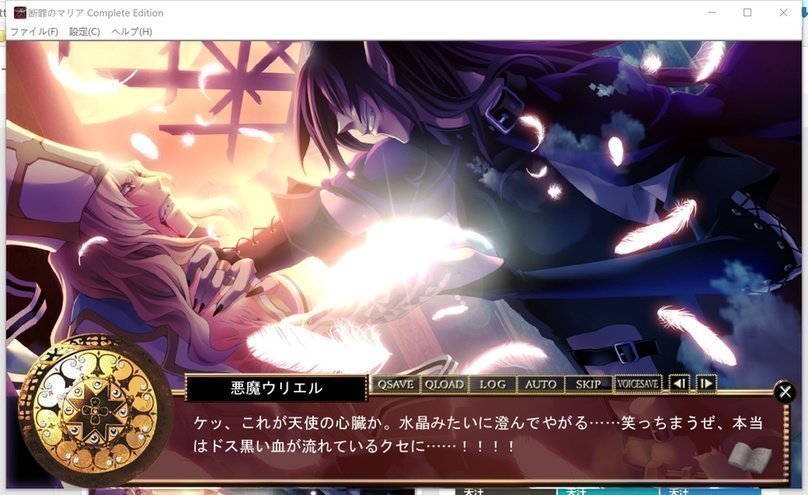
For this game, Uriel’s route is arguably the relative True End. Maria is born of tragedy, possessed by a demon yet fighting demons, trusted by neither church nor angels, and she hates the Society too. Nobody believes in her except the demon possessing her, who’s always protected her. And the game writes Uriel with real maturity — at one point he even says, “I don’t have a contract with Maria. I follow your orders because I want to protect you.”
Uriel is probably the ideal otome game male lead, really… the Sebastian-from-Black-Butler kind of character.
Later I looked into the different versions of Danzai no Maria and understood why what I played felt so off. The original release apparently ended around when Maria’s secret gets exposed at the church. Then a PSP version added routes, and later a Complete Edition added all the routes — the Society, more characters, and so on…
Staple those added routes onto the original and the result is that nobody on either side feels quite human anymore… Funny thing is, I couldn’t find a single walkthrough for the Complete Edition routes that matched up correctly. The original version’s walkthrough should wrap up around the underground hospital… I’ve also seen Japanese players say the original version “has an ending where you can’t see any hope,” which probably ties into this.
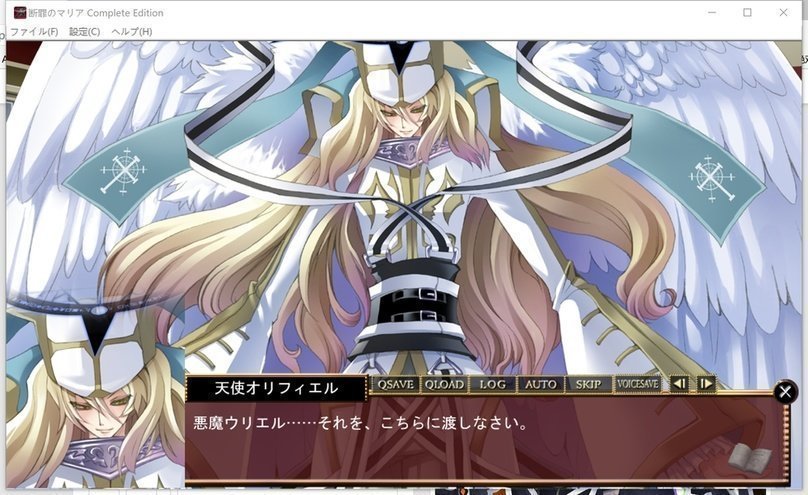
I get why an otome game needs added male lead routes to make the heroine happy, but doing it this way feels like something’s missing… Then I thought about it: Maria’s suffered enough. Let her be happy. It’s rough out here for the girls playing these games, so a forced Happy End is forgivable.
The art isn’t good. For an otome game I’d say it doesn’t even match what teenage girls would find appealing, but that’s forgivable too. Why?
Because the scenario writer and the artist are the same person (菜摘かんな)!
What more do you want… She’s a scenario writer by trade. Getting halfway decent art out of her is already a win…
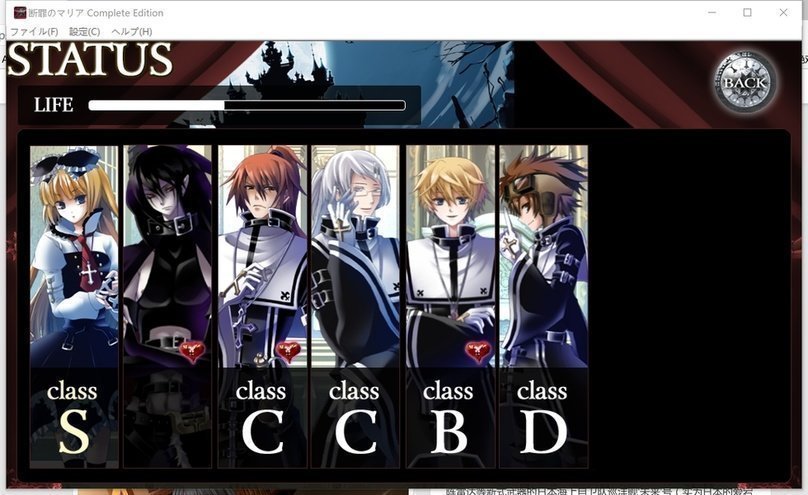
The game system is a highlight because it’s hard… Yeah, lots of choices, and you can’t find a fully accurate walkthrough online. Every choice has a time limit, and picking wrong costs you HP. Run out and you probably croak. Hell, I’m honestly curious why a female-oriented game is the hard one while male-oriented games are always stupid easy — are modern nerds all glass-hearted and otaku girls all iron-hearted now?
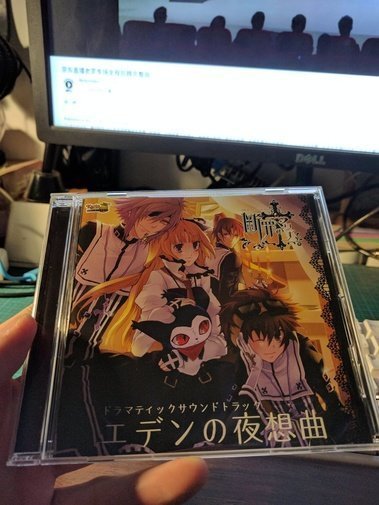
The music deserves a mention — heavy church style, very listenable. I already bought the OST.
On voice acting, the standout is the heroine, Kana Asumi. She delivers the tragic story perfectly — she could wipe the floor with plenty of galgame heroines’ VAs. As for the male leads’ VAs, all I can say is they’re terrible. The characters were already dumbasses, and those overwrought performances make them even dumber. But that’s not all — Uriel’s performance is the real highlight, the one voiced by 平川大輔 (Daisuke Hirakawa), Itou Makoto’s VA… He nails a demon who’s “tsundere,” “reliable,” “composed,” and “arrogant.” Most importantly, even though he keeps insisting he’s a demon, he’s the one who treats the heroine best in the entire game…
Thinking back on it, if the game didn’t have all that tacked-on, sequel-baiting material, it would have a solid premise. Most stories go on about how wonderful angels are; in this game the angels are despicable, and you’ll see it when you play — that arrogant, human-despising, won’t-even-bother-saving-you, just-wants-to-duke-it-out-with-demons faggot attitude really makes you want to punch them. The most disgusting part is how hypocritical the angels are, and the church members who worship them are hypocritical too.
Maria genuinely wants to save people, but because she’s demon-possessed she gets looked down on and even stripped of the right to save anyone. That’s a real irony, you have to admit.
Maria is a tragic character in this game. She gets redeemed in the end, but it still feels a bit fake.
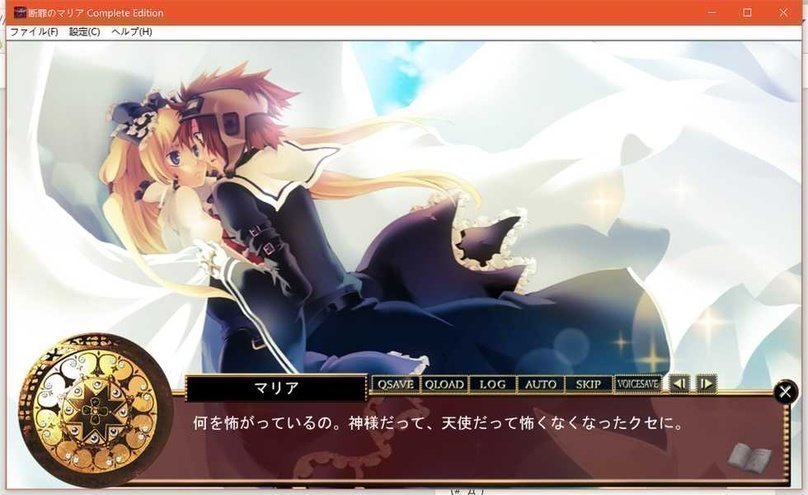
The ED is sung by Maria’s VA, Kana Asumi — 《神様 どうか目を閉じて》 (God, Please Close Your Eyes). In Asumi’s slightly despairing voice, it sings the heroine’s despair at the world, and her faint disappointment in the so-called gods…
Comments are hosted on the Chinese main site. This mirror is read-only.