Tsukikage no Simulacre (月影のシミュラクル) Review
If the World Were Really That Great, Trump Wouldn't Have Gotten Elected
Tsukikage no Simulacre was last year’s supposedly “free” “visual light novel”—and oddly enough, it’s rare for Japanese developers to label their own work that way. They usually just call it an eroge.
And just like that “free” game said at the end, it only told an incomplete story. There were a ton of loose ends, and the devs themselves said the free version wasn’t the point—the real deal was the project coming after it.
So what was that project? Well, look, the January eroge release schedule has a new entry called Tsukikage no Simulacre -Kaihou no Hane-, doesn’t it?
Right—that free version was literally just a “trial edition.” A demo, basically. The final version is this game.
Honestly, when you think about it, they just released a demo early, then put out the full game later. Dressing it up as “first we give you the free part, then the follow-up project” is the same old playbook.
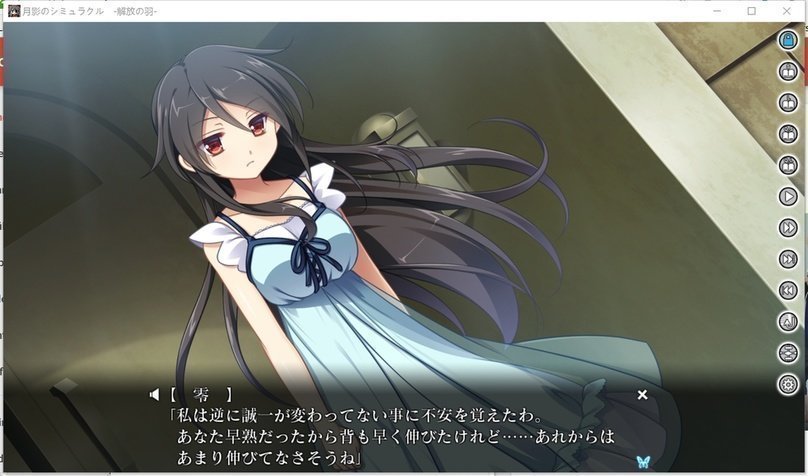
When I got the full version, I was surprised at how tiny it was. Fired it up, and yeah… now I get why it’s so small.
- The story is short.
- Content-wise, the length is about what the free version had. The full version just adds more endings and a True End.
Thinking about it that way, calling it a “free version” makes sense, right? At least they showed you the story flow—the endings could be sold to you as DLC.
So basically, the free version gave you two endings. In the full version, you clear one ending to unlock the next. There are at least 13 endings, and once you unlock them all in order, you can enter the final route.
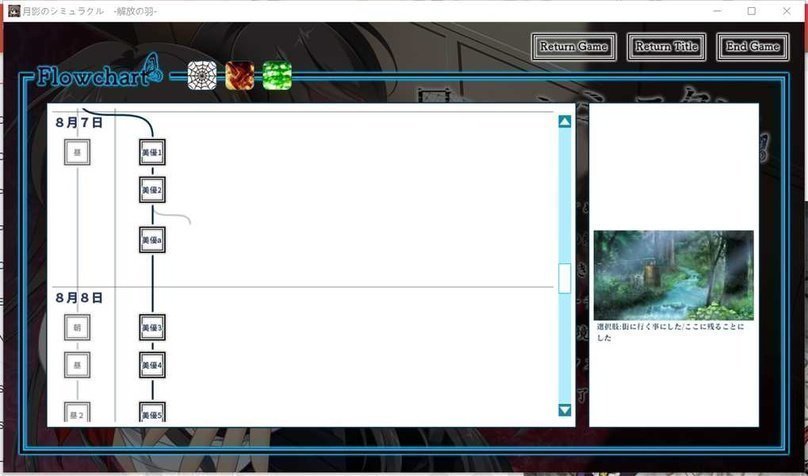
It’s kind of like a story lock, but not quite. Anyway, it gives you a way to avoid that Bad End from the “free version,” and you can piece together the final situation through the different endings.
Remember the original story? The protagonist, a member of the Kisaragi family’s branch house, goes to the main family to take part in a ritual—a wedding ceremony with a “living doll” passed down through the family. Supposedly it’s an ancient Kisaragi tradition. The Kisaragi are a doll-making family, and they’ve always had a “doll with life” in the household. The protagonist is there to stand in for the head of the family and marry the living doll.
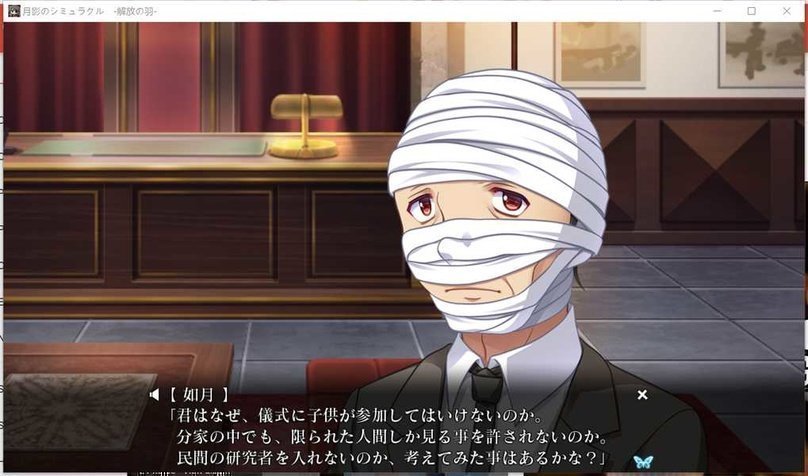
They call it a wedding ceremony, but it’s really just a ritual. The head of the Kisaragi family is in poor health—legs messed up, face covered in bandages—so they had to call in the protagonist, a relative.
During the ceremony, the protagonist notices the doll seems to actually be alive. Later that night he sneaks into the doll’s room and talks to her. She calls herself “Kurenai” and says the protagonist gave her that name—when he arrived, he read the characters off the wall nearby, and the doll took it as her name. She even tries to push the protagonist down, but he runs away…
After that, he tells the young mistress the doll is really alive. She says don’t be ridiculous and takes him to see—the doll is just sitting there motionless. She explains that the “wedding ceremony” is meant to make you dizzy and hallucinate…
Over the next few days, big things happen in the Kisaragi household. First the head is murdered, killer unknown. Then others are killed. Finally the protagonist comes back from a trip to find the young mistress has set her own house on fire. After that, he meets a strange person on the street who looks exactly like the living doll Kurenai, and that person says she wants to “play” with him…
Then the common route ends—the free version cuts off right there.
For the detailed free version story, see here… /archives/4502/
So the free version leaves several mysteries:
- Is the doll actually alive, or is the living doll someone in disguise? Because the doll looks a lot like the young mistress, Kisaragi Rei.
- Did the doll commit the murders, or did someone frame her?
- Why does the Kisaragi family have so many branch houses? And the village says the branch houses burned down too—what about the vampire legends? Are those real?
- Who is that strange person at the end? Why does she say “How shall we play this time?” when she sees the protagonist?
The full version starts unraveling all this, and I really don’t like the way it does it—doling out the truth bit by bit through multiple ENDs. There are about 13 ENDs. Some are BAD ENDs, some are KEY ENDs, meaning you have to clear one to unlock the next.
I won’t go into the unlocking process. By the halfway point, a lot of the mysteries are solved…
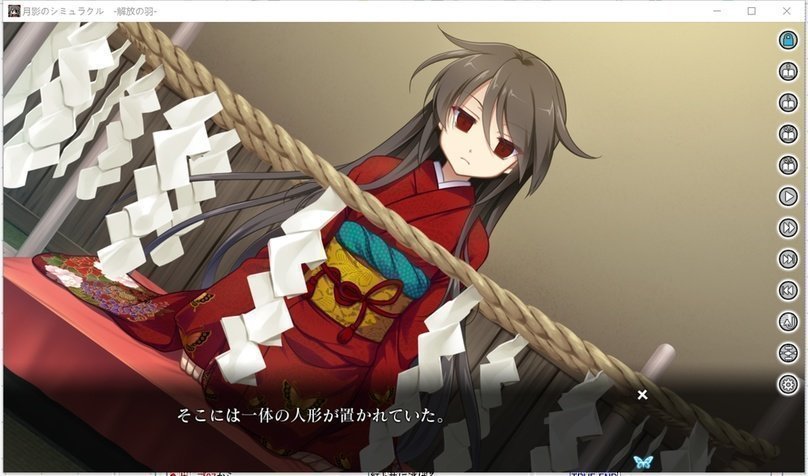
First, the doll is indeed alive and has a soul. She’s been passed down through the Kisaragi family—or rather, the family has always had to wait on her. Every so often they hold a wedding ceremony to feed her some human vitality, otherwise she goes out of control, runs wild, and kills people.
Several endings involve the protagonist eloping with one of the heroines. The doll chases him relentlessly—either drags him off or chops him up.
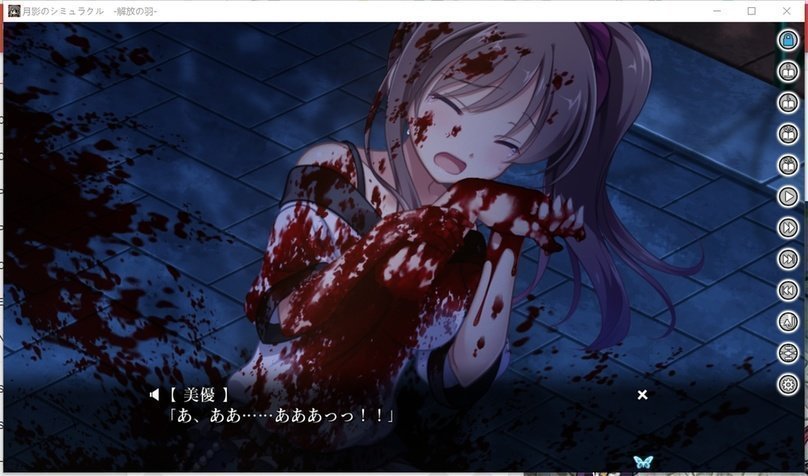
So where does the doll come from?
Later endings explain. Long, long, long ago, the Kisaragi family came to this forest, where something like a “spider god” lived. The Kisaragi ancestor begged the spider god for a place to live. The spider god reached an agreement with the human ancestor: in exchange, they would make a doll, pour part of the spider god’s soul into it, and have it “watch” humanity, because the spider god didn’t quite trust humans…
So the doll was modeled after one of the Kisaragi ancestor’s women. That’s the “living doll” that exists now.
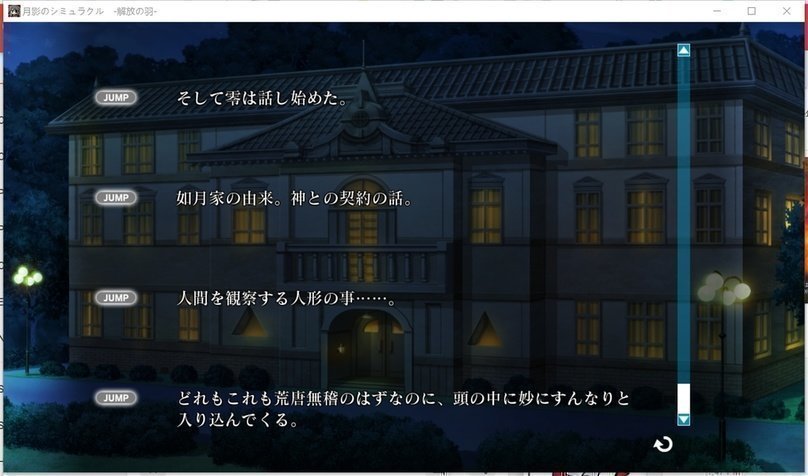
Because the soul inside the living doll is the spider god, not human. And a god looks down on humans—sees them as prey and bait. The Kisaragi family has had to carefully serve this living doll for generations. Many tried to kill her, but she’s immune to guns and fire, impossible to kill, and she kills humans instead. So the Kisaragi have studied doll-making for generations—even in the modern age of robots, they keep at it, all for the sake of killing this menace. The living doll knows humans mean her no good, so she’s always been in opposition to them.
The contract with the spider god goes back so far that the Kisaragi family branched out many times over the years. The branch house incidents are also tied to this troublesome living doll. Some branch endings go into that.
And the funny part: the protagonist met the living doll as a child when he visited the Kisaragi house. He helped her stand up and made a promise with her. What promise?
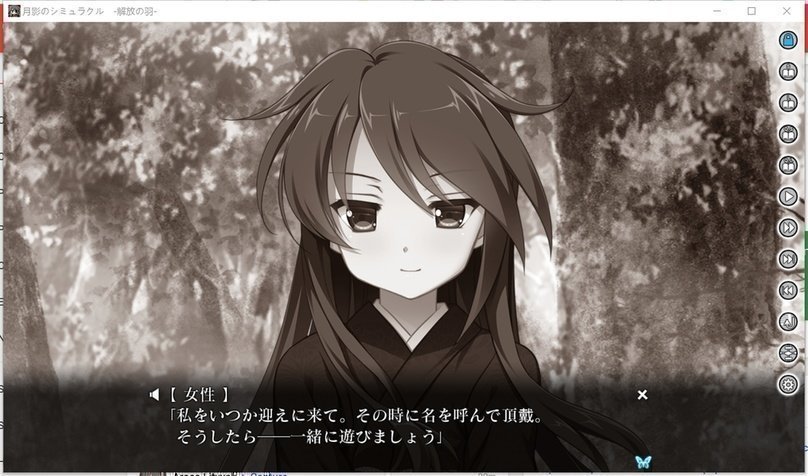
“Do you have a name?” “No.” “Then next time I see you, I’ll give you a name. Let’s play together.” “Okay.”
So after the wedding ceremony in the common route, the doll keeps repeating the name the protagonist gave her—“Kurenai.” And in several endings she says, “How shall we play this time?"—all because of what the protagonist did as a kid.
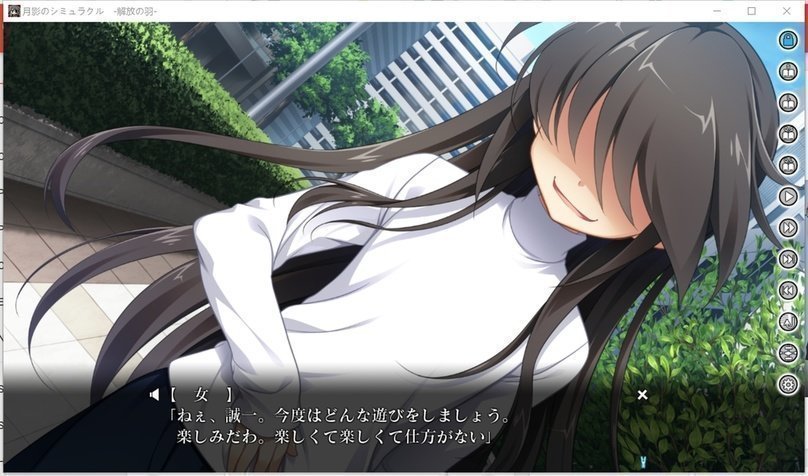
Of course, being an eroge, the doll is a possible romance route.
So in the later endings, the protagonist faces a choice: side with the doll, or side with the Kisaragi family against her. If you choose to fight the doll, she remains missing, and you get the feeling she’ll show up before the protagonist someday—very “I’ll be back.” Not exactly a Happy End.
If you choose the doll, she instantly becomes all soft. She explains that she needs to absorb human vitality to survive—bodily fluids are best: saliva, semen, whatever. After absorbing them, she can feel part of that human’s emotions and spirit. That’s what the wedding ceremony is for.
If you pick the doll, the murders stop (probably). The village vampire incidents were probably other mischief from the spider god. The core issue is still the conflict between the spider god and humans.
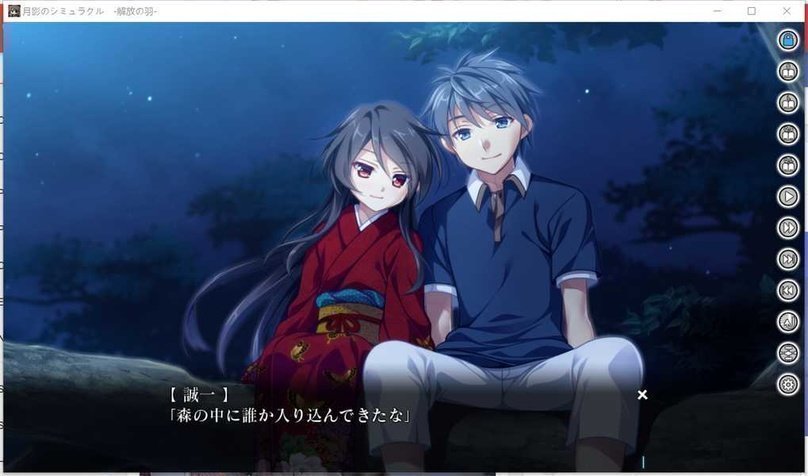
One of the doll’s ENDs is decent, I thought. The protagonist chooses her, she spares the Kisaragi family, he leaves the family, and they watch a festival together in the forest. Pretty romantic…
But romance aside, the core problem isn’t solved. So how does the game solve it? I literally spat out my drink…
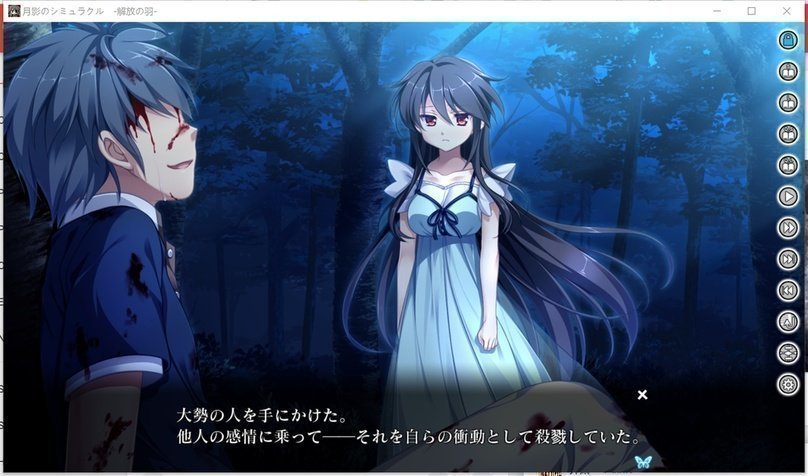
In the final True End choice, the protagonist says: I won’t pick the doll, I won’t pick the Kisaragi family. We should find a reasonable, compromise solution.
What’s the solution? The protagonist says he’ll go deep into the forest to “talk things over” with the spider god…
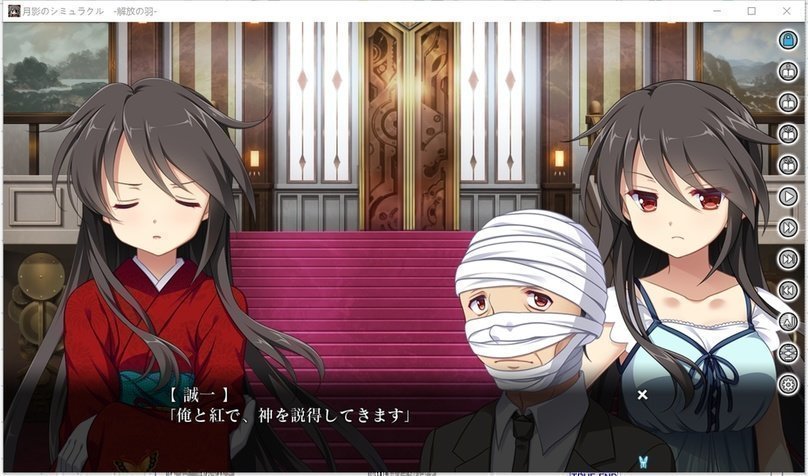
Then comes the most eye-bleedingly melodramatic development imaginable. The protagonist takes the doll to the spider god, achieves “mutual understanding” with it, the spider god spares the protagonist’s group and the Kisaragi family, the doll survives too.
And then it’s a Happy End—nobody dies, nobody sacrifices anything, no more conflict between humans and spiders. Pretty sick, right?
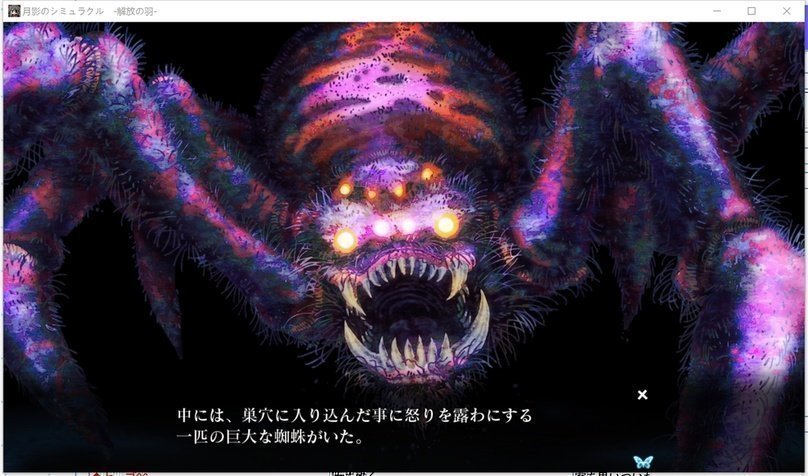
Sick my ass! If anything, the game completely betrays my expectations from start to finish and falls right back into that “infinite love, mutual understanding” formula that Japanese scenario writers and authors love so much.
At first I thought this was a detective story. The murders look like the doll’s doing, but the doll and the young mistress look so similar—except for the chest, yeah, except for the chest. Early on the game even emphasizes that Kisaragi Rei’s chest has grown, a hint that the doll and the mistress are different. I figured maybe the mistress did it and framed the doll somehow. That’d be pretty cool—just needed a logical explanation…
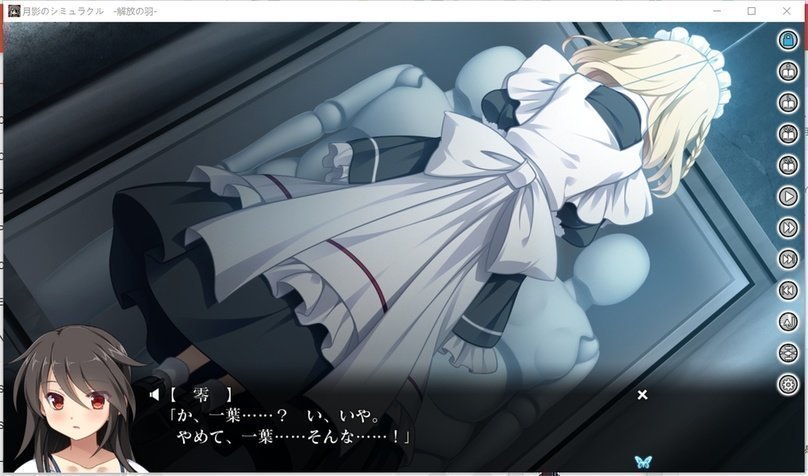
But by the mid-game, the story tells me the doll really is alive… and it turns into a fantasy tale, dragging in the Kisaragi ancestor and the local spider god… So all that constant emphasis on spiders, the butterflies in the OP, and the various “XX no Hane” endings were just to set this up? That alone would be okay—supernatural plots aren’t rare, as long as they resolve it in the end.
But then the True End’s solution made me spit out my drink again. Never mind before the True End—the “living doll” stops being scary at all. At one point the young mistress even goes to check on her, finds her gone, and just says, “Oh, she’s out again.” That’s it… no tension left. Early on they built up all this horror atmosphere, and now it’s gone… And the final solution? Talk the spider god into mutual understanding, and it just lets you go… then Happy End…
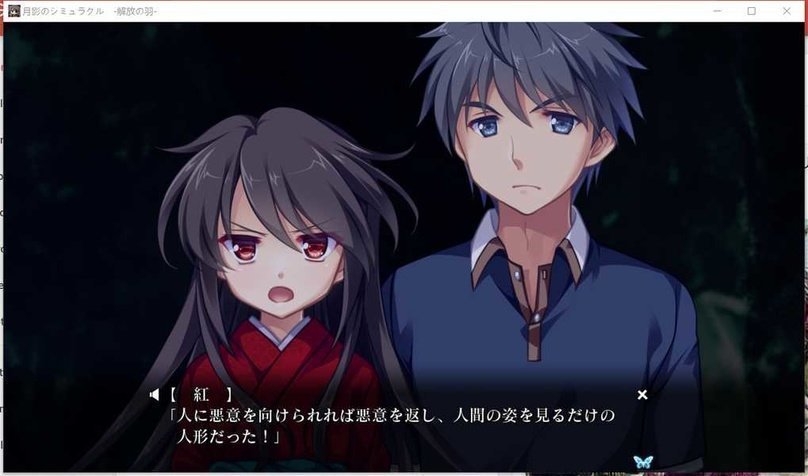
How much do these Japanese scenario writers fucking love “mutual understanding”? I thought it was a detective story, then found out it was supernatural, then it turned into an original-anime-shit-ending. Yeah, I think this ending is shit. Write anything else, but mutual understanding? At least the ending was short enough that I didn’t feel too disgusted. The doll was described as so cunning early on, then suddenly turns all soft—what the hell? This isn’t even as good as Hana no… something Sakura. At least that one was straightforward from the start, and the protagonist’s power foreshadowing got explained. What is this? I can accept not explaining too many loose ends, but this ending—after all that running around, it’s just a few words with the spider god? What the hell!
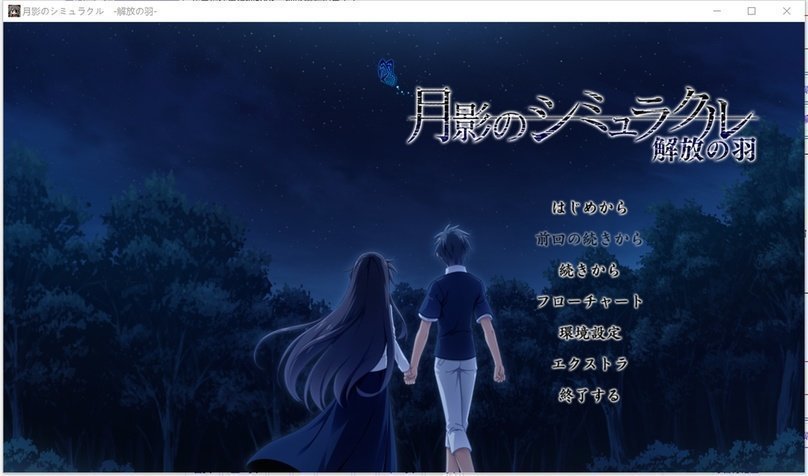
I won’t deny it: Tsukikage no Simulacre has great art, excellent music, a convenient flowchart system, and I won’t deny Kiri Tsuki’s writing is solid. The dialogue isn’t low-quality, fits standard plot development, has a novel-like atmosphere, and the foreshadowing pays off reasonably well. Details mentioned early on get explained later. The most interesting bit is the first choice in the game—about the mistress’s chest—which is actually foreshadowing. The title Kaihou no Hane symbolizes the freedom people desire, bound by the conflict between the Kisaragi family and the spider god. You have to admire how deep the foreshadowing goes… But good writing, atmosphere, and foreshadowing payoff can’t beat that forcibly preached melodramatic development in the end.
So for me personally, this game fails because of that stupid ending.
It also has Kiri Tsuki’s usual flaw: “Except for the main heroine, the other routes are written half-assedly and abandoned.” Whatever, I’m used to it. The main heroine is what matters. That’s not the problem anyway—the problem is that damn ending.
Does Kiri Tsuki think people should understand each other more, so he wrote this ending to show a longing for peace, to advocate building a new bridge through communication?
That preachy attitude is really not good. Not good at all. It reeks of sermonizing and puts people off—like the evening news. No matter how beautifully you put it, the world isn’t that beautiful. It just makes me think you’re full of shit.
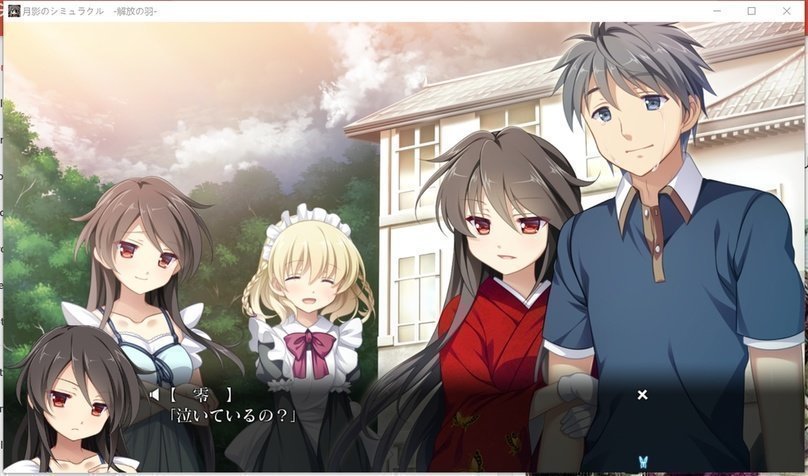
Besides, this is a world of mutual harm. If the world were really that easy to understand, would there still be so many conflicts between the two sides of the strait, between mainland and Hong Kong, between China and Japan, between China and the US, between Muslims and various countries, and between both sides of all those online flame wars?
Mutual understanding is ultimately just a word from a dream. Both sides need to compromise, but in reality nobody compromises—it just sparks bigger conflicts and pushes more radical people to become the final choice.
Think about it: if the world were really that great, if people could all understand each other, would Trump have gotten elected?
Of course I know that’s exactly why works need to repeatedly emphasize this understanding—but you… you can’t just force an ending like that. It backfires. Doesn’t that prove you’re partly responsible?
Comments are hosted on the Chinese main site. This mirror is read-only.