Shugaten! (しゅがてん!) Review
How Many Years Do You Get for Santa Claus Fucking a Loli?
Everyone knows I’m not a moe-otaku.
Even so, I still look up to moe-otaku. Years ago — probably five or six by now — I was dead set on becoming one.
Back then I was still watching anime, and when it comes to the stuff that was big around then, it’s gotta be K-On, right? At the time the Bilibili homepage was still wall-to-wall muscle bro memes, so if you wanted to watch shows you had to go to Acfun. But Acfun’s shitpost section was full of K-On MADs — the Cagayake!GIRLS MADs alone were everywhere, completely out of hand lol… I listened to it so much I could sing it. So sometimes when I saw that crowd spamming “My great Kon!” over the song, I couldn’t help feeling a little like I didn’t get it…
There’s a reason I can’t wrap my head around it — I watched K-On! for real, seriously, but I just couldn’t keep going.
I figure a lot of people feel the same way I do. The plot drags, the pacing crawls, the dialogue is brain-dead, and the forced moe is cranked up way, way too hard…
Yeah, very very serious. It’s about at the level where the dialogue isn’t interesting so they just pad it out with cuteness. That said, the anime isn’t entirely without merit — its bright spots are pretty glaring. Probably the instrument-research drawings; you could call them “meticulous” and not be wrong. And a fair number of the songs are genuinely nice to listen to. That actually has nothing to do with the animation either — it’s more the composer’s credit than anything.
I just can’t stomach the moe-otaku bait that is K-On, even though most people can, BBM for instance.
“Everyone hopping on whatever’s hot” isn’t a mainland-China-only thing—Japan does it too. So K-On blew up, and all the copycats followed, and from then until now, no matter how the times have changed, there’s always been work made for the “moe-otaku,” and it keeps pouring out. Some of it I’ve actually watched, because I thought it was pretty good—but thinking about it, the reason I thought it was good was that the thing itself was interesting (mostly comedy manga), not really anything to do with the “moe” aspect. And as for the works that lead with “selling moe,” after all these years, they’re still essentially no different from K-On back then…
The plot drags and the pacing is slow… though there are still improvements: the dialogue isn’t as brain-dead anymore, and the forced moe pandering isn’t as bad as before.
All things considered, moe-otaku bait did evolve after all, didn’t it?
If we’re talking about the “moe-otaku” shows that have been blowing up lately, the first one that comes to mind has to be Gochuumon wa Usagi Desu ka? — the Japanese title literally means “Is the Order a Rabbit?” In Chinese it usually gets shortened to “Diantu,” which I think is a bit more compact than the Japanese abbreviation “Gochiusa”…
Believe it or not, I’ve never actually finished Gochuumon wa Usagi Desu ka? (Is the Order a Rabbit?). I watched one episode and just couldn’t get into it. It’s evolved a lot compared to K-On back in the day, and a lot of it is easier to swallow now — I’m just lazy these days. This kind of formulaic plot really does nothing for me; I can’t work up any enthusiasm to watch it.
Some people like to call this kind of work a “moe slice-of-life tea-drinking show.” Basically, there’s no real main plot—every day is just the same daily routine, and the routine only has so many variations: tell some jokes, chat a bit, and let each character put on a little skit. If you were to express it in a non-ACG way, it’d be something like a sitcom.
How big Gochuumon wa Usagi Desu ka? actually got, I genuinely have no idea. All I know is there’s a shitload of doujinshi for it, and I guess that’s as good a popularity gauge as any. A few people got famous off drawing those doujinshi — aside from some outfit called XX Momo, the one left is a certain Shiratama, and Shiratama has actually done official key animation work on Gochuumon merch and spinoff stuff, so there’s a bit of “official” flavor mixed in there…
Of course, Shiratama doesn’t draw manga — she does eroge too. Besides a certain Koikari -Love, and Happiness, and More!-, there’s Sugar*Style (しゅがてん!), which just came out this month.
Shugaten! is one of those games where you can tell exactly what you’re getting from the premise alone: a sweets shop in a fictional Nordic-style town, loli girls working there, everyday happenings centered on those girls, plus Shiratama’s art. One look and you already get that “moe-otaku tea-drinking show” vibe, right?
Of course. You’re still too naive.
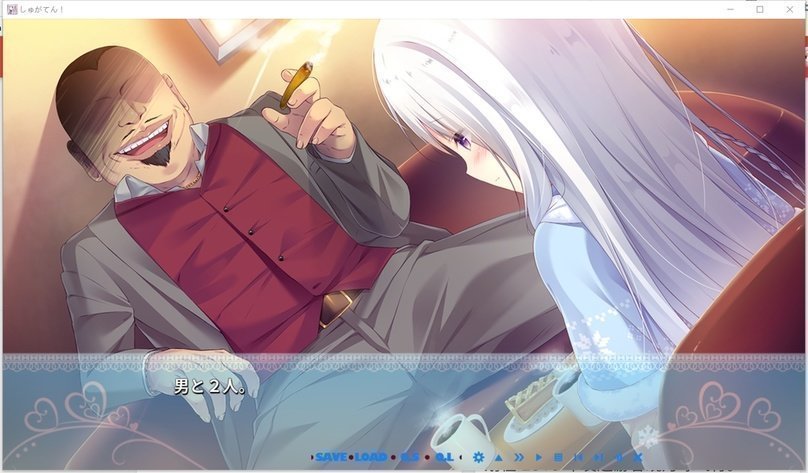
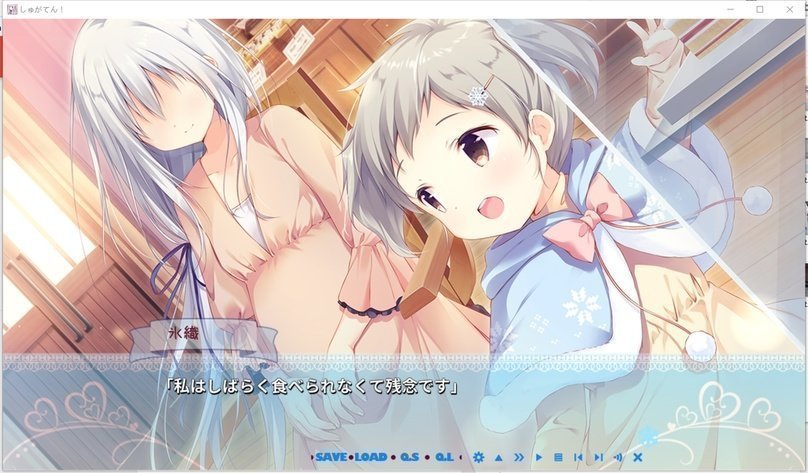
oh, forget about this CG. What I was getting at is that this game does actually have lore — namely the core concept, the “妖精の夜” (Fairy Night).
The game is set in a town where, every year around December 20th, there’s a night called “Fairy Night.” On that night, strange phenomena appear in the sky, and any wish you make comes true. It’s on this “Fairy Night” that the heroines Hiori and Meru pick up a guy… the protagonist, that is.
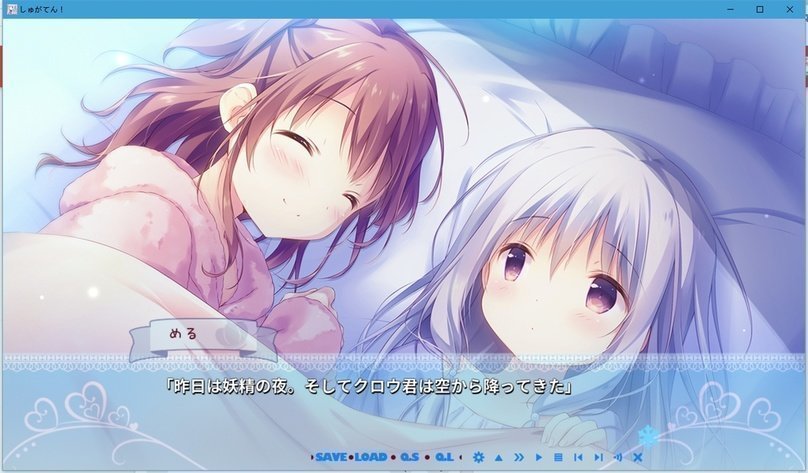
The protagonist says he fell off a house, and when he woke up he’d lost his memory—he just can’t remember who he is no matter what. Hiori and Meru run a tea and sweets shop called Volfork or something like that, but Hiori’s just boarding there; the shop’s owner is Meru’s grandpa. Only problem is the old man’s back is shot and he’s stuck in the hospital. Grandpa was the only one who could make the sweets, so without him the shop can’t open. The protagonist volunteers to give it a try, and it turns out he can whip up ridiculously good sweets just by winging it. Meru’s over the moon—the shop can finally reopen! So the protagonist becomes the cook at this sweets shop.
Funny thing is, the protagonist can’t remember who he is no matter how hard he tries—and he’s not exactly in a hurry to figure it out either. Meru says he was found during the “Fairy Night,” so he’s got to be the reincarnation of a fairy, or maybe a savior sent by the heavens. Hiori won’t buy it for a second. She even gets into arguments with Meru over it, loud ones too, yelling stuff like “There’s no such thing as miracles or fairies in this world!” Naturally, she doesn’t believe he’s some fairy either, and she keeps insisting they need to get him to remember who he is—she even starts investigating on her own.
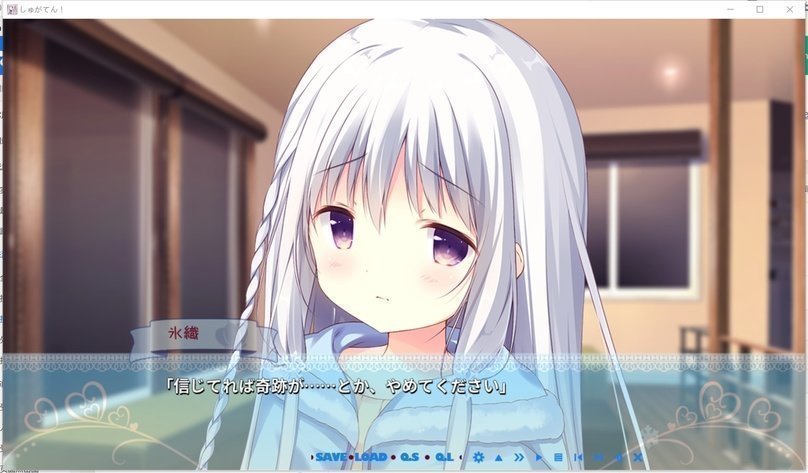
调查有结果了。她从男主摔下来时衣服口袋里翻出一张名片,是某家事务所的,名片上的名字是「山田九郎」。于是氷織打电话过去,问有没有叫「やまだ」(山田)的人。事务所那边说没有啊。氷織又问:你们事务所是干什么的?对方回……「啊,就是帮人忙的啦。」也没细说……
Hiori had no choice but to say she couldn’t find the protagonist’s contact info, and figured the business card might belong to someone else. After thinking it over, there was nothing else to do but let the protagonist stay on here as a cook — and besides, his pastry skills had already earned the approval of Meru’s grandpa. And so the daily life of reopening the shop began.
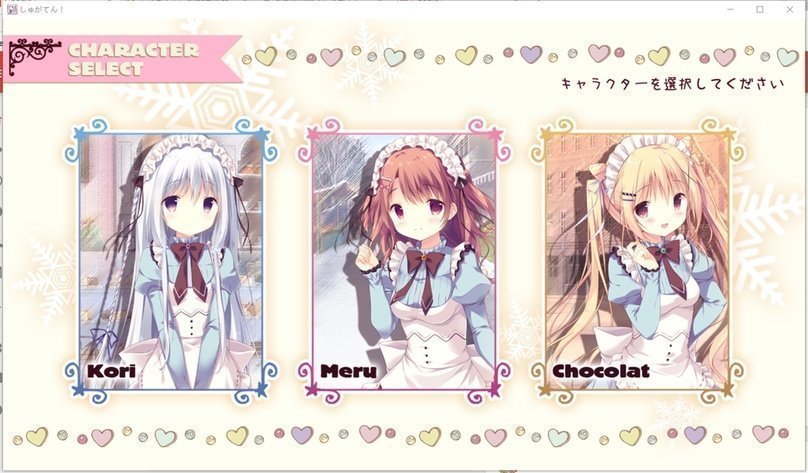
After that, the game lets you pick whose route to pursue: Hiori, Meru, and Chocola, the foreigner who came to town wanting to open another sweets shop… no wait, “ショコラ”. Clear all three routes and the final True End unlocks.
Let’s focus on the game’s only main route. If you go down Hiori’s route, late in the story — I forget the exact reason, but anyway — you notice Hiori is acting suspicious. She goes out in the afternoon and comes back at midnight with mud on her feet. When she returns she’s totally off, and she tells Meru, “Tonight there’s definitely a fairy night, go take a look,” and when you go outside, sure enough, there really is one — the whole sky is full of diamond-like ice crystals dancing around.
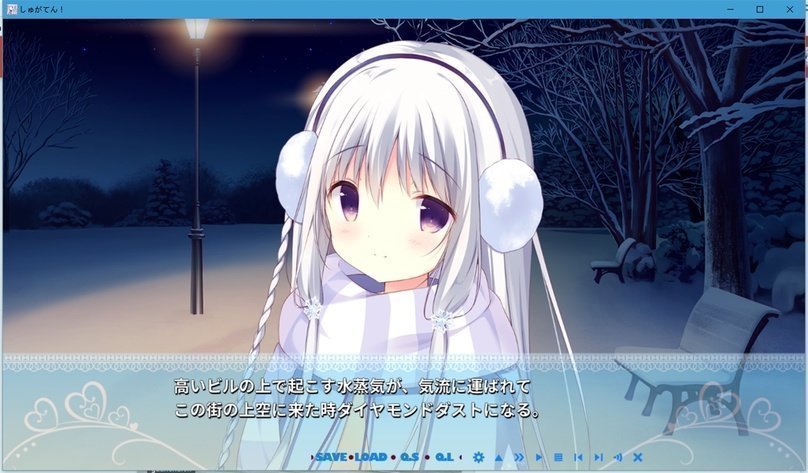
One day the protagonist gets curious and follows Hiori, and finds she’s secretly slipped off to a small building on the outskirts of town. She goes up to the roof and burns snowflakes, giving off a huge amount of steam, and once she’s done she heads home. That night, “Fairy Night” descends — as if Hiori herself had created it.
Under the protagonist’s questioning, Hiori admitted it: the so-called “Fairy Night” was something she herself had created. That’s also why she never believed in any of that “fairies and miracles” stuff from the start — after all, she was the one who’d cooked the whole thing up.
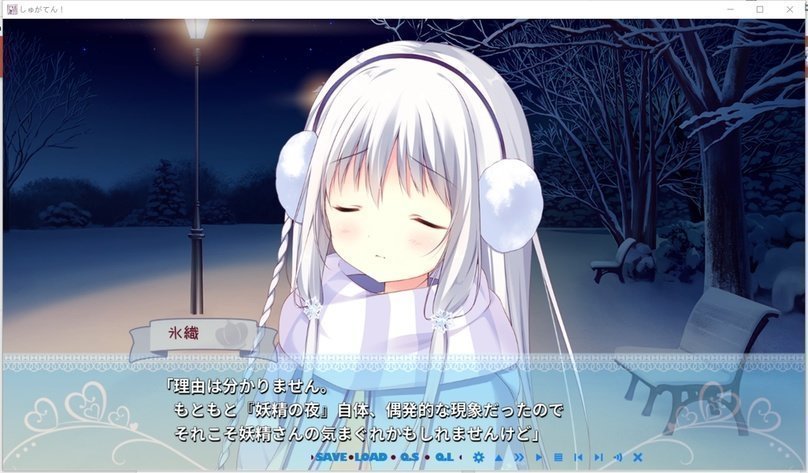
Hiori said this town used to have a phenomenon called “Yousei no Yoru” (Fairy Night) — around the 20th of December each year, ice crystals like diamonds would drift through the night air. Then Hiori’s parents came to this town to invest in a factory. After they built it out in the suburbs… the “Yousei no Yoru” phenomenon disappeared…
Right, it disappeared. The townspeople start getting uneasy, and Hiori’s father is uneasy too—after all, he’s probably the culprit, so he starts all kinds of research. Eventually he figures it out: if you burn snow at some spot in the factory, out past the outskirts, and make steam, then at night the “Fairy Night” comes back.
The game actually plants a seed for this too — the common route goes over the geography and climate of this fictional town, which is basically artificial hail, right?
So to make up for what he’d done, Hiori’s father and Hiori would head out and burn the snow themselves every year, whenever they figured the “Fairy Night” was about to come—manufacturing an artificial “Fairy Night.” They didn’t want the townsfolk to be disappointed. And yet, that’s exactly how they started disappointing themselves: there’s no miracle, no fairy. It’s all fake.
Hiori’s ending, naturally, is a “Fairy Night with no human intervention” descending on her—one that loosens part of the knot in her heart, and she slowly starts to believe in miracles.
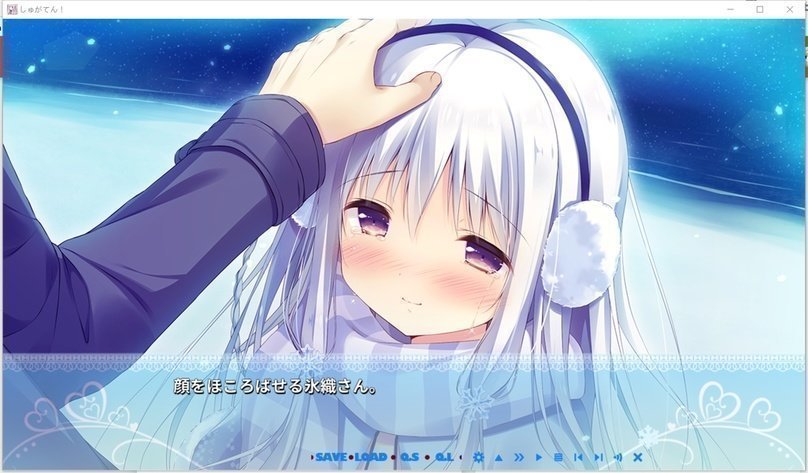
By this point you can probably already piece it together: “Yousei no Yoru” was likely just a hail-crystal phenomenon, or maybe a snowfall, caused by the peculiar geography of that fictional town. The Hikoori family’s factory just happened to mess up the feng shui, so they had to atone with artificial snow.
And so the only mystery this game has left is one thing: who’s the protagonist?
The final True End is short, but it gives you the answer:
游戏里一直有个女人,好像知道男主角的身份,但很多人问她,她都不说。就是那个养狗、天天遛狗的森都あいら——直到最后的 True End 她才开口:男主角叫「山田九郎」。重点在「山田」的读音,整个名字不是常见的「やまだくろうす」,而是「サンタクロース」。
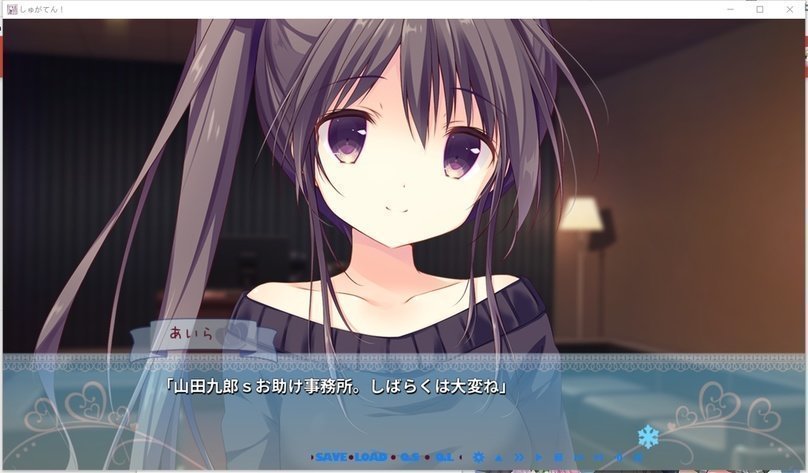
What the hell is “Santa Claus”? You know Santa Claus, right? The protagonist is literally fucking Santa Claus.
In the end, even the female assistant at the agency where the protagonist works says it too: “He (the protagonist) has always been busy running around for other people’s happiness — sometimes he’d be gone for hundreds of years, so I’m used to it. Now he’s lost his memories again, so I’ll just wait until he remembers and then we’ll talk.”
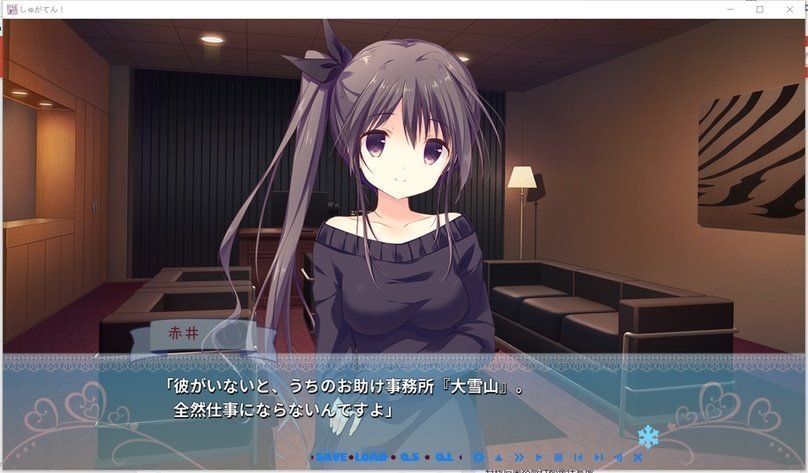
And the game comes to an abrupt halt…
Honestly I don’t think there’s much point explaining further. How did the protagonist even show up? He fell off a roof, lost his memory, and had a business card in his pocket — which was actually his own. It’s just that the pronunciation of “Yamada” isn’t the usual one… And the protagonist’s identity is probably something like a “Santa Claus” figure, a kind of deity who protects other people’s happiness. So he helped out that dessert shop and brought happiness to more people.
Honestly — honestly — aside from Hiori and the way the final True End route ties everything into one story, most of the game doesn’t have much to do with the main plot. That doesn’t mean it’s bad, though. The pacing is exactly what I mentioned earlier… a “moe-otaku tea-sipping show,” just repeated daily conversations and slice-of-life.
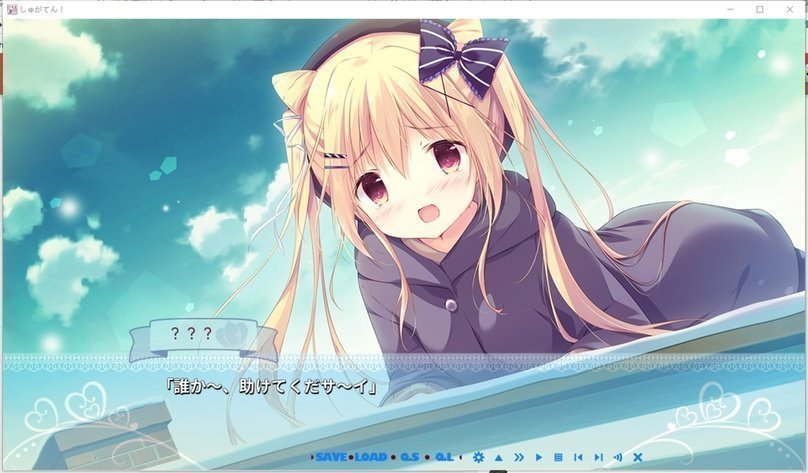
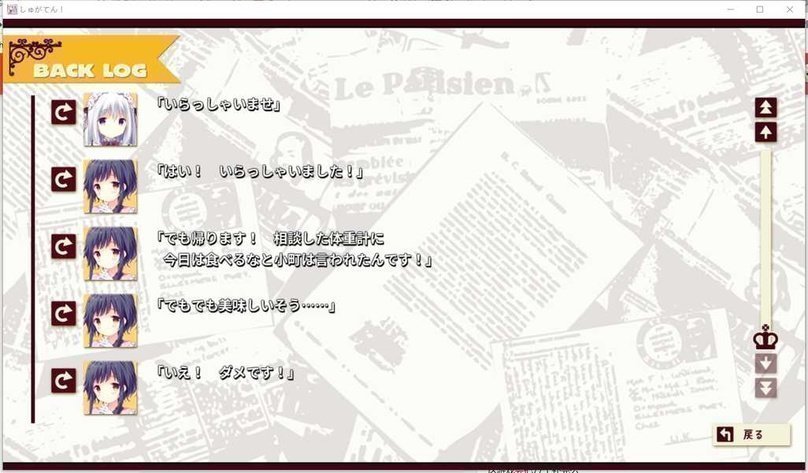
Not that this kind of story is bad — far from it, the characters the game builds are a big success. Hiori’s maturity, Meru’s wide-eyed innocence, Chocola’s sweet, well-behaved nature, and Murazaki Komachi, who shows up at the shop to eat cake every day and then worries about her weight. I actually like Murazaki Komachi best myself, because she feels the most real — that whole “I want sweets but I’m scared of what it’ll do to me” mindset is spot-on. Not that this is because I’m also dieting every single day. It’s not.
The soundtrack is fine, and the OP is genuinely great. The art… well, can you even find fault with the art? On top of that, the game is remarkably wholesome—outside of the HCGs there’s not a single moment of deliberate fanservice. For an 18X eroge it somehow holds itself back. Outside the HCGs all you see is cute girls. Forget the common route—even on the individual routes, right up until the HCG, I literally saw nothing. No ちくび, no パンツ, no まんこ, no ちんぽ, no ぜったいりょういき. Sometimes I honestly have to wonder whether this is even a porn game…
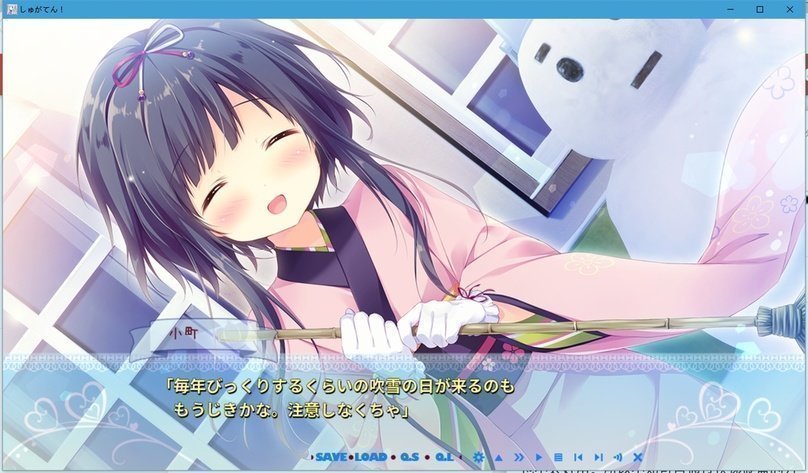
That said, the game does have HCGs, and they’re pretty bold… there’s sound effects (really fake, like rubbing soap), and butt stuff, and SM too… anyway, for someone like me who skips every HCG on sight, I wouldn’t know any of that.
The voice acting in this game blew me away way more than I expected. Mitsu Anzu’s performance is easily one of her best roles — zero dissonance, and none of that forced moe stiffness from her older work. Ishihara Mai didn’t annoy me this time either, and let’s not even get started on Fujisaki Usa. Suzutani Maya was great too. Point is, the CV work makes it genuinely easy to feel how cute these characters are, and it pairs with the art perfectly.
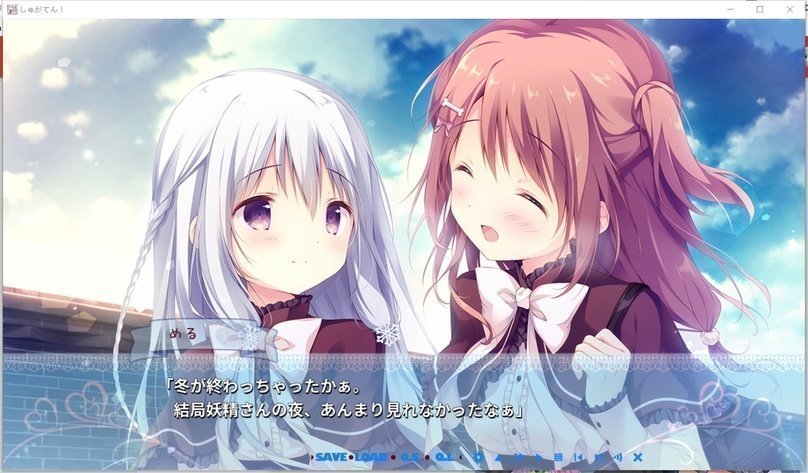
The game’s scenario seems to deliberately hold the pacing back, steering it toward the rhythm of a moe-otaku anime tea-time show. The slice-of-life scenes put the characters front and center, and the foreshadowing only gets cashed in at the key moments. It also massively downplays the protagonist’s presence—strip out the HCGs and you’d probably think it was a yuri game. Honestly, that’s pretty great. If you’re the type who likes cute characters, you’ll probably find it “very comfortable” to play. The whole thing has a consistent style—even the BGM tracks are named things like “It’s Pancakes Today!” and “The Donut Shop on the Corner,” dripping with sweetness, and the art matches perfectly. Real talk, games this cohesive are rare these days.
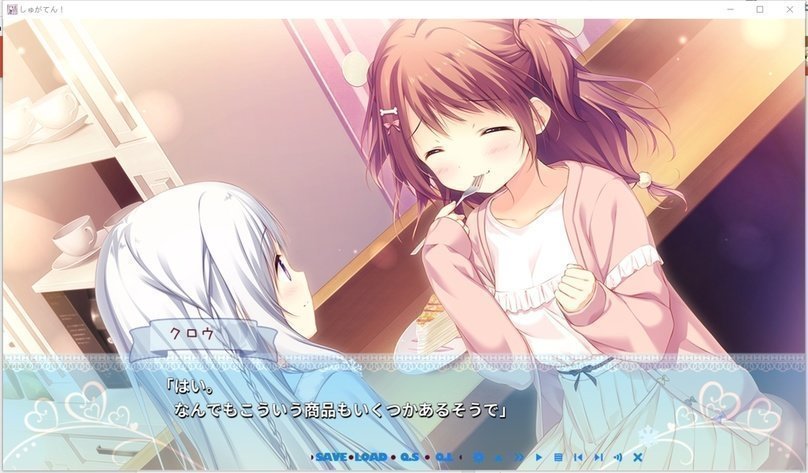
So what’s the verdict on this game? I’d say it’s basically a “no real flaws” title — great art, standout soundtrack, solid music, and the story… well, it doesn’t have many ups and downs, but there is a main plot, and the main plot does explain its foreshadowing. The pacing leans about as close as it gets to the “tea-drinking slice-of-life” that moe-otaku love, so I figure the moe-otaku crowd will all enjoy it. And this game only sells for 7000 yen in Japan, which you could call a conscience of the industry, right?
I’m not a moe-otaku myself. But this game really can open the moe-otaku door for a lot of people.
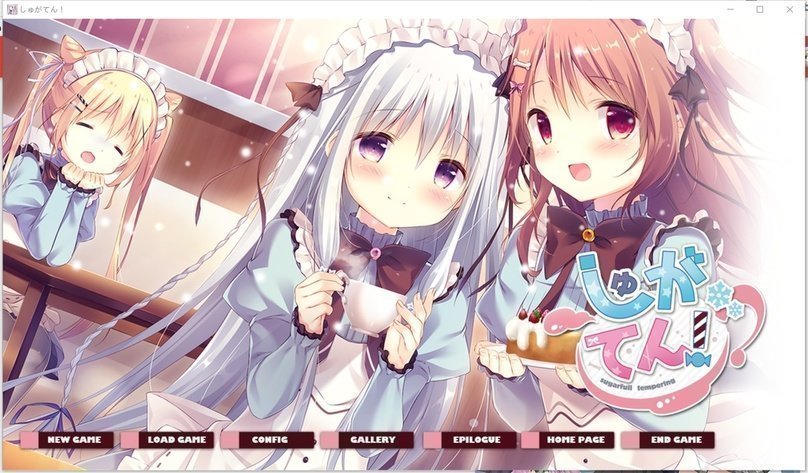
“Welcome to Moe World!”
To all you moe-otaku, to anyone who loves watching moe-otaku shows, and to all you moe-otaku wannabes out there, let me recommend this game: Shugaten! (しゅがてん!)
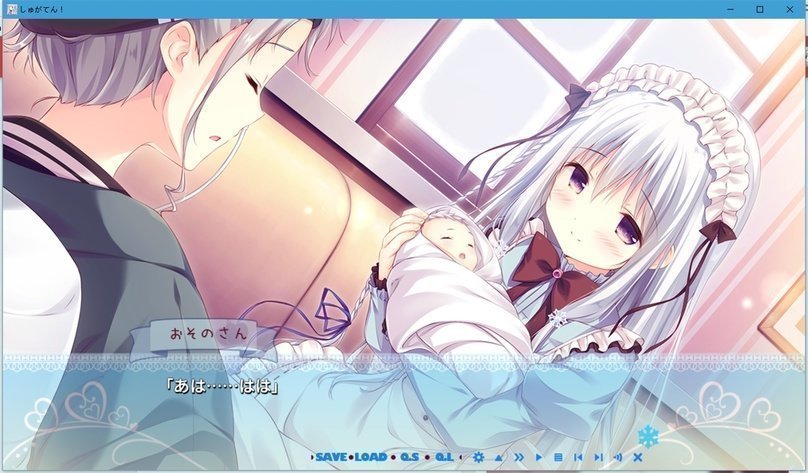
Oh right! One crucial question: since the protagonist’s identity is Santa Claus, how many years does Santa Claus get for fucking a loli?
Comments are hosted on the Chinese main site. This mirror is read-only.