Timepiece Ensemble Review
What Beat Me Wasn't Eating Shit, But the Long Haul of Living With It
This post shouldn’t exist. I originally wanted to make a video to trash this game—I even had the style mapped out, something like AVGN or Ao Changzhang doing lighthearted snark. I had shots and camera angles in my head and everything.
But then I thought about it and couldn’t decide whether to make my YouTube debut, so I shelved the video. Plus it’s a hassle. Typing is easier.
The game I’m trashing today is called “Timepiece Ensemble.” And honestly, I didn’t play it because of Kiritani Hana, nor because I had a good impression of the studio Glace from before—I played it because of the artist, Sesenaau.
Sesenaau is a female artist, and her characters always have this element of feminine “cuteness” that male artists just can’t capture. I’ve always thought that’s a big advantage of female artists: male artists can only draw girls that are super erotic, while female artists can draw cuteness on a spiritual level. It’s not that male artists can’t draw cute things—it’s just that it always feels fake, like it has no soul.
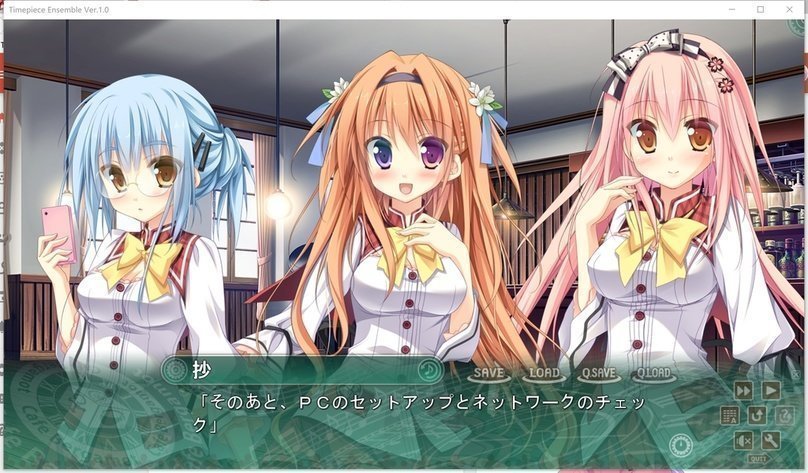
So I saw this game called Timepiece Ensemble, and it was announced it’d be ported to PSV soon, so I skimmed the intro. It’s simple: the protagonist is preparing for the school culture festival and stumbles upon a mysterious shop. The shopkeeper says she can sell him “time”—the ability to rewind time. He doesn’t know what use that ability has, but that’s how the story begins.
“Let’s fall in love at the culture festival!” is the game’s tagline. So what would you expect? A normal moe romance, right? Time rewinding might be a foreshadowing, but the game probably wouldn’t be too bound by that ability—maybe there’d even be some crazy twist, right?
So I booted up the game and was dumbfounded: there’s no title screen. It just starts running immediately…
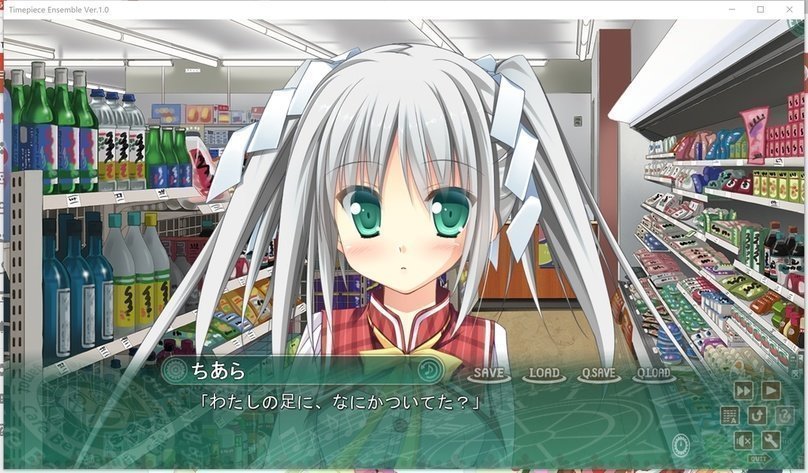
Okay, maybe there’d be one later, but I finished the game and deleted it without ever seeing a title screen. I checked Japanese reviews—yep, there really isn’t one…
What the hell kind of game doesn’t even have a main menu?! Do they think clicking “Game Start” is too low-class? Then how do you look at CGs and recollection? You know how? There’s a little circle in the top right corner of the game at all times—click it and you can view the recollection. I was floored by this convenient design. I don’t know if they got to the disc-pressing stage and realized they forgot the main menu, so they rushed it out. So for this game, clicking once starts it directly—don’t panic, don’t rush, it’s just like that.
Then the game proper begins. The protagonist is in the preparation phase for the culture festival, running around with his harem of girls getting things ready. He accidentally wanders into a clock shop. The shopkeeper is a talking cat, and next to it is a little loli called “Kurotsuba.” The loli says she sells “time” and can sell the protagonist time to rewind.
The protagonist says he doesn’t need it. The loli gets anxious and says she’s having a big sale and gives him one day for free. He thinks she’s crazy and walks away.
Then a miracle happens: the next day, he realizes yesterday happened again… meaning he got an extra day.
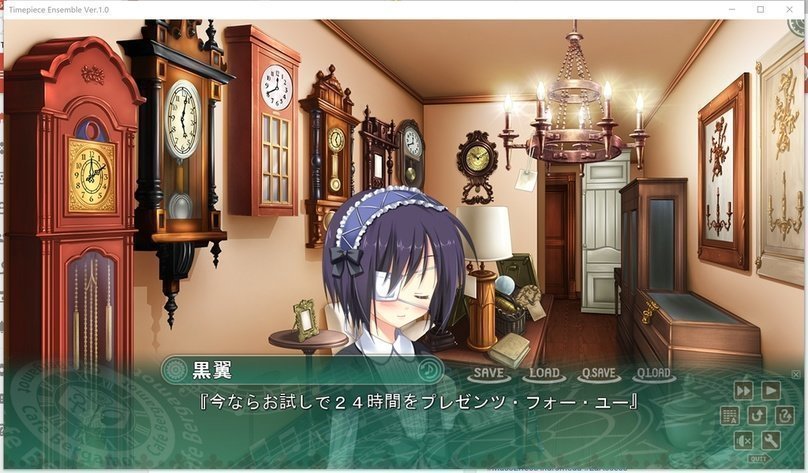
The protagonist believes it now—that loli really can control time. But what good does that do? Time rewinding is a real hassle, especially when he was exhausted preparing for the culture festival yesterday, and now he wakes up and has to do it all over again. That’s brutal!
So the protagonist just keeps going. The clock shop loli keeps appearing and trying to sell him time, but he ignores her. As the culture festival progresses, you can choose a route.
By the way, this game has a plot lock: after clearing Tsukiyono Chiara, Yanagibashi Saori, Yushima Towako, and the little sister Torigoe Shou, you can pursue the true heroine, Kuramae Nanami. Also, there’s a hidden heroine, Kuramae Konami—I’ll get to her later.
Now let’s criticize this stupid plot lock. First, the point of a plot lock is that the branches are worth playing, or the main story needs the branches for better understanding. This game is neither. Its other routes are not only boring but stupid, and also in-fucking-credibly long.
How long? If you turn on Skip from the first HCG of a route (i.e., after the confession succeeds and there’s nothing much left), it takes about 15 minutes to reach the end. And the common route itself is also super long—I won’t even say how long Skip takes because I forced myself to read it all.
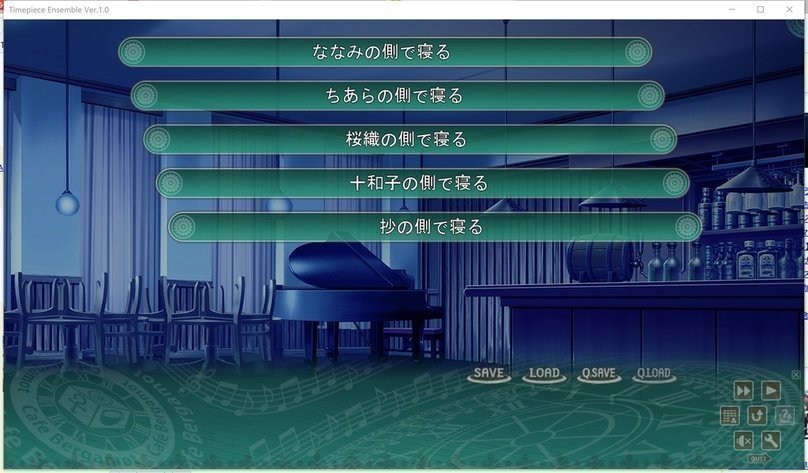
Why skip? Simple: the story isn’t readable. The game has pitifully few CGs, not much BGM, and I never even saw an OP. The entire route is the protagonist and his harem endlessly tidying up, moving desks, running network cables, and configuring servers (DNS servers, no less), because they’re setting up a school internet cafe for the culture festival (hell if I know why). Then when they get tired, they go shopping at the supermarket, and buying a damn thing drags on for half an hour. Japanese players say playing this game for over 10 minutes gets you attacked by the “sandman,” and I totally agree—this game’s sleep-inducing effect is top-notch. If you seriously read the dialogue for over half an hour, you’ll feel it’s torture. I swear watching the Spring Festival Gala and ripping on the news would be more interesting. And the torture is super long. I played Tsukiyono Chiara’s route for Kiritani Hana’s sake and got blown away…
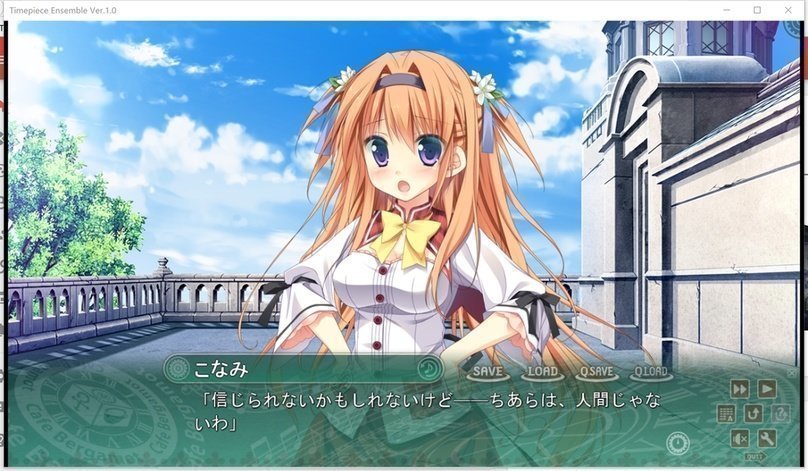
Why blown away? In the second half, the game suddenly tells me that this character, Tsukiyono Chiara, isn’t human.
It says the girl is a doll made by a shrine, and that this doll has a lifespan—after Christmas (which I’d forgotten the game takes place just before), she’ll disappear.
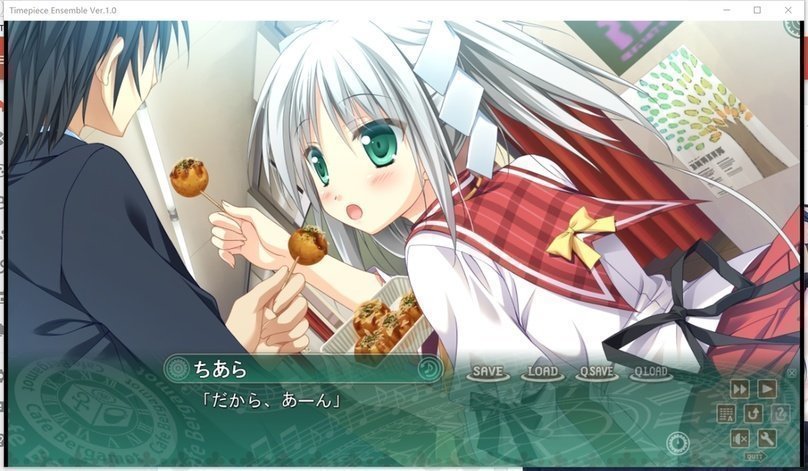
So the plot naturally goes into the cliché of buying time from the loli, and then somehow time is sufficient and the protagonist gets a happy ending. I was left completely baffled.
After that, I really couldn’t bring myself to play the other routes. Even fast-forwarding and skipping, the boredom of the dialogue was torture. Three routes, each taking 25 minutes to skip, means you’d have to sit there skipping for over an hour. I truly admire the writer—writing bland dialogue isn’t scary, writing a garbage story isn’t scary, but writing such a… long~~~~~ garbage story is terrifying. There are so many better things to do with your precious time: jerking off, eating pizza, carpooling for hot pot, screaming “this is awesome!” on social media, shitposting with your favorite hentai manga online. Why waste your precious time writing this stuff for others to read? Do you enjoy mutual suffering that much?!!!!
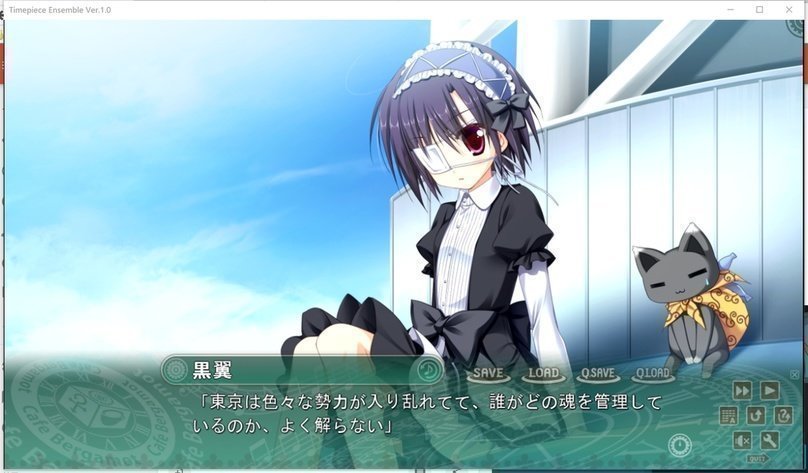
Of course, in its long, stinking, unreadable routes, the game does reveal a few things—some setting details.
- Tsukiyono Chiara isn’t human; she’s a doll created by a certain shrine.
- The little sister, Torigoe Shou, is a magician who can create an independent world space where only she and her brother exist.
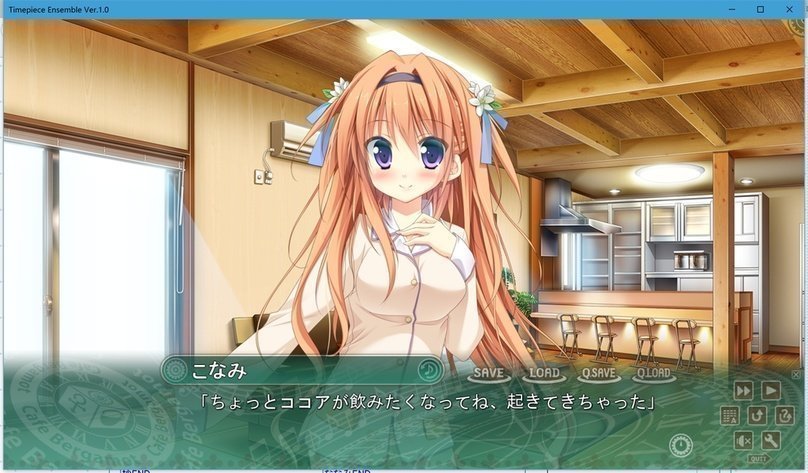
- The protagonist’s childhood friend, Kuramae Nanami, has another personality. In the morning, or when Nanami is unconscious, someone named Konami comes out. The difference is the eye color; they seem to share one body.
- The protagonist seems very familiar with this Kuramae Konami, and they seem like lovers, but why Konami appears, who Konami is—the game never says. The protagonist just talks to her naturally, and nothing else is explained.
So after you endure the common route and the other routes, you finally unlock the final Kuramae Nanami route. Of course, the lead-up to this route is still long—yes, long and stinking—and when the story reaches a certain point, Nanami finally reveals she once had a twin sister named Kuramae Konami, who died in a car accident.
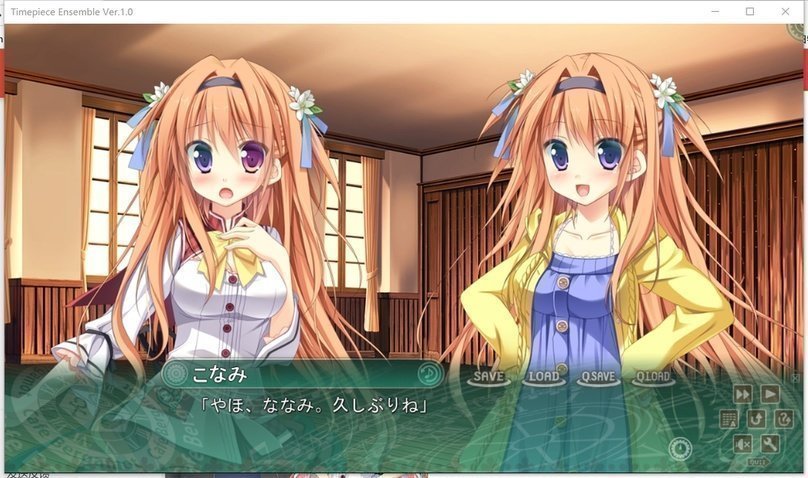
You know what! Only now do I learn that Kuramae Konami is Nanami’s sister, and that she died in a car accident. Before this, I always thought she was some split personality!
As a dead soul, Konami resides in her sister’s body. Seeing the protagonist fall in love with her sister, she decides to move on to the afterlife—but then discovers her life is tied to her sister’s. If she moves on, her sister dies too. If she doesn’t, her sister remains haunted by the soul and can’t be freed. Then the loli Kurotsuba appears and says she knows how to solve this: just think about why the sisters’ lives are entangled, remember the reason and the events, and it’ll be easy.
After that, Kurotsuba starts appearing more and more, trying to awaken some memory in the protagonist—like why did Kuramae Konami die? Why did she run into the street and get hit by a car? What was the protagonist doing on the day Konami died?
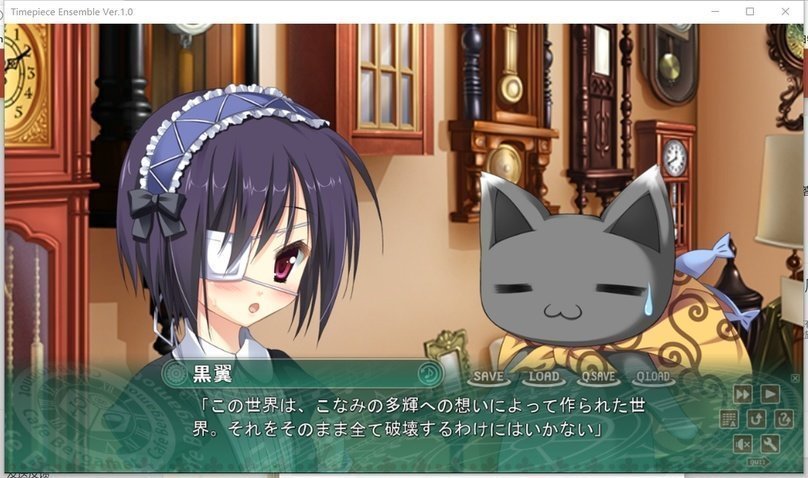
But the protagonist just can’t remember, and then the story drags on for another round—a particularly long one. He keeps feeling like he’s about to remember but can’t, until the very end, when the writer apparently ran out of stalling material and the protagonist suddenly remembers everything.
Kuramae Konami and Kuramae Nanami are twin sisters. They played with the protagonist as kids. Both liked him. Then one day, the protagonist’s parents were going to change jobs and move, so he’d have to transfer schools. The sisters didn’t want him to move, so they somehow heard about a shrine in town that would grant any wish made through certain means.
So Konami went to the shrine and wished, “No matter what, the protagonist must not transfer; he must stay here.” Since she was young, wishes require a price, and she easily said she’d pay with her life if necessary. Well, not long after, she got hit by a car and died—but her soul’s grudge was so strong it possessed her sister. The shrine accepted the life and decided to grant the wish. But the wish was hard to fulfill: the transfer was already set. So the shrine twisted the entire town and surrounding space—meaning within this space, the protagonist is in a “didn’t transfer” state, while outside, he’d already transferred away.
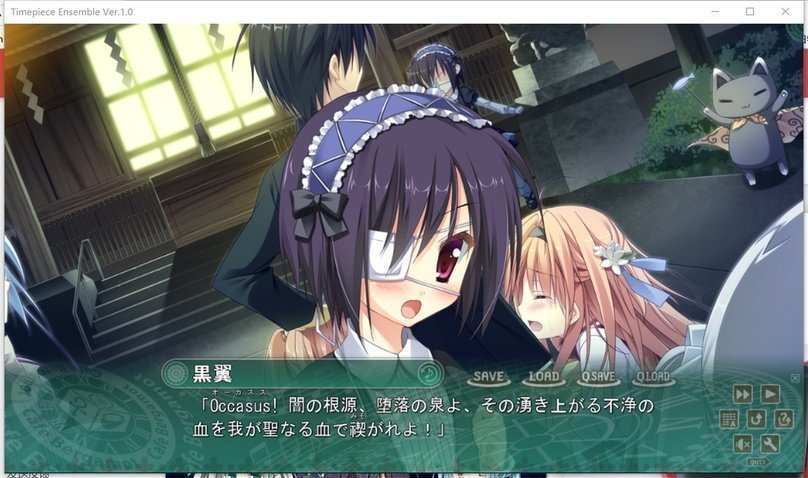
So the town is a twisted space isolated from the outside, which naturally causes weird things: the shrine can create dolls like Tsukiyono Chiara, the protagonist’s sister can use magic, the loli Kurotsuba can easily control time here, etc. Because this is a magical space.
Kurotsuba came here, observed the town’s abnormal state, realized it was an isolated twisted space, and came to correct it back to reality. What’s reality? The protagonist had already transferred, Konami and Nanami stayed, and the three probably wouldn’t even know each other. Kurotsuba also said she could fix the distortion, but Konami wouldn’t come back to life. The protagonist objects: “How can that be? She died for nothing!”
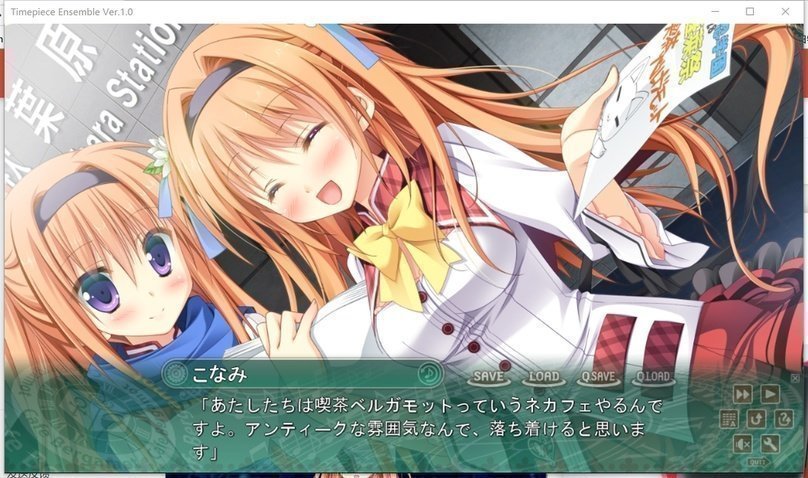
After more bickering, Kurotsuba compromises: she’ll rewind time to when the protagonist and the sisters didn’t know each other, and if fate allows, they’ll meet again. At least everyone lives, and there’s no wish or car accident.
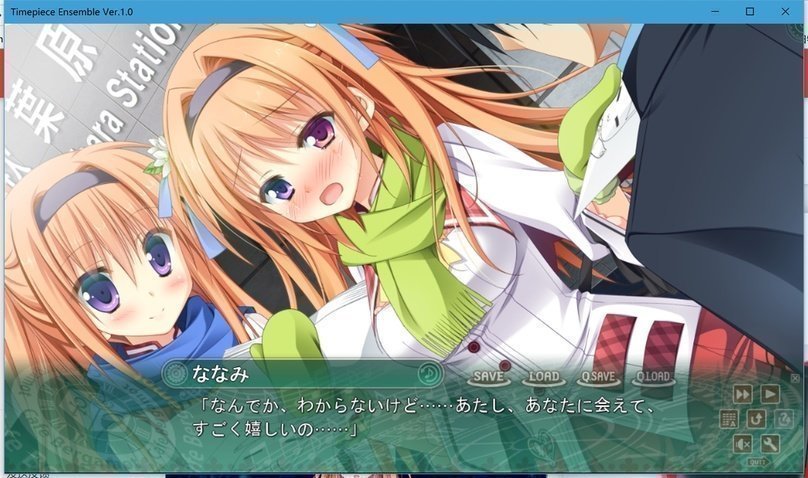
The result: time rewinds, the protagonist returns to the town years later and meets the sisters, and they cry.
Then the game just ends!
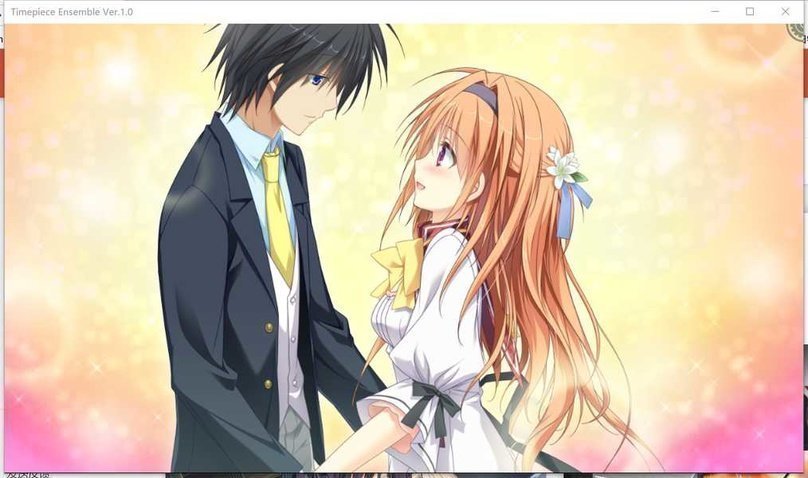
Ends!
After all that bullshit, so long and stinking, just when a few more words are needed, it cuts off and ends!!
This game is basically similar to Steins;Gate: rewinding time to a worldline where the two don’t know each other to save the heroine’s life, and then they meet again by fate. That’s about it. So why the hell is this game written so disgustingly?
Whose fault is it? I think 80% the writer’s.
Because the game is too fucking long and stinking, the common route is worthless, the main plot starts way too late, and just when Konami’s wish is revealed, the game free-falls for about 20 minutes and then ends.
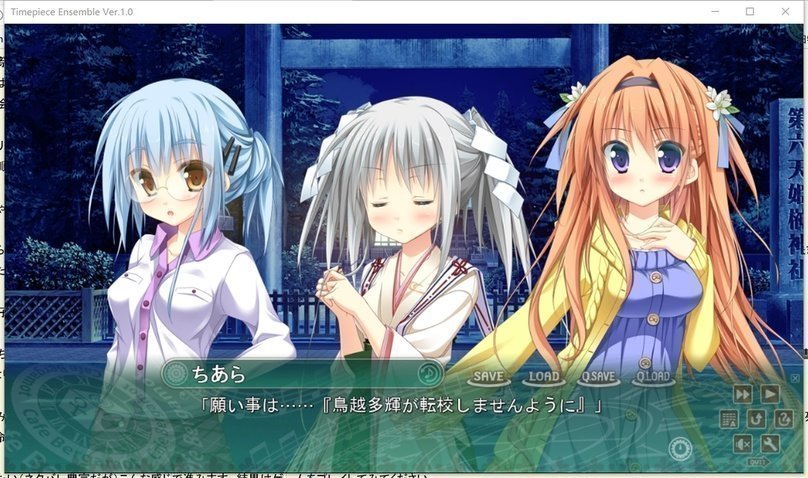
What does that mean? It means the game’s “proper” content is only about 20 minutes; the rest is mostly optional. Even though the routes have some hints about the setting—like the sister being a magician who can create spaces, the little sister voiced by Kiritani Hana being a doll, the mysterious shrine in town that grants all wishes—so what? At best it’s just a glancing blow. The whole story is a mess, and only at the very end does the writer seem to remember to explain things, so they hastily do, and the game stops abruptly.
So I absolutely do not recommend playing this game, unless you’ve been having trouble sleeping. I think 10 minutes is enough to put you to sleep; even with skip, I doubt you’ll last 10 minutes. The overall story, if you strip away the foot-binding-length crap, is actually okay—not unacceptable—but the crap ruins the game.
Sometimes I think people call a game a “landmine” mostly because its setting and development are too stupid, or it’s full of malice toward the player, leaving you clueless after playing, not knowing what it was trying to say.
However, Timepiece Ensemble isn’t a landmine in terms of plot. If you just look at the overall story, you’d think it’s okay. But I find it more disgusting than a landmine.
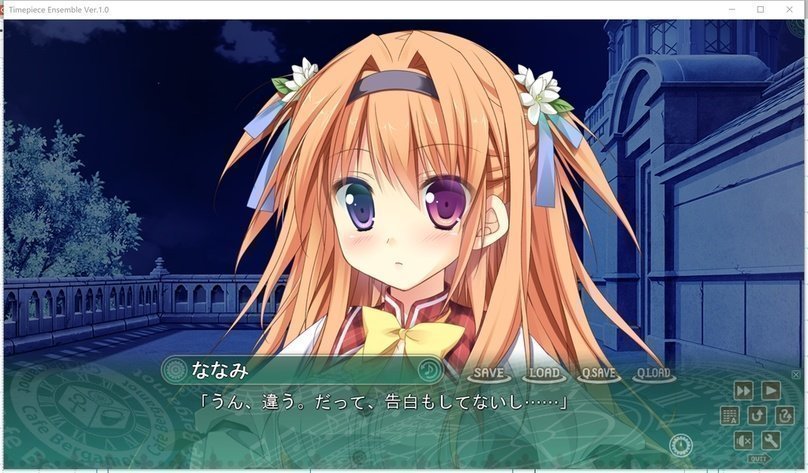
You know, even with a stupid plot, a galgame can still be interesting—at least yelling at it is fun. But this game, I can’t even figure out how to yell at it. It’s a pile of shit, sure, but it doesn’t force you to eat it like some landmine games; it just slowly dangles in front of you.
But then again, compared to “eating shit,” being forced to spend a long time with a pile of shit seems worse. After all, short pain is better than long pain.
Comments are hosted on the Chinese main site. This mirror is read-only.