Suisou Ginkka no Istoria (水葬銀貨のイストリア) Review
水葬銀貨のイストリア
I’ve made no secret of how much I love Hihou no Mahoutsukai (紙の上の魔法使い), or of how much I praise its writer, Rukuru. Same goes for Unmei Yohou wo Oshirase Shimasu, the game Rukuru put out before it. What makes this writer so strong is that he genuinely knows how to tell a story — the pacing, the dialogue, the word choice and the overall style all give off this elegant, gripping feel. Other visual novel writers, by comparison, read like high schoolers in the middle of a chuuni phase. That gap hits you hard: play a Rukuru game, then go pick up some mainstream VN, and the latter’s dialogue feels stupid and half-witted next to it, while the former actually reads like a story, one with images in it. I guess that’s what you’d call raw skill in a scenario writer.
After Hihou no Mahoutsukai, the studio Ugui Sugura went quiet for way too long. A little over a year before, they tweeted that yes, they were properly working on a new game; then at the end of 2016 Suisou Ginkka no Istoria got announced, an early 2017 trial came out, and in March it launched with zero delays. Happiness arrived too fast, and I started playing the moment I got it. (I’d love to buy a legit copy, but I have no idea if standard forwarding will get me a friendly invitation from customs — any veterans with a reliable route, please enlighten me.)
Same lineup as Hihou no Mahoutsukai: scenario by Rukuru, art by Kiriya, music by Meto, coloring by Hagino Kokon. Same formula, same flavor… or so it should be. But after I fought through this thing in fits and starts over a week, saying that out loud doesn’t feel quite right for this game.
No question, Suisou Ginkka no Istoria walks the same tragic, dark path as its predecessor, ending in a kind of release through personal growth and redemption. It’s just that, looking back after finishing it, there’s one thing I should say up front:
If you’re the kind of newcomer who can’t stomach tragedy, the sort who thinks the darkest turns in Hihou no Mahoutsukai were already your limit — do not touch this game. Do not touch Suisou Ginkka no Istoria.
Why? Because most of Suisou Ginkka no Istoria is just that heavy.
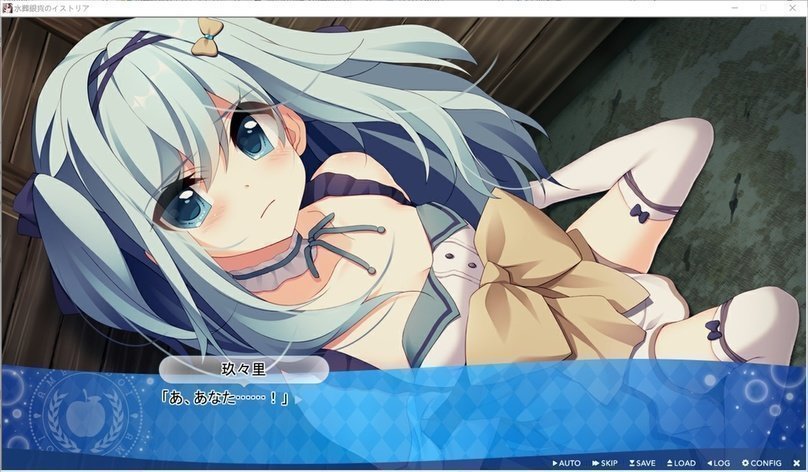
Suisou Ginkka no Istoria takes place on a small island cut off from the mainland. The island has a legend: once, a mermaid princess existed — a noble being above humans, whose tears could heal any wound. Greedy humans found out and begged the mermaid princess to cry for them, to heal them. But every time she shed a tear, her own lifespan shortened; healing others cost her years of her own life. So the mermaid princess refused to cry. The greedy humans flew into a rage, imprisoned her, and used every method they had to torture tears out of her, then used those tears for themselves. In the end the mermaid princess’s life drained away in despair, and as she died she cursed everyone on the island: no one would be able to cry anymore. No matter how sad, no tears would come. Legend said the only ones who could still cry were those who inherited the mermaid princess’s role — but nobody had ever seen one. To mourn her, remember her, and atone, the islanders throw apples called “Suisou Ginkka” into the sea, praying for the mermaid princess’s forgiveness, for release from the “cannot cry” curse, and for the power of her tears once more.
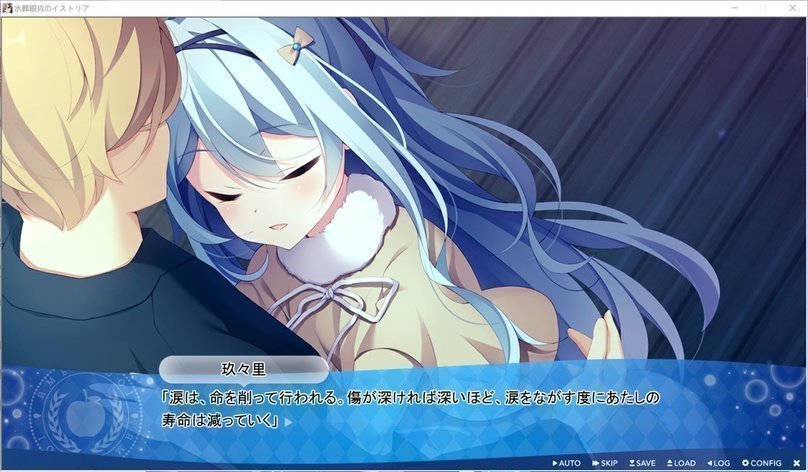
So the title: Suisou Ginkka no Istoria. “Istoria” comes from the Greek ιστορία — myth, legend, story. The title’s meaning is obvious enough: “The Legend of Suisou Ginkka,” the story of what happened around the Suisou Ginkka.
The setup the game opens with is baffling. Protagonist Kayagasaki Eishi has a little sister, Kayagasaki Yuuzakura — but also another little sister, Susugaya Sayo. Sayo, the game tells you from the start, isn’t his real sister; more like a stepsister, since they don’t even share a surname. The protagonist doesn’t seem to acknowledge Sayo as his sister, but Sayo keeps insisting she’s his little sister, and he just puts up with it. Then it gets even more absurd: at school the protagonist acts like he wants nothing to do with anyone, but after class he goes to find a white-haired woman named Yatsukuri Momiji, saying he’s her servant, her underling, working to earn her money. Sayo’s working for Momiji too, he says. Momiji once helped him and Sayo, paid off a pile of debt — basically lent them money — so he has to work to repay it. But what’s the work? What does he actually do? Not a word.
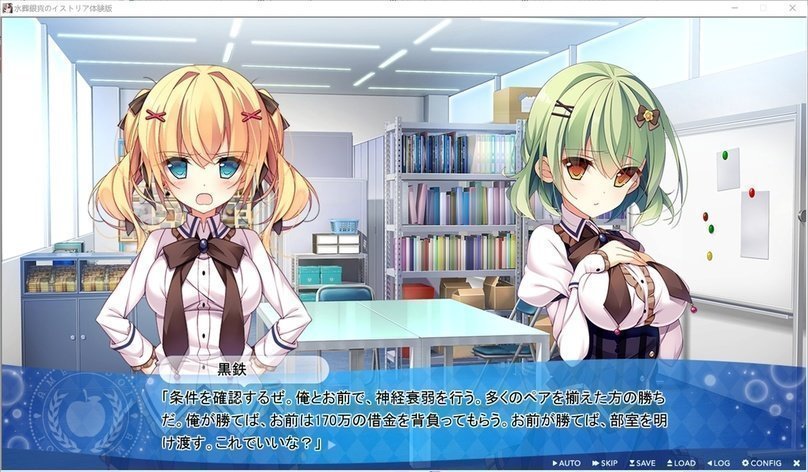
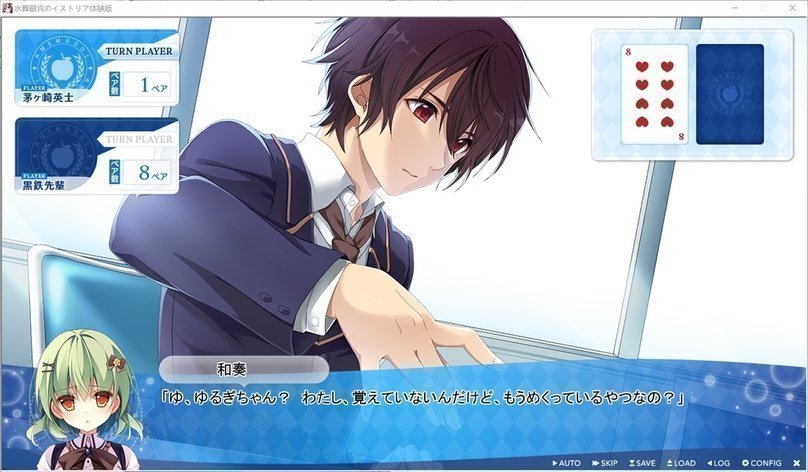
Later the protagonist meets some underclassmen at school — Shindou Wakana, Ko-Fudou Yurugi, that bunch. They’re trying to start a club, get bullied by the school’s delinquents, and the delinquents demand a gambling game of “concentration” (nerve weakness); beat them and they’ll hand over the clubroom they’ve taken.
The two girls lose badly at first, because the delinquents cheat. Finally the protagonist can’t watch anymore and steps in, and only then do the girls realize he’s a gambling monster. Not just iron nerves — strong enough to know the other side is cheating and still control the game and win clean.
He wins them the clubroom, and Ko-Fudou Yurugi looks up to him, because she’s always idolized “heroes of justice.” But the protagonist tells her he’s no hero, don’t worship him. Yurugi thinks he’s being modest. He isn’t.
Later Yurugi learns the protagonist gambles because of his stepsister, Susugaya Sayo. Sayo’s father died in the island’s casino — supposedly to pay for Sayo’s treatment, he went to win money, lost everything, including his life. The one who took it all was the casino’s undefeated champion, C.A. That C.A. won the money Sayo’s father had set aside for her treatment, gambled his life against him, and killed him with his own hands.
So C.A. is the man who killed Sayo’s father. Because of that, the protagonist — to pay for treatment for Sayo, who had nothing — fell deep into debt to Momiji, and now has to work at that casino. Sayo works there too, as a dealer, watching C.A. appear in front of her again and again, helpless, unable to take revenge.
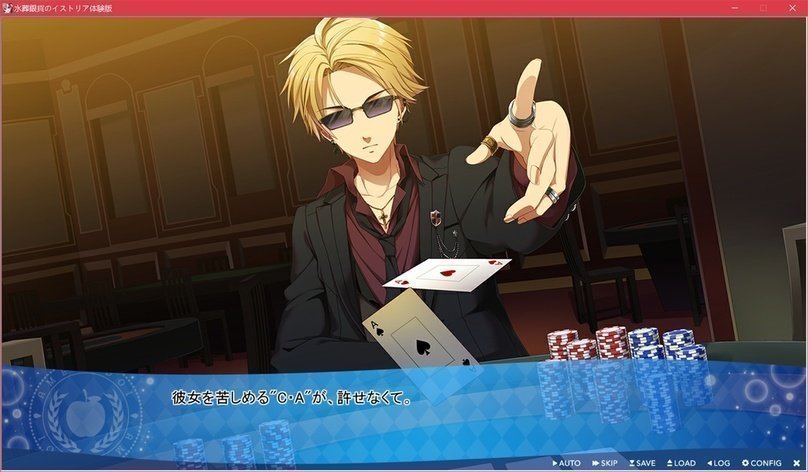
Ko-Fudou Yurugi can’t stand it. She goes to the protagonist: if he’s that good at gambling, why not beat C.A. at the casino and avenge Sayo?
The protagonist just smiles and says nothing. Says he doesn’t have what it takes.
Yurugi isn’t having it. She decides to go to that casino herself, as a ally of justice, and avenge Sayo.
So one night Yurugi shows up at the casino, challenges C.A. directly, and gets crushed, as expected.
After the crushing, C.A. comes to find Yurugi and tells her not to come back to the casino, that she can’t beat him. Yurugi, confused and angry, asks if he’s taunting her. C.A. takes off his glasses and reveals the face under the disguise. C.A. is the protagonist. Kayagasaki Eishi.
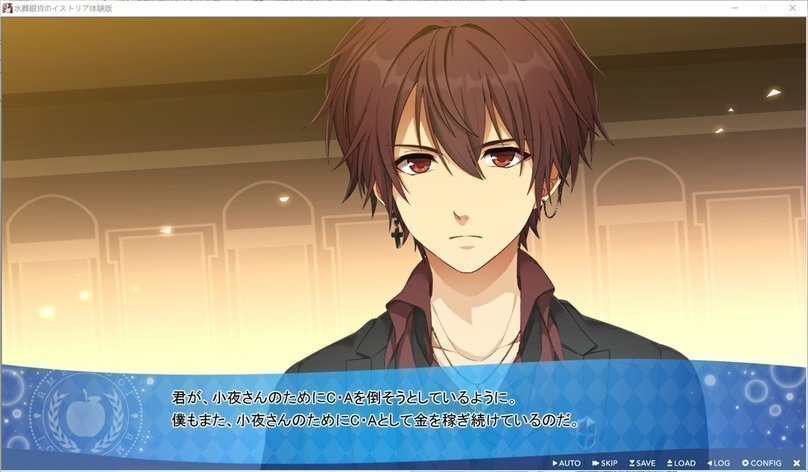
“You’re C.A.?” The protagonist nods. “You killed Sayo’s father?” He nods again. “That’s why I’m a man carrying a heavy sin. I can’t be any hero of justice. Don’t come here. You can’t win here. Stay away from the casino, as far as you can.”
So the protagonist goes to school by day and plays C.A. by night, winning money at the casino to pay off his debt to Momiji. Momiji once lent him a huge sum to treat Sayo, and the price of that was becoming her slave — only able to follow her orders, winning money at the casino.
So why did the protagonist kill Sayo’s father? Why did Sayo need treatment? From chapter three the game goes dark and stays dark, dragging along a long, long flashback.
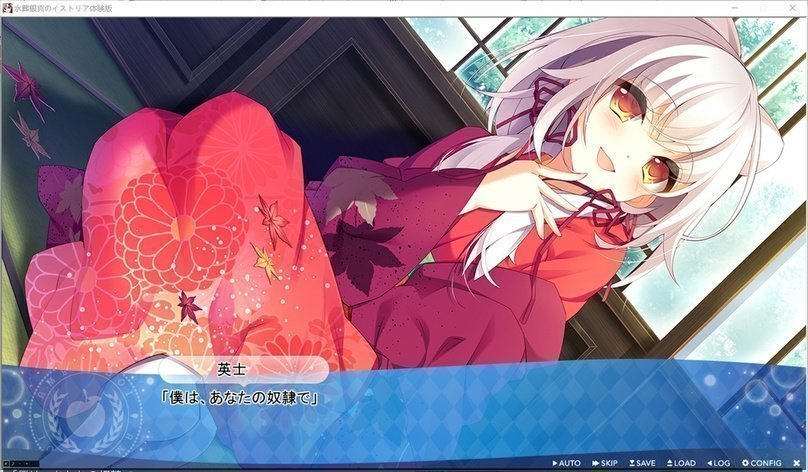
It goes back to an old child kidnapping case: the Birdcage Incident.
The protagonist Kayagasaki Eishi’s real sister is Kayagasaki Yuuzakura. They have a father whose whereabouts are unknown. Susugaya Sayo is not his sister. Long ago, Yuuzakura and Sayo were playmates, always together. One day the protagonist’s father appeared, abducted Sayo, and also abducted Yuuzakura, who was playing with her. The father, Kayagasaki Seiji, dragged the protagonist along too, and locked the protagonist, his sister Yuuzakura, and another family’s daughter, Sayo, up together.
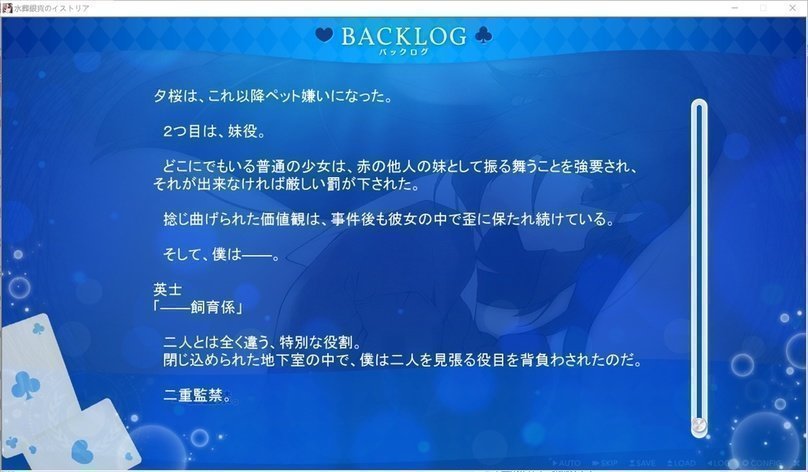
The kidnapper was his own father. The protagonist couldn’t understand it.
His father explained: he’d kidnapped them so they could play a game. A family game for three.
The game had three roles: keeper, doll, pet.
The doll had to treat the keeper as her “big brother,” had to call him “big brother” nonstop, had to address him as “big brother.” Getting it wrong was a violation. The pet couldn’t speak human words, only make animal sounds; speaking human words was a violation if caught. The keeper had to discipline the doll and the pet and was responsible for feeding them. If anyone broke the rules, the one who got beaten was always the keeper.
After the assignments: the protagonist became the keeper, Sayo became the doll, and his real sister Yuuzakura became the pet.
In the long months of imprisonment, the protagonist took countless beatings, his sister as the pet was tormented until she couldn’t move, and Sayo, watching the protagonist get beaten, was in agony, able only to call him big brother. Over time all three children’s minds were scarred. Eventually the protagonist was found and rescued by Momiji’s servant, the maid Kanmine Akari, and his father ran off, whereabouts unknown.
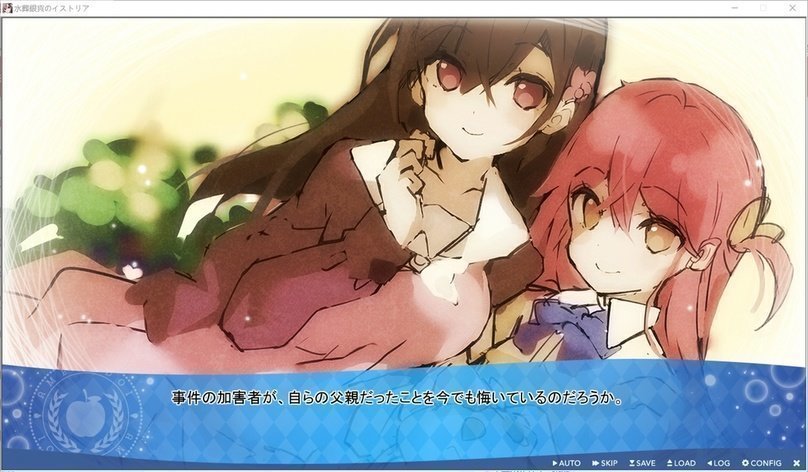
All three rescued children were deeply damaged. The protagonist’s and his sister’s mother died of grief and depression after losing her children so long. The protagonist’s heart was left extremely fragile; he believes forever that he’s guilty — after all, the criminal was his father, and he was the keeper. His sister Yuuzakura, unable to speak for so long while playing the pet, became wildly energetic once free, chattering nonstop, sometimes seeming half-crazy. And the one hurt worst was Sayo. Her mind was destroyed; she blindly believes the protagonist is her real big brother, and goes mad without him.
Back home, Susugaya Sayo kept calling her big brother’s name — calling for the protagonist. He wasn’t her real brother, but she obsessively believed she had a brother, and that brother was him. If she couldn’t see him, she’d go berserk.
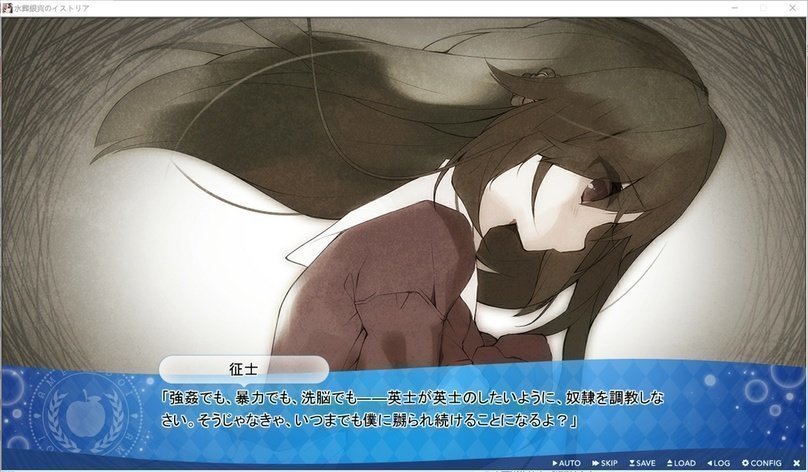
Sayo’s father found the protagonist, asking him to keep playing her brother, hoping he’d even become her brother for real, because Sayo couldn’t be without him now.
The protagonist didn’t want to agree, but after thinking it over he did, because he owed Sayo. Even though he stayed by her side, Sayo still broke down and went mad from mental instability again and again.
Nothing for it but to seek medical help. They were told it couldn’t be cured — but there was one way to treat Sayo’s mental illness: on this island, in the biggest hospital, the Kumosue family’s hospital, there was a miracle doctor, Kumosue Michimichi, who could cure her.
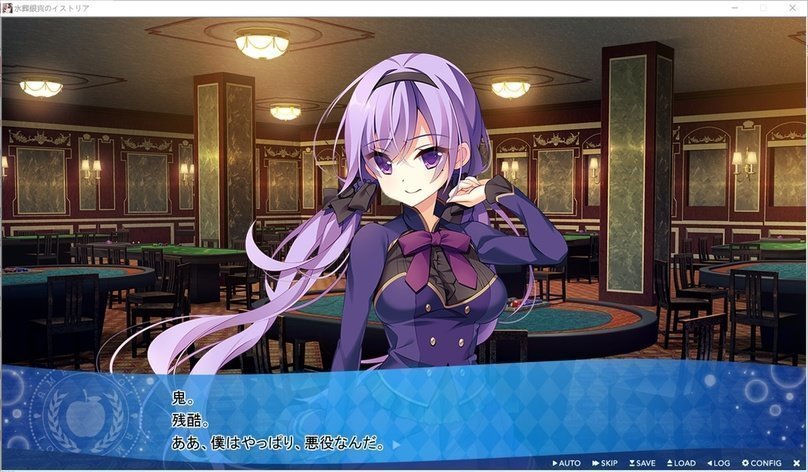
But getting an appointment with Kumosue Michimichi wasn’t just a matter of waiting in line; it took a huge amount of money, and Sayo’s family didn’t have that. The protagonist was still young then, couldn’t earn money. Sayo’s father liked playing poker, and the protagonist learned some poker skill from him. There was a casino on the island. The protagonist thought of a way out: go to the casino, win money, use it to treat Sayo.
A kid going into a casino was of course not allowed, but he was going in anyway. That’s when a woman appeared, claiming to be Kumosue Michimichi’s daughter and the casino’s manager, Kumosue Shiko. Hearing the protagonist wanted to win money to save someone, Shiko pretended to be deeply moved and offered to stake him — but the price was becoming her slave, doing whatever she said.
For Sayo, the protagonist agreed. Shiko gave him an outfit, saying a kid should go by another name, wear some makeup, and move around the casino.
“Let’s call you C.A., then!”
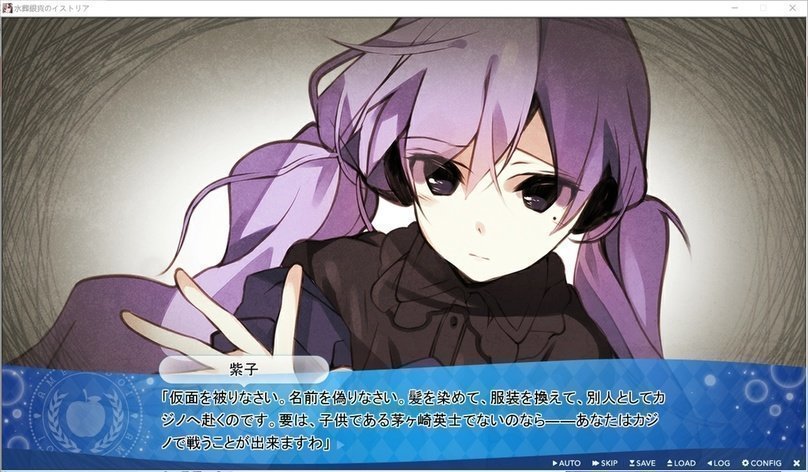
So C.A. appeared in the casino. At first the protagonist was too weak to win, and Shiko wasn’t in a hurry. But eventually she told him: keep this up and not only will you not win, once you’ve lost it all you can look forward to being my slave forever. Don’t count on winning anything.
The protagonist grew desperate, craving victory. Then one night, someone he knew came to the casino: Sayo’s father.
Sayo’s father had already noticed the protagonist’s odd behavior and finally came here.
He started gambling right away, saying he too had come for Sayo’s medical fees. In the end, Sayo’s father and the protagonist gambled against each other.
The protagonist had no confidence he could beat his teacher, but Sayo’s father went all in. In this underground casino, whoever loses everything gets dragged off and loses their freedom — so between the protagonist and Sayo’s father, one of them was going to be finished.
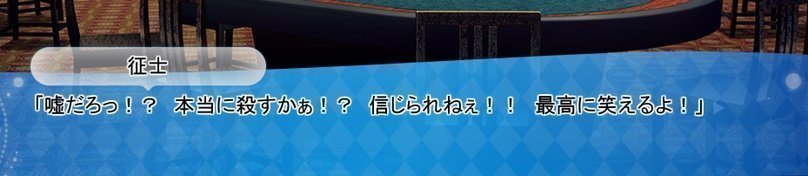
At the crucial moment, Sayo’s father let the protagonist win. Gave him the victory, everything Sayo’s father had, including the right to decide his life.
Kumosue Shiko watched from the side, enjoying it, and handed the protagonist a gun to kill Sayo’s father — because he’d lost at gambling and would have been dragged off by the Kumosue family as a slave, so being executed by the protagonist counted as a good ending by comparison.
Sayo’s father entrusted his daughter to the protagonist and asked him to kill him; if he didn’t, neither of them would leave the casino. In the end the protagonist pulled the trigger and killed Sayo’s father.
In despair, the protagonist tried to kill himself. He failed.
Waking in the hospital, he found a white-haired woman named Yatsukuri Momiji before him. She said she’d bought both his life and Sayo’s with her money; they’d escaped the Kumosue family’s clutches, but now they belonged to her.
The protagonist explained to Sayo: her father, in the casino, had everything taken by a man called C.A., and was killed by C.A. Only, afraid she couldn’t take it and would go even more insane, he hid the fact that he was that C.A.
Momiji seemed satisfied with his performance. She also put up money to treat Sayo, and said he’d repay it — by continuing to play C.A. and win at that casino until it was enough. To help, she taught him how to gamble, and he improved, but he could never match her, never once beat her.
After treatment, Sayo improved markedly; she stopped going mad, though she still believed the protagonist was her brother. He insisted he wasn’t, but she stayed devoted, and C.A. remained the father-killer she’d never forget. The protagonist could never bring himself to reveal who he was.
Then one day, just as the protagonist was finally about to win enough, Momiji sent out her maid, Kanmine Akari, to face him, and exploiting his soft heart, won all his money back again. The protagonist fell into despair and realized: Momiji didn’t want to help him. She just wanted him as her slave forever.
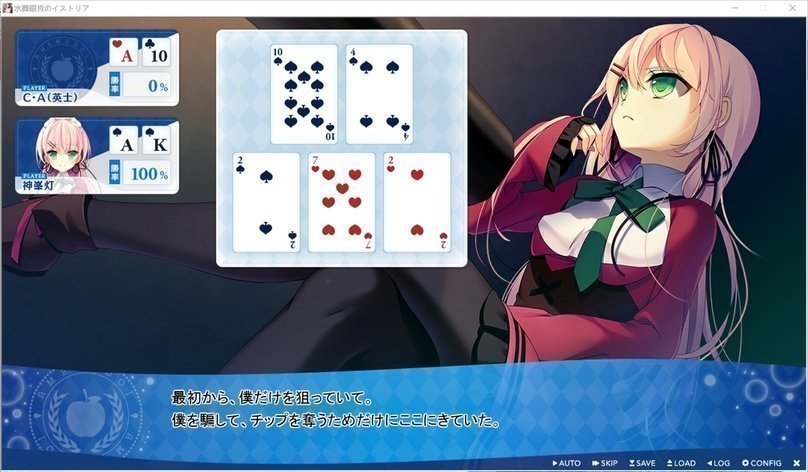
Momiji’s use of the protagonist wasn’t limited to the casino. She also had him look after a girl she’d bought, Shioiri Kukuri.
Shioiri Kukuri called herself a “failed artificial mermaid princess” of the Kumosue family, and through her the protagonist learned the shocking truth.
The island’s Kumosue family hospital — that miracle doctor Kumosue Michimichi’s miraculous treatments didn’t rely on medicine. They relied on the mermaid princess’s tears.
Just like the legend, the island did still have descendants of the mermaid princess. The Kumosue family captured them, imprisoned them, forced them to cry, used them for treatment, and charged exorbitant fees, calling it miraculous medicine. Sayo’s treatment was the same: fully anesthetized the whole time, never knowing what happened, and then she was cured.
Eventually the last mermaid princess the Kumosue family had imprisoned ran out of tears and died, so the family began crudely searching for the next one. Just like the legend, no one on the island could cry; anyone who could was a descendant carrying the mermaid princess’s power. The Kumosue family started rounding up anyone on the island who might be one — whose mother had been one, whose sister had been one — imprisoning and torturing them to see if they could cry. Those who could were confirmed as mermaid princesses and dragged off as treatment machines.
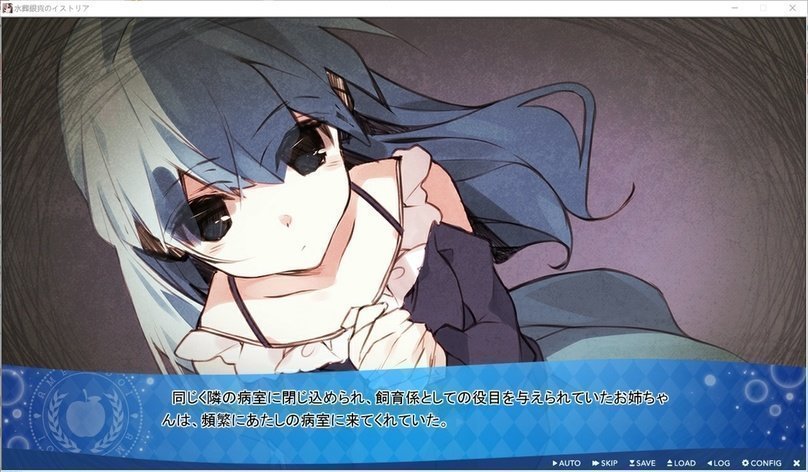
Shioiri Kukuri had been one such test subject. She and her sister were imprisoned and tortured mercilessly, until her sister began selling herself out, actively tormenting her little sister, just so the sister would cry and become a mermaid princess and she herself could be freed.
In the end Shioiri Kukuri still didn’t cry, and her sister was deemed worthless. Kukuri was labeled a “failure.” Momiji saw her and said she’d pay to take Kukuri in, and got her out of the Kumosue family’s laboratory prison.
Momiji didn’t adopt Kukuri for nothing: Kukuri really could cry. But Momiji saw it and told her she mustn’t cry, that she had to hold it in, that she’d come back to save her. So in the end Kukuri was bought out and freed.
Freed Kukuri was made to live with the protagonist, and Momiji tested him a few times to see if he’d obey. But soon word came across the island: the Kumosue conglomerate’s top ruler, the hospital’s director, Kumosue Michimichi, was dead.
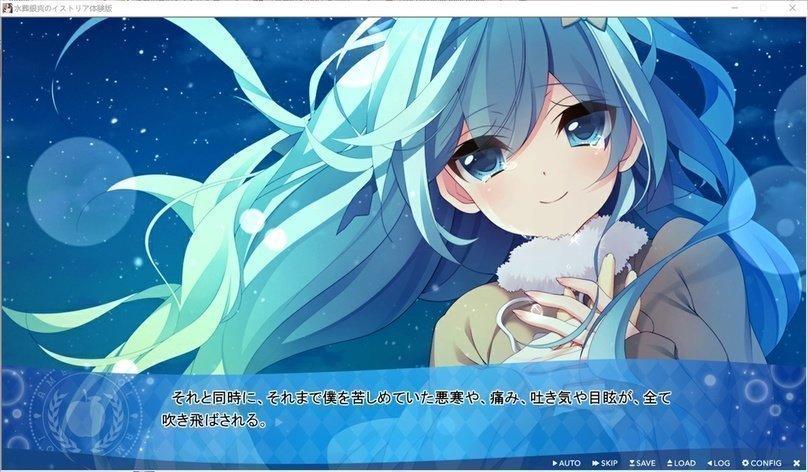
After Kumosue Michimichi’s death, a girl named Kumosue Shiko claimed to be his daughter and inherited the top leadership of the conglomerate. And standing beside Kumosue Shiko was a man named Kayagasaki Seiji — yes, the protagonist’s own father, the one who’d imprisoned him and driven Sayo mad.
And Kukuri revealed more of the truth: this Kayagasaki Seiji had also been one of the people in the Kumosue family’s laboratory torturing her and her sister.
So his father, after the Birdcage Incident, had gone to the Kumosue family. The protagonist hadn’t expected that.
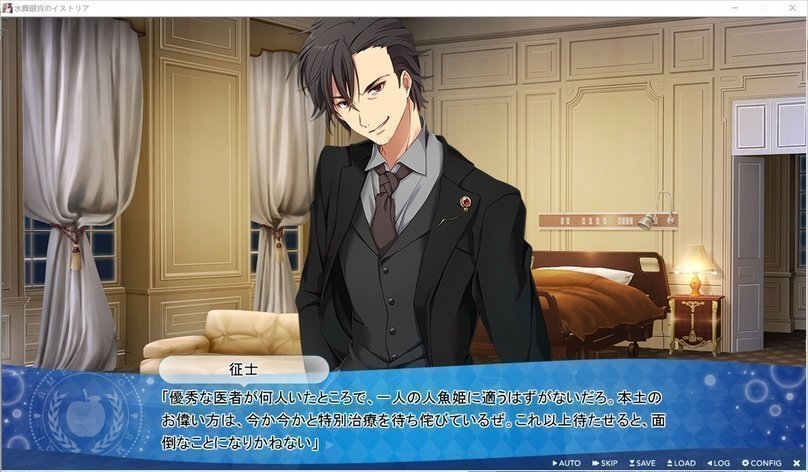
After taking over, Kumosue Shiko greatly intensified the search for “mermaid princesses,” hunting like a madwoman for descendants, for anyone who could cry. In fact the Kumosue family hospital no longer depended entirely on mermaid princesses — most illnesses could be treated by doctors now, and losing the tears wasn’t such a big deal — but Shiko was obsessed. She had to find a mermaid princess.
Kayagasaki Seiji suggested they grab that girl, Susugaya Sayo: her mother was a mermaid princess. And he said he was confident he could make Sayo cry.
So Kayagasaki Seiji appeared before Sayo again. The protagonist wanted to protect her, but Sayo was terrified. Then Kukuri bravely stepped forward and said, come at me, I’m the mermaid princess.
When Kumosue Shiko learned Kukuri might be a mermaid princess, she demanded Momiji hand her over, and Momiji demanded the protagonist hand her over — the Kumosue conglomerate was taking Kukuri. Kayagasaki Seiji added that if he wouldn’t hand over Kukuri, then he’d take Sayo.
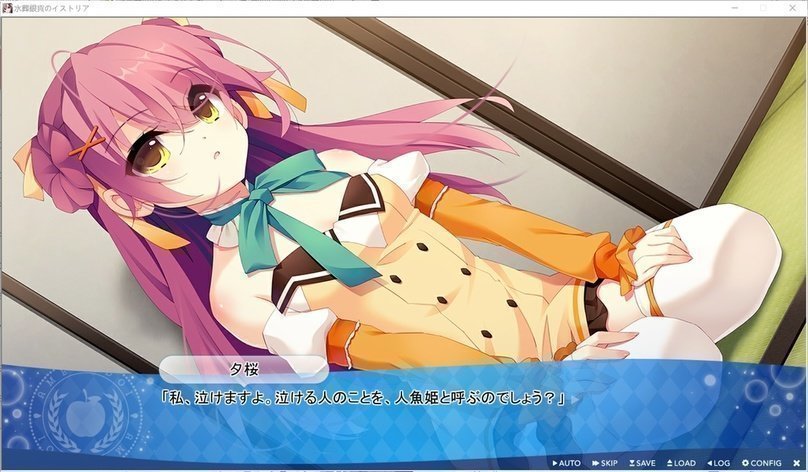
The protagonist wanted to protect Kukuri, but he felt even more guilt toward Sayo. In the end, with no way out, he decided to hand Kukuri over — and that’s when his sister Kayagasaki Yuuzakura suddenly stepped forward, went to Momiji herself, and said she too was a descendant of the mermaid princess, that she’d discovered long ago she could cry.
“When did you find out?” Momiji was startled. “Well, I cried back during the Birdcage Incident when my brother got beaten. So even though he got hit so many times, his life was never in danger — the tears healed him.” “Why are you stepping forward?” “Well, you see, my brother’s always felt he owes Sayo, and he also wants to protect Kukuri, and me? I’m just his unremarkable little sister. So all I can do is step forward myself and lighten the load for my unremarkable brother.”
In the end, when the protagonist reluctantly moved to hand Kukuri over, he found his sister Kayagasaki Yuuzakura already standing beside Kumosue Shiko. Shiko said one mermaid princess is enough; Kayagasaki Yuuzakura is a mermaid princess, so if you don’t want to hand over Kukuri, then don’t.
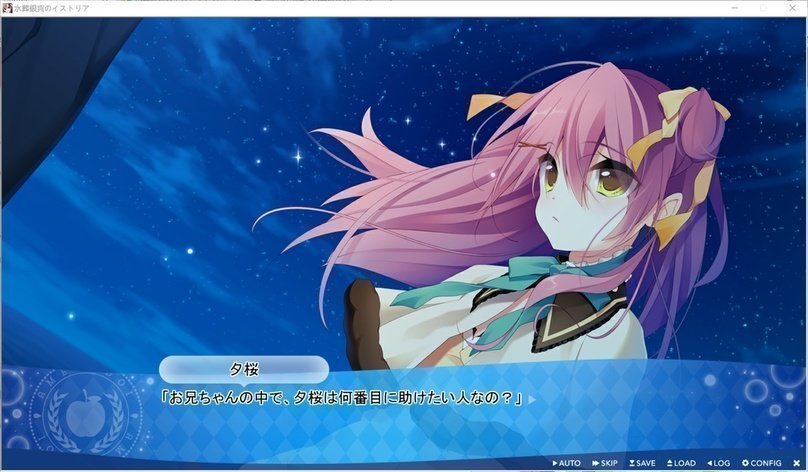
“Brother, first you want to protect Sayo, second you want to protect Kukuri — I wonder what number I’d have to be before you’d want to protect me?” Yuuzakura said to him in despair.
The protagonist never imagined it would come to this. Then Kayagasaki Seiji stepped forward too and gave him a choice.
- Give up Kukuri, keep Yuuzakura — but Kayagasaki Seiji won’t stop harassing Sayo.
- Give up Yuuzakura, keep Kukuri — Kayagasaki Seiji drops Sayo, and everything is settled.
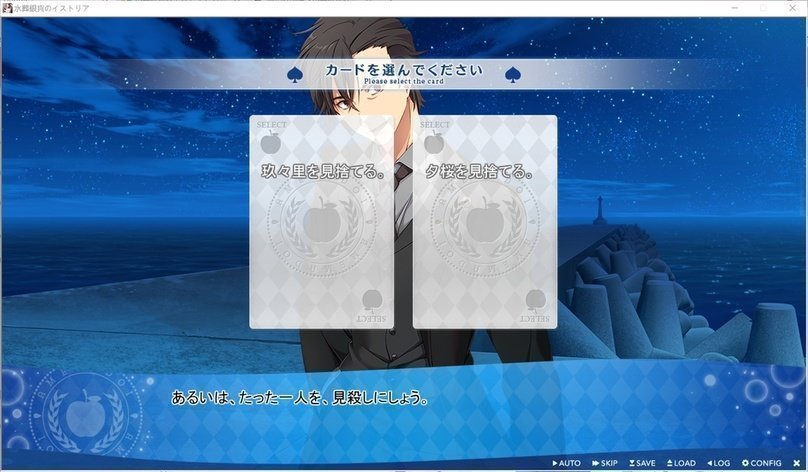
Funny thing is, Kumosue Shiko told the protagonist that no matter who he handed over, once she had a mermaid princess, Kayagasaki Seiji was worthless, and she’d dispose of that person.
Choose his sister, or choose Kukuri? The protagonist is stuck — and so, in fact, is the player.
This is a choice, a route branch. Only after clearing all the other individual routes can you unlock the True End.
The True End is the extra option: I don’t want to give up either of them.
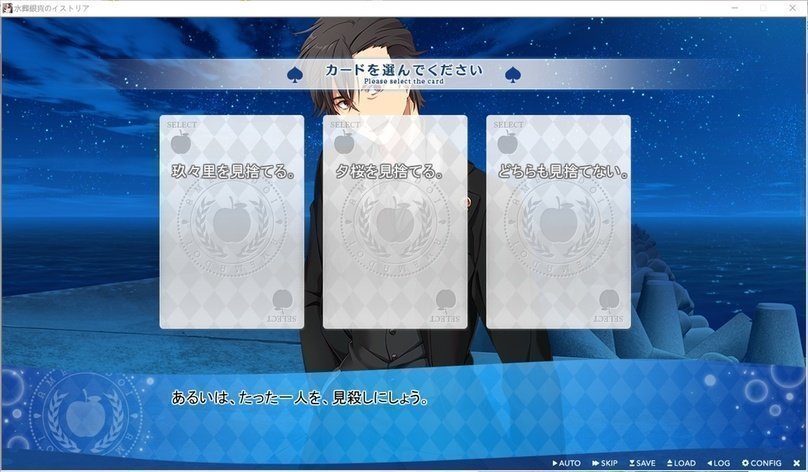
After the protagonist says he won’t give up either, Kayagasaki Seiji mocks him, says he’s flexing, that he can’t protect anyone and yet talks big.
“Fine, you don’t want to give up either one? Then take them both, playing the hero.”
In the end Kumosue Shiko says there’s no need for that, and takes his sister Kayagasaki Yuuzakura anyway.
After being taken, Kayagasaki Yuuzakura says she’s willing to cooperate with Kumosue Shiko and cry as a mermaid princess — but Shiko says Yuuzakura doesn’t need to cry for others, only for a certain someone Shiko designates. So Kumosue Shiko had another purpose in finding a mermaid princess all along.
Kusue Shiko asks Chigasaki Yuzakura if she has any other requests now that she has agreed to cooperate, and that she can ask for anything. Chigasaki Yuzakura says she wants her older brother—the game’s protagonist—to give up on her.
The way to make him give up is for the two of them to have a poker showdown, defeat him with her victory, and make sure he can never enter the casino again.
Chigasaki Yuzakura doesn’t declare war on her brother, but on C.A. At the same time, she brings in Saya as the dealer. Chigasaki Yuzakura tells everyone that she’s doing this to avenge Saya, to kill her father’s murderer.
The protagonist impersonates C.A. and goes to the appointment. During the match, he gradually realizes he’s no match for his opponent—his sister is inexplicably strong. When it comes to the final bet, the protagonist calms down, doesn’t go all-in, and chooses to fold, asking for a break before continuing. (You can also choose to go all-in, which leads to a Bad End: the protagonist loses spectacularly, is kicked out of the casino, despised by Saya, becomes a stray dog, and commits suicide by jumping into the sea.)
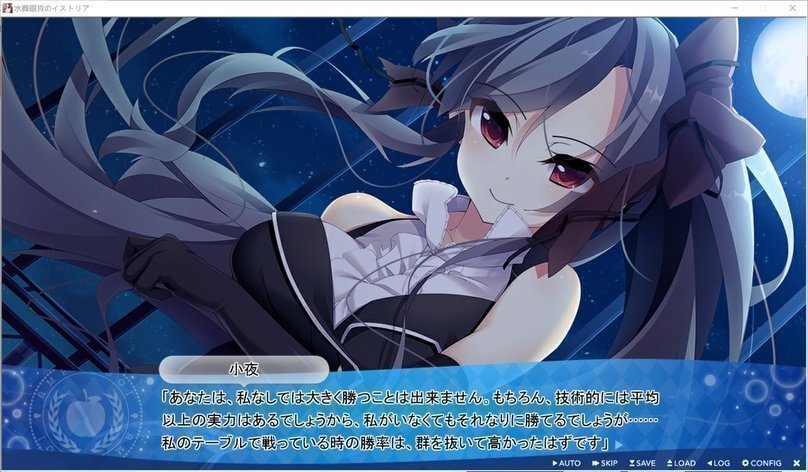
During the break, the protagonist realizes that his sister is doing so well because she’s cheating.
One reason for the cheating is that Saya might be involved—the dealer herself can cheat. If he continues the game wearing the C.A. mask, Saya, who hates C.A. so much, will definitely keep cheating, and the protagonist has no chance of winning.
The protagonist finally thinks it over, takes a gamble, and removes the C.A. disguise to appear as himself and continue the fight.
When Saya sees the protagonist appear, she realizes he is C.A., and she panics completely… let alone cheating, she loses the calm needed to cheat.
In the end, after a fair match, the protagonist defeats his sister. This surprises his sister, and also surprises Kusue Shiko.
According to the agreement, if the protagonist wins, his sister is returned; if he loses, he gives up on his sister and is kicked out of the casino. As a result, his sister has to be returned.
Chigasaki Seiji is about to go back on his word and forcibly take his sister away. Kusue Shiko actually gets angry, saying she hates people who break their promises the most, and lets the sister go back. Chigasaki Seiji is dumbfounded.
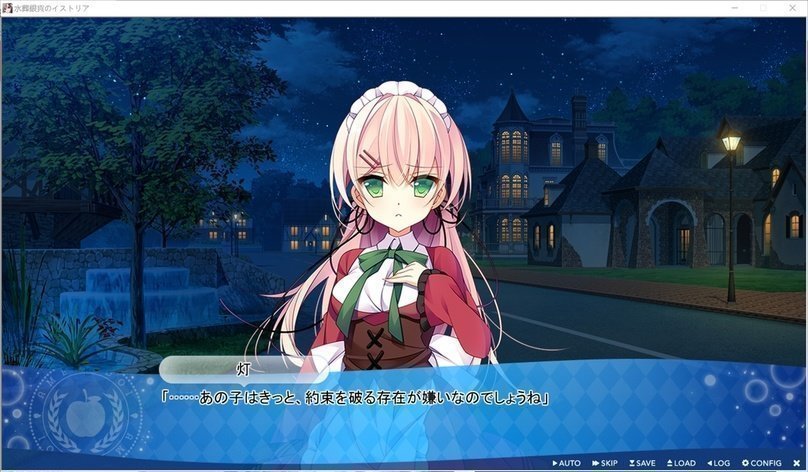
The protagonist finally explains to Saya how he became C.A., and how he was forced to kill Saya’s father in the casino as a child. Saya sort of understands—or rather, she had already realized the situation but didn’t want to believe it.
Having lost the mermaid princess, Kusue Shiko chooses another target: another mermaid princess, Kukuri. Chigasaki Seiji sees that Kusue Shiko won’t listen to his advice no matter what, and decides to act alone to take Saya away.
At this time, Momiji’s maid, Mitsumine Akari, sees Kusue Shiko and finds her familiar, because in the past she once met a girl named Kusue Shino. When Mitsumine Akari met Kusue Shino, Shino was still a little girl. At that time, Shino lived on the top floor of the Kusue Hospital. Shino said she was the mermaid princess, forced by the Kusue family to shed tears and imprisoned as a money-making tool. And to continue the bloodline and lineage of the mermaid princess, the Kusue family forced her to have sex with their family members and get pregnant, ensuring that the daughters born would also be descendants of the mermaid princess, used generation after generation. Mitsumine Akari was shocked to learn the truth about how the Kusue family treated and raised mermaid princesses, and told Shino that she would come to rescue her, but it would take time. Shino believed her all along and also told Mitsumine Akari that she had an older sister who was also being tortured and hoped she could be saved too. Mitsumine Akari agreed.
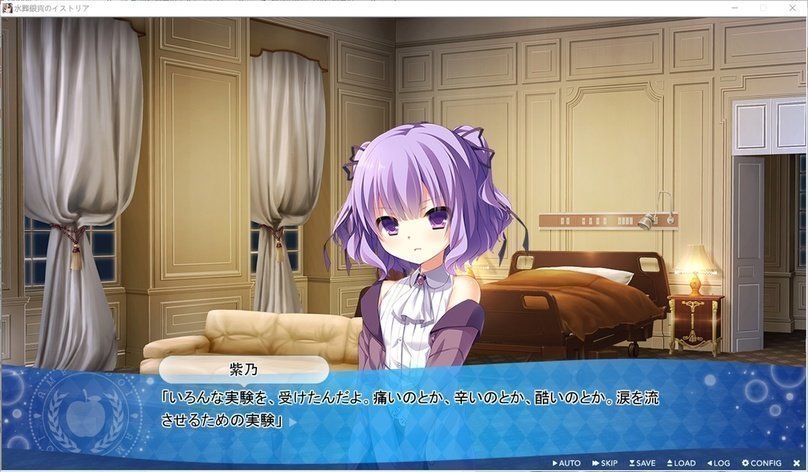
But things didn’t go smoothly. Mitsumine Akari was soon assassinated because the Kusue family had too many spies, and she was powerless to fight them. The assassinated Mitsumine Akari was saved by a person—a white-haired woman, Yatsukuri Momiji. Momiji took in Mitsumine Akari and made her her maid and slave, to work for her. Mitsumine Akari also somewhat admired Momiji. Momiji was something like a mafia figure on the island, straddling both the underworld and the legitimate world, both good and evil. Mitsumine Akari felt that someone like Momiji could accomplish great things, and that her previous desire to be a ally of justice was naive.
When Mitsumine Akari went to the hospital again to find Shino, she learned that Shino had already died, her tears dried up.
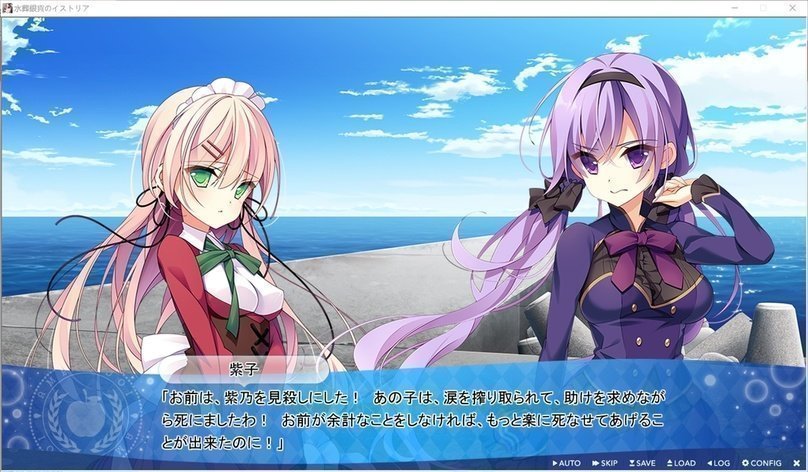
In the end, to capture Kukuri, Kusue Shiko corners the group at the seaside. Mitsumine Akari steps forward to confront Kusue Shiko. Shiko admits that she is Shino’s older sister. Shiko says she hates people who break their promises the most, because Mitsumine Akari had promised to save Shino but never came—she broke her promise. Mitsumine Akari failed to save Shino. Until her death, Shino believed she would come to rescue her, but no miracle happened.
Since then, Kusue Shiko gave up believing in hope and decided to become a villain. She began actively ingratiating herself with Kusue Michimichi, betraying her own people bit by bit, gaining some power, then becoming the manager of the underground casino run by the Kusue family, gradually raising her family status, until finally she used tricks to kill Kusue Michimichi and achieved her current position.
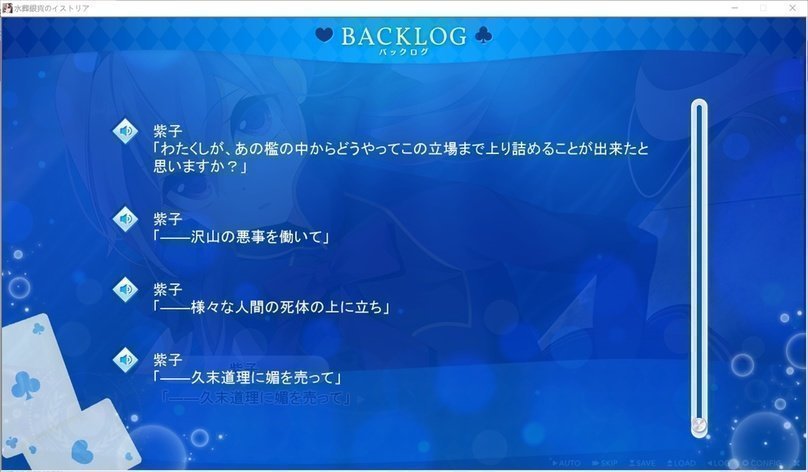
Although her current position is still not great—the Kusue family is huge—she at least has her own place.
Kusue Shiko says she hates all these people, and says she desperately wants to find the mermaid princess, because the mermaid princess’s tears can revive her sister.
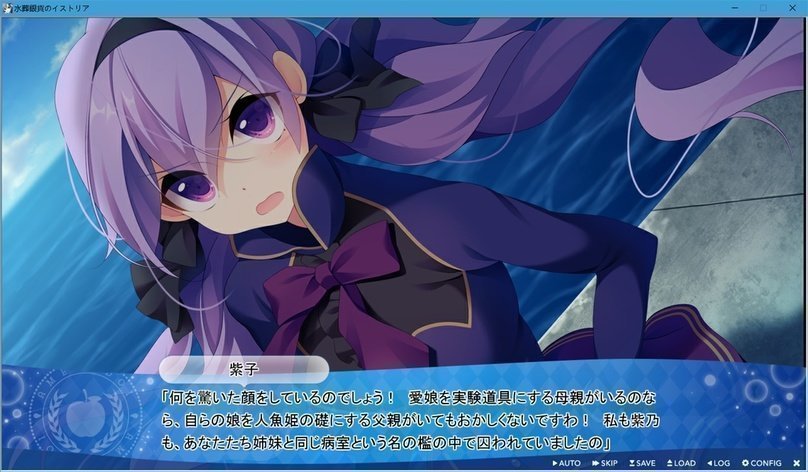
In the end, naturally, after a bunch of verbal sparring, the allies of justice defeat Kusue Shiko and tell her that the mermaid princess’s tears cannot bring back the dead, and unfortunately, not only that, but the mermaid princess’s tears are also ineffective on the mermaid princess herself…
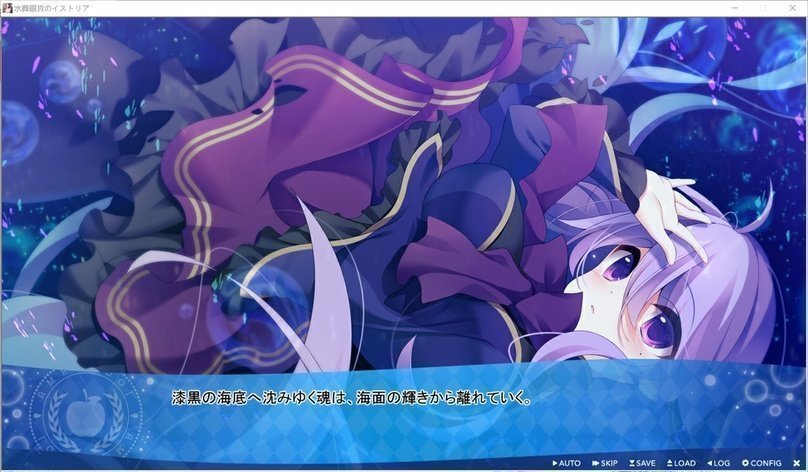
Kusue Shiko is finally disappointed and falls into despair, realizing that all her efforts were just to save her miserable sister, but it’s too late for everything… Interestingly, she herself sheds tears from sorrow and discovers that she too can become a mermaid princess, but what’s the use? She chooses to jump into the sea and commit suicide, to accompany her sister.
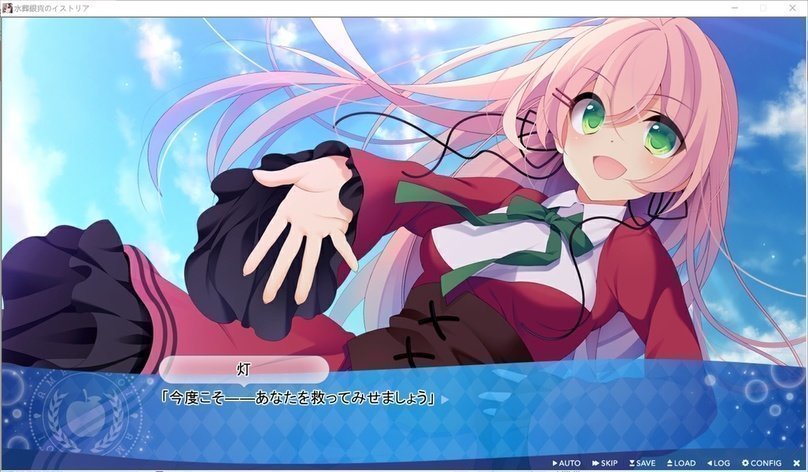
On the other side, Chigasaki Seiji is still acting independently, still looking for a chance to kidnap Saya. Chigasaki Yuzakura sees him and confronts him, asking:
“Why are you so obsessed with Susugaya Saya? Shouldn’t you be more obsessed with the mermaid princess? Everyone is obsessed with that.”
Chigasaki Seiji laughs contemptuously and tells a story: when he was young, he was particularly fond of Susugaya Saya’s mother. It was love at first sight, but he could never have her. Then, when he was drunk, a woman approached him on her own. Chigasaki Seiji was in need of a woman, so his beastly nature took over, he pinned her down and had sex with her. Later, the woman told him she was pregnant and wanted to get married.
Chigasaki Seiji initially refused—he didn’t like this woman; he had always liked Saya’s mother. But after thinking it over, he said, “We can get married, but I won’t take care of anything in my household.” The woman agreed.
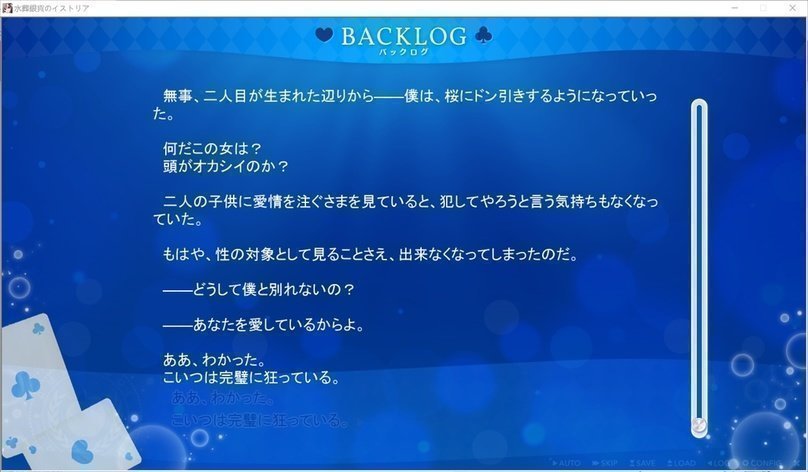
Later, the woman gave birth to a boy named Eiji. Chigasaki Seiji also often used the woman to vent his desires, causing another pregnancy, and a girl was born, named Yuzakura.
Nevertheless, Chigasaki Seiji never loved his wife or his children. What he always wanted was Saya’s mother, but Saya’s mother was already married—to a man named Susugaya.
So one day, when Saya’s mother was alone, Chigasaki Seiji raped her. She became pregnant and gave birth to Susugaya Saya.
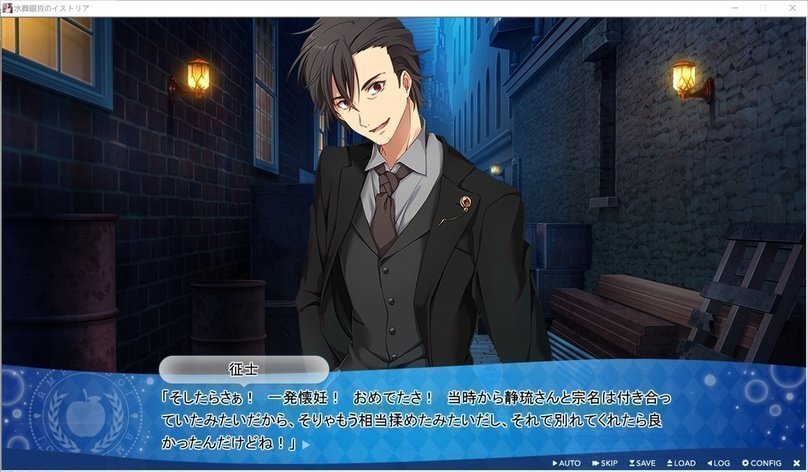
“In other words, Saya was always my daughter, and Eiji’s older sister. I made you play the family game to correct how you address each other,” Chigasaki Seiji says twistedly, having successfully cuckolded the Susugaya man.
Actually, the Susugaya man knew Saya wasn’t his daughter, but he chose to forgive his wife—after all, she was raped. (Badass!)
So Chigasaki Seiji’s obsession with Saya is because her every smile and gesture carries her mother’s charm, which is what fascinates him.
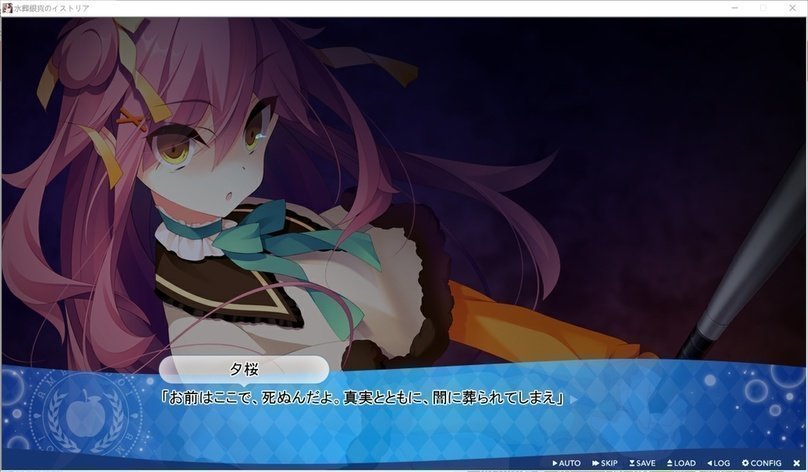
Having learned everything, Yuzakura is so angry she doesn’t know what to say. She takes out a baseball bat she had prepared and knocks her perverted biological father unconscious with a heavy blow. Just as she’s about to finish him off, the protagonist appears, takes the bat, and says that killing this scum shouldn’t be done by his sister—it should be done by him. Finally, he ends the life of this sinful father.
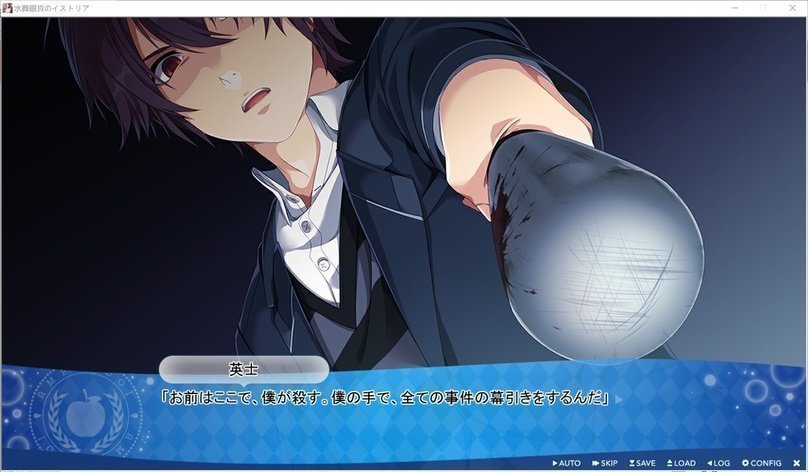
So in the end, Shiko jumps into the sea and commits suicide, the evil Chigasaki Seiji is killed, and everything should be over.
But is it really over? The protagonist remembers something odd.
Why did he meet Momiji at so many critical points in his life? Why is everyone around him connected to Momiji—whether it’s the birth of the mermaid princess or the casino business?
He feels like Momiji is manipulating everyone from behind the scenes.
The protagonist wants to ask Momiji what’s going on, but she’s no longer at her house. He finally finds her at the casino.
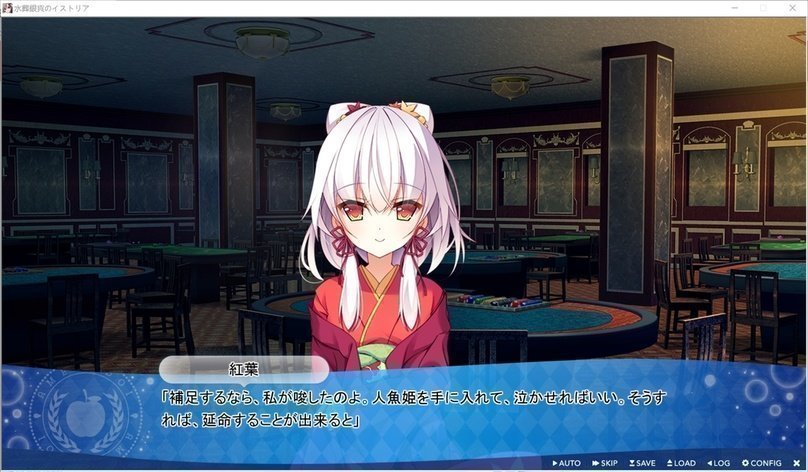
Momiji seems to be waiting for the protagonist to arrive, and slowly tells the story behind everything.
Why did Kusue Michimichi use the mermaid princess’s tears to cure illnesses? Because Momiji told him about the existence of the mermaid princess and the effects of her tears. Why did Saya’s father happen to go to the casino when the protagonist was C.A.? Because Momiji told him at that time that the protagonist was there, and gave Saya’s father money. Why was Kusue Shiko obsessed with the mermaid princess? Why did she believe the mermaid princess’s tears would revive her sister? Because Momiji told her. As for the protagonist’s casino work, the maid’s rebirth, and a whole series of other things, Momiji was involved, intentionally or unintentionally manipulating behind the scenes.
Momiji seems to enjoy this, and says something she has said more than once:
“I am the mermaid princess’s ally. I am not anyone’s ally.” “I like the mermaid princess. I don’t like humans.”
The protagonist then realizes that everything, absolutely everything, was manipulated by Momiji behind the scenes.
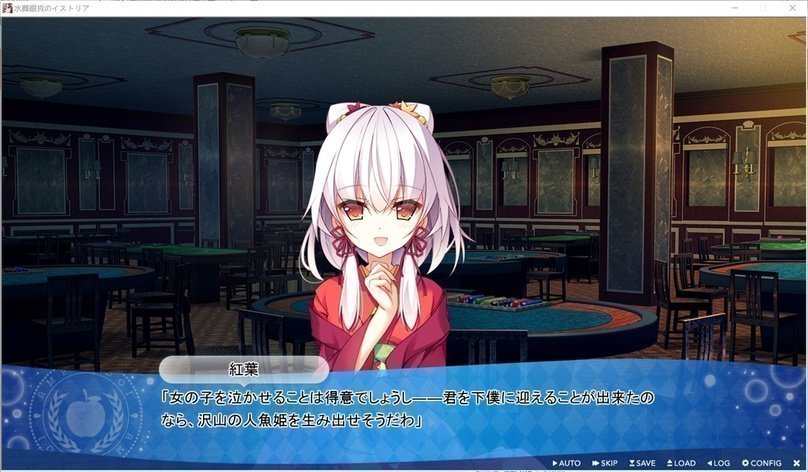
“I didn’t create tragedies. Tragedies already exist in this world. Even without my interference, tragedies would still happen.” “I just guide tragedies to be more interesting.”
The protagonist wants to ask who Momiji is. Momiji says she’ll play poker with him, and if he wins, she’ll tell him her identity.
At first, Momiji wins, and the protagonist concedes. But Momiji finds it too boring, uninteresting, and the protagonist lacks fighting spirit. So Momiji decides to go big—they’ll gamble with their lives, so the protagonist will go all out.
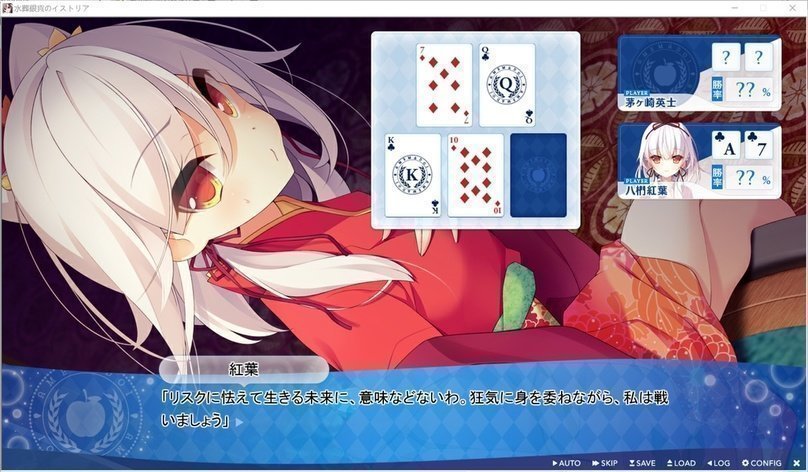
Finally, after another round of final verbal sparring (flirting), the protagonist finally defeats his teacher, Momiji, at poker.
Momiji can’t believe she lost. She has never lost in all these years. Having lost, she realizes she’s crying… shedding tears.
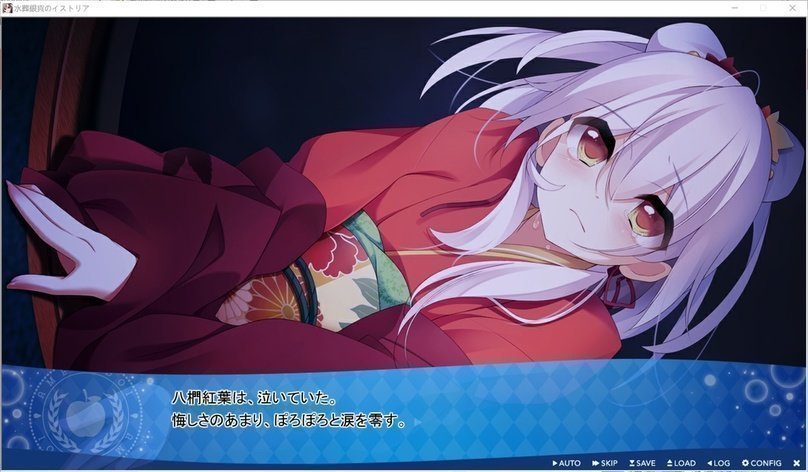
Momiji lost, and her life is handed over to the protagonist.
The protagonist asks who Momiji is. Momiji says she is the true mermaid princess, the oldest mermaid princess on the island. The protagonist realizes he doesn’t know how old she is.
The true mermaid princess is very long-lived, and that’s why she can shed tears to give her life to others. Momiji tells the island’s legend: the mermaid princess was captured by greedy humans, forced to shed tears until death, and that’s why Momiji hates humans.
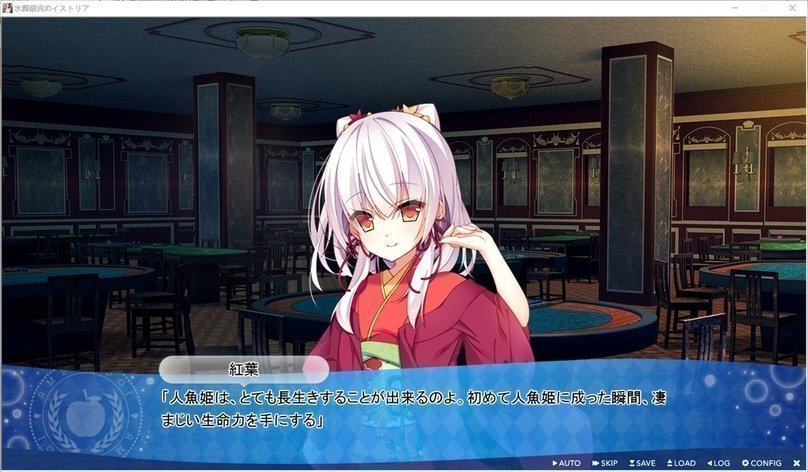
Momiji says the mermaid princess’s curse isn’t just that humans can’t shed tears—it’s that humans only shed tears when they are in despair, when they are sad for others. After shedding tears, the human transforms into a mermaid princess and can give their life to others. And foolish humans chose to capture those who can shed tears and continue to exploit their tears—that’s a form of mutual slaughter.
That’s also why several people on the island who have nothing to do with the mermaid princess also shed tears. Because they all fell into despair, were sad for others, and shed tears.
Momiji’s actions are like the mermaid princess’s revenge on humanity: creating tragedy after tragedy, making more and more people fall into tragedy, shed tears in extreme sorrow and become mermaid princesses, increasing the number of mermaid princesses, and making more and more people feel the tragic fate of the mermaid princess.
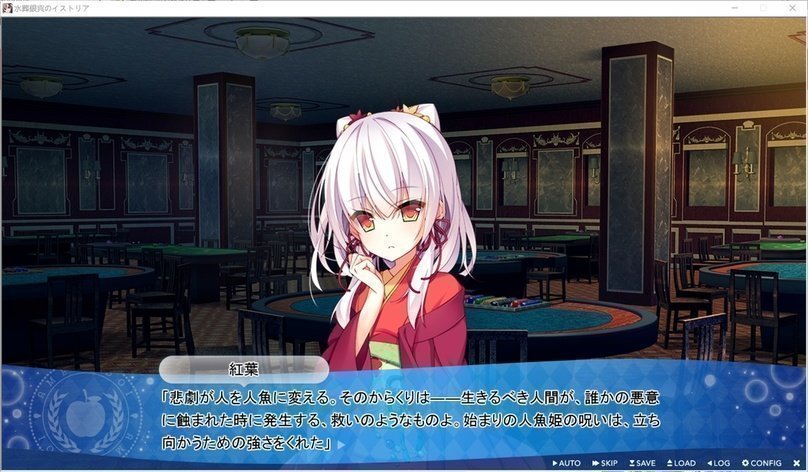
Finally, Momiji says she’s tired and waits for the protagonist to kill her.
The protagonist chooses to let Momiji go.
“You’re really letting me go? Think carefully. Once I’m out, I’ll make a comeback and manipulate others to create more tragedies! Don’t regret it! Now is your only chance to kill me. Next time you won’t have this chance!”
The protagonist says he won’t kill Momiji.
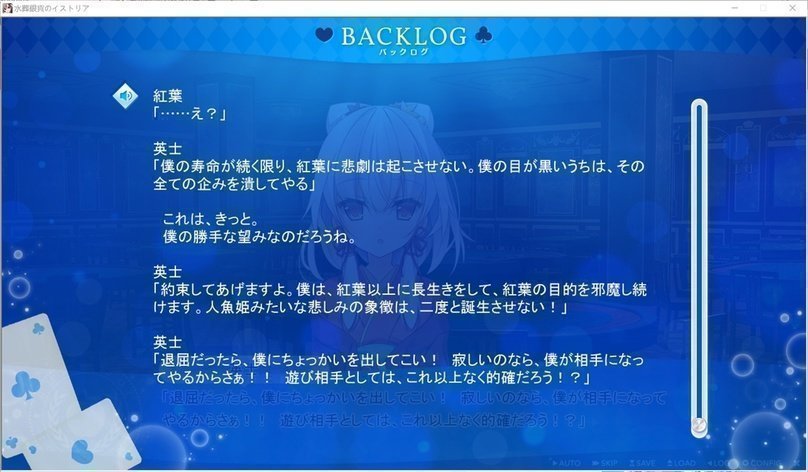
“I’ve already killed several people. I won’t kill you. If you want to go out and manipulate others to create tragedies, then go. I’ll show up to stop you. That’s all I can do.”
The final ending is that each heroine gets a good place: some stay on the island, some go to university, some remain here. And the protagonist, while living a normal life, still keeps an eye on Momiji’s movements, waiting for her to appear, waiting to stop the conspiracies she manipulates once again.
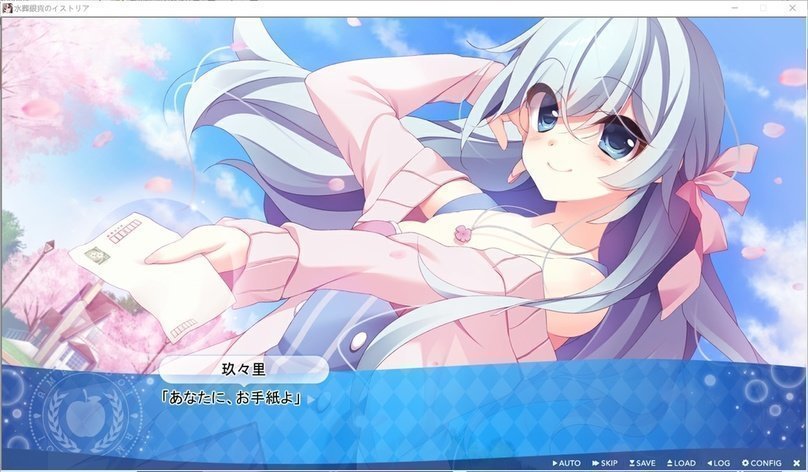
The game ends here.
Actually, besides the True End, there’s another individual route worth mentioning: the route of the sister, Chigasaki Yuzakura. In that route, the protagonist abandons all other heroines and fights only for his sister. In the end, for his sister, he has to play C.A. again, and encounters another person seeking revenge for Saya: Saya’s childhood friend, Idogaya Kiri.
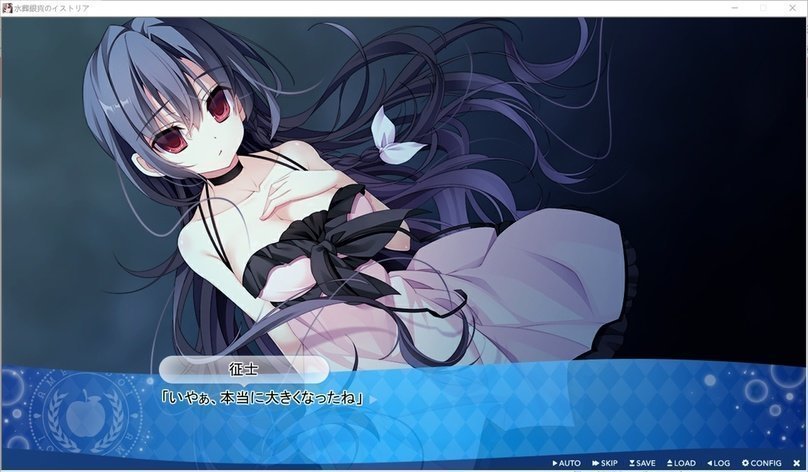
This route is honestly very painful. The protagonist abandons Saya and everyone else, choosing only his sister. Many people will come out to curse you, and the one who curses you the worst is this Idogaya Kiri. She keeps blaming the protagonist for not defeating C.A. and saving Saya, for not saving Saya. The protagonist confesses that he is C.A., and this girl completely explodes, going mad and trying to kill him. The protagonist fights hastily and loses, getting shot in the head.
He barely survives, and in the end the protagonist is also abandoned, living a shameful life with his sister.
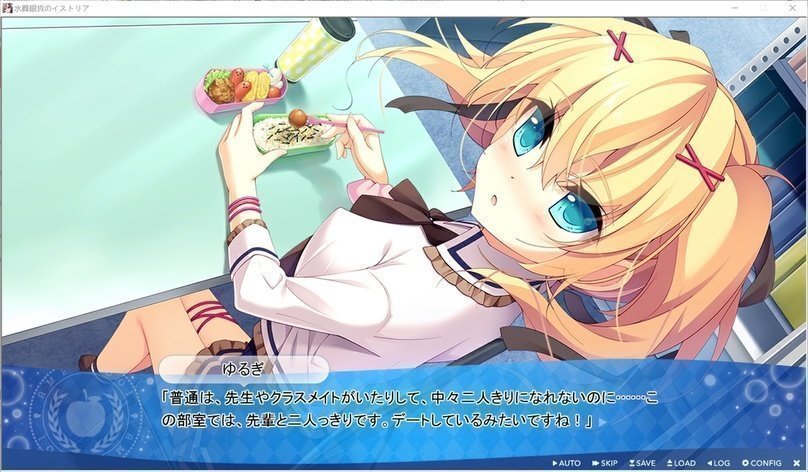
As for the other individual routes, fuck that, they’re so short there’s no point watching them. They’re basically freebies. And there are story locks—what’s the damn point? It would be better to let people go straight through one route like in previous games.
Suisou Ginkа no Istoria is not short this time—at a conservative estimate, it takes over 35 hours. Although Kaminо Ue no Mahoutsukai is also long, I think it can’t compare to this one. After finishing the whole game, I felt a bit dazed. How should I put it…
I feel extremely unsatisfied!
Admittedly, the scenario of Suisou Ginkа no Istoria is still the same old “good at telling a story,” but the overall experience of the game can’t really be called good. The pacing in Kaminо Ue no Mahoutsukai was very good, with multiple plot twists, but each one brought surprise. In Suisou Ginkа no Istoria, the story structure goes dark from chapter 3 onward—dark, dark, dark, dark, until you despair, until you’re depressed. Although the game’s promotional material told you, “We promise it will be a Happy End,” this kind of plot that stays dark until the very end and only then gives you a little benefit is hard to feel pleasant about. It’s more like heaviness, and that promotional slogan feels more like a reassurance to encourage you to keep going rather than making you feel so bad you quit.
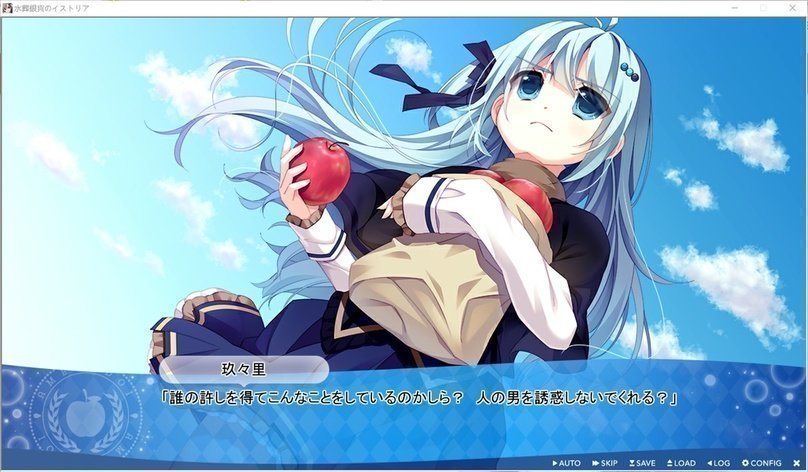
“Hang in there, it will be a Happy End!"—like someone keeps telling you that.
To use an analogy for the game’s plot, it’s like someone throws you into deep water and watches you sink bit by bit. But that person tells you they’ll pull you out in the end, yet they keep delaying. When you’re about to drown, when you’re in despair, finally a hand pulls you out of the water, and looks at you with a lewd grin.
“See? I told you I’d save you in the end.”
Can you say that experience feels pleasant?
The whole game, until the very, very end, you finally see a glimmer of hope in the story. The biggest villain in the game isn’t Momiji—it’s Chigasaki Seiji.
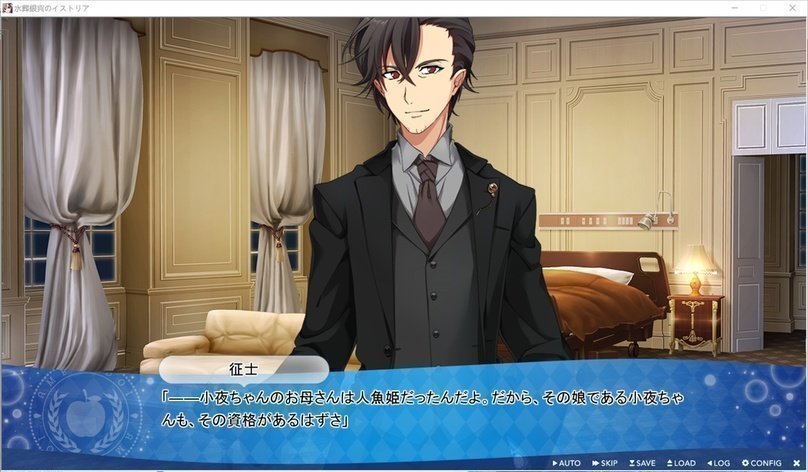
This bastard Chigasaki Seiji first appears in chapter 4, and after that his appearances increase, whether in the main story or in flashbacks. His appearance always makes me uncomfortable—not because the character writing is bad, nor because the CV performance is bad, but because they perform too well. This man shows you what true “evil” is, what a true “human scum bastard” is, what a true “twisted pervert” is. His demonic words, his satanic sophistry, and his twisted laughter all make you uncomfortable. In the later part of the game, when this guy says he raped Saya’s mother and abused his wife, he’s still smiling. I wanted to jump into the screen and hit him.
Compared to Chigasaki Seiji, Momiji isn’t really a villain—at most she’s like QB from Mahou Shoujo Madoka Magica: neither absolutely good nor absolutely evil, just wanting to stir things up. Her act of turning humans into mermaid princesses is also somewhat like turning magical girls into witches. I don’t hate her that much. What I hate is Chigasaki Seiji. He’s too fucking despicable. This is probably the villain I’ve hated most in a year of gaming, to the point my teeth itch.
Precisely because I hate the villain so much, it highlights another flaw of the game: lack of visual presentation.
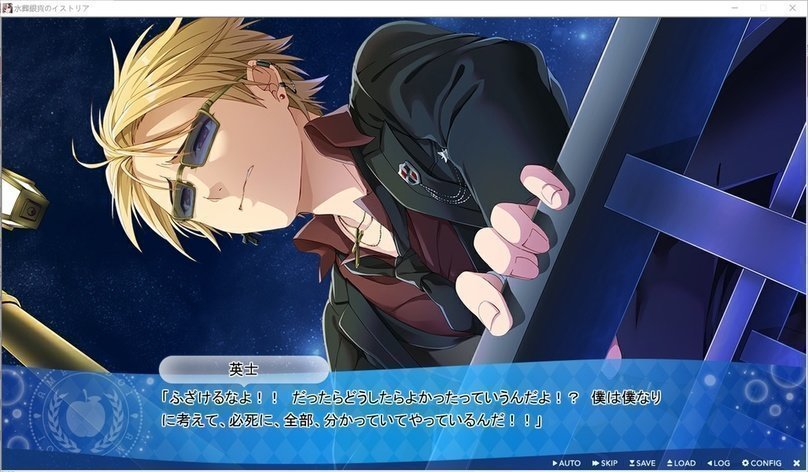
Although Chigasaki Seiji is finally punished, the presentation of that punishment is too poor—just a CG of a baseball bat, and it’s drawn roughly. The previous game, Kaminо Ue no Mahoutsukai, had great artwork and brought many famous scenes, like the CG of the sister Tsukihi standing in front of the bookshelf with arms spread, demanding the protagonist swear to the gods; the CG of Yako crying under the bookshelf; and many more key scene CGs that greatly enhanced the atmosphere. None of that is in Suisou Ginkа no Istoria. The flashbacks only have four images, key scenes lack CGs, and many CGs are off-model. The legs are drawn so badly I don’t even know how to complain. Supposedly the artist Kiriha is addicted to Japanese LOL and can’t stop. I think that’s too stupid—how can you have no self-control? Why are you playing LOL? What kind of garbage is that? Is it as fun as Honor of Kings? Seriously.
Another flaw of the game is something many Japanese players complain about: too many typos.
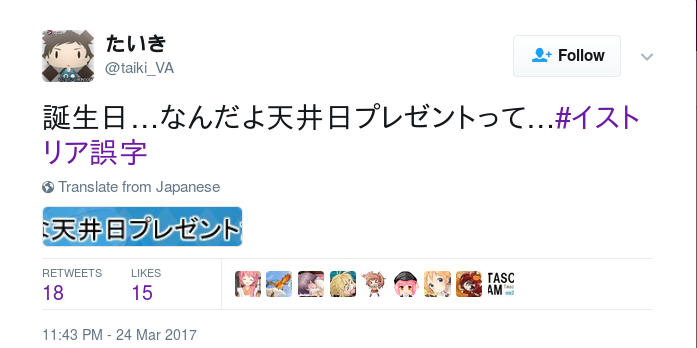
Actually, as a foreigner, I don’t notice many typos in Japanese, because I assume that’s just how the kanji is written. For example, a certain “unfilial son”—it’s a typo, but I thought it was just saying unfilial. So being a foreigner has its perks—I treat all kanji in Japanese as phonetic loan characters, haha. But this game really has a lot of typos. There’s even a hashtag on Twitter to track them. If you’re interested, check it out: #イストリア誤字
As for bugs, I didn’t encounter any, except that the game doesn’t actually save unless you quit the game, which cost me several save files.
Suisou Ginkа no Istoria itself doesn’t seem to intend to express much in terms of life views and values like Unmei Yohou wo Oshirase Shimasu does. Compared to Kaminо Ue no Mahoutsukai, it’s more pure—just telling a complex, tragedy-filled story full of mutual deception, but also with genuine emotions and heroic justice. The game has structural similarities to other excellent works, like the Kusue family raising a mermaid princess being similar to raising a baku in Sakura no Uta, and the protagonist submitting to others as a slave being similar to G-senjou no Maou. It’s just that the game has too many flashbacks in the middle, flooding the player, and they’re very heavy, putting you in a bad mood. Also, the game has too few CGs, and many of the CGs it does have are off-model, further hurting the experience.
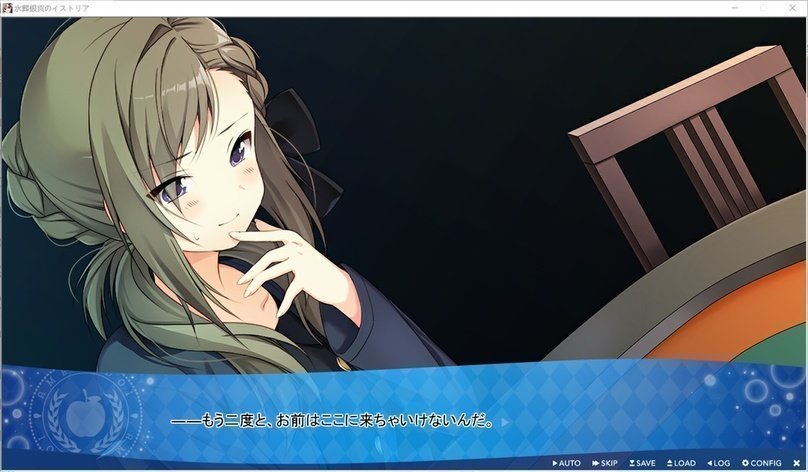
I think the scenario is inferior to Kaminо Ue no Mahoutsukai. Although the narrative is still smooth as always—being “good at telling a story” is still the quality guarantee of the great Lukuル (except for typos)—and the story feels more like a novel, I feel there’s less surprise in the unfolding technique. By the final part of the game, you can basically guess most of the direction. There’s no final twist like in Kaminо Ue no Mahoutsukai. Too few surprises…
But that’s not a bad thing. Being able to tell a story well is already commendable. Do you know how many Galgames actually know how to tell a story these days? Everyone else is just stringing together jokes and daily life, setting flags for individual routes, and padding CGs with sex scenes… Compared to those mediocre works, Suisou Ginkа no Istoria is already an excellent work in terms of story.
Yes, in terms of story it is. But precisely because there are so many visible flaws in other aspects—as mentioned, the drop in CG quality, many typos, poor presentation—and one key thing: the game’s ending is really too sloppy.
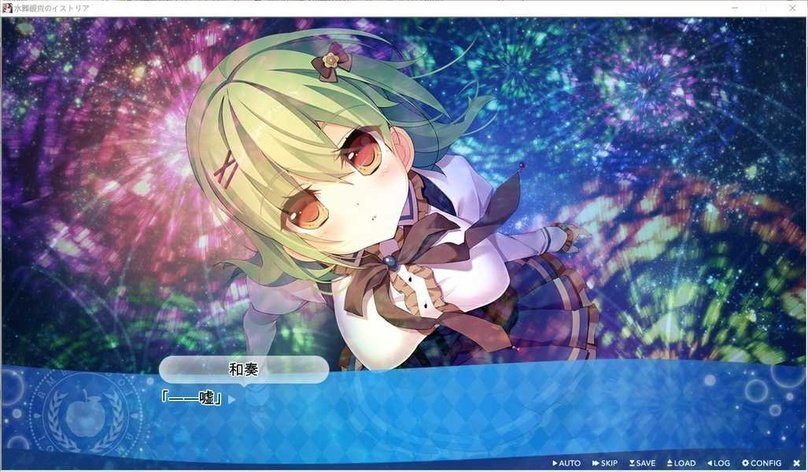
Not to mention individual routes just end with a single “END”, even the final route has no ED, no staff roll, no ending effects. Just a fucking “END” and that’s it. Holy shit, that’s too lazy. You had money to make an OP, but you can’t make an ED? Couldn’t you just run the staff roll with a piano version of the OP? The game ended before I even reacted!
The only thing that guarantees quality throughout the game is the composer Meto. The game’s OP, “Azureite no Hitsugi,” is full of his personal style, and the game’s music quality is as high as ever. It seems only the composer is working hard… Lukuル is also playing mobile games every day…
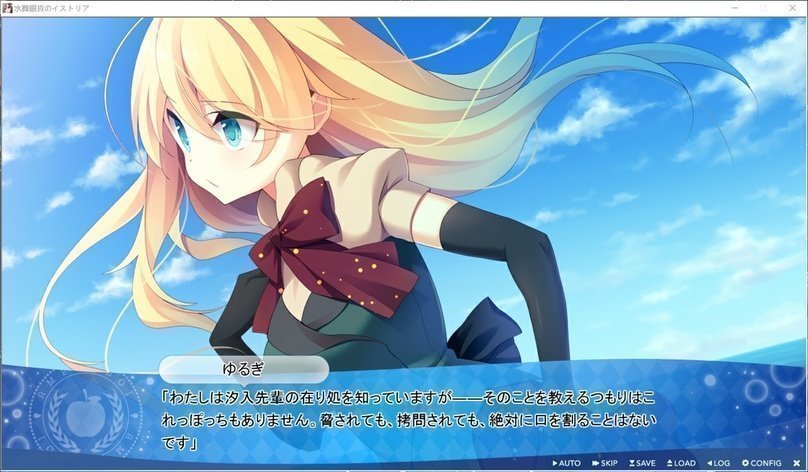
Anyway, Suisou Ginka no Istoria didn’t exceed my expectations, but it didn’t disappoint me too much either. It’s just that this game could clearly have been better, and that’s what really bums me out. A lot of the mistakes are purely down to the staff not giving a shit. Personally, I think the storytelling here is better than Sakura no Uta — it just doesn’t pad itself out with a bunch of random philosophy to inflate its own prestige. And honestly, even Sakura no Uta’s philosophy is bullshit; anyone who actually knows the material can tell it’s just flexing for the sake of flexing. I’d rather have Suisou Ginka no Istoria honestly telling its story straight.
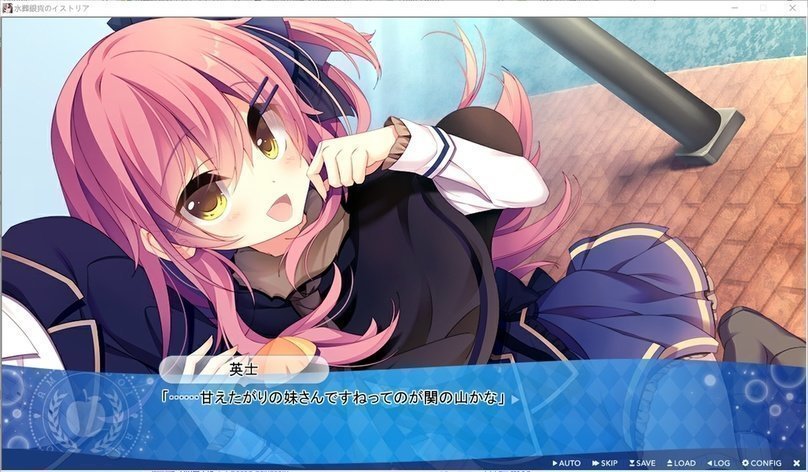
It’s just a shame. If Suisou Ginka no Istoria had nailed its CG presentation, cut down on the typos, and beefed up the system effects, I honestly think it could have beaten Sakura no Uta on pure storytelling (the philosophy-flexing category is a different matter). But who knows if the studio just didn’t have the money or the time — they wasted the opportunity completely. Sakura no Uta’s key CGs are genuinely the finishing touch, while Suisou Ginka no Istoria just has a handful of memory-flashback CGs reused dozens of times propping up a pile of typos…
What a shame… what a shame…
So, Rukuru-sensei, when’s the next one coming out…
Comments are hosted on the Chinese main site. This mirror is read-only.