Otonari Koi Sensou (おとなり恋戦争) Review
Actually, Those "Harems" in Eroge Aren't Harems at All
Back in middle school I read all kinds of web novels, so naturally I ran into power fantasy and harem stuff. Power fantasy needs no explanation—the protagonist shows up, is insanely OP, plays the pig to eat the tiger, and sometimes doesn’t even bother playing the pig and just instakills heaven, earth, and the entire world. As for harem novels, I stumbled on those later; I’ve always thought Chinese web novel romance is pretty terrible, but the “harem” tag in Chinese web fiction really does mean a true harem. The protagonist has several girls around him, and every single one of them is totally fine with him having other women, and they all coexist harmoniously…
That’s not weird at all, though—you’ve read The Deer and the Cauldron, right…
After that I got into the Japanese “light novel” thing. Japanese light novels also have power fantasy and harem stuff… it just feels completely different from the Chinese version.
Just like how Japanese people always phrase positive statements as negatives, the power fantasy and harem novels Japanese people write are way too conservative. Not just conservative—they’re full of tropes, and they happily wallow in them.
In light novels (and not just light novels), the power fantasy protagonist is usually set up as “weak” at the start, and achieves so-called “growth” by repeatedly beating stronger characters, so that even after defeating several absurdly strong opponents, the protagonist’s reputation in the setting is still “weak.” And Japanese writers don’t really have a good method for depicting “the weak beating the strong”—it’s mostly the protagonist using talk no jutsu to seize the moral high ground, the opponent freezes for a second realizing what they’re doing is actually evil, and then the protagonist one-shots the boss with a cheat. That formula isn’t wrong per se—justice always wins, right? You see it all the time in World of Warcraft; the Lich King final boss fight is exactly that.
It’s just that Japanese creators use it way too goddamn much, and they’re sick of it too, but they still use it anyway, like it’s some kind of unwritten rule. Lately some actual power fantasy stuff has appeared, but it’s still not satisfying enough—it tends to fall back into the old rut by the end.
Same goes for Japanese “harem” novels and “harem” anime…
Japanese harem works start out no different from the Chinese ones: the protagonist has an innate chick-magnet aura, all kinds of girls like him, he’s spoiled for choice. But there’s a fundamental difference—most authors stick to the international bottom line of “monogamy.” No matter how many girls the protagonist hangs out with, he must be devoted in love. There’s absolutely no way he ends up with a harem, and definitely no way two girls accept each other and hope the protagonist gets two or even more girls…
That bottom line causes a lot of tragedy, because with so many female characters in the novel, various “factions” form, and when the author can’t write anymore and wants to wrap up, they have to pick one ending among what those “factions” want…
No matter which heroine ends up happy, the readers will complain, so some authors just give up and choose to screw with society, like that bastard Fushimi XXX and Wakaki XX.
So that’s what I meant earlier—Chinese “harem” and Japanese “harem” are fundamentally different. The former is a real harem; the latter is mostly just a love story full of jealousy and fighting, and the protagonist is definitely going to end up with one person. Seen that way, those Japanese harem novels aren’t really harems, are they?
But is there really no territory in Japan where they dare to pioneer true harems? Of course there is! The adult industry! Forget porn films—let’s talk about 18+ text-based romance adventure games (serious face).
In Japanese 18+ text-based romance adventure games… ah forget it, let’s just say eroge. In eroge, harem content can appear, and it has appeared quite a few times. Many dedicated harem nukige include hidden harem routes, and those routes are mostly constrained by the same “monogamy” as light novels—at the end they’ll force an explanation like it was the protagonist’s dream or fantasy. Some hardcore works do straight-up call it a harem, but those are true nukige and have nothing to do with plot-driven games.
In other words, in eroge you can have a “harem” ending, but it’s rare and uncommon. Maybe Japan thinks the more “adult content” a game has, the lower its quality, and adding “harem” content makes the whole thing utterly trashy, so even without a hard rule they self-censor and maintain some bottom line. That actually places higher demands on the eroge itself…
What kind of higher demands? You’re supposedly a harem eroge, but you don’t even have a harem ending—then you’d better have some other substance to offer, right? Otherwise what are we playing for?
So various eroge developers pull out all the stops: some get good artists, some get good writers, some get good voice actors, all to make their game more appealing in the “non-adult parts”… oh right, a good artist can also boost the adult parts’ firepower…
My personal expectation for these works is that “everyday conversations become more interesting.” And indeed quite a few games follow that route, like the old Renai 0 Kilometer. I’ve always thought that for a game medium centered on dialogue, “making conversations interesting” should be the core competitive edge—otherwise why play the game? Just look at a CG pack.
So I impulsively played this game, hoping for “interesting conversations.” That game is Otonari Koi Sensou.
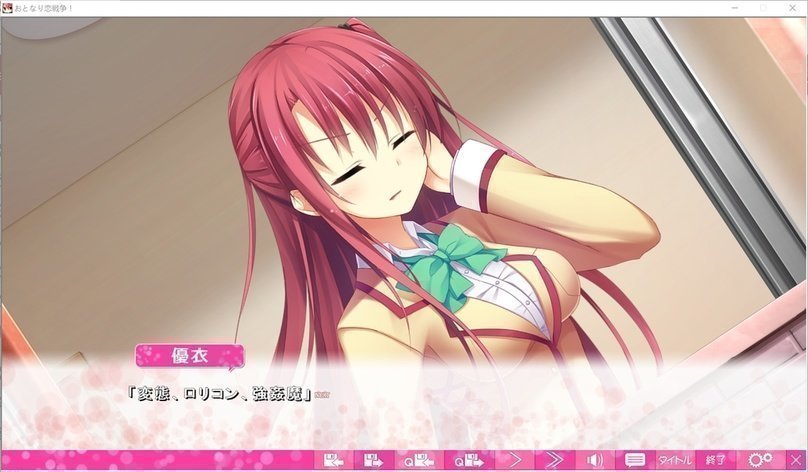
The title says it all: “Love War Next Door.” At a glance it’s a harem game. Incidentally, I noticed this game because its OP is really catchy. So I checked the premise—it’s a harem, but seems to be the kind where jealousy and fighting are played for comedy, so I gave it a try.
The game unfolds very straightforwardly: girls around the protagonist—his stepsister, his childhood friend, another childhood friend who moved away and came back, a school underclassman, and a school ojou-sama—all cluster around him, trying to get close.
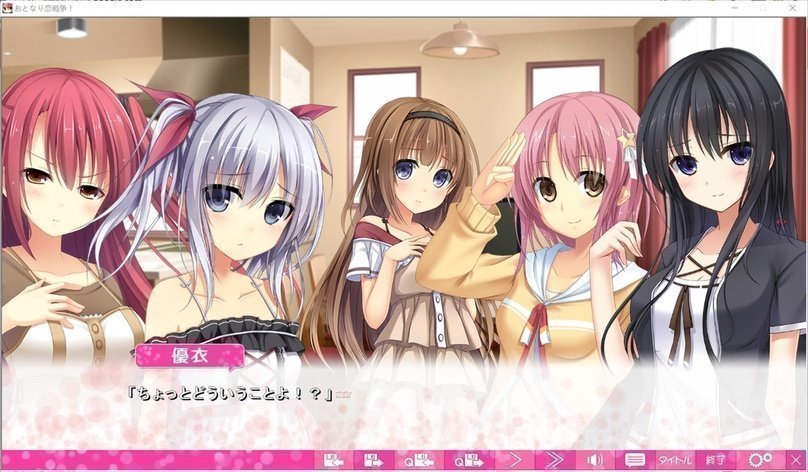
The interesting part is that only two of them actually like the protagonist—the two childhood friends. The others’ feelings toward him are weird: the stepsister just wants to be pampered, the underclassman joins in just for fun, and that school ojou-sama… upon meeting the protagonist, she says he smells nice and reminds her of her dead pet dog Joseph, so she treats him like her pet dog…
Judging from the promotional art and the OP singer info, the game’s focus should be the struggle between the protagonist and his two childhood friends, and the actual plot is indeed like that.
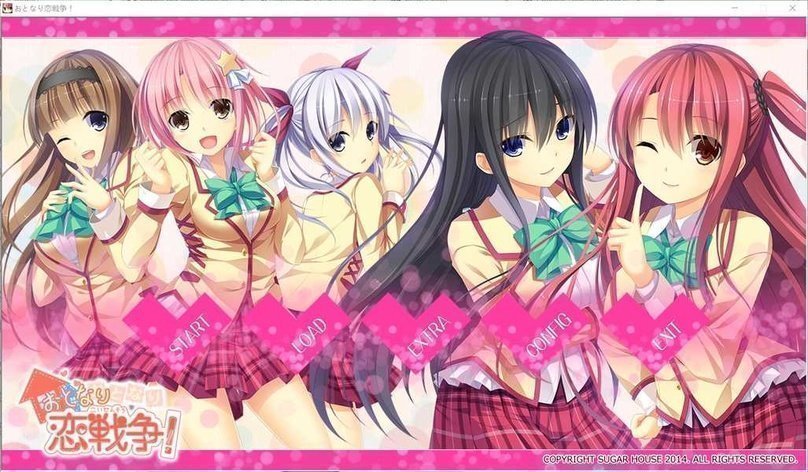
The protagonist’s standard childhood friend is Akamine Yui, the girl-next-door type living next door, a deep tsundere who secretly installs listening devices in his room. Because she’s a tsundere, she acts annoyed with him on the surface but actually likes him a lot… (this setup feels like it’s everywhere).
The other childhood friend is Aoi Suzuka, who supposedly promised to become his wife when they were kids, moved away, and now moved back. Upon meeting she says she’ll marry him. Her personality is somewhat sadistic, and she often enjoys teasing the tsundere Akamine Yui.
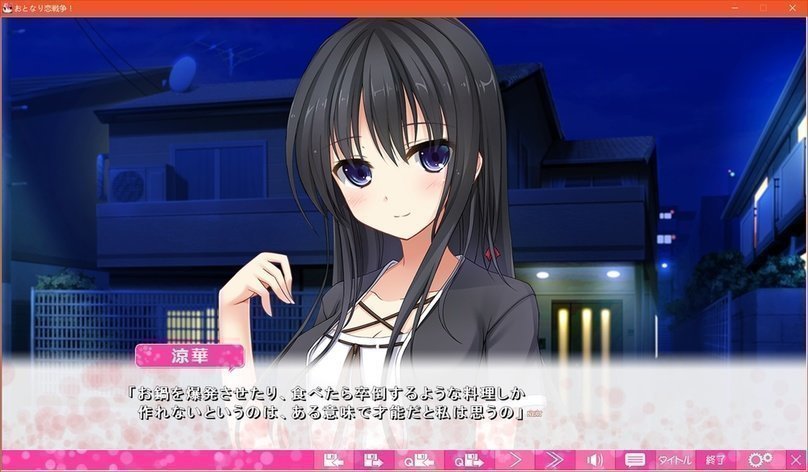
So the enjoyable part of the daily life is watching the tsundere Akamine Yui try to hit on the protagonist but fail to say anything, only to get toyed with by the scheming Aoi Suzuka. This daily-life feel is familiar—there’s an anime, what was it called… a light novel adaptation… oh right, “The Pet Girl of Sakurasou”? No wait, “My Teen Romantic Comedy SNAFU”? No… “Toradora!”? Hmm, the one about being caught between my girlfriend and childhood friend—oh yeah, “The “Hentai” Prince and the Stony Cat”? No. Anyway, something like that.
The game’s plot is standard jealousy and fighting, and in the end the protagonist must choose between the two—yes, two, since aside from the two childhood friends, the other characters are just there for fun.
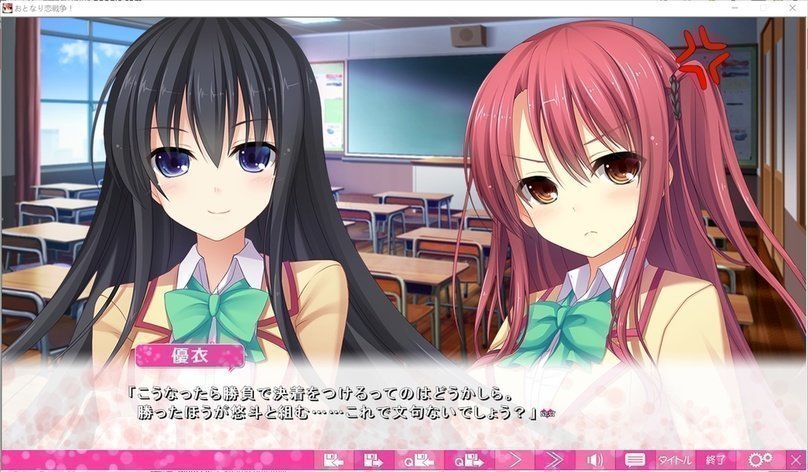
After choosing, there’s not much left—a bit of lovey-dovey stuff, a sex scene, and it’s over. I personally think the designated heroine is Akamine Yui; her tsundere personality makes her look like the main girl, and her romance route is relatively stable. After confessing to the protagonist there are some bumps—like she makes him promise to come watch her competition exam, but on the way he runs into another girl feeling unwell and takes her to the nurse’s office, misses it, and his girlfriend assumes he broke his promise and blows up. Not a big deal really, and it ends up quite orthodox.
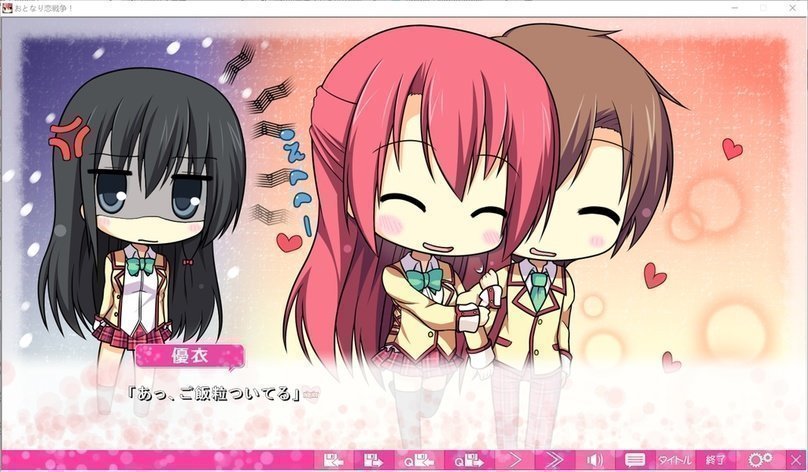
The key part of the game is the daily dialogue. I personally think the comedic daily parts are basically okay—at least good by light novel standards, on par with Renai 0 Kilometer and such. The biggest difference might be the lack of a designated funny-face character. Of course, I think the daily parts are decent only because the game’s flaws limit what is actually a not-bad script.
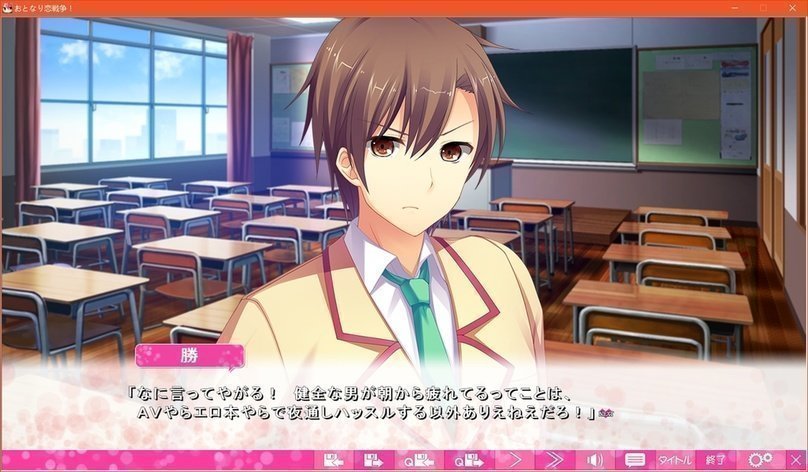
What flaws? About three:
- BGM switches way too often
The best way to make a galge low-quality is to constantly and abruptly switch BGM. This game is a prime example. Constantly switching BGM really hurts the presentation, and using good track arrangement to make BGM transitions smoother is what brings out a cinematic level of presentation. Have you ever seen a TV drama or movie switch BGM like a madman?
- Scene jumps with no transition
The dialogue scenes are fine, but sometimes when a scene ends and it’s time to move to the next one, the game just cuts instantly. Like I’m talking to my buddy, conversation ends, and whoosh, I’m on the rooftop. What the fuck… at least say a line like “I went to the rooftop” or something. Nothing, just a flash. Too violent, feels like flying. Combined with the constantly switching BGM, it feels like I’m being chased through the story.
- Voice acting is terrible
The game has many voice actors, and I can say the only one who performs well is the main heroine Akamine Yui’s VA, Ogura Yui. I’m not really an Ogura Yui fan—even though my router AP SSID at work is Ogurayui, I’m still not a fan. Even though I bought her album, I’m still not a fan. It’s just that her performance in this game is genuinely carry-the-whole-show level. The others are so bad she stands out too much, and only she can voice a tsundere so naturally, greatly boosting the game and her character’s appeal… Too bad the other characters are just average and don’t bring much to the table.

So for Otonari Koi Sensou, it has good qualities and a not-bad script, but because of the utterly trashy scene transitions, the godawful BGM cuts, and voice acting that has no highlights besides Ogura Yui, the game doesn’t meet expectations. Many Japanese players said they didn’t remember much after playing, which is understandable: the story is just ordinary jealousy, a plot you can explain in two sentences, and the fun daily dialogue is greatly diminished by the poor presentation. The flaws are obvious, the strengths don’t show, so… that’s how it is.
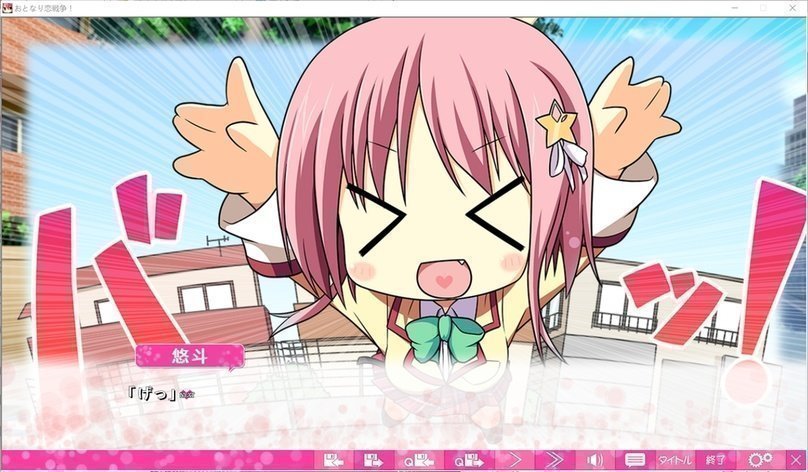
Someone on ErogameScape said Otonari Koi Sensou is a very common harem game so ordinary you could throw it on the street and not find it.
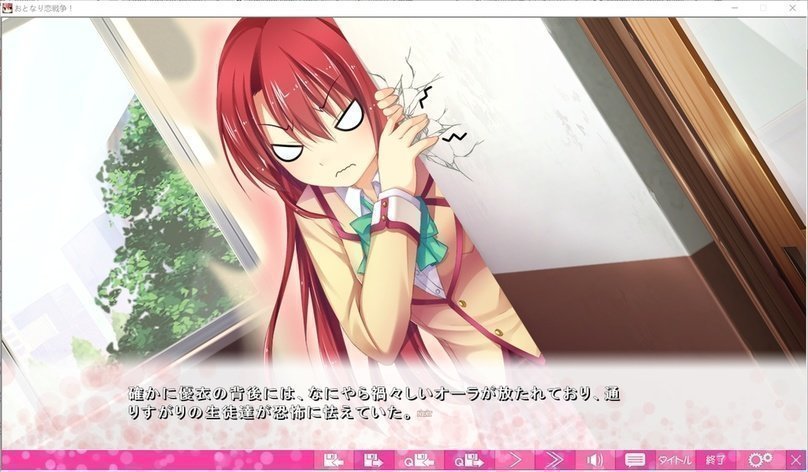
Bullshit! This game clearly has the protagonist choosing only one girl in the end—harem my ass! And insanely, several choices only let you pick numbers, not names, so you can’t even figure out how to enter a route without a guide. Harem my ass! There are five endings total and not a single harem ending—harem my ass!
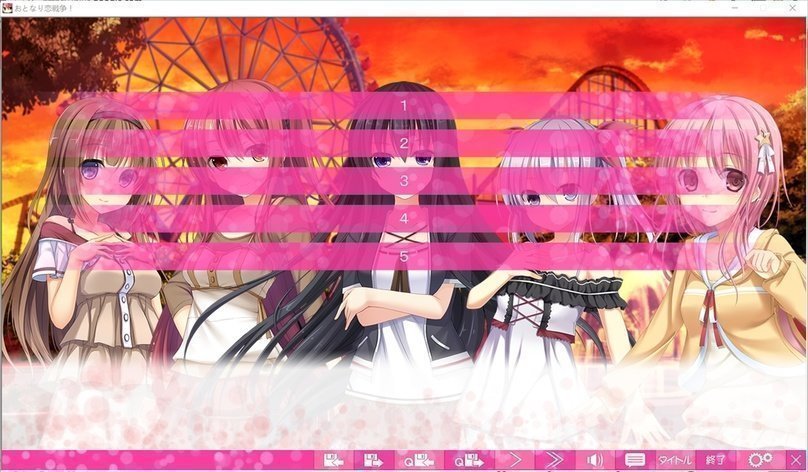
Besides, like I said at the beginning, those “harems” in eroge aren’t harems at all, are they!?
Comments are hosted on the Chinese main site. This mirror is read-only.