Anata ni Koisuru Renai Recipe (あなたに恋する恋愛ルセット) Review
Sugar Coma
A few days ago someone online was asking which eroge scenario writers people would recommend, and the usual crowd started rattling off the usual names. Urobuchi, Nasu, Maruto, and so on and so forth.
Honestly, I’m not especially fond of any of those guys’ scenario work. Some of those names actively make me feel sick when I see them. And besides, a few of them aren’t even eroge writers anymore — plenty of them have moved into anime, where their skill level is, frankly, also trash. In my book they rank below even Mari Okada.
Ah, no — the truth is Mari Okada is already a genuinely excellent anime screenwriter.
I’ve always had one firm opinion about “screenwriters” and “scenario writers”: if you’re the person telling a story to other people, the first thing you need is to actually know how to tell a story.
What does “know how to tell a story” mean? It means that whether or not the story itself is interesting, you should at least do everything in your power to make people able to sit through it — to keep listening, to keep watching. That skill is real. It’s the foundation. It’s the most fundamental thing there is.
Unfortunately, a few of the scenario writers that so-called ACG fans hype to the skies simply can’t tell a story. They either wallow in boring lore dumps, or they’re too busy jerking themselves off, or… they only know how to tell one formulaic story.
After consuming enough Japanese media, I started noticing something strange. A lot of Japanese works are always the same formula, and the creators themselves know it’s an old formula — but the audience just keeps eating it up. The eternal demon king and hero. The eternal prince and princess. The eternal Kamen Rider. The eternal ally of justice. The eternal childhood friend. The eternal bread-at-the-corner-on-the-way-to-school. The eternal transfer student. The eternal isekai. The eternal magical girl. The eternal idol. And the eternal cute boy.
That’s already a decent pile of ingredients. I figure you could grab a few at random, combine them, and get at least a small innovation out of it. But no — Japanese audiences don’t buy it. They prefer formulaic plots. Even when the premise is genuinely novel, the execution stays the same, and eventually it always circles back to the formula, as if that’s the only way the audience can feel “safe.”
It feels incredibly stuck in its ways. I don’t know if it’s tied to Japanese national character, but it’s like how Sony has great materials across multiple divisions and still can’t make a good phone.
On the scenario level, I’ve never personally liked the “already made it” types. A lot of those successful guys’ follow-up works are complete shit, but because they’re famous, people still read them, and afterward the fans will over-interpret everything just to praise their favorite writer.
Yes, I’m fucking talking about that idiot Maruto Fumiaki.
A scenario writer needs to know how to tell a story, and needs to know how to tell all kinds of stories — not just one kind. Versatility, being a multi-talented scenario writer — that’s what makes an excellent scenario writer, and only that kind of writer is the real deal.
So in that discussion thread I casually threw in a few scenario writers I like, and got shot down fast.
Some said the writers I like are moege hacks. Some said my taste is elementary-school level. Some said their scenario writing isn’t good enough.
I’m honestly baffled. What counts as “good enough,” then? Do you have to have crazy plot twists and foreshadowing payoffs? Lucle’s writing counts too, right? But then people jump in to say Lucle is elementary-school level, that he abandons character writing for the sake of twist reveals, that he casually throws out the worldbuilding just to make his own plotting convenient…
If you’re going to say that, doesn’t Urobuchi’s Puella Magi Madoka Magica do the exact same thing? Is there a single cent of character writing in it? Kyoko shows up and dies a few episodes later — where’s the character writing there? But you can’t say the show wasn’t good to watch, right?
A lot of people have blind love for the “famous” scenario writers and blind prejudice against new ones. What I really can’t understand is the contempt for writers of “moege,” especially female writers. Discrimination against stories by women exists among Japanese otaku too — I felt a few games were genuinely good but got inexplicably low scores from Japanese otaku. Is that also discrimination against female writers?
Actually, the style of female scenario writers is very gentle and cute. They focus more on developing the male lead, and the stories they write aren’t as “yellow” — they’re sweeter.
And besides, a romance game isn’t necessarily a moege… Writing a love story that’s genuinely sweet takes serious skill, okay? A good romance game really can make you feel the emotions of love while you’re playing. That’s not something you get from watching the male lead loop a million times, travel through time a million times, fuck the boss a million times, or even fuck Newton.
For example, the game I want to talk about: Anata ni Koisuru Renai Recette (あなたに恋する恋愛ルセット).
The title Anata ni Koisuru Renai Recette means “the love recipe for falling in love with you.” “Recette” should be a French word, recette, referring specifically to methods for making bread, pastry, and desserts. I think the French recette is basically the English recipe, it’s just that Japanese people insist on using katakana to distinguish it.
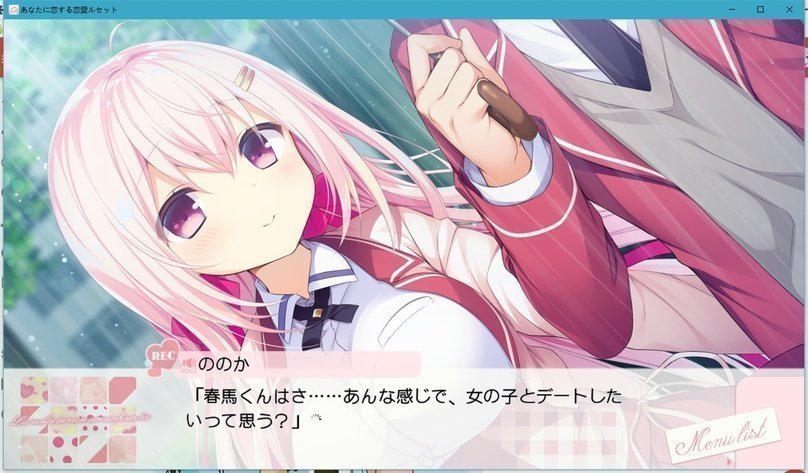
The game’s content and premise are exactly like the title. It’s built around making pastries and desserts, and follows the male lead as he arrives at a “senmon gakko” (vocational school) in Japan that has various departments, including one focused on pastry making. Because he likes sweets, he enrolls in that course. Four girls enroll alongside him: Tachibana Nonoka, a girl he’s known since childhood; Kagi Yuka, a girl skilled at traditional Japanese sweets; Oozono Yuzuki, a sheltered rich girl who’s never made sweets and just wants to learn; and Shirasaki Mieru, the daughter of the school’s director.
You might complain: “Wow, Japan is so great, they have schools that specifically teach people to make desserts — why doesn’t China have that? Isn’t this premise too convenient?”
That just means you don’t pay attention to real life. Japan’s “senmon gakko” is China’s “vocational school.” If you want to learn pastry making, you can report to Lanxiang anytime — and not just pastry, but hairdressing, auto repair, interior decoration, welding, argon arc welding too.
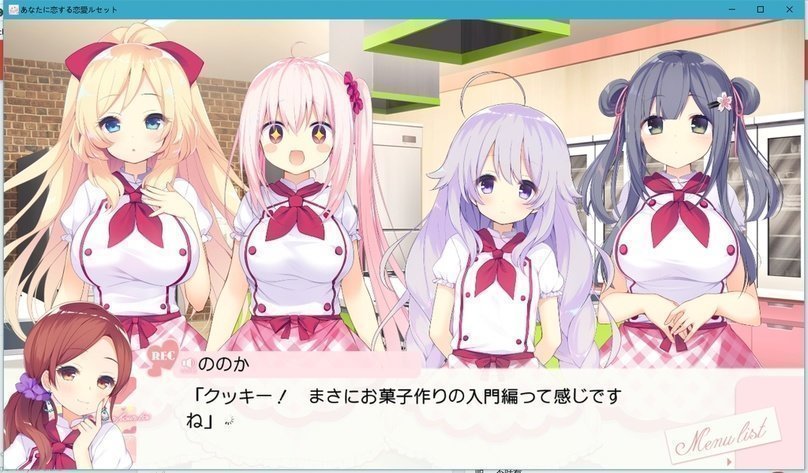
So the story unfolds after the male lead enrolls in vocational school to study pastry making. The game’s day-to-day pacing is actually very calm — and that calmness lives in every pastry-making description. Early on you make your first dessert, then the teacher’s assigned dessert, then the final exam dessert test, then the school festival where the whole class collaborates on a dessert, and finally the dessert making on each heroine’s individual route.
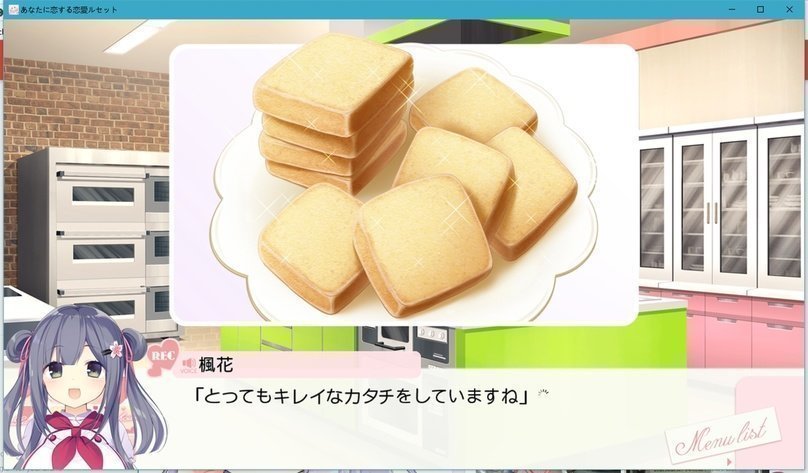
The game is remarkably careful in its descriptions of pastry making. I’ve made cookies myself, so I can tell — from the male lead’s first cookie bake to the later, more advanced choux pastry work, it’s basically all described according to real methods. The scenario writer clearly has done it themselves, otherwise they couldn’t possibly write it. And while describing the pastry making, the four heroines’ personalities gradually take shape, and before long each character starts to feel alive.
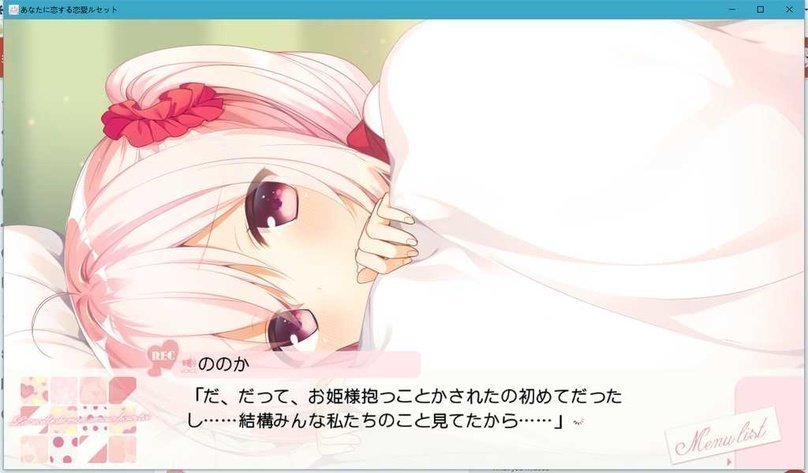
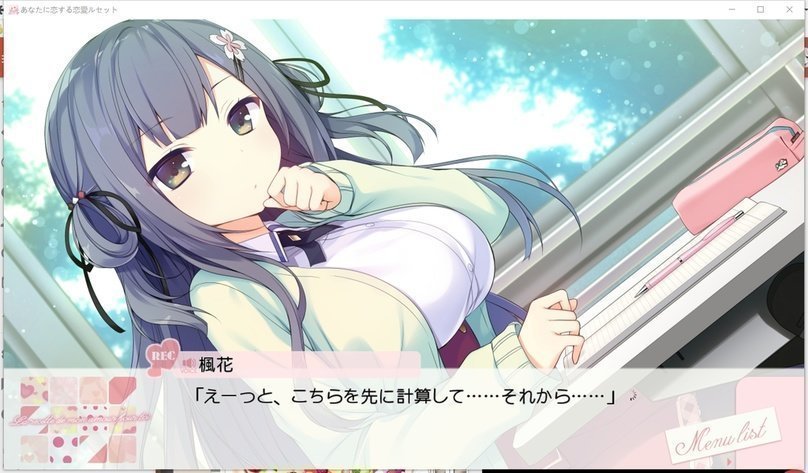
Kagi Yuka is the classic older-sister type with a traditional Japanese air about her. Mieru is a pastry genius who skips class and naps every day. Oozono Yuzuki is desperately earnest about learning to make things, but has no experience and is always clumsily failing. Karin-sensei claims to be a crossdresser, though whether that’s true is unclear — in the end she doesn’t deny it, so I guess it’s real. Sometimes she’s reliable, sometimes she’s got a nasty streak. And Tachibana Nonoka occupies a special position: she’s very adept at making sweets, upper-middle in skill, fairly dedicated, and always seems cheerful and smiling — but underneath, her personality is the most complicated of them all.
If you’ve seen the promotional art, you probably already get it — Tachibana Nonoka is the game’s anointed main heroine. You could say the entire main story is written around her.
Midway through the game there’s a flashback where the male lead explains why he loves making sweets.
The male lead says that as a kid he really loved cake but had no money. Finally one day he got his allowance and went to the cake shop in town to buy some, but there was a huge dog at the entrance that scared him off, and he couldn’t bring himself to go in several times. In the end he couldn’t resist the lure of the sweets, charged in, bought a cake, and tasted that sweet deliciousness — and at the same time he met a girl. The girl brought him a cake she’d made herself. He ate it and said “it’s really good,” and they promised that he’d keep eating the cakes she made.
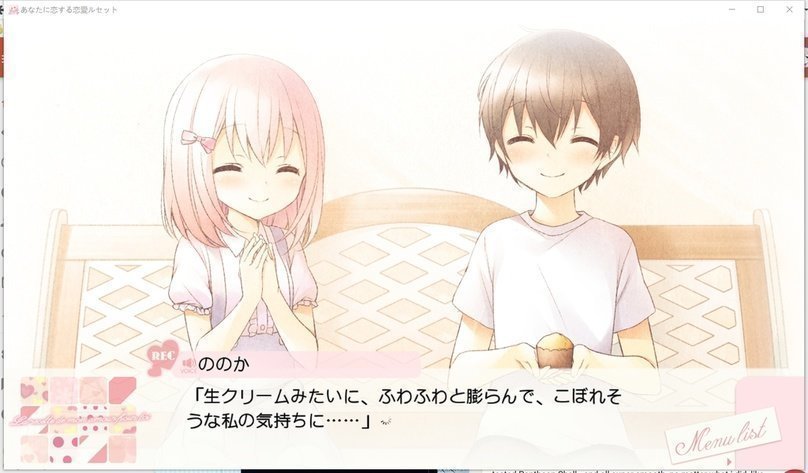
Then the male lead moved away, and he could never find that cake shop again — and that’s how he came to love sweets and want to make them himself.
Who was that girl? Nonoka, of course…
So when the male lead arrives at the vocational school and chooses the pastry department, meeting Nonoka again is “the childhood friend reunion.”
Later, Karin-sensei says she wants to recommend one person from the program to enter a very famous pastry competition, and Nonoka is the one recommended.
If you’re going to compete, you start training to improve — Nonoka practices hard, and the male lead stays by her side the whole time, looking things up for her and making sweets together.
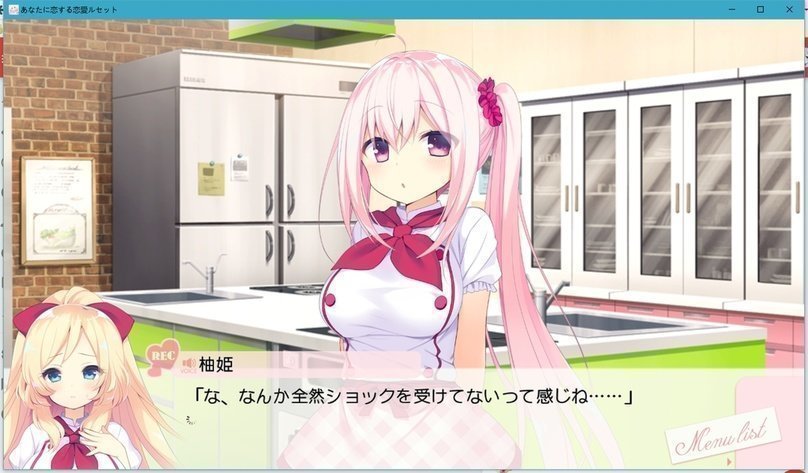
The results come in, and Nonoka has failed.
Everyone assumes Nonoka will be devastated, but she’s totally calm. She says that if her skill isn’t good enough, then oh well, she’ll just keep improving.
The male lead is confused, and everyone else feels… something’s a bit off. She worked so hard for the competition — why is Nonoka so calm?
Actually, this is exactly where the game’s characterization of Nonoka starts to quietly reveal its tricks.
Nonoka is a girl who’s good at putting up a front. On the surface she acts cheerful, generous with the male lead, appropriately casual when they interact — nothing seems off. But her inner thoughts are very complicated…
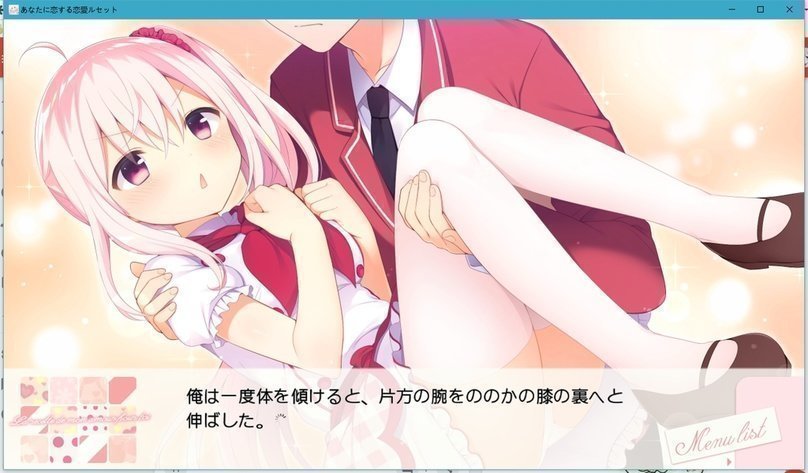
Nonoka likes the male lead. Her girlish heart goes wild all the time, but she never shows it in front of him. For Nonoka, her reason for making sweets is that childhood line from the male lead — “I want to eat your cake again” — which is why she insists on making a certain cake in class one time. Really, she doesn’t care about competitions; she just wants to spend more time with the male lead.
In the end the teacher sees through Nonoka’s heart and wants her to express her feelings soon. Nonoka isn’t a deep tsundere or anything, and eventually she finds a chance to confess that she likes the male lead. The whole thing is very sweet and a little touching.
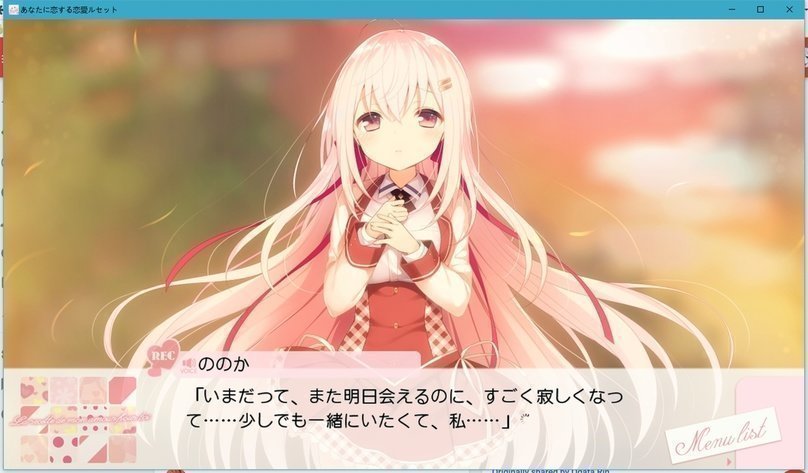
After that, things proceed even more naturally. Nonoka is basically the world’s best girlfriend — gentle without throwing herself at him, genuine without feeling fake, always happily enjoying the days she spends making cakes with the male lead. Even though there are plenty of chances to enter more competitions, she seems to treasure her time with him more.
And so, years after graduation, Nonoka and the male lead get married. The wedding cake at the ceremony is made by Nonoka and the male lead together. They went through an innocent childhood, then separation, then reunion at school, and finally walked into marriage hand in hand — you could say “sweets” are the deepest connection between the two of them.
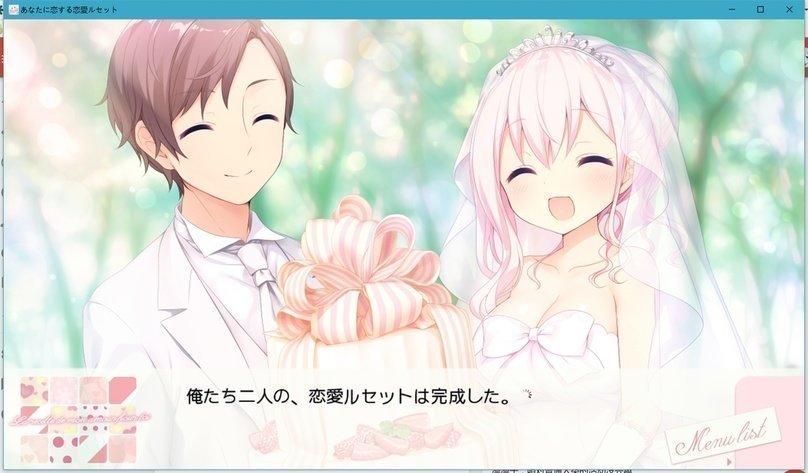
“My love pastry recipe with you is finally complete.” At the wedding, Nonoka smiles at the male lead. The game’s most important route comes to an end.
I’ve played a lot of games that do the “romance” layer well, but Nonoka’s route is genuinely something else.
Because it’s just that good!
The game uses a huge amount of internal monologue and detailed conversational cues to convey Nonoka’s girlish heart, and the game’s CG transitions are perfectly timed, the voice acting is flawless, and the gentle BGM brings it all together — perfectly building up the image of this adorable girl.
That’s something only achievable through the perfect combination of text, dialogue, voice acting, BGM, and visuals.
There are so many descriptions that make me think there must be a woman on the scenario team. Kazama Bonanza might actually be female. In the scene where the two share an umbrella, the focus is on “sweetness” rather than anything “ero.” In fact, aside from the HCG sections, everything in this game is very normal and healthy — it’s a romance story with an extremely high sugar content, not an eroge that exists just to have sex scenes.
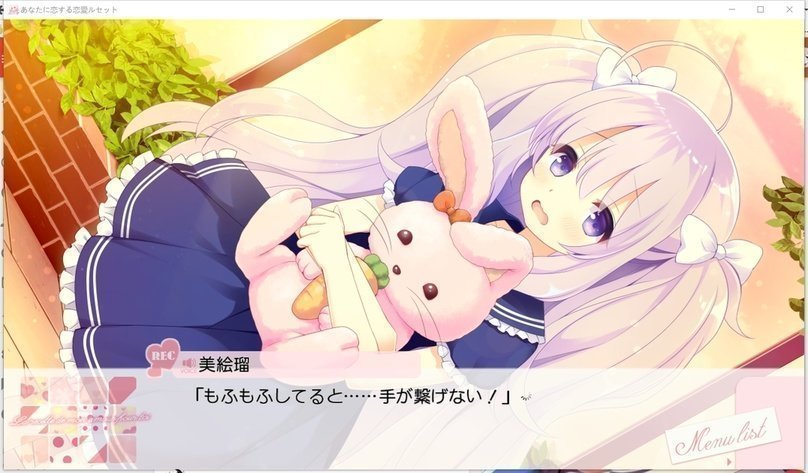
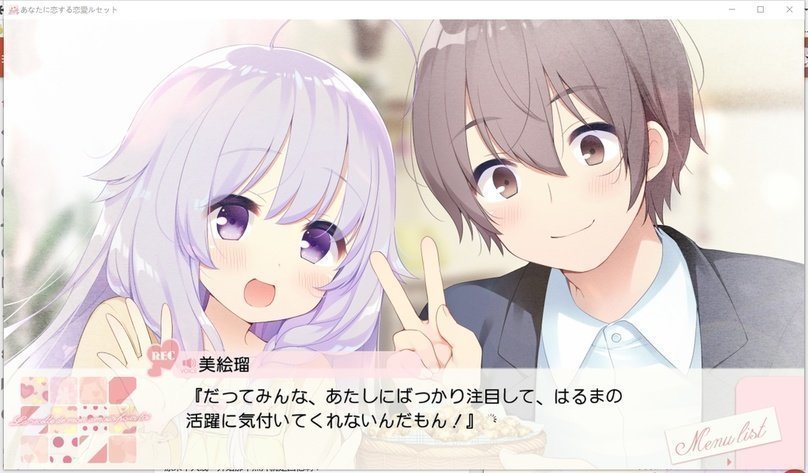
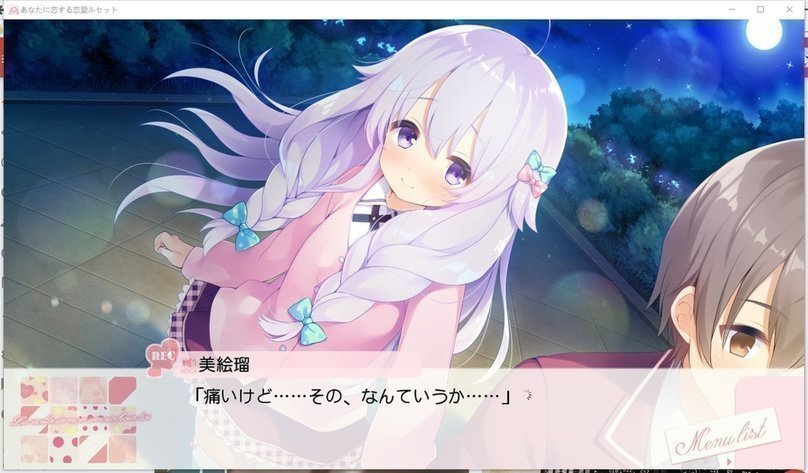
The game also uses a lot of different tricks in its narrative. Shirasaki Mieru’s route, for example, uses reverse chronology — it starts with the two of them going off to study pastry abroad, then flashes back through photos, and by the time the route ends, the memories reach their endpoint. It flows in one go. Mieru’s individual route is also handled very well. Mieru is a genius but always lazy, small-bodied and loli-ish, and the writing focuses more on her little-girl side without any malicious moe-baiting — just right. That’s really rare in today’s everyday romance games. And the reverse-chronology narration in this route uses language closer to a fairy-tale style, which, combined with the game’s pastry theme, creates a more interesting chemical reaction.
The BGM for Anata ni Koisuru Renai Recette is still by Mizuki Ryou, with the piano light music style you’re familiar with, though it’s mixed with some French-flavored material that fits the game’s theme very well. The art by Fumii, Yonejiro, and Pero is absolutely lethal — the overall visual quality is terrifyingly high, with no off-model art and plenty of CGs. The voice acting is top-tier too, using a mix of “veterans” and “newcomers” (probably). Kaze Ne and Miru are both veterans and handle their roles effortlessly. Nonoka’s VA isn’t exactly a complete newcomer but isn’t famous either — maybe the company was trying to save money? Cheap washed-up veterans and cheap unknown newcomers? Whatever — the voice acting already lives up to the game’s quality.
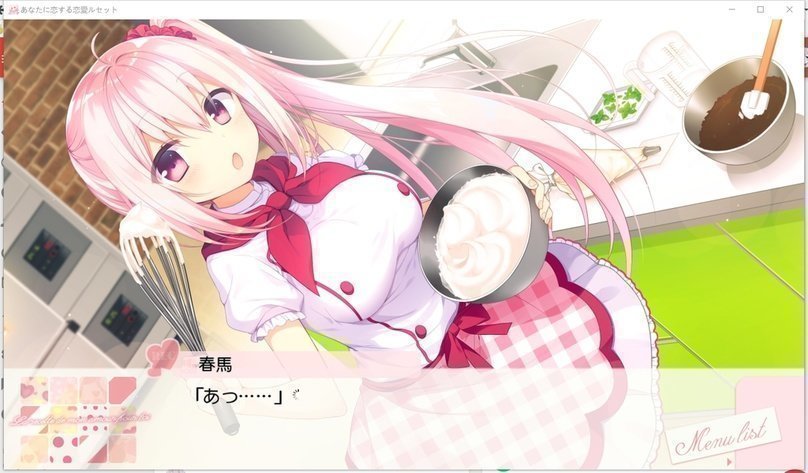
Anata ni Koisuru Renai Recette is a work that sticks very close to its title. The title tells you it’s about making sweets, and it presents you with a very sweet romance — from making them to tasting them, slowly feeling the sweetness spread through your body. The game itself does exactly that. It’s not really an eroge; it’s more like a “romance diary” full of girlish heart. Open it and your fatigue melts away, and you want to overcome every obstacle, reach through the screen, and hold hands with your girl until you’re old.
Of course, Japanese otaku can always find something to complain about with a game like this. For example, this:
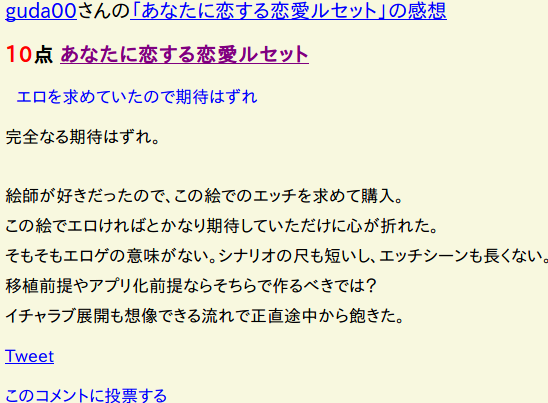
“I bought this game for the artist so I could jack off! And then your game goes and has a romance in it — there’s barely any fap material!”
I suggest this otaku go to a brothel.
If I were to score Anata ni Koisuru Renai Recette, I’d give it at least 90. This is a real “romance game” — one that makes you want to fall in love after playing it, one that makes you feel the sweetness and beauty of romance after playing it. That’s not something any random isekai or loop story can give you.
The OP and ED are, as usual, the Meis Clauson + Yuiko combo. According to the composer’s notes left in the game, the OP aims for “cute and cheerful, with sweets popping out all over the screen,” while the ED aims for “the floaty, happy feeling of drifting between reality and dreams after eating a sweet dessert.”
OP:https://www.youtube.com/watch?v=MsLdKDPOwdA ED:https://www.youtube.com/watch?v=qRNpnrAnYO0
Actually, I like the ED more than the OP.
That “sweet, drowsy feeling between dreams and reality” the ED describes — I actually know it. Westerners call it a sugar coma: the mild stupor caused by a spike in blood sugar after eating a high-sugar cake.
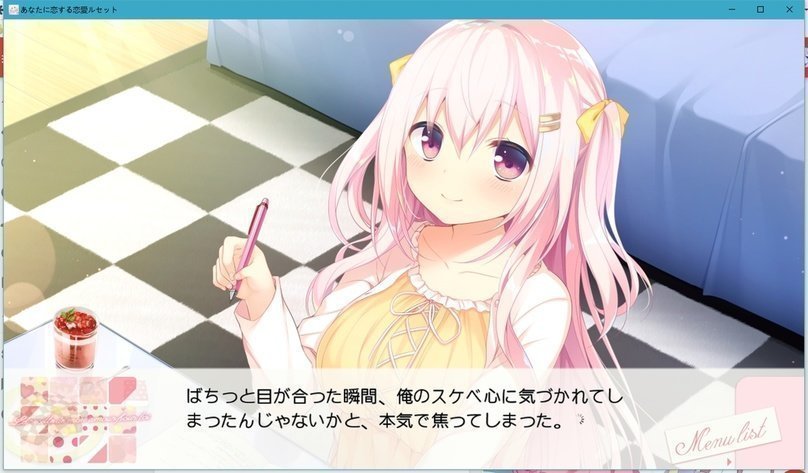
And isn’t that exactly it? Anata ni Koisuru Renai Recette has such a high sugar content that after playing it, I… may have fallen into a sugar coma full of happiness too.
Comments are hosted on the Chinese main site. This mirror is read-only.